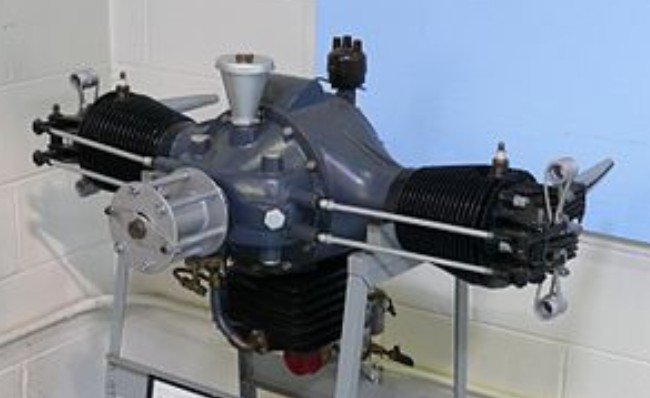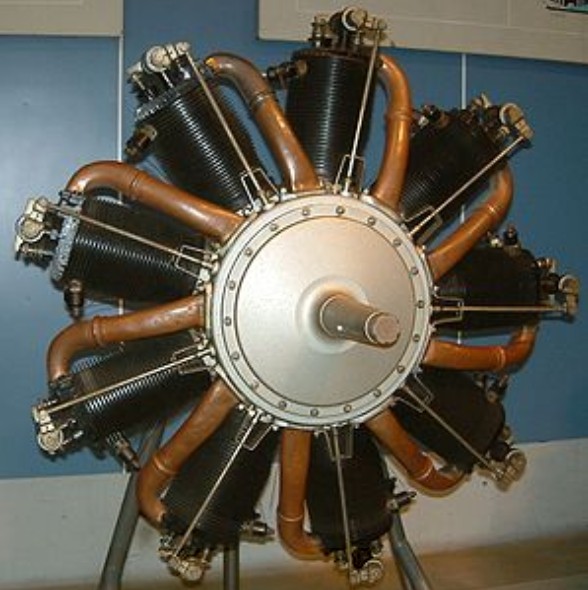
Le Rhône 9 / K / L / M / P / R

80 hp Le Rhône Model 9C

Le Rhône was the name given to a series of popular rotary aircraft engines produced in France by Société des Moteurs Le Rhône and the successor company of Gnome et Rhône. They powered a number of military aircraft types of the First World War. Le Rhône engines were also produced under license worldwide.
Although not powerful (the largest wartime version produced 130 horsepower (97 kW)), they were dependable rotary engines. The Le Rhône 9 was a development of the Le Rhône 7, a seven-cylinder design.

The copper induction tubes had their crankcase ends located in different places on the 80 and 110 horsepower (60 and 82 kW) versions – the 80 hp versions had them entering the crankcase in a location forward of the vertical centerline of each cylinder, while the 110 hp version had them located behind the cylinder’s centerline. This resulted in the 80 hp version’s intake plumbing being “fully visible” from the front, while the 110 hp version had the lower ends of its intake tubes seemingly “hidden” behind the cylinders.

A complicated slipper bearing system was used in the Le Rhône engine. The master rod was of a split-type, which permitted assembly of the connecting rods. It also employed three concentric grooves, designed to accept slipper bearings from the other cylinders. The other connecting rods used inner-end bronze shoes, which were shaped to fit in the grooves. The master rod was numbered as number one and the shoes of numbers. two, five and eight rode in the outer groove, the shoes of three, six and nine in the middle groove and four and seven in the inner groove. Although this system was complex, the Le Rhône engines worked very well.

The Le Rhône engines used an unconventional valve actuation system, with a single centrally-pivoting rocker arm moving the exhaust valve and the intake valve. When the arm moved down it opened the intake valve and when it moved up it opened the exhaust value. To make this system work a two-way push-pull rod was fitted, instead of the more conventional one-way pushrod. This feature required the cam followers to incorporate a positive action, a function designed in by using a combination of links and levers. This design functioned but it did prevent the incorporation of valve overlap which limits power output. Due to the structural and cooling limitations of the overall engine design the Le Rhône engines produced as much power as they were capable of, regardless.

As well as production by Société des Moteurs Gnome et Rhône, which had bought out Société des Moteurs Le Rhône in 1914, the Le Rhône was produced in Germany (by Motorenfabrik Oberursel), Austria, the United Kingdom (by Daimler), Russian Empire and Sweden.

Le Rhône 80 hp (60 kW) engines were made under license in the United States by Union Switch and Signal of Pennsylvania, and the 110 hp (82 kW) Oberursel UR.II rotary engine used by Germany in World War I, in such famous fighters such as the Fokker Dr.I triplane, was a close copy of the 110 hp 9J version.
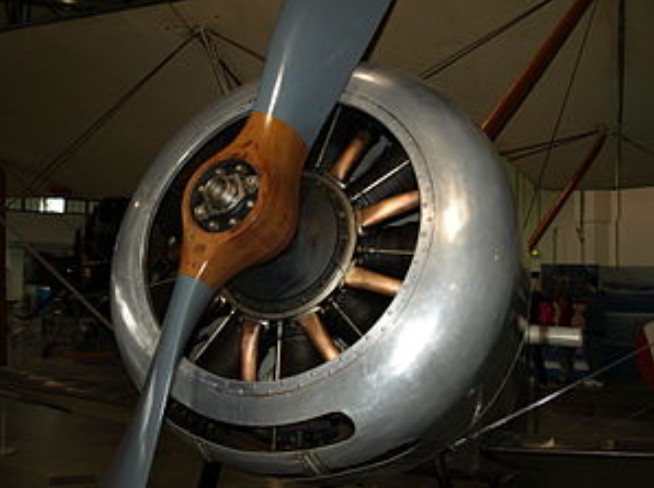
Le Rhône 9C in a Sopwith Pup

First run in 1916, the Le Rhône 9C is a nine-cylinder rotary aircraft engine produced in France by Gnome et Rhône. Also known as the Le Rhône 80 hp in a reference to its nominal power rating, the engine was fitted to a number of military aircraft types of the First World War. Le Rhône 9C engines were also produced under license in Great Britain by several companies, and in the United States. British production amounted to 1,088 examples.

In common with other Le Rhône series engines, the 9C featured highly visible telescopic copper induction pipes and used a single push-pull rod to operate its two overhead valves.

Oberursel produced the 110 hp model, supposedly without authorization in Germany. The Oberursel Ur.II was a straight copy of the Le Rhône, but the Le Rhône was preferred over the Oberursel due to the materials used in the French product. However, by July 1918 there was a shortage in Germany of castor oil, a plant-derived lubricant that the rotaries required as it could not be easily dissolved into the fuel, and because it possessed lubrication qualities superior to mineral oils of the day. A new Voltol-based lubricant, derived from mineral oil, was substituted and was blamed for engine failures on rotary-engined German fighters such as the Fokker E.V which used the Oberursel Ur.II. It has been suggested that without proper lubricants, the Le Rhône rotary would have been equally failure-prone.

A few examples of the 9C engine remain airworthy both in Europe and North America, one powering a vintage Sopwith Pup biplane in England, and a small number of others having powered reproduction WW I-era aircraft at Old Rhinebeck Aerodrome.

Variants:

Le Rhône Type 9C
(1916) 80 hp (60 kW), nine-cylinder rotary engine.

Le Rhône Type 9J
(1913) 110 hp (82 kW), nine-cylinder rotary engine.

Le Rhône Type 9Ja
(1915) 110 hp (82 kW), nine-cylinder rotary engine.

Le Rhône Type 9Jb
(1916) 120 hp (89.5 kW), nine-cylinder rotary engine.

Le Rhône Type 9Jby
(1916) 130 hp (97 kW), nine-cylinder rotary engine.

Le Rhône Type 9R
(1916) 170 hp (127 kW), nine-cylinder rotary engine.

Le Rhône 9Z
(1920) A 9-cylinder rotary.

Le Rhône K
(1916) A 9-cylinder rotary prototype engine.

Le Rhône L
(1916) A 9-cylinder rotary prototype engine.

Le Rhône M
(1917) A 9-cylinder rotary prototype engine.

Le Rhône P
(1917) A 9-cylinder rotary prototype engine.

Le Rhône R
(1917) A 9-cylinder rotary prototype engine.

Applications:
Bristol M.1
Bristol Scout
Caudron G.III
Caudron G.IV
Henry Farman F.20
Grahame White G.W.15
Grahame White G.W.E.6 Bantam
Morane-Saulnier G
Morane-Saulnier H
Morane-Saulnier L
Morane-Saulnier N
Morane-Saulnier P
Nieuport 10
Nieuport 11
Nieuport 21
Pemberton Billing P.B.23
Ponnier M.1
Royal Aircraft Factory F.E.8
Royal Aircraft Factory S.E.4
Sopwith Camel
Sopwith Dove
Sopwith Pup
Thomas-Morse S-4
Vickers F.B.12

Le Rhône 9C
Type: Nine-cylinder, single-row rotary engine
Bore: 105 mm (4.13 in)
Stroke: 140 mm (5.51 in)
Displacement: 10.89 lt (664.47 cu in)
Diameter: 94.5 cm (37.2 in)
Dry weight: 121.5 kg (268 lb)
Valvetrain: Cam-operated single rocker for both inlet and exhaust valves
Oil system: Castor oil, total loss
Cooling system: Air-cooled
Power output: 92 hp (68.6 kW) at 1,300 rpm (maximum)
Compression ratio: 4.5:1
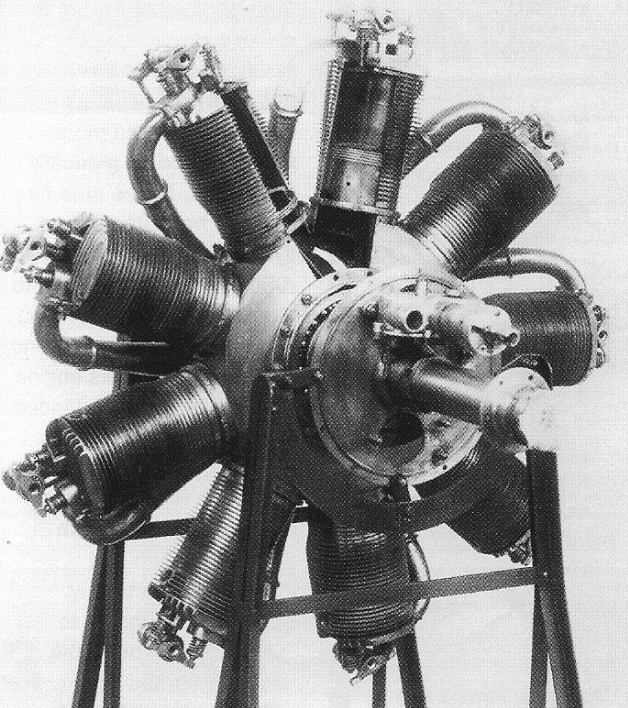
Le Rhône 7

1913 Type C

Le Rhône was the name given to a series of popular rotary aircraft engines produced in France by Société des Moteurs Le Rhône and the successor company of Gnome et Rhône. First run in 1910, they powered a number of military aircraft types of the First World War. Le Rhône engines were also produced under license worldwide.
Although not powerful (the largest wartime version produced 130 horsepower (97 kW)), they were dependable rotary engines. The Le Rhône 9 was a development of the Le Rhône 7, a seven-cylinder design.

The copper induction tubes had their crankcase ends located in different places on the 80 and 110 horsepower (60 and 82 kW) versions – the 80 hp versions had them entering the crankcase in a location forward of the vertical centerline of each cylinder, while the 110 hp version had them located behind the cylinder’s centerline. This resulted in the 80 hp version’s intake plumbing being “fully visible” from the front, while the 110 hp version had the lower ends of its intake tubes seemingly “hidden” behind the cylinders.

A complicated slipper bearing system was used in the Le Rhône engine. The master rod was of a split-type, which permitted assembly of the connecting rods. It also employed three concentric grooves, designed to accept slipper bearings from the other cylinders. The other connecting rods used inner-end bronze shoes, which were shaped to fit in the grooves. The master rod was numbered as number one and the shoes of numbers. two, five and eight rode in the outer groove, the shoes of three, six and nine in the middle groove and four and seven in the inner groove. Although this system was complex, the Le Rhône engines worked very well.

The Le Rhône engines used an unconventional valve actuation system, with a single centrally-pivoting rocker arm moving the exhaust valve and the intake valve. When the arm moved down it opened the intake valve and when it moved up it opened the exhaust value. To make this system work a two-way push-pull rod was fitted, instead of the more conventional one-way pushrod. This feature required the cam followers to incorporate a positive action, a function designed in by using a combination of links and levers. This design functioned but it did prevent the incorporation of valve overlap which limits power output. Due to the structural and cooling limitations of the overall engine design the Le Rhône engines produced as much power as they were capable of, regardless.

As well as production by Société des Moteurs Gnome et Rhône, which had bought out Société des Moteurs Le Rhône in 1914, the Le Rhône was produced in Germany (by Motorenfabrik Oberursel), Austria, the United Kingdom (by Daimler), Russian Empire and Sweden.

Le Rhône 80 hp (60 kW) engines were made under license in the United States by Union Switch and Signal of Pennsylvania.

Variants:

Le Rhône Type 7A
(1910) 50 hp (37 kW), seven-cylinder rotary engine – twenty built for use on Borel Monoplanes and Sommer Biplanes.

Le Rhône Type 7B
(1911) 50 hp (37 kW), seven-cylinder rotary engine – Thirty-five prototype engines built.

Le Rhône Type 7B2
(1912) 60 hp (44.7 kW), seven-cylinder rotary engine – 350 built at Societe Moteurs le Rhône.

Applications:
Airco DH.5
Avro 504
Bristol M.1
Bristol Scout
Caudron G.3
Caudron G.4
Hanriot HD.1
Fokker Dr.I
La Cierva C-6, autogyro, 1924
Macchi M.14
Morane-Saulnier N
Mosca MB 2 bis
Nieuport 11 “Bebe”
Nieuport 17
Nieuport 27
Sopwith Camel
Sopwith Pup
Standard E-1
Texas-Temple prototype
Thomas-Morse S-4C

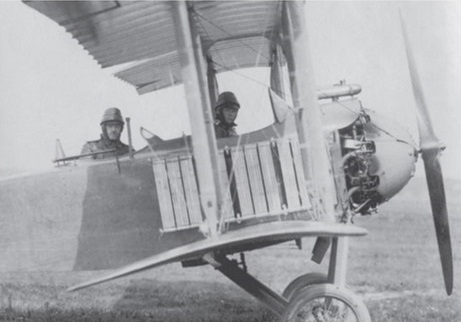
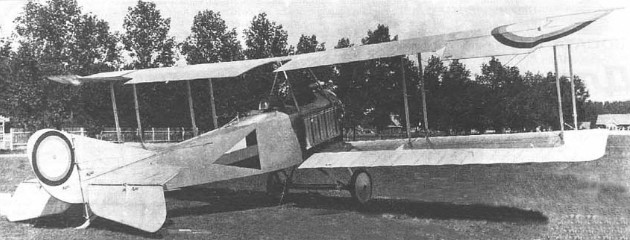
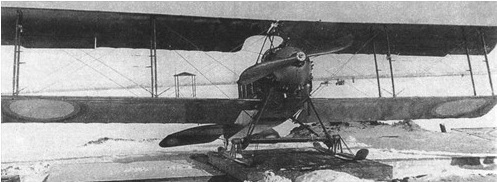
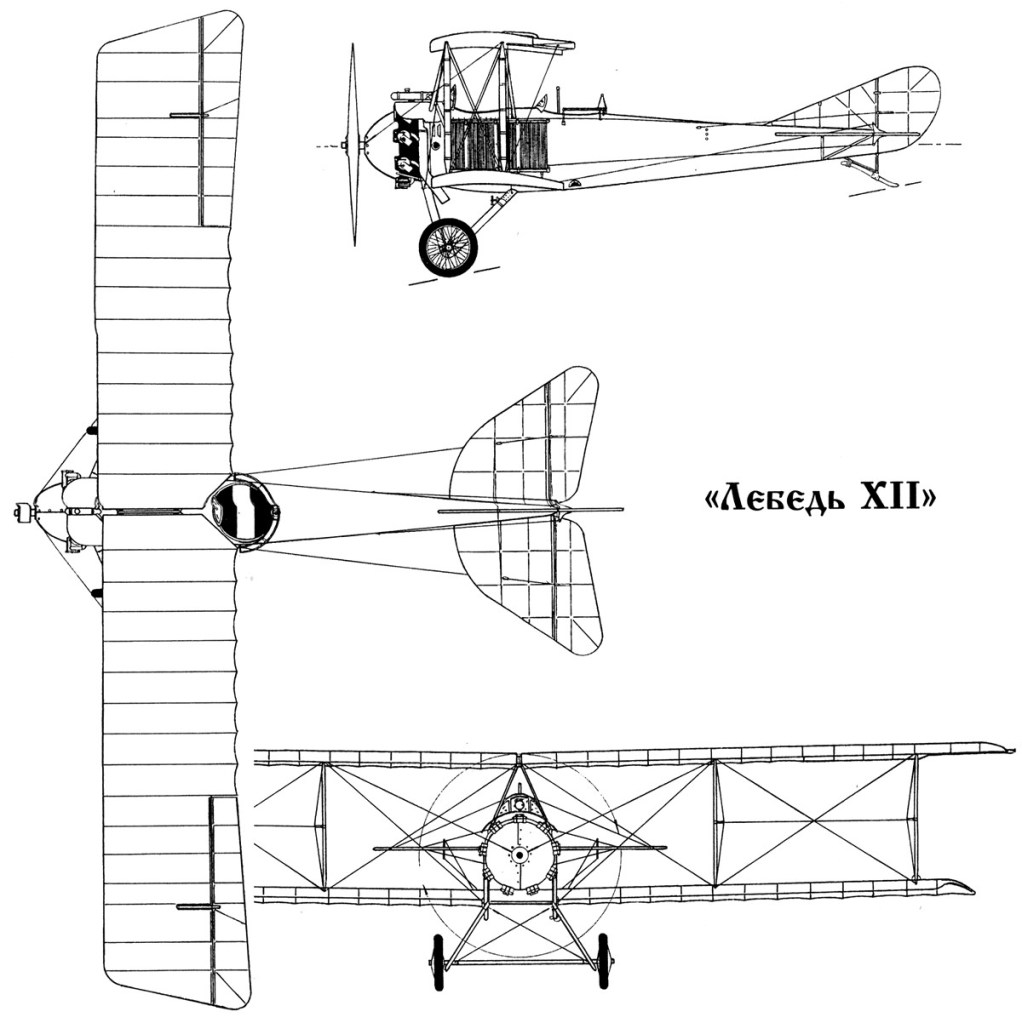
Lebedev Lebed’ 12

The Lebed XII was a Russian military reconnaissance aircraft produced during the First World War for the Imperial Russian Air Force. It was one of the few domestically designed aircraft to see production in Russia during the war, but was based on designs and techniques learned from Lebed’s rebuilding of captured German types. The fuselage was a plywood structure of rectangular cross-section with seating for the pilot and observer in tandem, open cockpits. The wings were built around a pine spar and covered in fabric, and the empennage (tail assembly) was of welded steel tube with fabric covering.

Test flights commenced on 28 December 1915, but were interrupted by bad weather in St Petersburg, where the Lebed factory was located. Testing was therefore moved to Kiev, and then to the Anatra factory at Odessa on 11–15 February 1916. Grand Duke Alexander Mikhailovich ordered 400 aircraft on February 23, but the final contract on 19 April was for 225 aircraft, 245 sets of spare parts and 10 static airframes for a total of 5,153,500 rubles.

Before production began, a number of handling difficulties noted by the test pilots were being corrected in the design, along with a new set of problems caused by a change in powerplant. The prototypes had been flown with 97 kW (130 hp) engines, but the production contract called mostly for 112 kW (150 hp) engines, plus some machines equipped with 104 kW (140 hp) engines for training. These heavier powerplants shifted the aircraft’s centre of gravity, and the mountings for the engine and cooling system had to be revised before a final round of tests began in October. Serial production finally commenced in November and delivery to squadrons soon afterwards.

The Lebed XII started appearing on the front line in quantity in early 1917, but problems quickly became apparent. In particular, a number of engine fires and crashes due to structural defects led to deliveries of the type being suspended by mid-year while an investigation was held. Army test pilots concluded that the version with the more powerful engine was unfit for frontline service, and recommended that it be relegated to training use only, while the lower-power version was regarded as not even fit for training. Lebed disputed the findings, blaming the poor results on the inexperience of the test pilots and on poor weather while the tests were conducted. The Army therefore held a second inquiry. On 2 October 1917, this panel concluded that the type was obsolete and unfit for service, recommending that production be halted and the type withdrawn altogether. However, due to a shortage of aircraft, production continued into 1918, and eventually 214 of the original order were delivered.

The Lebed XII saw limited frontline service in the North and North-western parts of the front with Germany, equipping four air divisions of the 38th Corps, 5th Army. Aircraft delivered in the second half of 1917 went mostly to training units, however. These included the Imperial aviation school, the Gatchinskoy military flying school, the Odessa flying school, Kiev school for pilots and observers and the flying school of the Caucasus. Over 50 were supplied to the Navy’s school of air combat in Krasnoye Selo alone. Survivors were taken over from the Imperial Russian Air Force by the Soviet Air Force.

The Estonian Air Force operated one aircraft only.

Variants:

Lebed XII
Main production type

Lebed XIIbis
Two aircraft constructed with alternative engines – one with a Hispano-Suiza engine, the other with a Green

Lebed XIII
High-speed version, anticipated to reach 150 km/h (94 mph). Planned for March 1916, but possibly not built.

Gallery

Specifications:

Engine: 1 × Salmson, 115 kW (150 hp)
Wingspan: 13.15 m (43 ft 2 in)
Length: 7.96 m (26 ft 1 in)
Height: 3.25 m (10 ft 8 in)
Wing area: 42.0 m2 (452 ft2)
Empty weight: 820 kg (1,800 lb)
Gross weight: 1,350 kg (2,970 lb)
Maximum speed: 135 km/h (84 mph)
Endurance: 3 hours 0 min
Service ceiling: 3,500 m (11,500 ft)
Crew: Two, pilot and observer
Armament: 1 × machine gun on flexible mount for observer
Bombload: 220 lb / 90.7 kg

Lawrance A-3 / Model A

Lawrance Model A

The Lawrance A-3 or Lawrance Model A was an American twin-cylinder aircraft piston engine. Designed by Charles Lawrance in the mid-1910s the engine was produced by the Lawrance Aero Engine Company and under license by Excelsior. Weighing 200 lb (90 kg) the engine produced 28 horsepower (21 kW). A feature of this engine was the shared use of a single crankpin for both cylinders, this caused vibration as the pistons moved in the same direction.

First run circa 1916, around 450 were built.

Applications:
Breese Penguin (flightless ground training aircraft)
Driggs Dart
Waco Cootie
Shinnecock lightplane

Specifications:
Type: Two-cylinder, air-cooled horizontally opposed piston aircraft engine
Dry weight: 200 lb (91 kg)
Cooling system: Air-cooled
Power output: 28 hp (21 kW)

Lawrance Aero Engine Company

The Lawrance Aero Engine Company was founded in 1917 by Charles Lawrance. After the end of World War I, the Lawrance engineers worked with both the Army and the Navy in developing their L-1 into a nine-cylinder radial engine, which became the 200 hp Lawrance J-1. It was the best American air-cooled engine at the time, and passed its 50-hour test in 1922.

The United States Navy was very enthusiastic about air-cooled radials, but was concerned that Lawrance couldn’t produce enough engines for its needs. The Navy suggested to Wright that it purchase the Lawrance company and build the J-1 itself. In May 1923, Lawrance was purchased by Wright Aeronautical, with the J-1 being further developed by Wright into the J-5, J-6, and R-795.

Products:
Lawrance A-3
Lawrance C-2 1917
Lawrance J-1
Lawrance J-2
Lawrance L-1
Lawrance L-2
Lawrance L-3
Lawrance L-4 aka Wright Gale
Lawrance L-5

Latham

Latham et Cie Societe Industrielle de Caudebec
Hydravions Latham

France
Jean Latham built flying-boats during the First World War. After the war became Latham et Cie Societe Industrielle de Caudebec, later Hydravions Latham, continuing the design and construction of single- and multi-engined flying-boats. In 1920 built the Gastambide-Levasseur variable- incidence biplane. Explorer Raoul Amundsen was lost on the Latham 47-2 searching for the crew of the airship Italia in 1925. In 1929 company amalgamated with Societe d’Emboutissage et de Constructions Mechaniques, later Amiot.

Latécoère / Ateliers Aeronautiques de Toulouse

La societé industrielle d’aviation Latécoère
Forges et Ateliers de Construction Latecoere
Ateliers Aeronautiques de Toulouse

The Forges et Ateliers de Construction Latecoere began its interest in aviation in 1917 with an aircraft works at Toulouse-Montaudron. In 1917 P-G Latécoère turned from making munitions to licence-building aircraft for the Aviation Militaire Française. Total wartime production amounted to 800 licenced Breguet XIV and Salmson 2A.2 2-seat reconaissance bomber biplanes.

The experimental Latecoere 1 two-seat fighter of 1918 was unsuccessful and the company concentrated for a period on licence manufacture of the Salmson 2 reconnaissance biplane, over 800 of which were built. Latecoere showed an aircraft at the 1919 Paris Salon, and another two, the LAT 4 airliner and LAT 6 bomber, in 1921. The Societe Industries d’Aviation was formed in 1922. From 1925 Latecoere developed an airline to South America and built a series of commercial aircraft for this route. Part of the Toulouse factory went to SNCAM in 1936. Developed a series of bomber aircraft (L.28, L.29) and torpedo-carrying floatplanes, the L.290 and L.298, the latter in service in 1939-1940. Some LeO flying-boats also built. In the 1930s developed a number of two- and four-engined commercial flying-boats, culminating in the six-engined L.521 Lieutenant de Vaisseau Paris of 1938 and L.631 of 1939.

Construction of the latter was interrupted by the war, but four were eventually completed by Breguet and used on commercial routes in the Mediterranean until 1948. The firm was sequestered in 1945 under the name of Ateliers Aeronautiques de Toulouse, but returned to the original owners and name in 1947.

The Compagnie Latécoère had numerous aviation related divisions located around Toulouse including: the Lignes Aeriennes Latécoère and CGEA (Cie Generale d’Entreprises Aeronautiques). The Lignes Aeriennes Latécoère may explain why earlier designations are often shown as LAT-xx rather than Laté-xx (as well as the SILAT acronym).

  • 1918: Société des lignes Latécoère or Lignes Aeriennes Latécoère (LAT)
  • 1918: Compagnie Espagne Maroc Algerie (CEMA) P-G Latécoère & Beppo de Massimi
  • 1919: CEMA renamed Lignes Aériennes Latécoère (LAT)
  • 1921: LAT renamed Compagnie Générale d’Entreprises Aéronautiques (CGEA)
  • 1927: Marcel Latécoère sells CGEA majority shares to Marcel Bouilloux-Lafont
  • 1927: Marcel Bouilloux-Lafont founds Compagnie Générale Aéropostale (CGA)
    — NB: Aéropostale assoc. with Latécoère but not owned by Compagnie Latécoère
  • March 1931: Compagnie Générale Aéropostale declared bankrupt
  • 1932: Aéropostale dissolved by French government and merged with SCELA
    — SCELA: Société Centrale pour l’Exploitation de Lignes Aériennes
  • Aug 1933: Aéropostale officially merged with SCELA to become Air France

The Latécoère corporate identity went through three major changes between 1917 and the beginning of WWII.

  • 1917: Forges et Ateliers de Construction Latécoère building aircraft
  • 1922: name changed to Société Industrielle d’Aviation Latécoère (SIDAL)
    — Acronym later SILAT for clipped-form Société Industrielle LATécoère
  • End 1936: Latécoère nationalized (to be combined with Dewoitine as SCNAM)
  • 1937: Société Nationale de Constructions Aéronautiques du Midi (SCNAM)

Pierre-Georges Latécoère died on 23 Aug 1943.