First run in 1910, the Wolseley 60 hp or Type C was a British liquid-cooled V-8 aero engine that first ran in 1910, it was designed and built by Wolseley Motors. The engine featured water-cooled exhaust ports and employed a 20 lb (9 kg) flywheel. During an official four-hour test the engine produced an average of 55 horsepower (41 kW). A larger capacity variant known as the 80 hp or Type B used an internal camshaft and propeller reduction gear.
Applications: 60 hp Royal Aircraft Factory B.E.1 Royal Aircraft Factory B.E.2
80 hp Vickers E.F.B.1
Specifications: 60 hp Type: 8-cylinder, upright, 90-degree Vee engine Bore: 3.74 in (95 mm) Stroke: 5.51 in (140 mm) Displacement: 482 cu in (7.9 L) Dry weight: 385 lb (175 kg) Valvetrain: Sidevalve with single external camshaft Fuel system: Single Zenith carburettor Fuel type: 40-50 octane petrol Cooling system: Air-cooled with liquid-cooled exhausts Reduction gear: Direct drive, left-hand tractor Power output: 60 hp (45 kW) at 1,800 rpm (maximum power) Specific power: 0.12 hp/cu in (5.7 kw/L) Power-to-weight ratio: 0.15 hp/lb (0.25 kW/kg)
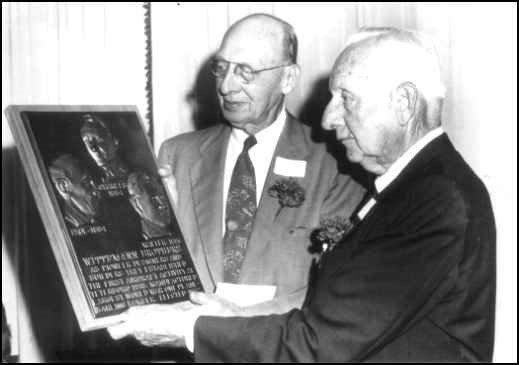
In 1905, Charles, Paul and Walter (1896-1980) Wittemann opened the first airplane manufacturing plant in the United States on their family estate in Staten Islad. After experimenting with gliders, they designed and built their first airplane in 1906 and continued to manufacture a number of experimental planes and models until their ever-increasing production forced their move to a more spacious building on the north edge of the Newark meadows.
(Charles and Adolph) Wittemann Aeronautical Engineers Ocean Terrace & Little Clove Rd Staten Island NY. USA
In 1907 the firm built a single-place, open cockpit biplane, powered by a 40hp Wright pusher. This featured a swivelling tailwheel, which was quite an advance in technology back then.
1907 also saw a single-place open cockpit triplane, powered by a 40hp Wright pusher.
Between 1908 and 1914 the firm built many planes, including Curtiss-type, single-place, open-cockpit biplanes, for notables of the time: Bud Mars, Ruth Law, Capt Thomas Baldwin, Lincoln Beachey, Cecil Peoli, Harold Blakesley, and others.
During 1911 the firm was involved in the construction of the Baldwin Red Devil III.
1916: Newark NJ. Aeronautical construction engineers of Newark, New Jersey. Rebuilt Airco D.H.4s to DH-4B standard for U.S. Army.
In 1917 they built a new plant at Teterboro Airport where the Wittemanns received the consent of the U.S. Army to convert unused DH-4 aircraft for the Post Office to be used for the first air mail postal service. The planes were modified to carry 400 lbs. of mail and in 1919 further improvements were made to accommodate 1000 lb. payloads. Approximately 75 of these single engine aircraft were produced at Teterboro.
c.1917: Wittemann-Lewis Aircraft Co Inc.
Had produced own-design mail carrier in 1920, when firm moved to Teterboro in 1919 (factory was eventually occupied by Fokker Corp). Contractors to US Post Office and USN for several aircraft.
During 1922-1923 built the Barling six-engined triplane bomber to Walter Barling’s design.
Built twin-engined Sundstedt-Hannevig seaplane 1923, for transatlantic attempt by Capt. Sundstedt.
During 1923, 25 de Havilland DH-4s were modified for mail carrying, powered by a 400hp Liberty 12. The last of the company’s efforts before filing bankruptcy.
In 1923 ended production to concentrate on engineering research. Of interest is that no Wittemann aircraft ever suffered a fatal or serious accident.
After bankruptcy in 1924, the firm property was acquired by Atlantic (Fokker).
Paul & Walter Wittemann were inducted in the Aviation Hall of Fame & Museum of New Jersey.
UK Aviation department of J. Samuel White under Howard T. Wright, who joined company in 1912. Employed double cambered aerofoils on early designs. Built training and operational seaplanes for Admiralty, a twin-engined torpedo bomber in 1915 and an experimental single-seat quadruplane.
The Whittemore-Hamm L-2 and L-3 built in 1917 were fabric-covered, laminated-wood fuselage trainers developed for Army interest, of which there was none. With two seats and open cockpit, one each was built, the L-2 sold to the Boston Post.
The Bognor Bloater gained its nickname from the scaley effect created by copper wire-stitching the cedar plywood covered monococque fuselage.
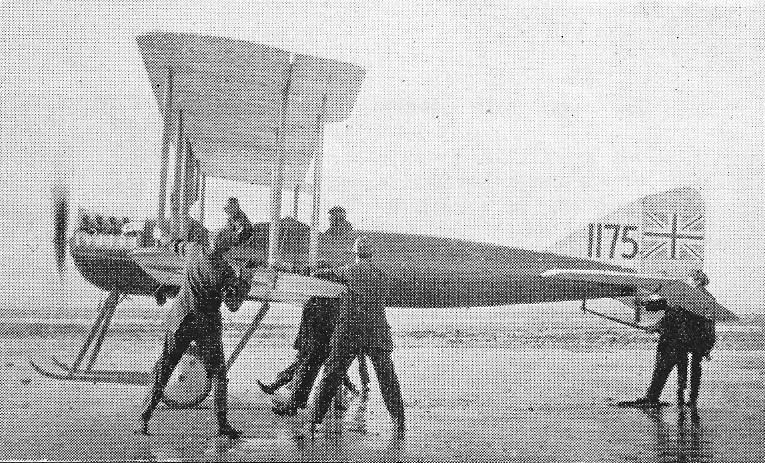
The 1915 Bognor Bloater tractor biplane is believed to have been the first aircraft in production with a monocoque fuselage. Twelve were ordered for the RNAS, but only 10 were delivered.




 All Aero