Ray A. Page established Nebraska Aircraft Corporation at Lincoln, Nebraska, during the First World War, and was a builder of the Lincoln Standard biplane, and also built aircraft under subcontract to the U.S. government.
Began construction, in 1922, of the five-seat Air Coach. Between 1923 and 1925 offered the Lincoln-Standard Tourabout, a three-seat rework of the Standard J.1 of 1916. Also produced the Sport Lightweight biplane. Page acquired the rights to the New Swallow and redesigned this as the three-seater Lincoln-Page LP-3 in 1928, an attempt to catch up with developments in light aircraft design. In 1929 produced a two-seat trainer known as the Lincoln-Page Trainer.
Lincoln Aircraft Company Inc was the official name of Lincoln-Page from 1929, but both names used indiscriminately.
The last design was the parasolwing Lincoln Playboy of 1931. Firm was by then the Lincoln Airplane and Flying School.
World War 1
Liberty L-8/ Packard Liberty L-8 / Packard 1A-1100 / Allison Liberty L-8
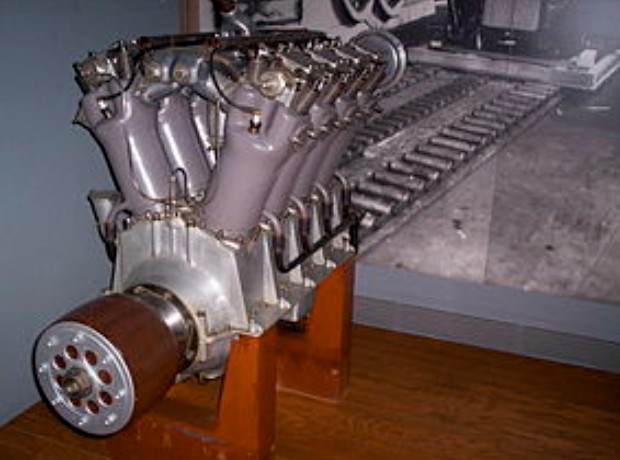
The Liberty L-8, aka Packard 1A-1100 engine was a prototype of the Liberty L-12 engine, designed by Jesse G. Vincent and Elbert J. Hall, and manufactured by Packard Motor Car Company in Detroit, Michigan around 1917. Although it did not see mass production several were built. The first of them built now resides in the National Air and Space Museum in Washington, DC.
Liberty L-8
Type: 8-cylinder, liquid-cooled Vee aircraft piston engine
Bore: 5 in (127 mm)
Stroke: 7 in (178 mm)
Displacement: 1,099.6 cubic inches (18.0 lt)
Length: 57 inches (1,448 mm)
Dry weight: 575 pounds (260.8 kg)
Valvetrain: One intake and one exhaust valves per cylinder actuated via a single overhead camshaft per cylinder bank.
Cooling system: Liquid-cooled
Power output: 290 hp (216 kW) at 1,700 rpm
Specific power: 0.26 hp/cu.in (11.9 kW/lt)
Power-to-weight ratio: 0.45 hp/lb (0.74 kW/kg)
Liberty L-4
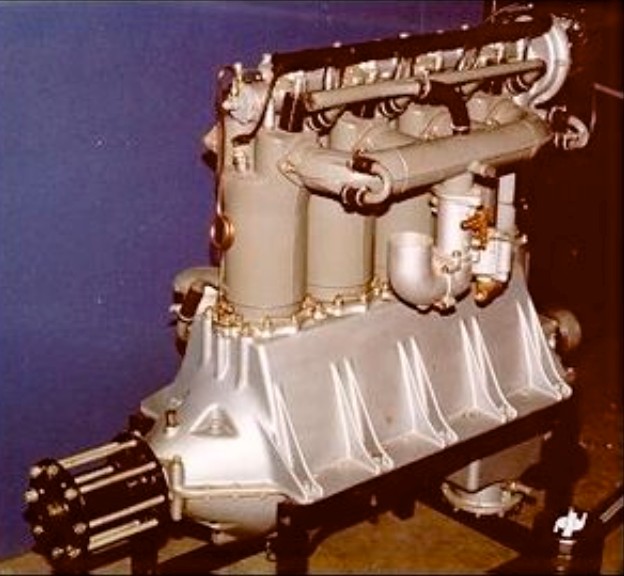
The Liberty L-4 was a four-cylinder, water-cooled, inline engine for aircraft developed in the United States during World War I. Designed by Jesse G. Vincent and Elbert J. Hall, the Liberty L-4 was an experimental engine of 102 hp, built by the Hudson Motor Co. and intended primarily for use in training airplanes. Only two were produced since other types of engines were available and already in production. It is unknown if the L-4 was ever test-flown.
Specifications:
Type: Four-cylinder inline piston engine
Bore: 5 in. (127mm)
Stroke: 7 in. (177.8mm)
Displacement: 549.8 cuin (9.0 L)
Cooling system: Water-cooled
Power output: 102 hp
LFG Roland W.I
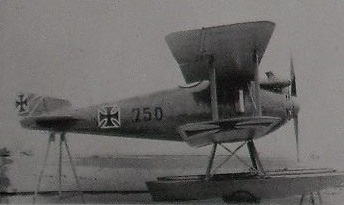
160 hp Mercedes 1917
LFG Roland D-XVI
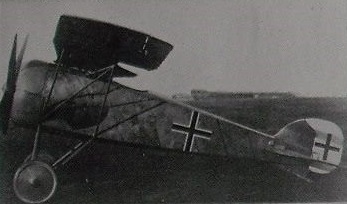
160 hp Siemens or 170 hp Goebel 1918
LFG Roland D-IV

The D.IV was a 1917 experimental triplane powered by a 160 hp Mercedes engine.
LFG Roland V-19 Stralsund
Produced the V-19 Stralsund, the first aircraft designed for carriage by submarines.
LFG Roland D.VI
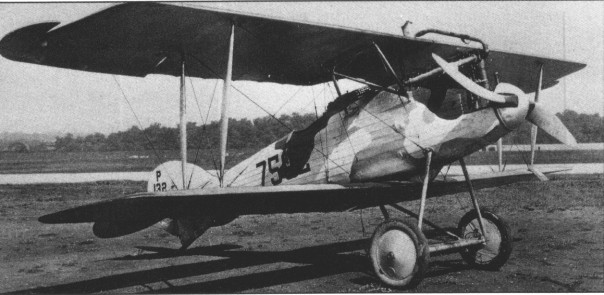
Late in 1917 the prototype D.VI appeared. The D VI followed the D II series and was built for the January 1918 German fighter competition. Two versions, one with a 160 hp water cooled Mercedes DIII engine and another with an improved 180 hp Mercedes, were entered in the fighter design competition of January 1918. There they lost to the Fokker that was to become the D.VII.
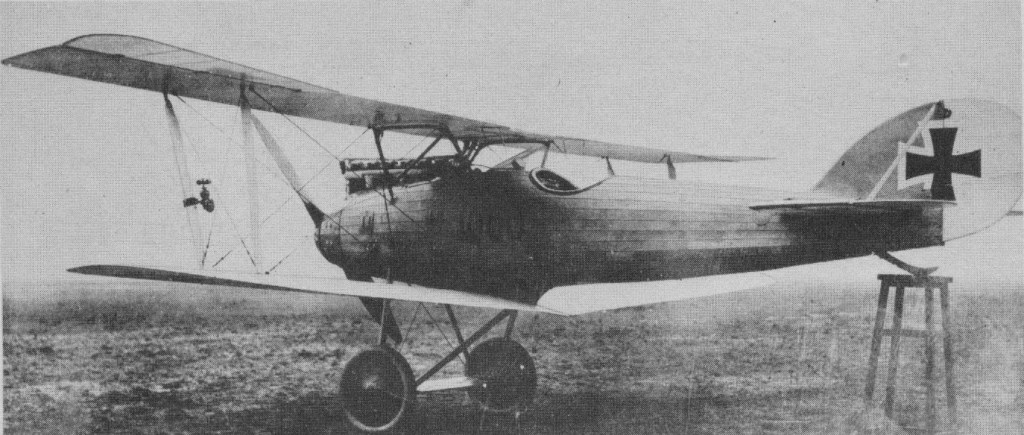
There was little to distinguish the standard production D.VIa from the earlier D.VIb other than the designation lettering on the side of the fuselage and the visible details of the different engines. Early models in each series had the radiator filler cap on the centre line of the upper wing while later models had it at the right side of the radiator. Late V.VI’s and all production S.VIb’s had a diagonal brace wire running from the lower rear wing strut to the upper wing overhang. Late model D.VIb’s were mostly identified by the installation on wider elevators which had aerodynamic balance areas extending forward to the hinge line. Serial numbers were not accurate because many D.VIb’s had earlier serials than late D.VIa’s.
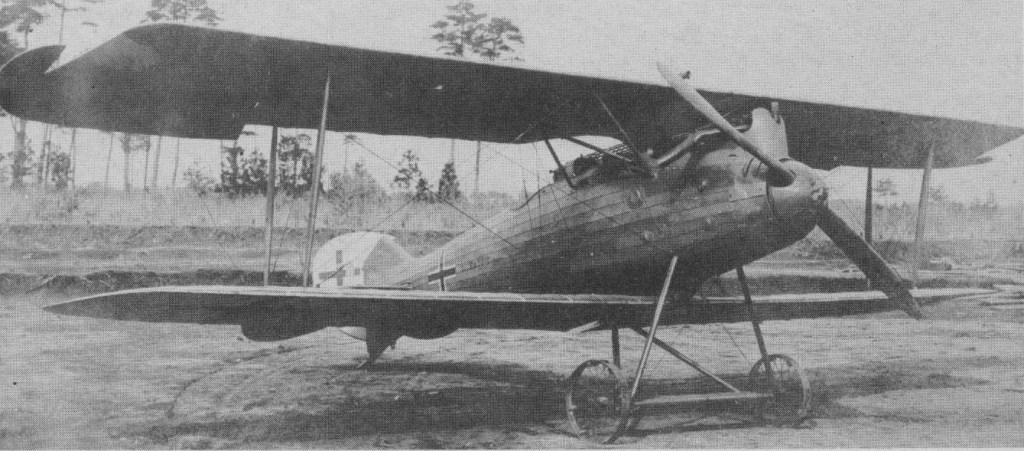
The D.VI wings were built up of wood spars and ribs, fabric covered. While the stabiliser was wood and fabric, the vertical fin on all but a few of the experimental prototypes was plywood covered. A unique feature was the fuselage construction. Roland used longitudinal strips of solid wood tapered to conform to the fuselage lines and planed to a wedge-shaped cross section to allow overlapping of adjacent strips exactly like shiplap in a “clinker-built” boat. This was officially termed “Klinkerkonstruction” and was exclusive with Roland.
Centre section bracing consisted of two welded steel tube assemblies instead of individual struts; outer wing struts were wood. Landing gear struts were streamlined steel tubing cross-braced with wire. The axle, secured to the landing gear struts with rubber shock cord, was carried inside a streamlined spreader bar fairing hinged at its top to allow upward movement of the axle when under load. The lower wing was not attached to the bottom of the fuselage but mounted on a narrow external keel that projected below the fuselage proper. The rear landing gear struts also attached to this keel where it joined the rear wing spars.
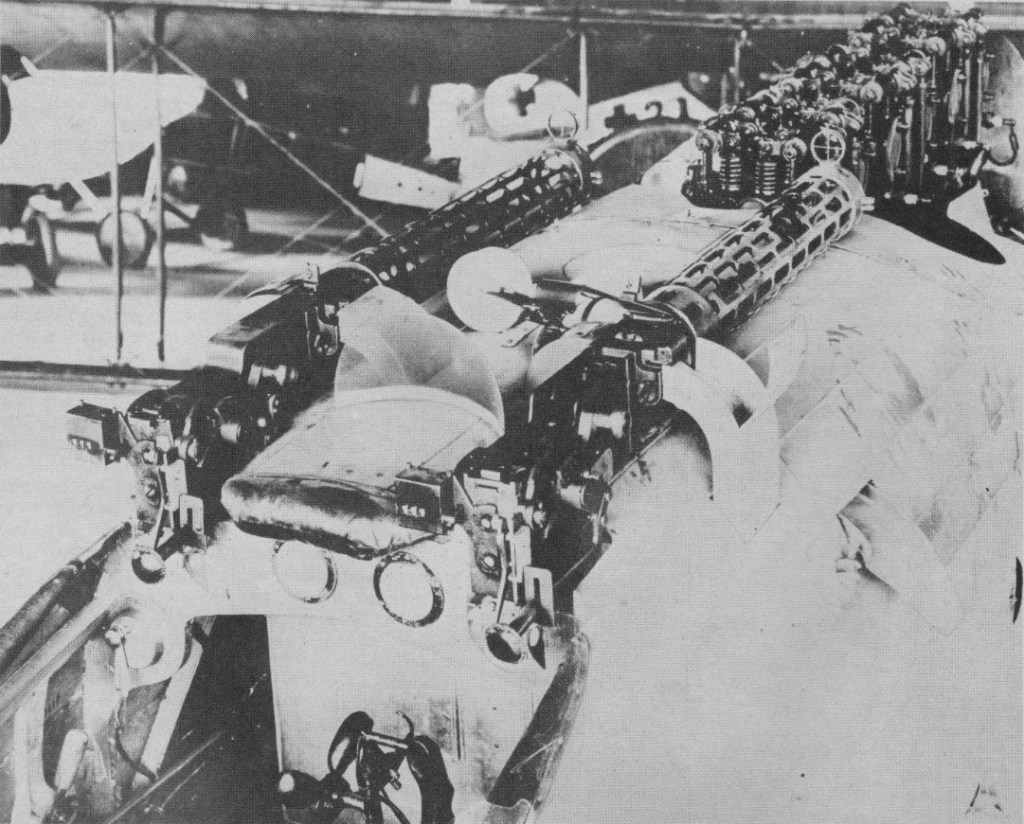
Installation of the radiator in a flat position in the centre section of the upper wing was standard practise. This type of installation was adequate in northern an central Europe but postwar tests of a C.VIb at McCook Field, Dayton, Ohio, revealed the cooling inadequate under American climatic conditions.
The aileron control system was adapted from that of the French Nieuport 11 and 17 in that a steel torque tube projected from the hinge line of the aileron to the centre section over the cockpit. Cables from control horns on the tube connected directly to a rocking beam under the control stick. The D.VI was the first German fighter to feature a horizontal stabiliser that could be adjusted for in-flight trim. The entire stabiliser pivoted about the rear spar. Other fighters with trim control had bungee springs or set screws attached to the stick.
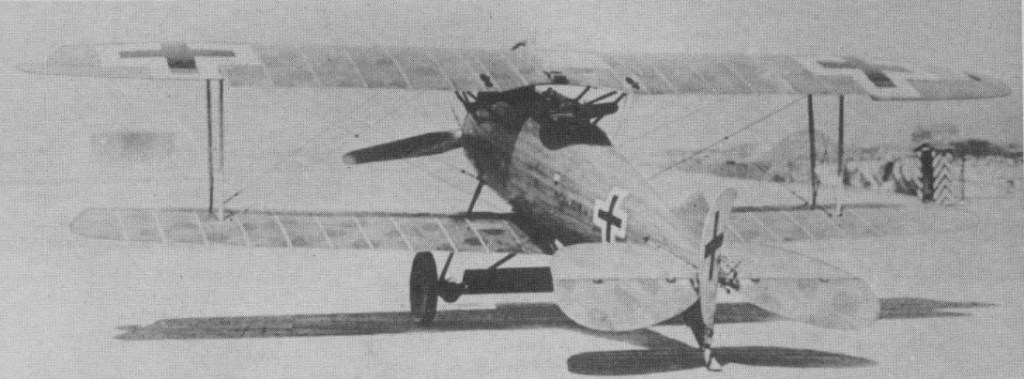
Later evaluation resulted in production orders for two improved Rolands, the D.VIa with the 180 hp Mercedes and the D.VIb with a new model 185-200 hp Benz, another six cylinder. Both of these engines had been tested in experimental D.VI, which were themselves undergoing considerable aerodynamic refinement, and no special designations were applied to identify the various prototypes by powerplant or other feature.
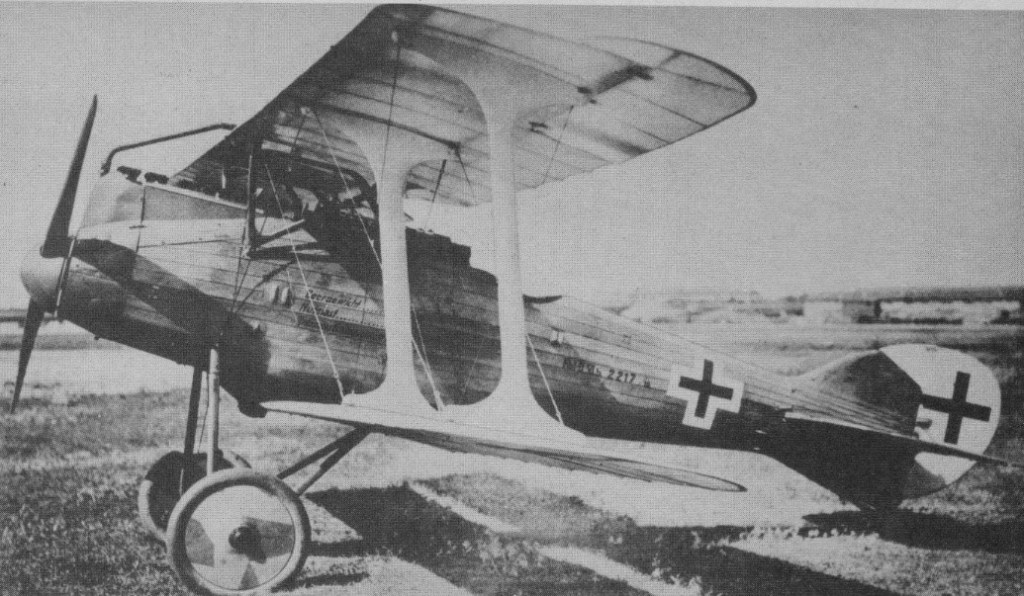
The Roland D.VI reached the front in service quantities shortly after the Fokker D.7. A few D VIs were used over the Western Front, while others went to the German navy for the defence of seaplane bases.
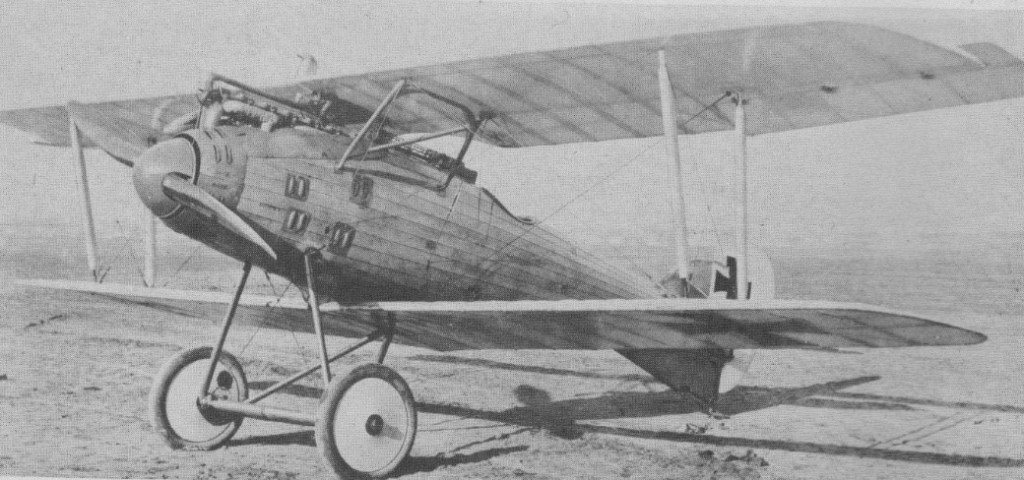
D.VI / D.VIa
Engine: Mercedes DIII, 119-kW (160-hp).
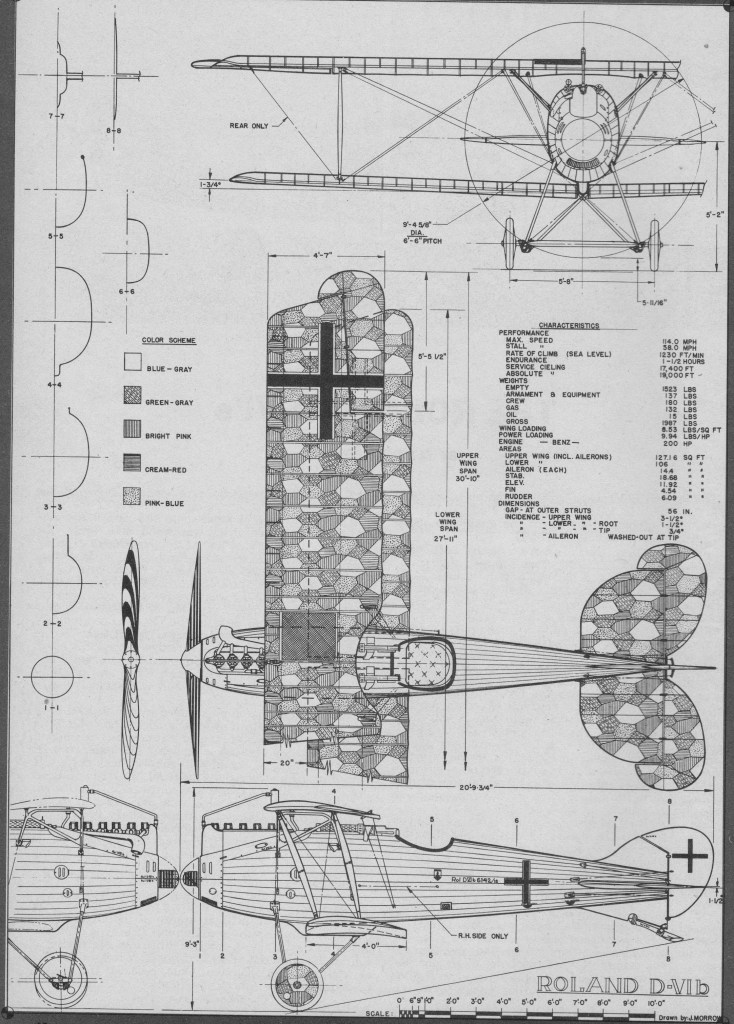
D.VIb
Span: 9.4m (30ft l0in)
Length: 6.3m (20ft 8in)
Powerplant: l x Benz Bz.IIIa, 149kW (200 hp)
Armament: 2 x 7.92-mm (0.312-in) LMG 08/15 mg
Max T/O weight: 860 kg (1,896 lb)
Max speed: 114 mph
Operational endurance: 2 hr
LFG Roland D.V
The single D V prototype had a more refined fuselage structure compared to the D.III.
LFG Roland D.III
The D III introduced a revised and shallower fuselage over which the upper-wing centre section was supported on cabane struts, but only a few were built.
 All Aero