USA
Captain Le Pere of the French Aviation mission to the U.S.A. designed a two-seat fighter, the LUSAC-11 (Le Pere United States Army Combat), which was built by the Packard Motor Car Company in 1918. Thirty LUSAC-11 s with Liberty engines and three LUSAC-21 s with Bugatti engines were built, but contracts for quantity production were cancelled at end of First World War.
World War 1
Oertz-Werke Gmbh
Max Oertz in Neuhof-Reiherstieg near Hamburg, Germany, an established builder of yachts, entered the aircraft business in 1911 and produced Wright machines.
They then built the Doppeldecker before another more well-known biplane. The company produced three examples of the mid-wing M1911-12 monoplane and a single developed M1912-13 model.
They built several flying boats and eventually sold the business to Hansa-Brandenburg in 1917.
Oberursel
Motorenfabrik Oberursel
Motorenfabrik Oberursel A.G. was a German manufacturer of automobile, locomotive and aircraft engines situated in Oberursel (Taunus), near Frankfurt (Main), Germany. The company had its origins in 1891, when Willy Seck invented a new gasoline fuel injection system and produced a small one-cylinder stationary engine of about 4 hp, which he called the Gnom. The following year he founded Willy Seck & Co. to sell the design, which became famous around the world. The engine was improved to achieve more power, but in 1897 the shareholders refused to allow Seck to develop a Gnom-powered car and he left the company. The company was reorganized as Motorenfabrik Oberursel the next year, and by 1900 had built 2,000 engines.
The same year the company granted a license to the Seguin brothers in Lyon to produce the Gnom in France. Sold under the French name Gnome, the engine became so successful that they renamed their company to the same name. In 1908 they developed a rotary version of the basic Gnome system as the Gnome Omega aircraft engine, and from there a series of larger versions of the same basic design. The new Gnome engines were wildly successful, powering many of the early record breaking aircraft.
In 1913 Motorenfabrik Oberursel took out a license on the French Gnome engine design and the similar Le Rhône 9C. They produced both, the Gnomes as the U-series, and the Le Rhônes as the UR-series. During World War I it supplied a major 100 hp-class rotary engine that was used in a number of early-war fighter aircraft designs.
The Gnome Lambda seven-cylinder 80 hp rotary engine was also produced by the Oberursel firm as the Oberursel U.0 Umlaufmotor (the generic German term for a rotary engine) as their first-ever powerplant for German military aircraft, and was used on the initial versions of the Fokker Eindecker fighter, the Fokker E.I.
When World War I started the following year the Oberursel U.I of 100 hp, a clone of the Gnome Delta 100 hp rotary, had the best power-to-weight ratio of any German engine. It went on to power most of the early German fighters, such as the Fokker and Pfalz E-series monoplanes
.
Oberursel also built a copy of Gnome’s 14-cylinder Double Lambda two-row rotary. This 160 hp (120 kW) engine, designated U.III in Germany, was difficult to build and quickly wore out in service. It was used on the Fokker E.IV and D.III designs.
The 110 hp Oberursel UR.II, the clone of the Le Rhône 9J of the same power output, was the next major success. Fokker bought the company in 1916 in order to guarantee supplies of the UR.II. This acquisition proved advantageous because Fokker was partial to rotary powered designs, and because supplies of the Mercedes D.III engine were limited. The UR.II was used in the Fokker Dr.I and Fokker D.VI.
By 1917, the UR.II had been rendered obsolete by its relatively low power and poor performance at altitude. An 11-cylinder development, the UR.III, was not used operationally. Indeed, by 1918, rotary engines had largely fallen from favor with the Idflieg and with pilots. The lack of castor oil and the poor quality of the mineral oil substitute “Voltol” severely reduced engine life and reliability.
Nevertheless, in the summer of 1918, the UR.II was installed in the Fokker D.VIII. The light weight and aerodynamic cleanliness of the D.VIII allowed it to achieve excellent performance even with the outdated UR.II.
After the war the company was purchased in 1921 by Gasmotorenfabrik Deutz, another gasoline engine manufacturer, who moved their two-stroke diesel manufacturing to the Oberursel factories. In 1930 they merged with Humboldt-Deutz, but with only one product line. The factory was eventually closed in 1932 during the Great Depression, reopening in 1934 for small-scale production.
In 1938 the company merged Klöcknerwerke AG. From this point on they were known as the Klöckner-Humboldt-Deutz Oberursel factory, known primarily for their locomotive engines.
In 1940 during World War II all diesel research was relocated to Oberursel, where Dr. Ing. Adolf Schnürle led the development of much larger and more advanced engines for aircraft use. This led to the Klöckner-Humboldt-Deutz DZ 700 8-cylinder radial engine, the DZ 710 16-cylinder boxer engine, and the DZ 720 32-cylinder H-block made from twinned 710’s. None of these designs reached operational use by the end of the war, when the factory was occupied by US troops.
For a short period in 1946 the factories were used as a tanks and trucks repair depot by the US army.
In 1956 the factories were returned to Klöckner-Humboldt-Deutz, and from then on have been used primarily for gas turbine development and production. For the next twenty years they produced a variety of designs, typically under license from other companies. In 1980 they were renamed KHD Luftfahrttechnik GmbH.
In 1990 the company was sold to what was then BMW Rolls-Royce. The new owners decided to use the Oberursel plants to produce an entirely modern engine for the “small end” of the aviation market, and started development of the Rolls-Royce BR700 family in 1991. The engines have since gone on to power a number of aircraft including Bombardier, Gulfstream V and the Boeing 717.
The factory in Oberursel is claimed to be the oldest surviving aircraft engine factory in the world.
Engines:
Gnome designs:
Oberursel U.0
licensed Gnome 7 Lambda, 68 hp (51 kW) seven cylinder rotary.
Oberursel U.I
100 hp (75 kW), nine cylinder.
Oberursel U.II
110 hp (82 kW)
Oberursel U.III
Gnome Lambda-Lambda 14-cylinder, two-row rotary engine copy. 160 hp (120 kW).
Le Rhône designs:
Oberursel Ur.II
Le Rhone 9J 110 hp (82 kW) nine cylinder rotary.
Oberursel Ur.III
11-cylinder development of the Ur.II. 145 hp (108 kW).
Norman Thompson Flight Company / White and Thompson
In 1909, Norman Arthur Thompson, an Electrical Engineer born in 1874 at Streatham, London, became interested in the science and practice of Aeronautics after reading two books on by the pioneer aerodynamacist Frederick W. Lanchester. Thompson, after securing finance from Dr Douglas White, a wealthy friend, approached Lanchester and persuaded him to collaborate on designing an aircraft. Lanchester designed a two-seat pusher configuration biplane powered by two 50 hp (37 kW) rotary engines, the Thompson-Lanchester No. 1 Biplane or Gray Angel. This was completed during 1910, but proved incapable of any more than brief hops, and was eventually scrapped.
Despite these setbacks, which used up most of White’s initial capital, Thompson and White set up a limited company, “White and Thompson” on 8 June 1912 to continue their aviation business at Bognor Regis. In early 1913 Thompson, working on his own without the involvement of Lanchester designed a second aircraft, the Norman Thompson No. 1 Biplane, another pusher, this time powered by a single 100 hp (75 kW) water-cooled ABC engine, which successfully flew. This was not progressed further, however, as White and Thompson was hired to maintain a Curtiss Model F flying boat, and was appointed the exclusive European agents for Curtiss in February 1914.
In the summer of 1914, White and Thompson designed and built two flying boats to compete in the Daily Mail £5,000 Circuit of Britain race for seaplanes, a single-engined flying boat, and a larger twin-engined aircraft. Although the race was cancelled owing to the outbreak of the First World War, the single-engined aircraft was successful, and a further eight were built for the RNAS as the White and Thompson No. 3, being delivered in 1915, as were 10 examples of the “Bognor Bloater”, a single-engined landplane.
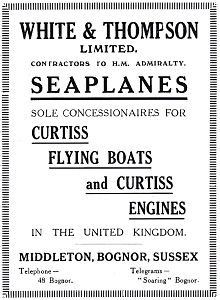
White left White and Thompson in 1915 to join the Royal Army Medical Corps, the company being re-organised as the Norman Thompson Flight Company, and expanding its factories to cope with increased demand for its aircraft, orders being placed for the N.T.4, a twin-engined patrol flying boat of similar size to the Curtiss H.4 Small America, and the N.T.2B, a single-engined flying boat trainer. One N.T.2B was shipped to Canada to make forestry patrols from Lake St John, Quebec. A change in RNAS requirements lead to the sudden cancellation of orders for the N.T.4, however, while engine problems caused delays to the delivery of N.T.2Bs.
These problems caused Norman Thompson to go into receivership on 19 April 1918, an attempt to sue Curtiss over breaking the 1914 agreement for White and Thompson to have exclusive sales rights in Europe getting nowhere. The Norman Thompson Flight Company went into Voluntary liquidation on 12 July 1919, the company’s factory and stock being purchased by Handley Page.
Aircraft
Thompson-Lanchester No. 1 Biplane / Gray Angel
White & Thompson No. 1 Seaplane
White and Thompson No. 3
White & Thompson Bognor Bloater
Norman Thompson N.1B
Norman Thompson N.T.2B
Norman Thompson N.T.4
Nieuport & General Aircraft BN.1
In 1917 H. P. Folland joined the firm’s Cricklewood- based design team and produced the BN.1 fighter
Nieuport & General Aircraft
UK
Formed to license-manufacture Nieuport fighter designs for the Royal Flying Corps and Royal Naval Air Service. Sopwith Camels and Snipes were also built under subcontract. In 1917 H. P. Folland joined the firm’s Cricklewood- based design team and produced the BN.1 fighter, followed by the Nieuport Nighthawk in 1919, which was produced by the Gloster Company when Nieuport & General closed down in 1920.
Nieuport 28
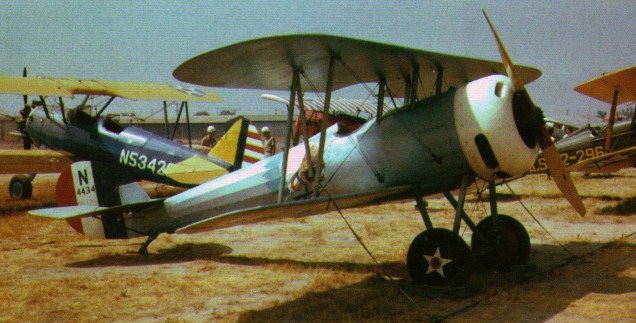
By 1917 the single-spar wing had reached the limit of development so Nieuport designed to two-spar Nieuport 28 around the new 160 hp Gnome engine.
Flying the Nieuport 28C-1 – Frank Tallman
A single bay biplane, the two-spar wooden wings have plywood on the leading edges and fabric covering aft of the front spar. The wooden fuselage has plywood covering as far as the cockpit and fabric on the rear fuselage. Conventional controls were fitted, with ailerons on the lower wings only.
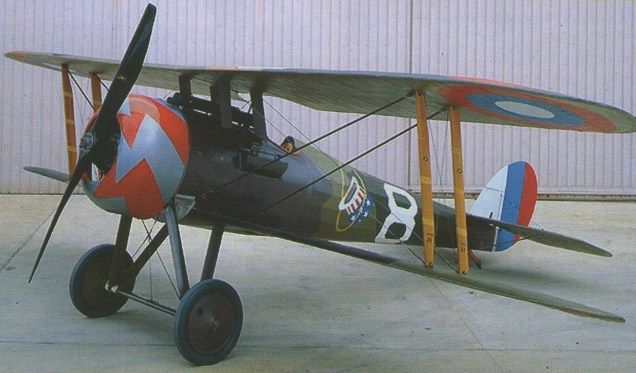
Only a few were used by the French Air Force but the Americans bought 297 to equip their Expeditionary Force.
They did have a habit of shedding fabric from its wings in a dive. Before this was fixed, the Nieuport 28 had been replaced in the US squadrons by Spad 13’s.
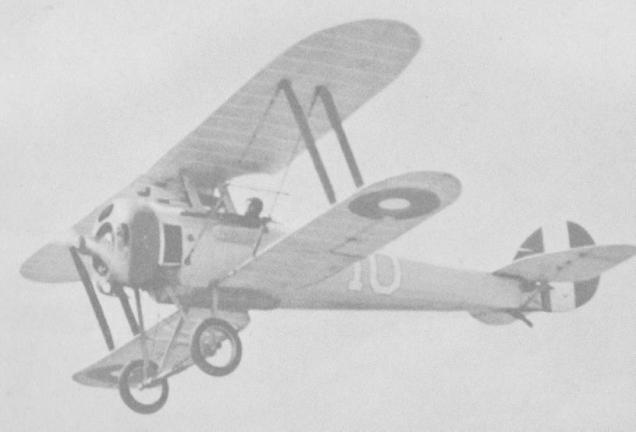
Ultralight replica:
Airdrome Airplanes Nieuport 28
28C
Engine: Gnome, 160 hp or Clerget, 160 hp
Wingspan: 26 ft 9 in
Length: 20 ft 3 in
Height: 7 ft
Max speed: 140 mph at SL
Endurance: 2 hr
Armament: 1 or 2 Vickers mg
Crew: 1
Nieuport N 28 C 1 Bébé
Engine: Gnôme-et-Rhône 9 N Monosoupape, 160 hp
Length: 21 ft 9 in / 6.4 m
Height: 8 ft 1 in / 2.5 m
Wingspan: 26 ft 9 in / 8.16 m
Wing area: 172.224 sqft / 16.0 sq.m
Max take-off weight: 1540 lb
Weight empty: 960 lb / 435.0 kg
Max. weight carried: 507.2 lb / 230.0 kg
Fuel capacity: 33 Imp.Gal
Max. speed: 128 mph / 111 kts / 206 km/h at SL
Initial climb rate: 1181.10 ft/min / 6.00 m/s
Service ceiling: 20,000 ft / 6100 m
Wing load: 8.61 lb/sq.ft / 42.00 kg/sq.m
Range: 130 nm / 240 km
Endurance: 2 h
Crew: 1
Armament: 2 x Vickers mg
Nieuport 27
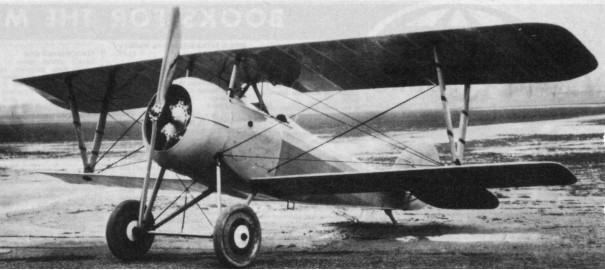
The Nieuport 27 saw comparatively little com¬bat and the AEF appear to have made the greatest use of it. Over 180 are thought to have been purchased, most being used as ‘pursuit trainers’.
The genuine Nieuport 27.Cl had the plain tailskid. The central, vertical, bracing wire to the mid point of the spreader bar where the two half axles were pivoted, and the simplified skid, distinguished the Nie 27 from the Nie 24.
Ultralight replica: Airdrome Airplanes Nieuport 27
Nieuport 25
Ultralight replica: Airdrome Airplanes Nieuport 25
Nieuport 24
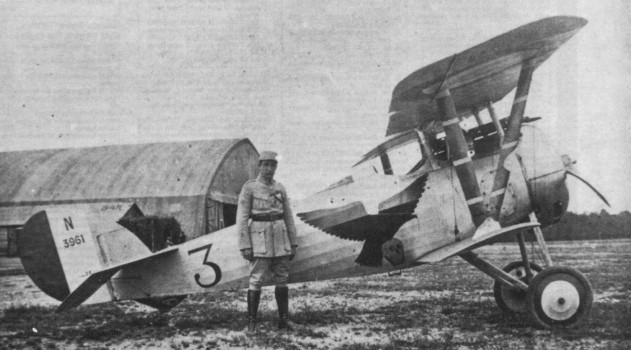
The Nieuport 24bis strongly resembled previous Nieuport designs but was lighter and had more power than the 17. It was aerodynamically cleaner through the use of fuselage side stringers.
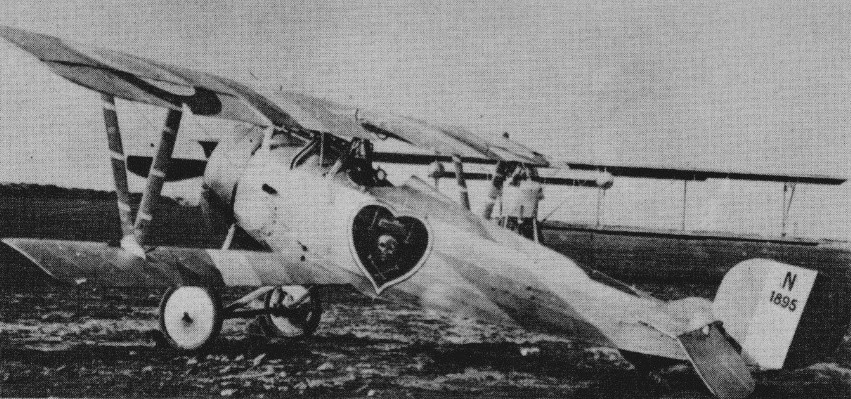
The Nieuport 24 and 27 were fitted with a round tail similar to the later type 28, whereas the type 24bis used the angular type 17 empennage.
As with all “Vee” strut Nieuport designs the 24bis possessed an inherent weakness of the lower wing. The sesquiplane configuration caused the wing to twist during prolonged high speed dives or abnormally violent maneuvers.
Shortly after its inception the 24bis was cancelled out as a first line fighter and many found their way to the rear as advanced trainers.
Replica: Redfern Nieuport 24
Ultralight replica:
Airdrome Airplanes Nieuport 24
Circa Reproductions Nieuport 24
24bis
Engine: Bentley, 130 hp
Weight: 782 lb
Max speed: 116 mph
 All Aero