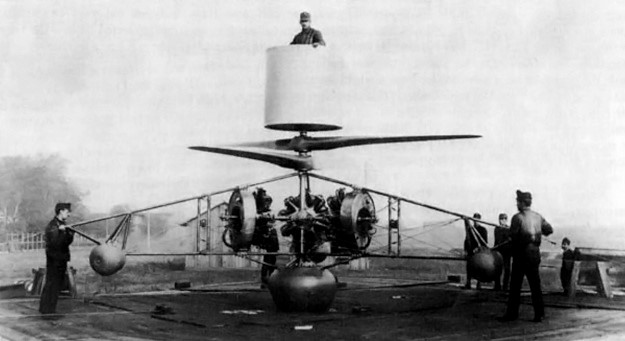
Petróczy-Kármán-Žurovec PKZ 1 / PKZ 2

After the PKZ 2 was modified in May 1918 and the 120 hp (89 kW) La Rhône engines installed

In 1916, Major Stephan Petróczy von Petrócz of the Austro-Hungarian Army envisioned replacing hydrogen-filled observation balloons with tethered helicopters. These helicopters would have been used as static observation platforms. Compared to hydrogen balloons, the helicopters’ were much less likely to catch fire, presented a smaller target for the enemy, increased operational readiness, required fewer ground and support crew, and eliminated the need for hydrogen generating equipment.

To achieve his goal, Petróczy, along with Oberleutnant Dr. Theodor von Kármán and Ingenieurleutnant Wilhelm Žurovec, conceived the Schraubenfesselflieger (S.F.F) mit Elektromotor (captive helicopter with electric motor). This machine is now commonly referred to as the Petróczy-Kármán-Žurovec 1 (PKZ 1) helicopter. Built in 1917 and primarily designed by von Kármán and Žurovec, the PKZ 1 consisted of a rectangular frame with an observation basket in the middle. On each side of the basket were two lift rotors. All four rotors were powered by a single 190 hp (142 kW) Austro-Daimler electric motor.
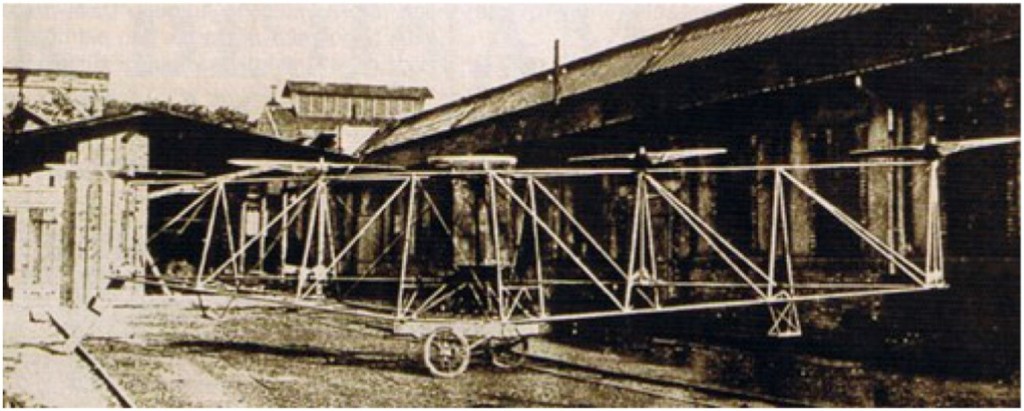
PKZ-1

The PKZ 1 was flight tested and was able to lift three men to a tethered height of 20 in (50 cm). However, the electric motor generated 50 hp (37 kW) less than anticipated, and on the fourth flight, the straining motor gave out. Because of the scarcity of high-grade electrical copper and quality insulation, Daimler was not able to repair the motor. In addition, the PKZ 2, which was originally known as the S.F.F. mit Benzinmotor (captive helicopter with petrol engine), was nearing completion. No further work was done on the PKZ 1.
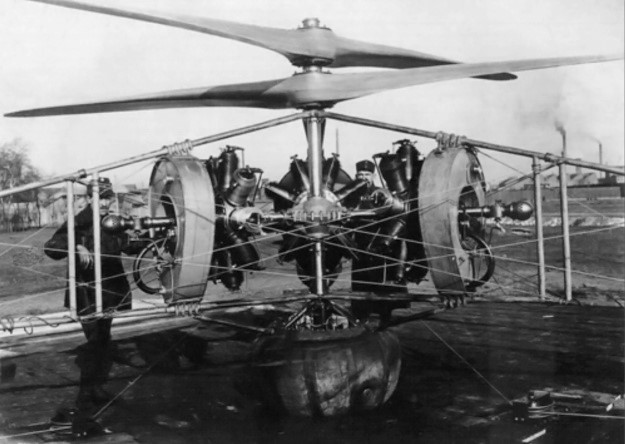
PKZ 2 rotary engine arrangement with the 100 hp (75 kW) Gnomes installed

The PKZ 2 helicopter (for which he received German patent 347,578) was designed solely by Wilhelm Žurovec. The PKZ 2 was privately funded by the Hungarian Bank and the iron foundry / steel fabrication firm of Dr. Lipták & Co AG, who built the machine. The PKZ 2 utilized two two-blade contra-rotating rotors to cancel out torque and provide lift. The rotors, made of high-quality mahogany, were 19 ft 8 in (6.0 m) in diameter and were rotated at 600 rpm by three 100 hp (75 kW) Gnome rotary engines. A removable observation basket sat atop the rotors.

120 hp Oberusel powered

The craft had three outrigger legs; each supported one engine. All engines were connected to the rotors via a common gearbox. The PKZ 2 was supported by a central air cushion and three additional air cushions; one on each outrigger leg. These air cushions were filled by an air pump driven from the rotor drive. Attached to each outrigger was a tethering cable that was connected to the ground and controlled by an electric winch. With one hour of fuel, The PKZ 2 weighed 2,645 lb (1,200 kg).
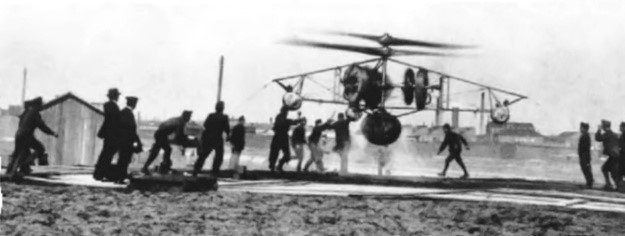
PKZ 2 shown just off the ground and without the observation basket on 5 April 1918, powered by the 100 hp (75 kW) Gnome engines.

Tethered and unmanned, the PKZ 2 was test flown on 2 April 1918. After several flights, including one that lasted about an hour, tests were suspended on 5 April because of insufficient power from the Gnome engines. The engines were replaced by 120 hp (89 kW) La Rhône engine (that were captured and rebuilt) and, with a few additional modifications, tethered and unmanned flight tests resumed on May 17th. With the new engines and calm winds, an altitude of 165 ft (50 m) was achieved, and the PKZ 2 could lift 330–440 lb (150–200 kg). The craft would lose lift at higher altitudes, but the PKZ 2 was kept under control as long as tension remained on the tethering cables.

PKZ 2 in a tethered high hover with power provided by the 120 hp (89 kW) La Rhône engines on 10 June 1918

On 10 June 1918 the PKZ 2 was demonstrated for high ranking members of the military. A flight was made with the observation basket in place, but the engines were not running well and the craft became unstable. The basket was removed and another flight attempted. The wind had picked up, and as the PKZ 2 hovered at 40 ft (12 m) tethered to the ground, the craft began to rock. The overheating engines lost power, and the tether winch crew could no longer maintain control. The PKZ 2 crashed from a height of 6.5 ft (2.0 m), severely damaging the airframe and completely destroying the rotors.

Realizing the technical problems could not be overcome quickly, the government cancelled the project on 21 June 1918. However, Žurovec pressed on and began to design an individual cylinder water jacket to water-cool the rotary engines. The craft was being rebuilt to resume flight tests in November 1918 when the end of the war and revolution caused all development to cease. The PKZ 2 made over 15 tests flights, but it is doubtful any were manned.
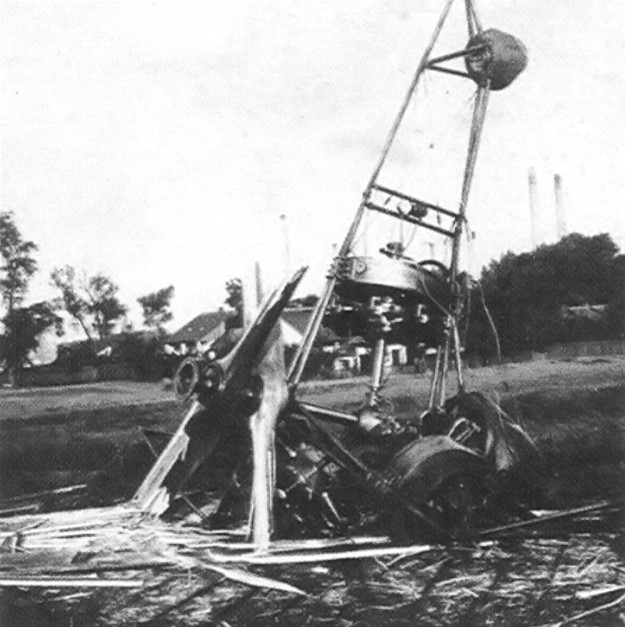
Remains of the PKZ 2 after it crashed on 10 June 1918.

Pemberton-Billing P.B.29E

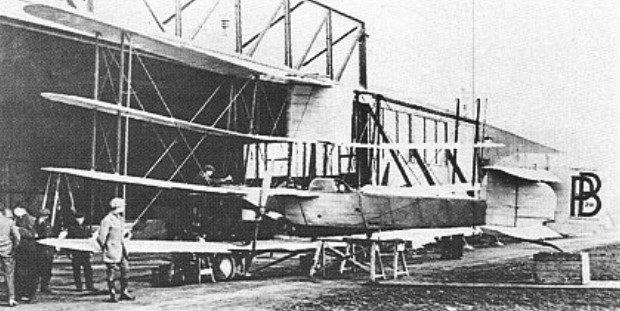
The 1915 P.B.29E twin-engined quadruplane interceptor fighter was conceived as an anti-airship aircraft. Intended to be capable of prolonged cruise at low speeds during the nocturnal hours, and built in seven weeks from beginning of design, the P.B.29E featured high aspect ratio wings with a pair of 90hp Austro-Daimler six-cylinder water-cooled engines underslung from the second mainplane and driving pusher propellers. The entire wing cellule was braced as a two-bay structure, the fuselage being attached to the second wing and accommodating two crew members, and a gunner with a single 7.7mm machine gun occupying a nacelle that filled the gap between the centre sections of the upper mainplanes. The P.B.29E was flown in the winter of 1915-16, and was destroyed comparatively early in its flight test programme, but aroused sufficient interest to warrant development of the P.B.31E of similar concept. No data relating to the P.B.29E are available.

Pemberton-Billing P.B.25 Scout

Known officially as the Scout, the P.B.25 was a development of the P.B.23. The most obvious differences were in the design of the nacelle, which was fabric covered, and in the wing cellule, the mainplanes featuring 11 degrees of sweepback and inversely-tapered ailerons. Twenty P.B.25s were ordered by the Admiralty, all but one of these being powered by the 100hp Gnome Monosoupape, the exception having a 110hp Clerget rotary. Armament comprised a single 7.7mm machine gun mounted on the nacelle. The last P.B.25 was delivered to the RNAS in February 1917, by which time this type had acquired an unenviable reputation, the take-off and landing characteristics being particularly hazardous. Apart from poor flying qualities, its performance was inadequate and, being viewed as something of an anachronism, the Scout was quickly discarded.

Max take-off weight: 699 kg / 1541 lb
Empty weight: 490 kg / 1080 lb
Wingspan: 10.04 m / 33 ft 11 in
Length: 7.34 m / 24 ft 1 in
Height: 3.17 m / 10 ft 5 in
Wing area: 25.73 sq.m / 276.96 sq ft
Max. speed: 143 km/h / 89 mph

Pemberton-Billing P.B.23E

Designed in 1915 by Noel Pemberton-Billing, and built by the company bearing his name, the P.B.23E single-seat pusher fighting scout biplane was of wooden construction, but the nacelle mounted between the wings and accommodating the pilot was unusual for its time in being covered with light alloy sheet metal. Armament consisted of a single 7.7mm machine gun mounted in the nose of the nacelle and power was provided by an 80hp Le Rhone rotary. The P.B.23E was first flown in September 1915, but was not adopted in its original form, being further developed as the P.B.25.

Parseval-Siegsfeld Drachen

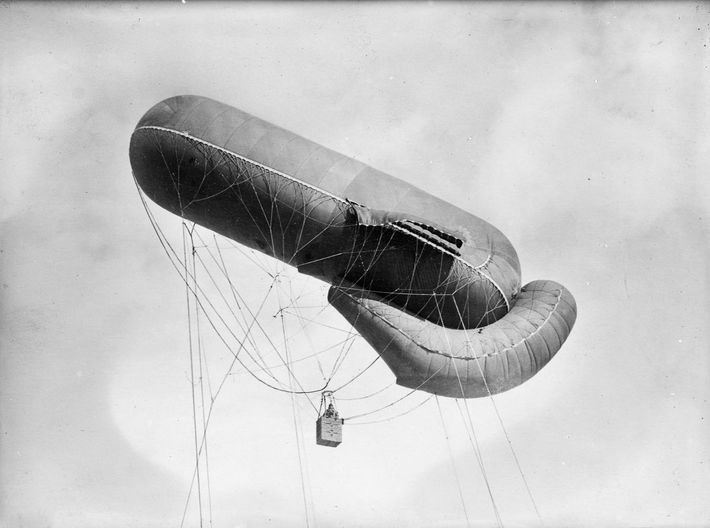
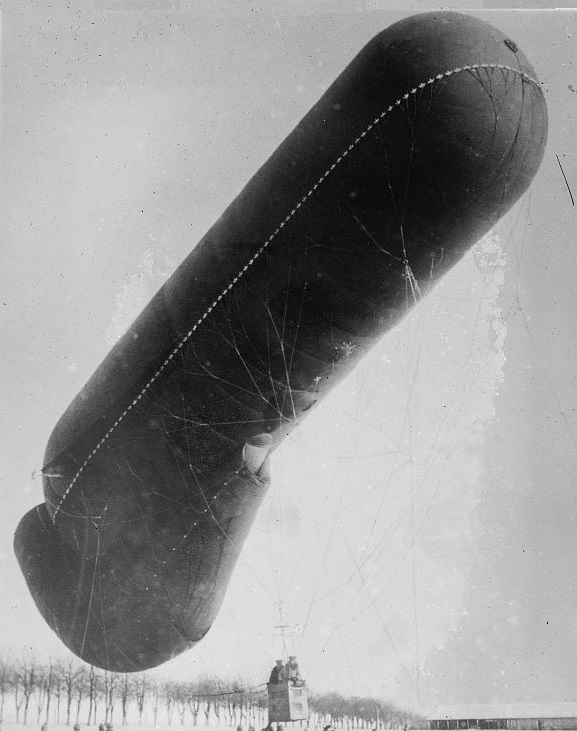
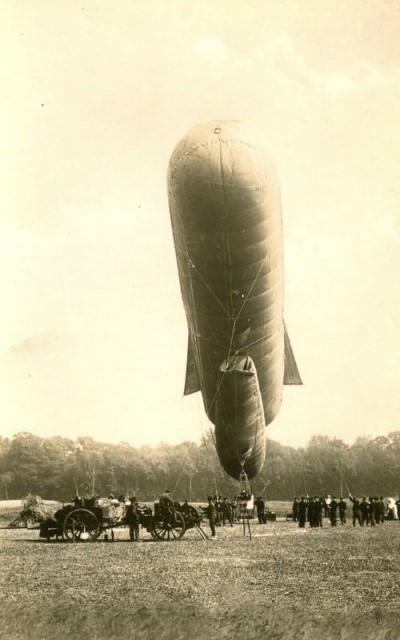
The Germans made excellent use of observation balloons in several configurations. An early variety made by Parseval-Sigsfeldand called “Drachen”, had a single fin, low centre, and was totally cylindrical, with rounded ends. The British called them sausages, for obvious reasons. The balloon’s shape gave it another nickname, “Nulle” or “Testicle”.

The drawback of military captive balloons was their unsteadiness in the air. This was remedied by two German officers, Major August von Parseval and Captain H. Bartsch von Sigsfeld, who set themselves the task of turning out an improved type of observation balloon. The outcome was the ‘Drachenballon’, or kite balloon, so called because it combines both balloon and kite principles. Theirs was not a new idea, but they improved on previous efforts. They created an oblong envelope which was partly supported by the wind when facing it at an inclined angle of 30 to 40 degrees. It was stabilised by means of a control surface, which was later replaced by a large air bag.

Beginning in 1893 they tried different combinations and various sizes of envelopes, from 600 cu.m (21,200 cu.ft) capacity to twice that size, and by 1898 von Parseval and von Sigsfeld had arrived at the type which gradually became the standard of most European armies. By now they had added a stabilising fin on the right and left sides of the envelope to prevent the captive balloon from twisting around its longitudinal axis and, like a kite, it was further provided with a long tail to which one to five parachute-like ‘umbrellas’ were attached. Combined with the stabilising bag, these devices held the balloon facing into the wind.

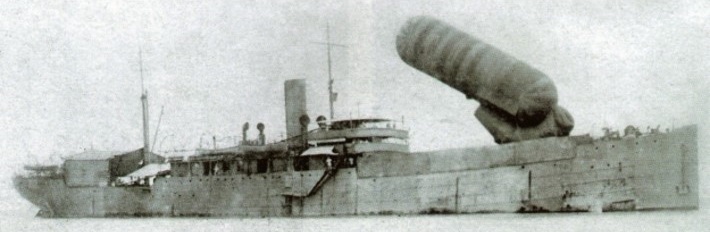
The August Riedinger balloon plant in Augsburg, Germany, began a regular production of this type of kite balloon, and also supplied various styles of engine-driven motor winches on which the observation balloons were raised into the air and later hauled down again to the ground. The cruisers in the navies of several countries were also equipped with kite balloons, to detect enemy submarines and protect the cruisers against their attacks. It soon became standard practice for the kite balloon to stay completely steady in the air at altitudes ranging from 1,000 to 2,000 m, even in winds of up to 65 km/hr (40 m.p.h.)

Kite balloons were used extensively in World War 1. They soon began to appear in great numbers on the western front, where the Germans employed them to direct their gunfire and report its effects. This, combined with the proclivity of the Germans for eating large quantities of sausages, explains why these kite balloon artillery observation platforms were soon nicknamed ‘sausages’ by the Allies, who in turn copied, built and used them extensively until the French came up with the improved ‘Caquot’ type balloon. Although the kite balloons were in fixed positions, the fighter pilots flying to attack them soon had driven home to them forcefully that this meant first running the gauntlet of a well-adjusted barrage of fire from anti-aircraft guns mounted to protect them. This meant that the kite balloons must be attacked very fast from above in a determined dive on them because they could be hauled down fast. The downing of a kite balloon therefore ranked on a par with a victory in any other air battle. The balloon observer was one up on the aeroplane pilot in one respect, in that he had a parachute hanging on the outside of the basket and could jump to save his life in case of an enemy air attack.

In 1896 Maj. August von Parseval and Hptm. Rudolf Hans Bartsch von Siegsfeld successfully floated the first Drachen (Dragon) balloon, an engineering advance that quickly replaced the older spherical balloon. The Drachen differed in several respects from its predecessor, with design refinements aimed at improving the stability of the observer’s platform. The most important—as well as the most visible—differences in the Drachen lay in the elongated shape of the balloon and in the addition of a stabilizing lobe to the rear of the craft. French construction of Drachen-type balloons began in October 1914 and completed balloons began arriving at the front that December. Germany had nine of the improved kite balloons in the field on the Western Front in February 1915 and by the end of the year the number of German balloon sections had increased to forty, each with two balloons.

Because the Parseval-Siegsfeld Drachen balloon had an extremely low ceiling—around 1,500 feet in an average wind—it offered limited usefulness as a reconnaissance and artillery-observation platform. German designers dealt with the low ceiling issue by making the balloon bigger, increasing its volume first to 800 cubic meters and later still to 1,000. Floating it higher in the sky did not entirely cure the Drachen’s problems. Contrary to its designer’s initial hopes, the addition of the lobe did not completely solve the stability issue and too many observers still became airsick as their craft pitched and yawed violently in moderate-to-high winds. This led to further fundamental improvement in observation balloon design, but the French engineer Albert Caquot beat the Germans to the next advance. Caquot tackled the pitch and yaw problem

The German approach to organizing its Balloonzüge (balloon sections) illustrates the strength of the partnership achieved between observation balloonists and ground units. As part of the reorganization of Germany’s aviation program in the last months of 1916, balloons became the joint responsibility of the Kommandierende General der Luftstreitkräfte (commanding general of the Air Force, abbreviated Kogenluft) and the Inspektion der Luftschiffertruppen (inspector of Airship Troops, abbreviated Iluft). Below this overall command structure, a Staboffizier der Luftschiffertruppen (staff officer of Airship Troops, abbreviated Stoluft) provided balloon staff support at each German Army headquarters. Within each army, balloon detachments at the division level managed three to five individual Balloonzüge, each with an active and a reserve balloon working with artillery units assigned to the corps.

There were several sizes (going from 600 m³ to 800 m³, for man-lifting ones, between 1909 and post-WWI. The form was held by an inside air-ballonnet, into the gas-balloon of 150 m³.

One was 750 m³ with diameter 6,5 m and lenght of 27 m.

There seems to have been 2 sizes of baskets, probably following the volume of the balloon.

In Spain, one was constructed following the plan drawings from Germany of 800 m³, 7 m diameter but only 18 m length.

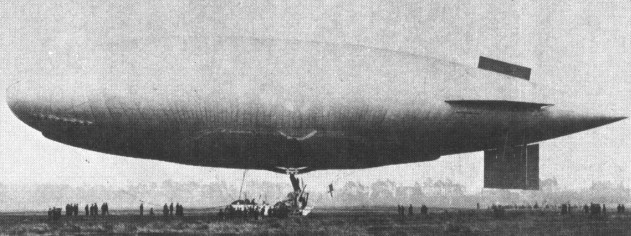
Parseval PL 18

A new non-rigid airship made its first flight in Germany in May 1906: re¬latively small with a volume of only 2300 cu.m (81 224 cu ft), this airship was of technical interest in that the shape of the envelope was maintained by means of pressurized ballonets fore and aft. The craft was to the design of former army officer August von Parseval, later a professor at the Berlin Technical Academy, and improved models con¬tinued to be produced after their con¬struction was transferred from the Motorluftschiff Studiengesellschaft to the Luftfahrzeug Gesellschaft (LFG) organization in June 1913. In this same year an order was placed by the Brit¬ish government for a single example of the improved type, and Parseval PL 18 was delivered for use by the Royal Navy where it received the service designation Naval Airship No. 4 (NA4).

On 5 August 1914 this vessel, by a strange stroke of irony, was the first British aircraft to carry out an active war operation when, flying from its base at Kingsnorth, the first RNAS airship station, it was sent to patrol the Thames Estuary. It was used again on 10 August, this time in company with NA3, the only British airship of the period to be armed, another imported design, an Astra-Torres.

The degree to which Parseval de¬signs had advanced in a short time was evident from the fact that the NA4 was a revised type of vessel, which prob¬ably promoted the order for a further three before the war, to be built under licence by Vickers at Barrow-in¬-Furness. These were given the service designations NA5, NA6 and NA7 at the beginning of their career, which was entirely confined to use for the instruc¬tion of airship crews.

Meanwhile, the NA4 was still em¬ployed on sterner duties, and the first months of World War I found it in use as a submarine hunter, although its effect was entirely psychological, pro¬viding cover for the convoys ferrying troops of the British Expeditionary Force between Dover and Calais.

An order had been placed with the LFG organization for a further three airships of similar design which would have been the PL 19, PL 20 and PL 21 but the outbreak of war prevented their delivery. They would probably also have been used for training, a role to which the NA4 was finally relegated but it is interesting to note that at the time it was in service as a patrol vessel, the German navy had requisitioned the non-rigid PL 6009 August 1914 and also obtained PL 19 on loan on 19 September for sea patrol work over the Baltic from Kiel This was a duty to which they were well suited, being capable of carrying 590 kg (1,301 lb) of bombs and with a maximum flight time of 11 hours.

Type: patrol airship
Powerplant: two 134 2-kW(180-hp) Maybach six-cylinder water-cooled piston engines
Maximum speed 72 kim h (45 mph)
Service ceiling 4000 m (13123 ft)
Range 1000 km (621 miles)
Diameter 15.50 m (50 ft 10.2 in)
Length 94.00 m(308 ft 4.8 in)
Volume 10000 cu.m (353 147 cu ft)

Parseval

At the instigation of the Kaiser a committee was formed, the Moorluftschiff-Studien-Geselechaft, to investigate the work of promising experimental airship proposals. One of the designs selected by thic committee as being worthy of further encouragement was that of Major August von Parseval.

Between 1906 and 1923 the Parseval concern built 27 pressure airships, the last of which was of 1 million cu.ft in capacity.

At the time, the Parseval airships impressed the British Committee of Imperial Defence by their performance and potential and an example was purchased for the Royal Navy, with orders placed for three others.

Packard-LePere LUSAC-21

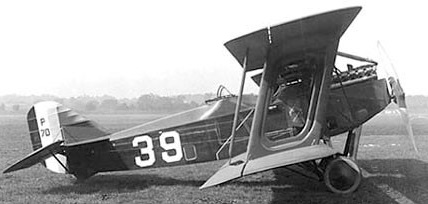
The LUSAC-21 (LUSAC = LePere US Army Combat) of 1919 was LUSAC-11 refitted with the 420hp Bugatti 16 engine. One prototype was converted: AS40023.

Thirty LUSAC-11s with Liberty engines and three LUSAC-21 s with Bugatti engines were built, but contracts for quantity production were cancelled at end of First World War.

Engine: 420hp Bugatti 16
Length: 27’1″
Gross wt: 4485 lb

Packard-Le Pere LUSAC-11 / LUSAGH-11

Packard-LePere LUSAC 11

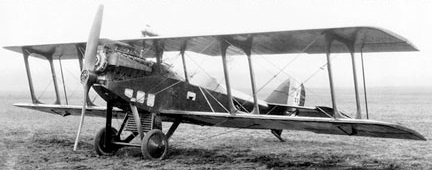
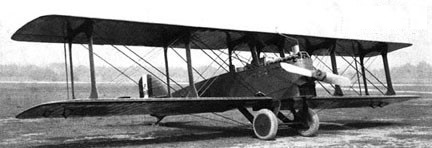
Captain Le Pere of the French Aviation mission to the USA, and Dwight Huntington designed a two-seat fighter, the LUSAC-11 (Le Pere United States Army Combat), which was built by the Packard Motor Car Company in 1918.

First flying in August 1918 piloted by Lt de Marmier, the LUSAC 11 (LUSAC = LePere US Army Combat) featured a plywood fuselage and box-type wing struts. It was the first US aircraft with a turbo-supercharger, and first to leave a vapor trail, on 27 February 1920.

Packard-LePere LUSAC 11

Two prototypes and 24 production LUSAC-11s with Liberty engines [AS40013/40023, AS42129/42142, AS42151] and three LUSAC-21s with Bugatti engines were built, but contracts for nearly 3,500 were cancelled at end of First World War.

AS40021 was modified as a single seat LUSAGH-11 with longer wings and a canopied cockpit at McCook Field. LUSAGH = LePere US Army Ground Harassment.

Packard-LePere LUSAGH 11 AS40021

Gallery

LUSAC-11
Engine: Liberty 12, 425hp
Wingspan: 41’7″ (?>39’0″)
Length: 25’3″ (?>25’5″)
Max speed: 133 mph
Cruise speed: 118 mph
Stall: 50
Range: 320 mi
Ceiling: 20,200′
Seats: 2