Chicago and Cicero IL.
USA
Built a biplane in 1915.
Chicago and Cicero IL.
USA
Built a biplane in 1915.
Engineering firm which formed an aviation department in 1920. Poland’s first aircraft manufacturer, it was based at Lublin and built the Ansaldo Ballila, A-300 and Potez 25 under license. Subsequently built series of indigenous designs such as the Lublin R-VIII reconnaissance biplane, R-XI five-passenger monoplane. Ceased production following German occupation in 1940.
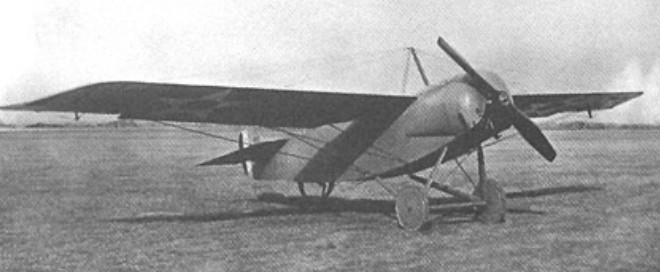
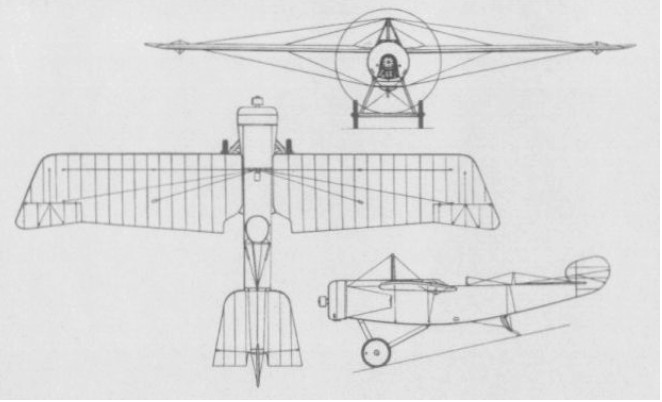
At a time when the biplane configuration had become the norm for single-seat fighting aircraft, George N Albree designed a single-seat shoulder-wing monoplane intended for use as a fighting scout. Ordered by U.S. Army April 17, 1917, two prototypes were delivered to the US Army Signal Corps by the Pigeon Hollow Spar Company in September 1917.
The aircraft was of wooden construction and powered by a 100 hp Gnome rotary engine. A unique design concept of the aircraft was that the “rudder” was not used for flight control, but only to compensate for engine torque. Also the Scout quite possibly was the very first aircraft design to invoke the use of an all ‘flying tail’ as the entire tail assembly was hinged behind the cockpit moving up and down for elevator control. It is believed to be the first aircraft to utilize a flat-bottomed airfoil, and uniquely designed spring-type wheels were used to provide shock absorption.
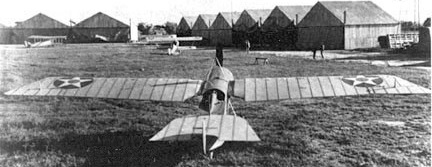
First aircraft Model SG- SC-#116 delivered in September 1917 and SG- SC #117 followed in November 1917. First flight: both were flown and successfully tested by contract pilots including Eddie Stinson, at Langley Field, VA. There were no official flights authorized to be made for the U.S. Army acceptance process.
The third Model SG order under the same contract was for a fuselage only, no engine to be provided and with instructions for it to be shipped to the Colt Arms Company, Hartford, CT. The SG fuselage was completed and shipped in the fall of 1917.
The two Model SGs for the Army had their SC Serial #s: high on the vertical stabilizer for #117, and lower for #116). U.S. Army standard aircraft wing star markings for 1917. The first pursuit aircraft contracted for by the United States.
The aircraft was intended to be fitted with a single machine gun, but no armament was ever provided and the Signal Corps considered the aircraft both unreliable and too slow. The fisrt aircraft was tested to destruction, while reportedly the second aircraft was test flown on behalf of the USASC, crashing on its first flight, killing the pilot. The USASC considered the aircraft both unreliable and too slow, consequently, no series production was undertaken.
A third unfinished aircraft was stored in the rafters of the Pigeon Company. It was bought by Cole Palen on November 15, 1961, and restored for display at the Old Rhinebeck Aerodrome Museum.
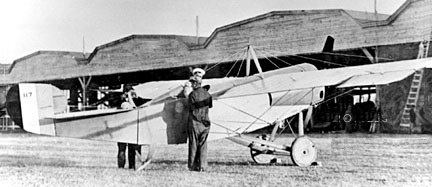
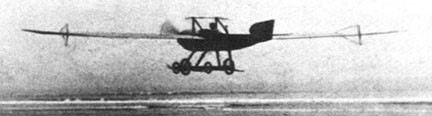
A Pigeon with 50hp Gnôme engine constructed by Roscoe P Timson and flown at Nahant Beach twice in 1916 by Clifford Webster of Lowell, a test pilot for Burgess Airplane Co.
Of the 4 built, of which 3 for US Army, but were not accepted after testing at McCook Field—one reportedly was a static test model, one crashed and burned in a test flight, one was put in storage by Pigeon Co, and info on the fourth is imprecise, but it could be Albree’s plane. Photos verify the existence of four aircraft, with two of them identified as c/n 9 and s/n 117.
Engine: 100 hp General Vehicle-Gnome rotary
Span: 37ft 11in (11.56 m)
Length: 24 ft (7.32 m)
Height: 8 ft 8.5 in (7.32 m)
Weight T/O: 1250 lb (557 kg)
Speed max: 103 mph (166 kmh)
Seats: 1
1830:
Henry Pigeon Mast & Spar Co,
Boston MA.
USA
1900:
Pigeon Hollow Spar Co,
131 Coleridge St,
Boston
USA
The company also built automobiles and gondolas for airships prior to their foray into the airplane field. It was still active in watercraft to about 1979.
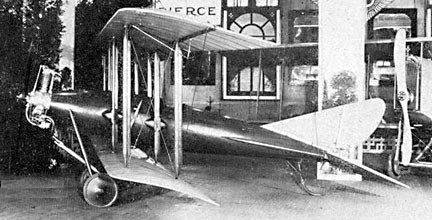
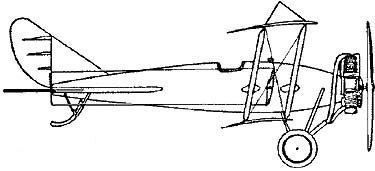
The 1916 Pierce Aeroplane Co Sporting Tractor single seat open cockpit biplane had an underslung lower wing and monocoque fuselage.
Engine: Lawrance L-4, 40hp
Wingspan: 26’0″
Length: 20’0″
Useful load: 250 lb
Seats: 1
S S (Samuel) Pierce Aeroplane Co,
Southhampton NY.
USA
Built the Sporting Tractor in 1916.
SA Piaggio & Co, an engineering and shipbuilding company, produced some Caproni aircraft and parts during the First World War at a Finale Ligure factory, but subsequently abandoned aircraft manufacture until it took over Pegna & Bonmartini in 1923. First product was the Piaggio-Pegna pursuit monoplane with Hispano-Suiza engine. Later was associated with Societa di Costruzioni Meccaniche Aeronautiche in license-construction of Domier Wal flying-boats. Built P.32 twin-engined heavy bomber at end of 1930s and several four-engined P.108 heavy bombers during Second World War.
Resumed aeronautical work in late 1946 with conversion of Dakotas for airline service. Built P.136 five-seat twin-engined amphibian, prototype flying in 1948, followed by a series of trainers for the Italian Air Force; the P.149 was also license-built by Focke-Wulf in Germany. Produced the P.166 executive transport in 1957, with two Lycoming engines and pusher propellers, as with the P.136; P.166-DL3 turboprop variant later developed and produced, with final P.166-DL3-SEM Maritime variant for search and surveillance, coastal patrol and other roles still available in 1998, but only to special order. Signed agreement with U.S. Douglas company in 1961 for joint development of light utility aircraft, first flown in 1964. Designated PD.808 and powered by two Bristol Siddeley Viper turbojets, only a small number was built.
The present Rinaldo Piaggio company was formed in February 1964 as a separate concern, but in 1994 was put under insolvency protection; 51 percent shareholding in the company was purchased by Tushav, a Turkish holding company, in mid-1998, and protection was thereafter lifted. P.180 Avanti twin-pusher turboprop business aircraft flown September 1986, but only 43 production aircraft ordered; turbofan derivative may be developed. Has manufactured components for Aeritalia/Alenia, AMX International, Dassault and Panavia.
In 1998 three Italian industrial families bought the debt-free assets from the Government and formed Piaggio Aero Industries SpA.
In 2024 Italy approved the sale of Piaggio Aerospace to the Turkish unmanned combat aerial vehicle (UCAV) producer Baykar. In 2023, Baykar ranked among the top 10 exporters in Türkiye across all sectors, racking up $1.8 billion in exports. Türkiye dominates 65% of the global unmanned aerial vehicle (UAV) export market, with Baykar alone holding nearly 60% of the market – three times the size of its closest US competitor. In recent years, Baykar has generated more than 90% of its revenues from exports, delivering Bayraktar TB2 UCAVs and Bayraktar AKINCI UCAVs to 35 countries.
Phoenix became part of the English Electric Co Ltd. in 1918 and continued development of flying-boats, initially the P.5 Kingston.
Phoenix Dynamo built two Phoenix P.5 Cork flying-boats.
UK
Bradford company which became Admiralty contractor in First World War for construction of Short 184 seaplanes, Short landplane bombers, Maurice Farman Longhoms and a pair of Armstrong Whitworth F.K.10 quadraplanes.
Later built Felixstowe F.3 and F.5 flying-boats and two Phoenix P.5 Cork flying-boats. Phoenix became part of the English Electric Co Ltd. in 1918 and continued development of flying-boats, initially the P.5 Kingston.
 All Aero