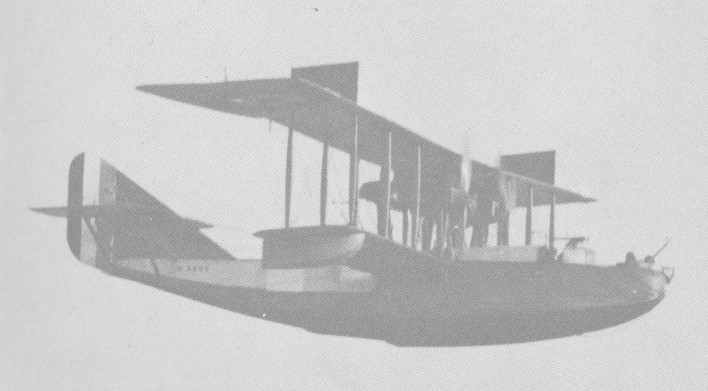
Potez, Henry / Societe d’Etudes Aeronautiques

Founded in 1916 as Societe d’Etudes Aeronautiques at Aubevillers. Made series of two-seat biplanes, notably SEA 4 reconnaissance aircraft and SEA 7, the latter a “limousine” first flown December 1919. Built a two-seat tractor biplane, the Type 4C.2.

Post-war the company became known as Henry Potez and established itself as a major French aircraft manufacturer with a long series of civil and military aircraft.

Starting in 1920 and starting with a small 50 hp engine derived from the automobile, the Potez company manufactured a range of engines of various powers from 60 hp to 410 hp, including a series based on the Anzani radial engine, whose company Potez bought, based in Courbevoie.

In France, the Socialist Government of the so called Popular Front brought all the companies building military aircraft, aero engines and ar¬mament under its control in 1936. The im¬mediate result was the socialized oblivion of such established companies as Marcel Bloch, Bleriot, Nieuport, Potez, Dewoitine, Hanriot and Farman within half a dozen nationalized groups or Societies Nationales, named ac¬cording to their geographical location (Nord, Ouest, Centre, Midi and so on).

In 1937 Potez, with Liore-et-Olivier, and Romano, became part of the nationalized French aircraft industry in the SNCAN group.

At that time it was producing the 56 twin-engine light transport, the 63 fighter-bomber and the Potez-CAMS 141 four-engine reconnaissance flying-boat, together with prototypes of the 661 12-passenger four-engine monoplane and the Potez-CAMS 160 six-engine flying-boat, a scale model of the proposed Type 161 transatlantic flying-boat.
For 16 years the company was not involved in aviation, but in 1953 produced the Potez 75 single-engine twin-boom ground-attack aircraft, built by SNCAN. A contract for 500 for the French Army was awarded in 1956, but was canceled later because of military cutbacks.

Took over Air-Fouga in 1958, and continued production of that company’s Magister jet trainer. Built two prototype turboprop transports, Potez 840, flying first in 1961. Proposed versions were 841 with PT6A engines and 842 with Astazou Xs, but production did not proceed beyond six aircraft. Also built Paris III twin-jet executive aircraft developed by Morane-Saulnier. Potez was absorbed by Sud Aviation in 1967, which in turn became part of Aerospatiale in 1970.

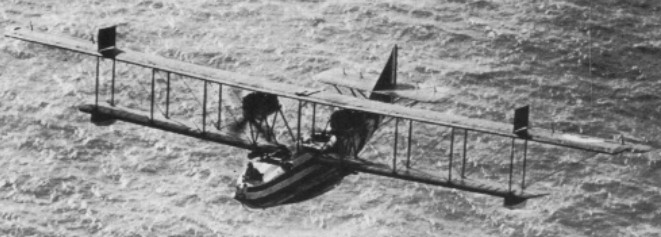
Portsmouth Aviation Ltd / J. Samuel White & Co / Wight Aviation

J. Samuel White & Co, boatbuilding company at Cowes, Isle of Wight, which in 1914 constructed to the design of Harris Booth, of the Air Department, the largest aeroplane then built in Britain, the AD 1000 three-engined torpedo-bomber. Also built Short 184s under subcontract and designed and built aircraft under name of Wight Aviation.

Founded in 1932 as Wight Aviation Ltd to operate an air services to the Isle of Wight. Repaired military aircraft during Second World War. Built prototype of Aerocar twin-boom high-wing six-seat aircraft, flown in 1947; not put into production.

Porte Super-Baby / Felixstowe Fury

Porte’s ultimate design was a triplane flying boat, unofficially nicknamed the ‘Porte Super Baby’, but officially designated Felixstowe Fury. With wings spanning 37.5 m (123 ft), the Fury was powered by five 360hp Rolls Royce Eagle engines, two as tractors and three as pushers. Flying controls, initially, were power assisted by servomotors. After successful flying trials, the Fury was in the last stages of preparation for a projected flight to South Africa on August 11, 1919, when it was wrecked in Harwich harbour. All work on a second Fury was then stopped and the Fury programme cancelled. In October 1919, John Cyril Porte, the man whose inventive genius had conceived the F series of flying boats, died in Brighton of tuberculosis.

Engines: 5 x 334 hp Rolls-Royce Eagle VII
Span: 37.5 m (123 ft)
Length: 19.2 m (63 ft 2 in)
Height: 8.4 m (27 ft 6 in)
Maximum speed: 156 km/h (97 mph) at 609.5 m (2000 ft)

Porte F.2A America

The Admiralty placed orders for Curtiss H.4 and H.12 flying-boats in 1924-15 on the recommendation of Squadron Commander John Porte. When they arrived, Porte fitted some with much improved hulls of his own design, built at the Naval Air Station of Felixstowe and by private manufacturers.

The engines were also replaced by Rolls-Royce Eagles in the H.12’s, which were redesignated F.2A.

They featured three-bay biplane wings with two spar wood construction and fabric covering. The hull was wood with plywood covering. Conventional controls with ailerons on the top wings only. Stabilising floats were under each lower wing tip.

Normal defensive armament was four Lewis machine guns: one in the nose cockpit, one in the rear cockpit aft of the wings and one on each side of the fuselage. Sometimes the nose and rear positions were each fitted with two guns, and an additional gun could be mounted above the pilots’ canopy. Racks for two 230-lb bombs were under the wings.

Best known was the F.2A, which, in the last year of the war, formed the backbone of RNAS/RAF ocean activ¬ity. Carrying up to seven Lewis guns and two 220 lb bombs, it had a maximum weight of 11,000 lb, its two 345 hp Rolls¬Royce Eagles gave it a top speed of 95 mph and it could reach 2,000ft in 3.5min and 10,000ft in 39.5min. Despite its 120ft wingspan it was surprisingly agile. Gradually F.2s replaced H12s.

The F2A was basically a Porte II hull married to the wings and tail unit of the Curtiss H.12. Utilised by Britain during WW 1 and credited with shooting down Zeppelins L.22, L.43 and L.62.

F.2A
Engines: 2 x Rolls-Royce Eagle VIII, 345 hp
Propeller: 4 blade
Wingspan: 95 ft 7.5 in
Wing area: 1133 sq,ft
Length: 46 ft 3 in
Height: 17 ft 6 in
Empty weight: 7549 lb
MTOW: 10,978 lb
Max speed: 95 mph at 2000 ft
Service ceiling: 9600 ft
Endurance: 6 hr
Armament: 4-7 Lewis machine guns
Bombload: 2 x 230 lb

Porte II / Felixstowe F.2

By July 1916 first examples of a larger Curtiss flying boat design began arriving in England. Designated H.8, these were quickly modified to accept more powerful twin 250 hp Rolls Royce engines, and redesignated Curtiss H.12s, or ‘Large Americas’ as the RNAS crews usually referred to them. The Curtiss H.12 hull soon proved to be inadequate for its tasks, so Porte designed a new hull (the Porte II), resulting in all round improvement in performance. With a new tail unit added, the modified craft was designated Felixstowe F.2, and its general structure became a prototype for succeeding F boats.

Large scale production of the F.2 was ordered, and the type began to equip RNAS units in late 1917. Carrying a crew of four, and a bombload of approximately 272 kg (600 lb), the F.2a (its production designation) could achieve a maximum speed of some 145 km/h (90 mph), with an endurance of perhaps six hours. It was cumbersome to handle and slow in manoeuvre, yet gave formidable operational service for the rest of the war. With at least four machine guns in nose, tail, and flank locations, it also gave a good account of itself when engaged by German seaplanes. The F.2a’s main duty was antisubmarine hunting; an air deterrent which undoubtedly proved successful in the protection of Britain’s vital mercantile shipping.

Span: 29 m (95 ft 7.5 in) (upper), 20.8 m (68 ft 5 in) (lower)
Length: 14.1 m (46 ft 3in)
Height: 5.3 m (17 ft 6 in)
Maximum speed: 153.7 km/h (95.5 mph) at 609.5 m (2000 ft)

Porte Baby

On the outbreak of the First World War, among the Admiralty’s chief responsibilities was the aerial defence of Britain, as well as the more traditional role as guardian of the island’s surrounding sea¬ways. At that time the Royal Naval Air Service was almost wholly equipped with floatplanes of limited range and unreliable performance. The obvious need for a sea¬going aircraft of long range led Captain Murray Sueter, Director of the Naval Air Department, to purchase two Curtiss flying boats.

After some operational use of these initial Curtiss flying boats, Commander John C Porte set out to improve some of the more obvious weaknesses in the design.

In September 1915, Porte was appointed in command of RNAS Felixstowe and while there finally produced his own design of flying boat. It was a large, three engined aircraft, and was allocated the serial number 9800. Quite unofficially, it was titled the ‘Porte Baby’. The largest flying boat design of its day, the ‘Baby’ was put into limited production some 20 machines and most of these saw operational service in 1916 17.

It had three Rolls Royce Eagle engines, two installed as tractors and one as a pusher. One successfully launched a Bristol Scout from its top wing while airborne over Felixstow.