Russian Empire airship / Vozduhtsentr / Dirizhablestroy

In 1906 the Chief Engineer’s Office Russian Empire was specially seconded to France, with a delegation of engineers and professionals for the development of on-site experience of the most advanced airship.

In 1923, the Society for the Friends of the Air Fleet of the USSR was created special Vozduhtsentr with tasks which included the promotion of Russian airship in Russia. After a while Vozduhtsentr was renamed vozduhsektsiyu Osoaviahima USSR and in the autumn of 1924 completed the construction of another Myagenko airship under the title “Moscow chemist rezinschik” (MHR). This title pointed to the fact that it was made by means of chemical industry workers in and around Moscow. The designer of this project was N. Fomin.

At the end of 1931 at CAB CAF was created under the title “Dirizhablestroy.” This organization was to unite the efforts of various groups of professionals working in the field, as do the planned deployment of the work in designing and building the next Russian airships. Also, the organization should take the time to research on the topic of aeronautic and improve methods of exploitation airships.

Nobile worked in the USSR from 1931 until 1935. He is believed to have been responsible for the design of nine semi-rigid airships.
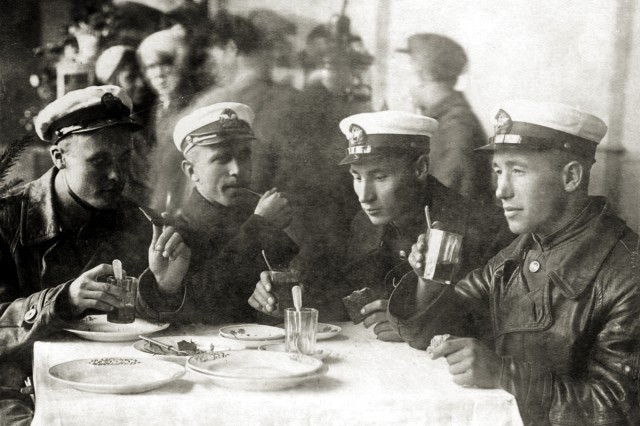
Russian airship crewmen (left to right) – Nikolai Gudovantsev, Ivan Obodzinsky, Ivan Pan’kov and Vladimir Ustinovich. 1933

The rationale for the Soviet program was to provide transport to distant rugged regions, notably Siberia, as well as such utility functions as surveying.

There were works at Leningrad, and Zagi near Moscow, the latter also the center of Tsiolkovski’s metalclad efforts. The plan was to make 92 ships but it is unknown how many were actually made.

There were also some non-rigids built in 1937 at Zagi.
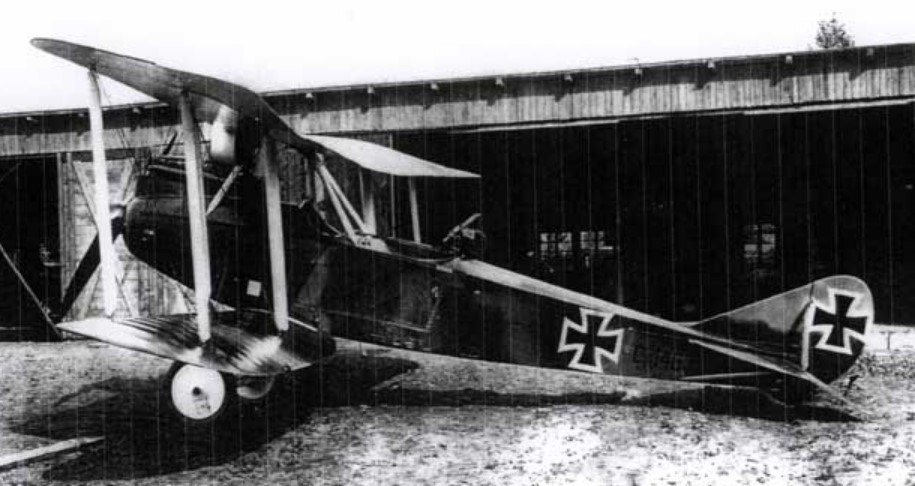
Rumpler C.IV / 6B 2 / Pfalz C.I

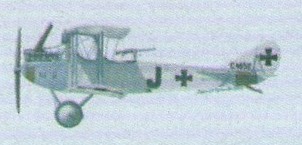
The Rumpler C.IV was a German single-engine, two-seat reconnaissance biplane. It was a development of C.III with different tail surfaces and using a Mercedes D.IVa engine in place of the C.III’s Benz Bz.IV. The Rumpler 6B 2 was a single-seat floatplane fighter variant with a 120 kW (160 hp) Mercedes D.III engine built for the Kaiserliche Marine (Imperial Navy).

For a two-seater reconnaissance aircraft, Rumpler C.IV had an excellent performance, which enabled it to remain in front-line service until the end of World War I on the Western Front, as well as in Italy and Palestine. Its exceptional ceiling allowed pilots to undertake reconnaissance secure in the knowledge that few allied aircraft could reach it.

300 aircraft were licence-built by Pfalz Flugzeugwerke as the Pfalz C.I, differing in ailerons on all four wings. From February 1917 they were renamed Rumpler C.IV (Pfal).

Replica
Slingsby T.58 Rumpler C.IV

Rumpler C.IV
Powerplant: 1 × Mercedes D.IVa, 190 kW (260 hp)
Propeller: 2-bladed fixed-pitch
Wingspan: 12.66 m (41 ft 6 in)
Wing area: 33.5 m2 (361 sq ft)
Length: 8.41 m (27 ft 7 in)
Height: 3.25 m (10 ft 8 in)
Empty weight: 1,080 kg (2,381 lb)
Gross weight: 1,530 kg (3,373 lb)
Maximum speed: 171 km/h (106 mph, 92 kn) at 500 m (1,640 ft)
Endurance: 3½-4 hr
Service ceiling: 6,400 m (21,000 ft)
Crew: 2 (pilot and observer)
Guns: 1 × fixed, 7.92 mm (.312 in) LMG 08/15 and 1 × 7.92 mm (.312 in) Parabellum MG14 machine gun
Bombs: 100 kg (220 lb)

Rumpler GmbH

E. Rumpler Luftfahrzeugbau

Germany
Founded before First World War as E. Rumpler Luftfahrzeugbau, with the company’s works and flying school based at Berlin/Johannisthal airfield, and with a military flying school at Monchelberg. Began production with license construction of Etrich Taube monoplane, but subsequently became famous for a series of armed biplane reconnaissance aircraft in First World War, including the C.I, CIV and C.VII. Went into liquidation about 1919 owing to lack of work.

RNAS Experimental Construction Depot, Port Victoria

UK

Commissioned early in 1915 on the Isle of Grain as the RN Aeroplane Repair Depot, and named Port Victoria to distinguish it from the original air station. Experimental Armament Section set up alongside, followed in 1916 by the Seaplane Test Flight. Began construction in 1916 with the P.V.1, a Sopwith Baby fuselage with modified wings and enlarged floats. There followed a series of seaplane prototypes, the Grain Kitten and Eastchurch Kitten landplanes and the final type to be built by the ECD, the Grain Griffin, a converted Sopwith B.1 single-seat bomber. The Depot was subsequently renamed the Marine Experimental Aircraft Depot.

Royal Aircraft Factory RAF 4 / RAF 5

RAF 4a

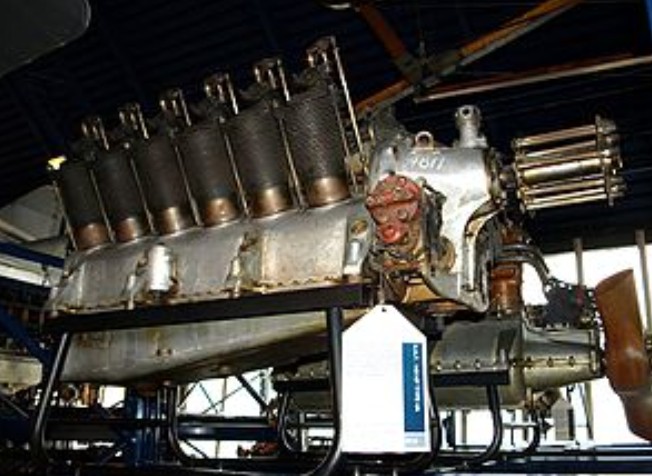
Designed by A.J. Rowledge, the RAF 4 was a British air-cooled, V-12 engine developed for aircraft use during World War I. Based on the eight–cylinder RAF 1 it was designed at the Royal Aircraft Factory, first run in December 1914, but produced by the two British companies of Daimler and Siddeley-Deasy.

More than 3600 were built.

The RAF 5 was a pusher version of the same engine.

In April 1918 a turbocharged experimental version of the RAF 4d was developed using a Rateau turbocharger, the engine being flown in the R.E.8 B738.

Variants:
RAF 4
1914 – Prototype engine, 140 horsepower (104 kW).

RAF 4a
1917 – Main production variant, 160 horsepower (119 kW). 3,608 built.

RAF 4d
1916 – 180 horsepower (134 kW), experimental supercharger installation. 16 built.

RAF 4e
1917 – 240 horsepower (180 kW), strengthened cylinders and enlarged valves.

RAF 5
1915 – 150 horsepower (112 kW), pusher version with fan-cooling.

RAF 5b
170 horsepower (127 kW), increased bore version of RAF 5.

Applications:
RAF 4
Armstrong Whitworth F.K.8
Bristol F.2 Fighter
Royal Aircraft Factory B.E.12
Royal Aircraft Factory R.E.7
Royal Aircraft Factory R.E.8
Siddeley-Deasy R.T.1
Vickers F.B.14

RAF 5
Royal Aircraft Factory F.E.2
Royal Aircraft Factory F.E.4

Specifications:
RAF 4a
Type: 12-cylinder, upright, 60-degree Vee engine
Bore: 3.94 in (100 mm)
Stroke: 5.51 in (140 mm)
Displacement: 806.15 cu in (13.2 L)
Dry weight: 680 lb (308 kg)
Valvetrain: EOI (side-valve inlet, exhaust overhead)
Fuel system: Twin Claudel-Hobson Mk.1A carburettors
Cooling system: Air-cooled
Reduction gear: 0.5:1, Left-hand tractor
Power output: 163 hp (122 kW) at 1,800 rpm (takeoff power)
Specific power: 0.2 hp/cu in (9.2 kW/L)
Compression ratio: 4.3:1
Power-to-weight ratio: 0.24 hp/lb (0.4 kW/kg)