The SF5 was widely used as an SF2 replacement.
World War 1
Sablatnig SF.4
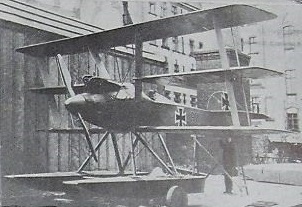
The SF4 was a single-seat fighter floatplane, built both as a biplane and triplane during 1916-17.
Engine: Benz 150 hp
Sablatnig SF.2
The SF1 floatplane (1915) developed into the very successful SF2 (license-built by LFG and LVG).
Sablatnig SF.1
The SF1 floatplane (1915) developed into the SF2.
Sablatnig
Sablatnig Flugzeugbau GmbH
Austrian Josef Sablatnig experimented and flew before First World War. Moved to Germany and in 1913 became a director of Union Flugzeugwerke GmbH, where he did technical work and flying. When Union company went into liquidation (1915) he founded Sablatnig Flugzeugbau GmbH in Berlin, famous for seaplanes used by German Navy but built other types also. SF1 floatplane (1915) developed into very successful SF2 (license-built by LFG and LVG); SF4 was single-seat fighter floatplane, built both as biplane and triplane; SF5 was widely used SF2 replacement; SF8 was last Sablatnig floatplane built in numbers (trainer of 1918). Landplanes included trainers, single engined night bombers, and a monoplane. N1 was two-seat land fighter used at Kiel. After war developed civil types, including P1 four-passenger biplane and P3 six passenger high-wing monoplane. One light sports type built, but aircraft work ceased 1921.
Russo-Baltic Waggon Works Sikorsky S-20
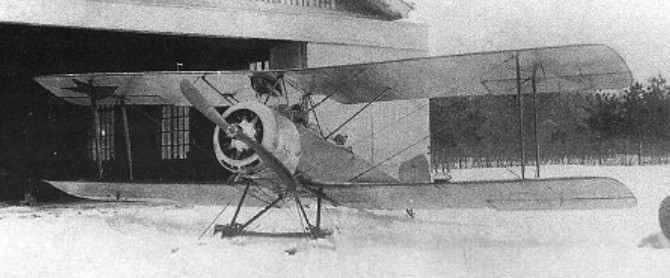
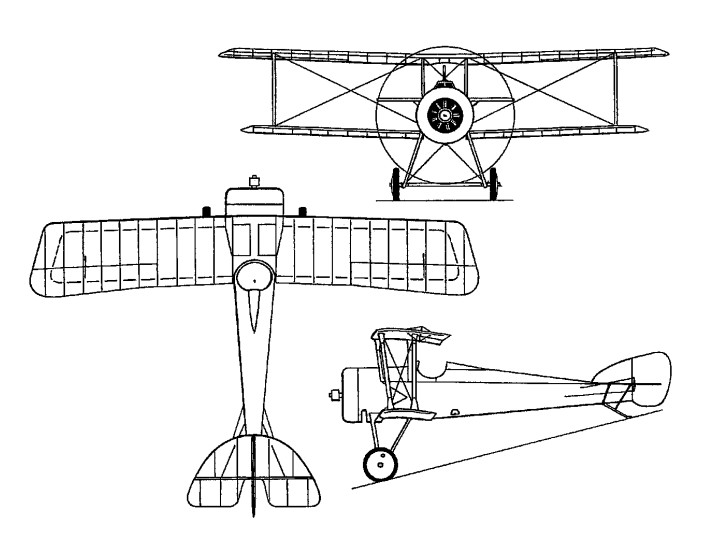
The last of the RBVZ’s First World War fighters, the S-20, embodied lessons learned from licence manufacture of the French Nieuport 17. The production version, with a 120hp Le Rhone engine, was said by its pilots to be faster than the Nieuport, with a top speed of 190km/h; but only five were ordered, leaving the RBVZ free to concentrate on production of its Ilya Mourometz bombers.
Russo-Baltic Waggon Works Sikorsky S-19
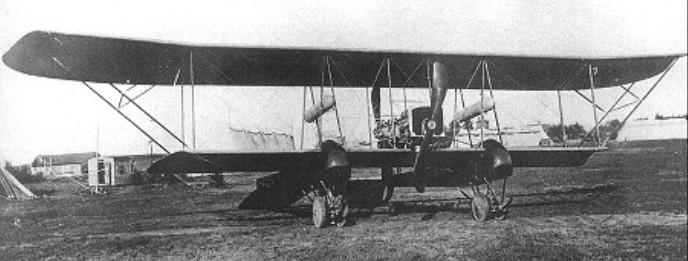
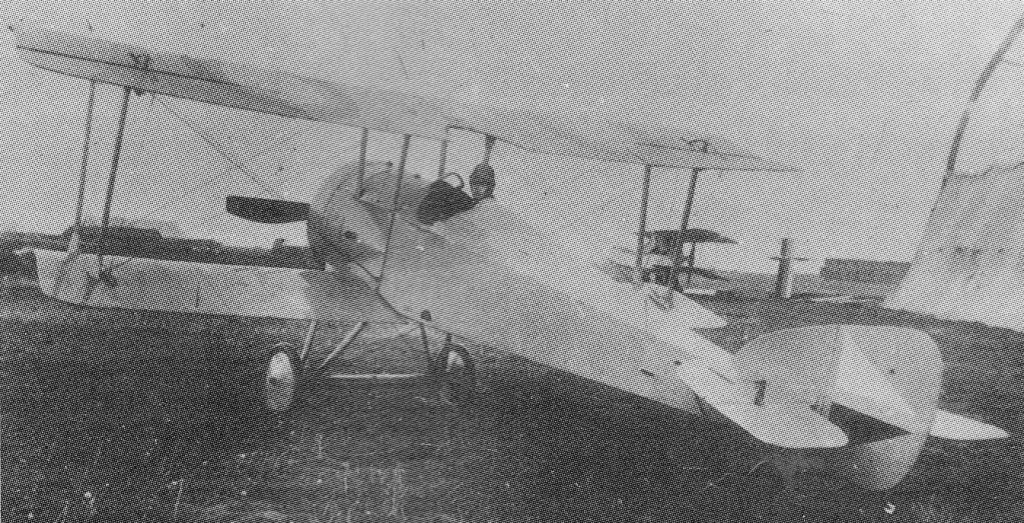
The S-19 had two 150hp Sunbeam engines in tandem and a cockpit in the nose of each of the twin tailbooms that projected slightly forward of the lower wings. The design seems to have emanated from the Russian War Department, which ordered the RBVZ to match German experiments with twin-boom combat aircraft. The prototype was completed in late 1916.
Russo-Baltic Waggon Works Sikorsky S-18
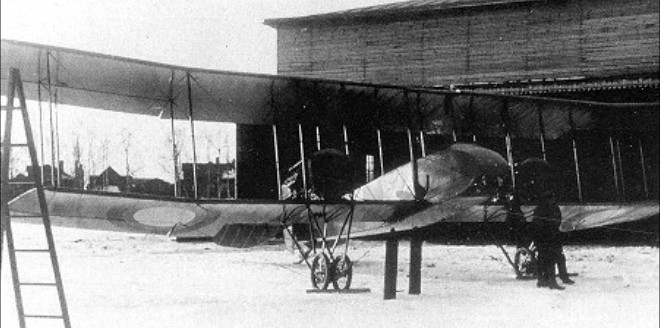
Intended as a twin-engined fighter capable of inflicting heavy blows on enemy aircraft penetrating Russian airspace, the S-18 had a cockpit in the nose for an observer-gunner. Two 150hp Sunbeam pusher engines failed to lift it off the ground at its maximum weight of 2100kg.
Russo-Baltic Waggon Works Sikorsky S-16

During the First World War most Russian squadrons flew French-designed aircraft, many of them built under licence. Sikorsky’s single-seat S-13 and S-14 biplanes were probably not completed. Three two-seat S-16s were built as trainers for bomber crews of the Squadron of Flying Ships in 1915, followed by about twenty-four more as two-seat S-16-2 and single-seat S-16-3 bomber escort and reconnaissance scouts with 80hp Gnome engines in 1916-17. A machine-gun was mounted under the top wing, firing clear of the propeller, until Engineer Lavrov invented an interrupter gear for a fuselage-mounted gun.
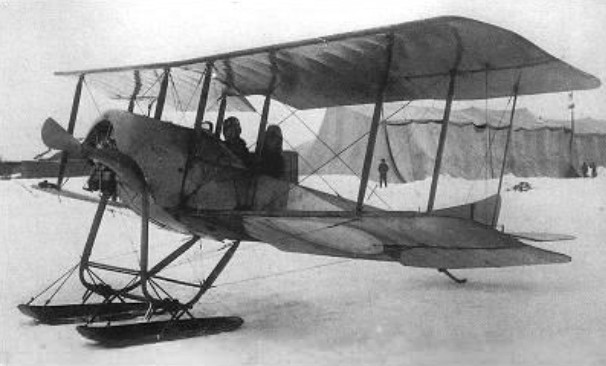
For winter operation, a number of S-16s were flown on skis in place of the standard four-wheel landing gear; at least one was fitted with twin floats in 1916. Contemporary accounts show that pilots enjoyed the stability, manoeuvrability and delicate controls of the S-16s, but they were outclassed by German fighters of the time.
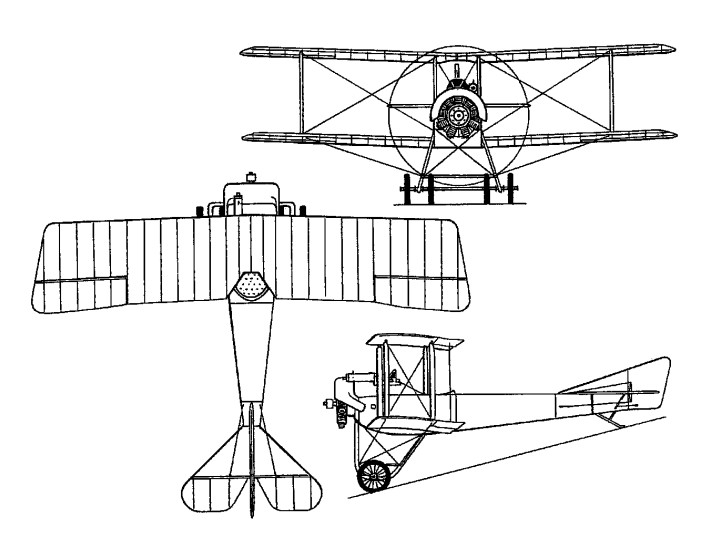
Russian Empire airship Giant / Gigant
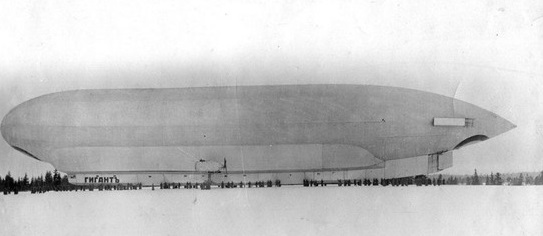
The Gigant was built by engineers A.Kovanko and A.Shabskogo at the Russo-Baltic Wagon Works, Salizi, south-east of St.Petersburg, between 1912 and 1915. It was of 724,060 cu.ft capacity, measuring 374 ft long with a 56 ft diameter, giving a gross lift of 21 tons and a useful lift of 8.8 tons. As originally designed, power was four 215 hp Austro-Daimler eight-cylinder petrol engines, later reduced to two such units mounted in streamlined nacelles positioned amidships above the keel.
On the first flight, in February 1915, shortly after take-off at low altitude, the airship dipped in the middle, causing the propeller to cut one of the cable braces. The airship, breaking in half, fell to the ground. The crew was not injured.
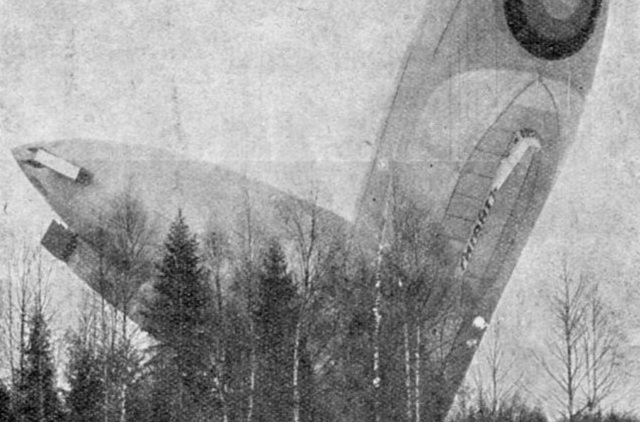
The cause of the accident was because of the loads imposed by rearranging the engine cars.
The airship was rebuilt, but due to the lack of hydrogen, it was not filled and was scrapped in late 1916.
Engines: 4 x 212 hp
Volume: 20,500 cu.m
Length: 114 m
Diameter: 17 m
Max speed: 58 km / h
 All Aero