Located at Felixstowe, Suffolk, its products being identified by initial F. Particularly associated with Squadron Commander J. C. Porte, RNAS, who assumed command of the Felixstowe station in September 1915. Porte had started aeronautical work in 1909; his interest in flying-boats led him to join Curtiss, in U.S.A., during 1914. Before taking command at Felixstowe had flown Curtiss flying-boats on operations, and set out to improve them. Felixstowe F.1 had wings and tail of Curtiss H.4 but Porte hull. F.2 was comparable development of H.12, and further improved as F.2A and used extensively from late 1917. Porte Baby was early 3-engined type, from one of which a Bristol Scout was air-launched in May 1916. F.3 was larger than F.2A, but though built in quantity was less highly regarded. Some were built in Malta Dockyard, others by British contractors. Some completed as further developed F.5, a type also used by U.S. Navy and Japan. Felixstowe Fury was very large 5- engined type, flown (and wrecked) after Armistice.
World War 1
Schütte-Lanz D-III
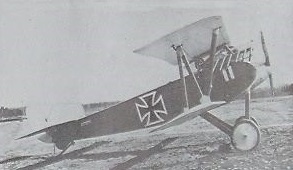
160 hp Mercedes 1916
Schütte-Lanz Luftfahrzeugbau
Luftschifflan Schutte-Lanz
Schütte-Lanz Luftfahrzeugbau
In 1909 Luftschifflan Schutte-Lanz was established to build airships. This company’s Luftfahrzeugbau was founded in 1915 at Zeesen, near Konigswusterhausen, Brandenburg, in recognition of the fact that airships must be supplemented by aeroplanes. The C-1 of 1915 had an unconventional engine installation; D-III built in 1916 was a single-seat fighter. Company built the Ago-Flugzeugwerke two-seat C.IV in quantity. Had studied ‘giant’ aircraft and was included in 1916 R-plane ‘giant’ programme. Contract awarded for six Staaken bombers. R.27-29 delivered late 1917 and became operational; three other Staaken machines (R.84- 86) unfinished at Armistice. Company also made special equipment (e.g. bomb gear and engine-room telegraphs) for other builders of giants, but own ambitious twin-boom project of 1917 remained unrealised. After aircraft work ended company remained as plywood manufacturer.
Schreck FBA-Impro S
An improved version of Type-S with new design, powered by one 275 hp Hispano engine, 1918
Schreck FBA-High Seas
A biplane high seas flying boat, powered by four 250 hp Hispano engines, 1918
Schreck FBA-Triplane
A triplane flying boat of 1917, powered by one 300 hp Renault engine
Schreck FBA-S
A final wartime production with more improvements, as a seaplane recce aircraft
Schill 1914 Biplane
Paul Schill built circa 1914 about 2 landplanes and 2 “hydroaeroplanes” used for exhibitions around Long Island NY. One with innovative aluminum body and 15° sweptback wings.
Wingspan: 50’0″
Length: 40’0″
Seats: 2
Schill, Paul
NYC.
USA
Paul Schill, a well-known auto racer at the time, first designed and built an 80hp V-8 aviation engine in 1912 for Max Ames Machine Co, Mt Vernon NY. Studied aviation in Europe for five years, moved to Milton VT c.1920.
Circa 1922 Schill built a Motor-glider. It was destroyed before it ever flew when its hangar collapsed in a windstorm.
In 1922 Schill went to to form Vermont Air Transport Co with Alfred Henninger and John Burns at Schill Airport, Milton VT.
Schiefer & Sons Aeroplane Co RS
In 1917 Schiefer & Sons Aeroplane Co built the RS, designed by N B Robbins. A Pursuit trainer based somewhat on French V-strutted Nieuport design, it first flew on 9 December 1917.
The sole example was bought for a reported $11,000 and tested by the Army, but rejected as not being as good as Orenco or Thomas-Morse.
Engine: US-built Gnöne 9, 100hp
Wingspan: 26’6″
Length: 20’0″
Seats: 1
 All Aero