Siemen Schkukert R.VII

In October 1914 Siemens started design of four-engined aircraft similar to that of Sikorsky in Russia. As entirely new venture company sponsored designs by two Steffen brothers leading to giants R.I-VII of 1915-1917.

The then relatively low engine power required lightest construction. This in turn required precision and caution, especially when landing – where such giant wooden aircraft were extra-sensitive. Many crashed.
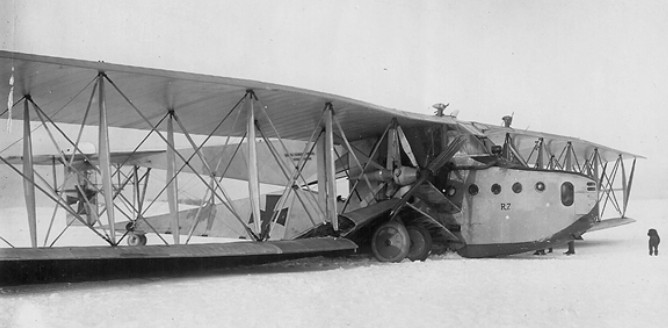
Siemens Schuckert R 7

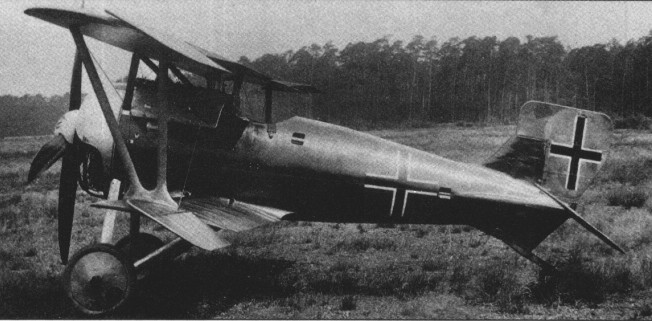
Siemen Schkukert D-IV

The D III was followed by the D IV, which introduced much aerodynamic refinement for slightly higher speed and still better climb rate. A total of 280 were ordered, but less than 140 D IVs were completed, most entering service after August 1918.

D IV
Engine: l x Siemens-Halske Sh.IIIa, 119kW (l60hp)
Span: 8.35m (27ft 4.75in)
Length: 5.7m (18ft 8.5 in)
Max TO weight: 735 kg (1,620 lb)
Max speed: 119 mph
Operational endurance: 2 hr
Armament: 2 x 7.92-mm (0.312-in) LMG 08/15 mg

Siemen Schkukert D-II / D-III

Via the D II prototype Siemens-Schuckert then moved to a completely German design, ordered late in 1917 as the D III equal-span biplane with the 119-kW (160-hp) Siemens-Halske Sh.III rotary engine whose diameter dictated the circular section of the compact fuselage that tapered sharply into the empennage with its large tailplane and angular vertical surfaces. After the teething problems of this engine had been cured, the 50 D IIIs matured as extremely fast-climbing interceptors whose other performance figures were low.

Siemens-Schuckert D-III Article