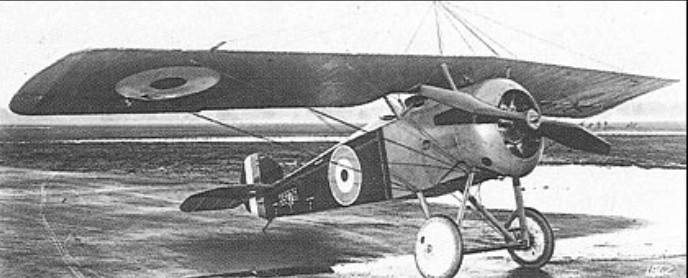
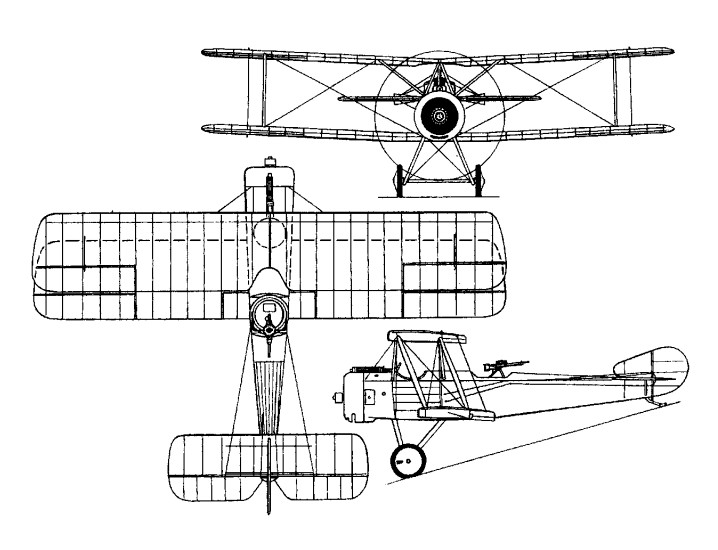
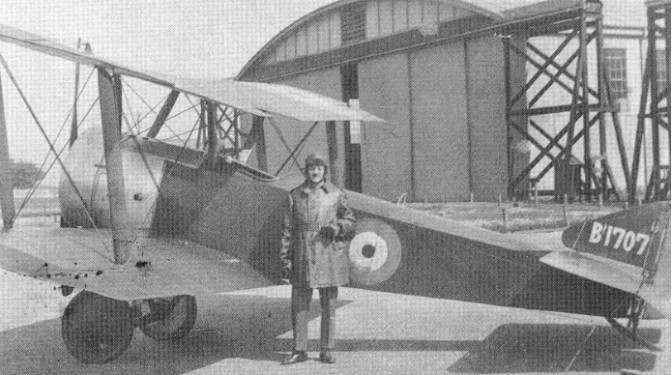
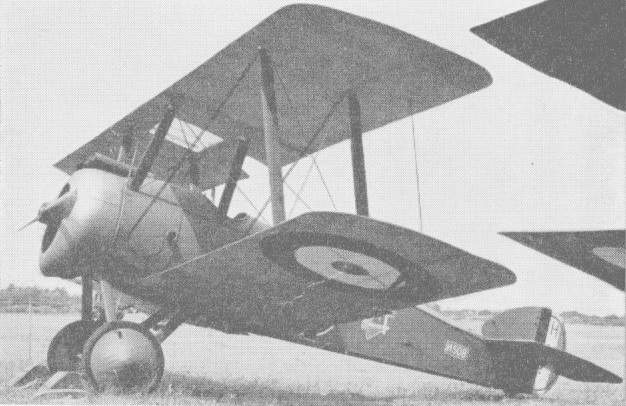
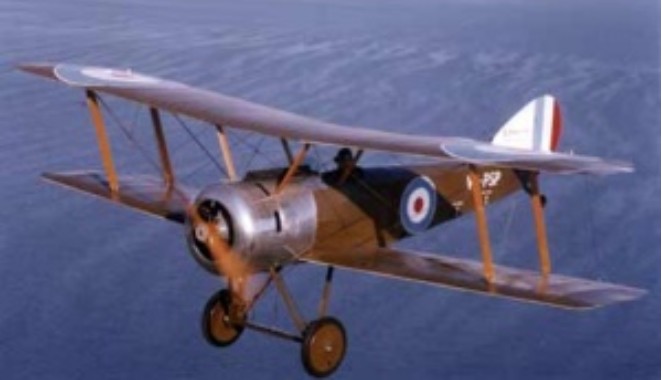
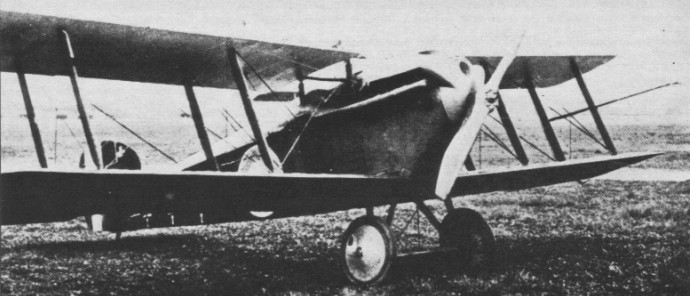
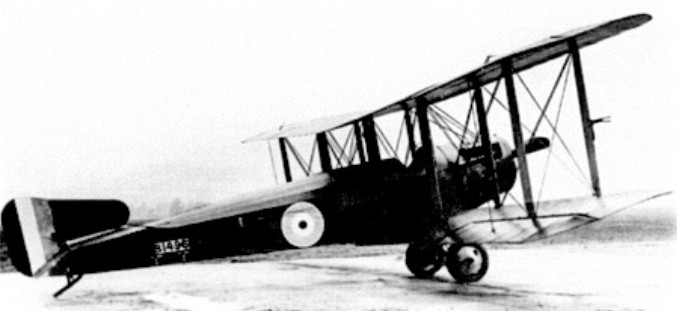
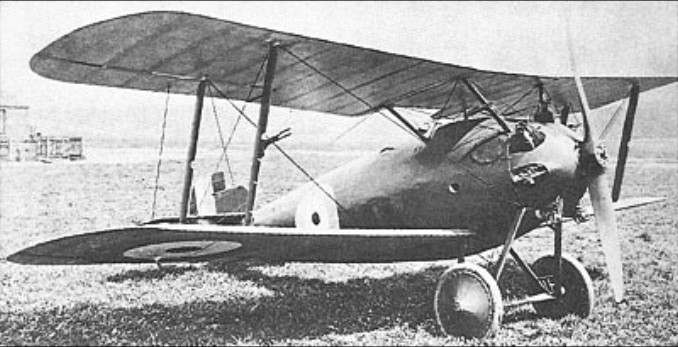
Utilising a Pup fuselage mated with a parasol wing, the Swallow single-seat fighter monoplane was powered by a 110hp Le Rhone 9J nine-cylinder rotary engine and carried the standard armament of twin synchronised 7.7mm machine guns. Flown for the first time in September 1918, the Swallow was delivered to Martlesham Heath for official trials on 29 October 1918, remaining there until May 1919, the trials having been delayed by fuel system problems. The performance of the Swallow as revealed at Martlesham did not warrant further development, and the prototype was scrapped.
Max take-off weight: 644 kg / 1420 lb Empty weight: 403 kg / 888 lb Wingspan: 8.79 m / 29 ft 10 in Length: 5.72 m / 19 ft 9 in Height: 3.10 m / 10 ft 2 in Wing area: 14.86 sq.m / 159.95 sq ft Max. speed: 182 km/h / 113 mph
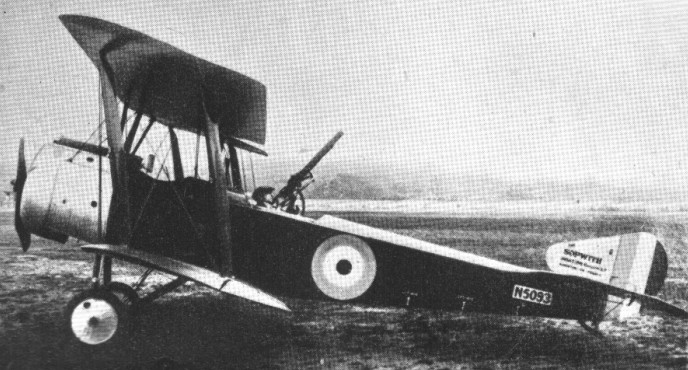
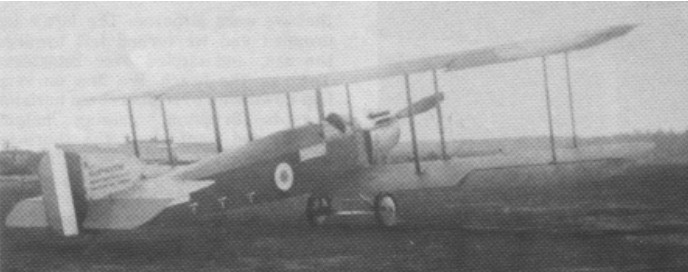
Designed and built for the Admiralty, the unarmed prototype was completed in December 1915, and series deliveries to the RNAS followed from February 1916. The Sopwith two-seater, quickly named the 1½ Strutter because of the unusual arrangement of its central mainplane bracing struts. The 1 1/2-Strutter was both the first British aircraft to be built with a synchronised gun as standard equipment and the first true two-seat fighter to see RFC service.
A single-bay biplane with two-spar wooden wings and wooden fuselage with fabric covering, the 1 1/2-Strutter featured air brakes in the lower wing and an adjustable-incidence tailplane. At an early production stage, armament was standardised on a synchronised 7.7mm gun with a second weapon of similar calibre on a Scarff ring mounting in the rear cockpit. A single-seat bomber version was built in parallel, some examples of this variant being converted as two-seat fighters.
The 1 1/2-Strutter was used by the RNAS in both escort and (without observer) bombing roles, and 77 of the first 150 aircraft ordered by the Admiralty were transferred to the RFC.
Flying from the cruiser HMS Australia
A single-seat bomber version was used by the Royal Naval Air Service and by French units. Single and two seat 1½ Strutters equipped the first unit ever formed as a strategic bombing force; No.3 Wing Royal Naval Air Service.
Initial production aircraft were powered by the 110hp Clerget 9Z ninecylinder rotary engine, but, in the autumn of 1916, this gave place to a 130hp Clerget 9B.
It was widely used by escadrilles of the French Aviation Militaire as well as Belgian and United States air forces. French production of the aircraft considerably exceeded the numbers of British built 1½ Stutters.
At least 1,513 1 1/2-Strutters were built in the UK (by the parent company, Fairey Aviation, Hooper & Co, Mann, Egerton & Co, Ruston, Proctor & Co, Vickers Ltd, Wells Aviation and Westland Aircraft). The 1 1/2-Strutter was licence-built in France as a single- and two-seat bomber (SOP 1B1 and 1B2) and two-seat reconnaissance aircraft (SOP 1A2), primarily with the 110hp and 135hp Le Rhone 9J and 9Jby nine-cylinder rotaries, 4,500 allegedly being produced by Liore et Olivier, Hanriot, Amiot, Bessoneau, Darracq, REP and Sarazin Freres. The US government procured 514 from France, and others were supplied to Belgium and Imperial Russia.
Replica: Aviation Preservation Society of Scotland Sopwith 1½ Strutter
Engine: Clerget 110 hp Prop: 2 blade Wingspan: 10.21 m / 33 ft 6 in Length: 7.69 m / 25 ft 3 in Height: 3.12 m / 10 ft 3 in Wing area: 32.14 sq.m / 345.95 sq ft Max take-off weight: 975 kg / 2150 lb Empty weight: 592 kg / 1305 lb Fuel capacity: 40 Imp.Gal Max. speed: 161 km/h / 100 mph Service ceiling: 16,000 ft Endurance: 4 hr 15 min Armament: 1 x Vickers MG / 1 x Lewis gun Bombload: 2 x 65 lb
Engine: Clerget 130 hp Prop: 2 blade Wingspan: 10.21 m / 33 ft 6 in Length: 7.69 m / 25 ft 3 in Height: 3.12 m / 10 ft 3 in Wing area: 32.14 sq.m / 345.95 sq ft Fuel capacity: 40 Imp.Gal Armament: 1 x Vickers MG / 1 x Lewis gun Bombload: 2 x 65 lb
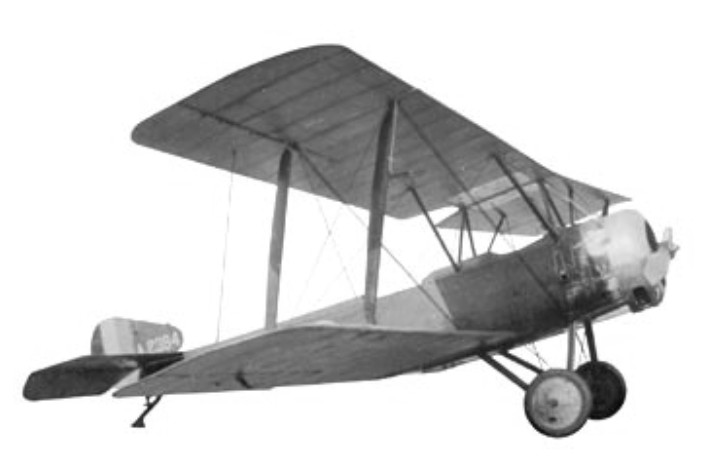
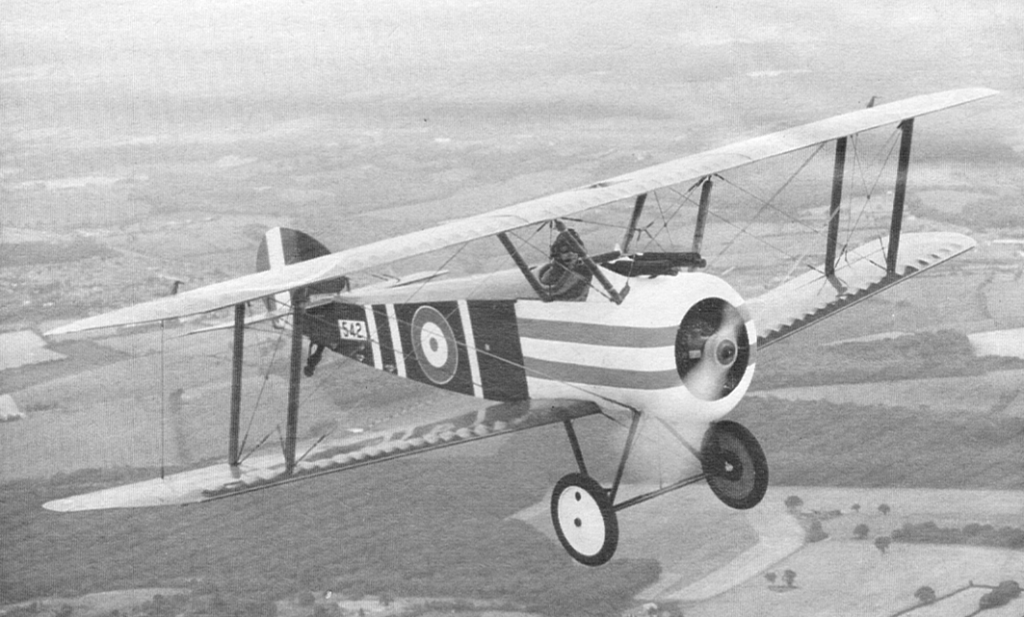
The Pup or Scout Tractor was Sopwith’s follow-up fighter to the type 9700 or 1 1/2 Strutter and got its name as a smaller single-seat version. A single-bay biplane, the wings were two spar, with steel-tube tips and trailing edge. Ailerons were on all four wings. The fuselage is all wood, and tailplane wood except for a steel rear spar. Other tail surfaces were steel construction. The entire airframe is fabric covered.
The prototype serialled 2691 was first flown in February 1916. The Pup was original powered by an 80 hp Le Rhône 9C, 9 cylinder, air-cooled rotary engine. Several alternative engines were fitted, including the 100 hp Gnome Monosoupape.
It was ordered by the Admiralty for the Royal Navy Air Service to serve on the Western Front, where it arrived in September 1916. A total of 170 aircraft were built for the Royal Naval Air Service (RNAS).
Although underpowered, the Pup was a fine aircraft with good maximum speed and climb and excellent manoeuvrability – especially when the torque of the engine was exploited for fast turns. The battles of Ypres, Messines and Cambrai kept the Pup locked in combat and helped to establish its reputation as a ‘pilot’s aircraft’.
Armed with a single synchronous Vickers .303 machine gun, it was superior to the Fokker D.III. Soon it was underpowered for combat on the Western Front when the German put the Albatros DIIIs in service. Although underpowered, pilots liked the plane because it was manoeuvrable and fast. It could climb and hold its altitude better than any other fighter. The Sopwith Pup remained in service on the front until late 1917 when it was replaced by the Sopwith Camel. After removal from the front it was used as a Home Defence unit fighter. Some were occasionally armed with Le Prieur rockets for anti-Zeppelin patrols.
About 1770 airframes of the Sopwith Pup were built by and under license for the Sopwith Aviation Company Ltd.
Notwithstanding their Naval origins, the majority of Pups constructed served with the Royal Flying Corps, with a total of 1670 built initially as fighters. They were also involved in the training role from 1918. In 1919, eleven Pups were supplied to the Australian Flying Corps as part of the Imperial Gift. Upon formation of the RAAF in 1921, the aircraft were allotted to No 1 Flying Training School at Point Cook for use as an intermediate fighter trainer until 1930.
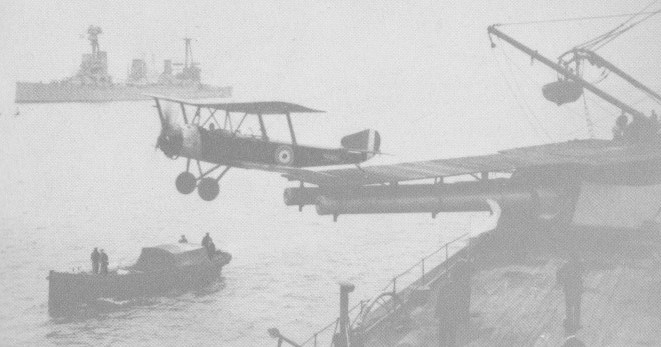
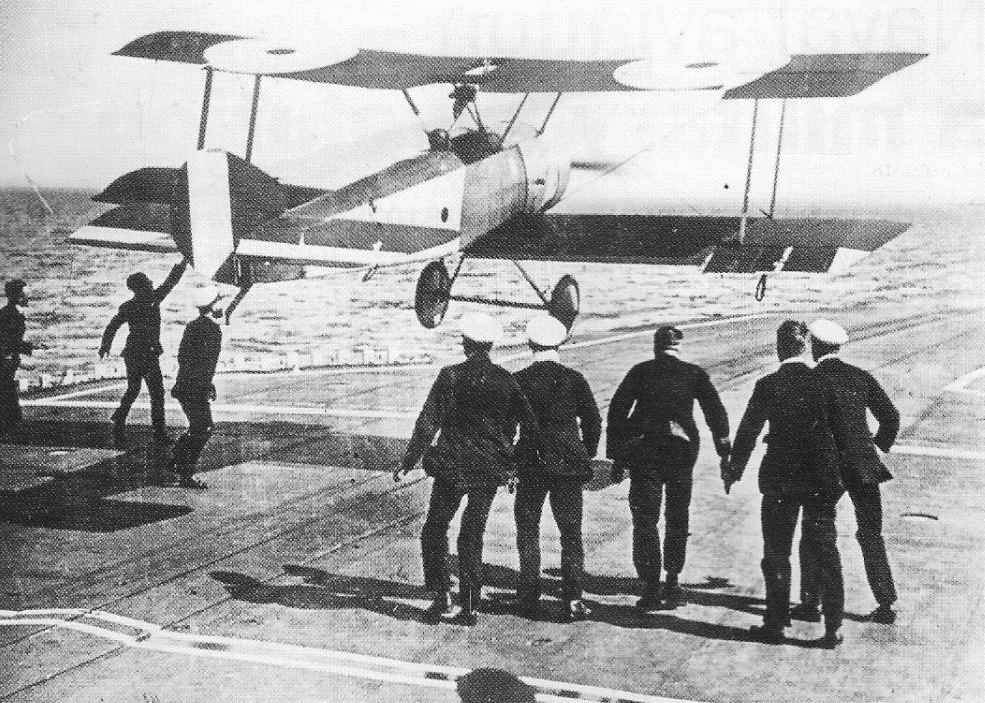
One of the best remembered exploits of the Pup was its use in determining the feasibility of landing conventionally wheeled aircraft on board aircraft carriers. In June 1917 the first takeoff was made from the gun turret platform of HMS Yarmouth. On 2 August 1917 a Pup, flown by Squadron Cdr E. H. Dunning, landed on the deck of HMS Furious, so recording the first landing of an aeroplane on a moving ship. Grab straps attached to the aircraft enabled deck crew to pull it to rest.
Squadron Cdr E. H. Dunning landing on HMS Furious 1917
When another landing was attempted on 7 August, the Pup stalled and went over the side of the carrier into the sea and Dunning was killed. Nevertheless the results were sufficiently encouraging for the experiments to continue and the Royal Navy became the first service in the world with an effective carrier force.
Engine: Le Rhone 9C, 80hp / 59kW Wing Span: 26 ft 6 in / 8.1 m Length: 19 ft 3.75 in / 5.9 m Height: 9 ft 5 in Wing area: 23.6 sq.m / 254.03 sq ft Empty weight 787 lb / 357 kg Loaded weight: 1,225 lb / 556.0 kg Fuel capacity: 19.25 Imp.Gal Crew 1 Climb: 10,000ft/14 mins Ceiling 17,500 ft / 5,300 m Speed: 97 kt / 111 mph / 180 kph (sea level) 103 mpg @ 9,000 ft Endurance: 3 hours Range: 162 nm / 300 km / 186 miles Armament: 1 x Lewis MG or 1 x Vickers MG Rockets: 8 x Le Prieur rockets
Engine: Gnome Monosoupape, 100 hp Span: 26 ft 9 in Length: 19 ft 7 in Height: 9 ft Empty weight: 868 lb Loaded weight: 1313 lb Wing area: 254 sq.ft Wing loading: 4.8 lb/sq.ft Armament: 1 x Vickers mg Crew: 1 Max speed: 106 mph at 6500 ft Service ceiling: 17,500 ft ROC: 650 fpm to 6500 ft Endurance: 3 hr
Designed as a progressive successor to the Sopwith F.1 Camel, the first prototype Dolphin passed out of the Sopwith experimental department on May 23, 1917. A two bay biplane, with equi-span backward staggered wings, the Dolphin was designed to carry two fixed and synchronised 7.7mm Vickers guns either one or two guns of similar calibre mounted over the wing centre section and movable, but usually firing forwards and upwards. Ailerons were fitted to all four wings. The pilot was seated with his head in the open framework connecting the upper mainplanes. The back staggered wing arrangement gave its pilots a superb view, but was less satisfactory in the event of crash landing. Primarily of fabric-covered wire-braced wooden construction with an upper centre section of steel tube, the Dolphin was powered by a 200hp Hispano-Suiza geared eight-cylinder water-cooled engine in its initial production form. The prototype had a car type radiator which was changed for side radiators on production aircraft.
The prototype was flown in late May 1917, the first production contract was placed in the following month, on 29 June, and quantity deliveries to the RFC began late in the year. 19 Squadron, the first operational unit to be fully equipped, received replacements for its former French Spad S7s; 19 Squadron’s official badge still has a dolphin motif.
Only three more RFC/RAF units were wholly Dolphin equipped. In England, 79 Squadron began receiving Dolphins on December 15, 1917; then proceeded to France in February 1918, and began operations in the following month. In France, 23 squadron replaced its Spads in April 1918; while later in the same month 87 Squadron arrived from England fully equipped. Several other units were initially intended to use Dolphins, but in the event used other types of aircraft.
A small number of Dolphins were issued to home defence units, and 141 Squadron operated one flight for a period; while large scale production of the type was planned in France with a view to equipping both French and American units. At least five examples were bought and evaluated by the US Air Service in late 1918. The decision was taken to licence-build a version for the US Air Service in France. This, the Dolphin Mk II powered by a 300hp Hispano-Suiza engine, was to be manufactured by the SACA (Societe Anonyme des Constructions Aeronautiques) and the Air Service anticipated taking delivery of 2,194 by mid 1919. In the event, only a few Dolphin Mk IIs were completed before the Armistice prompted cancellation of all contracts.
Difficulties with the reduction gear of the original 200hp engine led to the conversion of many to direct drive, aircraft fitted with the modified power plant being designated Dolphin Mk III and some engines having their compression ratio raised to boost output to 220hp.
In operational service over the Western Front, the Dolphin proved highly successful, having the distinct advantage of a higher fighting ceiling than most of its contemporaries. Although ostensibly a four gun fighter, in practice most pilots discarded the upper Lewis guns in favour of less weight and thereby improved performance. Nevertheless, in 87 Squadron at least, several Dolphins experimented with fixed Lewis guns on the lower wings. When employed on ground-strafing duties, Dolphins were fitted with under fuselage racks to carry four 11.3 kg (25 1b) Cooper bombs. In combat, many of the Dolphin pilots ran up appreciable victory tallies, such as F W Gillet, DFC, of 79 Squadron (17), R B Bannerman of 79 Squadron (16) and A D Carter of 19 Squadron (at least nine victories in Dolphins). A further indication of the machine’s fighting ability was 87 Squadron’s claims for a total of 89 combat victories all claimed by Dolphin pilots, in only seven months of fighting.
Just before the Armistice a further Dolphin unit came into being No.1 Squadron, Canadian Air Force – but this unit saw no operational service. By mid 1919, all other Dolphin squadrons had been disbanded within the Royal Air Force.
A total of 1,532 Dolphins were built, of which all but 121 were built during 1918.
Dolphin Mk I Engine Hispano Suiza, 200 hp Span: 9.9 m (32 ft 6 in) Length: 6.8 m (22 ft 3 in) Height: 2.6 m (8 ft 6 in) Wing area: 263.25 sq.ft Maximum speed: 205 km/h (127.5 mph) at 10,000 ft Service ceiling: 6400 m (21000 ft) Weight empty 1,406 lb. (638 kg) MTOW: 2008 lb Fuel capacity: 27 gal Seats: 1 Armament: 2-3 7.7mm Vickers mg Bomb load: 100 lb. (45 kg.) Endurance: 1.75 hours
Dolphin Mk III Engine: 220 hp Hispano Suiza Max take-off weight: 907 kg / 2000 lb Empty weight: 665 kg / 1466 lb Wingspan: 9.90 m / 33 ft 6 in Length: 6.78 m / 22 ft 3 in Height: 2.59 m / 9 ft 6 in Wing area: 24.46 sq.m / 263.28 sq ft Max. speed: 206 km/h / 128 mph
The first prototype flew in December 1916 powered by a 130 hp Clerget, and two main versions were produced by a variety of contractors, the F1 and the 2F1 shipboard variant, both powered by no fewer than six different rotary engines at various stages.
Its handling characteristics were a gift to the skilful pilot but could kill the slow or unwary. This made the Camel ideal for daylight combat but versatile enough to allow it to be used as a night fighter and ground attack aircraft. The shipboard 2F1 Camel (340 built) also saw some success operating against German airships and seaplanes over the North Sea.
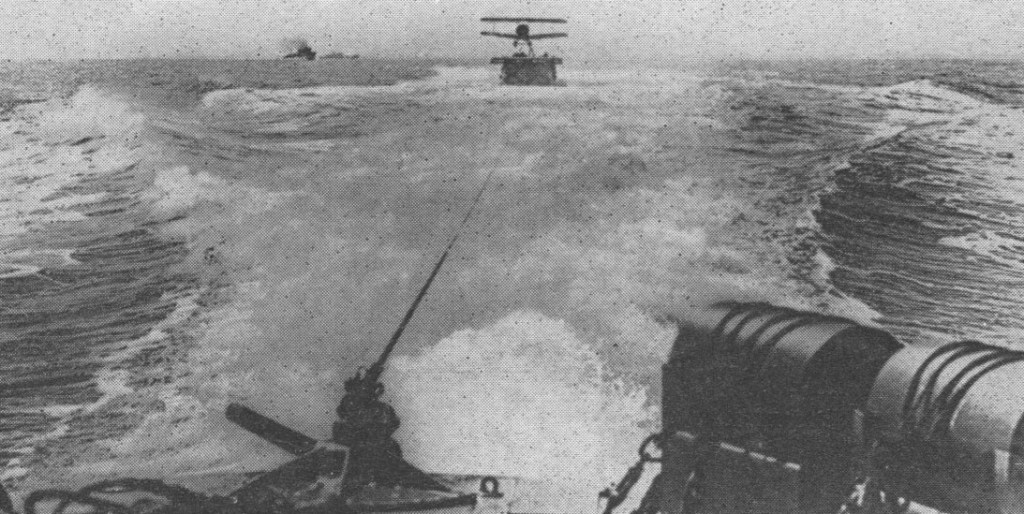
The Camel was flown from a lighter towed behind a fast destroyer.
Within an hour of making this successful take off on 11 August 1918 Lt. S.D. Culley shot down Zeppelin L.53 in flames off Ameland.
By the Armistice the Camel equipped 32 RAF Squadrons.
A single bay biplane, the two spar wooden wings are fabric covered. The wooden fuselage has metal covering forward of the bottom wings, plywood covering to just aft of the cockpit and fabric covering on the rear fuselage. Ailerons are on all four wings.
On naval Camel 2F.1’s the rear fuselage was detachable to save stowage space.
The first prototype flew in December 1916 and two main versions were produced by a variety of contractors, the F1 and the 2F1 shipboard variant, both powered by no fewer than six different rotary engines at various stages. Its handling characteristics were a gift to the skilful pilot but could kill the slow or unwary. This made the Camel ideal for daylight combat but versatile enough to allow it to be used as a night fighter and ground attack aircraft. The shipboard 2F1 Camel also saw some success operating against German airships and seaplanes over the North Sea.
The Camel entered service in July 1917 with 4 Squadron RNAS and soon after with 70 Squadron RFC. Their first Camel victory was scored by New Zealander Clive Collett on July 27 1917. The Camel equipped the Australian 4 AFC until just before the Armistice. Capt A.H. Cobby was the highest scoring AFC pilot, gaining 29 victories while flying Camels.
Camels remained in first-line use until the Armistice. The Camel saw extensive service in home defence, over the Western front, in the UK on training and test work until 1923 and in other countries up until 1928. As well as the RFC and RNAS (later RAF) the aircraft was also operated during WWI by French and US squadrons.
The Camel is remembered as the most successful British single-seat fighter of World War I and is credited with 1,294 ‘kills’. Total Camel production was 5,490, serving also with Belgian and AEF squadrons and with other air forces. It was a Camel that shot down the German ace Rittmeister Manfred von Richthofen (the ‘Red Baron’) at the hands of Captain Roy Brown of No.209 Squadron, RAF, over Sailly-le-Sec on 21 April 1918.
Camels were built in two main versions, the F.1 for the RFC and the 2F.1 for the RNAS with detachable rear fuselage, to save stowage space on board ship, a one foot shorter span and armament of one Vickers and one Lewis gun. Engines fitted as an alternative to the 130 hp Clerget included the 110 hp Clerget, 110 hp Le Rhone and 150 hp B.R.l. The armament was also varied sometimes. Home Defence Camels had two Lewis guns mounted on the wing centre section. The T.F.1 trench strafer had two Lewis guns firing through the floor of the cockpit. Four 25 1b. bombs could be carried. Experimental versions were used for everything from dive bombing to training, as two seaters, and for experiments in using airships as flying aircraft carriers. One Camel was built with tapered wings.
Camel F.1/3 night-fighter, built by Royston Proctor, based Hainault Farm 1917
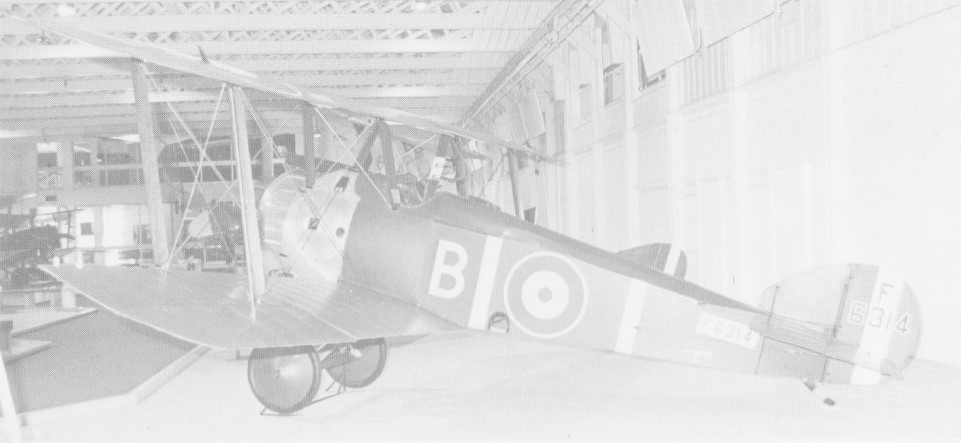
An F.1 Camel was built in 1977 by Viv Bellamy at Lands End, as a flyable reproduction for Leisure Sport Ltd. It was painted to represent B7270 of 209 Squadron, RAF, the machine which Captain Roy Brown flew when officially credited with shooting down Baron Manfred von Richthofen, it has a Clerget rotary engine of 1916 and was registered as G-BFCZ until 2003. First displayed at the Brooklands museum in Weybridge, Surrey, in January 1988 for Sir Thomas Sopwith’s 100th birthday celebrations, it was purchased by the museum later that year.
A Camel was completed in 1992 with a 160 hp Gnome Monosoupape model 9N rotary at the Old Rhinebeck Aerodrome in Red Hook, New York as B6299. Built by Nathaniel deFlavia and Cole Palen. It replaced one of the Dick Day-built and -flown Camel reproductions formerly flown at Old Rhinebeck by Mr. Day in their weekend vintage airshows, which had left the Aerodrome’s collection some years earlier.
Dick Day built an airworthy F.1 at the Cavanaugh Flight Museum in Addison, Texas. It was by original factory drawings. The aircraft is fitted with original instruments, machine guns and an original Gnome rotary engine. It is painted in the scheme of the World War I flying ace Captain Arthur Roy Brown (RAF officer), a Canadian who flew with the Royal Air Force.
Dick Day also constructed an airworthy replica F.1 for the Javier Arango Collection in Paso Robles, California. It powered by a 160 hp Gnome Monosoupape 9N rotary, and registered as N8343.
Rolland Carlson in Wi, Canada, built an F.1 from Replicraft plans. Airworthy in Oliver BC Canada, it was operated as C-FGHT by the Royal Flying Corps School of Aerial Fighting Ltd, powered by a Warner Super Scarab 165 hp engine.
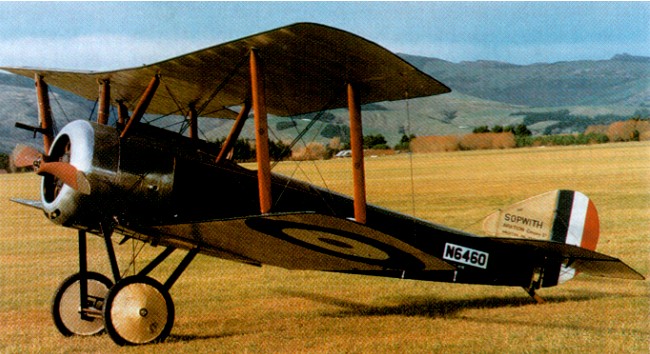
A full-scale replica fitted with a 119 kw (160 hp) Gnome rotary engine was built by Gerald Hampshire in Illinois in the USA where it was registered as N4463 in May 1985, eventually being registered ZK-JMU (c/n 11-11-18) in New Zealand on 26 March 2001.
C.J.Warrilow of High Wycombe, UK, was working on a Pup replica with the registration G-AVPA c/n CJW-1, in 1967.
Replica Camel built in 1974 for the Great Waldo Pepper movie. Later sold to Personal Planes Services / Tony Bianchi
F.1 Engine: Le Rhone, 110 hp Wingspan: 28 ft Wing area: 231 sq.ft Length: 18 ft 8 in Height: 8 ft 6 in Empty weight: 889 lb Loaded weight: 1422 lb Wing loading: 6.1 lb/sq.ft Max speed: 118 mph at 10,000 ft Service ceiling: 24,000 ft Rate of climb: 1000 fpm Endurance: 2 hr 15 min -2 hr 30 min Armament: 2 x Vickers mg Crew: 1
F.1 Camel Engine: Clerget 9B, 130 hp / 96kW Wingspan: 28 ft (8.5 m) Wing area: 231 sq.ft (21.5 sq m) Length: 18 ft 9 in (5.7 m) Height: 8 ft 6 in (2.6 m) Empty weight: 929 lb (421 kg) Loaded weight: 1453 lb (659 kg) Fuel capacity: 37 Imp.Gal Wing loading: 6.4 lb/sq.ft Max speed: 117 mph (188 km/h) at 6000 ft Service ceiling: 19,000 ft (5790 m) Rate of climb: 880 fpm Range w/max.fuel: 350 km / 217 miles Endurance: 2 hr 30 min Armament: 2 x .303 inch Vickers mg Bombs: Four 20-lb Cooper bombs Crew: 1
2F.1 Engine: Bentley B.R.1, 150 hp Wingspan: 26 ft 11 in Wing area: 231 sq.ft Length: 18 ft 8 in (5.7m) Height: 8 ft 6 in Empty weight: 962 lb Loaded weight: 1471 lb Wing loading: 6.5 lb/sq.ft Max speed: 121 mph at 10,000 ft Service ceiling: 20,000 ft Rate of climb: 995 fpm Range: 480km (300 sm) Endurance: 2 hr 15 min -2 hr 30 min Armament: 2 x Vickers mg Bombs: Four 20-lb Cooper bombs Crew: 1
2F.1 Engine: Gnome Monosoupape, 150 hp Wingspan: 26 ft 11 in Wing area: 231 sq.ft Length: 18 ft 8 in Height: 8 ft 6 in Empty weight: 962 lb Loaded weight: 1471 lb Wing loading: 6.5 lb/sq.ft Max speed: 121 mph at 10,000 ft Service ceiling: 20,000 ft Rate of climb: 995 fpm Endurance: 2 hr 15 min -2 hr 30 min Armament: 2 x Vickers mg Crew: 1
Engine: 1 x 230hp Beardmore-Halford-Pullinger (BHP) 6-cylinder water-cooled in-line Max take-off weight: 1630 kg / 3594 lb Empty weight: 992 kg / 2187 lb Wingspan: 12.50 m / 41 ft 0 in Length: 9.22 m / 30 ft 3 in Height: 3.33 m / 11 ft 11 in Wing area: 56.86 sq.m / 612.04 sq ft Max. speed: 184 km/h / 114 mph Ceiling: 3658 m / 12000 ft Armament: 2 x 7.7mm machine-guns, 4 x 50kg bombs Crew: 2
Engine: 1 x 200hp Hispano-Suiza 8-cylinder Max take-off weight: 1387 kg / 3058 lb Empty weight: 772 kg / 1702 lb Wingspan: 11.73 m / 39 ft 6 in Length: 8.23 m / 27 ft 0 in Height: 2.90 m / 10 ft 6 in Wing area: 42.74 sq.m / 460.05 sq ft Max. speed: 190 km/h / 118 mph Ceiling: 5791 m / 19000 ft Crew: 1 Armament: 1 x 7.7mm machine-gun Bombload: 275 kg
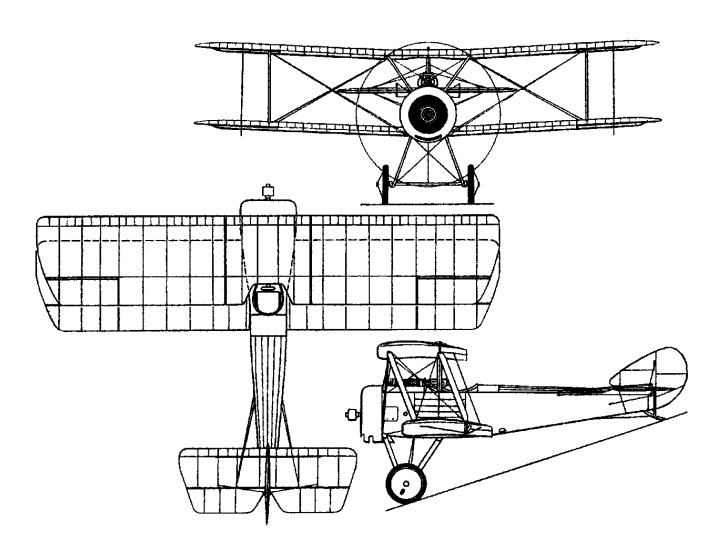
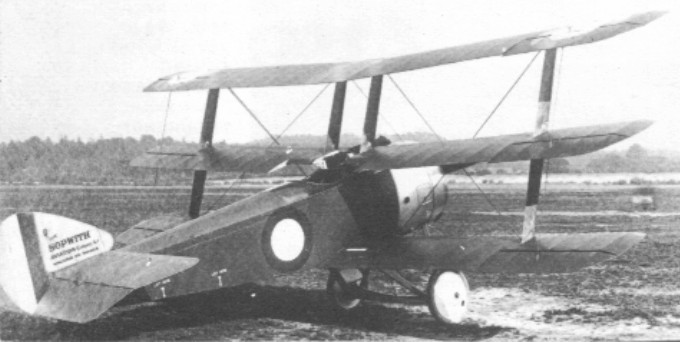
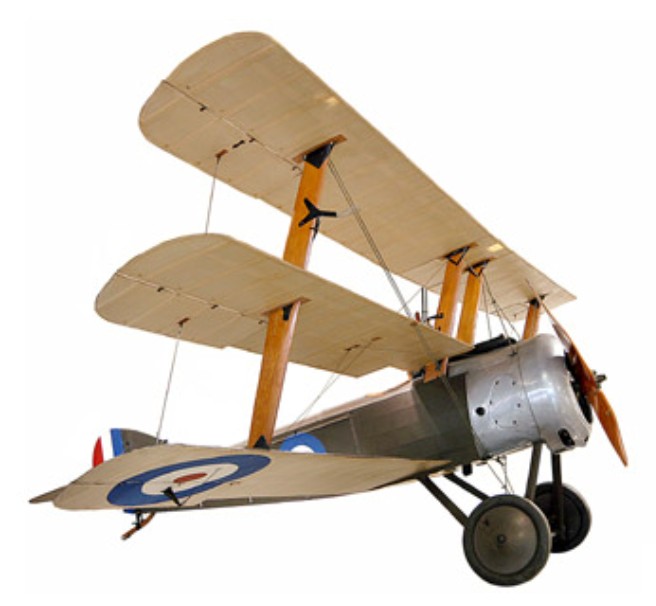
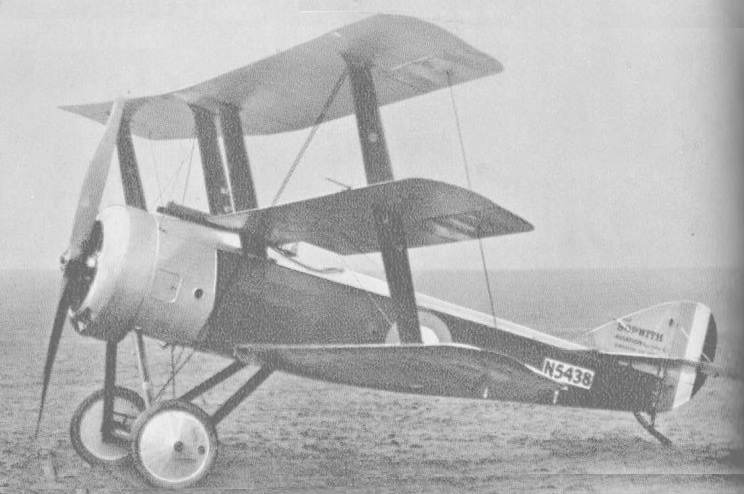
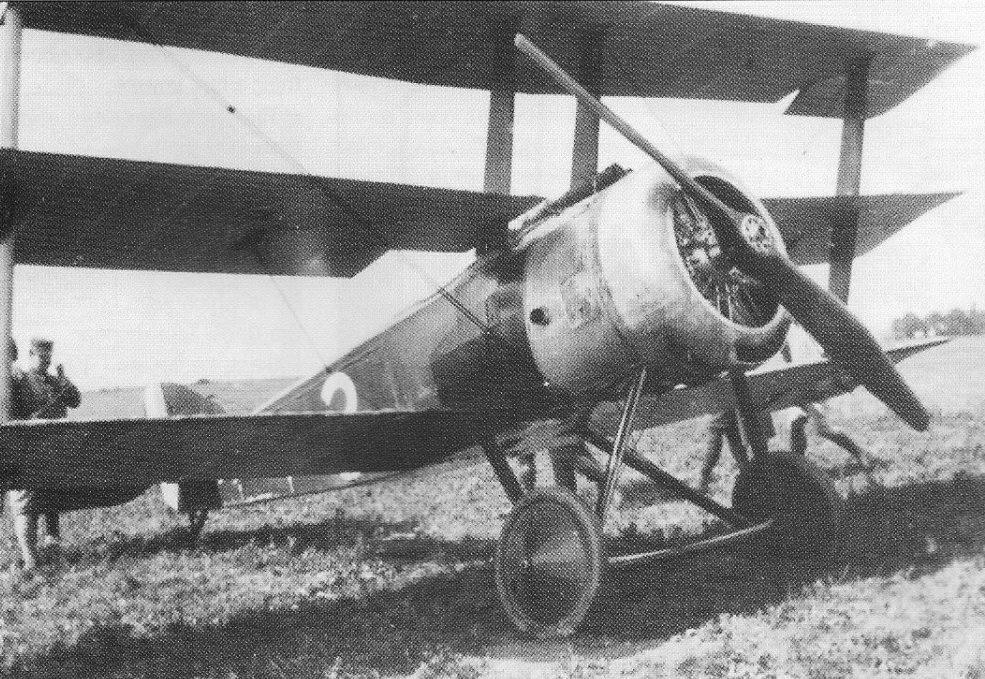
The original Sopwith Triplane, serial N500, was designed as a private venture by Herbert Smith. It had been evolved as a faster-climbing derivative of the Pup, with even better manoeuvrability and improved vision for the pilot. Wing span remained the same as for the Pup, but each wing was of much narrower chord and had an aileron fitted.
The prototype made its first flight on 28 May 1916 with test pilot Harry Hawker at the controls, and so delighted was he with the Triplane’s handling that he looped the aircraft three times within three minutes of taking off.
Both the Royal Flying Corps and the Royal Naval Air Service ordered the type but policy changes led to the Triplane only being used by the Royal Naval Air Service fighter squadrons on the Western Front. The Triplane single-seat fighter was nicknamed ‘Tripe’ or ‘Tripehound’.
The exact number of Triplanes that became operational with the RNAS is not clear. What is known is that the first prototype was followed by three more fitted with Clerget and Hispano-Suiza engines of 112kW and 149kW. A further 148 aircraft were built, of which five were presented to France, another three were loaned and probably returned, and one went to Russia.
Some production was by Oakley and Co at Ilford.
Initial production Triplanes, with 82kW Clerget rotary engines, had been ordered for the RFC. In the event they were delivered to the RNAS, as were later examples with 97kW Clerget engines fitted and the tailplane span reduced from 10 ft to 8 ft. The last was delivered on 19 October 1917.
The top exponent of the Triplane was Raymond Collishaw, who commanded ‘B’ Flight of No 10 (Naval) Squadron from April 1917 – a unit which received some of the first Triplanes. Known as the ‘Black Flight’ because of the colour of its Triplanes and the names given to individual aircraft (Black Maria, Black Sheep, etc), it was composed exclusively of Canadian pilots, who accounted for 87 kills between May and July. Collishaw managed to average more than one kill every two days throughout June. He ended the war as the highest-scoring RNAS pilot, with 60 victories.
It made such a profound impression on the Germans that a specific request was made to their aircraft manufacturers to design and produce triplane fighters. Only the Fokker Dr1 was built in quantity. The triplane concept had a brief life and in less than two years it had been eclipsed by the new and more powerful biplane fighters on both sides.
Although not so famous as its Fokker counterpart, the Sopwith Triplane achieved impressive success in its brief career, entering service early in 1917 until the autumn of that year, when it was superseded by the Camel. Approximately 150 Sopwith Triplanes were built. No other machine could match its rate of climb, and no other fighter could regularly operate at 6100 m (20,000 ft), a height at which the Triplane frequently patrolled.
Flt. Sub-Lt. Ray Collishaw along shot down 16 German aircraft in 27 days of fighting. His ‘Black Flight’ of No 10 Sqn accounted for 87 enemy aircraft in three months.
A Mr M.Alliot of Godalming, UK, was building an external replica of a Triplane, 80% complete in 1974. It was to be powered by a Lycoming O-290-3 and serialed N5487. It was offered for sale in April 1975 and almost certainly bought by Phillip Mann and taken to Booker for competition.
John S. Penny of Sheffield, UK, was building and external replica in conjunction with Northern Aeroplane Workshops (who were building their own replica). Built to Sopwith plans, it was underway by June 1974, registered with the PFA as 21-10035.
Engine: 1 x Clerget 9 Z, 130 hp / 96kW Length: 18 ft 10 in. (5.72 m.) Wing span: 26 ft 6 in (8.07 m) Height: 3.1 m / 10 ft 2 in Wing area: 24.6 sq.m / 264.79 sq ft Weight empty: 1,100 lb (500 kg) Max take-off weight: 699 kg / 1541 lb Fuel capacity: 20 Imp Gal. Max speed: 117 mph (190 kph) Ceiling: 20,500 ft (6,250m) fully loaded Endurance: 2.75 hours Range w/max.fuel: 450 km / 280 miles Seats: 1 Armament: One 7,7mm Vickers machine gun, firing forward
Engine: Clerget 9B, 130 hp Wingspan: 26 ft 6 in Length: 18 ft 10 in AUW: 1540 lb Max speed: 117 mph
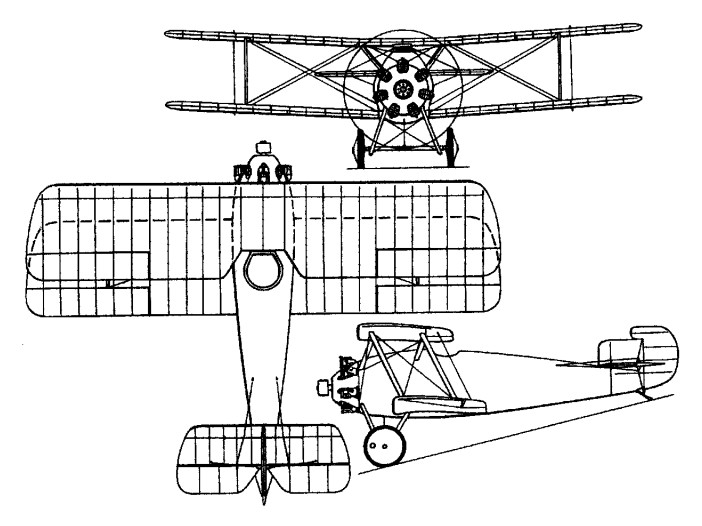
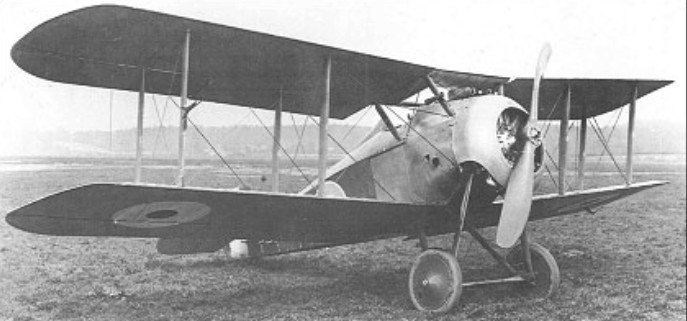
In October 1917, the A.B.C. Wasp seven-cylinder radial air-cooled engine was considered to offer much promise, and on the 31st of that month Sopwith was invited by the Air Board to tender designs for a single-seat fighter utilising that power plant. Four prototypes were ordered, these being of conventional construction, and, on 23 November, the company was asked to build two additional prototypes with plywood monocoque fuselages. In view of its intended function adoption of the name Snail for the new single-seater was bizarre, this being approved on 16 February 1918.
Powered by a 170hp Wasp I, the first prototype Snail was completed in April 1918, this having negative wing stagger and fabric skinning for its circular-section fuselage. Intended armament comprised two synchronised 7.7mm machine guns, a third weapon of similar calibre being mounted above the wing centre section, to starboard of the cut-out. The remaining three prototypes of conventional construction were not completed, the next Snail to fly being the first of the two with plywood monocoque fuselages and positive wing stagger. On 9 May, the monocoque Snail was sent to Martlesham Heath for official trials, the reports being less than complimentary about its manoeuvrability and low-speed control. When, in October 1918, it was decided to abandon the Wasp engine, further work on the Snail was terminated, the second monocoque prototype being discontinued before completion.
Max take-off weight: 871 kg / 1920 lb Empty weight: 630 kg / 1389 lb Wingspan: 7.72 m / 25 ft 4 in Length: 5.79 m / 19 ft 0 in Height: 2.39 m / 8 ft 10 in Wing area: 21.24 sq.m / 228.63 sq ft Max. speed: 185 km/h / 115 mph
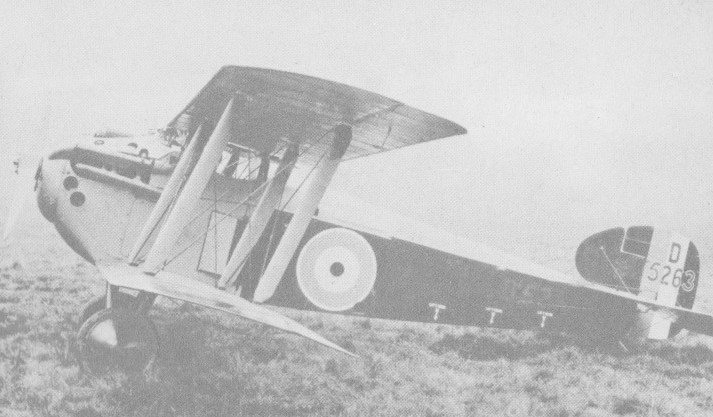
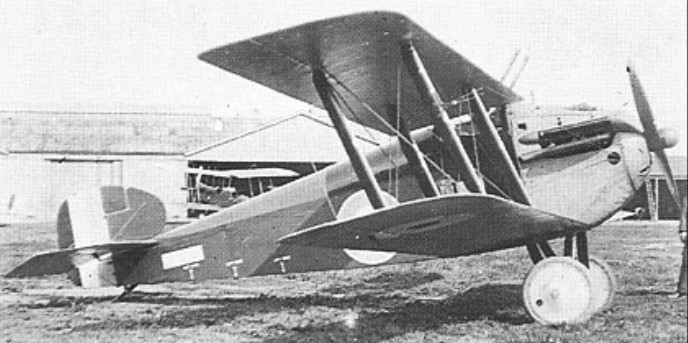
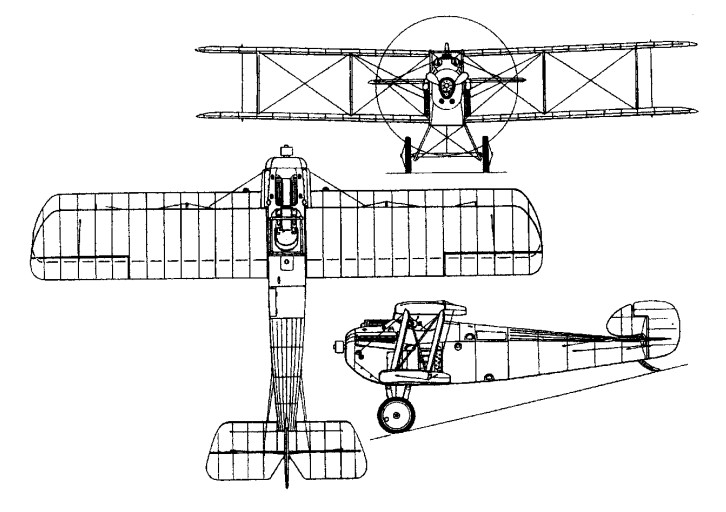
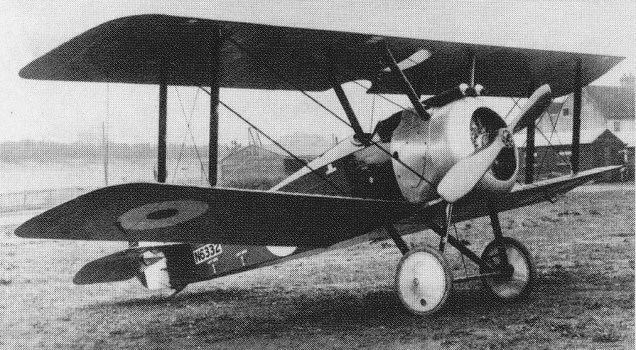
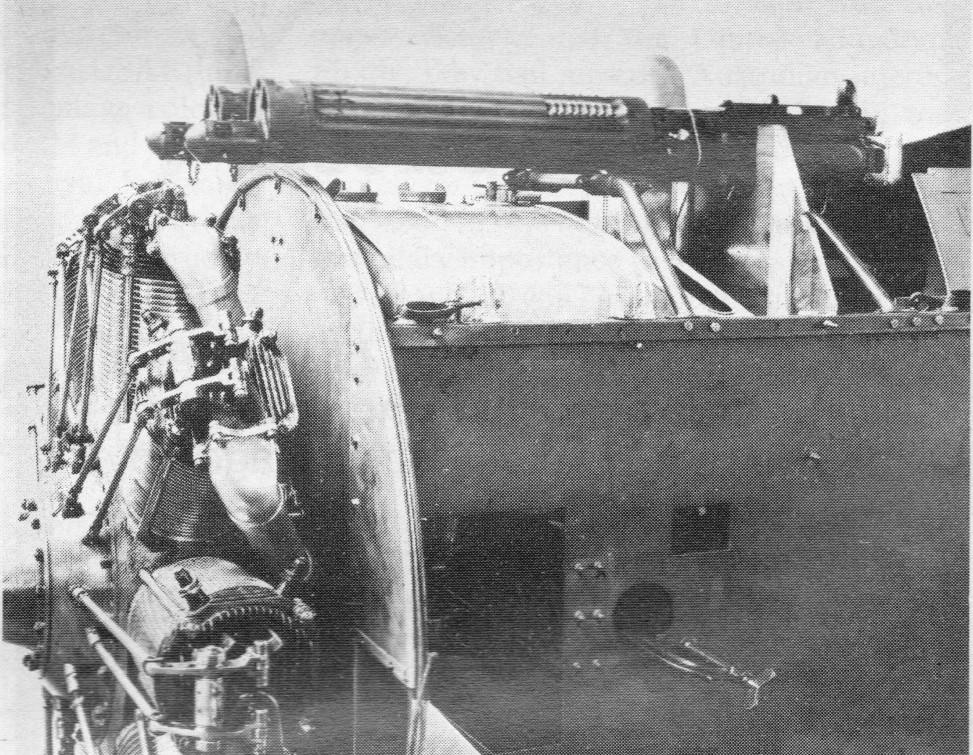
A requirement for an armoured single-seat ground attack fighter was issued to the Sopwith company in January 1918, a standard F.1 Camel being rapidly fitted with armour protection in which armour plate formed the cockpit walls, and triple-gun armament. Flying as the T.F.1 in the following month (T.F. indicating Trench Fighter), the T.F.1 was a stop-gap type that could be made available rapidly by modifying existing aircraft, but the requirement had specified the use of a 230hp Bentley B.R.2 nine-cylinder rotary engine and Sopwith discarded the T.F.1 in favour of a modified Snipe design as the T.F.2 Salamander. Despite many similarities to the Snipe, the Salamander differed extensively and there was little or no interchangeability between the two aircraft. The forward portion of the fuselage was a simple armoured box, the bottom being 11mm plate, the sides 6mm plate, the front – the engine backplate – 8mm plate and the rear 10-mm plate with a second 6mm plate separated by 9.50cm. Armament comprised two synchronised 7.7mm guns with provision for four 11kg bombs.
The first of three prototypes was flown on 27 April 1918, and the Salamander was ordered in large numbers (contracts were placed with the parent company, Air Navigation Co, Glendower Aircraft, National Aircraft, Palladium Autocars and Wolseley Motors), 37 being on RAF charge by 31 October. When hostilities ceased, production of the Salamander continued with a view to its use by the postwar RAF, and by mid 1919, when manufacture eventually terminated, Sopwith had delivered 334 and other contractors had contributed a further 85. However, no squadron was ever equipped with this type which was abandoned in favour of the Snipe.
Max take-off weight: 1139 kg / 2511 lb Empty weight: 836 kg / 1843 lb Wingspan: 9.52 m / 31 ft 3 in Length: 5.94 m / 20 ft 6 in Height: 2.84 m / 9 ft 4 in Wing area: 25.27 sq.m / 272.00 sq ft Max. speed: 201 km/h / 125 mph







 All Aero