Tarrant Tabor

One patriot who felt he could fill this gap and strike a blow at the Kaiser was a Surrey building contractor, W. G. Tarrant, whose company had been involved in wartime contract work manufacturing wooden aircraft components. Tarrant hired Walter Henry Barling to design the aircraft, which was to be a ‘bloody paralyzer’ of a triplane made entirely of home-grown timber and constructed using a largely female work force, according to the terms of the contract issued by the Ministry of Munitions. The massive Tabor triplane was the first and last aeroplane built by W. G. Tarrant Ltd of Byfleet, Surrey. Designed in an attempt to enable Berlin to be bombed from bases in England, and assembled at RAE Farnborough, the aircraft was not completed until 1919.

When it appeared, too late for its intended purpose, it spanned 40m (131 ft 3 in) from tip to tip of its middle wing, and had a 22.25m (131 ft 3 in) fuselage of monocoque construction formed from ply skinning over Warren-girder type circular formers. Serialled F1765, the one and only completed Tabor was powered by a total of six 450 h.p. Napier Lion engines: two pairs in push-pull tandem between lower and middle wings, and another two tractor engines between middle and top planes. The fuselage was of finely streamlined monocoque construction, while the tail consisted of a biplane unit with twin fins and rudders.

The Tabor stood as high as a four-storey house, and its height, and particularly the location of its upper engines, brought about its speedy demise. On 26 May 1919 the giant Tabor was winched out of the balloon shed at the Royal Aircraft Establishment at Farnborough along a specially built railway track. Some 508 kg (1120 lb) of lead was loaded into the nose at the last moment when some final calculations showed that the aircraft might be tail heavy, and the long, wearisome process of hand-starting the six Napier Lions began. With all engines running the pilot, Captain F. G. Dunn, and his co-pilot, Captain P. T. Rawlings, began taxi trials. Also aboard were a technical observer from Tarrant’s, a fitter, an engineer officer, and two foremen from the RAE. When Dunn opened up the top engines, which had previously been throttled back, and the sudden extra thrust so far above the aircraft’s centreline caused it to nose-over and bury its forward fuselage in the earth just as it was about to leave the ground. The two pilots died shortly afterwards of their injuries and Tarrant, perhaps fortunately for other aviators, never again dabbled with aviation.

Construction of a second Tabor was abandoned.

Engines: 6 x Napier Lion, 450 hp
Wingspan: 40m (131 ft 3 in)
Fuselage length: 22.25m (131 ft 3 in)
Weight: 45,000 lb
Tarrant, W.G.

UK
Building contractor of Byfleet, near Brooklands, Surrey, which undertook aircraft component manufacture during First World War. Only aircraft produced was Tabor long range bomber, designed with collaboration from Royal Aircraft Establishment; this six-engined triplane nosed-over and was wrecked in its first attempt to take off in May 1919.

Talleres Serie-H

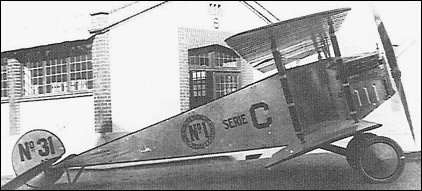
The Serie A aircraft were followed from the National Aviation Shops by the improved Serie B, the single seat Serie C Microplano with an Hispano Suiza engine and the two seat Serie H parasol, but as a result of the revolution that ensued with the fall of the Carranza regime, the Mexican Army’s air component found itself reduced to a dozen airworthy aircraft in September 1920.

Talleres Serie-C

The Serie‑A aircraft were followed from the National Aviation Shops by the improved Serie‑B, the single‑seat Serie‑C Microplano with an Hispano‑Suiza engine and the two‑seat Serie‑H parasol, but as a result of the revolution that ensued with the fall of the Carranza regime, the Mexican Army’s air component found itself reduced to a dozen airworthy aircraft in September 1920.

Talleres Serie-B

The Serie A aircraft were followed from the National Aviation Shops by the improved Serie B, the single seat Serie C Microplano with an Hispano Suiza engine and the two seat Serie H parasol.

As a result of the revolution that ensued with the fall of the Carranza regime, the Mexican Army’s air component found itself reduced to a dozen airworthy aircraft in September 1920.

Talleres Serie-A

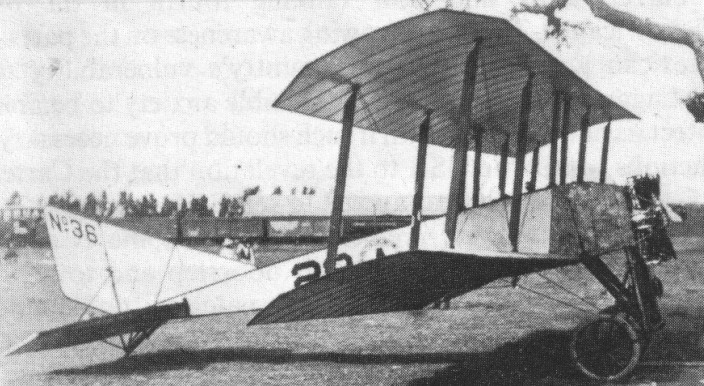
The first Mexican designed aircraft, the Serie A, built in some numbers by the Talleres Nacionales de Construcciones Aeronauticas for the Army. A conventional two seat two bay biplane powered by a Mexican -designed engine, the 60 hp Aztatl (Stork) six cylinder radial the only foreign items of equipment utilised by the Serie A were, in fact, the French magnetos as even the propeller was of Mexican design.

On 6 July 1917, the Serie A No 9, piloted by Army Lt Horacio Ruiz, flew the first Mexican airmail service, from Pachuca to Mexico City, and six months later, on 3 January 1918, Cadet Samuel C Rojas became the first officer to graduate from the Military Aviation School after completing his training in a Serie A aircraft. Lt Rojas was also the first pilot to perform aerobatics in Mexico, on 26 June 1918, but within nine weeks, on 5 November, the Mexican Army’s fledgeling aviation component suffered its first fatality. For some time Lt Amado Paniagua had led a small demonstration team known as the Escuadrilla Amado Paniagua to promote aviation among the Mexican populace, but on that day, his Serie A aircraft failed to recover from an “Immelmann” turn over the beach at Veracruz and spun in.

Talleres Microplane Veloz

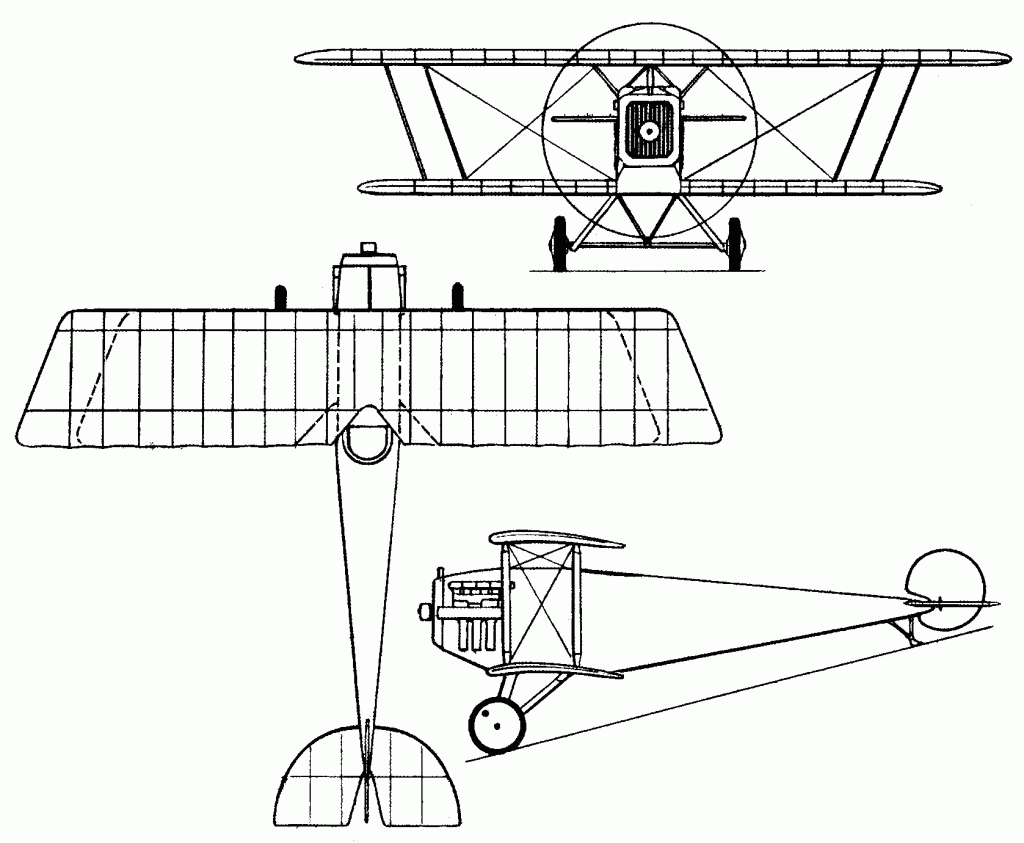
In February 1918, the Talleres Nacionales de Construcciones Aeronauticas (TNCA), or National Aircraft Manufacturing Workshops, at Balbuena Airfield, Mexico City, completed the prototype of a single-seat fighting scout to the designs of Francisco Santarini and Capt Guillermo Villasana. First own product of the National Aircraft Manufacturing Workshops.

A single-bay unstaggered biplane known as the Microplano, the aircraft was powered by a 180hp Hispano-Suiza eight-cylinder Vee-type water-cooled engine driving a Mexican Anahuac propeller, and was of metal construction. The intended armament was either one or two synchronised machine guns.

Although flight trials of the Microplano were allegedly satisfactory, no series production was undertaken owing to the overthrow of the Carranza regime and the ensuing civil war.

Engine: 180hp Hispano-Suiza
Wingspan: 8.00 m / 26 ft 3 in
Wing area: 18.00 m2 / 193.75 sq ft
Length: 6.60 m / 22 ft 8 in
Height: 2.55 m / 8 ft 4 in
Empty weight: 460 kg / 1014 lb
Max take-off weight: 650 kg / 1433 lb
Max speed: 220 km/h / 137 mph

Talleres Nacionales De Construcciones Aeronauticas / TNCA / Talleres Generales De Aeronautica Militar

Mexico
National Aircraft Manufacturing Workshops, established November 1915 at Valbuena, near Mexico City. Began by building Bleriot, Morane-Saulnier and other foreign types under license. Own first products were the Microplane Veloz single-seat fighter biplane of 1918 and the Series A two-seat general-purpose biplane. Followed in late 1920s by the Azcarate-E training and reconnaissance sesquiplane. Aircraft design halted by Government 1930, but shortly afterwards built Chance Vought O2U Corsairs under license. Later products included Teziutlan primary trainers in 1942 and, in late 1940s, the prototype TTS-5 six-seat twin-engined general-purpose transport.

Swanson Airplane Company Inc

1917: Swen Swanson,
Williamsburg VA.
USA

1922: Univ of South Dakota,
Vermillion SD.
USA

S. S. Swanson was an amateur constructor, and in 1923 co-producer of Swanson-Freeman light biplane.

1925: Swanson-(Edgar) Freeman,
Vermillion SD.

Later worked with Lincoln-Standard Aircraft Corporation.

Swanson Airplane Company Inc incorporated 1930, and developed Swanson Coupe two-seat high-wing cabin monoplane.

1931: Rockford IL.

Swanson Aircraft Co Inc,
Hopewell VA.

1934: Swanson-(Olaf “Ole”) Fahlin,
at Nicholas-Beazley Airplane Co,
Marshall MO.

1935: Fahlin Mfg Co (propellers).