The C.II of October 1915 was a refined version of the C.I designed by Georg König with reduced dimensions and increased agility.
World War 1
AEG ZK.9 / C.I
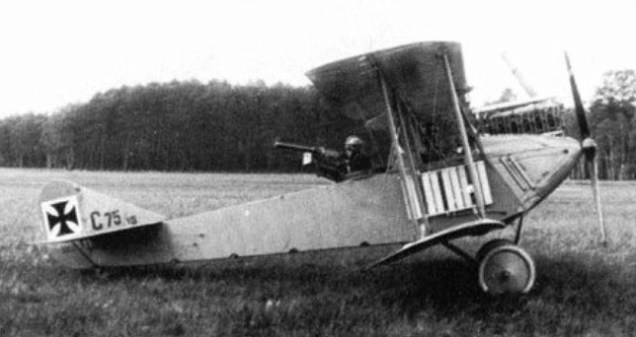
Introduced in March 1915, as the AEG C.1, the ZK.9 designed by Georg König was a minor development of the B.II with a more powerful Benz Bz.III engine and the observer relocated to the rear cockpit. The rear cockpit being fitted with a Schneider Drehring gun mount and a 0.312in (7.92mm) MG 14 Parabellum trainable machine gun for defence of the rear and sides.
Engine: 1 x Benz Bz.III, 150hp
Wingspan: 15.00 m / 49 ft 3 in
Length: 9.00 m / 30 ft 6 in
Height: 3.50 m / 12 ft 6 in
Wing area: 41.50 sq.m / 446.70 sq ft
Empty weight: 650 kg / 1433 lb
Max. speed: 140 km/h / 87 mph
Cruise speed: 120 km/h / 75 mph
Ceiling: 4800 m / 15750 ft
Range: 480 km / 298 miles
Armament: 1 x 7.92mm
AEG B.III
Following the B.II, the B.III designed by Georg König incorporated some detail improvement, including a rounded fin and rudder. The B.III was only produced in small numbers and was the last of AEG’s unarmed reconnaissance ‘B’ Series.
Engine: Mercedes D.II, 120 hp
AEG Z.9 / B.II
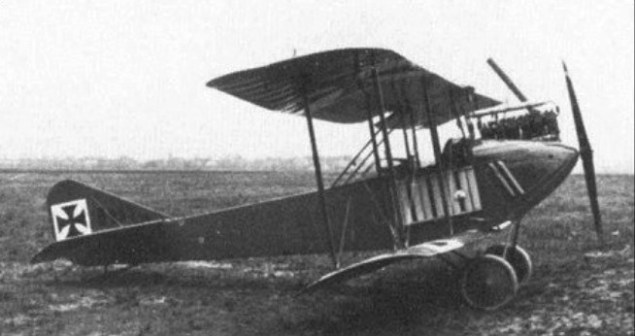
Designed by Georg König the 1914 Z.9 (military B.II) of 1914 was an improved version of the Z.6 (military B.1). A two bay biplane of smaller wingspan, the Z.9 was powered by the Mercedes D.II engine of 120 hp and saw limited war service.
Engine: 1 x Mercedes D.II, 120hp
Wingspan: 15.50 m / 51 ft 10 in
Length: 10.50 m / 34 ft 5 in
Height: 3.15 m / 10 ft 4 in
Wing area: 40.12 sq.m / 431.85 sq ft
Empty weight: 723 kg / 1594 lb
Max. speed: 110 km/h / 68 mph
Cruise speed: 96 km/h / 60 mph
Ceiling: 3000 m / 9850 ft
Range: 1130 km / 702 miles
Crew: 2
AEG Z.6 / B.I
Designed by Georg König, the Z.6 three-bay biplane of unequal span became the company’s first mass production type, serving with the military from 1914 as the B.1, an unarmed two-seat reconnaissance aircraft.
Almost the entire structure was of welded steel tube, the wings each having two tubular steel spars with wooden ribs covered in fabric. The tailskid featured a nosewheel unit mounted beneath the engine to protect the propeller if the aircraft nosed over. Large radiators for the engine were mounted on each side of the fuselage.
Type: Reconnaissance biplane.
Engine: Mercedes D.I inline, 100 hp.
Wingspan: 50 ft 10.25 in / 15.5 m
Length: 34 ft 5 3/8 in / 10.5 m
Wing area: 473.6 sq.ft / 44 sq.m
Empty wt: 1433 lb / 650 kg
Max speed: 62 mph / 100 kph
Seats: 2
AEG (Allgermeine Elektrizitas Gesellschaft)
Electrical company Allgermaine Elekritzitäts Gesellschaft (AEG) formed an aviation division (the Flugtechnische Abteilung) in 1910 which designed and built its first aircraft in 1910; the Z.1. Early designs included a Wright-type biplane, a monoplane, flying-boat, and floatplane, but quantity production began with the Z 6 (B1) biplane of 1914 and introduced steel-tube construction.
Having produced a total of 658 ‘C’ types, the majority being the C.IV, and production of G series totaled 542,
AEG operated until 1919.
Adamoli-Cattani Fighter
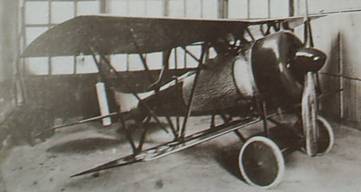
In 1918, Adamoli and Cattani designed the smallest possible single-engine seat fighter around the most powerful rotary engine available, the 200-hp (149-kW) Le Rhone. With conventional wooden construction and fabric covering, the fighter was unequal-span unstaggered biplane with Warren truss-type interplane bracing. Lateral control was by interlinked and hinged wing leading edges varing the wing’s camber tip. Rigid tubes were used to actuate the movable tail surfaces. Construction of the prototype Fighter began at the Farina works in Turin, but was then transferred to the Officine Moncenisio in Condove for completion. Initial static testing revealed that the engine only developed 160hp (119 kW) and the fighter would be seriously underpowered. These limited trails took place at the end of WW1 and further development of the fighter was abandoned after the Armistice.
Adamoli-Cattani fighter (estimated for fully-rated engine)
Type: single-seat biplane fighter
Engine: 160-hp (149-Kw) Le Rhone rotary
Maximum level speed: 186mph (300 kmh)
Endurance: 2 hr 30 min
Empty weight: 1,035 lb (470 kg)
Loaded weight: 1,488 lb (675 kg
Wing span: 28 ft 2 ½ in (8.6 m)
Length: 20 ft 1/8in (6.1 m)
Armament: 2 x 0.303-in (7.7mm) machine guns
ABC Dragonfly
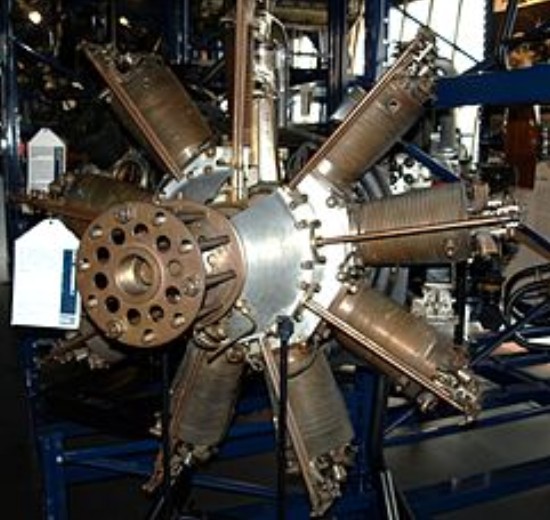
In 1917, after initial promising tests of the ABC Wasp air-cooled radial, Bradshaw produced a design for a larger and more powerful engine, the nine-cylinder Dragonfly. The engine was simple and easy to produce, and was predicted to give 340 hp (254 kW) for a weight of 600 lb (273 kg). One distinctive feature was the use of copper-plated cooling fins, which were claimed by Bradshaw to be so effective that water would not boil on the surface of the radiators.
On the basis of the promised performance, Sir William Weir, the Director of Aeronautical Supplies, made the decision to place large orders for the Dragonfly, with 11,500 engines having been ordered from 13 suppliers by June 1918. It was planned that a large proportion of RAF aircraft would be powered by the Dragonfly in 1919. Types designed to be powered by the Dragonfly included the Sopwith Dragon (a derivative of the existing Snipe), the Nieuport Nighthawk, and the Siddeley Siskin. Of this order 1,147 engines were built but only nine or ten actually flew.
Testing showed severe problems with the much vaunted engine. It was subject to extreme overheating, the copper-plated cooling fins proving useless; showed much poorer fuel consumption than expected; and suffered severe vibration, running at the resonance frequency of the crankshaft. These problems proved unsolvable, and the Dragonfly was eventually abandoned.
Variants:
Dragonfly I
1918, 320 hp (239 kW)
Dragonfly IA
360 hp (268 kW), revised pistons and cylinder heads, revised oil system.
Specifications
Dragonfly IA
Type: 9-cylinder air-cooled radial engine
Bore: 5½ in (139.7 mm)
Stroke: 6½ in, (165.1 mm)
Displacement: 1,389.86 in³ (22.78 L)
Dry weight: 600 lb (273 kg)
Valvetrain: 3 overhead valves, 2 inlet and 1 outlet per cylinder
Fuel system: Twin carburettors
Oil system: 2 oil pumps
Cooling system: Air-cooled
Power output: 340 hp (254 kW) at 1,650 rpm
Specific power: 0.24 hp/in³ (11 kW/L)
Specific fuel consumption: 0.56 pints per bhp/hour(0.32 L/kW)
Oil consumption: 7 pints per hour (3.97 L/hr)
Power-to-weight ratio: 0.56 hp/lb (0.93 kW/kg)
ABC Gnat
The ABC Gnat was a 45 hp (34 kW) flat, two-cylinder aero engine designed by British engineer Granville Bradshaw for use in light aircraft. The Gnat was built by ABC Motors, first running in 1916, production ceased in December 1918. 17 engines were built from an original order of 18.
Applications:
BAT Crow
Blackburn Sidecar
Eastchurch Kitten
Grain Kitten
Macchi M.16G
Sopwith Sparrow
Sopwith Tadpole
Specifications:
Gnat I
Type: 2-cylinder air-cooled flat-twin
Bore: 4.33 in (110 mm)
Stroke: 4.72 in (120 mm)
Displacement: 139.06 cu in (2.28 L)
Dry weight: 115 lb (52 kg)
Valvetrain: Overhead valve, two valves per cylinder
Fuel system: Single A.B.C. carburettor
Fuel type: Petrol (40-50 Octane rating)
Cooling system: Air-cooled
Power output: 45 hp (34 kW) at 1,920 rpm (takeoff power)
Specific power: 0.32 hp/cu in (14.9 kW/L)
Compression ratio: 3.8:1
Power-to-weight ratio: 0.4 hp/lb (0.6 kW/kg)
ABC Mosquito
The ABC Mosquito was a 120 hp (90 kW) six-cylinder radial aero engine designed by British engineer Granville Bradshaw for use in light aircraft. The single Mosquito engine was built by ABC Motors, first running in 1916. It is thought that the design resulted from a bet between Harry Hawker and Bradshaw, Hawker proposing that Bradshaw could not build and fly a six-cylinder radial engine. The Mosquito used copper-plated steel Gnat cylinders. The engine was not a success.
Applications
BAT F.K. 22
Specifications
Type: 6-cylinder, single row, air-cooled radial engine
Bore: 4.33 in (110 mm)
Stroke: 5.51 in (140 mm)
Displacement: 487 cu in (8 L)
Dry weight: 180 lb (82 kg)
Valvetrain: Overhead valve, two valves per cylinder
Fuel type: Petrol (40-50 Octane rating)
Cooling system: Air-cooled
Power output: 120 hp (90 kW)
Specific power: 0.25 hp/cu in (11.25 kW/L)
Power-to-weight ratio: 0.66 hp/lb (1 kW/kg)
 All Aero