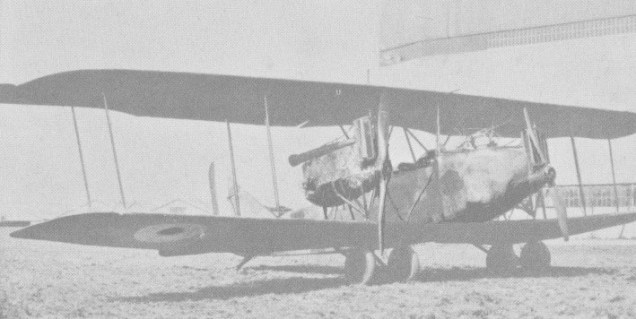
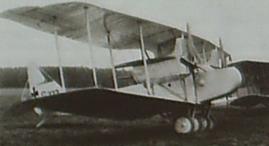
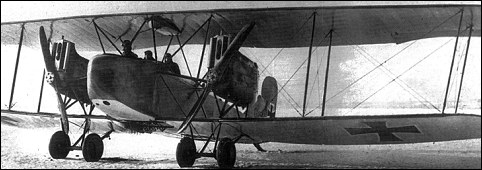
Aermacchi M.5

The Macchi M.5 was Italy’s first flying-boat fighter and first single-seat aircraft. A total of 244 M.5s were built, equipping five Italian maritime patrol squadrons from early 1918 until after the Armistice. The M.5mod was equipped with a 250hp engine.

Replica: Petroelje Macchi M.5

Macchi M.5mod
Engine: 1 x 250hp Isotta-Fraschini V6B liquid-cooled
Take-off weight: 1080 kg / 2381 lb
Wingspan: 9.95 m / 32 ft 8 in
Length: 8.10 m / 26 ft 7 in
Height: 2.95 m / 9 ft 8 in
Max. speed: 209 km/h / 130 mph
Ceiling: 5000 m / 16400 ft
Climb to 4000m: 20 min
Armament: 2 x 7.7mm mg
Crew: 1

AEG Helicopter

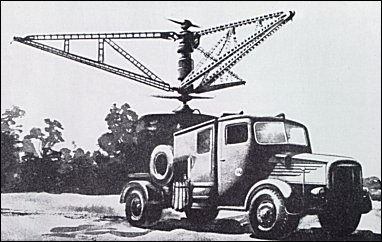
The A.E.G. helicopter designed by R. Schmidt was attached to the ground by a system of three tethering cables which helped to stabilise. R. Schmidt worked from about 1933 and this work was finalised in 1940 in the shape of a tethered electric helicopter for use as an aerial observation or support post for the army.
The helicopter had two two-blade rotors mounted co-axially, one being attached to the shaft and one to the shell of an electric motor. Three fixed arms were attached above the upper rotor, and these arms not only supported the cabin below but served as the cable attachment points for tethering. In the event of engine failure, the observer escaped by using a parachute blown into the air by a powder charge.
The three tethering cables were also used to feed power to the motor from a ground source via the control panel located in the launching and transporting truck. It was driven by electric motors of 50, later 100 and 200 horsepower and had a lift ranging from 450 to 1250 kilograms. Despite successful trials, the AEG helicopter does not appear to have been adopted for military use.

Engine: 1 x 200hp electric motor
Rotor diameter: 7.92m
Weight fully loaded: 1225kg
Ceiling: 1000m
Seats: 1

AEG R.I

During 1916 AEG received an order for two R.I Giant four engine heavy bombers. R was an abbreviation of “Riesenflugzeug” (giant aircraft). All four engines were grouped inside the fuselage and drove four blade propellors at 750 rpm via shafts and gearboxes; a combination leather cone and dog clutch. Two blade propellors were installed later.

AEG R.I Article

One R.I was completed (R.I 21/16) and made its first flight in 1916. During a trial night flight on 3 September 1916 this aircraft broke up in the air with a loss of all seven crew. This crashed was caused by propellor delaminating because of insufficient hardening of the glues. A second machine, R.I 22/16, was still incomplete at the end of World War 1 and eventually scrapped.

Engine: 4 x Mercedes D.IVa, 260 hp
Wing span: 118 ft 1.5 in
Length: 63 ft 11.5 in
Empty weight: 19845 lb / 9000 kg
Loaded weight: 28,003 lb / 12,500 kg

AEG DJ.I

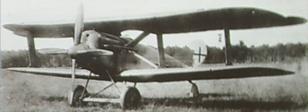
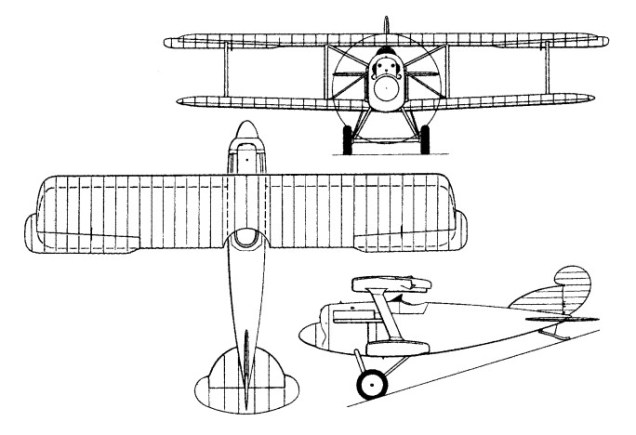
Before flight testing of the AEG PE, development continued in the DJ.I. The DJ.I was a two bay biplane, of unequal span using I-section aerofoil section interplane struts. The fabric covered wings had dural spars, the fuselage utilising aluminium sheet skins and some armour protection for the engine, fuel tank and pilot.
Three DJ.I prototypes were built, the first flying in July 1918. The first two were fitted with Benz Bz.IIIb V-8 engines of 195 hp and fitted with 4-blade propellors, while the third had a Maybach Mb.Iva engine of 240 hp.
Flight testing was not completed by the end of World War 1 in November 1918.

Engine: 1 x Benz Bz.IIIb, 195hp
Wing span: 32 ft 9.75 in / 10 m
Length: 21 ft 11 3/8 in / 5.69 m
Height: 9 ft 10 in / 3 m
Max take-off weight: 1375 kg / 3031 lb
Empty weight: 1182 kg / 2606 lb
Max. speed: 180 km/h / 112 mph
Cruise speed: 146 km/h / 91 mph
Climb to 3280 ft / 1000m: 4 min
Armament: 2 x 7.92mm mg
Crew: 1

AEG PE

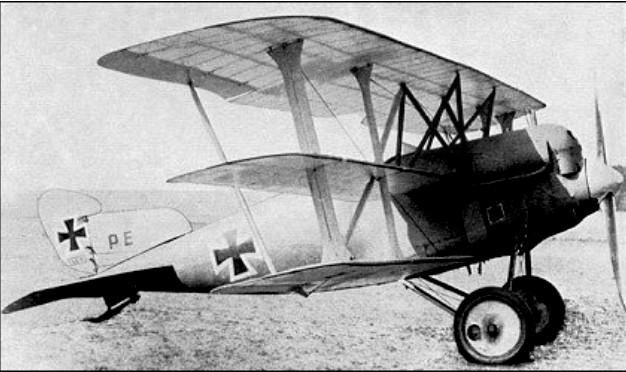
The AEG PE (Panzer-Einsitzer) was a single seat armoured ground-attack triplane aircraft. The PE featured an armoured fuselage of light alloy construction; fabric covered flying surfaces with dural tubular wing spars.
First flying in March 1918 the PE was easy to fly but suffered from poor stability and considered inadequate for fighter versus fighter combat.

Engine: 1 x 195hp Benz Bz IIIb
Wingspan: 11.20 m / 37 ft 9 in
Length: 6.60 m / 22 ft 8 in
Height: 2.48 m / 8 ft 2 in
Wing area: 31.60 sq.m / 340.14 sq ft
Max take-off weight: 1412 kg / 3113 lb
Empty weight: 1182 kg / 2606 lb
Max. speed: 166 km/h / 103 mph
Cruise speed: 121 km/h / 75 mph
Range: 480 km / 298 miles
Armament: 2 x 7.92mm mg
Crew: 1

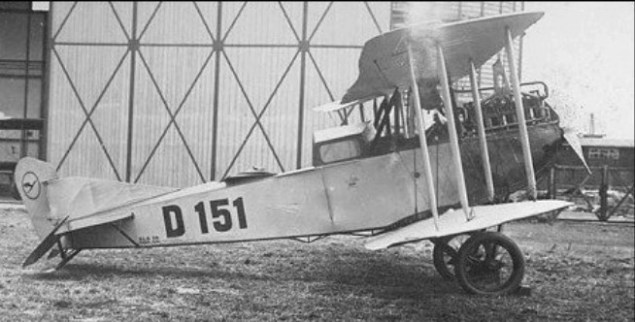
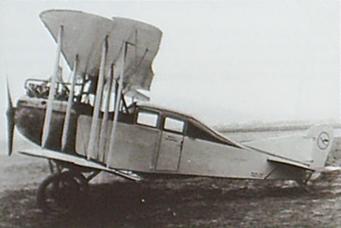
AEG J.II

The J.II was similar to the J.I but introduced an improved control system and horn-balanced control surfaces. To to improve directional stability the fin area was also increased. These improvements increased the weight by 55 lb / 25 kg.
After the armistice a number of J.IIs were used as transports (with the armour removed) by Deutsche Luft-Reederei. The J.II civil cabin biplane built 1918 had a two-seat cabin in place of the gunner’s position, as well as
a door and steps.

AEG built more than 600 J.Is and J.IIs.

Passenger conversion
Crew: 1
Pax cap: 2

Engine: 1 x 220hp Benz Bz.IV
Length: 7.92 m / 26 ft 0 in
Height: 3.35 m / 11 ft 0 in
Wing area: 34.50 sq.m / 371.35 sq ft
Max take-off weight: 1819 kg / 4010 lb
Wingspan: 13.46 m / 44 ft 2 in
Max. speed: 152 km/h / 94 mph
Cruise speed: 140 km/h / 87 mph
Ceiling: 4500 m / 14750 ft
Rate of climb: 170 m/min / 550 ft/min
Range: 590 km / 367 miles
Armament: 3 x 7.92mm mg
Crew: 2

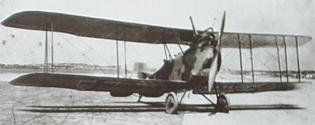
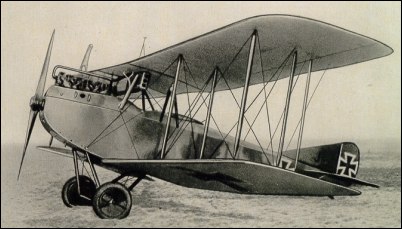
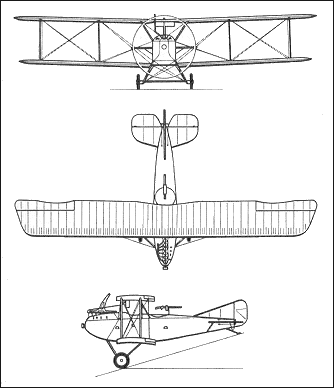
AEG J.I

Late 1915 the German army air service introduced what could be called ground support units. Proving effective on a small scale during the Battle of Verdun in early 1916, a high priority expansion programme began. The AEG J.I was developed to meet this task until more suitable aircraft became available.

The J.I was essentially a C.IV with a more powerful Benz Bz.IV of 200 hp to offset the weight of 860 lb 390 kg) of armour plate crew and engine protection. This 2 in (51mm) thick steel sheet protection extended from the nose to the rear of the cockpit. Armament was 2 LMG 08/15 mounted in the rear cockpit floor pointing downward and forward at about 45 degrees. These could be used to strafe trenches or columns of troops. The observer had also a trainable LMG 14 on a ring mounting.

The increased weight caused ailerons to be added to the lower wings to improve lateral control.

AEG built more than 600 J.Is and J.IIs.

Engine: Benz Bz.IV, 200 hp
Wingspan: 44 ft 2 in / 13.46 m
Length: 23 ft 7.5 in / 7.2 m
Height: 10 ft 11.5 in / 3.3m
Wing area: 357.16 sq.ft / 33.18 sq.m
Empty wt: 3280 lb / 1455 kg
MTOW: 3836 lb / 1740 kg
Max speed: 94 mph / 150 kph
Climb to 3280 ft / 1000m; 6 min
Service ceiling: 14,765 ft / 4500 m
Max range: 233 sm / 375 km
Max endurance: 2.5 hr
Crew: 2
Armament: 2 x fixed forward/downward firing 7.92mm MG 08/15 machine guns / 1 x trainable 7.92mm LMG 14 Parabellum
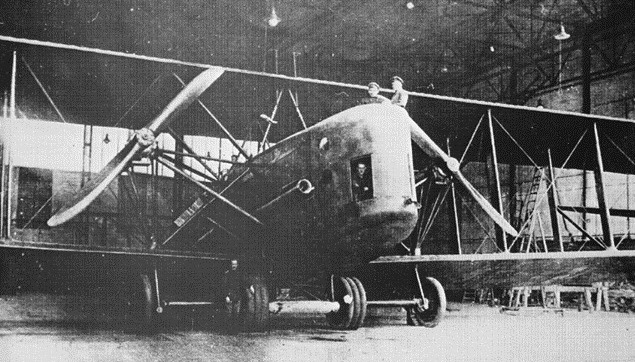
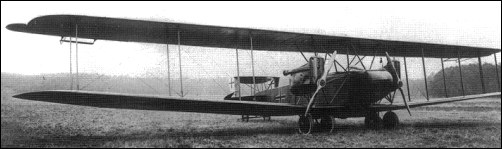
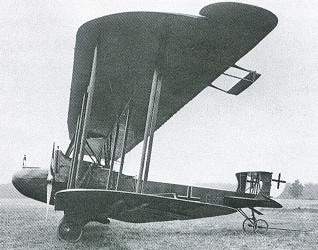
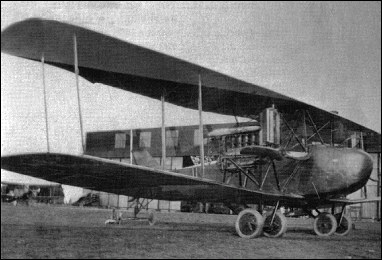
AEG G. V

A larger three-bay design and carrying three times the bomb load of the G.II, the G.V entered service in 1918.
The G.V was AEG’s last bomber, the end of the war prevented the G.V from becoming operational and it was after the war that a number were operated as six-passenger civil transports by Deutsche Luft-Reederei – an airline company financed by and connected with AEG.

In 1919 the G.V was the only large German 1914-18 aircraft employed commercially to any great extent. As a makeshift transport (with an open cockpit for passengers) a Limousine version was developed. This had a new cabin fairing attached to enclose the passenger area, a downward-hinging fuselage nose to provide a baggage locker (which could also act as a buffer if the aircraft overturned) and a toilet aft of the cabin. One was recorded as flying from Berlin to Eskjo, Sweden in 4 hours and seven minutes.

AEG G.IV

The AEG G.IV was produced in 1915 and entered frontline service by 1916, seeing action through to the end of the war in 1918.

AEG G.IV Article

The twin-engine, three-man aircraft was of a biplane design with two steel tube spars, wooden ribs, and wooden leading edge and wire trailing edge. Ailerons were on the top wing only. Of welded steel tube construction and covered in fabric except the plywood skinned nose section, the crew of four could change positions through connected cockpits.

Up to 882lbs of ordnance was carried on the aircraft and this was complimented with two defensive machine gun positions at fore and aft of the pilots mid-position.

The G.IV served the German air force in an offensive capacity but was limited by the short range when carrying a crew of three and full bomb load it was used mainly as a tactical bomber between allied lines on the Western Front. Without a bomb load, it was able to be used for long range reconnaisance and aerial photography. The units equipped with the G.IV fought against the Italians on the Southern Fronts to good effect and would even be called upon to complete night bombing missions. About 50 G.IVs were being used for night bombing behind Allied lines in August 1918.

Small numbers were built for assessment by the Schistas at the front. These included the G.IVb with a three bay wing cellule of increased span, and the G.IVK with a 20mm Becker cannon in the nose.

An example was captured almost intact by the Allied forces and evaluated in flight in the UK, where it was found to be deficient in elevator control and extremely difficult to land. The absence of a passenger in the front gunner’s cockpit apparently made the machine almost uncontrollable.

About 500 of the 542 AEG G bombers built were of G.IV type. Fifty were still in use in France in August 1918.

G.IV
Engines: 2 x Mercedes D.IVa, 260hp
Prop: 2 blade wooden
Wingspan: 60 ft 4.5 in / 18.4m
Length: 31 ft 9.5 in / 9.7m
Height: 12 ft 9.5 in / 3.9m
Wing area: 721.21 sq.ft / 67 sq.m
Empty wt: 5291 lb / 2400 kg
MTOW: 8003 lb / 3630 kg
Fuel capacity: 123 Imp Gal
Climb to 3280 ft / 1000m; 5 min
Max speed: 103 mph / 165 kph / 89kt
Service ceiling: 14,765 ft / 4500 m
Time to 9000ft: 24 min
Max endurance: 4-5 hr
Maximum Range: 466miles / 750km
Max bomb load: 882 lb / 400 kg
Crew: 3
Armament: 2 x trainable 7.92mm LMG 14 Parabellum