1960: (pres: James L Robertson)
Ft Worth TX
USA
Post WW2
Skycraft Viva
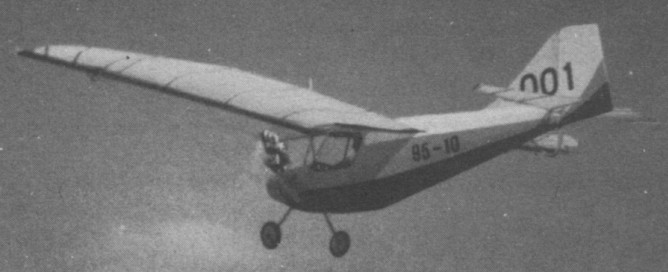
The illustrated Viva is located at Holbrook ultralight museum.
Skycraft Scout Biplane
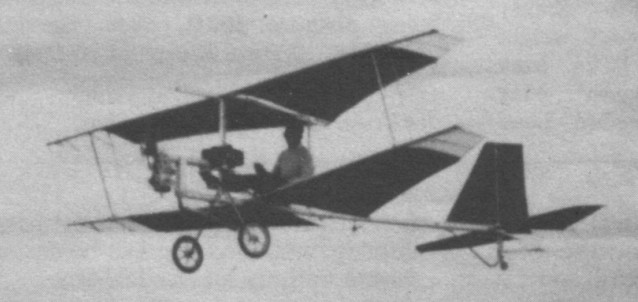
A second version of the Biplane Scout was built by Ron Wheeler.
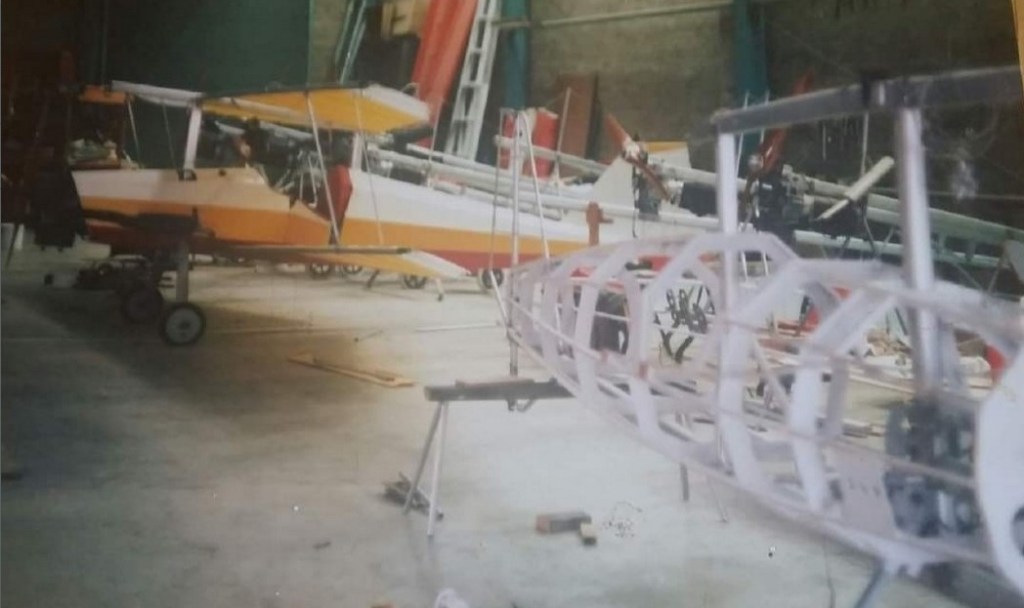
Skycraft Scout
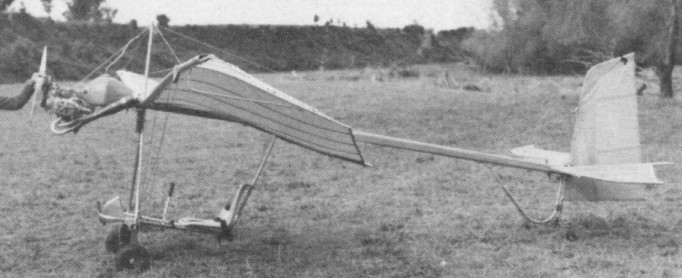
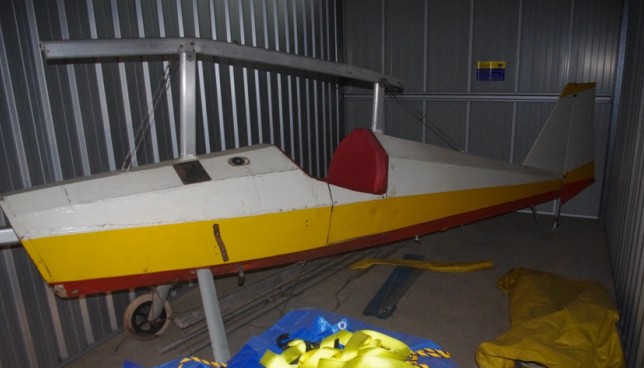
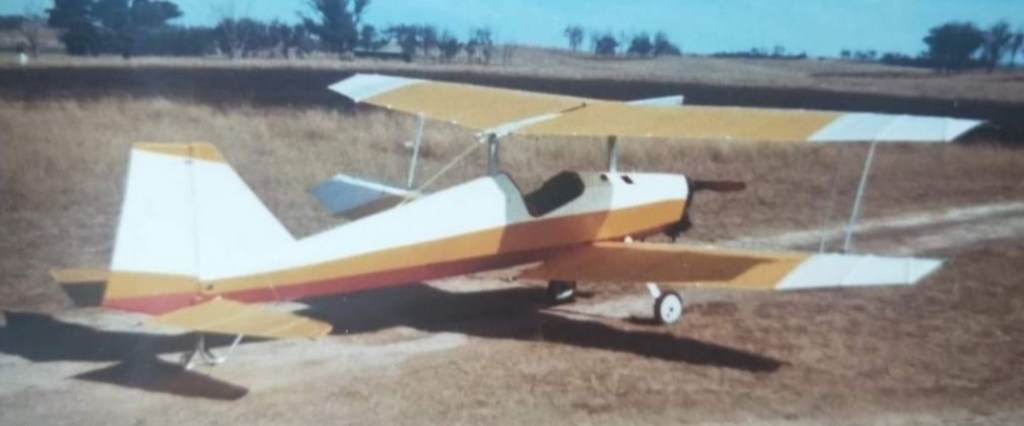
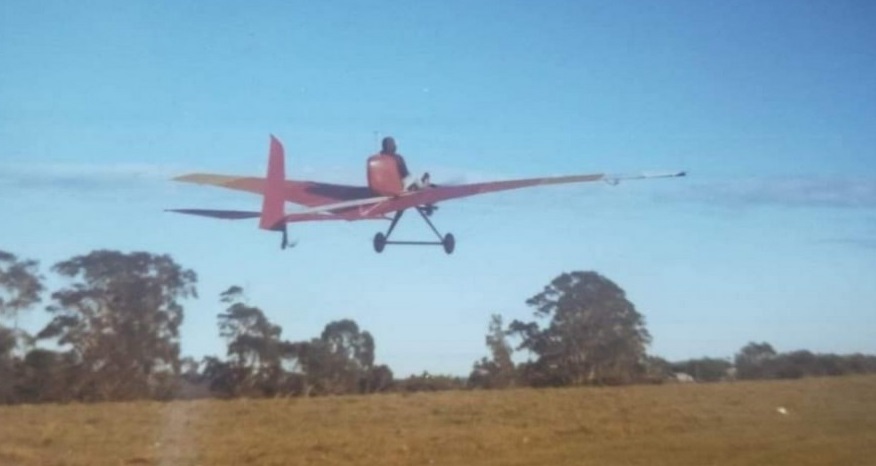
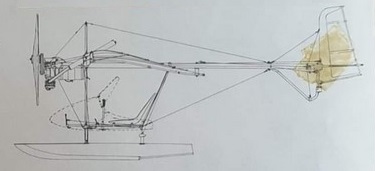
This Australian design was originally built by Ron Wheeler in 1972 as a powered version of his earlier Tweetie hang-glider design. First flown in May 1974, his friends asked him to build them one and by 1976 demand was so high Ron Wheeler set up Skycraft and full-scale production began in November 1976 after the issuing of the ANO 95.10. The stitching of catamaran sails is still evident in the wing of the very early models. The Scout, later dubbed Mk.1, was considerably cheaper than the other types available mainly because it is smaller and doesn’t offer quite the same performance. It is however more economical and resembles in many ways the very first microlight — the Santos Dumont Demoiselle of 1911. The single surface wire braced taildragger has three-axis control via the all flying tail “feathers and wing warping for roll control. Airframe is constructed from high tensile alloy section extruded from the company’s dies. The aircraft sits high on the main wheels, an advantage for its rough strip capabilities. An engine option was available as well as floats and a cockpit pod, and optional Rotax 377 engine. The floats were designed by Wheeler and added to his aircraft in September 1977. The aircraft with floats was first displayed at the Schofield Air Show in 1978.
A historic aircraft in Australia, being the first type to receive certification under to Ultralight classification. The first to do so is in the Powerhouse Museum in Sydney, Australia.
En route, it has gained a modified front axle and seat support (hence the Mk2 title) but otherwise it is little changed. The same 173cc Pixie Major engine is used, driving a tractor propeller, and controls are two axis, operated entirely by the stick and with no separate roll control for the single surface wing. The Scout Mk.2 was a single seat single engined high wing monoplane with two axis control. Wing has unswept leading edge, swept forward trailing edge and tapering chord; conventional tail. Pitch control by fully flying tail; yaw control by fully flying rudder; no separate roll control. Control inputs through stick for pitch/yaw. Wing braced from above by kingpost and cables, from below by cables; single surface wing. Undercarriage has three wheels in tail dragger formation; steel spring suspension on main wheels. Push right go right tailwheel steering connected to yaw control. No brakes. Aluminium tube framework, without pod. Engine mounted at wing height driving tractor propeller. Stainless steel rigging and control cables. Wing material is heavy duty Dacron.
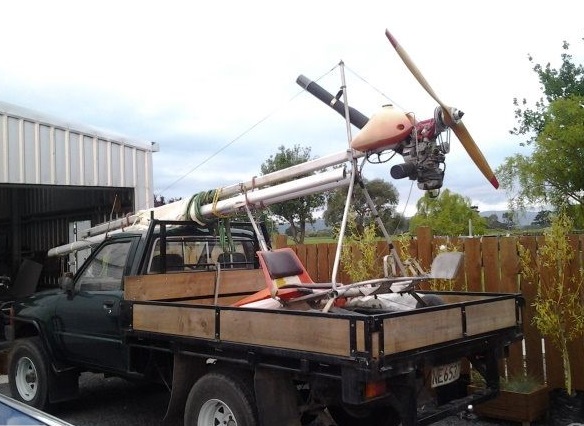
The combination of very small fuel tank and low maximum speed means that the Scout is more of a fine weather fun machine than an aircraft for cross country flying. Never the less the Scout has won many friends in its seven years of flying, not least because of its 15 minute rigging time, and has earned its place in the history of the sport.
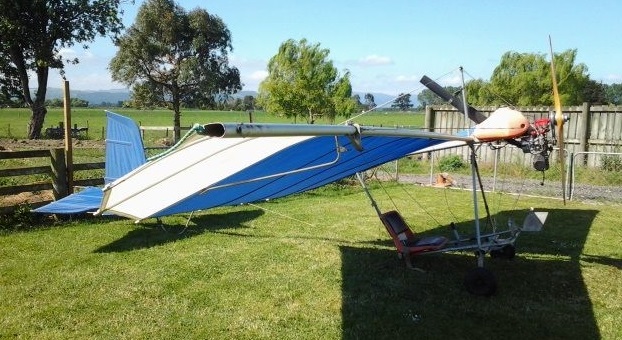
The Scout Mk.3/3/R was a single seat single engined high wing monoplane with conventional three axis control. Wing has unswept leading edge, swept forward trailing edge and tapering chord; conventional tail. Pitch control by fully flying tail; yaw control by fully flying rudder; roll control by wing warping; control inputs through stick for pitch/roll and pedals for yaw. Wing braced from above by kingpost and cables, from below by cables; single surface. Undercarriage has three wheels in tail dragger formation; steel spring suspension on mail wheels. Push right go right tailwheel steering connected to yaw control. No brakes. Aluminium tube framework, without pod. Engine mounted at wing height driving tractor propeller. Stainless steel rigging and control cables. Wing material is heavy duty Dacron. Introduced in 1982 to cater for pilots wanting conventional three axis controls, the Scout Mk3/3/R uses a wing-warping system for roll control. Rudder pedals control yaw and also operate the steerable tailwheel. However, the adoption of three axis control was not the only major change. The Pixie engine was discarded in favour of a 250 Robin, bringing a marked improvement in performance and giving rise to the ‘R’ in the designation title (the second ‘3’ indicates three axis). Typical output for a 250 Robin is 18 hp, but in this application 21 hp is claimed, using an exhaust system engineered specifically for this aircraft. There are also numerous detail engineering changes compared to the Mk2, plus a modified framework which gives better pilot protection.
While the wing warping system has proved effective as a wing levelling device, adverse yaw can be experienced under some circumstances and further modifications to eliminate this have been designed by one of Britain’s Scout dealers as the Flylite (East Anglia) Super Scout.
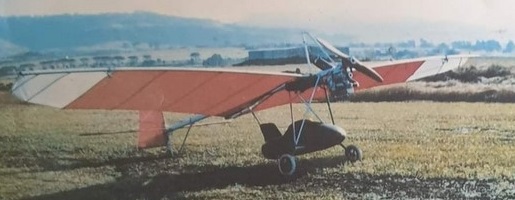
The Scout Twin Mk.4 was powered by a Rotax 377 engine and featured a fibreglass fuel tank, moulded to the fuselage and over the C of G, and a moulded fibreglass cockpit. The Mk.IV can also be fitted with floats. About 50 of these were built.
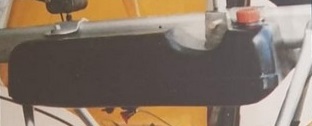
Components such as the moulded cockpit will fit the Mk.III as will the dual wire drag system. The aerolastic structure has been truck tested to air loads above 80 mph.
A further enclosed version was built.

And another version place the pilot position above the fuselage.
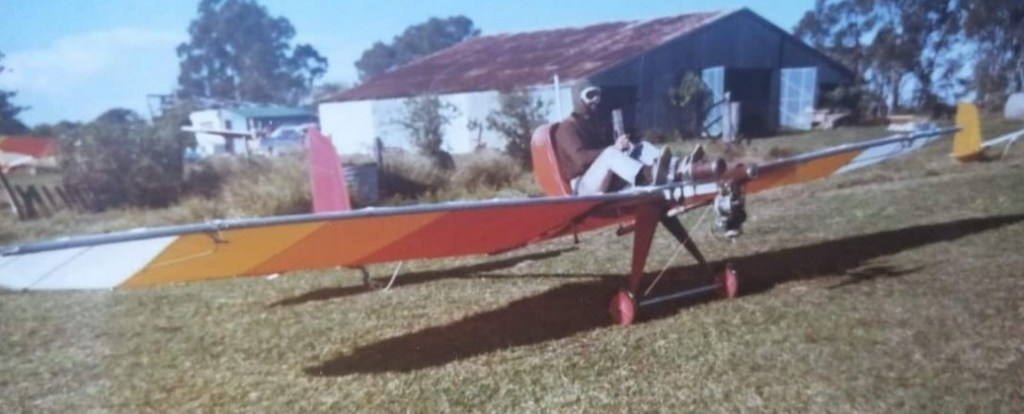
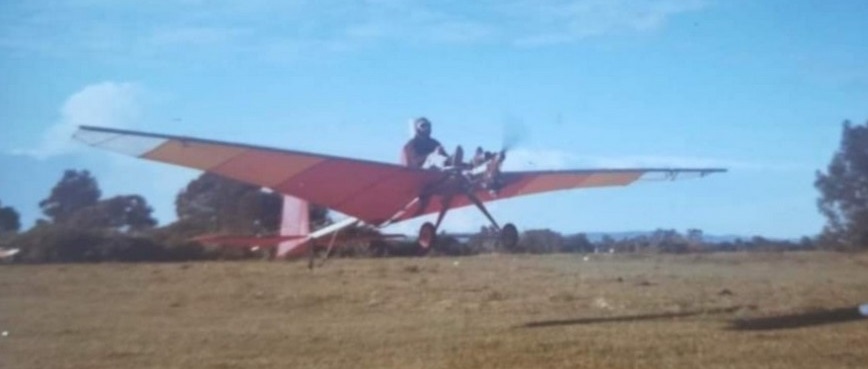
Variation: Mahe Pfadfinder
Scout Mk.I
Engine: Pixie Major, 14hp at 6500rpm
Propeller diameter 48 inch, 1.23 m
V belt reduction, ratio 3.0/1
Max static thrust 79 lb, 36 kg
Power per unit area 0.13 hp/sq.ft, 1.4hp/sq.m
Fuel capacity 0.6 US gal, 0.5 Imp gal, 2.5 litre
Length overall 17.1 ft, 5.20 m
Height overall 6.2ft, 1.90m
Wing span 28.8ft, 8.77 m
Chord at root 6.5ft, 1.98 m
Chord at tip 1.3ft, 0.40m
Sweepback 0 deg
Tailplane span 10.5ft, 3.2m
Rudder height 4.8 ft, 1.47 m
Total wing area 109 sq.ft, 10.1 sq.m
Total elevator area 12.5 sq.ft, 1.16 sq.m
Wing aspect ratio 17/1
Wheel track 4.5ft, 1.37m
Wheelbase 12.5ft, 3.80m
Tailwheel diameter overall 4 inch, 10cm
Main wheels diameter overall 12 inch, 31 cm
Empty weight 122 lb, 55.5 kg
Max take off weight 297 lb, 135 kg
Payload 175 lb, 79.5 kg
Max wing loading 2.72 lb/sq.ft, 13.4 kg/sq.m
Max power loading 21.21b/hp, 9.65kg/hp
Load factors; >+3.0, > 3.0 ultimate
Max level speed 47 mph, 75 kph
Never exceed speed 75 mph, 120 kph
Max cruising speed 40 mph, 65 kph
Economic cruising speed 40 mph, 65 kph
Stalling speed 20 mph, 32 kph
Max climb rate at sea level 200ft/min, 1.0m/s
Min sink rate 510 ft/min at 40 mph, 2.6 m/s at 65 kph
Best glide ratio with power off 7/1 at 40 mph 65 kph
Take off distance 230 ft, 70 m
Land¬ing distance 100ft, 30m
Service ceiling 9900ft, 3000m
Range at average cruising speed 28 mile, 45 km
Mk.III
Engine: Robin 244cc 2 stroke
Wing Span: 28 ft 6 in (8.8 m)
Wing Area: 149 sq. ft
Cruise speed: 46 mph (75 kmh)
Stall speed: 19 mph (32 kmh)
Max speed: 105 kph
Max. rate of climb: 550 fpm
Empty weight: 130 lb (58.03 kg)
Max. pilot weight: 205 lb (91 kg)
Engine: 244 cc/19 hp Fuji Robin 1-cylinder Two-stroke
Fuel capacity: 19 ltr
Prop: 122cm
Range: 55 miles
3/3/R
Engine: Robin EC25PS, 21 hp at 6500 rpm
Propeller diameter: 48 inch, 1.23 m
V belt reduction, ratio 2.2/1
Max static thrust 130 lb, 59 kg
Power per unit area 0.19 hp/sq.ft, 2.1 hp/sq.m
Fuel capacity 1.6 US gal, 1.3 Imp gal, 6.0 litre
Empty weight 130lb, 59kg
Max take off weight 310 lb, 141 kg
Payload 1180 lb, 82 kg
Max wing loading 2.84 lb/sq.ft, 14.0 kg/sq.m
Max power loading 14.8 lb/hp, 6.7 kg/hp
Load factors design; >+3.0, > 3.0 ultimate
Max level speed 53 mph, 85 kph
Never exceed speed 75 mph, 120 kph
Max cruising speed 47 mph, 75 kph
Economic cruising speed 47 mph, 75 kph
Stalling speed 20 mph, 32 kph
Max climb rate at sea level 550 ft/min, 2.8 m/s
Min sink rate 470 ft/min at 40 mph, 2.4 m/s at 65 kph
Best glide ratio with power off: 7/1 at 40 mph, 65 kph
Take off distance 130 ft, 40 m
Land¬ing distance 100ft, 30m
Service ceiling 9900ft, 3000m
Range at average cruising speed 56 mile, 90 km
Scout Twin Mk.4
Engine: Rotax 377
Empty weight: 82 kg
AUW: 180 kg
Wingspan:8.7 m
Wing loading: 7 kg/sq.m
Takeoff distance: 25-40 m
Landing roll: 24-30 m
Stall: 32 kph
ROC: 600 fpm
Max speed: 100 kph
Cruise: 75 kph
Glide ratio: 7-1
Fuel capacity: 15 lt
Fuel burn: 8 lt/hr
Skycraft Tweetie
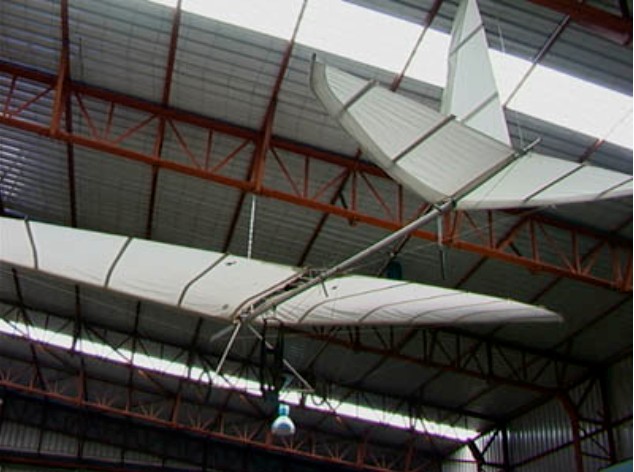
In 1974 Ron Wheeler developed the “Tweetie” hang glider. The Tweetie was almost exactly the same as the Scout only it did not have the engine, the tail plane was fixed and the pilot hung from the A-frame below the wing. Apart from being quite a successful hang glider the Tweetie allowed Ron to experiment and get experience with the Scout design.
Skandinavisk Aero Industri As / SAI / Kramme & Zeuthen
Skandinavisk Aero Industri A/S (abbreviated SAI) was a Danish manufacturer of aeroplanes that existed between 1937 and 1954. The company was founded by technician Viggo Kramme (1905–1984) and engineer Karl Gustav Zeuthen (1909–1989) and based in Copenhagen.
The company’s aeroplanes were labelled “KZ” for Kramme and Zeuthen, the first being the KZ I from 1937. The KZ IV was built as an ambulance plane for Zone-Redningskorpset and introduced in 1944. Post-war sales never reached the company’s expectations, and production turned unprofitable in the early 1950s, driving the company to shutdown. In mid-1950s turned increasingly to repair and maintenance of military aircraft, and aircraft production had ended by late 1950s. In total, about 200 planes were built by the company.
A number of the KZ planes have been preserved. As of 2005, Dansk Veteranflysamling (The Danish Collection of Vintage Aircraft) exhibits a specimen of each of the 11 aircraft models manufactured by the company.
Sisler SF-2 Whistler / SF-2A Cygnet
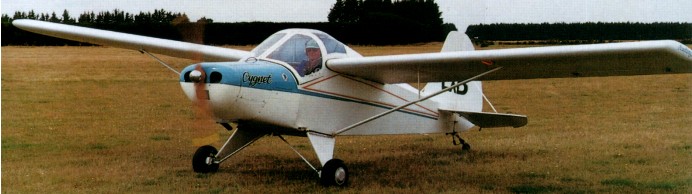
Bert Sisler, of Barnsville, Minnesots, second design was the mid-wing Whistler. The two-seat craft is convertible from tailwheel to tri-gear configuration. The fuselage is tubular steel and fabric, the wings and tail are of wood geodetic construction with fabric covering. The baggage compartment has a 70 lb capacity.
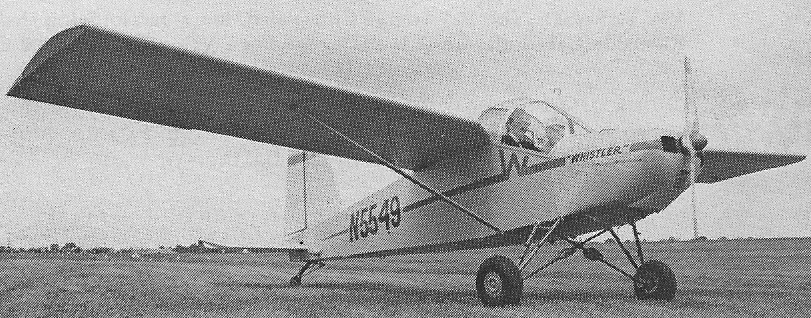
The SF-2 Whistler N5549 built in 1973 was improved to become the SF-2A Cygnet circa 1977.
Designed by Burt Sisler, USA, the two-place, plans-built, VW powered Cygnet has geodesic wing construction, offers excellent short-field performance, good climb rate and ease of control. It can handle two 175-pound people and 80 lbs of baggage. This is a United States designed side by side 2 seater being designed for STOL operations. The Cygnet features folding wings and is designed for running on Mogas. Early United States mac¬hines were powered by a 60 hp HAPI engine, providing a 100 mph cruise and 350 mile range.
The Cygnet Model SF-2A in 2008 was available from:
Viking Aircraft
333 Sunny Hill Dr
Elkhorn, Wisconsin 55312
SF-2 Whistler
Engine: 70 hp Baker VW1834
Wingspan: 30’0″
Length: 19 ft
Height: 5 ft 9.5 in
Empty weight: 645 lb
Useful load: 500 lb
Baggage capacity: 70 lb
Max speed: 95 mph
Cruise: 86 mph
Stall: 43 mph
Landing speed: 42 mph
Landing roll: 300 ft
ROC solo: 700 fpm
Seats: 2
SF-2A Cygnet
N191S
Engine: 62hp Barker-VW 1834cc
Wingspan: 30’0″
Length: 19’0″
Useful load: 515 lb
Max speed: 108 mph
Cruise: 100 mph
Stall: 48 mph
Seats: 2
SF-2A Cygnet
Engine: 1835cc HAPI VW conversion
HP range: 60-82
Speed max: 108 mph
Cruise: 90-100 mph
Range: 390 sm
Stall: 41 mph (solo), 48 mph (dual)
ROC: 580 fpm
Take-off dist: 700 ft
Landing dist: 700 ft
Fuel cap: 15 USG
Weight empty: 585 lbs
Gross: 1100 lbs
Height: 5.83 ft
Length: 19 ft
Wing span: 30 ft
Wing area: 125 sq.ft
Seats: 2
Landing gear: tail wheel
Cygnet SF-2A
Engine: 1835 60HP VW
Span: 30 ft
Empty Weight: 585 lbs
Useful Load: 515 lbs
Seats: 2 Side by Side
Stall: 48 mph
Landing Speed: 60 mph
Cruise: 100 mph
Rate of Climb: 580 fpm
Sisler SF-1 Pipit
Built during the 1970s, the two seat Sisler SF-1 Pipit was sold before the formation of the Sisler Aircraft Co.
Sisler
(A M Bert) Sisler Aircraft Co,
Bloomington MN.
USA
Airline captain Bert Sisler built and sold Pipit 2-seater, formed Sisler Aircraft Co. and built SF-2 Whistler (EAA award 1973) and later marketed plans for improved version SF-2A Cygnet high-wing 2-seater.
Siren D 77 Iris / Issorie-Aviation D 77 Iris
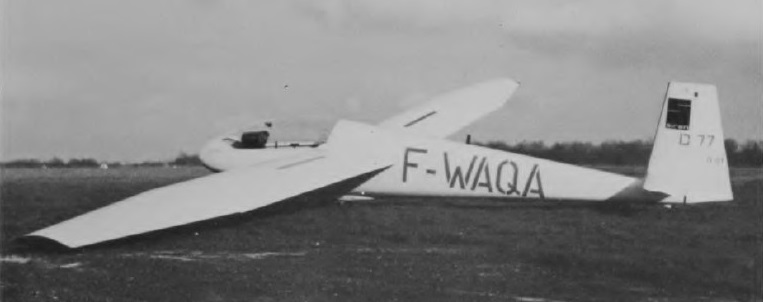
Design of the D 77 Iris single-seat training sailplane was started in 1973 by Siren SA. Of glassfibre/plastic foam sandwich construction, the Iris was also available in kit form for homebuilders, and has cantilever mid-set wings of Bertin E55-166 aerofoil section and glassfibre/polyester/PMC sandwich construction, with glassfibre ailerons and metal Schempp-Hirth air brakes in the upper surfaces. The fuselage is a glassfibre/polyester monocoque built in two halves and reinforced at the wing attachment points. As originally designed, the Iris had a cantilever T-tail but this was changed to one with a low-set fixed incidence tailplane and a spring tab in each elevator; the tail is of similar construction to the wings. There is a non-retractable unsprung monowheel with a Siren hydraulic brake, and a tailskid. The pilot sits in an adjustable semi-reclining seat under a one-piece flush-fitting cockpit canopy which opens sideways to starbaord.
The prototype first flew on 26 February 1977 and made its public debut at that year’s Paris Salon Aeronautique; after the manufacturer’s tests were completed, tests by the CEV (Centre d’Essais en Vol) followed early in 1978, after which certification got under way.
Production of the Iris and of the E 75 Silene became the responsibility of Societe Issorie-Aviation, which was formed late in 1977 by the President of Siren SA following the bankruptcy of Wassmer-Aviation; approximately 50 D 77s had been ordered by February 1979 when production was due to begin.
Issoire D 77 Iris
Span: 13.5 m / 44 ft 3.5 in
Length: 6.37 m / 20 ft 10.75 in
Height: 0.9 m / 3 ft 11.25 in
Wing area: 11.4 sq.m / 122.7 sq.ft
Wing section: Berlin E-55-166
Aspect ratio: 16.0
Empty weight: 220 kg / 485 lb
Max weight: 330 kg / 727 lb
Water ballast: None
Max wing loading: 27.2 kg/sq.m / 5.57 lb/sq ft
Max speed: 145 mph / 126 kt / 234 km/h (in smooth air)
Max aero-tow speed: 105 mph
Stalling speed: 32.5 kt / 60 km/h
Min sinking speed: 2.23 ft/sec / 0.68 m/sec at 50 mph / 39.5 kt / 73 km/h
Best glide ratio: 33:1 at 48.5 kt / 90 km/h

 All Aero