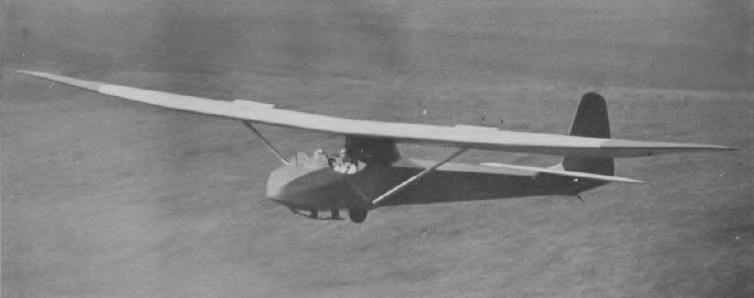
This single-seat intermediate trainer is basically an updated and improved version of the Grunau Baby, of which Slingsby had built a small number under licence before the war as the T5 Baby.
Of conventional wood and fabric construction, it has a braced wing with air brakes but no flaps, and a nose skid under the forward fuselage just ahead of the non-retractable monowheel; there is also a tailskid, and the tailplane is braced. The pilot sits in an open cockpit and has a small windscreen.
The Prefect, which first flew in prototype form in June 1948, is semi-aerobatic and suitable for cloud flying and cross-country flights.
Altogether 30 Prefects were built for clubs and other civil users, and 16 for the ATC as the T30A Prefect TX Mk 1 (WE979 to WE993 and WG783).
Prefect WG783 was initially delivered with camera mounting fittings and flaps fixed in the down position for the second stage of carrier wake trails, which involved flying a glider from the deck of an aircraft carrier to investigate characteristics of the wake over the flight deck.
Span: 45 ft 0 in Length: 21 ft 3.5 in Height: 4 ft 2 in Wing area: 154 sqft Aspect ratio: 13.2 Empty weight: 390 lb Max weight: 587 lb Max speed: 100 mph Min sinking speed: 2.75 ft/sec Best glide ratio: 21:1
By November 1947, a powered version of the T-8 Tutor was undertaken, somewhat against his wishes, by Mr Fred Slingsby, and this, the T29 Motor Tutor, featured a new fuselage with a fixed, divided-axle type undercarriage and tailwheel married to the standard Tutor wings and tail unit. The first prototype G-AKJD was completed at Martin Hearn Ltd, Hooton Park. It first flew, as the T29A with a 25hp Scott Flying Squirrel engine, in December 1947 but this first prototype was underpowered.
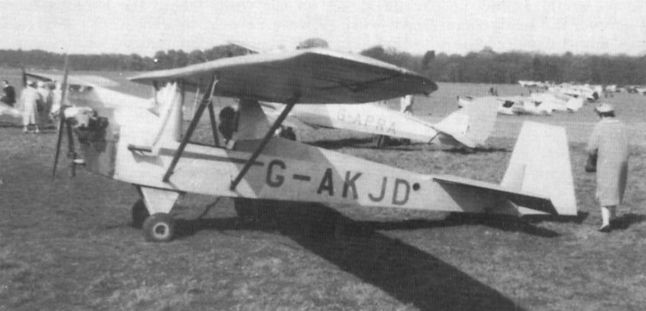
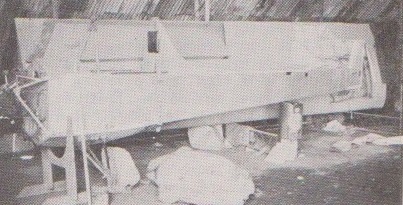
Slingsby-built Type 29B Motor Tutor G-AKJD was first flown at the end of 1950. It was crashed at Dunstable Downs on June 21, 1964 and is seen here at Woburn in 1959.
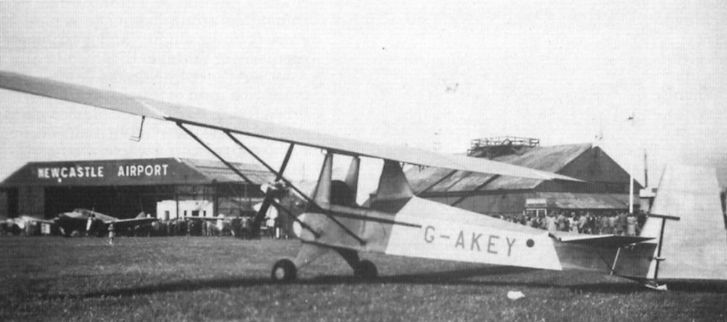
The second prototype, the T29B G-AKEY which first flew in June 1948, was being built by Slingsby Sailplanes and had a 40hp Aeronca JAP two-cylinder, horizontally-opposed air-cooled engine; a single 9.5 Imp gallon fuel tank was installed. Completition was delayed to incorporate any modifications indicated by the flight tests.
Slingsby Type 29B Motor Tutor G-AKEY, a Tutor glider airframe with an undercarriage and powered by a 40 h.p. Aeronca-JAP J-99. First flown in this form in June 1948, ’EY was sold in the Bahamas in 1963.
It was intended that the Motor Tutor should be sold in kit form for assembly by Ultra-Light Aircraft Association groups but when, after protracted deliberations, the ARB at last granted the Motor Tutor a C of A it was not for training and, since this role had been the main reason for developing the type in the first place, further work on the Motor Tutor ceased and an initial order for six was cancelled.
Five or six other conversions are known:
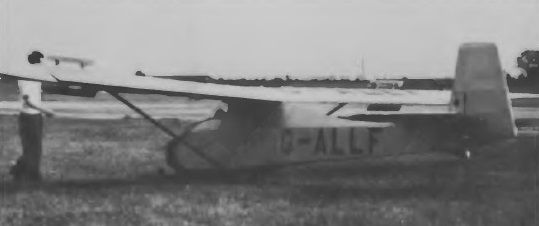
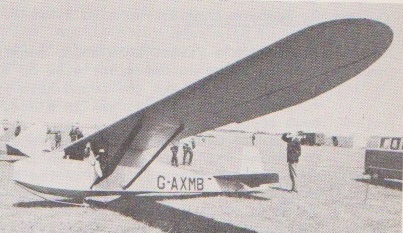
G-AXMB By C.W.Osborne used a Type 7 Kirby Cadet (single-seat T.31) BGA.805, probable ex-VM590. It was converted at Bedford with two 220cc Villiers motorvyvle engine mounted one on each wing strut and termed a Twin Cadet. It was converted to a Motor Cadet with a converted Triump T-100 in the nose later.
PFA.1312 T.West
PFA.1385 G-AYAN P.J.Martin and D.R.Wilkinson converted T.31B BGA.1224 (ex-RAFGSA.223) at Twinwood Farm. Powered by a VW 1600cc as ‘Thermal Hopper’ c/n 003, it was first flown in 1971.
G-AYAN at Sywell 1970
PFA.1573 G-AZSD R.G.Boyton, Epsom, used an un-completed Slingsby-airframe, probably c/n 561, starting in 1972 as constructor’s number RGB.01/72.
PFA.1586 G.Milton
A Motor Cadet was resident at Bickmarsh, UK, built on T.31B RAFGSA.297, BGA.1346.
c/n 537 / ex-RA883, BGA.535 About 1957 R.Swinn converted T.7 Cadet into a Motor Cadet using a JAP J-99 engine at Sutton Park.
A proposed postwar development of the T.13 Petrel was the T.22 Petrel 2, which had a revised cockpit with a step, wing spoilers, a monowheel and a tailplane with elevators, but this version was not built. A Petrel was fitted with a small engine on top of the fuselage in 1947 by Wing-Commander K. H. Wallis but this version of the Petrel was never flown.
Designed by F. N. Slingsby, this side-by-side two-seater was designed to meet the ATC’s requirements for a simple dual control sailplane of medium performance and low price. The prototype, designated T21P, first flew in 1944 and had a wing span of 50ft 0in using the same wing section as the Grunau Baby, and with a removable nose upper deck section to give students the same exposure to the airflow as experienced in primary gliders. Structure: All wood frame, wing D-box and forward fuselage plywood covered, remainder fabric.
The first production version was the T21A for clubs and other civil customers, with the span increased to 54ft 0in, which first flew in April 1947.
The T21B (originally designated T28) was the version of the T21A, with fixed nose, ordered for the ATC and known as the Sedbergh TX Mk 1 in Service use, being named after the famous Yorkshire public school; this first flew in December 1947.
Altogether 121 civil T21As were built and 73 T21B Sedberghs for the ATC, plus 19 more T21Bs built under sub-contract by Martin Hearn Ltd, who had also built Cadets for Slingsby. Three more T21s were built outside – by the Midland Gliding Club, by Leighton Park School and by Mr J. Hulme, making a total, including upper surfaces.
Slingsby T21B Sedbergh
The forward portion of the fuselage back to the two main wing attachment frames is a wooden stressed skin structure, and the centre and rear portions are of fabric-covered girder construction. The tailplane is braced and the rudder and elevators fabric-covered. Landing gear consists of a large non-retractable monowheel with a nose skid in front of it, and a sprung tailskid. The two pilots sit side-by-side in an open cockpit with dual controls, and with two small windscreens ahead of them; the spoiler lever, cable quick-release and trimming controls are positioned on a console between the two pilots.
The Royal Air Force operated 92 T.21B’s (known as the Sedbergh T.X. Mk. 1) in its air cadet training program until the 1980’s. Approach control is accomplished only by upper surface spoilers. Most examples had open cockpits; a few were modified to incorporate a canopy (T. 21 C).
Slingsby Sailplanes Ltd Slingsby Aircraft Company Ltd
Having served in the Royal Flying Corps in the First World War Frederick N. Slingsby helped to found the Scarborough Gliding Club in 1930 and, from repairing the first Primary the club owned, in his furniture works, soon became a designer and builder of gliders. His first glider, the Falcon I, was a version of the Schleicher Falke, built from plans bought from the German Aero Club.
Mr. C.E. Hardwick requested Slingsby build another Falke for himself and this was the beginning of the Slingsby glider works. He also began to manufacture primary gliders and the first advertisement appeared in “Sailplane and gliders” in November 1933 offering primary gliders for £45 complete.
For several months the empty tramsheds of Scarborough Corporation were used but, in September 1934, a move was made to part of an engineering factory in Kirkbymoorside. The move was at the invitation of Major J.E.D. Shaw, a local landowner, who owned several aircraft and had a small aerodrome on his estate at Welburn Hall. His objective was to bring employment to the region and he offered Slingsby complete financial backing. The engineering firm then operated as Slingsby, Russell & Brown Ltd.
During a slack period, light aircraft were also considered and the construction of two different types began in 1938 but both types were abandoned.
Slingsby post WW2
In 1938, at Kirbymoorside, Yorkshire, Slingsby Sailplanes Ltd built Kirby Kitten single-seat monoplane, designed by F. N. Slingsby.
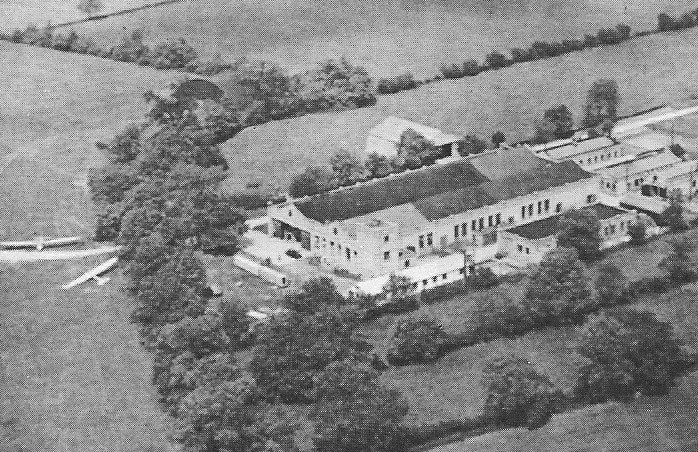
Demand called for larger premises and a new factory was built at the side of Major Shaw’s airfield at Welburn just outside Kirkbymoorside was built. In July 1939, when the new factory was ready for occupation, a separate company, Slingsby Sailplanes Ltd, was formed with Major J.E.D. Shaw as Chairman and F.N. Slingsby as Managing Director and Chief Designer. It was planned to officially declare the new factory open on Monday September 4th but the outbreak of the war on the previous day put a stop to all private flying in the UK.
Chiefly famous for gliders, Motor Tutor of 1948 was Slingsby Tutor glider with engine and landing gear.
On 21 April 1955 Major Shaw died. His share in Slingsby Sailplanes had to be sold to settle death duties on his estate. To avoid a take-over bid the shares were acquired by a trust formed by the leading members of the British gliding movement. The company was then owned by the Shaw-Slingsby Trust, and Phillip Wills was appointed Chairman.
In 1962 Slingsby was affect by heart trouble and in 1964, aged seventy, decided to retire. P.R. Street joined the company as Managing Director.
In 1965 J.W. Bradley was appointed Chairman of the Board, with W.N. Slater as Managing Director. In 1967 the company was split into Slingsby Aircraft Ltd and Slingsby Joinery Ltd, with a holding parent company Slingsby Aircraft Holdings Ltd.
The whole of the main aircraft factory area was burnt to the ground on 18 November 1967. No Slingsby drawings were lost in the fire but all records and drawings of Operation Sigma Ltd were destroyed.
After the fire many employees were made redundant. The total number before the fire was 120. Further redundancies were declared in February 1969 but on 11 July it was announced Slingsby Aircraft Holdings Ltd was in the hands of a Receiver.
On 3 November 1969 Vicker Ltd acquired the entire assets of the company for a reported figure of £179,150. A new company using the old title of Slingsby Sailplanes Ltd was established.
The fibreglass work which was by then a speciality was continued, but aimed more at the military and marine environment, such as bathyspheres and small submarines.
Slingsby Aviation Ltd. is member of ML Holdings Plc group and offers professional pilot training and subcontract component building, in addition to sales of the T67 Firefly side-by-side two-seat civil/military piston-engined trainer and private aerobatic-capable lightplane (first flown May 1981, as license-built Fournier RF6B).
Jim Tucker came along later and bought the company, being a major shareholder of Slingsby Aviation which continued to produce for military GRP contracts and underwater craft, as well as hovercraft and gondolas for airships.
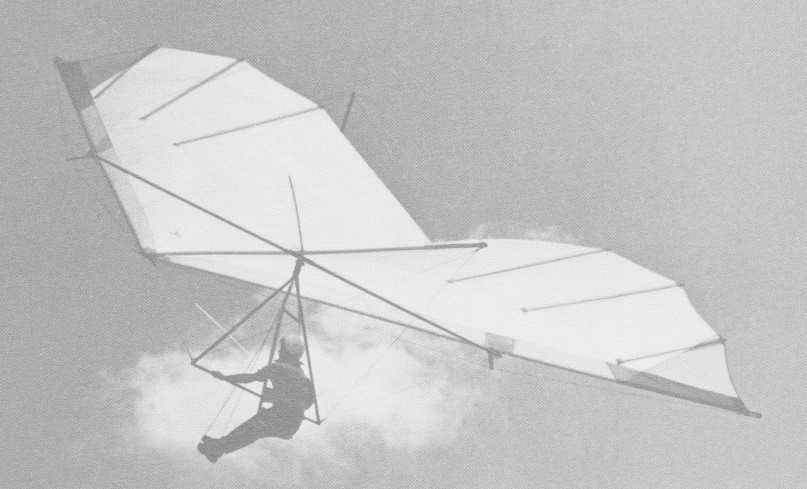
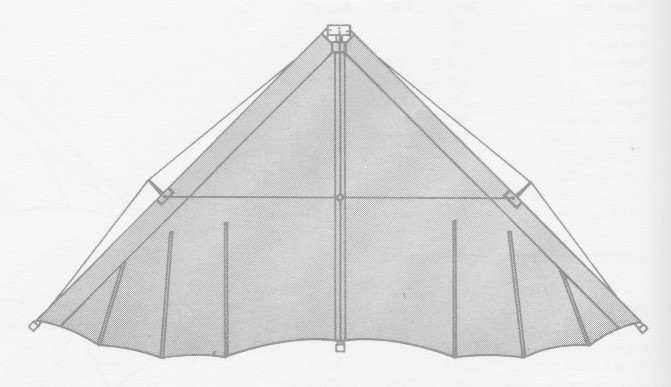
Circa 1972, the Bobcat II was suitable for beginners ad advanced pilots, built with strong construction for training. It met USHGA and Harker World Cup rules and, with deflexers folded, met FAI/CIVL rules. The Bobcat II has two nose angle settings.
The airframe is made from 6063-T832 1.75 x .058 in tubing in both model sizes. Dowelling is not used, strength coming from stainless steel bushings and inside sleeving. Deflexers are used normally, but may be left folded.
Marine stainless steel 3/32 in 7×7 rigging is used throughout with protective vinyl coating on the bottom wires. Quick links and pins are used.
All hardware is of stainless steel or aircraft quality aluminium. Nuts, washers, bolts and turnbuckles are aircraft grade. The sail is 3.8oz stabilised dacron with double zig-zag stiching with five colour choices.
Either a ‘bikini’ training harness, a swing seat, or supine harness were available.
Two nose angle positions are available for selecting billow. One for the best L/D and one for the minimum sink. Rounded nose plate helps prevent sudden stops during landing. Rigging can be adjusted easily for either prone or seated flying. The centre of gravity is adjustable. It can be packed down to about half the leading edge lengths.
Bobcat II 19×14 Leading edge: 19 ft Keel length: 14 ft Wing span: 26.8 ft Wing area: 204 sq,ft Aspect ratio: 3.48 / 3.4 Nose angle: 90˚ / 89˚ Sail billow: 3.0˚ / 3.5˚ Weight: 42 lb Pilot weight: 125-165 lb Stall speed: 16.5 mph Best glide ratio (L/D): 6.1 Min sink: 330 fpm
20×15 Leading edge: 20 ft Keel length: 15 ft Wing span: 28.3 ft Wing area: 230 sq,ft Aspect ratio: 3.48 / 3.4 Nose angle: 90˚ / 89˚ Sail billow: 3.0˚ / 3.5˚ Weight: 44 lb Pilot weight: 150-210 lb Stall speed: 16.5 mph Best glide ratio (L/D): 6.1 Min sink: 330 fpm
1946 aviation periodicals told of a “new twin-boom Skylark project” in three versions: two-place 246, four-place 446, and five–place 546. When the prototype appeared, it was as 447, with model number amended to fit the year.
The 1946 two-place Skycraft 246 featured wing ailerons and flaps. It is unknown if any were built in this designation, possibly was an evolutionary project, prised at $3,800-4,200.
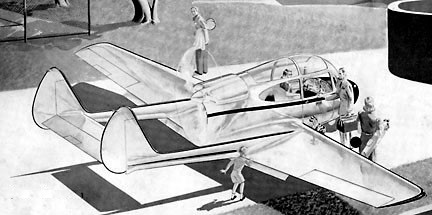
No record of production found for the 1945 four-place Skycraft 445 and Skycraft 545. Partially-retracting gear to prevent structural damage in the event of a wheels-up landing, the 545 was noted in a brochure as slated for “Air Taxi service.”
Skycraft Rendering of unspecified model (company brochure)
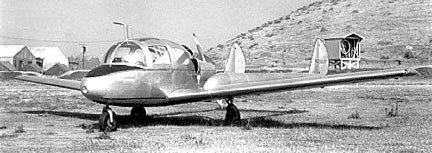
The 1947 four-place Skycraft 446 and 447 featured all-metal construction, twin booms and tails; no ailerons, but wing spoilers served that purpose.
Partially-retracting gear to prevent structural damage in the event of a wheels-up landing. Priced at $5,800-7,500, one was built, NX25607 (registration also belonged to a North American NA-50A that went to Thailand).






 All Aero