Based on the Lazor-Rautenstrach Belle of Bethany and built by Robert R Smidley in 1959, the Smidley Rapid Robert was a single-place cabin, low wing monoplane.
Engine: 85hp Continental C-85
Wingspan: 17’10”
Length: 15’8″
Useful load: 220 lb
Seats: 1
Based on the Lazor-Rautenstrach Belle of Bethany and built by Robert R Smidley in 1959, the Smidley Rapid Robert was a single-place cabin, low wing monoplane.
Engine: 85hp Continental C-85
Wingspan: 17’10”
Length: 15’8″
Useful load: 220 lb
Seats: 1
Tulsa OK.
USA
Built the Rapid Robert in 1959.
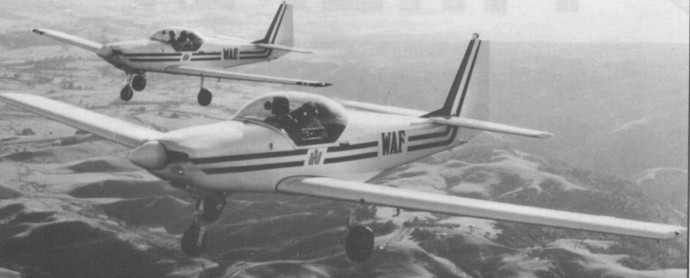
The Fournier company in France, manufacturer of a range of sporting aircraft, was in receivership and its RF6B, an aerobatic two-seat club trainer with fabric covered steel-tube fuselage and wood-and fabric wing designed in the early 1970s, looked promising. Slingsby bought the last of the RF6B line, numbering 10 or so aircraft in various stages of completion, along with all manufacturing rights, and called it the T67A.
Those aircraft were leased out to various aero clubs in the United Kingdom and the clubs were asked for their full and frank comments. At the same time, the T67A was being re-engineered for production in fibreglass at Kirbymoorside, Yorkshire, but retaining the shape and all the RF6B’s good points, and incorporating suggestions filtering back from the aero clubs. The end result was the Slingsby Firefly, a range of aerobatic trainers of differing engine power in the one airframe.
The Slingsby T67 Firefly was the world’s first aerobatic GRP aircraft to receive full public transport certification, meeting both the British BCAR and American Aviation Administration FAR part 23 requirements.
First flown in May 1981, the base model is the T67B, with the 116 hp Lycoming engine. The T67C has the 160 hp Lycoming carburettor engine, still with fixed-pitch propeller, while the T67D is fuel-injected, 160 hp, and with constant-speed propeller, as well as having wing mounted 159 litre fuel tanks in place of the fuselage mounted 113 litre tank found in the B and C models. Next is the T67M (for military), still with the same engine as the D but with a few extra items of equipment that air forces can’t do without, and top of the line is the T67M200, with 200 hp fuel-injected Lycoming because the military doesn’t think of any aircraft in terms of less than 200 hp.
The most potent and best-balanced of them all is generally reckoned to be the 160 hp fuel-injected version, with full inverted everything, which will exceed all military specifications except horsepower. The M models come with inverted fuel and oil systems as standard equipment, while the lesser versions are all equipped with sump trays that retain a semblance of oil presssure under negative G, but of course run out of power upside down.
First flight of the T67M200 was made on 16 May 1985 and production examples are powered by a 200 hp (149 kW) Textron Lycoming AEIO-360-A1E engine. Customers for this version to 1990 include the Turkish Aviation Institute, King Air in Holland and the Royal Hong Kong Auxiliary Air Force. Production of the earlier T67B, C and D exceeded 90 aircraft.
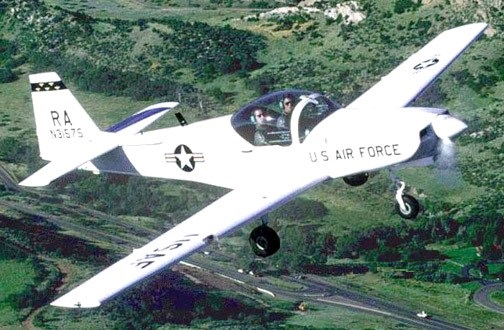
From 1992 one-hundred and thirteen T-67 Firefly were operated in USAF service as T-3A Firefly (92-0625 to 0662, 93-0555 to 0596, and 94-0001 to 0033), wearing civil registrations, at Randolph Field TX.
T67B
Engine: Lycoming O-235, 116 hp
Prop: fixed-pitch
Fuel cap: fuselage mounted 113 lt
T67C
Engine: Lycoming O-320, 160 hp
Prop: fixed-pitch
Fuel cap: fuselage mounted 113 lt
T67D – Engine: Lycoming IO-320, 160 hp
Prop: constant-speed
Fuel cap: wing mounted 159 lt
T67M Firefly
Engine: 1 x Lycoming AEIO-320, 119 kW
Span: 10.6 m
Length: 7.3 m
Wing area: 12.6 sq.m
Empty wt: 650 kg
MTOW: 907 kg
Max speed: 256 kph
Initial ROC: 360 m / min
Ceiling: 4570 m
T/O run: 190 m
Ldg run: 230 m
Fuel internal: 160 lt
Range: 980 km
T67M-200
Lycoming IO-360-A1E, 200 hp
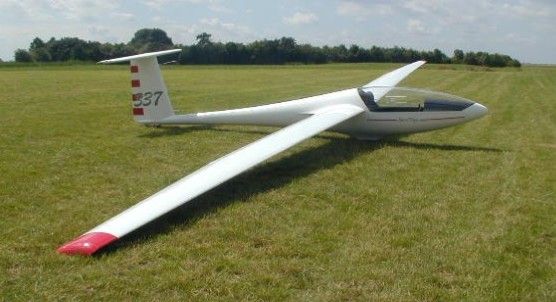
Designed by R. Sanders, the T-65 15m Contest Class single-seater is the first sailplane of entirely Slingsby design to appear since the liquidation of the former Slingsby Aircraft Co in July 1969 and its reorganisation as part of the Vickers group; it was later known as Slingsby Engineering Ltd (Aircraft Division). The Vega was designed to take advantage of the change in Standard Class rules permitting camber-changing flaps to be installed in this class after 1976. The all composite T. 65 was the first sailplane designed from the outset with a carbon fibre mainspar. The wings are of foam plastics sandwich construction with a single carbon-fibre main spar, which keeps the weight of each wing down to only about 130lb; the Wortmann wing section and carbon-fibre spar allow a constant 15% thickness/chord ratio from root to tip, giving performance benefits at the higher speeds. The wing tips are turned downwards to reduce tip stalling and are protected by inset metal rubbing strakes, and a convenient feature is that all controls are automatically coupled on rigging, leaving only the centre pin to be inserted. The wings also hold up to 195lb of water ballast in shaped plastic bags, thus avoiding any leakage which may occur when the wing itself is used as a tank. The cantilever mid-set wings are designed for optimum performance and have combined flaps/air brakes inboard and the ailerons outboard; the latter can be operated independently or in conjunction with the flaps. The wings have a unique single-lever operation for the flap and air brake system instead of using two separate levers as in other types; in the Vega the lever moves fore and aft in the usual way for air brake movement but is rotated by wrist action to select the flap positions which range from -12° to + 12°. The air brakes are hinged to the flaps with continuous flexible straps. Trim setting is adjustable by flap setting for hands-off flight at most operating speeds. Also automatic are the coupling of control and ballast-dumb plumbing on rigging.
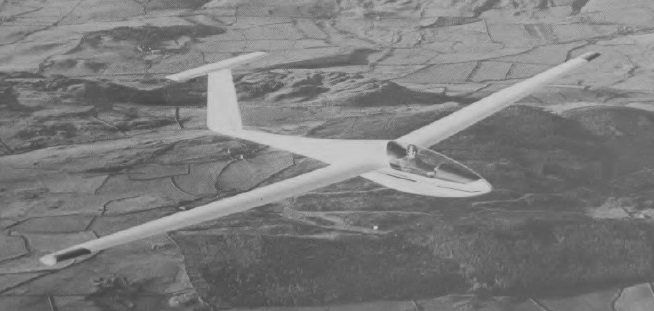
The Vega prototype first flew on 3 June 1977 and, after some initial problems resulting from stiffness of the single-lever flap/air brake control, resumed test flights in November that year; the first production delivery was in April 1978, by which time 48 had already been ordered.
The fuselage is a conventional semi-monocoque plastics structure, and is gently ‘waisted’ to reduce the possibility of airflow separation over the wing/fuselage junction; the tow hook is carried on the frame that carries the monowheel, and retracts with it. The latter has a brake, and an unusual feature for a sailplane is that the Vega’s tailwheel retracts as well. The pilot sits upright under a long one-piece canopy which opens forwards and upwards, and is jettisonable. The cantilever T-tail has a tailplane of symmetrical Wortmann section with a carbon-fibre spar and a separate elevator with a spring trimmer.
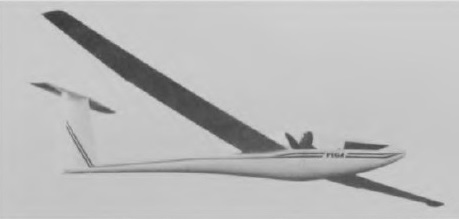
The A model has glass wing skins and 100 kg/ 220 lb of water ballast, while the D model has Kevlar skins for added strength and 160 kg./ 352 lb of ballast. The T. 65C model is a Sports Class variant. The T65C Sport Vega first flew on 18 December 1979, and this version differs from the Vega in having a glassfibre main spar, rotating trailing edge air brakes instead of flaps, and a fixed monowheel and tailwheel. There is no provision for water ballast. The T.65D was first built in 1979 with a standard price at the time of US$17,900. At the time it was produced, the Slingsby company operated under the name Vickers-Slingsby, but the Vickers part was subsequently dropped.
By the beginning of 1980 34 Vegas had been delivered.
Span: 49 ft 2.5 in
Length: 22 ft 0.5 in
Height: 4 ft 11 in
Wing area: 108.2 sqft
Aspect ratio: 22.4
Empty weight: 515 lb
Max weight: 970 lb
Max speed: 155 mph (in smooth air)
Max aero-tow speed: 92 mph
Min sinking speed: 2.21 ft/sec at 51 mph
Best glide ratio: 42:1 at 69 mph
T.65D
Wing span: 15m / 49.2ft
Wing area: 10.05sq.m / 108.2sq.ft
Length: 22 ft
Height: 4.75 ft
Empty Weight: 236kg / 520lb
Payload: 600lb / 272kg
Gross Weight: 1120lb /508kg
Wing Load: 10.35lb/sq.ft / 50.5kg/sq.m
Water Ballast: 352lb /160kg
Airfoil: Wortmann FX 67-K-150
Aspect ratio: 22
MinSink: 0.56 m/s / 1.85 fps / 1.10 kt
No. of Seats: 1
L/DMax: 42.1 @ 111 kph / 60 kt / 69 mph
Max speed: 135 kt
Stall speed: 34 kts
Rough air airspeed: 135 kts
No. Built: 80
Structure: carbon fibre main spar, Kevlar wing skin, fibreglass fuselage and tail
Vega
Wing span: 15.0 m / 49 ft 2 in
Length: 6.72 m / 22 ft 0.5 in
Wing area: 10.05 sq.m / 108.2 sq ft
Wing section: Wortmann FX-67-K-150/FX-71-L-150
Aspect ratio: 22.4
Empty weight: 234 kg / 516 lb
Max weight: 440 kg / 970 lb
Water ballast: 88 kg / 195 lb
Max wing loading: 43.8 kg/sq.m / 8.97 lb/sq ft
Max speed: 135 kt / 250 km/h
Stalling speed: 36 kt / 67 km/h
Min sinking speed: 0.67m/sec / 2.21 ft/sec at 44 kt / 82 km/h
Best glide ratio: 42 at 60 kt / 111 km/h

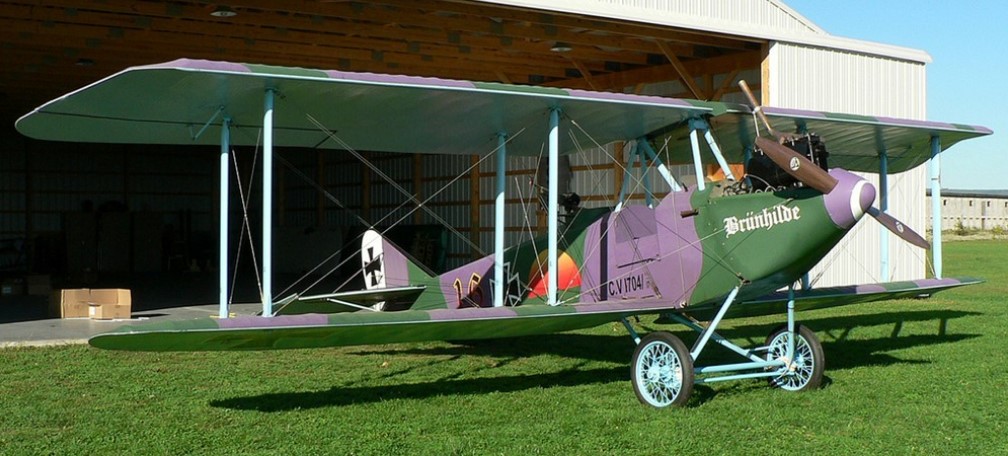
Universal Pictures contracted Slingsby Sailplanes to build rwo flying and several static replicas of the 1917 Rumpler C.IV scout aircraft. They were built at Kirkbymoorside 1968/69 using Tiger Moth airframes and Gipsy Major 10 Mk. 1-3 engines.
The Gipsy Major 10 Mk. 1-3 engine, converted to run upright by Hants & Sussex.
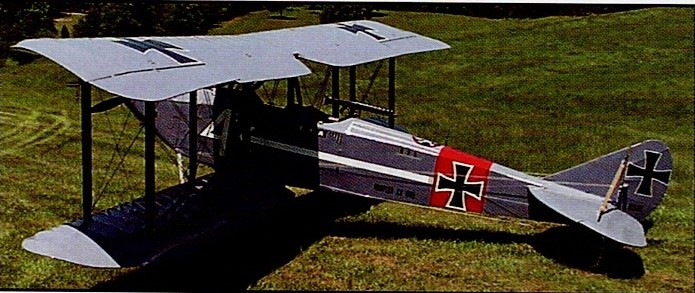
The Tiger basis made them 0.86 scale replicas.
First flown in March 1969 they were shipped to Tunisia for filming before being sold in Virginia.
c/n 1704 G-AXAL
First flew 24 March 1969 at Rufforth
Sold in USA as N1915E
It was donated to the Golden Age Air Museum in Pennsylvania
c/n 1705 G-AXAM
First flew 25 March 1969 at Rufforth
Sold in USA as N1916E
with Ron Bloomquist in Tennessee, USA, in July 2007
Engine: Gipsy Major 10 Mk. 1-3
Wingspan: 39.04 ft
Length: 23.11 ft
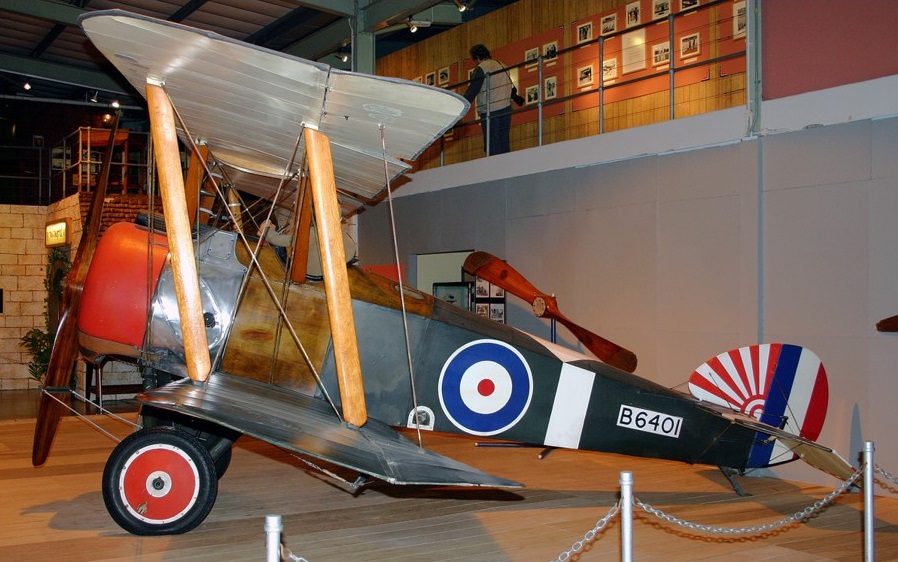
In 1969 Slingsby built a flyable Type T.57 Sopwith Camel Replica powered by a 145hp Warner Scarab engine for use in a Biggles film that was not made. It first flew on 4 March 1969, at White Waltham.
It became N1917H in 1971 (Flying Circus, Bealeton, VA). In 1973 it was sold to Pocono Eagle Industries, but damaged in a ground loop.
In 1975 repairs were started and it was brought back to the UK by AF Carlisle and became G-AWYY. Rebuild completed by Shuttleworth Collection at Old Warden with 29 hours on the log, flown again in October 1976.
Registered G-AWYY c/n 1701, it has a Warner Scarab engine installed and is painted as B6401.
In March 1977 it went to Leisure Sport at Chertsey but in 1982 it was put up for sale and stored at Lands End, Cornwall.
In February 1984 it went to the FAAM at Yeovilton and stored in the Cobham Hall reserve collection. The Certificate of Airworthiness expired on 1 September 1985.
This aircraft is now on display at the Fleet Air Arm Museum, Yeovilton painted as B6401.
Engine: 145hp Warner Scarab
Span: 28.00 ft
Length: 19.04 ft
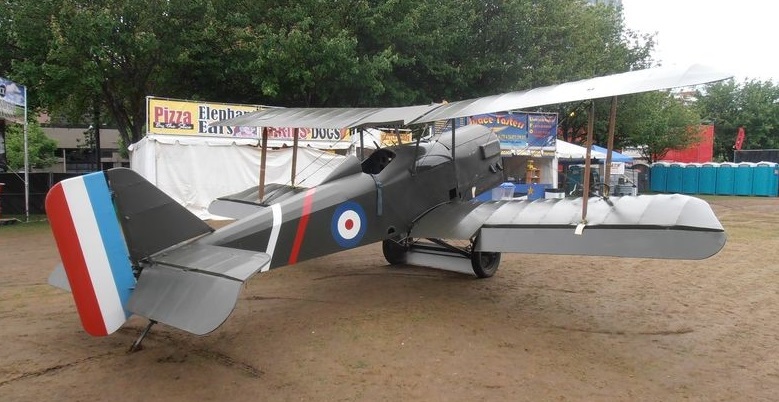
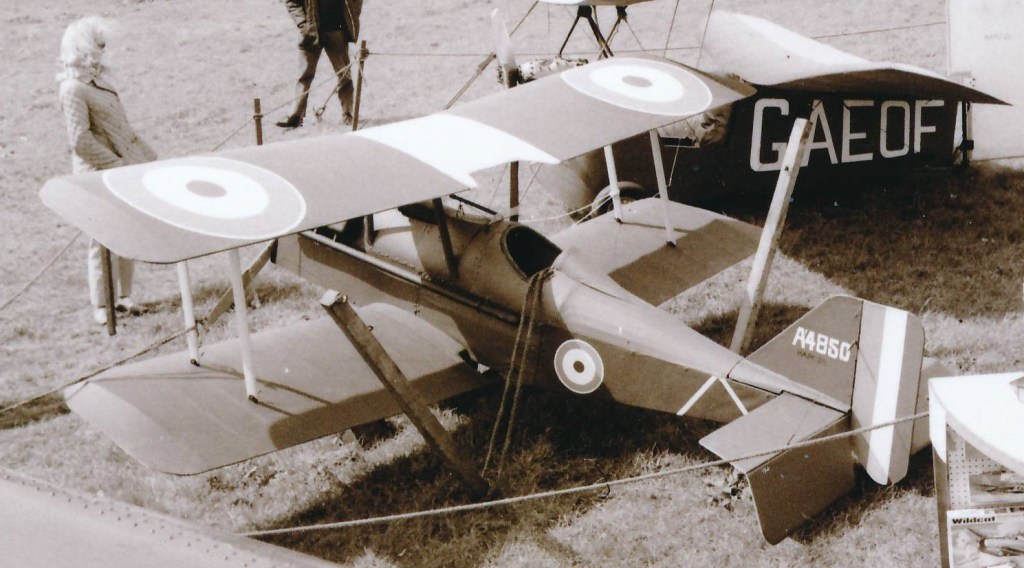
In 1967 Slingsby Sailplanes Limited built six Currie Wot based aircraft to represent the Royal Aircraft Factory S.E.5A for film work. They were powered by 115 hp Lycoming O-235 engines with dummy exhausts and other modifications as 0.83 scale replicas.
They were not modified Currie Wots but were built by Slingsby as a new type based in the Wot drawings, they differ considerably from the Wot. Gliding guru Derek Piggot oversaw the construction of the Slingsby versions, but due to a slight scaling error in design, the nose section was big and boxy. It had almost twice the frontal area, so a large part of the propellor arc was blanked and performance suffered.
They were delivered to Ireland and fitted with dummy guns for the film Darling Lili. These Slingbsy T.56 were referred to as Minis due to their not being full size reproductions. Many static mock ups were built by Slingsby at the same time for the Film Darling Lili.
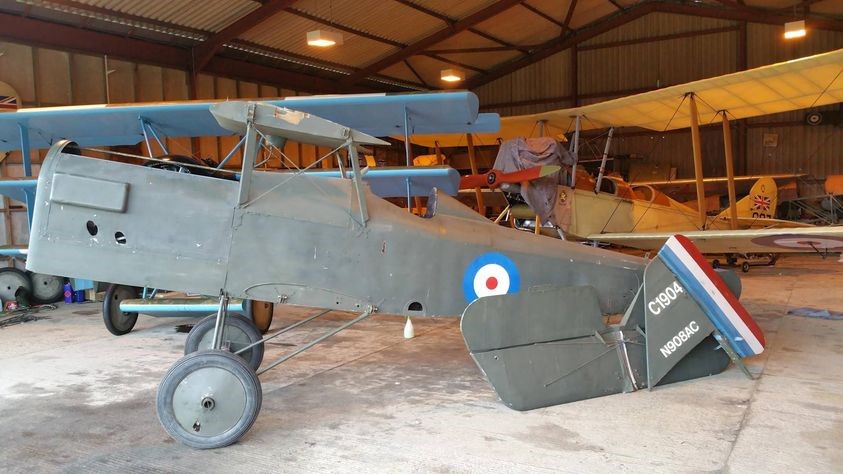
Four additional SE-5s (N908AC, N909AC, N910AC & N912AC) built after The Blue Max for Darling Lili and used in You Can’t Win Them All, Von Richthofen and Brown and Zeppelin were technically Slingsby T56s, 7/8-scale replicas built on converted Currie Wot biplane kits. The latter two movies saw fatal crashes and the aircraft were soon after dispersed to private collections. They were all sold to The Fighting Air Command in Denton, Texas, in the early 1980s, by which time none of them were airworthy.
EI-ARH Slingsby T56 Currie Wot 1590 ex G-AVOT
Lynn Garrison dereg 2011
EI-ARI Slingsby T56 Currie Wot 1591 ex G-AVOU
N909AC Fighting Air Command dereg 21/1/11
EI-ARJ Slingsby T56 Currie Wot 1592 ex G-AVOV
N908AC Fighting Air Command (active)
EI-ARK Slingsby T56 Currie Wot 1593 ex G-AVOW
N912AC Fighting Air Command (active)
EI-ARL Slingsby T56 Currie Wot 1594 ex G-AVOY
N910AC Fighting Air Command dereg 21/7/11
One of our SE5 replicas returned Biggles Biplanes in the UK for restoration.
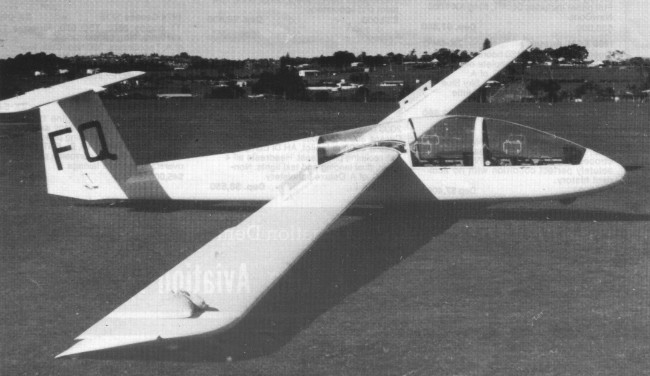
Made distinctive by its swept forward wing and the extensive area of its transparent canopy glazing, which extends back to the wing trailing edge, the T53 tandem two-seater trainer was designed by J. L.Sellars and was Slingsby’s first all-metal type. The type is intended for initial or advanced training and the prototype, the T53A, made its first flight at Wombleton, Yorkshire, on 9 March 1967. It had tapered wings with camber-changing flaps with a range of 5° up to 15° down, ailerons of large chord and an all-moving tailplane.
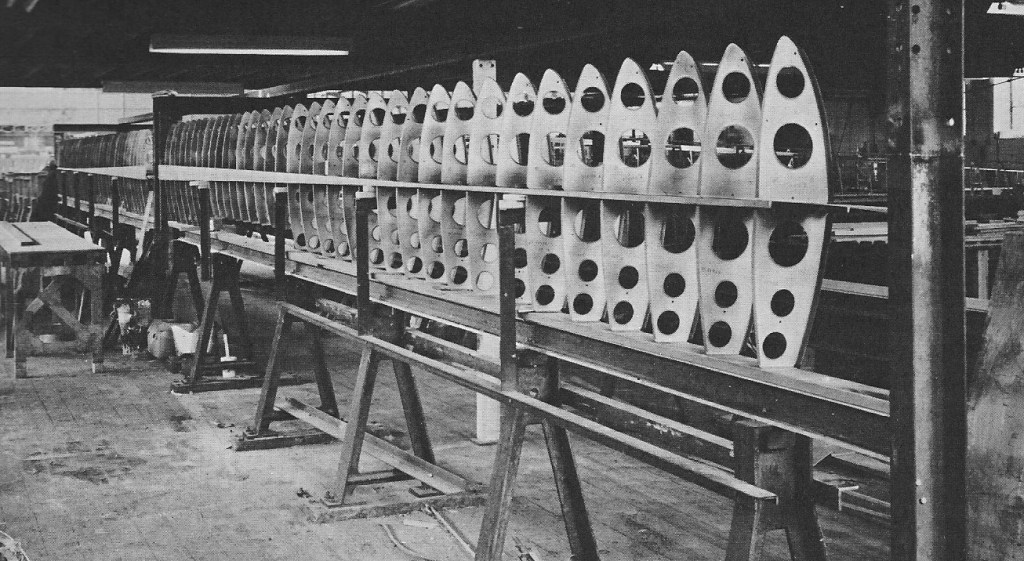
The first production version, the T53B, made its first flight on 28 March 1968, and had the cockpit moved forward, the structure redesigned and simplified, the flaps deleted and the all-moving tailplane replaced by a conventional tailplane and elevators; the aileron chord was also reduced and these changes resulted in lighter stick forces and a considerable saving in weight. The T.53B features two fixed tandem wheels and a swept- forward flapless wing of constant chord (the prototype T.53A had flaps).
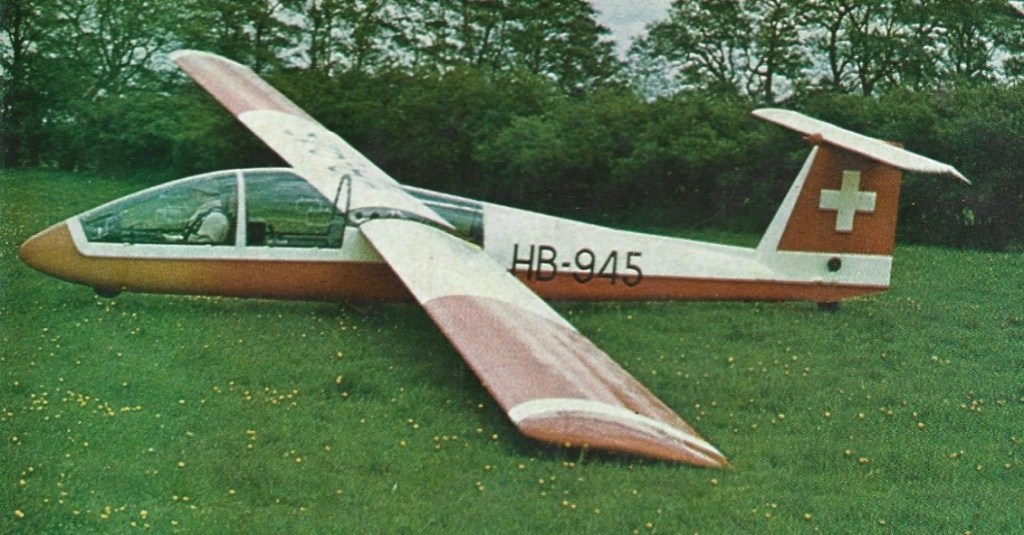
Of light alloy stressed skin construction throughout, the T53C has two-spar cantilever shoulder wings with 3° forward sweep at the quarter-chord line as compared to the 5° 15′ forward sweep of the T53B; the ailerons are mass-balanced and there are Schempp-Hirth air brakes in the upper and lower surfaces. The fuselage is a semi-monocoque and the cantilever tail unit has an internal spring-loaded trimmer. Landing gear consists of a non-retractable main wheel and nose wheel (or skid on the ATC variant), plus a tailskid; main wheel shock absorption on the T53C is by Armstrong damper units and there is an expanding caliper brake. The pilots sit under a sideways-hinging moulded flush Perspex canopy, and radio and an oxygen system can be fitted if desired.
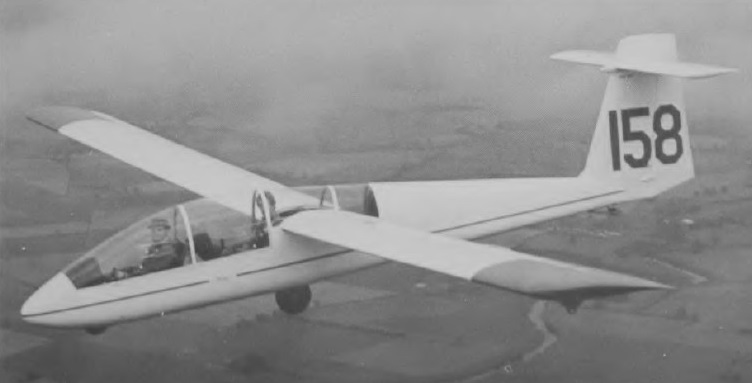
The first T53B, XV951, was in RAF markings for air cadet training, and there were a number of modifications made to meet ATC requirements. These included fitting a nose skid in place of the standard nose wheel, to shorten the landing run; fitting a ground rapid-retrieve facility to improve utilisation in circuit training; fitting a performance retarding device for basic pilot training and making the main wheel spring-loaded. It was also envisaged that the ATC variant could be operated with open cockpits if the crew’s comfort demanded.
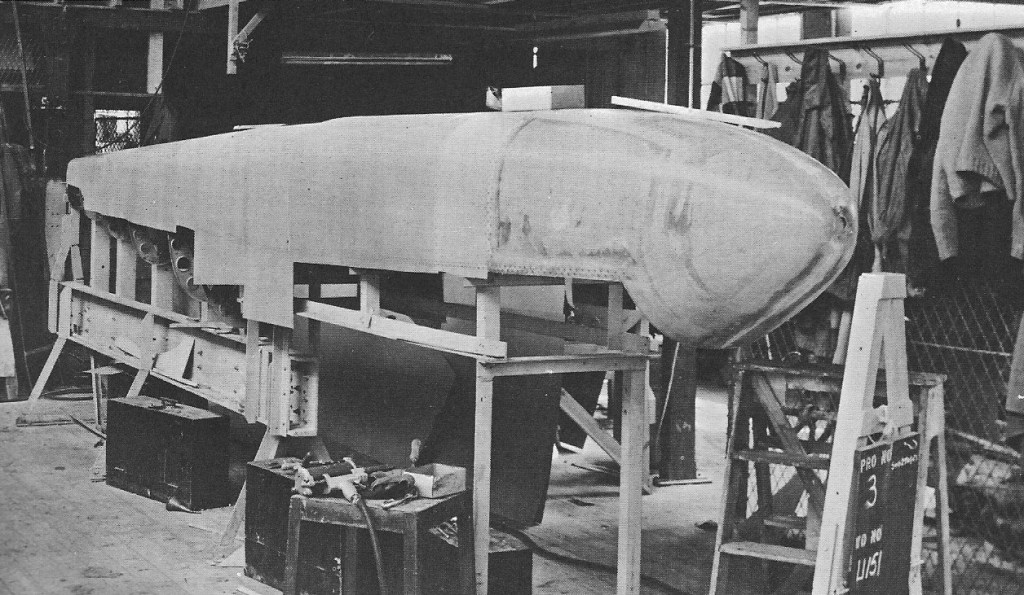
But in the end it was the T53C that was built in small numbers for the ATC, the variant incorporating the special ATC modifications being known as the T53C(M).
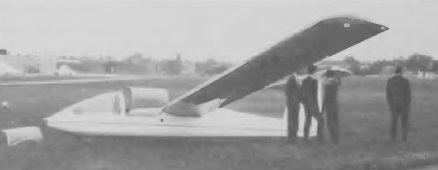
The C, which first flew in May 1970, had a revised and extended fin and rudder with extra area above the tailplane, no dorsal fin, a structurally redesigned wing, reduced aileron control loads resulting from the use of aileron servo tabs, a revised spring trim system and improvements in the cockpit layout, seating, ventilation and canopies; some extra equipment was carried and the all-up weight was increased.
The T53D project of October 1968 was a semi-aerobatic powered trainer version with a pusher engine installed on the port wing only, and a fuel tank in the wing leading edge, and the T53E was another project for a powered trainer version of the T53C.
Only 16 T53Bs and one more T53C (actually the last T53 converted) were built before the November 1968 fire at Slingsby’s works put a stop to production, but the design was later acquired by Yorkshire Sailplanes, who had built three more as the YS.53 Sovereign by 1974. This differed from the T53B chiefly in having longer tail surfaces and a
nosewheel instead of nose skid.
Variation:
Yorkshire Sailplanes YS.53 Sovereign
T53C
Wing span: 17m / 55.5 ft 6 in
Wing area: 18.02 sq.m / 194 sq.ft
Aspect ratio: 15.9
Airfoil: Wortmann FX 61-184
Length: 7.7 m / 25 ft 3.25 in
Height: 1.83 m / 4 ft 7.25 in
Empty Weight: 354 kg / 780 lb
Payload: 226 kg / 499 lb
Gross Weight: 1279 lb / 580 kg
Wing Load: 6.59 lb/sq.ft / 32.19 kg/sq.m
Water ballast: None
Max speed: 135 mph / 117 kt / 217 km/h
Max rough air speed: 80 kt / 148 km/h
Stalling speed: 40.5 kt / 75 km/h
L/DMax: 29 @ 89 kph / 48 kt / 55 mph
MinSink: 0.76 m/s / 2.5 fps / 1.48 kt at 50 mph / 43 kt / 80 km/h
No. of Seats: 2
No. Built: 21
Structure: metal
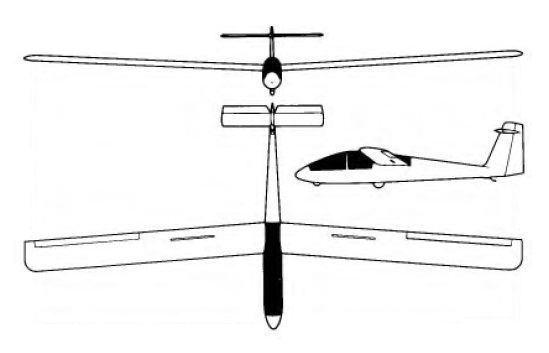
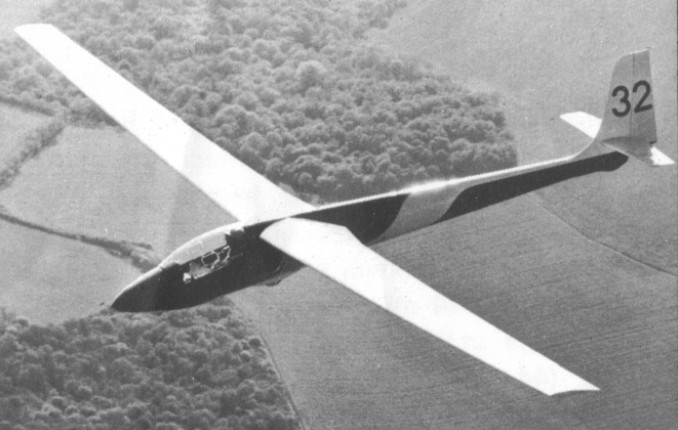
This high performance Standard Class single-seater was the last Slingsby type of conventional all-wood construction and the last to be designed under Mr F.N. Slingsby’s direction.
The T.51 Dart 15 rear fuselage is long and slim with a small fin and tailplane. The overall length of the fuselage is the same as the length of one wing. The general arrangement and size of the cockpit is the same as that of the Skylark 4, although the fuselage depth is reduced by 10 cm (4 in). This is achieved by running the flying controls along the side of the cockpit instead of under the pilot’s seat. The tailplane is of the all-moving type with anti-balance tabs.
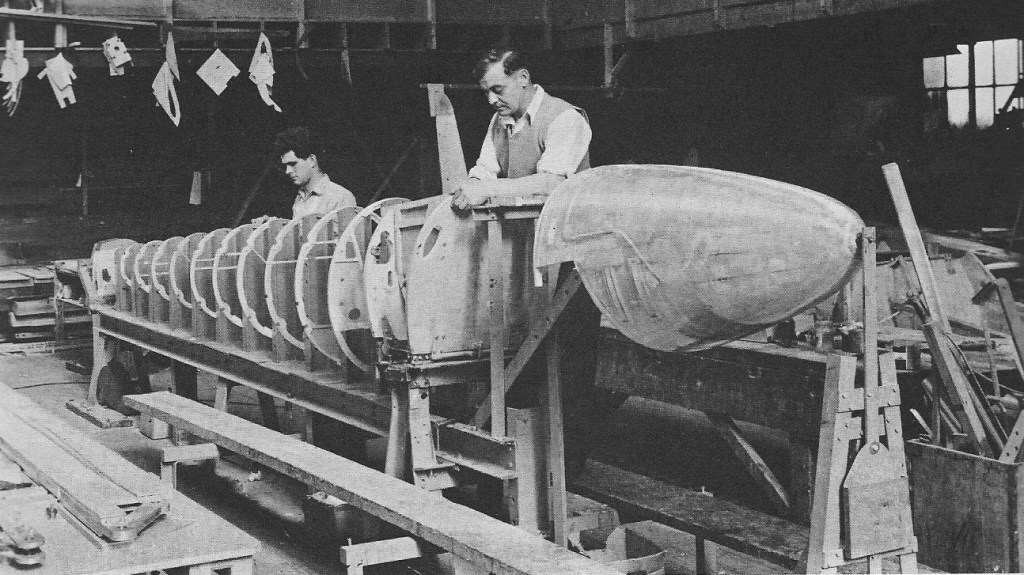
The Dart was originally designed to Standard Class rules and the prototype Dart 15 first flew on 26 November 1963 and the Dart 15 – known as the 15R when fitted with a retractable monowheel – was the initial Standard Class version with 15m span shoulder wings, which were cantilever single spar spruce structures with a birch plywood leading edge torsion box and a fabric-covered rear portion; there were air brakes at the 50% chord line and the plain ailerons were plywood-covered. The wing spars were initially entirely of wood, but were later changed to box spars of mixed wood and light alloy construction with Redux bonding when this type of spar was introduced into the Dart 17 in 1965. Wing root fillets like those on the Dart 17 were also fitted at this time and later production Dart 15s had an all metal tailplane.
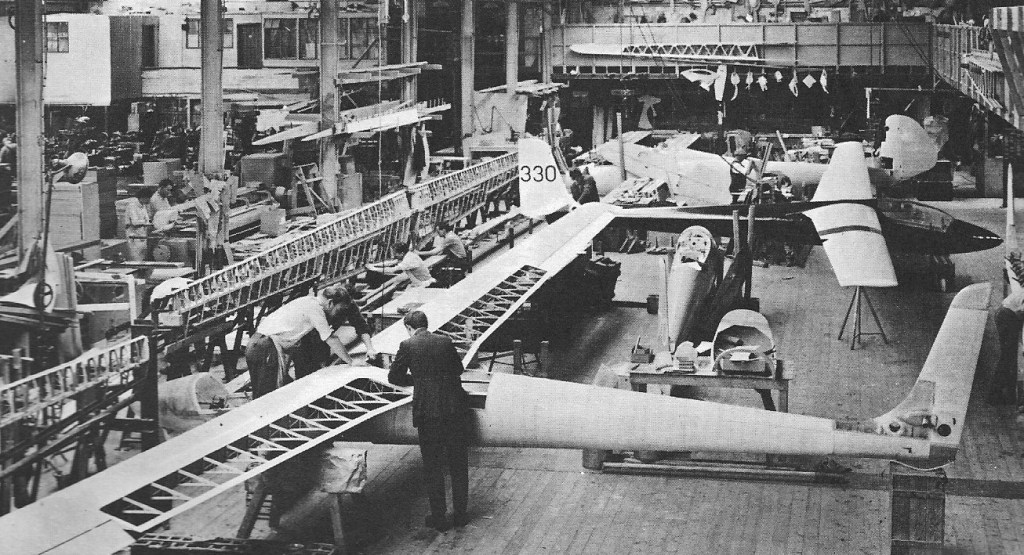
Altogether 50 Dart 15s were built, plus five more constructed from kits supplied by Slingsby, four of these being built by Mr Fred Dunn in New Zealand; the price of a Dart 15 in July 1964 was £1,425.
This verison scored a number of competition successes: one flown by G. Burton gained 5th place in the Open Class at the 1965 World Championships at South Cerney, Gloucestershire, and the Dart 17 prototype, flown by H. C. N. Goodhart, took 7th place in this event. The Dart 15 was awarded the OSTIV Design Prize at these 1965 Championships. In League One of the 1967 British Championships, Darts came 1st and 2nd and took eight more of the first 20 places. In 1965 Dick Georgeson of New Zealand set a world Out & Return record of 730.6 km./ 453.98 miles in a Dart 15.
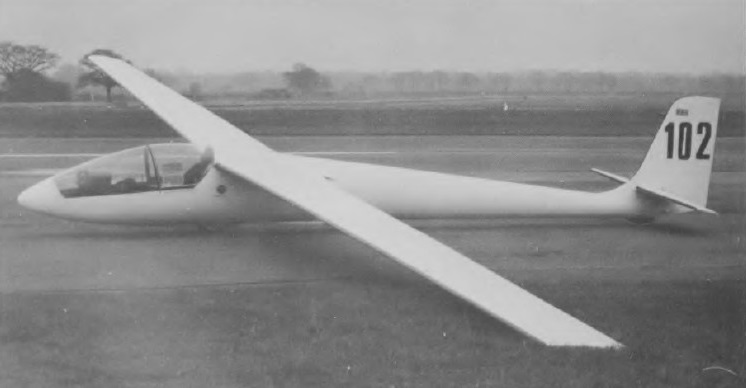
But the Dart 15 in its wooden-sparred form was really too heavy and did not really have the performance for soaring in average British conditions, and this led to the Dart 17 – or 17R with retractable monowheel – with the span increased to 17m, this now being the Open Class version; the prototype 17 first flew in November 1964 and the price of a 17R was £1,950 in August 1966. Altogether 44 Dart 17s and 17Rs were built, plus four more built from kits in New Zealand by Fred Dunn. There was also one Dart 15/17, G-ATOE, which had detachable wing tips for changing the span from 15 to 17m, and two examples of the Dart 15W were built, this being a special version for the British team in the 1968 World Championships in Poland. The 15W had a new Wortmann wing section instead of the previous NACA 64-series aerofoils, a revised canopy shape and cockpit interior; the 15W first flew at Lasham on 29 March 1968 and after the Championships both 15Ws were convertred to Dart 17Ws with the 17m span wing, first flying in this form on 3 May 1969, and both were later fitted with retractable monowheels, in which form they were designated Dart17WR.
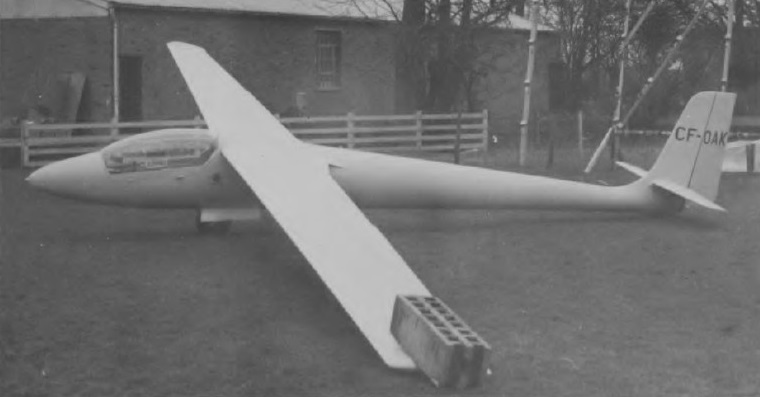
Most Dart 15s and 17s had the retractable wheel, which became available as an optional fitting at the end of 1965, and this allowed a change of wing incidence, thus avoiding the Dart’s tail-high attitude when flying at high speeds. All-metal tailplanes were also fitted to the later production Dart 17s. With the original wooden spar wing, flexure was caused when the Dart 17’s air brakes were extended, and so to reduce this a new box spar with light alloy booms Redux-bonded to wooden webs was introduced, the first Dart 17 with this spar being rolled out in April 1965. At the same time the aileron span was increased by 11.75in, and new wing root trailing edge fillets were added to reduce drag. On the Dart 15 the new spar resulted in a saving of 45lb in tare weight over the wooden-sparred version. The Dart’s fuselage is a semi-monocoque spruce structure of elliptical cross section, the cockpit section being covered with glassfibre and the remainder with birch plywood. The pilot sits in a semi-reclining seat under a sideways hinging moulded Perspex canopy with clear vision panels, and the cockpit is very similar in size and general arrangement to the Skylark 4’s. The fuselage is shallower than the letter’s because the flying controls run along the sides of the cockpit instead of under the pilot’s seat. The fin and rudder are of spruce with glassfibre leading edges, the rudder being fabric-covered, and the light alloy stressed skin tailplane, previously wooden, is an all-moving surface with anti-balance tabs. As well as the monowheel, which has an expanding brake, there is a short forward skid under the nose and a tail bumper fairing.
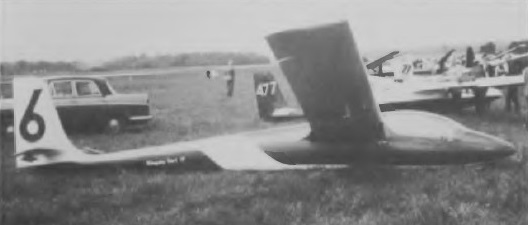
A total of 81 Darts were built.
T.51 Dart 15
Wing span: 15m / 49.2ft
Wing area: 12.5sq.m / 136sq.ft
Wing section: NACA 64s618/615
Aspect ratio: 18
Length: 7.47 m / 24 ft 6 in
Empty Weight: 218kg / 480lb
Water ballast: None
Payload: 122kg / 270lb
Gross Weight: 750lb / 340kg
Max speed: 116 kt / 215 km/h
Stalling speed: 35 kt / 65 km/h
Max rough air speed: 80 kt / 148 km/h
Wing Load: 5.51lb/sq.ft / 27.21kg/sq.m
L/DMax: 31 @ 87 kph / 47 kt / 54mph
No. of Seats: 1
MinSink: 0.76 m/s / 2.5 fps / 1.48 kt at 41.5 kt / 77 km/h
Structure: wood/ metal bonded spar, metal tailplane
T51 Dart 17 R
Wing span: 17 m / 55ft 9.25 in
Wing area: 13.87 sq.m / 149.3 sq.ft
Aspect ratio: 20.4
Wing section: NACA 6433618/615
Length: 7.54 m / 25 ft 5 in
Empty Weight: 243 kg / 535 lb
Payload: 88kg / 195lb
Water ballast: None
Gross Weight: 331kg / 730lb
Wing Load: 4.89 lb/sq.ft / 23.86 kg/sq.m
Max speed: 136 mph / 119 kt / 220 km/h (in smooth air)
Max rough air speed: 117 kt / 216 km/h
Stalling speed: 35 kt / 65 km/h
L/DMax: 37 at 87 kph / 47 kt / 54 mph
MinSink: 0.58 m/s / 1.97 fps/ 1.13kt at 46 mph / 40 kt / 74 km/h
No. of Seats: 1

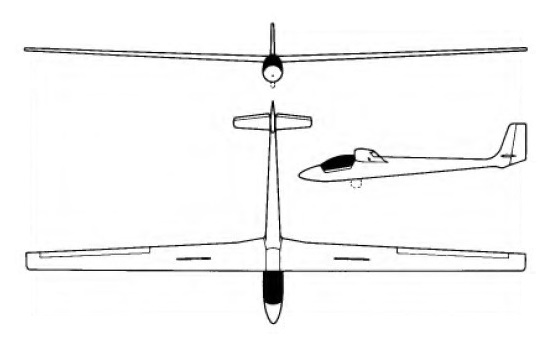
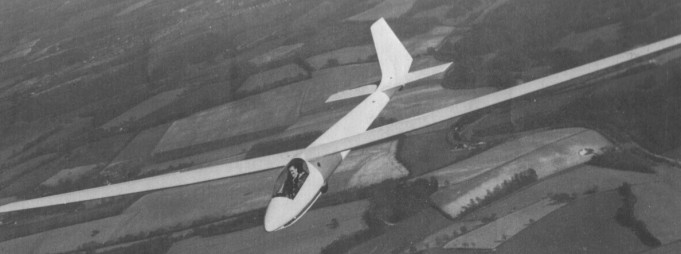
Although developed from the later versions of the Skylark 3, the Skylark 4, with its new and shallower fuselage with the pilot sitting in a semi-reclining position, and its new outer wings and ailerons giving a wing span of exactly 18m (59ft 0.5in), was almost a new design. It was developed through the Slingsby T47, a verison of the Skylark 3 projected in December 1958 with a span of 20m (65ft 7in) created by increasing the span of the constant chord centre section; the wing area was now 193.45sq ft and the aspect ratio 22.2. The Skylark 4 has the wings faired directly into the top of the fuselage without the built up pylon-type structure behind the cockpit of the Mks 3 and 2, the height of the wing being 9in lower than the Mk3’s. The wing is very similar to that of the 3G but has modified wing roots, and the main spar has been strengthened to avoid the Mk 3’s tendency for the wing tips to be deflected downwards at high speed.
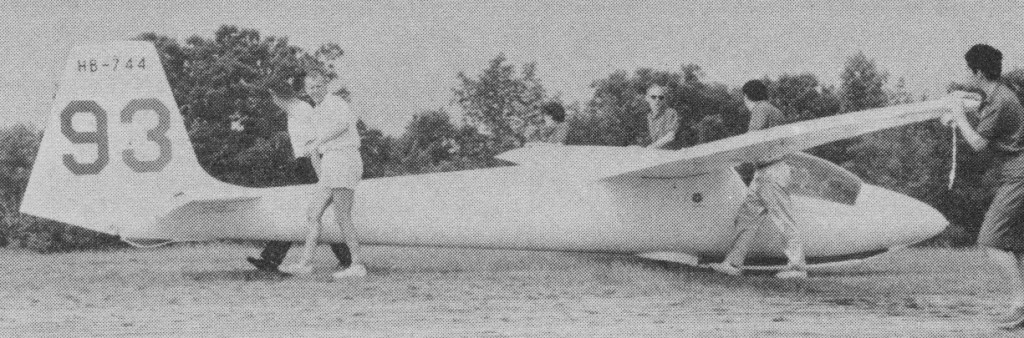
The prototype Skylark 4 first flew in February 1961 and altogether 63 Mk 4s were built, plus three more constructed in New Zealand by Mr Fred Dunn from kits supplied by Slingsby. The Mk 4 was successful in competitions, and scored two notable successes in 1963 when examples of this version won both the US and Canadian National Championships.
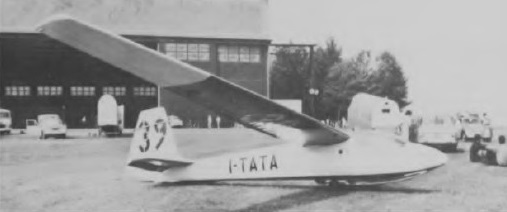
Structurally the Mk 4 was very similar to the Mk 3, with a light rear spar carrying the ply-covered ailerons, the wing being plywood-covered to the rear spar and with a fabric-covered trailing edge; the air brakes in both upper and lower surfaces are on the 50% chord line. The wooden fuselage is a semi-monocoque of elliptical cross section with a glassfibre-covered nose and plywood covering for the remainder. The pilot sits under a moulded Perspex canopy that is larger than the Mk 3’s, and likewise hinges sideways to open. Landing gear consists of a non-retractable Dunlop monowheel with rim brake, a rubber-sprung nose skid and a tail bumper. The fin and tailplane are plywood-covered and the rudder and elevators fabric-covered, with a trim tab in the starboard elevator.
The Royal Air Force operated 4 (known as the Swallow T. Mk. 1) in its air cadet training program. Altogether 192 Skylark Mks 1-4 were built.
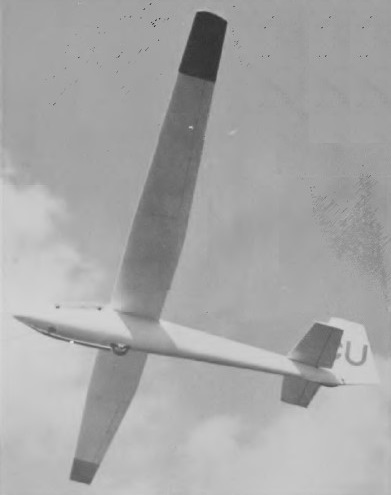
Skylark 4
Span: 59 ft 0.5 in / 18 m
Length: 25ft 1 in
Height: 5ft 3in
Wing area: 173 sqft
Aspect ratio: 20.5
Empty weight: 570 lb
Max weight: 830 lb
Mex speed: 135 mph
Max aero-tow speed: 80 mph
Min sinking speed: 1.74 ft/sec at 43mph
Best glide ratio: 36:1 at 47 mph
No. of Seats: 1
T.50 Skylark 4
Wing span: 18.16 m (59 ft 7 in)
Length: 7.64 m (25 ft 1 in)
Wing area: 16.07 sq.m (173 sq.ft)
Wing section: NACA 633620/6415
Aspect ratio: 20.5
Empty weight: 253 kg (558 lb)
Max weight: 376 kg (829 lb)
Water ballast: None
Max wing loading: 23.4 kg/sq.m (4.79 lb/sq ft)
Max speed: 118 kt (219 km/h)
Stalling speed: 32 kt (60 km/h)
Min sinking speed: 0.53 m/sec (1.74ft/sec) at 37 kt (69 km/h)
Max rough air speed: 71 kt (132 km/h)
Best glide ratio: 36 at 41 kt (76 km/h)
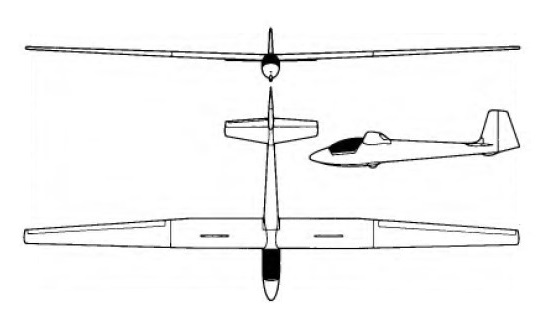
 All Aero