Stanisław Sobkow was born in 1924, probably in Lviv. When he was a boy, his parents often took him to the Lviv airport. He admired the acrobatics there. Fascinated by this sight, he began to build wooden models of airplanes.
In 1939, as a 16-year-old young man, he tried to build a glider (probably named WS-1) and a small amateur WS-2 aircraft according to his own designs. However, these plans were interrupted by the war.
After World War II, Stanisław Sobkow worked as a technician at WSK-Okęcie . Despite the many and various difficulties that prevailed after the end of the war. In 1951 he started building an amateur plane, which he called WS-3 “Czajka”. The works were not completed until 1956. In the summer of 1956, “Czajka” made the first flight. Sobków’s plane was also demonstrated at the air shows in Kielce and Mielec. Unfortunately, the construction and piloting of own aircraft were strictly forbidden in Poland at that time.
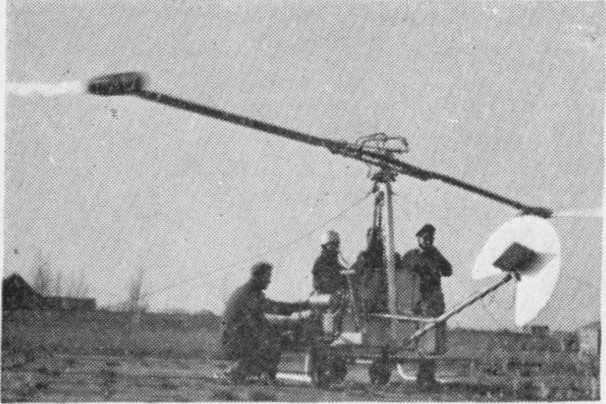
Fortunately, the burning of “Czajka” did not break Stanisław Sobków, who again started working on a new structure. It was a helicopter named WS-4 “Świerszcz”. Its construction was completed in 1967.
Stanisław Sobkow also developed other constructions, such as a 3-seater snowmobile, a motor boat, the “Żbik” tricycle (that is, the conversion of the “Komar” moped into a 4-seater vehicle!) And a modification of the “Syrena-103” car.
The first post-War Dutch-built helicopter the Sobeh-l, was developed into the Sobeh H-2. Its all-metal, all-bonded rotor had automatic stability and transfers automatically into auto-rotative pitch in case of engine failure. The rotor was turned initially by a separate 1 hp bicycle engine.
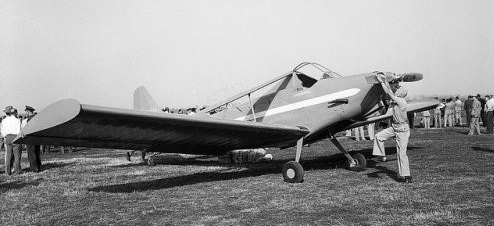
By 1955 plans were under way for the S2 model, to be joined by the S2B, a 450 hp version, with the pilot sitting behind the hopper. This first flew in August 1956. The smaller model, the S2A, was fitted with the Continental W670-6A radial engine of 220 hp and 74 of these were built by the Snow Aeronautical Corporation. Only 17 of the larger 450 hp S2B were built and this was followed by the Snow S2C-450, still an open cockpit aircraft with distinctive overturn protection incorporating a larger hopper and a wing span increased to 44 feet, 7 inches. The empty weight was 2940 lbs and loaded, 5700 lbs. Some 215 were built, at least half with the 600 hp P&W R-1340-AN1 which increased the loaded weight to 6000 lbs.
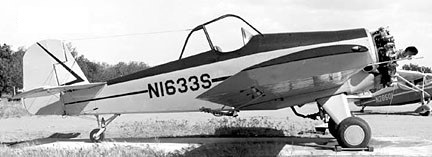
The first Snow S2C appeared in 1960, a follow-on aircraft to the similar Snow S2B of which nineteen were produced. Both were powered by the 450-hp R-985. At that time Snow were also building the S2A which was produced until 1962. A smaller aircraft, the pilot sat in front of the hopper. Some S2C aircraft had the wingtips removed and were fitted with large end plates.
Snow S-2C N1633S
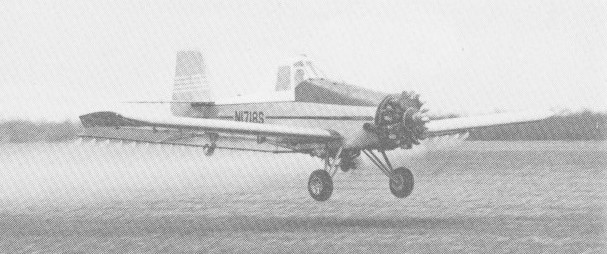
Around 260 Snow S2Cs were built, firstly powered with a 450hp P&W R-985-AN-1, first flying on 12 April 1961, a 600-hp P&W R-1340-AN-1 version first flying on 12 May 1961. From 1962 until production was superseded by the Aero Commander-Snow S2D-600 in 1965. Until this point all aircraft were built with open cockpits.
In 1965 the Snow Corporation was taken over by Aero Commander and a new model, the S2D-600, was flown in 1965. It was the first with the new enclosed cockpit, setting the lines for the later Thrushes and with a larger hopper. Snow also modified the aircraft to incorporate a loader driver seat directly behind the pilot’s and facing rear.
Aero Commander built 105 S2D-600’s. The S2D was fitted with an even larger hopper suitable for rice sowing and fertiliser spreading and this became the Rockwell S2R-600 Thrush in 1968.
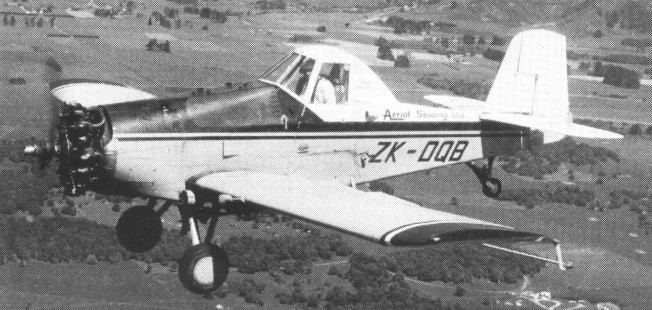
Rockwell Thrush Commander
Re-engining became popular. Besides the R-1340 version, Rockwell introduced the S2R Thrush 800 fitted with a Wright R-1300B1 radial of 800 hp. In 1975 two US Ag operators, Marsh in Arizona and Ayres in Georgia, fitted Garrett and Pratt & Whitney turbines to Thrush aircraft. Marsh had previously fitted a Garrett TPE-331 Pre-Century of 575 shaft horse power to an open cockpit 1965 model Snow S2C and it was first flown on 9 July 1973. It is the first known conversion, known as the Marsh S2R-T Turbo-Thrush, of an agricultural aircraft in the United States; N1674S, #600-1250C (the 250th ag¬plane built by Snow), was later sold to Plexico as XB-ETQ. Another conversion by Serv-Aero Engineering was to fit the 1200 hp Wright R-1820-71 piston radial. In 1977, the Ayers Corporation, of Albany, Georgia, purchased the Thrush Commander line and continued to build the S2R, with the same constructors serial sequence, finally ending at 2582R.
A new sequence was started by Ayres with the 750 hp P & W PT6A-34AG with constructors numbers beginning with 6001, and incorporating one major change, the fitting of a 500 US gallon hopper. The 5000 sequence was used for the 100 or so 800 hp Wrights built by Rockwell.
Once Ayres had taken over, one of the new versions was named the Bull Thrush, powered with a 1200 hp Wright R-1820-97 and fitted with a 500 US gallon hopper. One of the new features was a Dual Cockpit variant, being denoted by a DC at the end of the constructor’s number. From this time Ayres were to start a whole new series of constructors numbers, prefixed by S2R, followed by engine model fitted and then a number, in most cases, starting at -001. As example, S2R-1340-… (600 hp), S2R-1820-… (1200 hp), S2R-RS3-… (PZL R83, 595 hp) and S2R-T34-… (750 hp).
Snow began designing his first aerial application aircraft, the S-1, in 1951 when he was 21 years old.
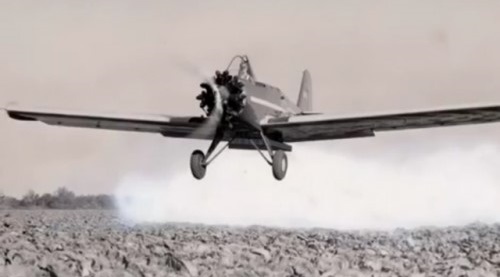
In August, 1953, the S1 flew for the first time, powered by a 190 hp Lycoming. Unusually for a US ag-plane, the pilot sat between the engine and the hopper, and, unlike later Snow models, the aircraft had wing struts.
The aircraft was successful, enough for Snow to take it to Nicaragua for a season the following year.
To give it more power, it was fitted with a Continental radial of 220 hp. The radial engined S-1 lost its wing struts.
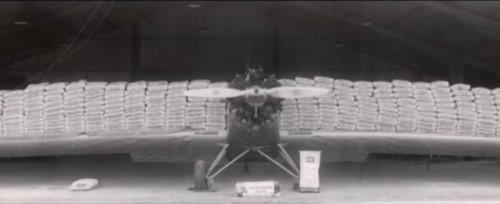
Dam¬aged by a thunderstorm in 1958, this aircraft was destroyed in a warehouse fire a few years later.
That airplane remained in production until 1957, after which Snow introduced the S-2A and S-2B models.
Founded 1955 by Leland Snow to make agricultural aircraft of own design. Incorporated 1961; expanded 1963.
Original Snow S-2B, a low-wing single-seat monoplane of metal construction, with fixed landing gear, received FAA Type Approval July 1958. By end of February 1965 260 aircraft of basic S-2 series delivered to 19 U.S. states and 11 foreign countries.
In 1965 Rockwell-Standard acquired Snow Aeronautical, continuing to produce agricultural aircraft at Olney as Snow Commanders (as division of Aero Commander), and acquired Intermountain Manufacturing Company (IMCO) 1966. Single-engined Model 112 delivered to customers from 1972. Low-wing twin-engined Rockwell Commander 700 produced jointly with Fuji in Japan.
Thrush Commander was very notable specially-designed agricultural aircraft. The entire Thrush Commander range sold to Ayres Corp and then became known by the Ayres name. Shrike Commander 500S terminated 1980 but Commander Jetprops continued by Gulfstream American Corporation.
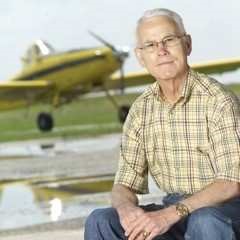
Leland Snow, founder and President of Air Tractor, Inc., and the inventor of modern aerial spray aircraft, died Sunday morning, February 20, 2011 while jogging near his home. He was 80 years old.
Herman Östrich’s team in charge of the development of the BMW 003 engine had moved to the town of Stassfurt, near Magdeburg, in February 1945. An underground production factory was being set up in a salt mine outside town by C.G. Rheinhardt in a desperate attempt to continue engine production in face of the now overwhelming Allied air campaign. This mine is well known historically as it was also being used for the storage of uranium compounds as part of the Nazi atomic bomb program.
The town of Stassfurt surrendered to US forces on 12 April 1945, and Östrich hid much of the technical data in a local cemetery. The next day a ten-man team made up primarily of engineers from Pratt & Whitney arrived, and he handed the data over to them. Production restarted for US use while the war ground to a close, and the US forces cleared out the factory while they waited to turn the area over to the Soviets.
Östrich had by this time moved to Munich for further interrogation, and from there to England at the request of Roy Fedden. He had them work on the design of a turboprop engine for a proposed C-54 Skymaster-class four-engine transport. While working on this design, Őstrich was secretly approached by French DGER agents with an offer to take up further design of the 003 in France. The French forces had found a number of 003 engines in their occupation zone after the war, and were interested in setting up a production line. These discussions had not progressed very far when Őstrich was allowed to return to Munich, only to be brought back to England in late August, then returned to Munich again where the US offered him and a hand-selected team jobs in the US, but without their families.
The French made contact with Herman Oestrich, the chief designer of the German BMW factory, and smuggled him out of the American occupation zone into the French zone and then into France itself, giving him every technical support in return for his skills. By 1948 Oestrich had produced his first jet engine; the Atar
Östrich instead accepted the French invitation, and by September had been set up at the former Dornier factories in Rickenbach in the French Zone. Here they were soon joined by other former BMW engineers, as well as those from a number of other German firms, bringing the team to about 200 members. The group was named the Atelier Technique Aéronautique Rickenbach, or ATAR. They worked on a new design that was based on the BMW layout, but considerably larger and more powerful. They completed the preliminary design of the ATAR 101 (model R.101) in October, and granted a production contract on the proviso that actual production would be carried out in France. In January a further five-year contract was offered to the entire team, including protected wages, provisions for their families, few travel restrictions, and the possibility of French citizenship. The contract was signed on 25 April 1946, and the drawings for the ATAR 101 were sent to SNECMA for production.
Communications between the ATAR group and SNECMA, the newly formed Nationalised engine manufacturer, proved to be difficult and the design team soon moved to Decize on the River Loire, to improve communications with SNECMA and was re-named Aeroplanes G.Voisin, Groupe ‘O’ . Manufacture of components for the ATAR 101 V1 commenced at SNECMA plants in May 1946.
The first engine took some time to assemble. The first parts were available as early as May 1946, but a complete compressor or turbine was not ready until the middle of the next year. The first complete engine finally ran on 26 March 1948. By April 5 it had been brought up to 3,700 lbf (16,000 N) thrust and was continually improved until it reached 4,850 lbf (21,600 N) by October. During this time a new turbine made of solid high-temperature steels replaced the earlier air-cooled models, allowing for better aerodynamic shaping and an improved compression ratio. By January 1950 several additional engines had joined the program, bringing the total running time to over 1,000 hours, and a thrust of 5,955 lbf (26,490 N), making it among the most powerful engines of the era. The BMW 003 that it was developed from provided only 1,760 lbf (7,800 N), less than half of the Atar.
The ATAR 101 was steadily developed with improvements to materials, aerodynamic design, compressors, combustion chambers and turbines resulting in the first commercially viable engine, the ATAR 101B, which, along with later marques, powered the SNCASO S.O.4050 Vautour fighter / bomber/ reconnaissance aircraft.
The ATAR 101B introduced more stator blades as well as a number of changes to fix minor problems seen in the earlier experimental models. The first B model passed a 150 hour endurance test in February 1951 at 5,290 lbf (23,500 N). A flight test followed on 5 December 1951 in the Dassault Ouragan, and starting on 27 March 1952, under the wings of a Gloster Meteor F.4. After delivering the initial production run of B models, the Atar 101C used an improved compressor and combustion chamber, raising the power to 6,170 lbf (27,400 N). The Atar 101D featured a slightly larger turbine with new high-temperature alloys that allowed the exit temperature to rise to 1,000 C and the thrust to 6,615 lbf (29,420 N). The D model also included a new exhaust consisting of a long pipe ending in two “eyelid” shutters on the outside of the engine in place of the earlier moving cone on the inside. The Atar 101E added a “zeroth” compressor stage, raising the overall pressure ratio to 4.8:1 and the thrust to 8,160 lbf (36,300 N). Various models were tested on a wide variety of aircraft.
An afterburner was incorporated into the D model to produce the Atar 101F of 8,380 lbf (37,300 N), while the same addition to the E model produced the 10,365 lbf (46,110 N) ATAR 101G. These were flight tested on the Mystère II in August 1954, but they did not see production on this aircraft. Their first success was on the Super Mystère, a Mystère in name only, which first flew under Rolls-Royce Avon power on 2 March 1955, and followed by the 101G powered version on 15 May 1956.
Production started in 1957 with a contract for 370 aircraft, but this was later cut back to 180 in light of the performance of the Dassault Mirage III which was then undergoing testing.
The early engines were constructed from ordinary commercial steels and suffered from very short running lives, not achieving a 150 hour endurance test until 1951. As more exotic materials were introduced the durability and reliability of test engines improved dramatically and on 10 November 1950 the first flight-ready ATAR 101A flew in the fuselage of a Martin B-26G Marauder (F-WBXM). Steady progress was made by Groupe O, but they were soon absorbed into SNECMA during a massive re-organisation of the nationalised giant in June 1950. Other aircraft joined the flight test program, including two SNCASE S.E.161 Languedoc airliners, a SNCASO S.O.30P Bretagne (F-WAYD), SNCASE S.E.2060 Armagnac and a Gloster Meteor F.4 (RA491).
With the Atar 101 now sitting at the low end of the power scale, in 1954 SNECMA started the design of a more radical upgrade, the Atar 08. Overall design and dimensions were similar to the 101, but the new engine included a nine-stage compressor in place of the earlier seven-stage one, and a smaller two-stage turbine to power it. There were many detail improvements as well, including the replacement of the original compressor rotor with a new one made of magnesium alloy. The first Atar 08 B-3 produced 9,500 lbf (42,000 N) and had a slightly improved overall pressure ratio of 5.5:1.
A new and much improved afterburner was designed for the engine, resulting in the Atar 09. It was first tested in January 1957 at 12,350 lbf (54,900 N), and was soon improved to 13,230 lbf (58,800 N). A further improved afterburner with eighteen flaps in place of the two-flap system of the earlier designs was introduced on the 09C model in December 1959. This version also featured a new starter from Microturbo that provided compressed air directly into the engine allowing it to start without the compressor running at full speed. The Atar 9D replaced the exhaust and afterburner area with one made of titanium that allowed continual operation at Mach 2, up from the C’s 1.4. Air cooling was re-introduced for the Atar 9K models, further improving overall performance, and especially fuel economy.
With the Atar 8 and 9 series, the long ten years of development had finally resulted in a successful commercial design. Thousands were produced for a variety of aircraft, including the Étendard and Super Étendard strike aircraft, Mirage III, Mirage 5 and Mirage F1 fighters, the Mirage IV bomber, and a variety of test aircraft.
In 1955 the French government started a project to explore flight speeds up to Mach 3.0. SNECMA began studies on an engine to power it, initially consisting of the compressor design of the existing Atar 101, but replacing all of the light alloys with steels in order to handle the increased operating temperatures. This also demanded the use of an air-cooled turbine, similar to the ones from the earliest prototypes. Such an engine, the M.26, ran in May 1957, giving 47 kN (10,364 lbf) without an afterburner. Further improvements led to the M.28, which ran in September 1958 at 52 kN (11,466 lbf).
This work led to the Super Atar design of 85 kN with afterburning. This version also included variable stators, which were in the process of being widely introduced in the industry. However, the project to build the test aircraft, the Griffon III, never went ahead and SNECMA ended development of the Super Atar in 1960.
The Atar design was also used for a variety of larger, smaller, and experimental developments. Of particular note are the R.104 Vulcain, a scaled-up Atar, and the much smaller R.105 Vesta. Both engines were developed in parallel to the Atar in the early 1950s in order to fill particular performance niches, the Vulcain for the Mystère IV D, and the Vesta for a variety of designs. None of these entered production, however; the Mystère IV D was cancelled, and the Vesta lost out to the Turboméca Gabizo, which was also abandoned.
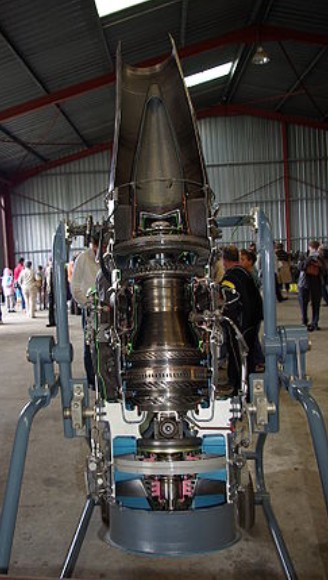
The original Atar 101 featured a seven-stage axial compressor using aluminum alloy blades attached to an aluminum rotor. The front bearing was held in place by four vanes, with the “left” one as seen from the front containing a power takeoff shaft. One unique feature of the Atar designs was the separate Atar 5000 accessories section, which could be mounted in front of the engine, driven by an extension shaft. The combustion area consisted of twenty steel flame cans arranged in a “canular” layout, exiting into the single-stage turbine. Early models were 2.85 m long, 0.9 m in diameter, and weighed 850 kg, while The C models and on were 3.68 m lone including the long extension, 0.89 m in diameter, and weighed 940 kg. Later versions were generally similar to the C model, although the inclusion of the afterburner increased lengths to 5.23 m, and weights varied from 925 to 1,240 kg depending on the model.
Improved marques continued to be developed throughout the 1950s culminating in the 101G with after-burning laying the ground work for the later ATAR 8 and ATAR 9.
The Atar 8 and 9 used a 9-stage compressor similar to the 101, but including a steel first stage in order to improve damage resistance. The turbine included two stages. Length and width remained the same as the 101 models, deliberately, but weights further increased up to 1,350 kg for the 9B.
Variants: 101V Early test engines used to develop the engine.
101A Flight test engines flown on flying test-beds.
101B Initial production engine built in limited numbers for prototypes and test installations on contemporary aircraft. First flown in a Dassault MD.450-11/12 Ouragan on 5 December 1951, 101Bs also flew in a Gloster Meteor F.4 and the S.O.4050-01, first prototype of the Vautour
101C Improved compressor and combustion as well as an increase in maximum rpm from 8,050 to 8,400 rpm gave a thrust of 27.45 kN (6,170 lbf)
101D The D introduced a variable area eyelid nozzle, replacing the translating bullet used in earlier Marks.
101E By 1954 the I0IE3 was developing 34.32 kN (7,715 lbf) largely due to a new compressor with 15% higher pressure ratio.
101F The 101D fitted with an afterburner to produce the 101F
101G The 101E fitted with an afterburner to produce the 101G
Atar 08 Two-stage turbine and improved compressor, non-afterburning, developed in 1954-1956.
Atar 08B Used in Dassault Étendard IV
Atar 08K-50 Simplified non-afterburning version of Atar 9K-50 for Dassault Super Étendard
Atar 09C Used in Dassault Mirage III and 5 fighters
Atar09K-10 Improved combustion chamber, turbine blade cooling; used in Dassault Mirage IV bombers
Atar09K-50 Improved Atar 9C with a redesigned turbine and upgraded compressor resulting in improved fuel consumption and thrust; used in Dassault Mirage F1 and Mirage 50.
Atar Plus Joint development with ITP and Denel, new compressor, new turbine, new electronics.
Applications: Martin B-26 Marauder Dassault Étendard IVM Dassault Étendard IVP Dassault Mirage F1 Dassault Mirage III Dassault Mirage IV Dassault Mirage 5 Dassault Mirage 50 Dassault Super Étendard Dassault Mystère B prototypes Dassault Mystere C production aircraft Dassault Mystère IVB prototype only Dassault Super Mystère Dassault MD.450-11/12 Ouragan Gloster Meteor F.4 Leduc 0.22 Nord Gerfaut SNCASE S.E.161 Languedoc SNCASE SE-212 Durandal SNCASE S.E.2060 Armagnac SNCASE S.E.5000 Baroudeur Sud-Est Baroudeur
Specifications: Atar 101C Type: Turbojet Length: 3,680 mm (145 in) Diameter: 890 mm (35 in) Dry weight: 940 kg (2,072 lb) Compressor: 7-stage Axial flow Combustors: Annular Turbine: Single stage Axial Fuel type: Aviation kerosene Oil system: Pressure spray / splash system Maximum thrust: 2,800 kgf (27.46 kN; 6,172.94 lbf) Specific fuel consumption: 1.05 (107.03 kg/kN/hr) Thrust-to-weight ratio: 2.98 (0.0292 kN/kg)
Atar 9C Type: Afterburning turbojet Length: 5,900 mm (232 in) Diameter: 1,000 mm (39 in) Dry weight: 1,456 kg (3,210 lb) Compressor: 9-stage axial compressor Combustors: annular Turbine: Two-stage Maximum thrust: 42.0 kN (9,440 lbf) military power 58.9 kN (13,240 lbf) with afterburner Overall pressure ratio: 5.2:1 Specific fuel consumption: 103 kg/(kN·h) (1.01 lb/(lbf·h)) military power 207 kg/(kN·h) (2.03 lb/(lbf·h)) with afterburner Thrust-to-weight ratio: 40.5 N/kg (4.1:1)
The SNECMA Turbomeca Larzac is a military turbofan manufactured by GRTS (Groupement Turbomeca-SNECMA), a consortium between the two French companies, SNECMA and Turbomeca. Its main application was on the Dassault/Dornier Alpha Jet.
Variants: 04-C6 04-C20 04-H-20
Applications: Dassault/Dornier Alpha Jet HAL HJT-36
The French made contact with Herman Oestrich, the chief designer of the German BMW factory, and smuggled him out of the American occupation zone into the French zone and then into France itself, giving him every technical support in return for his skills. By 1948 Oestrich had produced his first jet engine; the Atar


 All Aero