Originally a specialist in aircraft hydraulic systems, began small-scale construction of aircraft for other small manufacturers. After failing to obtain a license to build the CAB Supercab, designed a new lightplane known as the SRCM-153 Joigny, which first flew in March 1960. This was a three/four-seat monoplane with rectractable landing gear, powered by a Lycoming engine.
Post WW2
Constructions Aero Navales SUC-10 Courlis
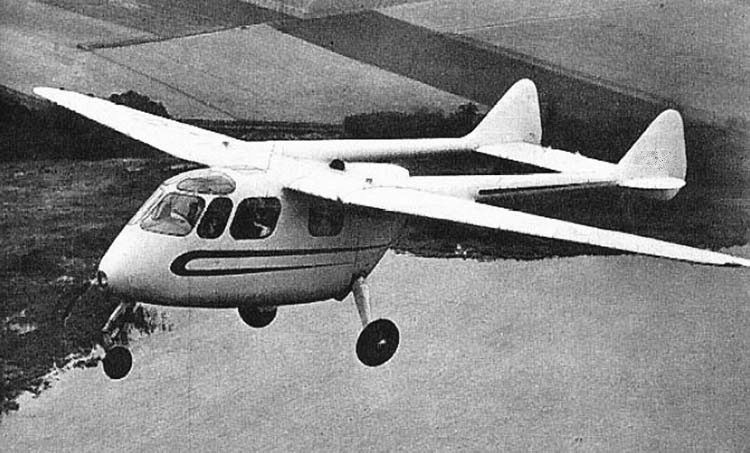
After Second World War Societe D’etudes Et De Constructions Aero Navales undertook to produce all-metal light aircraft. Resulted in Courlis twin-boom monoplane of 1946, with tricycle landing gear and special loading arrangements.
Societe D’etudes Et De Constructions Aero Navales
Subsidiary of Usines Chausson of automotive industry. After Second World War undertook to produce all-metal light aircraft. Resulted in Courlis twin-boom monoplane of 1946, with tricycle landing gear and special loading arrangements. After 1950 concentrated on components, including Speedpak freight container for Lockheed Constellation, and external tanks for fast aircraft.
Societa Idrovolanti Alta Italia / SIAI
Italy
Forerunner of the Siai-Marchetti organization (see Siai-Marchetti Societa Per Azioni). Founded 1915 by Luigi Cape at Sesto Calende, with a seaplane base on Lake Maggiore. As Idrovolanti Savoia built FBA flying-boats under license. Name “Savoia”had a geographical and historical connotation (House of Savoy), and after the war new flying-boats were known by the name Idrovolanti Savoia, or Savoia. These achieved early distinction, notably in the 1920 Schneider Trophy contest. Names Savoia and Marchetti were linked in 1922, when Alessandro Marchetti became technical director of company renamed Societa Idrovolanti Alta Italia—Savoia-Marchetti. In 1925 the company gained publicity when an S.16ter was flown to Australia and Tokyo and back to Italy by Francesco De Pinedo. Famous types included the twin-hulled S-55 which, though first flown in 1924, is remembered chiefly for General Balbo’s mass-formation flights of 1930 and 1933. Special long-range landplane S-64 broke world’s duration and distance records in June 1930. Initials S. M. for type numbers were not commonly applied until later, and then particularly in association with fast 3-engined civil and military types. Most famous was S.M.79 bomber and torpedo bomber of Second World War. Civil types included the record-breaking S.M.75 of 1939. Last Second World War aircraft was S.M.91 twin-boom fighter-bomber, but S.M.84 bomber served as transport until 1948.
SAN SAN-101
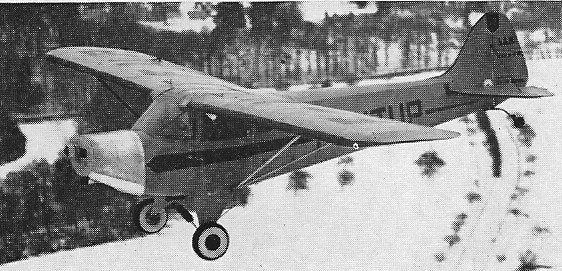
The SAN-101 was the first product of Societe Aeronautique Normande. A tandem two-seat high-wing monoplane powered by a 65 hp Continental C65 engine.
One prototype was built, first flying at the end of 1949.
Engine: 65 hp Continental C65
Wingspan: 38 ft 2.5 in
Length: 24 ft
Max speed: 98 mph
Cruise: 74 mph
Range: 373 mi
Societe Aeronautique Normande / SAN
Formed 1948. First prototype of the SAN-101 two-seat high-wing monoplane flew 1949. Built other light aircraft, notably Jodel D.150 Mascaret; 4/5-seat Jodel D.140 Mousquetaire; and D.140R, for use as glider tug and in mountainous areas. The products were known as SAN Jodel and attained considerable success, but company went into liquidation early in 1969.
SOCATA TB.9 Tampico / TB.10 Tobago / TB.11 / TB20 Trinidad / TB.21
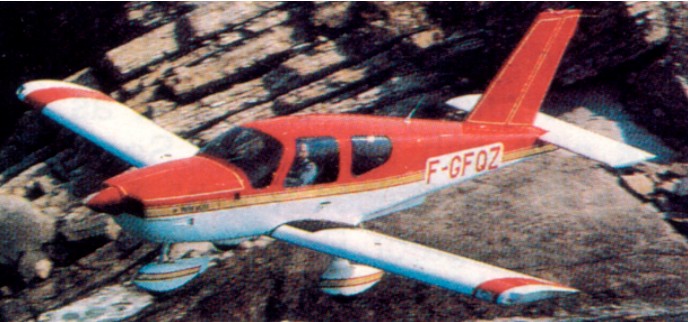
This series was originated in 1975 as a supplement to the Rallye family with fixed landing gear and lower performance but greater accommodation.
Effectively starting with a clean sheet of paper, the Aerospatiale design team came up with an entirely new and original aircraft, the TB9/TB10. First launched in mid 1979, the initial two versions, the TB9 Tampico and the TB10 Tobago, share virtually identical airframes. The Tampico however is powered by a fixed pitch prop, 160 hp Lycoming (though a variable pitch version has subsequently become available), while the Tobago comes with 180 hp driving a constant speed propellor.
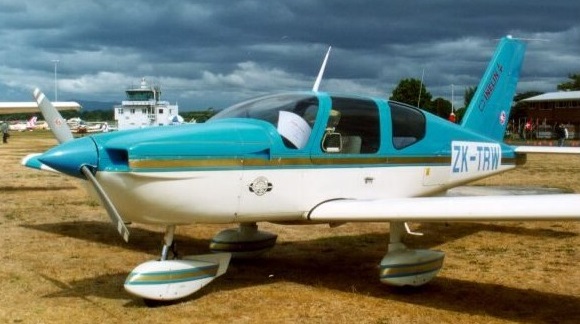
The series began with the TB.10 that first flew in February 1977 with a 119-kW (160-hp) O-320-D2A engine. The type was later named Tobago, but with the development of a higher-powered model the original type became the four-seat TB.9 Tampico so that the designation TB.10 Tobago could be accorded to the newer four/five-seat model with the 134-kW (180-hp) O-360-A1AD.
The third member of the family flew on 14 November 1980 as the TB.20 Trinidad with more power and, more importantly, retractable tricycle landing gear. The latest variant was introduced in 1983 as the TB.11 aerobatic version of the Tobago with an inverted flight engine/fuel system for the training of professional pilots.
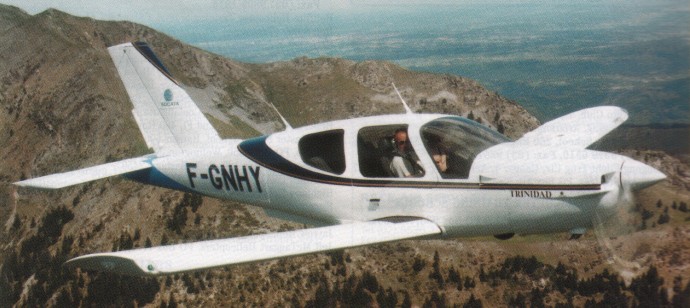
Actual airframe structure is remarkably simple – which returns savings in both initial cost and future maintenance. The entire aircraft has only 800 parts (compared with 2,000 or more for most similar light singles), and construction is done on a modular basis- This enables individual customer options, including avionics and indeed even the choice of 160 or 180 hp engine, to be installed at the appropriate constructional stage, rather than as an add-on later.
Wing spars are milled from a solid billet of aluminium instead of being built up with webs, gussets, spar caps etc. The only cable run in the aircraft is the elevator trim, the rest of the controls being torque tubes and/or push/pull tubes. Socata have got the parts count for the basic airframe down to around 800 pieces.
The TB.20 Trinidad was designed utilising the interior dimensions of the Citroen GS car. Certified in 1981 to the American FAR 23. Wing spars are milled from a solid billet of aluminium instead of being built up with webs, gussets, spar caps etc. The only cable run in the aircraft is the elevator trim, the rest of the controls being torque tubes and/or push/pull tubes. Socata have got the parts count for the basic airframe down to around 800 pieces.
The 10 degree flap extension speed was raised from 103 KIAS to 129 KIAS. The early models had a takeoff weight and landing weight of 1335 kgs. The take-off weight only was then increased to 1400 kgs. The Trinidads from serial number 950 have the same take-off and landing weights of 1400 kgs. This later mod involved changes to the landing gear that can’t be retro-fitted.
TB.9 Tampico
Engine: Lycoming O-320, 160 hp
Cruise 65%: 107 kts
Endurance 65%: 4 hr 40 min
Stall: 58-48 kt
Useful load: 910 lbs
ROC: 660 fpm
TO dist 50 ft: 1854 ft
Max X-wind: 25 kt
TB.9 Tampico Club
Engine: Lycoming O-320, 160 hp
TB.10 Tobago
Engine: Lycoming O-360-A1AD, 180 hp
Prop: Hartzel Variable Pitch CSU
Seats: 4-5
TO dist 50 ft: 1398 ft
Max X-wind: 25 kt
Cruise speed: 115kts
TB 10 Tobago
Engine: Lycoming O 320 D2A, 158 hp
Length: 25.066 ft / 7.64 m
Height: 9.514 ft / 2.9 m
Wingspan: 32.021 ft / 9.76 m
Wing area: 128.092 sq.ft / 11.9 sq.m
Max take off weight: 2249.1 lb / 1020.0 kg
Weight empty: 1228.2 lb / 557.0 kg
Max. speed: 173 kt / 321 km/h
Cruising speed: 127 kt / 236 km/h
Take off distance: 1398 ft / 426 m
Initial climb rate: 826.77 ft/min / 4.2 m/s
Wing loading: 17.63 lb/sq.ft / 86.0 kg/sq.m
Range: 594 nm / 1100 km
Crew: 2+2-3
TB.10GT
TB.11
TB.20 Trinidad
Engine: Lycoming IO-540-C4D5D, 250 hp
TBO: 2000 hr
Propeller: Const. spd.
Wingspan: 32 ft. 1 in
Overall length: 29 ft. 3 in
Height: 9 ft. 4 in
Wing area: 128 sq. ft
Gross weight: 3086 lb
Empty weight, std: 2010 lb
Useful load, std: 1076 lb
Fuel: 86 USgal
Wing loading: 24.1 lbs/sq.ft
Vne: 187 kts
Cruise speed 75% power: 157kt
Cruise speed 65% power: 153 kt
Cruise at 75%: 164 kts (8000 feet)
Cruise at 65%: 160 kts (12,000 feet)
Fuel consumption 75% power: 13.7 USgph
Fuel consumption 65% power: 12.1 Usgph
Rate of Climb @ 95 kts: 1260 ft/min
Best climb angle speed: 81 kts
Best glide: 92 kts
Final approach speed: 73 kts
Stall speed (gear, flaps down): 59 kt
Demonstrated Crosswind: 25 knots
Max speed: 193 mph at sea level
Max range (w/ res) 75% power: 887 nm
Max range (w/ res) 65% power: 1048 nm
Operational range: 1,109 miles
Service ceiling: 20,000 ft
Takeoff ground roll: 1193 ft
Landing ground roll: 755 ft
Landing gear type: Tri/Retr.
Seating capacity: 4-5
Cabin width: 50 in
Cabin height: 42 in
Baggage capacity: 143 lb
TB.20 Trinidad GT
TB.21 Trinidad TC
Engine: Lycoming TIO-540-AB1AD, 250 hp
TBO: 2000 hrs
Propeller: Const. spd.
Landing gear type: Tri/Retr.
Gross weight: 3086 lb
Empty weight, std: 1860 lb
Useful load, std: 1226 lb
Fuel: 86 USG
Wingspan: 32 ft. 1 in
Overall length: 25 ft. 7 in
Height: 9 ft. 4 in
Wing area: 128 sq. ft
Seating capacity: 4-5
Cabin width: 50 in
Cabin height: 44 in
Baggage capacity: 143 lb
Cruise speed 75% power: 187 kts
Cruise speed 65% power: 169 kts
Max range (w/ reserve) 75% power: 890 nm
Max range (w/ reserve) 65% power: 1030 nm
Fuel consumption 75% power: 16.4 USgph
Fuel consumption 65% power: 12.4 USgph
Stall speed (gear, flaps down): 59 kt
Best rate of climb: 1126 fpm
Service ceiling: 25,000 ft
Takeoff ground roll: 1217 ft
Landing ground roll: 755 ft
2004 Socata TB.21 Trinidad GT
Engine:Lycoming IO-540-CAD5D, 250 hp @2575 rpm@SL
TBO: 2000 hr
Fuel type: 100/100LL
Propeller: Hartzell 2-blade, CS
Landing gear type: Tri/Retr.
Max ramp weight: 3080 lb
Gross weight: 3080 lb
Landing weight: 3080 lb
Empty weight, std: 1911 lb
Useful load, std: 653 lb
Payload, full std. fuel: 728 lb
Usable fuel: 86 USgal
Oil capacity: 13.3qt
Wingspan: 32 ft. 2 in
Overall length: 25 ft. 5 in
Height: 9 ft. 4 in
Wing area: 128 sq. ft
Wing loading: 24.1 lbs./sq. ft
Power loading: 12.3 lbs./hp
Wheel base: 6 ft. 3 in
Wheel track: 7 ft. 2 in
Wheel size: 6.00 x 6 in
Seating capacity: 4-5
Cabin doors: 2
Cabin width: 50 in
Cabin height: 47 in
Baggage capacity: 143 lb
Cruise speed (best economy power) 75% power: 159 kt
Cruise speed (best economy power) 65% power: 156 kt
Cruise speed (best economy power) 55% power: 141 kt
Stall speed (flaps down): 54 kt
Best rate of climb (SL): 1200 fpm
Service ceiling: 20,000 ft
Takeoff over 50-ft. obstacle: 2150 ft
Landing over 50-ft. obstacle: 1825 ft
Socata 1998 Tobago XL
Engine: Lyc. IO-360-A1B6, 200 hp
TBO: 2000 hr
Propeller: Const. spd.
Landing gear type: Tri/Fixed
Gross weight: 2535 lb
Empty weight: 1576 lb
Useful load: 959 lb
Fuel: 54 USgal
Wingspan: 32 ft
Overall length: 25 ft. 2 in
Height: 9 ft. 10 in
Wing area: 128 sq. ft
Seating capacity: 4-5
Cabin width: 50 in
Cabin height: 46 in
Baggage capacity: 143 lb
Cruise speed 75% power: 130 kt
Cruise speed 65% power: 123 kt
Max range (w/ reserve) 75% power: 585 nm
Fuel consumption 75% power: 12.4 USgph
Fuel consumption 65% power: 11.0 USgph
Stall speed (gear, flaps down): 53 kt
Best rate of climb: 937 fpm
Service ceiling: 16,000 ft
Takeoff ground roll: 1067 ft
Landing ground roll: 623 ft
SOCATA Super Horizon 2000 / Provence / ST.10 Diplomate
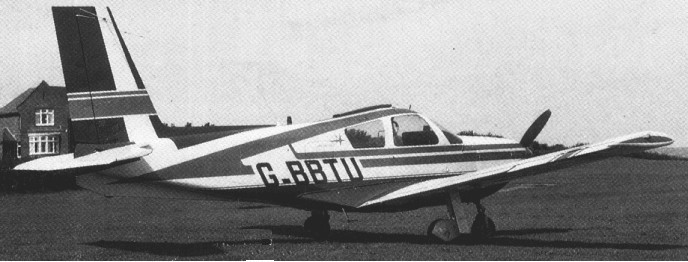
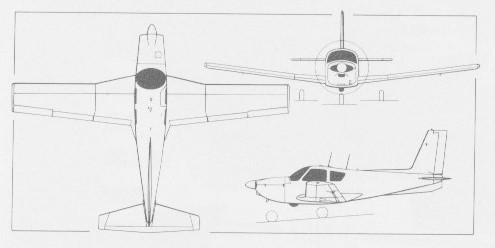
From the all-metal GY.80 Horizon SOCATA developed an improved model that first flew in November 1967 with a lengthened fuselage, a redesigned cabin, a modified tail unit, a more powerful engine and revised landing gear. This last adopted main units that retracted inwards into the undersurfaces of the wings, while the nosewheel unit retracted to leave about one-quarter of the wheel exposed. Initially designated Super Horizon 2000 and then Provence, the type eventually became the ST.10 Diplomate by the time production deliveries began at the end of 1969. Despite the fact that it offered a usefully higher level of performance than the Horizon, the type failed to attract any real sales enthusiasm and SOCATA ended production in 1975 after delivery of only 56 examples.
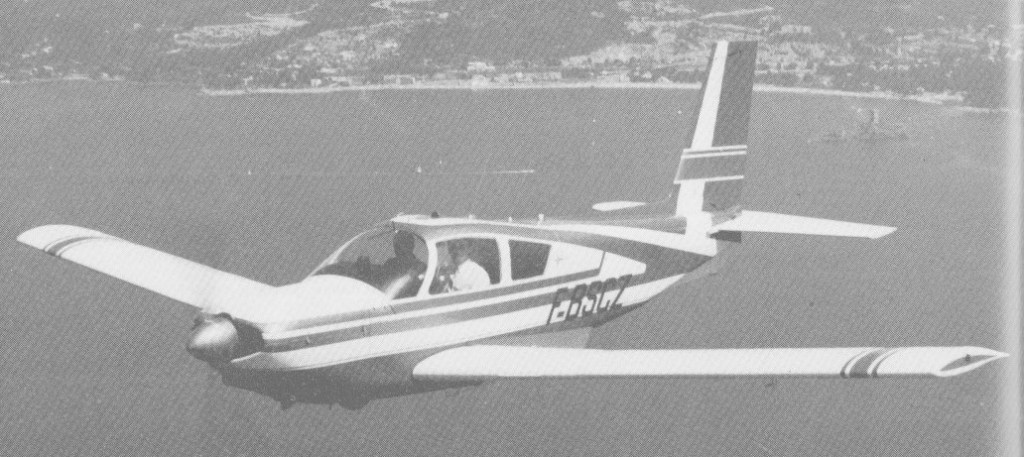
ST.10 Diplomate
Type: four-seat sport and touring lightplane
Powerplant: 1 x Avco Lycoming IO-360-C1B, 149kW (200 hp)
Span: 9.70m (31ft 9.75in)
Length: 7.26m (23 ft 9.75 in)
Empty weight: 1594 lb / 723 kg
Max TO weight: 1220 kg (2,690 lb)
Max speed: 174 mph at sea level
Max cruise 75%: 143 kt / 165 mph / 265 kph
ROC: 1003 fpm / 306 m/min
Service ceiling: 16,400 ft / 5000 m
Operational range: 860 miles / 746 km / 1385 km
Baggage capacity: 154 lb / 70 kg
Cabin length: 7 ft 3.75 in / 2.25 m
Cabin width: 3 ft 8.75 in / 1.14 m
Cabin height: 4 ft 1.25 in / 1.25 m
SOCATA / Societe de Construction d’Avions de Tourisme et d’Affaires
Formed 1966 out of Morane-Saulnier as subsidiary of Sud-Aviation, to develop and produce group’s light sporting and business aircraft. Known as Socata Groupe Aerospatiale, products including the TB30 Epsilon tandem two-seat piston-engined trainer (first flown December 1979), Rallye lightplane in four-seat 235F form, TB9 Tampico Club 4/5-seat lightplane (first flown March 1979), TB10 and more powerful TB200 Tobago 4/5-seat Iightplanes for basic/instrument flight training and cross-country flying among their many uses (first flown February 1977 and March 1991 respectively), TB20 and TB21 Trinidad 4/5-seat lightplanes with higher-powered piston engines for advanced instrument training among other roles, TBM 700 pressurized and turboprop- powered business aircraft (first flown July 1988), Omega tandem two-seat turboprop military trainer (first flown April 1989), TB360 Tangara twin piston-engined lightplane (first flown February 1997) based on U.S. Gulfstream American GA-7 Cougar, new MS 180 Morane and MS 250 Morane 4/5-seat lightplanes expected to fly by 2000 and featuring SMA MR turbocharged piston engines, tandem two-seat MS 300 Epsilon Mk 2 turboprop-powered basic and primary military trainer that is expected to fly in year 2000, and HALE high-altitude long-endurance communications and electronic intelligence platform, based on TBM 700 but with 48m wingspan (expected to fly in year 2004). Company made components under subcontract for wide variety of aircraft, including Magister and Concorde, and current work includes components for Eurocopter helicopters, Airbus and ATR airliners, Dassault Falcon bizjets, Lockheed Martin Hercules freighter, and CFM56 engine.
Aerospatiale’s light aircraft division Socata (Societe de Construction d’Avions de Tourism et d’Affaires) makes use of computerised milling machinery, when not in use for military or other contracts.
Nord-Aviation, Sud-Aviation and SOCATA joined to form Aerospatiale in 1971.
Sobkow WS-3 Czajka
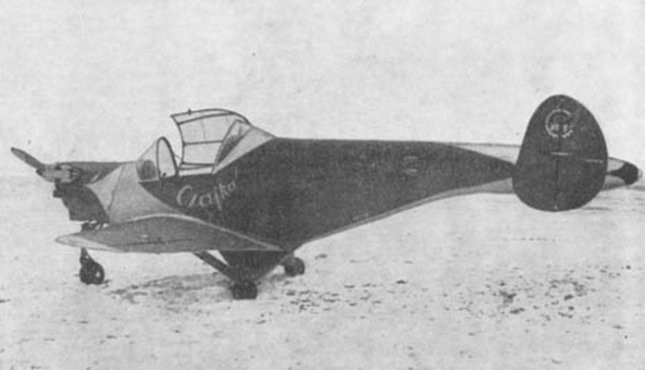
In 1949, Stanisław Sobkow started to construct an amateur plane, which he called WS-3 “Czajka”.
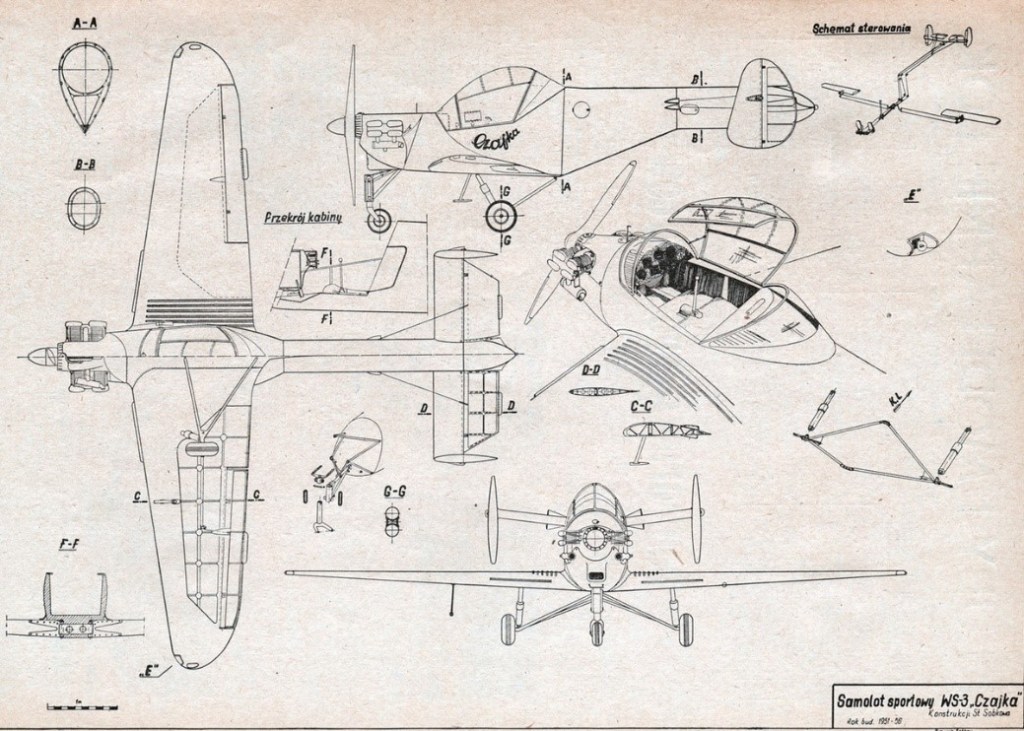
Single-seat, self-supporting low-wing wooden structure.
The wing is divided, with a trapezoidal contour, with rounded ends and with a slant backwards, the end of the wings is elliptical. The wing had a working caisson and two girders. The rear part of the wing is covered with canvas, at the fuselage and at the ends of the wings with plywood. Slotted ailerons, covered with linen.
The wooden fuselage had a rectangular cross-section in the front part, passing into a rounded tail part. Half-shell frame and longitudinal structure covered with plywood. Covered cabin.
Horizontal control with a rectangular contour with a rise. Covering the fins with plywood, the rudders with cloth. The spreading of the rudders made them act as aerodynamic brakes.
Three-wheeled chassis with a front wheel, fixed.

The construction was started in 1951. The woodwork was made in the carpentry workshop of Spółdzielnia Rzemieślnicza in Kielce, Poland, and metal details were made by the workshops of the Kielce Aeroclub, at the airport in Masłów, where the construction of the airframe was completed in mid-April 1956. The engine received from the Board of the League of Friends of the Soldier. Although “Czajka” was an amateur construction, only aviation materials were used for its construction. During the assembly of the plane of his idea, S. Sobkow used many ready-made structural elements from the glider and the factory plane. The works were completed on April 15, 1956.
After the taxiing tests carried out in the spring of 1956, on August 26, 1956, WS-3 “Czajka” made its first flight. The plane was also demonstrated at air shows, once at the Aeroclub in Kielce, once at the Workers’ Aeroclub in Mielec, arousing the understandable interest of the public, and above all, aviation hobbyists. This amateur, light and small plane was the first, thoroughly successful structure of this type, built in Poland after World War II. It was proved easy to fly, and of simple construction.

Up to 1959, “Czajka” spent about 20 hours in the air in about 70 flights. The constructor tried to legalize his activity, but the Institute of Aviation he did not respond to applications and letters for approval. The documentation sent there has not been checked. As a result, the designer was forced to stop using his plane, which was pushed behind the hangar.
In 1960 “Czajka” was completely destroyed. At that time, the construction and piloting of own aircraft were strictly forbidden in Poland. That is why a commission burned down the structure, which – apart from arsonists – was convinced by all to be successful. The structure that Stanisław Sobkow had been building for 6 years, putting 15,000 man-hours into it, was thoughtlessly destroyed.
Engine: Praga D, 55 kW (75 HP) max, 44 kW (60 HP) nominal
Span: 8.2 m
Wing area: 10.0 m2
Length: 6.4 m
Height: 2.2 m
Empty weight: 320 kg
MAUW: 470 kg
Useful load: 150 kg
Max speed: 195 km / h
Cruising speed: 150 km / h
Stall speed: 80 km / h
ROC: 3.3 m / s
Ceiling: 3300 m
Range: 450 km
Endurance: 3 hr
 All Aero