USA
Based at Media, Pennsylvania. In January 1975 began design of Spitfire Mark I light helicopter, developed from Enstrom F-28A but with turbine powerplant. Other projects included Spitfire Mark II helicopter with additional cabin space and more engine power, and Spitfire Mark IV with auxiliary propulsion engines at tips of stub wings.
Post WW2
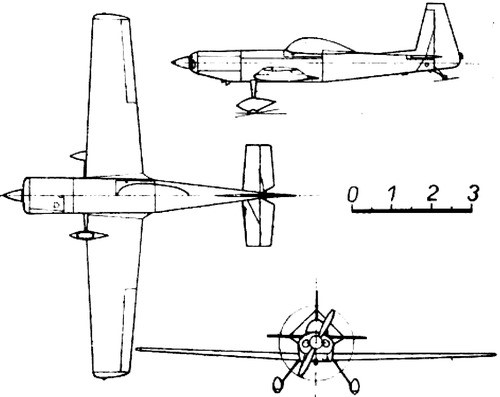
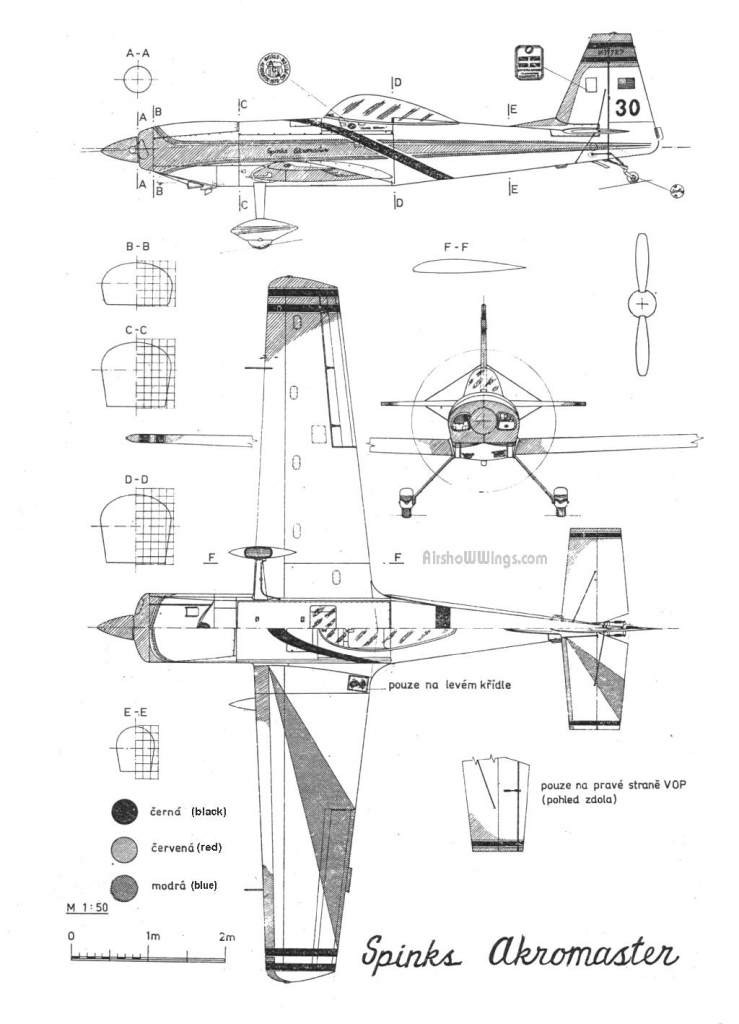
Spinks Akromaster
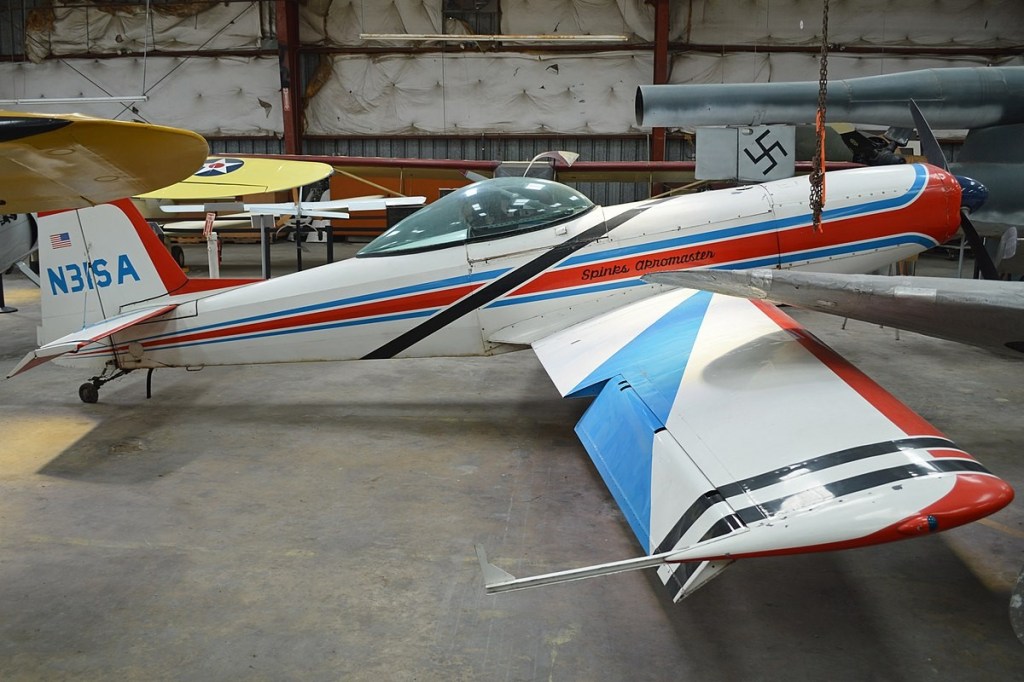
M H Spinks Sr designed and built the Spinks Akromaster, N7727, first flying on 28 August 1968.
A single-place cabin, low wing monoplane, it was marketed as a home-built for aerobatics.
Engine: 200hp Lycoming IO-360
Wingspan: 30’0″
Length: 24’0″
Useful load: 475 lb
Max speed: 280 mph
Cruise: 170 mph
Stall: 55 mph
Range: 1100 mi
Seats: 1
Spinks
M H Spinks Sr
Ft Worth TX.
USA
Designed and built the Spinks Akromaster in 1968.
Spibec
1956: W K Foss, Schenectady NY, and Spibec Corp, Philadelphia PA.
Spibec’s original intent was to experiment with fiberglass in lightplane construction, but poor sales of a fiberglass model introduced by Taylorcraft compelled the company to cancel its plans.
1958: Acquired rights for Luscombe Gullwing.
Spibec’s goal was to incorporate as Colt Aviation & Engr Corp.
1964: Sold rights to Swallow Aircraft Corp, Covina CA.
Spencer & Dent Trident
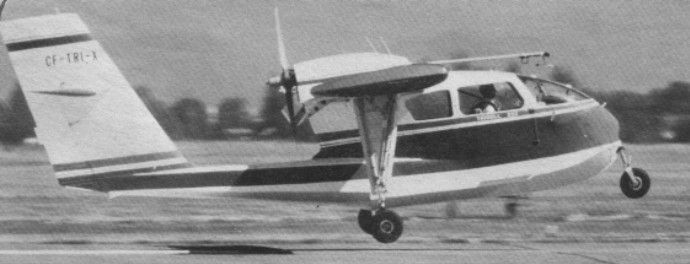
P. H. Spencer and Bob Dent decided the world needs is a new and better Seabee, so they dreamed up the Trident. That was back in the 1960s. Spencer and Dent started their work, in Los Angeles, with only $125,000 which soon ran out. Hazelwood bought the project, took it to Vancouver where the idea for it had been born. He has been at it for six years. After a brief romance with the Canadian Federal Government, which loaned Hazelwood’s company money through the prototype stages, the project by 1976 had moved under the wing of Canadian Aircraft Products, a manufacturer of aircraft floats and subassemblies in Vancouver. That company’s president, D. C. Cameron, says that the airplane is “on the back burner, and we’re not doing too well in our attempts to find a backer for production.” Cameron says certification of the initial prototype is within a few percent of completion. The airplane has flown about 275 hours and needs to fly another 40 or so. A second conformity prototype is 75 percent complete, he says, and will have to fly off its own approval program under the regulations of Canada’s Ministry of Transport.
Hazelwood is an indefatigible supporter of the airplane, and although each year seems to bring only the minimally sustaining increments for progress toward his goal of a full production airplane, his enthusiasm is unflagging or at least he must be very good at hiding any discouragement he may feel. All specs are being met or exceeded, and the abandonment of the Tiara 320 engine at the insistence of the government backers in favor of the certificated 285 (the 320 wasn’t certificated) has resulted in little loss of performance. He is delighted with the progress of the certification flights, he says. The production prototype is coming nicely, with engineering changes incorporated to cut the number of parts in half, eliminate many machined parts, use fiberglass instead of aluminum for the cabin enclosure (which is nonstructural) and add some beading in the skin. “Technically and physically, the airplane is just great. What we need is ‘trigger’ money to kick us off; we have plenty of follow on funds once we get past. . . . There is little chance of finding that kind of funding in the commercial loan market in Canada; they are mostly keyed to mortgages and are no help at all. It will take government help, and we feel we’re entitled to part of the support that’s being given the airframe industries right now.”
Spencer Aircraft Inc
Percival Hopkins “Spence” Spencer was born in Windsor, Connecticut, USA, on April 30, 1897, as the third child of then 63 year old inventor genius Christopher Miner Spencer. Percival always hated his name and preferred to be called “Spence”.
On April 11, 1911, Spence makes his first solo flight from Prospect Hill, when flying a hang glider built by himself from plans published in Popular Mechanics Magazine.
Spence makes his first flight in a motor powered airplane, flying a Curtiss-type flying boat from Connecticut River in Hartford, was on 15 May 1914.
In 1937, the Spencer-Larsen Aircraft Corporation is organized. Spencer and ex Sikorsky engineer Vincent A. Larsen design the single engine SL-12C amphibian.
Spencer leaves Spencer-Larsen in September 1940 and starts the work on his own S-12 Air Car amphibian design.
On 1 March 1941, the first parts are cut for the Spencer Amphibian Air Car.
In 1942 Spence starts working with Republic Aviation Corporation as a test pilot on their P-47 Thunderbolt fighters. Flight testing 134 Thunderbolts.
At 9:17 a.m, 1 December 1945, the first prototype Model RC-3 Seabee, NX87451, makes her first flight, taken to the air by designer and test pilot Percival H. Spencer from Republic Airport, Farmingdale.
1984: Spencer Amphibian Air Car, 8725 Cland Ave., Sun Valley, Calif. 91352, USA.
Offers plans and kits to construct the Amphibian Air Car four-seat pusher-engined amphibian, originally patented in 1950 and thereafter marketed until 1988 by Spencer Amphibian Air Car Inc.
1995: PO Box 327, Kansas, IL 61933, USA.
Percival H. Spencer died in 1995, aged 90.
Speedtwin Developments Ltd
UK
Markets kits for the Speedtwin Mk I and Mk II tandem two-seat and twin-engined aerobatic monoplane.
Specialized Aircraft Co Tri Turbo-3
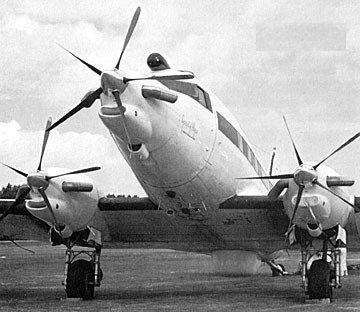
The 1977 Specialized Aircraft Co Tri Turbo-3 is a tri-motor conversion of Conroy-Douglas DC-3, built by Aircraft Technical Services Corp.
First flying on 2 November 1977 (N23SA), it features a swing-tail for loading and five-bladed props.
Engines: 3 x 1175hp P&W-Canada PT6A-45
Wingspan: 95’0″
Useful load: 12,000 lb
Cruise speed: 225 mph
Range: 2700 mi
Spearman S-1
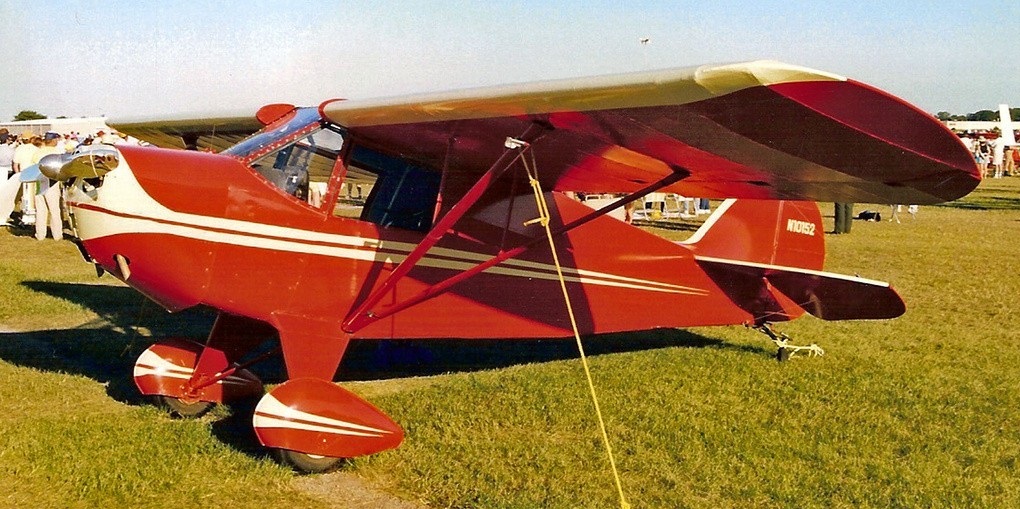
Built by Sam Spearman in 1959, the Spearman S-1 was a single-place cabin highwing monoplane registered N10152.
S-1
Engine: 55hp Lycoming
Wingspan: 24’0″
Length: 17’0″
Useful load: 235 lb
Max speed: 110 mph
Cruise: 95 mph
Stall: 40 mph
Range: 225 mi
Seats: 1
Spearman, Sam
Dunkirk OH.
USA
In 1959 Sam Spearman built the Spearman S-1.
 All Aero