Stampe Et Renard SR-6

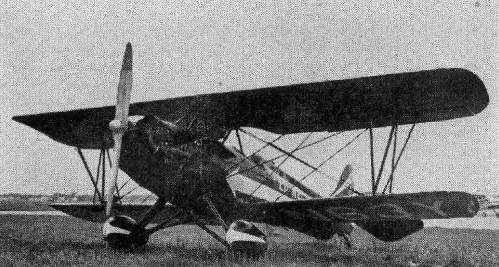
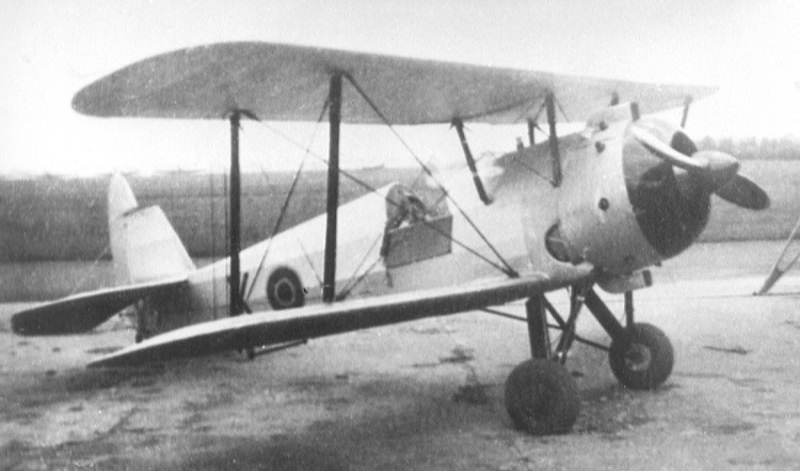
The unique SR-6 by Stampe-Renard owed much to the Stampe SV-4. Specially developed for aerobatic training in 1949, the Stampe Renard SR-6 was a single seat biplane powered by a 185 hp Mathis G.7R engine.

The aircraft first flew as OO-SRX in 1949 and was also briefly tested in Belgian AF colours while the letter “X” of its civilian registration remained on the fuselage.

The registration was cancelled in April 1954 and the aircraft was scrapped.

Stampe Et Renard Sa

Belgium
Formed after Second World War by merger of Constructions Aeronautiques G. Renard and Stampe etVertongen.
Overhauled and modified highly successful S.V.4 series of trainer biplanes, as used by Belgian and French Air Forces. Developed modernized S.V.4D; also, as a collaborative venture with Farman, new monoplane called Minitor using fuselage components of S.V.4. By 1970 had ceased aeronautical work.

Staib Carpenter Special / Little Dea-Dea

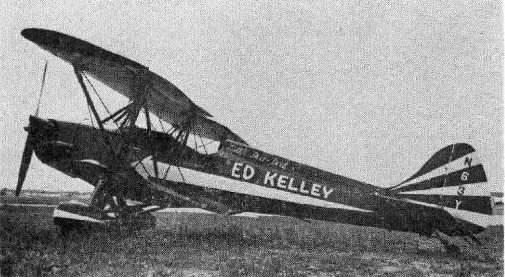
Carpenter Special Serial number 3 N63Y Little Dea-Dea

Carpenter Special Serial number 3 N63Y was built in 1933. The third aircraft built by Walter Staib. Each side of the aircraft has four flying wires and three landing wires, plus N struts. The upper wing is mounted on six cabanes, forming two pylons. It was powered by a Continental C-85 in 1955.

Originally installed was a Continental A-50 engine. Registration N63Y(X), the black and white biplane, called “Little Dea-Dea”, has a fuselage construction of steel tubing and wood stringers, wooden wings and the whole aircraft is fabric covered. Fuel is in a 12 USG wing tank and a 12 USG header tank.

Carpenter Special Serial number 3 N63Y Little Dea-Dea

In 1949 Charles E. Rawson bought the Special for $1800, recovered it, and installed a 125 hp Warner Scarab. He later scrapped the Warner as tired out and installed an 85 hp Continental. Rawson also installed Cessna 140 wheels and brakes, and Stinson 108 wheel pants.

Carpenter MLC-3
Engine: Continental C-85-12, 85 hp
Wingspan upper: 21 ft 0 in
Wingspan lower: 19 ft 9 in
Length: 19 ft 6 in
Height: 7 ft 10 in
Wheel tread: 5 ft 8 in
Max speed: 110 mph
Cruise: 100 mph
Landing speed: 65 mph
Fuel capacity: 24 USG
Cruise range: 325 mi

Staib LB-3 / LB-5

LB-5
LB-3

The LB-2 was flown at near top speed, with stalls untested. The roll rate was good, but turns were difficult. Landing speed was 120 mph (193 km/h). The fuselage was disassembled in 1953 to build the Staib LB-3 biplane. The LB-3 used new 14 ft (4.3 m) span wings made in the same fashion as Staib’s LB-1 with brazed steel bedspring, which was obtained from a local manufacturer, wing ribs with Taylorcraft airfoil sections. This airplane sat higher off the ground than others. The spring steel gear was of local manufacture, and was made of one piece.

LB-3

The aircraft cruised at 125 mph (201 km/h), landed at around 55 to 60 mph, and operated on the airshow circuit for two years. Cliff Baker operated the aircraft one more season, suffering a broken back after a high-speed incident.

LB-5

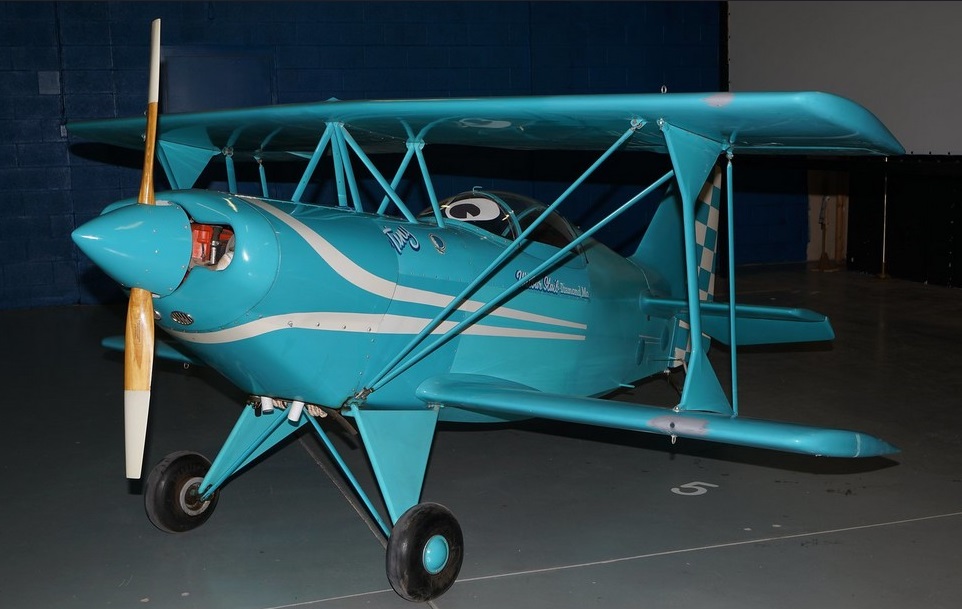
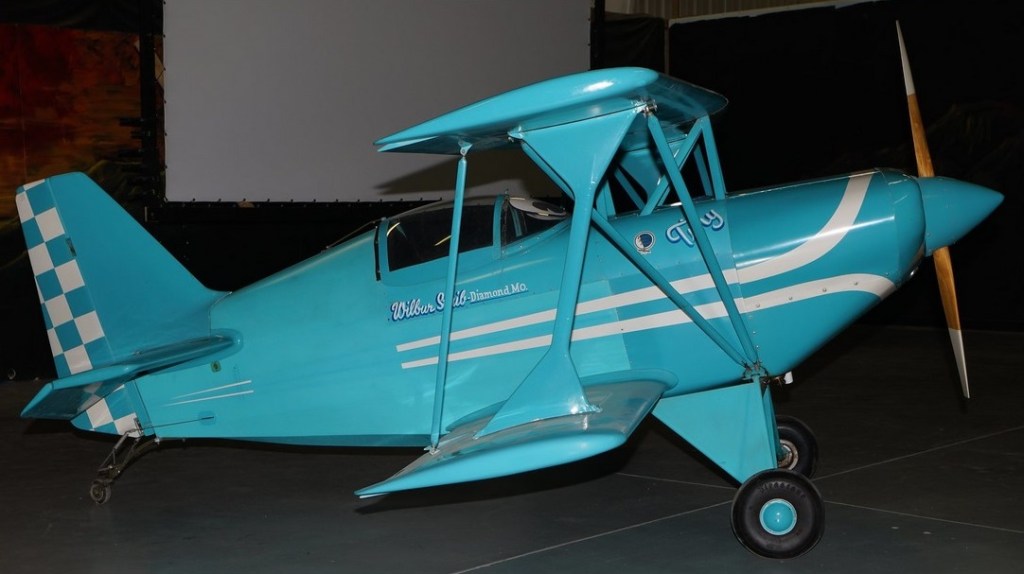
The Staib LB-5 “Little Bit” was a Volkswagen powered variant. One is on display at the Mid-America Air Museum.

LB-5

Staib Special / LB-2 / Little Bastard / Little Bit / The Monster

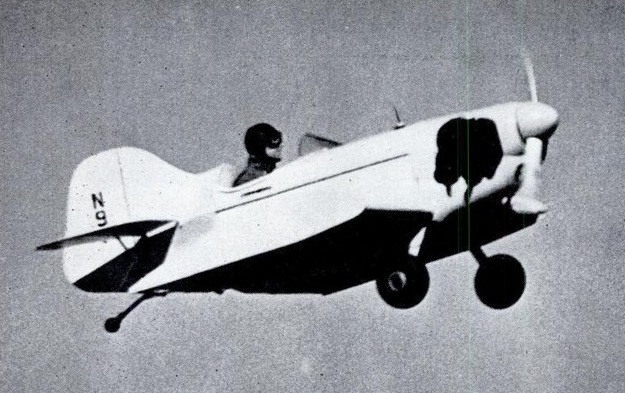
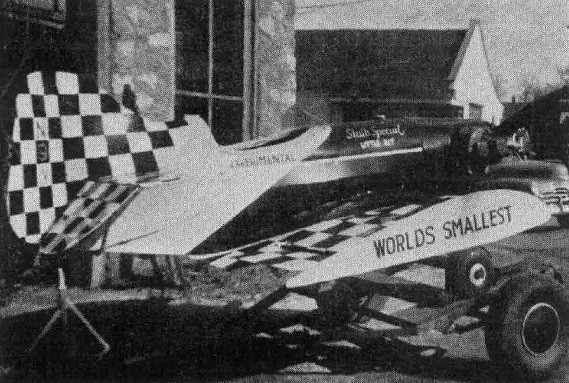
The Staib LB-2, also called the Little Bastard, Little Bit and The Monster, is a homebuilt aircraft design of Wilbur Staib. It once held the title as the “world’s smallest monoplane”. Staib flew his aircraft in airshows with the title “The Diamond Wizard”.

The LB-2 is a single engine low-wing, open cockpit monoplane with conventional landing gear. LB-2 was the considered the “World’s Smallest Monoplane” when built to take the title from Ray Stits 7 ft 6 in span aircraft. The wing section was adapted from a Piper Cub airfoil.

Named the “Little Bit”, but nicknamed the “Monster” it would do 160 mph., and was used for “one flight around the pattern” at exhibits, and was not flown other-wise.

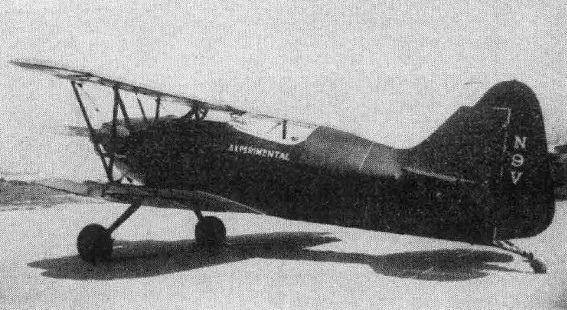
It was later dismantled for parts, as a ” hazard to the life and limb of Wilbur Staib”. Powered by an 85 hp. Continental engine, it weighed 390 lb empty. It bore the registration number N-9V(X), leading one to believe that a biplane may have been built from the remains of the “Monster”. Originally, the biplane had a tail group similar to that of the “Monster”, though later modified, and the fuselages are quite similar.

LB-2
Powerplant: 1 × Continental C-85, 85hp
Wingspan: 7 ft 6 in (2.29 m)
Wing area: 31 sq ft (2.9 m2)
Airfoil: Clark Y
Length: 11 ft (3.4 m)
Empty weight: 390 lb (177 kg)
Fuel capacity: 5 U.S. gallons (19 L; 4.2 imp gal)
Maximum speed: 140 kn (160 mph, 260 km/h)
Cruise speed: 130 kn (150 mph, 240 km/h)
Stall speed: 100 kn (120 mph, 190 km/h) est.
Endurance: 1 h
Crew: 1
Staib LB-1 Special

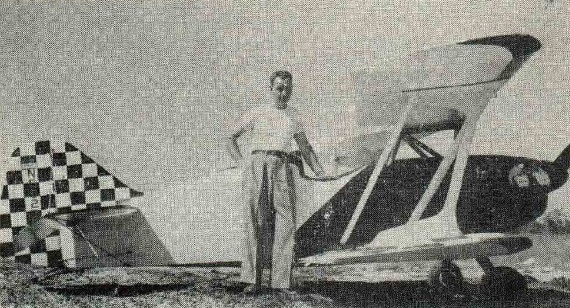
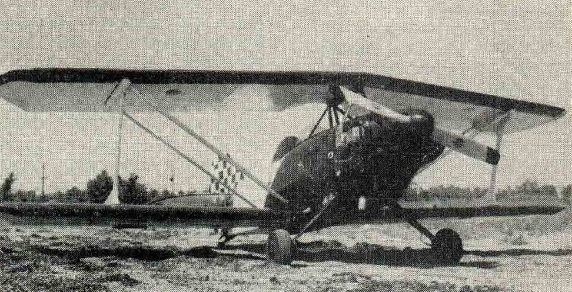
Designed and built by Wilbur Staib, the LB-1 N5927V (X) was a single engine, open cockpit biplane with conventional landing gear. The low-cost construction included using brazed steel bedspring wire for wing-ribs, and bed-sheet muslin covering. Metal ribs are spaced on a wooden spar and normal construction methods are used throughout. The airfoil was patterned on a Taylorcraft BC-12D. Fuel is in two 6 USG tanks in the fuselage. The aircraft used three fuel tanks: one in the headrest, one in the baggage compartment and one against the firewall. The red and white checkerboard-painted aircraft was outfitted with a smoke system for air show work.

The top wings are swept back, and lower wings are straight. Both sets span 17 ft. Note that the centre pylon slopes inward from the fuselage top. Arrangement of the other struts is a pair of parallel struts and I-struts connecting the wings at the outer brace point. Ailerons are only provided on the lower wings.

Staib used the LB-1 to perform on the pro-akro circuit, performing stunts such as inverted ribbon cuts. His LB-1 was comparable to the Pitts Special flown by Betty Skelton at the same shows. The aircraft performed from 1949 to 1952.

By 1955 it had flown approximately 1000 hours. The prototype was registered as late as 1990.

Staib LB-1
Powerplant: 1 × Continental C-85
Propeller: 2-bladed Metal
Wingspan: 17 ft (5.2 m)
Wing area: 95 sq ft (8.8 m2)
Length: 15 ft (4.6 m)
Height: 4 ft 9 in
Empty weight: 600 lb (272 kg)
Fuel capacity: 17 U.S. gallons (64 L; 14 imp gal)
Maximum speed: 96 kn (110 mph, 180 km/h)
Cruise speed: 87 kn (100 mph, 160 km/h)
Cruise at 2450 rpm: 110 mph
Stall speed: 48 kn (55 mph, 89 km/h)
Endurance: 2.5hr
Crew: 1

Staib LB-4 Airey-Plane

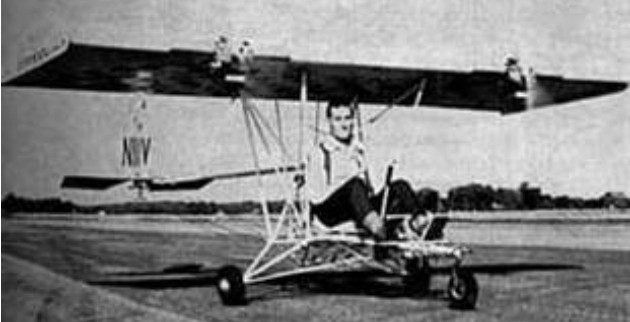
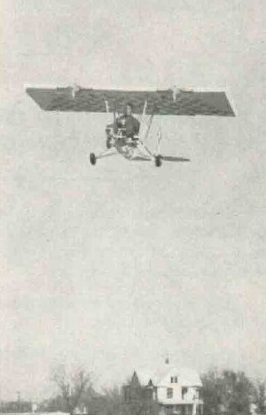
Wilbur Staib built this small airplane in limited spare time and working in limited hangar space in 1966. The “Airy-Plane” is a twin-engine aircraft registered N11V. Three months and about $500 were spent on the craft.

The LB-4 is a high-wing, uncovered welded steel tube fuselage, single seat twin-engine tricycle gear aircraft. It was registered by the FAA in 1966, and was considered at the time to be the world’s smallest twin engine aircraft. The wing ribs were a shortened pattern from a Piper Cub, assembled with staples. The tail is section is mounted on a wire braced removable boom for storage. Fuel tanks are made from 1 U.S. gallon (3.8 L; 0.83 imp gal) paint-thinner cans.

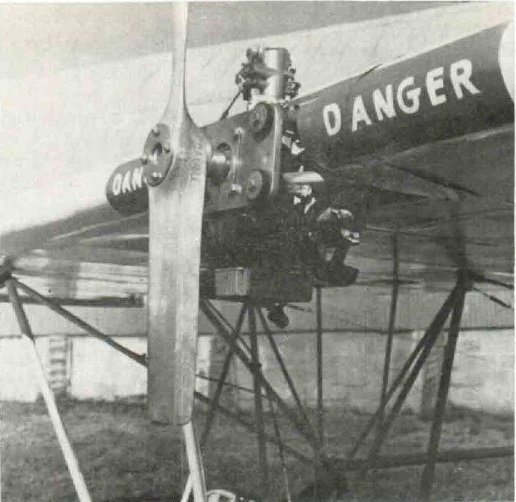
The engines are more or less inserted into the leading edge of the rather thick wing. Equipped with recoil starters they swing 24 in Troyer wood props.

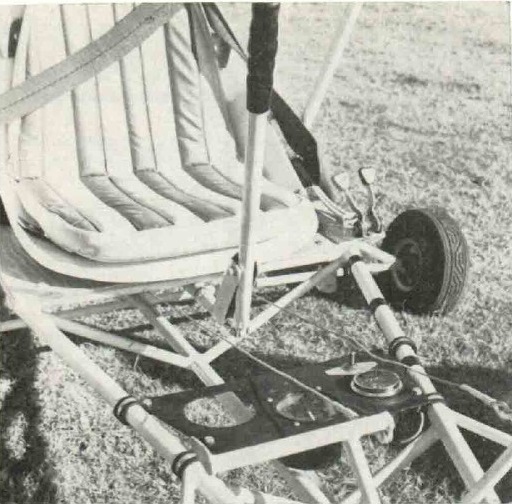
The fuel is carried in two 1 USG paint thinner cans. Instruments consist of an airspeed indicator and a tacho with a left-right toggle switch to pick up the reading from either engine.

Registration was N11V.

First flying in 1966, only the one was built. The LB-4 was test flown in 1966 at Carthage, Missouri. The aircraft cruises at 60 mph (97 km/h) and must be flown at full throttle. Later configurations included a third 10 hp (7 kW) engine mounted on top of the wing in pusher configuration.

Engines: 2 x 10 hp (7.5 kW) West Bend 820 chain-saw
Propellers: 2-bladed Troyer
Wing span: 14 ft (4.3 m)
Wing area: 70 sq ft (6.5 m2)
Airfoil: Modified Clark-Y
Length: 15 ft (4.6 m)
Empty weight: 175 lb (79 kg)
Gross weight: 340 lb (154 kg)
Useful load: 165 lb
Fuel capacity: 2 U.S. gallons (7.6 L; 1.7 imp gal)
Maximum speed: 52 kn (60 mph, 97 km/h)
Cruise speed: 52 kn (60 mph, 97 km/h)
Stall speed: 30 kn (35 mph, 56 km/h)
Seats: 1

Staib, Wilbur

Carthage MO.
USA

Wilbur Staib (1914–1993) was a self-taught aircraft designer from Diamond, Missouri. Staib served as a flight instructor during the Second World War at Chanute, Kansas flying PT-14s. Staib designed and built five different “LB” (Little Bastard) aircraft and a helicopter, of which several had the title “world’s smallest” at their time of construction. Staib flew his aircraft in airshows with the title “The Diamond Wizard”.

Wilbur Staib converted himself from motorcycle and speed boat passions in the late twenties, he has since come up with some mighty fine air-planes. He originally designed and built the three biplanes for Merrill L. Carpenter, which are known as the Carpenter “Specials”. Wilbur starts building by drawing chalk lines on the floor, and by periodically referring to his floor “drawing-board”, proceeds to build an airplane. There were four late biplanes, which all bore the Staib name. All were fully aerobatic and guaranteed not to come apart at any speed or attitude, with terminal velocity tests to back them up.