In 1970 Art Barker built the Barker B-2, two-place, high-wing parasol monoplane N6917, powered by a 140hp Lycoming O-290 engine.
Post WW2
Barker, Art
Kansas City MO.
USA
Built the Barker B-2 in 1970.
Aircraft Manufacturing Co
1949: Aircraft Mfg Co,
Texas
USA
Produced the Johnson Bullet as the Texas Bullet in 1949.
1951: Ended operations.
Avicar BF-8
The 1949 BF-8 was a two-place cabin biplane “plane-car” with 85hp pusher motor had no registration, but painted on its side was a large “PAT PEND” to indicate that Mr Bailey had some ambitious plans for his creation. Positive-staggered 8’0″ wings, and twin tails on a short-coupled fuselage.
Avicar
Kenneth Bailey,
Dearborn MI.
USA
Built the BF-8 in 1949
Tipsy M / Fairey Primer
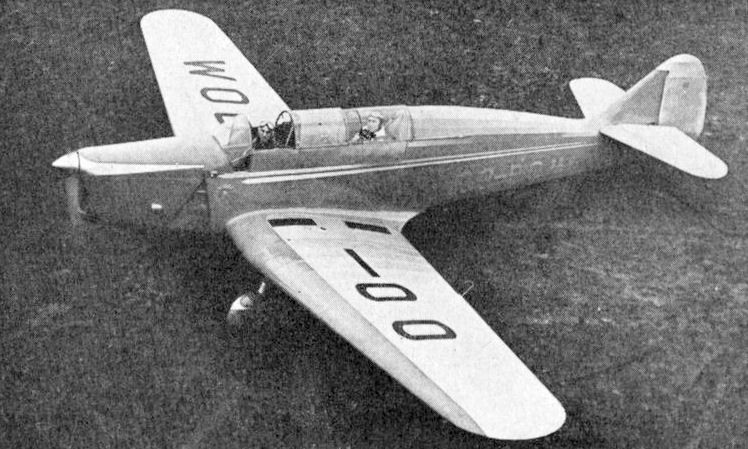
In the 1930s, designer Ernest Oscar Tips of Fairey Aviation’s Belgian subsidiary, Avions Fairey produced a series of light aircraft named after him, starting with the Tipsy S. These aircraft were not built by Fairey Aviation. The last to emerge before the Occupation of Belgium in 1940 was the Tipsy M ab initio trainer. Post war, the parent company decided, uniquely to produce this aircraft, calling it the Fairey Primer. Only one Tipsy M had been produced in Belgium and this became the Primer prototype.
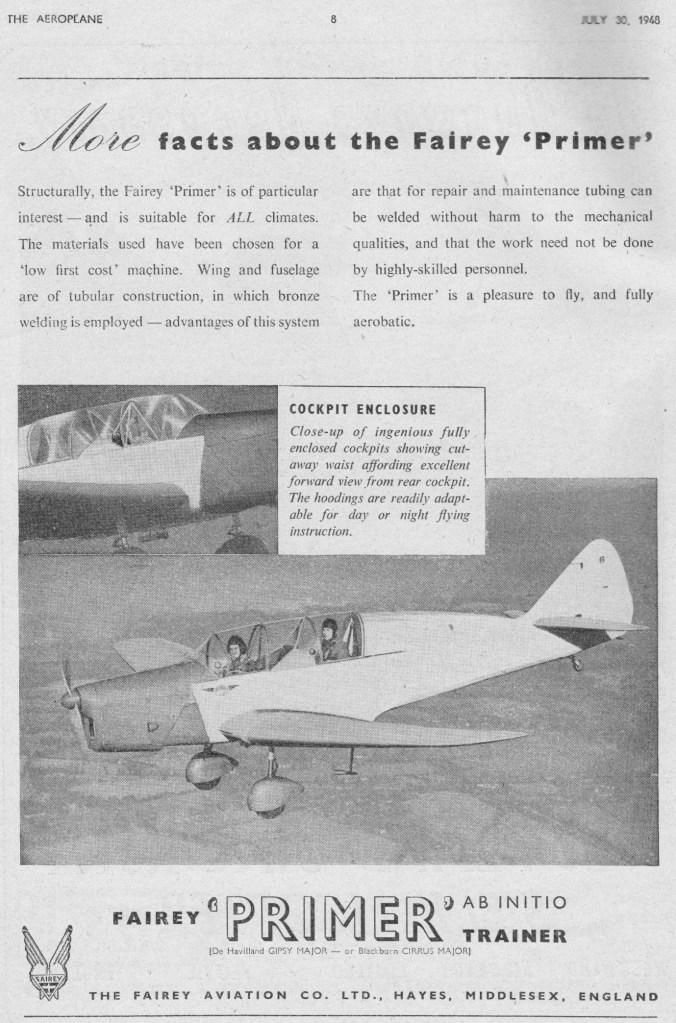
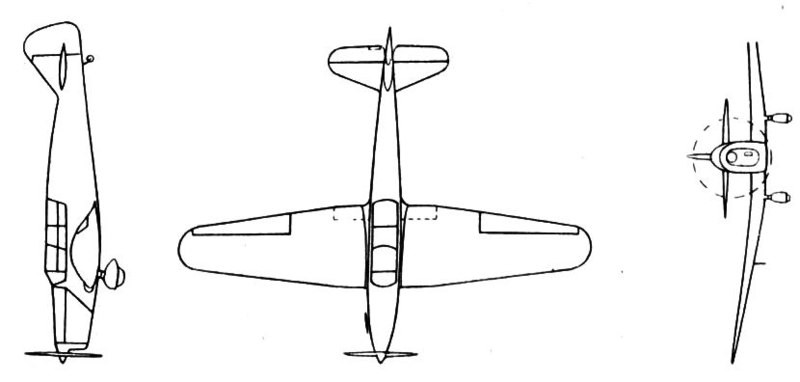
The Primer was a conventional single-engined, low-winged monoplane, constructed of welded metal tubes with wood in subsidiary structures like ribs and stringers, all fabric covered. The wings were quite symmetrically tapered and carried manually operated flaps across the centre section. Mild dihedral began outside the centre section. Each mainwheel, equipped with brakes was mounted on a single leg fixed at the end of the centre section. On the prototype the wheels were spatted, but these were removed on production aircraft. There was a small tailwheel below the fin. The rudder was horn balanced and the starboard elevator carried a trim tab.
The enclosed tandem dual control cockpits merged into a raised decking behind them, giving the aircraft a smooth but slightly humped look. Both cockpits were over the wing. The engines used by Primers, the 145 hp (108 kW) de Havilland Gipsy Major 10 and the 155 hp (116 kW) Blackburn Cirrus Major 3 were inverted in-line engines and ran in similar cowlings.
The Tipsy M, registered OO-POM and Gipsy powered, first flew at Avions Fairey’s works at Gosselies about 1938 and it visited the parent company’s works in England in June 1939. The Gosselies factory was destroyed by bombing on 5 May 1940 and at about that time all drawings and jigs for the aircraft were destroyed, deliberately or not. Before the German invasion in May 1940 the machine was taken apart and shipped to England, probably in September or October 1939; certainly it flew from Fairey Aviation’s Great West Aerodrome (the site now covered by London Heathrow Airport) for five months after November 1940. It was then used as a company hack until September 1941, when it was put into store. Shortly after the war OO-POM went back to Belgium for small modifications at Fairey’s suggestion; they then took over the Tipsy M with the aim of producing it under licence. Early in 1948, it was flying from White Waltham, still bearing its Belgian registration. The following year it received a UK registration (G-AKSX), but seems only to have flown with the experimental number G-6-1. It spent a period of assessment with service pilots at the Aeroplane and Armament Experimental Establishment, Boscombe Down.
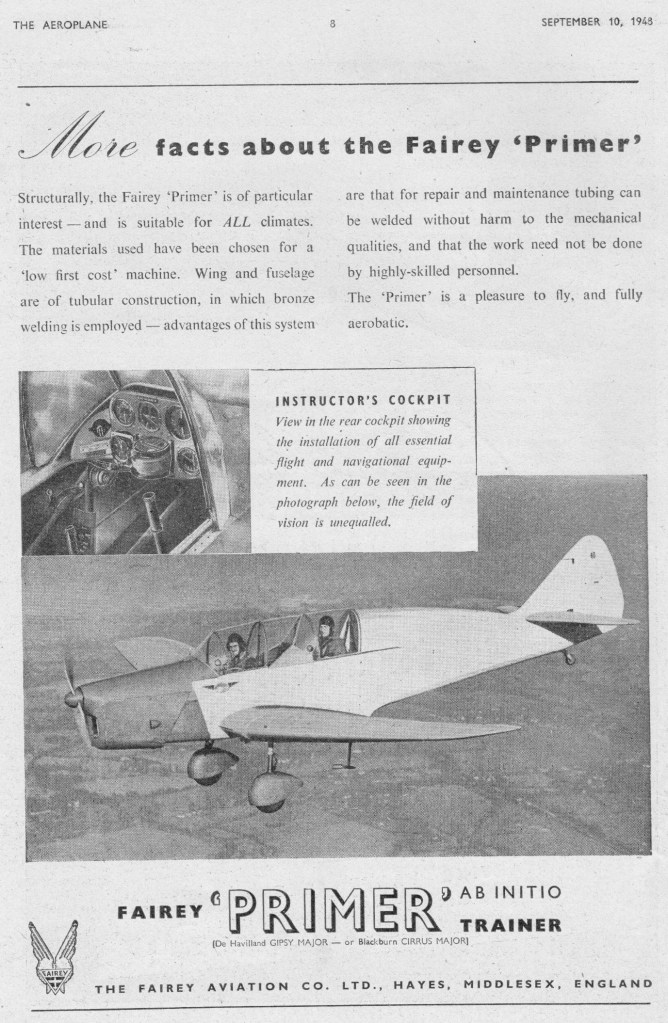
When returned from Boscombe Down, the Primer prototype had to be stripped down in order to recreate the lost drawings and jigs. The engine and some other parts were used to build the first production aircraft, though the CAA records G-AKSX as being sold abroad in Aug 1948; whether in flying condition or not is not noted. Fairey had intended to produce a run of ten, but only built two. The first of these, G-ALBL, gained its certificate of airworthiness in October 1948. Initially it had the Gipsy engine but this was later replaced by the Cirrus. It was dismantled in 1949; the CAA records it as destroyed in 1953. The second production aircraft, G-ALEW used this powerplant from the start, and was assessed against the de Havilland Chipmunk at Boscombe Down. The last of the line, it was dismantled in 1951.
Powerplant: 1 × de Havilland Gipsy Major 10, 145 hp (108 kW)
Wingspan: 32 ft 10 in (10.0 m)
Wing area: 154.5 sq ft (14.36 sq.m)
Length: 27 ft 6 in (8.38 m)
Height: 6 ft 10 in (2.08 m)
Empty weight: 1,360 lb (617 kg)
Gross weight: 1,960 lb (890 kg)
Maximum speed: 134 mph (215 km/h, 116 kn) at sea level
Cruise speed: 122 mph (196 km/h, 106 kn) at 2,300 rpm
Range: 383 mi (616 km, 333 nmi)
Service ceiling: 19,500 ft (5,900 m)
Rate of climb: 900 ft/min (4.57 m/s) at sea level
Crew: 2
Alvarez Polliwagen
Alvarez Polliwagen
The Alvarez Polliwagen was designed by Joseph Alvarez and Henry Arnace and built in 1977 at Chino CA.
A low-wing cabin monoplane, side-by-side, fibreglass composite construction, it featured retractable tricycle landing gear and was registered N176PW. It first flew in July 1977.
Engine: 90hp Revmaster VW 2100cc
Wingspan: 26’0″
Length: 15’0″
Useful load: 600 lb
Cruise: 230 mph
Stall: 45 mph
Range: 1000 mi
Seats: 2
Alvarez, Joseph
Chino CA.
USA
Built the Alvarez Polliwagen in 1977.
Ikarus AD 214-D

Designed to meet a Yugoslav Air Force requirement for a twin-engined crew trainer / transport, the prototype Type 214-D flew in 1951, powered by two 480 hp Ranger SVG-770 engines. A change to 600 hp Pratt and Whitney R-1340-AN-1 radials was made for production aircraft, which entered service in 1957.
As a transport the 214-D can carry a crew of two and eight passengers. In its primary role as a crew trainer, it is able to provide simultaneous instruction for pilots, navigators, bomb-aimers and radio operators.
Construction is of all-wood, except for the tail control surfaces, which are metal with fabric covering. Provision is made for carrying practise bombs and rockets under the wings.
Engines: 2 x 600 hp Pratt and Whitney R-1340-AN-1
Wing span: 53 ft 1.5 in
Length: 35 ft 9 in
Gross weight: 11,080 lb
Max speed: 226 mph
Range: 670 miles
Neiva N-59 Regente
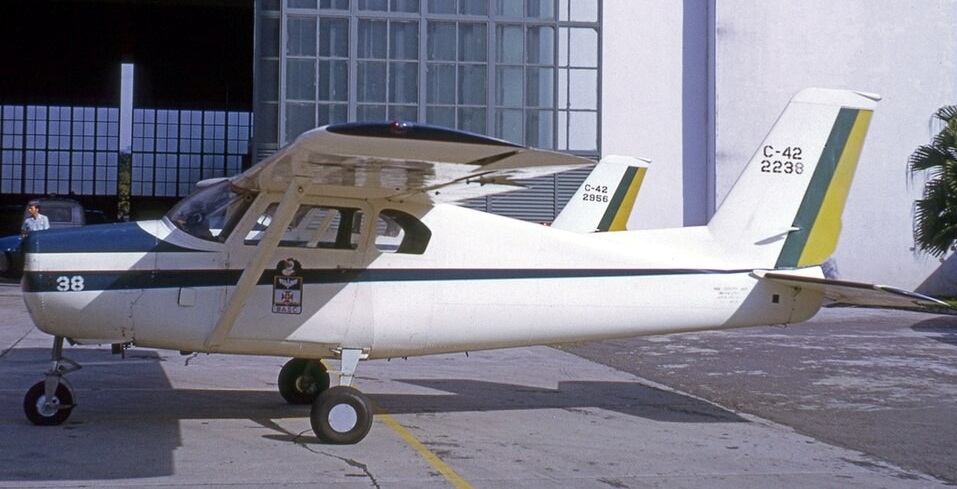
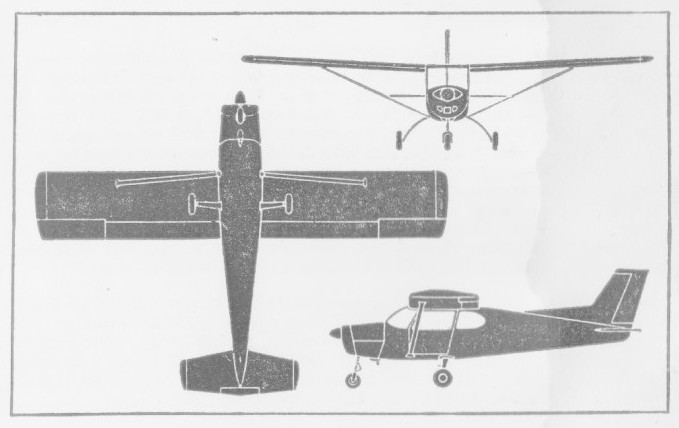
Neiva Regente is a Brazilian propeller-driven four-seat light utility aircraft manufactured by Indústria Aeronáutica Neiva.
The design was started in 1959 for a four-seat cabin monoplane aircraft with a high wing and fixed undercarriage. The prototype, designated the Neiva Regente 360C, was first flown on 7 September 1961 with a 145 hp (108 kW) Continental O-300 piston engine, and received its certificate of airworthiness on 19 November 1963.
The type was ordered into production by the Brazilian Air Force with a more powerful 180 hp (134 kW) Lycoming O-360-A1D engine. Eighty aircraft were built originally designated the U-42 (later changed to C-42) for the utility role. Twenty for the Brazilian Army’s Air Observation Squadron. First delivery occurred late in 1963. Neiva developed a three-seat air observation post version for the Air Force, designated the Regente 420L. Its tailcone was lowered in order to improve visibility, and it used a more powerful Continental IO-360D 210 hp engine. The aircraft was first flown in January 1967 as the YL-42. Forty were built for the Brazilian Air Force as the L-42. It had provision to carry light bombs or rockets on underwing hardpoints.
Two commercial versions were to be manufactured by Neiva, one being powered by a 180 hp Lycoming O-360-A1A and the other by a 145 hp Continental O-300-A.
Neiva also developed a four-seat civil version designated the Lanceiro. The prototype (Registered PP-ZAH) first flew in 1970, followed by production aircraft in 1973. The company’s subsequent involvement with Embraer resulted in the Lanceiro’s program termination.
Variants
Regente 360C – utility version (80 built)
U-42 – military designation of the Regente 360C
C-42 – military designation changed from U-42
Regente 420L – air observation post version (40 built)
L-42 – military designation of the Regente 420L. Originally designated L-8 and L-20.
Lanciero – civil version (2 built)
C-42
Powerplant: 1 × Lycoming O-360-A1D air-cooled flat-four engine, 130 kW (180 hp)
Propeller: 2-bladed Hartzell HC-C2YK-1A/A7666 constant-speed propeller
Length: 7.04 m (23 ft 1 in)
Wingspan: 9.13 m (29 ft 11 in)
Height: 2.93 m (9 ft 7 in)
Wing area: 13.45 sq.m (144.8 sq ft)
Aspect ratio: 6:1
Airfoil: NACA 4410
Empty weight: 640 kg (1,411 lb)
Max takeoff weight: 1,040 kg (2,293 lb)
Fuel capacity: 172 L (45 US gal; 38 imp gal)
Maximum speed: 220 km/h (140 mph, 120 kn) at sea level
Cruise speed: 212 km/h (132 mph, 114 kn) (max cruise)
Stall speed: 90 km/h (56 mph, 49 kn) (flaps down)
Range: 928 km (577 mi, 501 nmi) at 1,500 m (4,900 ft) (econ. cruise)
Service ceiling: 3,600 m (11,800 ft)
Rate of climb: 3.5 m/s (690 ft/min)
Takeoff run to 15 m (50 ft): 350 m (1,150 ft)
Landing run from 15 m (50 ft): 460 m (1,510 ft)
Crew: 1
Capacity: 3 passengers
Engine: 145 hp Continental O-300-A
Length: 7.04 m (23 ft 1 in)
Wingspan: 9.13 m (29 ft 11 in)
Height: 2.93 m (9 ft 7 in)
Wing area: 13.45 sq.m (144.8 sq ft)
Empty weight: 1190 lb
Max speed: 152 mph
Cruise 75%: 141 mph at 6560 ft
ROC: 866 fpm
Service ceiling: 15,420 ft
Range: 755 mi
 All Aero