1946: Steward-Davis Inc fdrs: Herb Steward, Stanley Davis Compton Airport CA. USA
Under name Steward-Davis/Jet-Packet made and promoted modernized commercial version of Fairchild C-82 with turbojet mounted above fuselage for augmented power.
Gardena CA.
1961: Long Beach CA Business partner with New Frontier Airlift Corp, Phoenix AZ,
In 1961 adapted C-119 in similar manner as Jet- Pak.
1971: New Frontier bankruptcy.
Steward-Davis Intl Van Nuys CA
Steward-Davis left the aircraft conversion business, but continued as a company marketing APU technologies.
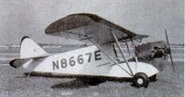
The prototype Headwind N8667E was built over a period of 5 months and was first flown on March 28, 1962.
Dec 1973
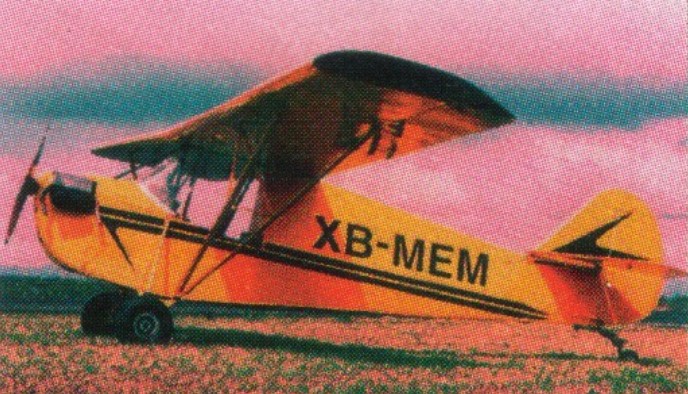
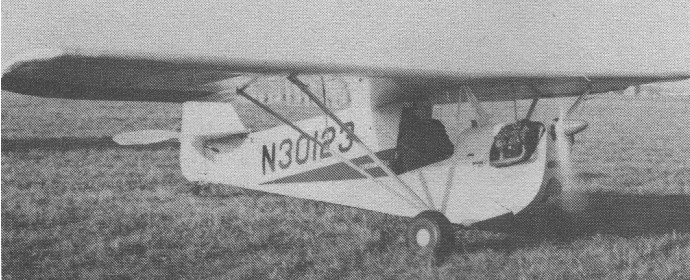
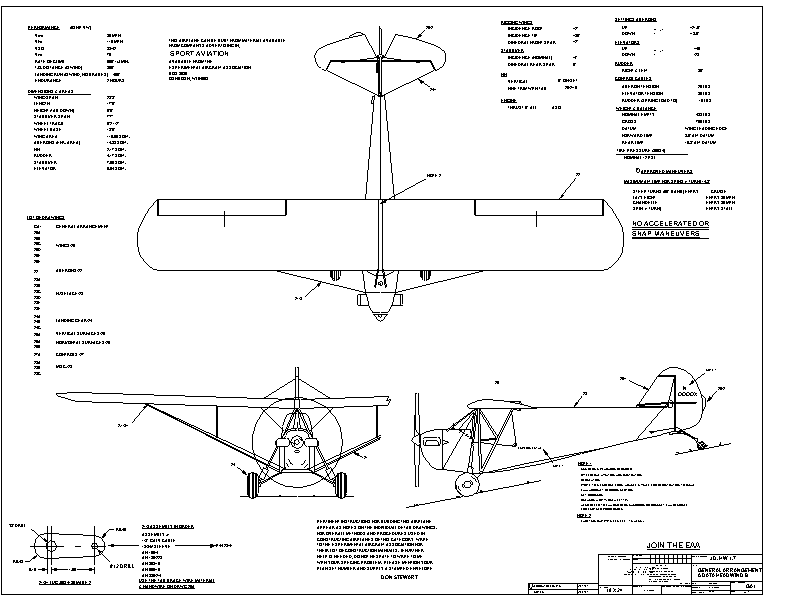
The Headwind is described as an extremely simple airplane of steel tubing construction for the fuselage and tail. The wings are two wood spars with either sawed plywood or formed aluminum ribs. All the fittings are flat, and only two of them require any preassembly. The engine bolts directly to the front of the fuselage, saving a separate engine mount. A 36- to 65-hp VW engine is used. The Headwind was the first design to use the Volkswagen engine in the United States and much development work was required to get the engine to it’s full potential as an aircraft engine. The most important development in the engine work was the design and patenting of a propeller speed reducing unit (PSRU) to allow the engine to develop it’s full horsepower. Many structural (to simplify and make it easier to build) and aerodynamic improvements have been made to the design so that now the only part of the original design still used is the engine mount and the portion of the fuselage between the cockpit and the stabilizer. Everything else is new.
In the forty some years that the Headwind has been in existence, many examples have been built all over the world. Well over one hundred airplanes are now in service powered by a variety of engines, however, only the Volkwagen engine is shown on the plans. No other engine data is published.
Approved Maneuvers: Steep turns ( 60 degree bank ) Entry – Cruise Lazy Eight ” – 85 mph Chandelle ” – 85 mph Spin ( one turn ) ” – Stall Maximum aft limit for spins 14.8″
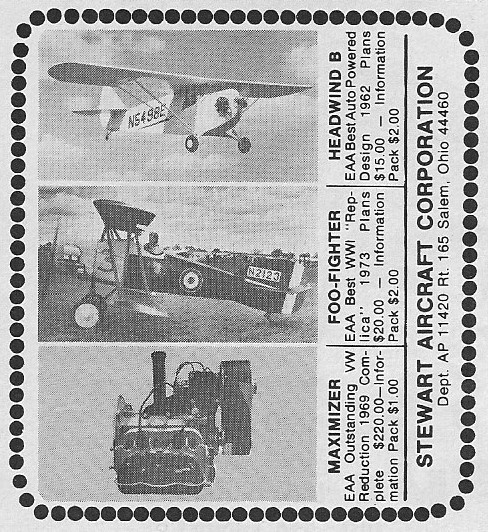
Headwind B
Wing Span 28′ 3″ Length 17′ 0″ Height ( tail down ) 5′ 9″ Gross Wt. 760 lb Empty Wt. 450 lb Fuel capaci¬ty: 6 USG Vno 80 – 85 mph Vne 110 mph Vso 38-42 mph R of C 650 fpm 1st minute T.O. distance ( 0 wind ) 300′ Landing run ( 0 wind no brakes ) 400′ Endurance 2 hours Range 195sm Stabilizer Span 7′ 7″ Wheel Track 5′ 2 1/2″ Wheel Base 13′ 6″ Wing Area 110.95 sq.ft Ailerons ( eff. area ) 14.83 sq.ft Fin 2.17 sq.ft Rudder 4.17 sq.ft Stabilizer 7.00 sq.ft Elevator 9.54 sq.ft
Headwind B Cruise: 85 mph Stall: 40 mph Range: 200 sm Rate of climb: 650 fpm Takeoff dist: 300 ft Landing dist: 400 ft Engine: VW, 53 hp Fuel capacity: 7 USG Empty weight: 435 lb Gross weight: 750 lb Length: 17 ft Wing span: 28-3 ft Wing area: 110 sq.ft Seats: 1 Cockpit width: 23-25 in Landing gear: tailwheel LSA: yes
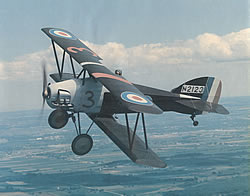
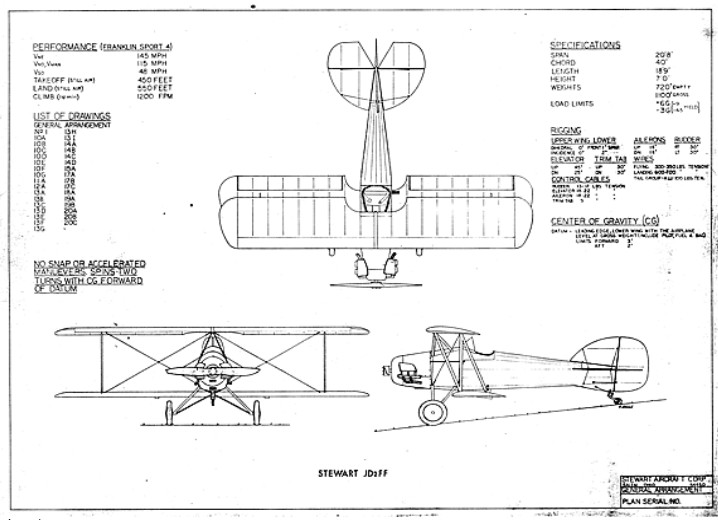
The Foo Fighter was designed and built in 1967 by Don Stewart and Tom Raybourn, Mohawk Airline pilots, and inspired by the Alcock A-1, a World War I war bird that resembles the Sopwith Pup. One distinguishing feature of the Foo Fighter is its lower wing that crosses below the fuselage, aft of the gear, and attaches on the centerline. The airframe is built from steel tubing and covered with fabric. Originally, a Falcon 200 six cylinder CID auto engine was installed, but a 130-hp Franklin Sport Four can also be used. It was first flown in 1970 with a PSRU but the engine proved to be too heavy for the power provided and the airplane was modified to use a Franklin “Sport Four” of 130 HP.
Dec 1973
This engine went out of production and so the airplane was once again redesigned to accept any of the four cylinder Lycoming engines from the O235 up to the O320 series. It is a very docile sport airplane that offers limited aerobatic capabilities.
The prototype was registered N2123.
Engine: Franklin Sport 4, 130 hp Gross Wt. 1100 lb Empty Wt. 720 lb Fuel capacity 19 USG Wingspan 20’8” Length 18’9” Top speed 145 mph Cruise 115 mph Stall 45 mph Climb rate 1200 fpm Takeoff run 450 ft Landing roll 550 ft Range 345 sm
Stewart Aircraft was formed in 1961 when the Headwind was designed. The name “Headwind” was derived as a bit of fun by naming it the opposite of the Whitman “Tailwind”, a very fast, two place cabin airplane. The Headwind is constructed from steel tube, wood and fabric and is a combination of several designs and concepts developed over a period of several years previous to building the airplane.
Circa 1967, Gary L Stevenson of Spenard AK., USA, built an all-metal design based on the Wittman Tailwind. Registered N173G, it was a two-place cabin. High-wing monoplane.
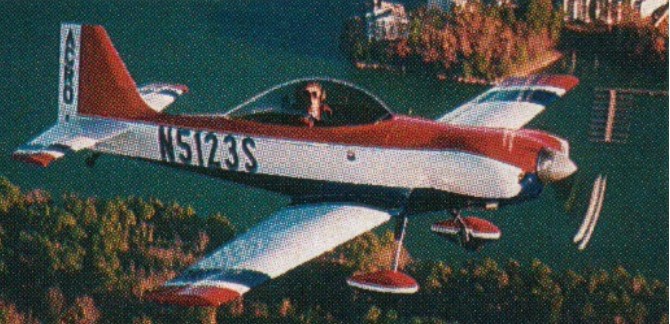
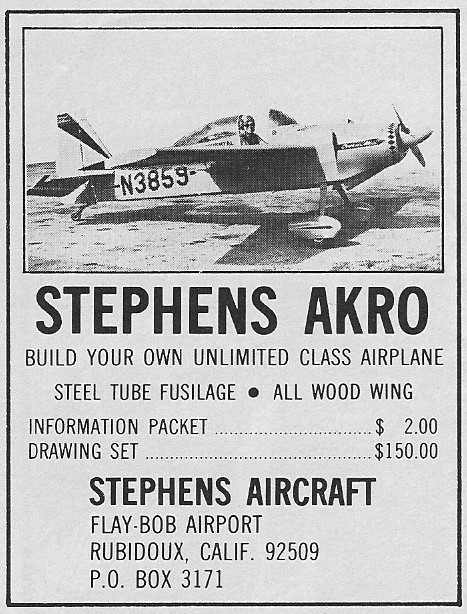
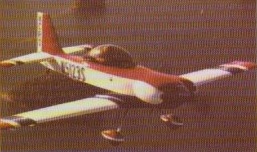
This homebuilt was designed to meet the requirements of aerobatic competition. It is stressed to + 12G and -11G. The Akro’s wing is a one-piece, all-wood structure with two spars, and its fuselage is a fabric-covered steel tube frame. Seating is for one under a sliding bubble canopy. The Model B has both a fuel and an oil system for inverted flight. The Akro is one of the most popular aerobatic ships in the monoplane class. All control surfaces are fully static-balanced.
Dec 73
The Aircraft Technologies Akro 1 first flew in March 1994.
 All Aero