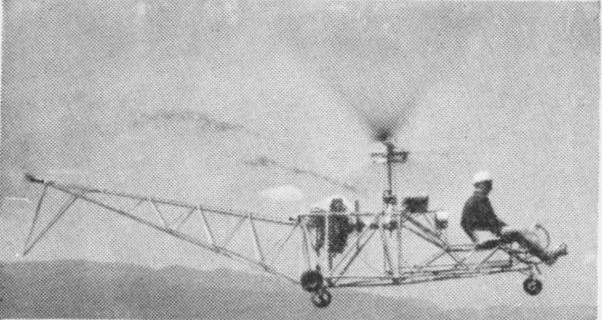
This helicopter, designed by Robert Stirlin of Geneva, won a 1954 competition in France for home-built light helicopters.
Engine: 65 h.p. piston
Rotor diameter: 21 ft. 7 in.
Rotors: 2-blade main; 2-blade tail.
Seats: 1
This helicopter, designed by Robert Stirlin of Geneva, won a 1954 competition in France for home-built light helicopters.
Engine: 65 h.p. piston
Rotor diameter: 21 ft. 7 in.
Rotors: 2-blade main; 2-blade tail.
Seats: 1
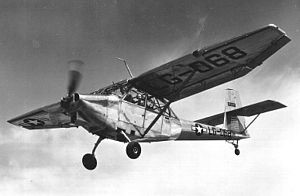

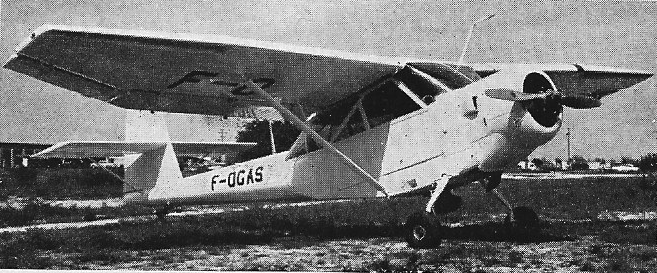
The Stinson L-13 (sometimes known as the Grasshopper) was a conventional high-wing tailwheel monoplane used for observation, liaison, and air ambulance duties first flown in 1945.
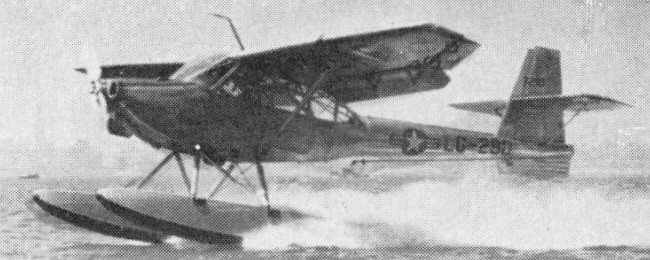
Developed when Stinson was a subsidiary of Consolidated Vultee, rights to it were not included in the 1948 sale of Stinson to Piper. Mass production was therefore undertaken by Convair, which built 302 of them.
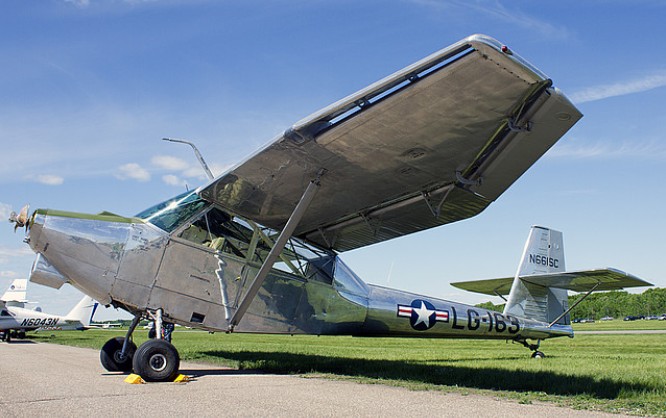
A 2-3 seat liaison and ambulance aircraft built for the USAF, power was a 245 h.p. Franklin O-425-9 engine. The L-13 has folding wings, interchangeable wheel, float or ski undercarriage, and can be towed as a glider. Two stretchers can be carried, as well as the pilot and medical attendant.
The United States Army received 43 ex-Air Force L-13As following the outbreak of the Korean War, serving in the Continental United States to free up aircraft for active service overseas. Some were still operated in 1955.
The L-13B were modified to operate in sub-zero temperatures.
Following their military service, some were converted for civil bush flying use, fitting a radial engine by Acme Aircraft Company as the Centaur, while others underwent similar conversions by Caribbean Traders Inc, as the Husky.
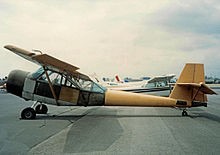
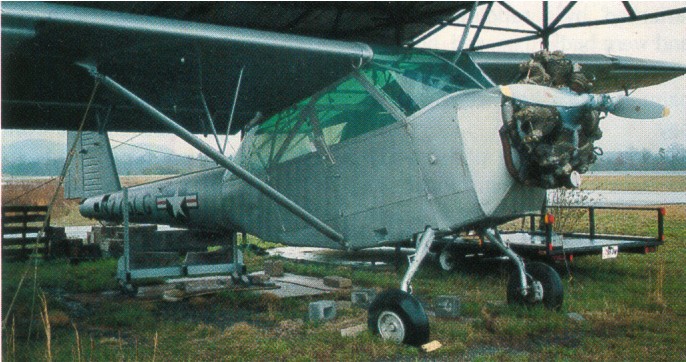
The Acme Aircraft Centaur 101 and 102 circa 1953 were six-place conversions of surplus Stinson/Convair L-13A for bush flying, based on a prototype by Longren Aircraft Co, Torrance CA (N4901V). The Centaur 101 had a 300hp Lycoming R-680-E3, and Centaur 102 with 300hp Jacobs R-755-A2. Reportedly only a few were converted.
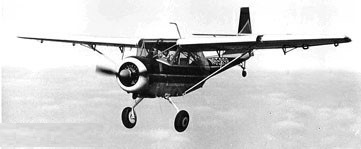
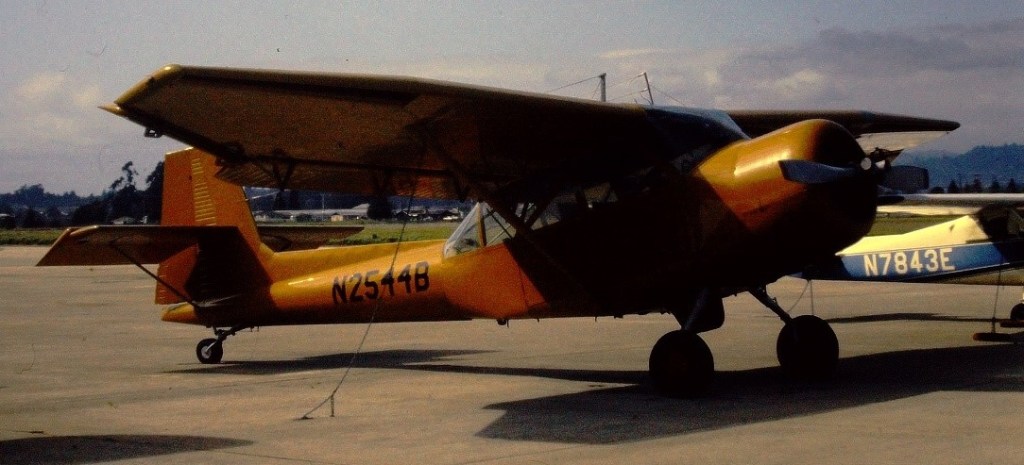
Servicair Co of Glendale CA, USA, converted Convair L-13 to Servicair Loadmaster circa 1960. One converted was N2544B and maybe others.
Variants:
XL-13
Prototype aircraft. Two built.
Engine: Franklin O-425-6, 245 hp (183 kW)
MTOW: 2900 lb
Top speed: 115 mph
Stall: 40 mph
L-13A
Production aircraft, 300 built.
Engine: 1 × Franklin O-425-9, 250 hp (187 kW)
Wingspan: 40 ft 5½ in (12.33 m)
Wing area: 270 sq ft (25.1 m²)
Length: 31 ft 9 in (9.68 m)
Height: 8 ft 5 in (2.57 m)
Empty weight: 2,070 lb (941 kg)
Loaded weight: 3,185lb (1,448 kg)
Maximum speed: 115 mph (100 knots, 185 km/h)
Cruise speed: 92 mph (80 knots, 148 km/h)
Range: 368 miles (320 nmi, 592 km)
Service ceiling: 15,000 ft (4,570 m)
Rate of climb: 830 ft/min (4.2 m/s)
Crew: one
Capacity: two passengers
L-13B
Conversion of L-13A for cold weather operation, capable of operating from wheels, skis or floats. 28 converted.
Acme Centaur 101
Conversion of L-13 as six-seat bush aircraft. Powered by 300 hp (224 kW) Lycoming R-680-E3.
Acme Centaur 102
Similar to Acme Centaur 101, with Jacobs R-755-A2 radial.
Caribbean Traders Husky I
Civil conversion of L-13A. Retained O-425 engine.
Caribbean Traders Husky II
Civil conversion of L-13A. Powered by 300 hp R-680-13 engine on modified engine mount capable of swinging out for easy maintenance.
Caribbean Traders Husky III
Similar to Husky II, but powered by 450 hp (338 kW) Wright R-975-7 radial engine.
Servicair Loadmaster
Engine: P&W R-985, 450hp
Wingspan: 40’6″
Length: 31’7″
Useful load: 2160 lb
Cruise speed: 115 mph
Stall: 50 mph
Seats: 4


Introduced in 1952, a metal covered twin rudder tail and a fabric covered fuselage, four-seater. It was powered by twin 125-hp Lycoming engines. The Twin Stinson design acquired by Piper in 1949, evolved into the Apache, Piper’s first all metal product. The PA 23 Apache 4/5 seat light twin first flew in March 1952.
Engines: 2 x Lycoming O-290-D-2, 135 hp
Cruise: 150 mph @ SL
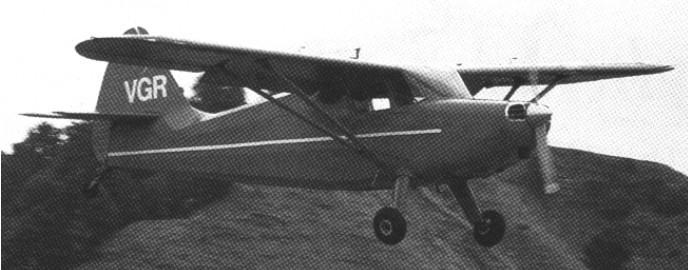
The model 108 Voyager was a post-war production version of the model 105 Voyager (90 hp Franklin) of 1939. Designed by B J Simmons the 108 Voyager first flew on 1 December 1944. The prototype NX31519 was powered by a 125hp Lycoming.
When introduced in August 1945 (ATC 767), the model 108 Voyager accounted for almost half of all four-place aircraft sold at $5,000, $5,489 in 1946. By the end of 1947, Stinson Aircraft had built over 5200 Voyagers, including a Station Wagon version.
Two versions powered by a 165 hp Franklin 6A4-150-B3 engine were produced in quantity by the Stinson division of Consolidated Vultee, the Standard Voyager and the externally similar Station Wagon.
The two-place Station Wagon sold for $5,745. The model 10-A was an enlarged version.
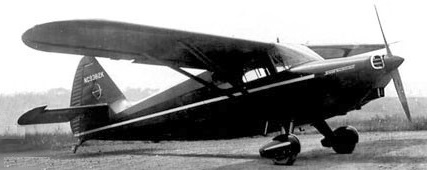
By then the boom had ended and 200 unsold Voyagers were parked at Willow Run Airport after 742 were built.
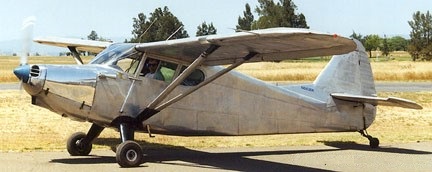
In 1947 the model 108-1 appeared with cosmetic improvements. 1,508 were built.
The 108-2, powered by a 165hp 6A4-B3 engine, was priced at $6,250 and 1,250 were built.

The 1948 108-3, renamed Piper-Stinson, enlarged tail and fuel tanks. 1,760 were built, including 125 built by Piper, some with a smaller, Piper-designed vertical tail. 18 wee exports to Spain.
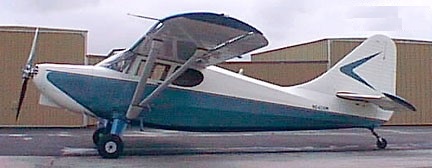
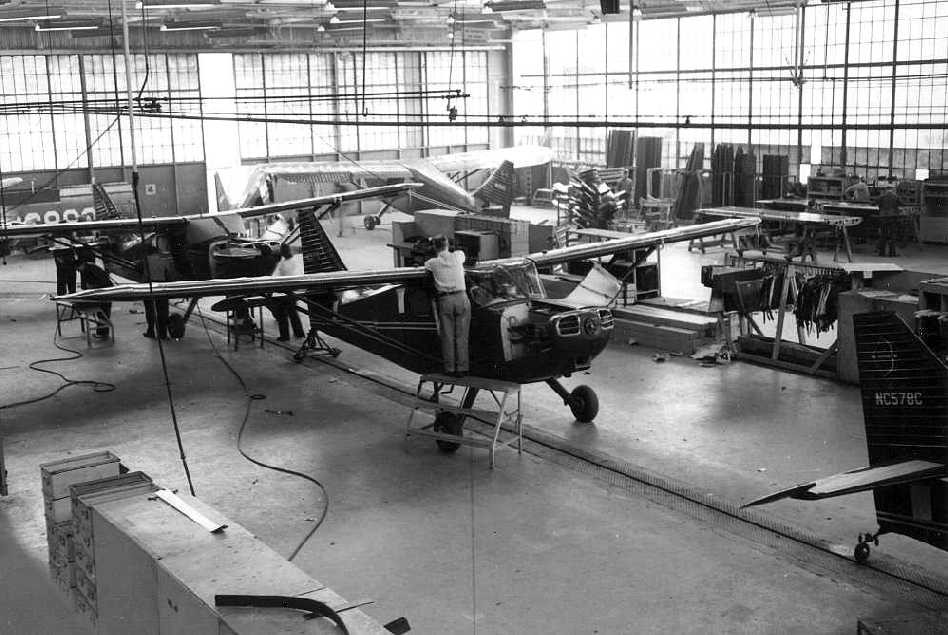
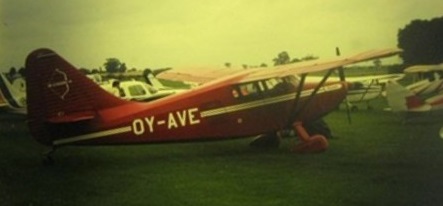
In 1964 Universal Aircraft Industries, Denver, re-certificated the Stinson 108-3 Voyager as the Model 108-5, powered by a 180 hp Franklin. First flying on 21 April 1964, N5565V, it was licenced in both utility and normal category and gross weights were 2000 lb and 2400 lb respectively. Cruising speed was 126 mph.
Univair also marketed kit for modifying the 108-3 to -5.
In the 1960s Chambers Aircraft Co of Greenville TX offered tricycle-gear conversions for Voyagers.
1986 Stinson 108 Voyager Grand Champion
108-2
Engine: 165hp 6A4-B3
Cruise: 130 mph
Stall: 50 mph
Voyager 150
Engine: 150hp Franklin 6A4-B31
Wingspan: 34’0″
Length: 25’3″
Seats: 3-4
Stinson Station Wagon 108-3
Price: US$6,484 (new)
Engine: Franklin 6A4-165-B3, 165 hp
Fuel type: 80/100LL
Propeller: Sensenich, Fixed
Landing gear type: Conventional
Max ramp weight: 2400 lb
Gross weight: 2400 lb
Max landing weight: 2400 lb
Empty weight: 1320 lb
Useful load: 50 lb
Oil capacity: 8 qt
Wingspan: 34 ft
Overall length: 24 ft. 6 in
Height: 6 ft. 10 in
Wing area: 155 sq. ft
Wing loading: 15.5 lbs./sq. ft
Power loading: 14.5 lbs./hp
Wheel track: 84 in
Wheel size: 6 in
Seating capacity: 4
Cabin doors: 2
Cabin width: 39 in
Cabin height: 46 in
Baggage capacity: 100 lb
Max level speed: 108 knots
Cruise speed 75% power: 104 knots
Fuel consumption 75% power: 10.0 USgph
Stall speed (flaps up): 54 knots
Stall speed (flaps down): 48 knots
Best rate of climb: 550 to 650 fpm
Service ceiling: 16,500 ft
Takeoff ground roll: 980 ft
Landing ground roll: 940 ft
Stinson 108-3 on Edo 2425 Float
Engine: Continental O-470, 230 hp
Gross weight: 2500 lb
Max ramp weight: 2500 lb
Useful load, std: 800 lb
Power loading: 10.9 lbs./hp
Seating capacity: 4
Climb rate: 750 fpm
Max certified altitude: 14,000 ft
Max cruise range, 75%: 110 nm
Takeoff distance, wheels: 600 ft
Landing distance, wheels: 550 ft
Universal Stinson 108-5
Engine: Franklin 6A-335-B1, 180hp
Wingspan: 33’11”
Length: 25’2″
Useful load: 1100 lb
Max speed: 152 mph
Cruise speed: 132 mph
Stall: 65 mph
Range: 475 mi
Seats: 4

Stinson Aeroplane Syndicate
Stinson Airplane Corporation
Stinson Aircraft Division of Vultee Aircraft Inc
1919: (Edward) Stinson Airplane Syndicate, Detroit MI.
In 1926 the Stinson Aeroplane Syndicate, West Detroit, Michigan, founded by E. A. Stinson, made Detroiter four passenger biplane designed jointly by Stinson and F. Verville. Name Detroiter was confusingly retained for later monoplanes. Three Detroiter biplanes acquired in 1926 by Northwest Airways Inc, at which time manufacturing company renamed Stinson Airplane Corporation.
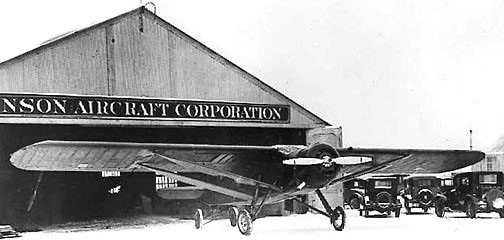
1927: Stinson Aircraft Corp, Northville MI.
Detroiters of several forms used widely by commercial and private operators; e.g. flew first regular airmail service in China. Detroiter monoplanes much developed, though general type was claimed as first U.S. aircraft with soundproofed and heated cabin, engine starter and wheel brakes.
Detroiter Junior of 1928 was scaled-down version for private and executive work. Detroiters established several records, including 174 hr airborne, July 1929.
1929: Wayne MI. 1931: Merger with E L Cord Corp.
About 1933 new tapered wing form adopted for Reliant single-engined series, which succeeded Detroiter line. Reliant series was especially successful and built in great quantities, 500 being transferred to Royal Navy under Lend-Lease. Voyager was later two-seat high-wing monoplane. Sentinel liaison type very widely used under Vultee name.
1940: Stinson Aircraft Div, Vultee-AVCO, Wayne.
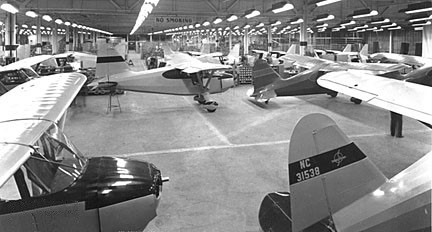
1946: Stinson Aircraft Div, Convair.
By the end of 1947, Stinson Aircraft had built over 5200 Voyagers, including a Station agon version, but by then the boom had ended and 200 unsold Voyagers were parked at Willow Run Airport.
In July 1948 the Stinson factory was closed and five month later Convair sold Stinson Aircraft to Piper Aircraft. The company that Eddie Stinson had founded 22 years earlier had built over 12,000 aircraft.
1962: Inventory and rights sold by Piper to Univair, Aurora CO.
The 1946 Stewart Texas Bluebird was a rebuild of the Welch OW-6M with changes in dihedral, control cables, and powerplant, built by Walter E Stewart.
A two-place cabin, high wing monoplane, the aircraft first flew on 16 December 1946 (possibly earlier), piloted by L G Welch.
Planned production never occurred, but ship was slated to sell for about $2,000.
Engines: 65hp Lycoming
Wing span: 34’5″
Length: 20’6″
Useful load: 435 lb
Max speed: 105 mph
Cruise: 85 mph
Stall: 35 mph
Range: 250 mi
Seats: 2
Walter E Stewart
Stewart Field
Tyler TX.
USA
Built the Stewart Texas Bluebird in 1946.

The 1962 Jet-Packet 3400 was a Steward-Davis Jet-Packet 1600 Fairchild C-82A with a single 3250 lb Westinghouse J34-WE-34 or 3400 lb WE-36 jet-pak. At least four were converted.
The Jet-Packet II involved airframe weight reduction to increase cargo weights. With two P&W R-2800CB-16 engines, the application was applied to Jet-Packet 1600 or 3400. At least three were converted, including TWA C-82A Ontos N9701F.
In 1967 Stewart-Davis completed a new version of its C-119 STOLmaster with a Jet-Pak 3402 detachable jet engine under each wing and provision for a third above the fuselage, supplementing the two R-3350-89a piston engines. Each Jet-Pak contains a 3400 lb thrust Westinghouse J34 engine.
The 1957 Jet-Packet 3200 was a Steward-Davis Jet-Packet 1600 Fairchild C-82A converted with two 3200 lb J30-W in a single upper fuselage jet-pak. Registered N5095V, the MTOW was 54,000 lb.
The 1956 Steward-Davis Jet-Packet 1600 was a civil conversion of Fairchild C-82A with a jet-pod added to upper fuselage. At least three were converted including N6887C and N6985C,
The Jet-Packet II involved airframe weight reduction to increase cargo weights. With two P&W R-2800CB-16 engines, the application was applied to Jet-Packet 1600 or 3400. At least three were converted, including TWA C-82A Ontos N9701F.
Engines: 2 x 2100hp P&W R-2800-85 and 1 x 1600 lb Westinghouse J30-W jet-pak
Max take-off wt: 54,000 lb
 All Aero