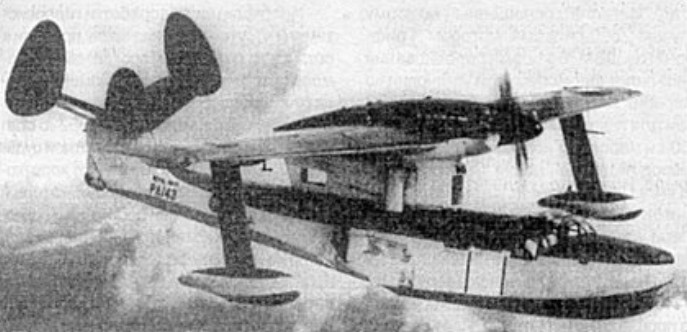
The first prototype flew on July 14, 1948. Did not enter production. Two built.
381 Seagull
Engine: 1 x Rolls-Royce Griffon 29, 1360kW
Max take-off weight: 6420 kg / 14154 lb
Crew: 3
Passengers: 6
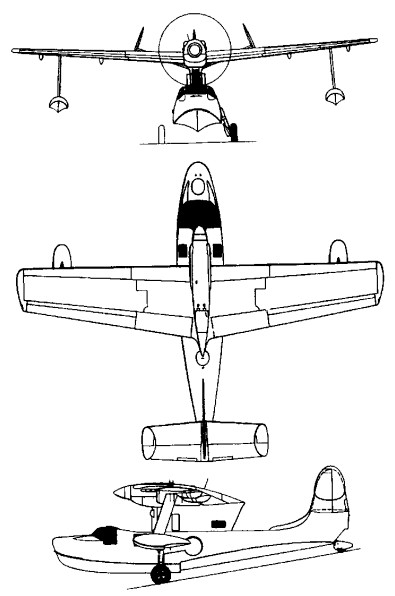
The first prototype flew on July 14, 1948. Did not enter production. Two built.
381 Seagull
Engine: 1 x Rolls-Royce Griffon 29, 1360kW
Max take-off weight: 6420 kg / 14154 lb
Crew: 3
Passengers: 6
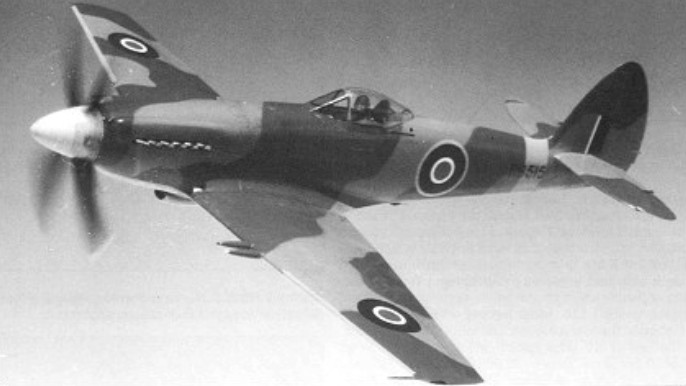
Conceived as a successor to the Spitfire, the Type 371 was projected from November 1942, initially mating a laminar flow wing with a Griffon-engined Spitfire XIV and progressively embracing a new fuselage. Three prototypes were ordered to Specification F.1/43, which was written around the project, and the first of these flew on 30 June 1944. This prototype comprised a Spitfire XIV fuselage with the new wing, a 2,035hp Rolls-Royce Griffon 61 engine and an armament of four 20mm cannon.
Named Spiteful, the second prototype flew on 8 January 1945 with the new fuselage, an all-round vision cockpit canopy and a 2,375hp Griffon 69 driving a five-bladed propeller. Production orders were placed for 188 Spitefuls, but only 16 were flown of 19 built or partially-completed (from April 1945) as the end of World War II and the advent of the jet fighter terminated plans for RAF use of the Spiteful. The designation F Mk 14 was applied to the Griffon 69-powered Spiteful; the proposed F Mk 15 had either the Griffon 89 or 90 with a six-bladed contraprop, and a single F Mk 16 had a Griffon 101 with a three-speed supercharger and five-bladed propeller. The two conversions from the Mark XIV, RB516 and RB518 were fitted with the Griffon 101 engine producing 2,420 hp and a top speed of 494 mph.
Development of a navalised Spiteful was pursued during 1945 to Specification N.5/45, and a contract was placed for two prototypes and by May 1945 nearly 150 fighters were ordered for production, the name Seafang being assigned. This aircraft was created as part of a project by Supermarine to design a new wing with a laminar profile. This began in November 1942. The machine, designated ‘Type 382’, was based on a Spiteful single seat fighter.
A Spiteful F Mk 15 with a “sting”-type arrester hook was tested early in 1945, and the Seafang prototypes flew in the following year. One of these represented the production Seafang F Mk 31 with Griffon 61 engine and a long-stroke undercarriage, but non-folding wings. The other represented the Seafang F Mk 32 with a Griffon 89 engine with contraprop, and upward-folding wings. The Seafang F. Mk.32 was a second production series that differed drastically from the first Mk.31 variant, and this was the version planned for mass production. Armament comprised four 20mm cannon and provision was made for carrying a pair of 454kg bombs or six 136kg rockets.
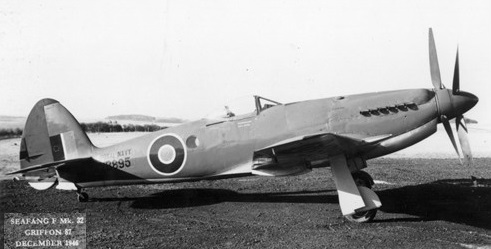
The prototype VB895 was only finished in early 1946. The aircraft was equipped with a system that allowed the wingtips to fold up for carrier flight decks. The fighter was powered by a 2350hp Rolls-Royce Griffon 89 engine and coaxial propellers. The design included all the necessary equipment to operate from aircraft carriers.
Four 20-mm Hispano cannons made up the main armament, additionally the fighter could carry rockets and bombs.
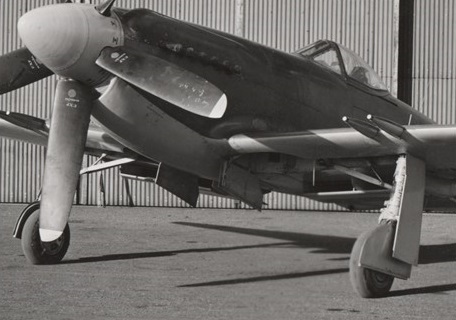
After completion during 1946-47 of 10 Mk 31s and six Mk 32s (some of which were never flown) production was cancelled, and attempts to interest other countries in purchasing the Seafang also failed.
All the produced aircraft were used extensively for various testing programs.

Spiteful F 14
Max take-off weight: 4513 kg / 9950 lb
Empty weight: 3334 kg / 7350 lb
Wingspan: 10.67 m / 35 ft 0 in
Length: 10.03 m / 33 ft 11 in
Height: 4.08 m / 13 ft 5 in
Wing area: 19.51 sq.m / 210.00 sq ft
Max. speed: 777 km/h / 483 mph
Ceiling: 12800 m / 42000 ft
Range: 908 km / 564 miles
Supermarine Spiteful F 16
Engine: Rolls Royce Griffon 65, 2342 hp
Length: 32.349 ft / 9.86 m
Height: 13.419 ft / 4.09 m
Wingspan: 35.499 ft / 10.82 m
Wing area: 210.006 sq.ft / 19.51 sq.m
Max take off weight: 10202.5 lb / 4627.0 kg
Weight empty: 7351.5 lb / 3334.0 kg
Max. speed: 413 kt / 764 km/h
Service ceiling: 42995 ft / 13105 m
Wing loading: 48.59 lb/sq.ft / 237.00 kg/sq.m
Maximum range: 1143 nm / 2116 km
Range: 490 nm / 908 km
Crew: 1
Armament: 4x 20mm MG, 454kg Bomb
Seafang F Mk 32
Max take-off weight: 4740 kg / 10450 lb
Empty weight: 3629 kg / 8001 lb
Wingspan: 10.67 m / 35 ft 0 in
Length: 10.39 m / 34 ft 1 in
Height: 3.82 m / 13 ft 6 in
Wing area: 19.51 sq.m / 210.00 sq ft
Max. speed: 764 km/h / 475 mph
Ceiling: 12500 m / 41000 ft
Range: 632 km / 393 miles

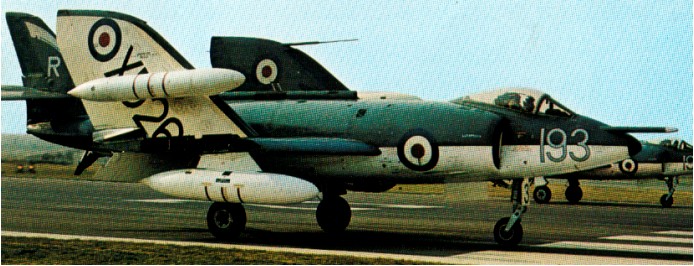
Known originally as the Supermarine N.113, the Scimitar F.1 was a large single-seat, twin-engined naval carrier-borne interceptor fighter and strike aircraft for the Royal Navy. The Royal Navy’s first single seat fighter capable of supersonic flight.
The Scimitar has mid-set sweptback wings, with slight anhedral, and dog-tooth leading edges. Blown trailing edge flaps are fitted. There are swept back tail surfaces with 10 degrees of anhedral on the tailplane. Conventional ailerons, rudder and one-piece all-moving tailplane are fitted. Engine air intakes are on each side of the fuselage by the cockpit. A tricycle undercarriage has single wheels on each unit, the mains retracting into the fuselage and the nosewheel retracts rearward. Internal tanks can be supplemented by four underwing tanks of up to 800 Imp.Gal total capacity. A flight refuelling probe can be fitted on the starboard side of the nose. The original armament was four 30mm Aden guns.
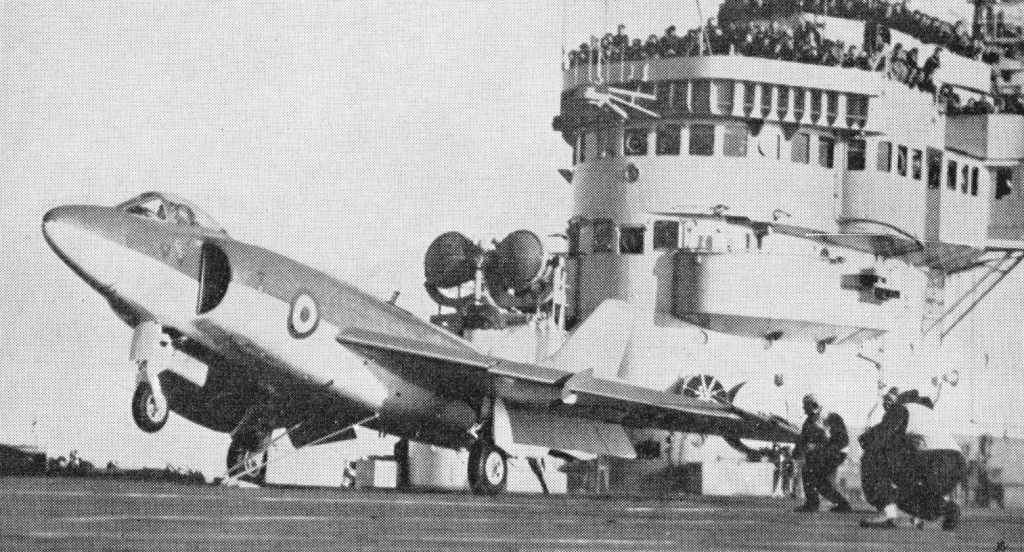
The prototype flew for the first time on 19 January 1956 and deck-landing trials were successfully completed on HMS Ark Royal in July 1957.

The first of 76 production aircraft flew on 11 January 1957 and the first operational squadron (No 803) was formed in June 1958 and embarked on HMS Victorious in the following September.
Scimitar F.Mk 1
Engine: 2 x Rolls-Royce Avon 202 turbojet, 50.04kN / 11,250 lb
Max take-off weight: 15513 kg / 34200 lb
Empty weight: 10869 kg / 23962 lb
Wingspan: 11.33 m / 37 ft 2 in
Length: 16.87 m / 55 ft 4 in
Height: 5.28 m / 17 ft 4 in
Wheel track: 14 ft 1 in
Wing area: 45.06 sq.m / 485.02 sq ft
Max. speed: 1143 km/h / 710 mph
Cruise speed: 14020 km/h / 8712 mph
Ceiling: 14020 m / 46000 ft
Range: 2288 km / 1422 miles
Armament: 4 x 30mm cannons, 4 x 454kg bombs or missiles
Crew: 1

Noel Pemberton-Billing, a wealthy yacht-broker, gun-runner and aircraft manufacturer (he established the Supermarine company, described as ‘tall, slick, monocled and iron-jawed’ by contemporary society columnists, learned to fly in 24 hours to win a £500 wager with Frederick Handley Page and subsequently served with the Royal Naval Air Service, from which his ‘tem¬pestuous temperament’ earned him an early retirement, though not before he had helped to organize the first aerial attack on the Zeppelin sheds on Lake Constance.
Noel Pemberton Billing began aeronautical experiments in 1908 with a primitive monoplane. Acquiring a factory at Woolston, Southampton, in 1913, he began to design and build marine aircraft, his P.B.1 biplane flying-boat being exhibited at the 1914 Olympia Show, but not flown.
Pemberton-Billing Ltd registered June 1914.
At outbreak of First World War in 1914 designed, built and flew P.B.9 single-seat scout biplane in nine days. The P.B.29E night patrol quadruplane of 1915, built in seven weeks from beginning of design, paved the way for the improved version, the 1915 P.B.31E Nighthawk anti-airship fighter with many ingenious features, including searchlight and recoilless gun. By the time this had flown the company had been renamed Supermarine Aviation Works.
Other designs were a twin-float seaplane and Baby single-seat fighter flying-boat, the latter flying in February 1918. Company’s postwar Schneider Trophy Sea Lion racing flying-boats were developed from Baby, but advanced S.4 racer of 1925 was a twin-float seaplane, though still of wooden construction. The S.5 and S.6 seaplanes, which followed, were renowned for racewinning and record-breaking, but especially as forerunners of Second World War Spitfire, designed by Reginald Mitchell (1895-1937), who had joined company in 1916. Well-known maritime aircraft included the Admiralty (AD) type built by Supermarine (and Pemberton-Billing) in First World War, and Seal/Seagull/Scarab/Sheldrake series developed during 1920s and 1930s.
When the company was absorbed by Vickers in 1928 it was already famous for large multi-engined flying-boats, particularly Southampton, distinguished in RAF service from 1925, especially for long cruises.
Supermarine became Vicker-Supermarine in 1929.
Successors were much-refined Scapa of 1932 and Stranraer of 1935, and the Walrus and Sea Otter earned their place in FAA history during Second World War. The Supermarine Spitfire first flew March5, 1936. Well over 20,000 were built by various makers. Basic change came when the Rolls-Royce was replaced by the Griffon engine. Seafire was naval development (over 2,500 built). Spiteful and Seafang were late piston-engined types with new wing, from which the jet-propelled Attacker was developed to enter service in 1951. Swept-wing Swift was unsuccessful as fighter, and twin-jet Scimitar of 1958 concluded fighter line.
A two-seat low-wing cabin monoplane, derived from the Culver Model V, and rebuild of Culver PQ-8 target drone. They featured retractable undercarriage.
First flying on 20 December 1957, they were certified under ATC 2-559 and 2-584 and, priced at $6,720 about 40 were sold.
Engine: 80hp Franklin 4AC
Wingspan: 29’0″
Length: 21’0″
Useful load: 570 lb
Speed: 130 mph
Range: 700 mi
Seats: 2
USA
A division of the Priestly Hunt Aircraft Corporation was formed in mid-1956 at Culver City, California, to acquire the assets of Culver Aircraft Corporation which became bankrupt in 1946. Put into production the Superior Satellite, a two-seat low-wing cabin monoplane, derived from the Culver Model V.
In 1958 rights were sold to California Aero Corp, Tracy CA.
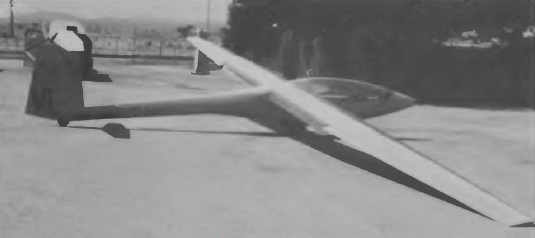
In 1972 the MOBA-2A, designed by an aircraft engineer, Gary Sutherland, was one of the two winners of an Australian Gliding Federation competition to design a 13 m (42 ft 8 in) sailplane which could be built in a small workshop with limited tools.
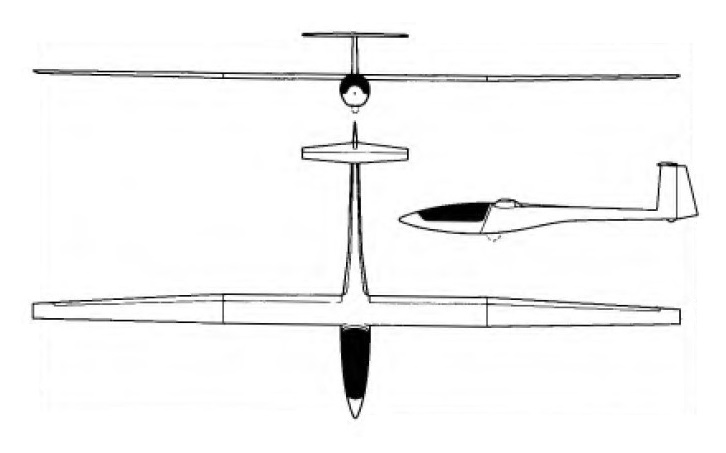
Designed and built by Mr Gary Sunderland of Heatherton, Victoria, an engineer with the Australian Department of Civil Aviation, the MOBA 2C is a Standard Class single-seater developed from the MOBA 2A, one of two 13m span sailplanes that competed with each other in 1972 in a design competition organised by the Australian Gliding Federation. MOBA is an acronym for My Own Bloody Aircraft, and the MOBA 2B was a 15m span version of the 2A; the 2C is an improved version of both the earlier models with a 15m span and the fin and rudder height increased to 4ft.
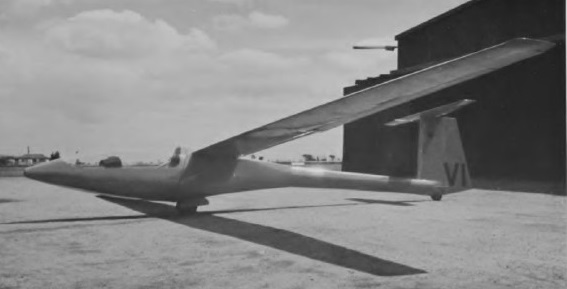
The prototype 2C made its first flight on 12 December 1979 and is a cantilever high wing monoplane of mixed construction with a T-tail; series production was not intended. The single-spar wings are built in three pieces and have plywood ribs with PVC foam infilling, and a skin of pop-riveted aluminium alloy sheet covered with glassfibre. The plain aluminium alloy flaps on the trailing edge also serve as air brakes, and the wooden ailerons are plywood-covered. The nose and centre fuselage are box structures of sheet aluminium alloy with a non-structural glassfibre skin, while the tail boom is of flush-riveted aluminium alloy sheet. The fin and rudder are also of flush-riveted aluminium, while the tailplane and elevator are of wood and plywood. Landing gear consists of a retractable monowheel and a fixed tailskid, while the pilot sits under a forward-sliding canopy.
MOBA-2A
Wingspan: 42 ft 8 in / 13 m
MOBA-2C
Span: 49 ft 2.5 in / 15.0 m
Length: 22 ft 3in / 6.78 m
Height: 4 ft 4 in / 1.32 m
Wing area: 97.7 sq ft / 9.08 sq.m
Wing section: Wortmann FX-67-K-150
Aspect ratio: 24.74
Empty weight: 499 lb / 226 kg
Max weight: 730 lb / 331 kg
Max wing loading: 36.5 kg/sq.m / 7.48 lb/sq ft
Max speed: 121 mph / 105 kt / 194.5 km/h (in smooth air)
Max aero-tow speed: 101 mph / 88 kt / 163 km/h
Stalling speed: 42 kt / 78 km/h
Min sinking speed: 2.0 ft/sec / 0.61 m/sec at 52 mph / 45 kt / 83 km/h
Best glide ratio: 37:1 at 57.5 mph / 50 kt / 93 km h
The Sunbird Nova is a 1979 hang glider.

Earlier experience with the T-58VD design, manufacturing and flight testing gave the design bureau the capability to design a STOL aircraft, designated T6-1, which became the first new-generation attack aircraft. Conceptual design work began in 1965. For the first time in the history of the Design Bureau, the loft technique was used for structural assembly coordination.
In one of the design rooms was a 49 ft 3 in (15 m) long drawing board, installed vertically and covered with a reference grid, on which a reduced scale aircraft side view was drawn. This drawing included external aircraft lines, air ducts, boundary layer air bleed wedges, additional air intakes and nozzle units, fuel tank contours, engine contours, radio equipment, aircraft system units contours, aircraft and engine control circuits, electrical wiring, hydraulic and pneumatic pipelines, fuel pipelines and ventilation system ducts and some structural members, including the landing gear assemblies in a retracted position. In addition, all of this information was plotted on fuselage cross section lofts in full-scale.
A T6-1 prototype was manufactured by the summer of 1967. It flew for the first time, with Vladimir Ilyushin at the controls, on July 2. It was planned to display the aircraft at the Domodedovo air show. However, the aircraft was not fully developed and it did not fly at Domodedovo.
In 1969, after intensive tests, the R-27F2-300 cruise engines of the T6-1 were replaced by Arkhip Lyulka AL-21 Fs. For this purpose, the rear fuselage was reworked. This involved not only the external contours but also the structure. The air brake panels, which had been placed on the rear fuselage, were removed. As a result of the flight tests, to improve directional stability characteristics, the wing tips were turned down and ventral strakes were installed on the fuselage bottom.
Because of the radar designer’s requirement, the fuselage nose radome dimensions were changed. Initially, the radome dimensions were chosen to meet the required supersonic performance. The radome became shorter and more obtuse. Tests proved the aircraft, with the new radome, to be capable of the required speed.
Sukhoi T6-1A more precise definition of the requirements for the new generation of attack aircraft along with the T-58VD and T6-1 flight test results and the theoretical analysis of twelve different aerodynamic shapes resulted in the Chief Designer abandoning the hybrid powerplant. Thus began the design of a variable-geometry attack aircraft. Further tests of aircraft with lift engines were stopped and the T6-1 was used as a test bed for radio equipment. From 1967 until 1970, the aircraft flew approximately 120 test flights. From 1971 until 1974, it was used more efficiently and flew more than 200 flights. In 1974 its service career was over. Today, the composite powerplant T6-1 prototype is an exhibit at the aircraft museum in Monino.
At much the same time the bureau produced its T-37 prototype meeting the requirement filled by the Ye-266. The T-37 was flown in 1960, but was not designed as anything but a research type.
 All Aero