In 1979 an Albatros D.Va powered by a 200hp Hall Scott L-6 engine was built for the San Diego Aerospace Museum.
One Albatros D.V reproduction was built in 1980 for the Champlin Fighter Museum, powered by a 180hp Mercedes engine.
In 1979 an Albatros D.Va powered by a 200hp Hall Scott L-6 engine was built for the San Diego Aerospace Museum.
One Albatros D.V reproduction was built in 1980 for the Champlin Fighter Museum, powered by a 180hp Mercedes engine.
1962: Jim Appleby.
1964: Antique Aero
Asbury Park NJ.
USA
1972:
Fla-Bob Airport
Riverside CA.
USA
1988:
Yucca Valley CA.
USA
A prolific constructor of accurate flying replicas, Antique Aero provided planes for more than 150 television and movie appearances.
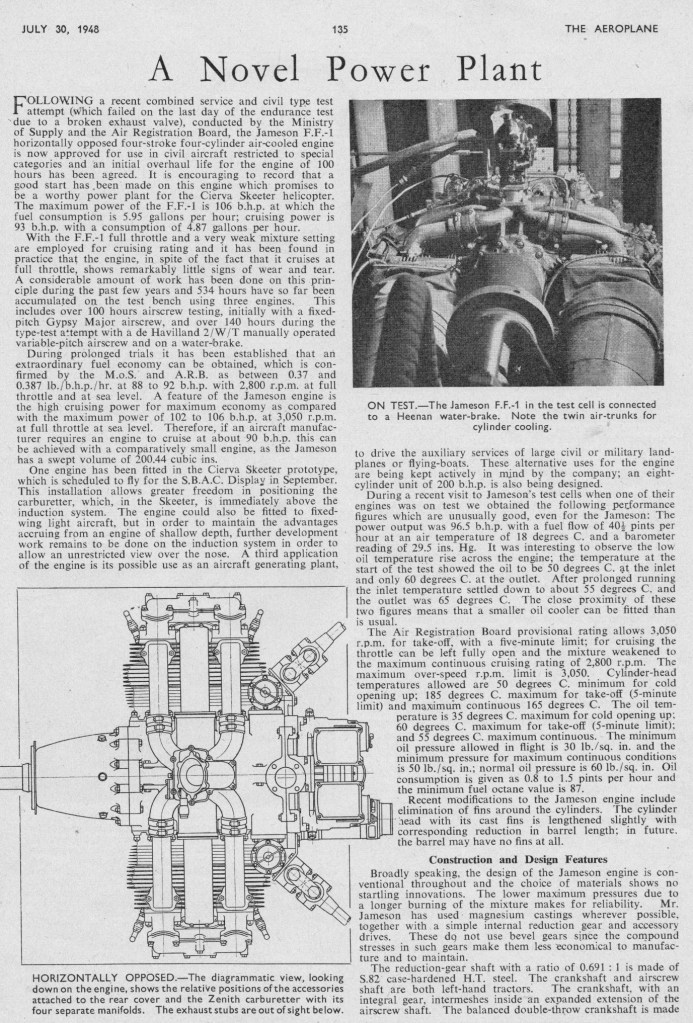

The Jameson FF.1 flew in a Cierva Skeeter helicopter.
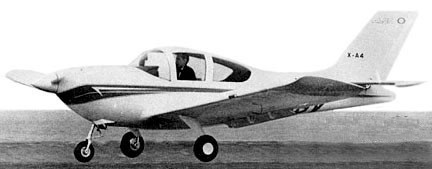
The 1966 X-A4 Aircoupe was a prototypical four seat development of the A2.
One was built, N6399X, first flying on 25 February 1966. Priced at $11,000, it did not enter production.
Engine: 150hp Lycoming O-320A
Wingspan: 30’0″
Length: 20’9″
Useful load: 1107 lb
Max speed: 150 mph
Cruise: 140 mph
Stall: 52 mph
Range: 755 mi
Seats: 4
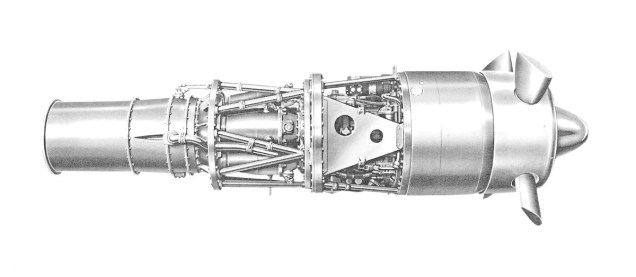
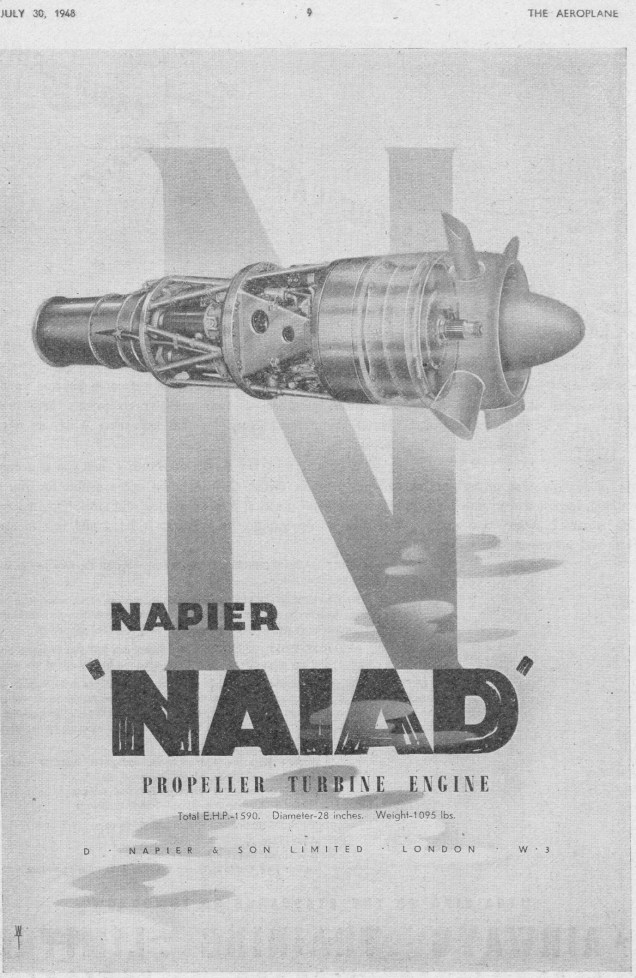
Following on from the light prototype ‘Nymph‘ engine Napier’s first (and late) entry into the aero gas turbine field was in 1947 with their first major type, the E128 ‘Naiad I’ turbo-prop engine.
A contract for a 1,500 shp propeller turbine was given by the Ministry of Air to D Napier & Son in 1945 probably as a replacement for the known future loss of ‘Sabre‘ development work. This became the E128 ‘Naiad’ engine from an October 1945 design. It was built and tested before the Napier Nomad compound aero engine in 1949. Its small axial compressor was based on an existing Nomad type with 12 stages giving 5.5:1 pressure ratio running at 18,250 rpm during take off. At the hot end it had a two-stage turbine providing the power within its slim 28″ maximum diameter. By the end of 1948 it was giving 1,590 ehp in bench tests at Acton and in the Coronation Road Test Tunnels which included 240 lb jet thrust at the take-off rating. The Naiad I gave 1,050 ehp when cruising with turbines at 17,000 rpm.
The Napier Luton Flight Development Establishment installed a Napier Naiad to fly in the nose of an Avro Lincoln which it did on reduced power at the SBAC Farnborough show whilst a mock-up of it in a Vickers airliner nacelle was exhibited on the DNS stand.
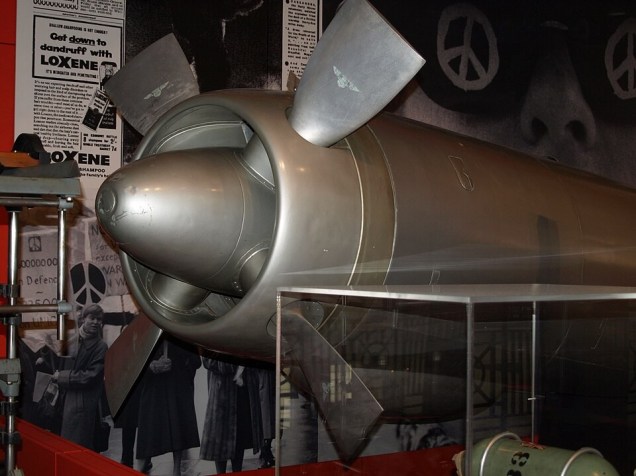
A pair of Naiads were coupled together through a double gearbox to reduce drive speed down to a single propellor shaft forming a most compact 3,000 shp engine which was the E128D engine proposed for the Fairey Gannet anti-submarine aircraft. This contract went to Armstrong-Siddley with their ‘Double Mamba’ engine leaving Napier with only castings for airflow tests at Luton.
Far more damaging than this was the loss of the turbo-prop engine contract for the Vickers Viscount airliner to the lower powered and 25% heavier Rolls-Royce Dart engine. Vickers did not trust the Naiad’s state-of-the-art axial compressor however their decision provided Rolls with a long term order to power over 400 Viscounts. This blow to Napiers was to have a permanent adverse effect on the Company’s aero gas turbine prospects in the UK.
Type: Turboprop
Length: 102 in (2,600 mm)
Diameter: 28 in (710 mm)
Dry weight: 1,095 lb (497 kg)
Compressor: 12-stage axial
Combustors: 5 chambers
Turbine: 2-stage (18,250 rpm)
Maximum power output: 1,500 shp (1,100 kW) plus 241 lbf (1.07 kN) residual thrust
Overall pressure ratio: 5.5:1
Air mass flow: 17.2 lb/s (7.8 kg/s)
Fuel consumption: 96.2 US gal/h (364 L/h; 101.2 L/ks)
Thrust-to-weight ratio: 1.37 shp/lb (2.25 kW/kg)
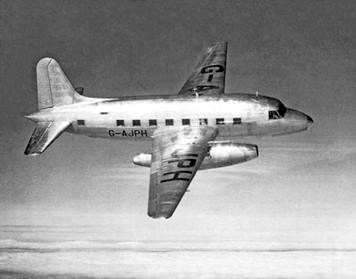
The Ministry of Aircraft Production Air Ministry Specification 17/44 from Vickers-Armstrongs Limited. The specification was for a peacetime requirement for an interim short-medium haul passenger aircraft. To speed development the aircraft used the wing and undercarriage design from the Wellington but the fuselage was new. Although the original contract referred to Wellington Transport Aircraft, on completion, the name Viking was chosen.
The initial 19 production aircraft (later designated the Viking 1A) carried 21 passengers, they had metal fuselages and – except for the wing inboard of the nacelles – fabric-clad geodetic wings and tail units. Following feedback from customers, the next 14 examples, known as, featured stressed-metal wings and tail units. The next variant, the Viking 1B, was 28 in (71 cm) longer than the Viking 1, carrying 24 passengers with up-rated Bristol Hercules piston engines, achieved a production run of 115.
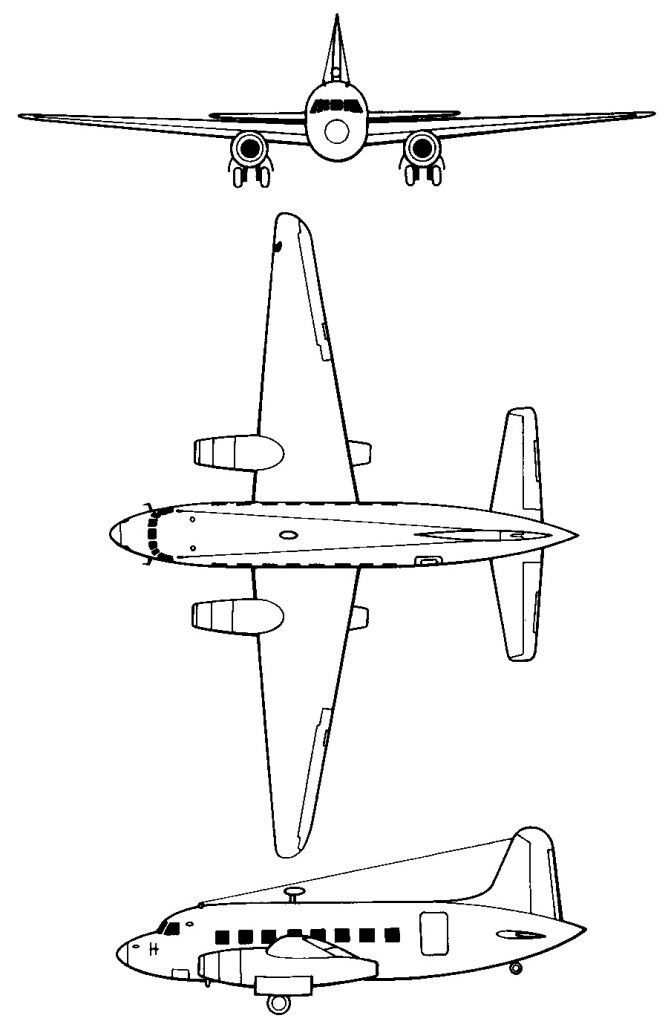
The 107th airframe on the Weybridge production line was set aside, and the existing nacelles were replaced by completely new jet pods each housing a Rolls-Royce Nene, with the trailing edge of the wing extended at the rear to fair smoothly into the top of the pod. The Vickers main landing gears were of a totally new type, designed only for this aircraft, with four separate short legs each carrying a wheel which retracted to lie on each side of the jet pipe inside the nacelle. Unlike other Vikings the elevators were skinned with metal, and the metal skin on the wings and tailplane was made thicker than normal. There were also changes to the cockpit, fuel system and other items.
Chief test pilot J ‘Mutt’ Summers flew the Type 618 Nene-Viking from Wisley on April 6, 1948. At different times it bore civil registration G-AJPH and Ministry serial VX856.
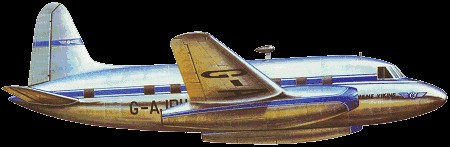
On 25 July 1948, on the 39th anniversary of Blériot’s crossing of the English Channel, the Type 618 Nene-Viking flew Heathrow–Paris (Villacoublay) in the morning carrying letters to Bleriot’s widow and son (secretary of the FAI), who met it at the airport. The flight of 222 miles (357 km) took only 34 minutes. It then flew back to London in the afternoon. It obtained a maximum speed of 415 mph (668 km/h) at 12,000 ft (3,700 m) and averaged 394 mph (634 km/h). In 1954 it was bought from the Ministry of Supply and underwent the substantial conversion to Hercules 634 piston engines by Eagle Aviation to join their fleet as Lord Dundonald on September 24, 1954.
Engines: 2 x 2268kg Rolls-Royce Nene I turbojets
Wingspan: 27.2 m / 89 ft 3 in
Wing area: 81.93 m2 / 881.89 sq ft
Length: 19.86 m / 65 ft 2 in
Height: 5.94 m / 20 ft 6 in
Empty weight: 9548 kg / 21050 lb
Take-off weight: 15196 kg / 33502 lb
Max. speed: 753 km/h / 468 mph
Cruise speed: 632 km/h / 393 mph
Range: 555 km / 345 miles
Crew: 4
In 1949 Carl & Vincent Ast, Van Nuys CA. built the Ast Special / Mercury Air midget racer ‘Shoestring’, designed by Rodney Kreimendahl. A single-place mid-wing monoplane.
First flown by Bob Downey, it won the 1951 Continental Trophy piloted by John Paul Jones and registered N26C.
It was restored in 1965 by Ray Cote with wing replacement in 1973 as N16V.
Plans were marketed, and several copies are known to have been built.
Engine: 85hp Continental C-85
Wingspan: 19’0″
Length: 17’8″
Max speed: 210 mph
Cruise: 180 mph
Stall: 65 mph
Van Nuys CA.
USA
Built the Ast Special / Mercury Air midget racer ‘Shoestring’ in 1949.
1959:
Aero Union Corporation
pres: Dale P Newton
Chico CA.
USA
Built conversions of war-surplus aircraft with tank systems for firefighting operation—AF-S2, B-17, C-119, C-130, CH-47, DC-3, DC-4, DC-6, DC-7, HU-16.
The Aero-Tech Boeing F4B-2/P-12C first flown in August 1978 was a 4/5-scale replica of Boeing F4B-2/P-12C.
Engine: 245hp Jacobs R-755-9
Wingspan: 24’0″
Length: 17’9″
Useful load: 570 lb
Max speed: 165 mph
Cruise: 135 mph
Stall: 63 mph
Range: 386 mi
Seats: 1
 All Aero