Developed M74 Wasp (certification 1976) and M79T Jet Wasp II (first flown 1979 with piston engine) as single-seat piston-engined agricultural/utility and two-seat turboshaft- powered modifications of Bell 47G/ TH-13T helicopters respectively. Assets bought by Aerodyne in 1985.
USA Dallas-based company which in mid-1970s acquired assets of Carstedt Inc and is continuing marketing of latter’s Jetliner 600 lengthened-fuselage turboprop conversion of de Havilland Dove as the CJ600.
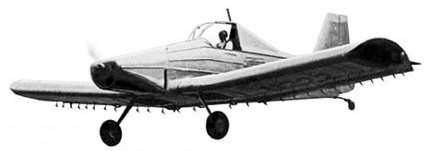
In 1949-50 the Texas A&M College in the USA developed a concept aircraft, the first purpose built agricultural aircraft designed by Fred E Weick and Hugh DeHaven, designated Ag 1 which flew in January 1950, piloted by Ted von Rosenberg. It was a low wing monoplane of all metal construction, powered by a 225 hp piston engine and designed to carry a chemical load of 1,200 lb (544 kg).
Weick Ag-1 N222
Built with US government support, the Ag 1 N222 was demon¬strated widely throughout the USA and was well received by the six or seven hundred pilots who flew it. The main criticism was that it was underpowered, and a decision was taken to refit it with a 300 hp engine. Before this could be done the Ag 1 collided with a powerline pole and ended up on its back. But the crash demonstrated one of the qualities for which it was designed: the aircraft was destroyed except for the cockpit area, but the pilot was uninjured, even though he had been subjected to forces more than 25 times that of gravity, according to the dynamometers installed for test purposes.
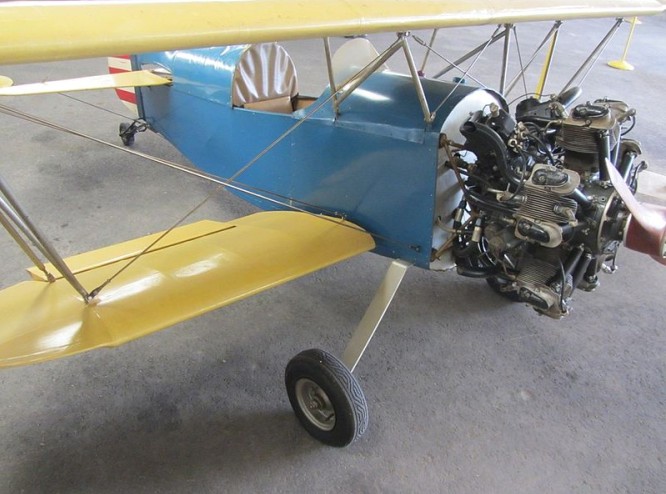
Designed by Rene Tessier and built in 1963, the Tessier Biplane is a single place homebuilt biplane.
The Tessier biplane is a single place tube and fabric construction aircraft with conventional landing gear. The wing spar is wood and ribs are plywood. The original engine was a Volkswagen air-cooled engine which was replaced with a Lawrance L-5 radial engine.
The original Tessier Biplane belongs to the EAA AirVenture Museum, but is neither airworthy nor on display.
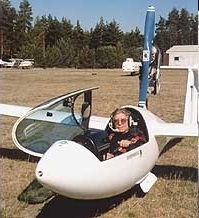
Finnish company Eiri Avion started to build the PIK-20 B sailplane, an all-fiberglass/epoxy high-performance glider designed by a group of engineers (Tammi, Hiedanpää, Korhonen).
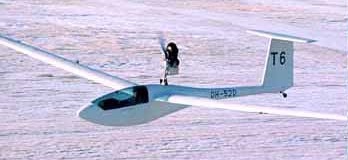
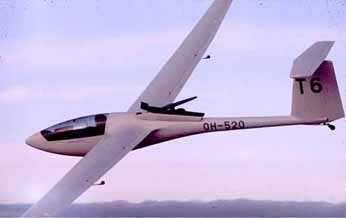
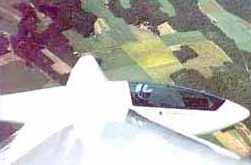
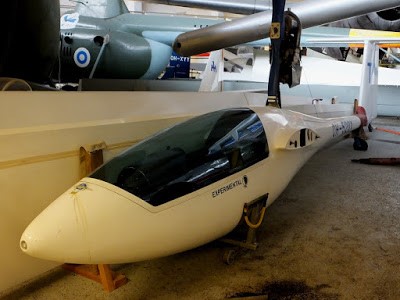
In 1975 an agreement was signed between Tervamaki and Eiri Avion to develop a retractable engine installation for the PIK-20B glider. The designation for the prototype was JT-6. It is a one-of-a-kind experimental machine used as a test bed for the production model which later emerged as PIK-20E (E for the engine).
The modifications necessary to convert a PIK-20B glider into a JT-6 motorglider were as follows: Engine installation including a retraction mechanism with automatically opening and closing doors, fuel tank, a 16-Ah battery plus engine gauges and controls. The engine and propeller necessitated enlargement of the fuselage aft of wing and, therefore, a new fuselage center-section mold was made. The fuselage was bonded together from three sections. The engine compartment opening required a strong beam around it to carry the loads. All of the above modifications added some 70 kg of mass and moved the CG 100 mm (4 in) backwards. To compensate for this CG shift, the wings were swept 2 degrees backwards, necessitating new wing spars and new wing root fittings. The wing spars were strengthened due to the increased fuselage mass. The main landing gear was moved 100 mm (4 in) backwards and a steerable tail wheel was added, as was retractable outrigger wheels into the wings.
Tervamaki first flew the JT-6 in August 1976, registered OH-520X. There were numerous difficulties in the beginning, and the first flight was a near disaster. The first engine, a Canadian Kohler, was of too low power (33 hp). In addition, the Kohler factory ceased working in 1977 but, a good, new choice was found in the Rotax 502. It was the first Rotax 502 installation in an aircraft. With the Rotax 502 the plane had a climb rate of 3.5 m/s.
Since the machine was an experimental prototype, a lot of things changed during the test flights and thereafter during the 20+ years of flying. The most serious ones are a couple of engine seizing due to too lean mixture.
An article about JT-6 appeared in Homebuilt Aircraft, August 1980. Self-Launch!, a book by Peter A. Williams from 1998 thoroughly describes motorglider history including the JT-6 in detail.
The JT-6 logged 1621 hrs in 23 years of flying of which less than 5 percent was by power, the rest was soaring.
The JT-6 was handed over in an airworthy condition to the Finnish Aviation Museum in May 2007.

 All Aero