Tipsy Nipper / Cobelavia Nipper III / Nipper Kits and Components Nipper / Delhamende Nipper

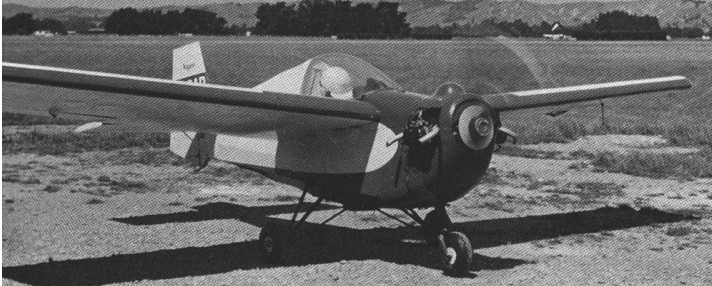
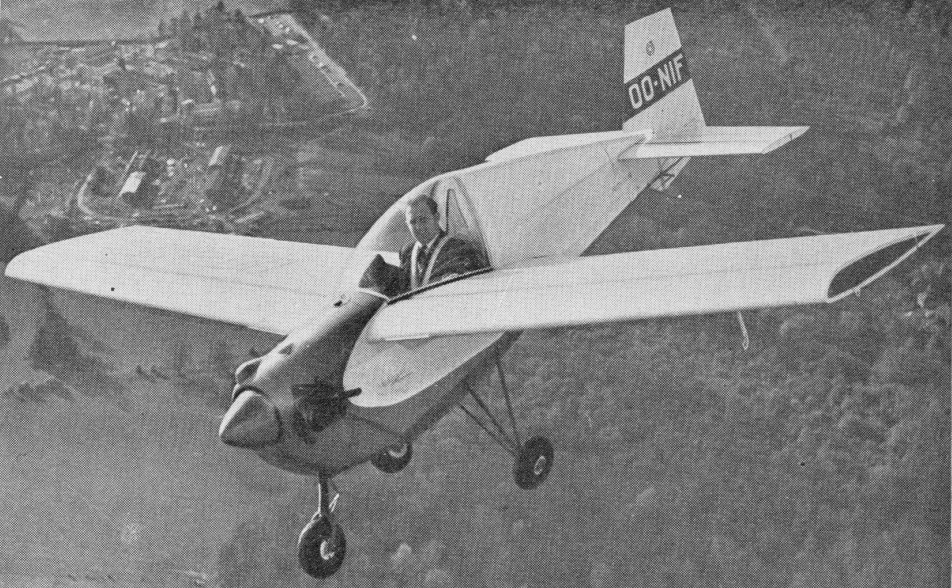
Conceived by Ernest Oscar Tips, managing director of Avions Fairey SA, and produced by Tipsy intended primarily for manufacture in kit form. The Nipper flew for the first time on 2 December 1957, powered by a 40 hp Pollmann HEP engine, entering production as the T.66 Mk.1. The first production model flyng on 10 March 1959.

Identical to the Mk.1 apart from its 45 hp Start Stamo 1400A engine, the Mk.2 first flew on 16 February 1959. Nipper production by Avions Fairey commenced almost immediately and the first production T66 Mk.II, flew on 20 October 1959.

Tipsy Nipper Article

Avions Fairey produced the Nipper in both fly-away and kit forms, the latter aimed at the developing amateur constructor market. However, it is not known how many units the company built. Construction numbers which are usually a reliable indication of production figures suggest at least eighty Nippers came off the company’s Gosselies production line before manufacturing rights were transferred to Coblevia in 1961, another Belgium company. Coblevia, after some design changes, produced aircraft marketed as the Coblevia Nipper III.
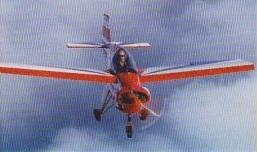
In June 1966 manufacturing rights to the Nipper were purchased by an English company Nipper Aircraft Ltd and a deal was negotiated with Slingsby to produce the aircraft at its Kirbymoorside glider factory. These aircraft were marketed by Nipper Aircraft in three vanants. The Nipper Mk.III powered by a 1500cc Rollason Ardem (converted VW auto engine), the Mk.IIIA fitted with a 1600cc Rollason Ardem and the Mk.IIIB kitset intended for amateur construction.

Slingsby Tipsy Nipper

Thirty-three Nippers were produced by Slingsby before production ceased toward the end of 1969.
Acro Engines and Aeroframes, the company run by contest pilot Barry Smith, using his own Volkswagen engine conversion, with fuel injection and inverted fuel and oil systems, aerobats a relatively old lightweight design, the Tipsy Nipper.

After liquidation of Nipper Aircraft in May 1971 Nipper Kits and Components Ltd. was formed to support existing aircraft, and continued to market the aircraft in Mk III form as plans and some components. In 1998 the Nipper was still being marketed by Nipper Kits & Components.
Gallery

Nipper Mk.I
Engine: Pollman HEPU, 40 hp
Wing span: 19 ft 8 in
Length: 15 ft 0 in
Height: 6 ft 2 in
Wing area: 80.7 sq.ft

Nipper Mk.II
Engine: Stark Stamo 1400A, 45 hp
Wing span: 19 ft 8 in
Length: 15 ft 0 in
Height: 6 ft 2 in
Wing area: 80.7 sq.ft
Empty weight: 412 lb
Loaded weight: 660 lb
Max speed: 101 mph
Max cruise: 93 mph
Econ cruise: 84 mph
ROC: 630 fpm
Service ceiling: 13,100 ft
Range: 200 mi

Nipper Mk.III
Engine: Stark Stamo 1400A, 45 hp

Nipper Mk.III
Engine: Ardem X, 45 hp
Wingspan: 19 ft 8 in / 6.00 m
Wingspan over tip tanks: 20 ft 6 in / 6.25 m
Length: 15 ft 0 in / 4.56 m
Empty weight: 465 lb / 210 kg
MTOW normal: 750 lb / 340 kg
MTOW aerobatic: 685 lb / 310 kg
Cruise 75% no tanks SL: 81 kt / 93 mph / 150 kph
ROC SL: 650 fpm / 198 m/min
Service ceiling: 12,000 ft / 3660 m
Range internal fuel 30min res: 173 nm / 200 mi / 320 km
Range w/tip tanks: 390 nm / 450 mi / 720 km
Seats: 1

Nipper Mk.IIIA
Engine: Ardem 1600cc, 55 hp

Nipper Mk.IIIB
Empty weight: 211 kg
Wing area: 7.50 sq.m
Fuel capacity: 34 lt
Engine: VW, 60 hp
MAUW: 340 kg
Seats: 1
Max speed: 235 kph
Cruise speed: 150 kph
Minimum speed: 61 kph
Climb rate: 3.3 m/s
Fuel consumption: 12.5 lt/hr
Plan price (1998): £55
Kit price (1998): £4004

Nipper Mk.IV
Engine: Jabiru

Engine: VW
Span: 19ft 8in
Wing area: 80.75 sq.ft
Length: 15 ft
Max wt: 750 lbs
Empty wt: 465 lbs
ROC: 650 fpm
Cruise: 80 kts
Seats: 1
Tipsy

Tipsy Aircraft Company Ltd.

Belgium
Formed in late 1930s together with Tipsy Aircraft Company Ltd in U.K. to build ultralight aircraft designed by E. O.Tips and previously manufactured by Avions Fairey.

Tipsy Aircraft Company Ltd. was formed 1937 at Hanworth Air Park. Middlesex, to license build Anglo-Belgian lightplanes of E. 0. Tips. Continued production postwar but closed down in 1952.

Pre-war products at Gosselies were single-seat S2 and two-seat B or B-2 (open cockpits) and BC (enclosed cabin). B-2 revived post-war as Tipsy Trainer, and BC as Belfair (from Belgian Fairey), together with new design of Junior in 1946 and Nipper in 1957. Production of Nipper taken over by Cobelavia in 1961, and by Nipper Aircraft Ltd in 1966.

Timmins Aviation Ltd

Canada
Transport aircraft repair and overhaul works at Montreal International Airport which in early/mid-1960s produced a “general aviation” conversion of the Catalina amphibian. Aircraft and Texaco Sky Service Divisions merged on January 1,1967 with Atlantic Aviation of Wilmington, Delaware, U.S.A.

Thurston Tawney Owl

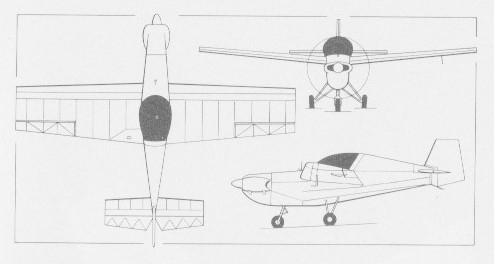
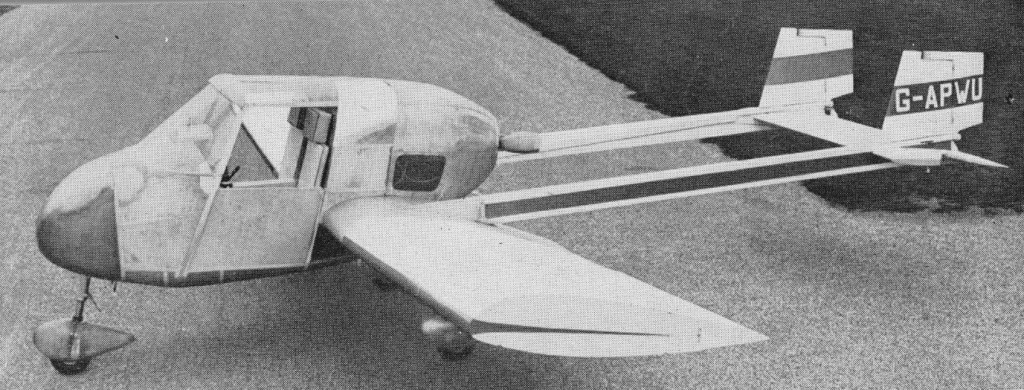
An attempt to produce a cheap new British lightplane, the Owl was designed by Tony Creedon and Eric Thurston, and built at Stapleford Tawney in Essex.

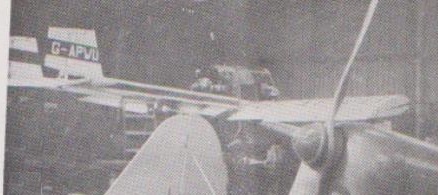
Thurston Tawney Owl G-APWU under construction at Stapleford Tawney in 1960.

It had a 75 hp Porsche engine and a metal and plastic airframe.

The first flight, on 22 April 1960, ended in a forced landing. Registered G-APWU c/n TA,1-1, it was put into store, firstly at Stapleford then Stendon and later offered for sale.

Engine: Porsche 678/4, 75 hp
Wingspan: 24.00 ft
Length: 19.06 ft
Seats: 2 side-by-side

Thurston Teal TSC-1A / Schweitzer Teal / Teal Aircraft Teal

Thurston Aircraft Corp designed and manufactured the TSC-1A1 Teal two/three-seat light amphibian later acquired by Schweizer and later Teal Aircraft Corporation.

The TSC-1A Teal prototype N1968T first flew in June 1968 and, selling for $17,150, fifteen went to the USN. The improved TSC-1A1 Teal flew in 1972.

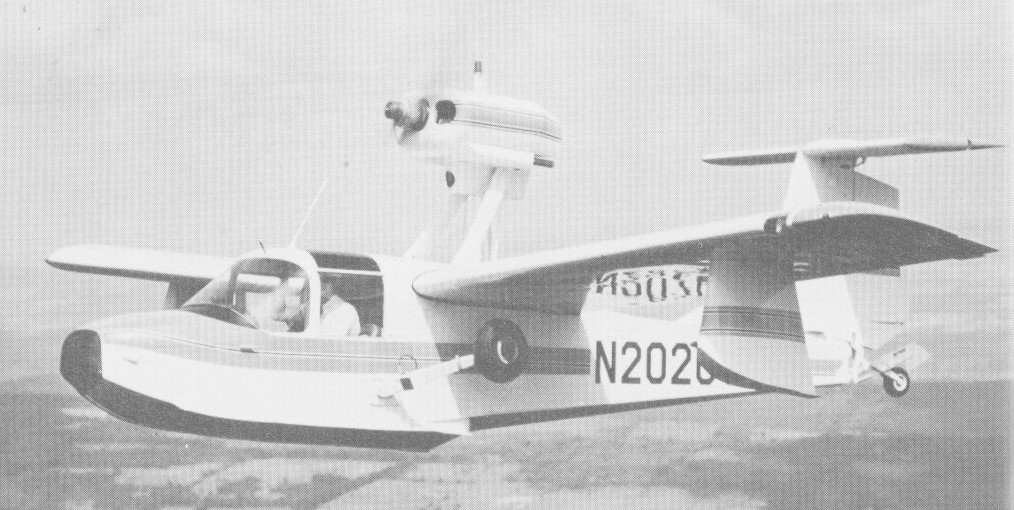
The TSC-1A2 Teal II N2020 first flew in October 1972. The TSC-1A2 Teal II was an improved version featuring slotted trailing-edge flaps, new wing leading-edge fuel tanks, optional hull fuel tank, and independent retraction of the tail wheel.

TSC-1A2 Teal II

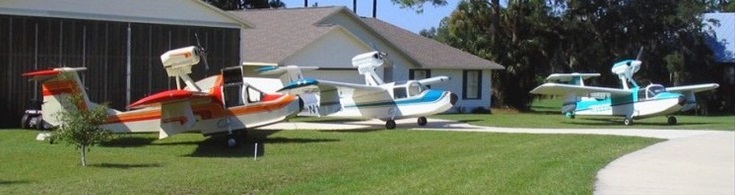
From 1976 Teal Aircraft Corp held manufacturing and tooling rights for the Thurston Teal, which was previously owned by Schweizer Aircraft Corporation. It was being produced by Teal Aircraft in St. Augustine, Florida, at the rate of 24 a year. For about $40,000, they’ll put you into the 150 horsepower Teal II, which cruises at 102 knots and carries a 765 pound equipped useful load. For $2,000 more, they’ll sell you the same airplane with a 180 hp engine the Teal III. The TSC-1A3 Teal III first flying in September 1991.

Thurston Aeromarine Corp superseded International Aeromarine; initially to produce two-seat Teal III amphibian (delivered from 1995), then expected to be followed by Seafire four-seat amphibian.

Thurston TSC-1A N2005T

Gallery

TSC-1A Teal
Engine: Lycoming O-320-A3B, 150hp
Wingspan: 31’11”
Length: 23’7″
Useful load: 600 lb
Max speed: 125 mph
Cruise speed: 108 mph
Stall: 54 mph
Range: 400 mi
Seats: 2
No built: 15

TSC-1A1 Teal

TSC-1A2 Teal II
Engine: Lycoming O-320-A3B, 150hp
Wingspan: 31’11” / 9.73 m
Length: 23’7″ / 7.19 m
Empty weight: 1435 lb / 651 kg
MTOW: 2200 lb / 998 kg
Useful load: 565 lb
Max cruise 5000ftt/1525m: 116 mph / 101 kt / 187 kph
Stall: 52 mph
ROC: 650 fpm / 198 m/min
Service ceiling: 12,000 ft / 3660 m
Range econ cruise 96kt/110mph/177kph 45min res: 472 mi / 410 nm / 759 kph
Range econ cruise 96kt/110mph/177kph 45min res opt fuel: 748 mi / 650 nm / 1203 kph
Seats: 2
Baggage capacity: 230 lb / 104 kg
Price 1974: $22,475

TSC-1A3 Teal III
Engine: Textron Lycoming O-360-1F6D, 180hp
Wingspan: 36’0″
Length: 23’10”
Useful load: 800 lb
Max speed: 116 mph
Cruise speed: 112 mph
Stall: 55 mph
Range: 500 mi
Seats: 2

Teal Aircraft Corp TSC 1A3 Marlin
Engine: Lycoming O-360-A1F6D, 180 hp
Seats: 2/4
Wing loading: 14.7 lb/sq.ft
Pwr loading: 12.8 lb/hp
Max TO wt: 2300 lb
Empty wt: 1435 lb
Equipped useful load: 782 lb
Payload max fuel: 350 lb
Range max fuel/ 75% pwr: 561 nm/ 5.3 hr
Range max fuel/ 55% pwr: 739 nm/ 7.7 hr
Service ceiling: 14,000 ft
75% cruise: 104 kt. 55% cruise: 96 kt
Stall: 45 kt
1.3 Vso: 59 kt
ROC: 700 fpm
Min field length land / water: 1000 / 1300 ft

TSC-1A1

Thurston

David Thurston
(David) Thurston-Erlandsen Corp (TEC)
Thurston Aeromarine Corp
1966: Thurston Aircraft Corp
Sanford ME.
USA

Thurston Aircraft Corp was organized in July 1966 by David B. Thurston to develop marine aircraft. It designed and manufactured the TSC-1A1 Teal two/three-seat light amphibian later acquired by Schweizer and later Teal Aircraft Corporation.

Thurston Aeromarine Corp superseded International Aeromarine; initially to produce two-seat Teal III amphibian (delivered from 1995), then expected to be followed by Seafire four-seat amphibian. Also then anticipated was eight-seat Seamaster with two turboprop engines.

In 1972 Schweizer Aircraft Corp acquired all rights to the Teal Amphibian (Thurston became engr mgr).

In 1976 Teal Aircraft Corp, St Augustine FL, bought Teal production rights from Schweizer (D Thurston as vice-pres).

Intl Aeromarine Corp, Sanford FL, partly owned by Thurston Aeromarine Corp, Cumberland Foreside ME.

Thunder Builders Group / Thunder Wings

1975: Thunder Wings, div Thunder Development Inc, Scottsdale AZ.

In the late 1970s, “Thunder Wings” was a company that originated in Vancouver B.C. by Wolfe Nottelman. According to Wolfe, through his connections, he obtained a government grant of 1.5 million. He contracted a company in Scottsdale, Arizona to develop flying prototypes of the FW-190, Spitfire and P-40. They had done some work on a “secret” project of a fighter trainer with a cheap buzz-jet engine of their own design. At the time of the contract it looked like everything would be OK. It was stipulated that the money must be spent in Canada so the US company opened an office in Vancouver. After they obtained the money, they transferred all the funds to Arizona. They got the contract on their “experience”. At that time they had a 3/4 replica of a FW-190 flying. It was built the classic way; tubular structure, covered with fibreglass skins, the same way they built the P-40. On the first test flight, their test pilot was killed. The official version is the man who bought one of them did not take off according to procedure on the maiden flight.

On their marketing material they offered the Spitfire too. In Phoenix in the early 80’s it looked like a good, hard working company. There was an unfinished prototype of an all-composite Spitfire. They said the prototype was sold to someone in England and it was flying over there. They declined to give any info.

The story on the Spitfire in England was a big lie. Friends of mine bought this unfinished prototype (tubular structure covered with skins) from someone in the US a few years later. They changed the design from tubular to composite. They never changed their moulds so many parts did not fit. (For example, the rear wing spars were 1/2 inch higher than rib at the root). Parts were moulded poorly; the main spar had a 2 inch bend. The company never provided plans for the composite model. The plans that were provided were for the tubular structure. Even the manual was only 30% complete. They never finished the project. They were selling unproven kits and they falsely advertised the Spitfire test flights. We paid for the wing skins and spars and they were not delivered. Thanks a lawyer, some managed to obtain the ownership of the moulds, which were exchanged with Wolfe for the moulded parts.

Thunder Wings of Phoenix was folded and re-opened under a new name: Thundergroup, using the original Thunder Wings of Canada money. They screwed about 70 customers who bought the kit from Scottsdale. All the moulds were in storage in Vancouver (Spit, FW-190, and P-40). Wolfe died and there is no details after that.

Papa51 Co. Ltd., the original manufacturer of the Thunder Mustang is no longer in business. The Thunder Builders Group L.L.C. acquired the assets required to manufacture the Thunder Mustang through foreclosure on a loan. We have posted these assets for sale. Discussions are ongoing with several interested parties but at this time we have not finalized an agreement that will see this incredible aircraft back in production. The TBG is focused on finding the right mix of passion and money to make this happen.

Thunder Wing had claimed to build in 1980:

Curtiss P-40C
4/5-scale replica
Two seat, retracting undercarriage
Engine: 300hp Lighting Merlin V-12
Wingspan: 30´0″
Length: 25’0″
Useful load: 574 lb
Cruise speed: 200 mph
Range: 500 mi

Focke-Wulf Fw.190A
4/5-scale replica
Single seat, retracting undercarriage
Engine: 240hp Contentinal W670
Wingspan: 28’0″
Length: 23’0″
Useful load: 600 lb
Cruise speed: 185 mph
Range: 627 mi

Supermarine Spitfire Mk IX
4/5-scale replica
Two seat, retracting undercarriage
Engine: 300hp Lighting Merlin V-12
Wingspan: 27’0″
Length: 23’0″
Useful load: 600 lb
Cruise speed: 225 mph
Range: 812 mi

Thunder & Colt AX-8

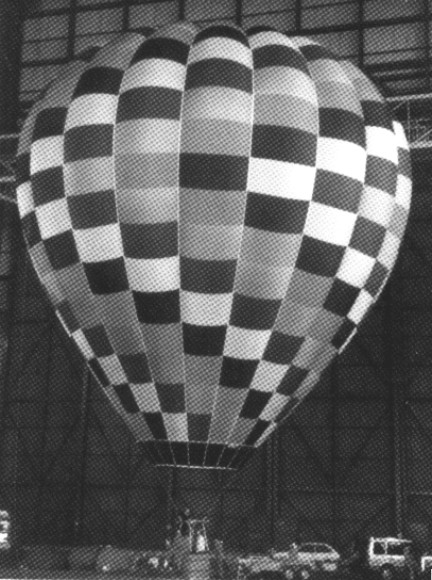
AX-8-90 Srs.II

All AX8-90 and AX8-105 (S.2) are certified under Federal Aviation Administration USA B2EU

AX8-84

AX8-90
1972
Persons: 5
Diameter: 59 ft
Height: 72 ft
Volume: 90,000 cu.ft
Weight: 700 lb
Payload: 1971 lb
Burner: 16 Million BTU/hr
Fuel capacity: 40 USG
Cost: (1972): US$ 10,293
FAI AX-8

AX8-90
90,000 cu.ft
MAUW: 900 kg
2011 Price: US$26,730

AX-8-90 Srs.II
Capacity: 90,000 cu.ft

AX8-105
1972
Persons: 6
Diameter: 61 ft
Height: 74 ft
Volume: 105,000 cu.ft
Weight: 870 lb
Payload: 2299 lb
Burner: 16 Million BTU/hr
Fuel capacity: 60 USG
Cost: (1972): US$ 11,390
FAI AX-8

AX-8-105
105,000 cu.ft
2011 Price: US$27,635

Thunder & Colt AX-7

AX7-77A-24 Gore

All AX7-77A are certified under Federal Aviation Administration USA B2EU

AX7- 65
1972
Persons: 3
Diameter: 51 ft
Height: 65 ft
Volume: 65,000 cu.ft
Weight: 527 lb
Payload: 1423 lb
Burner: 8 Million BTU/hr
Fuel capacity: 30 USG
Cost: (1972): US$ 8868
FAI AX-7

AX7-65
65,000 cu.ft
2011 Price: US$23,655
Type Certificate ID Federal Aviation Administration USA B2EU

AX7-77
1972
Persons: 4
Diameter: 54 ft
Height: 70 ft
Volume: 77,000 cu.ft
Weight: 625 lb
Payload: 1686 lb
Burner: 8 Million BTU/hr
Fuel capacity: 40 USG
Cost: (1972): US$ 9267
FAI AX-7

AX7-77
77,000 cu.ft
2011 Price: US$25,065

AX7-77Z
1972
Persons: 4
Diameter: 54 ft
Height: 70 ft
Volume: 77,000 cu.ft
Weight: 625 lb
Payload: 1686 lb
Burner: 8 Million BTU/hr
Fuel capacity: 40 USG
Cost: (1972): US$ 9450
FAI AX-7

Thunder Balloons AX-6

1972 Hot Air Balloon

AX6-56
Persons: 3
Diameter: 48 ft
Height: 63 ft
Volume: 56,000 cu.ft
Weight: 425 lb
Payload: 1226 lb
Burner: 8 Million BTU/hr
Fuel capacity: 20 USG
Cost: (1972): US$ 8255
FAI AX-6

AX6-56Z
Persons: 3
Diameter: 48 ft
Height: 63 ft
Volume: 56,000 cu.ft
Weight: 425 lb
Payload: 1226 lb
Burner: 8 Million BTU/hr
Fuel capacity: 20 USG
Cost: (1972): US$ 8293
FAI AX-6