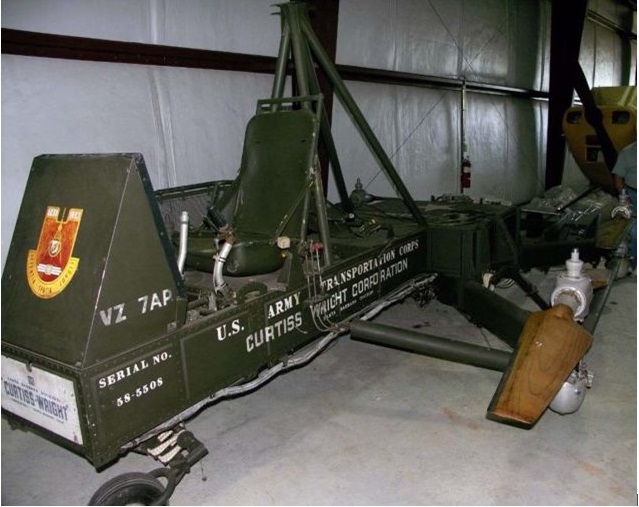
Aero Spacelines 377PG Pregnant Guppy

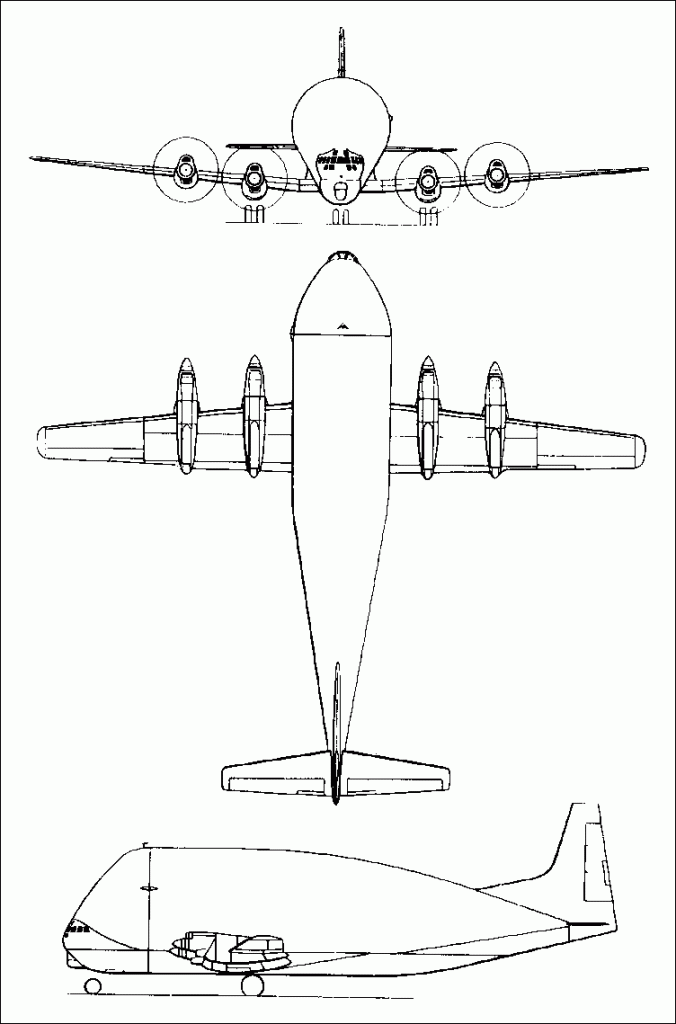
Aero Spacelines started work in 1961 on the conversion of a Boeing B-377 Stratocruiser to an outsize cargo aircraft able to airlift large booster rocket stages being employed in the American space programme, for the transport of aircraft assemblies, oil drilling equipment, and any other items too large to be carried by any then existing aircraft.

Designed by Jack Conroy, the fuselage of ex-airline Boeing 377 N1024V was extended by 5.08m aft of the wing, and a new ‘bubble’ structure was added over the top of the fuselage to allow the loading of items up to 6.02m in diameter. Capable of carrying 34,000 lb of cargo, the resulting B-377PG Pregnant Guppy was flown for the first time on 19 September 1962, and was used from the summer of 1963, under contract to NASA, for the transport of space programme hardware. Aircraft was loaded by removing the tail section just aft of the wing trailing edge.

377PG “Pregnant Guppy”
Engines: 4 x Pratt-Whitney R-4360, 23500hp / 625kW
Wingspan: 43.05 m / 141 ft 3 in
Length: 38.71 m / 127 ft 0 in
Take-off weight: 60200 kg / 132719 lb
Empty weight: 41200 kg / 90831 lb
Payload: 13100kg / 28881 lb
Speed: 240 mph

Aero Spacelines 377GT Guppy 201

The Guppy 201 utilizes the lower fuselage, wings, tail unit and cockpit of a Boeing 377/C 97, with portions of the lower fuselage of several aircraft being joined to provide a larger cabin with interior diameter of 25′. Upper fuselage lobe added to stretched C-97 fuselage, plus parts from Airbus, Concorde, DC-10, and TriStar; engines from retired Lockheed Electras.

Although this Super Guppy is very close in dimensions to the original Super Guppy, the shape of the fuselage has a smoother flow and engine nacelles are completely different.

The first 377SGT Super Guppy Turbine flew on August 24, 1970. After success with the first of the 377SGTs, Aero Spacelines built a second 377SGT and it flew exactly two years later on August 24, 1972.

Aero Spacelines originally planned to build and operate the MGT and SGT aircraft but after the company got into serious financial trouble a decision was made to sell the SGT to Airbus Industrie.

Two were built by Aero Spacelines in early 1970s, N211AS and N212AS, and sold to Airbus Industrie/Aérospatiale to haul components of A300Bs and Concordes.

Two were built in early 1980s for Airbus by UTA Industries in France. Retired by Airbus in early ’90s; reportedly three went to European museums, and the last one was bought by NASA.

The Super Guppy Turbine (NASA’s B377SGT), super-sized cargo plane flown since 1980 was acquired by NASA in 1997. Its home base, was the Ellington Field, near the Johnson Space Center in Lancaster, California.

Gallery

Guppy 201
Engines: 4 x Allison 501-D22C, 3663kW / 4912shp
Take-Off Weight: 77111 kg / 170002 lb
Empty Weight: 45359 kg / 100000 lb
Payload: 25000kg / 55116 lb
Wingspan: 47.63 m / 156 ft 3 in
Length: 43.84 m / 143 ft 10 in
Height: 14.78 m / 48 ft 6 in
Wing Area: 182.51 sq.m / 1964.52 sq.ft
Max. Speed: 460 km/h / 286 mph
Cruise Speed: 407 km/h / 253 mph
Ceiling: 7620 m / 25000 ft
Range W/Max.Payload: 813 km / 505 miles

Aero Spacelines

Aero Spacelines was formed at Van Nuys, California, in 1961 for Boeing Stratocruiser and C-97 conversions.

The extremely deep high-capacity fuselage conversions were intended initially for transportation of large rockets and spaceflight equipment.

1961: Aero Spacelines, Inc
pres: A M “Tex” Johnson
Van Nuys CA.
USA

1965: Aero Spacelines div of Unexcelled Inc
pres: V Read,
Goleta CA
designer Jack Conroy to Conroy Aircraft Corp.

1974: Became a division of Tracor.

Tracor Aviation of Santa Barbara acquired Aero Spacelines in September 1981.

Aerospace General Corp Mini-Copter

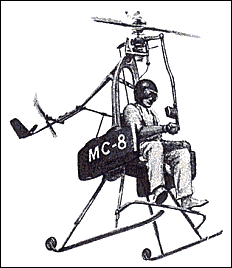
Aerospace General Corp announced their Mini Copter with an optional landing skid. Two small rocket motors powered the Mini Copter, converting hydrogen peroxide fuel into superheated steam which was released through rotor tip nozzles, providing equivalent to a 90 hp engine. Fuel was carried in two tanks each side of the pilot. The entire machine fitted into a cylindrical container no larger than a jet fighter’s droptank. The Mini-Copter was first flown in 1973.

The Mini-Copter was intended originally for air-dropping to a pilot who had been forced down behind enemy lines or in terrain unsuited to conventional rescue. It was evaluated by the US Army in an Individual Tactical Air Vehicle (ITAV) role in three configurations:

  • 1: is the basic version with no landing gear and the fuel tanks and control/rotor unit strapped to the pilot;
  • 2: consists of a welded steel tube structure carrying the control/ rotor unit and fuel tanks, and providing a seat for the pilot;
  • 3: is generally similar to version 2 but has the addition of a 67kW McCulloch flat-four engine. This model takes off as a helicopter using its two 19kg Aerospace General rocket motors (one on the tip of each main rotor blade) but at 48kph forward speed the tip units are turned off and the aircraft flies as an autogyro using the McCulloch engine.

Aero Saladillo Lenticular 15 S

This Argentine single-seater Standard Class sailplane was designed by Ing Teodoro Altinger, the prototype flying for the first time on 5 August 1971; it took part successfully in the following year’s national championships.

The type has an all-moving tailplane mounted on top of a distinctive swept-back fin and rudder, and the pilot is seated in line with the wing leading edge under a long transparent canopy giving excellent visibility. Construction is of glassfibre-reinforced plastic and glassfibre/balsa sandwich throughout and the wings, which have a Wortmann FX-63-168 section, have air brakes in the upper surfaces. The retractable monowheel has an internal brake and there is also a tailskid.

Series production was commenced in 1974 by Aero Saladillo, which had been formed in 1973 to build aircraft of glassfibre-reinforced plastic construction at Saladillo in the province of Buenos Aires, and by February 1977, 12 of an initial order for 20 Lenticulars had been completed, but production was suspended.

Lenticular 15 S
Span: 49 ft 2.5 in
Length: 21 ft 4 in
Height: 4 ft 7 in
Wing area: 129.2 sq.ft
Aspect ratio: 18.75
Empty weight: 573 lb
Max weight: 904 lb
Max speed: 152 mph (in smooth air)
Max aero-tow speed: 99 mph
Min sinking speed: 2.30 ft/sec at 49 mph
Best glide ratio: 32:1 at 53 mph

Aeroput

At the initiative of the Serbian Aero-Club on 6 February 1926 a conference was held at which embraced rules in the founding of the air traffic, and all participants have become founders. The rules are sent to the Ministry of Trade and Industry, which were approved on 13 March. After this, work centered on issuing shares. However, the registration of shares went below expectations and it was clear that further work was meaningless without a contract with the state to guarantee the Company. This agreement was signed on 25 January 1927, but subscription of shares was slow. The planned and required 24,000 shares (i.e. the then six million dinars required to purchase aircraft) by the end of March 1927, there were only about 10% subscribed and paid, which was in accordance with the applicable law of joint stock companies, but threatened Aeroput to be abolished.

The decision to accelerate the registration of shares found the aeronautical engineer Tadija Sondermajer, a member of the Company, a reserve captain and pilot of Salonika Front. He suggested that along with the pilot Leonid Bajdak, they perform a staged plane flight from Paris to Bombay, and thus prove the value and ability of Serbian pilots to make the local aviation and faster registration of shares. After a short preparation, Sondermajer and Bajdak flew from Paris on 20 April 1927. Finally, after covering 14,800 kilometers, 14 stages and 11 days of travel, on 2 May 1927 landed in Belgrade. The welcome was magnificent and more than 30,000 of Belgrade citizens hail to their heroes at the airport under Bežanijska Kosa. After this achievement of Sondermajer and Bajdak, subscription of “Aeroput” shares grew over all expectations. Aeroput was established with a capital of six million dinars, collected by 412 shareholders. Packets of shares was have: Vračarska Zadruga (Vračar Cooperative), Economic Bank, Postal Savings Bank, Gateret, Serbian bank of Zagreb, American-Serbian bank in Sarajevo, Teleoptik, Velauto, Ikarus from Novi Sad, Technical Society Voks and others. A total of 412 shareholders paid the 14,000 shares at 250 dinars, or 3.5 million dinars. Aeroput with that capital started to work and on that occasion they purchased four airplanes. For the three months were enrolled over 30,000 shares, which enabled the new company to overcome the crisis. Already on 17 June 1927 was performed a promotion of the Society in the Belgrade Commercial Court and from that day the Company for Air Traffic “Aeroput” is legal entity.

The first Aeroput aircraft arrived at Belgrade’s airport in early February 1928. Aeroput management bought four Potez 29/2 biplanes from the French company Potez. The choice of this type of aircraft management of Aeroput decided because the domestic factory Ikarus in Zemun produced planes under license from the same French company, the aircraft of type Potez 25, for Air Force Command and its air force units. Aeroput was important to in the immediate vicinity of airport is a factory that is capable of servicing their new aircraft. Biplane Potez 29/2 in that time had good characteristics for a passenger plane, the crew made up of two members, had five seats for passengers, range up to 500 kilometers, with a 450 hp engine, flying at a speed of 210 kilometers per hour, and the trunk is receiving load of 250 kilograms.

In the first three years, while in the fleet was the only Potez 29/2 biplanes, major aircraft maintenance for Aeroput is performed by aircraft factory Ikarus in Zemun, who have then the French licence for the Royal Yugoslav Air Force (JKRV) produced a similar plane Potez 25. Engine maintenance is performed at the factory Jasenica AD from Smederevska Palanka, which was produced under licence aircraft engines of the Lorraine brand. Early in 1931, the Aeroput buys a workshop for the repair of the aircraft from the French – Romanian company CIDNA, which was located at Zemun airport and assembly organized with the mechanics of Ikarus and the Air Force, and on that way organized its own technical aircraft maintenance service. Maintenance department was located in one of the large hangar at the civilian part of the airport, it was a modern and possessed a test stand for aero-engines. Since then, all the revisions, and airplane engines overhauling that had Aeroput was performed in they own technical service and the domestic design, the Aeroput MMS-3.

The bombing in 1941 was destroyed almost the entire property of the company. Aeroput submitted to the court for punitive damages on 31 October 1941. In 1942 year commissar administration banned Aeroput from work. German occupation authorities nationalized the property of the Aeroput in Knez Mihailova Street 32, where they moved their national airline D. H. N. – Deutsche Luft Hansa.

After the war the Aeroput renewed work on 2 July 1945, when the general meeting of shareholders elected the first post-war management of the company. Meeting was attended by delegates of the new government of Democratic Federative Yugoslavia (DFY), and with the participation of then the Head of State Ivan Ribar, who was a pre-war shareholder and board member. The work permit was a farce, since April 1947 JAT was created. Communist government adopted a decree prohibiting private joint-stock companies, pursuant solution, on 24 December 1948 the Aeroput was liquidated.
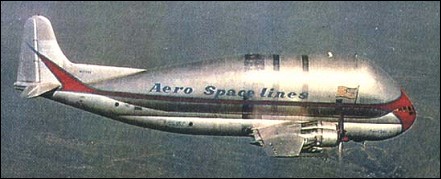
Aerophysics VZ-7 / Curtiss-Wright VZ-7

Soon after the U.S. Army ordered two VZ 7 aerial jeep research prototypes from the Aero¬physics Development Corporation, the company was absorbed by Curtiss Wright Corporation and became its Santa Barbara Division.
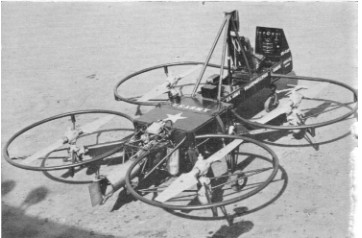
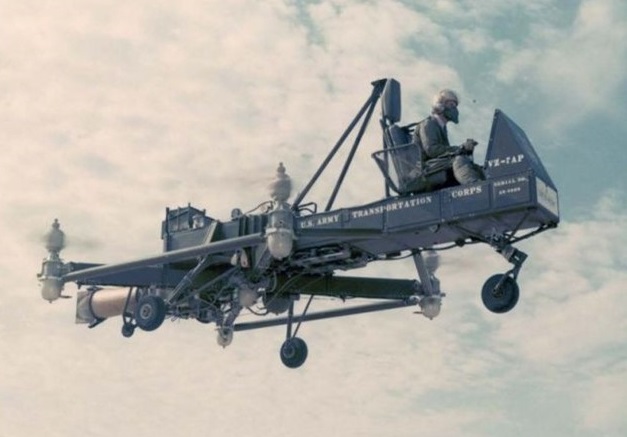
The VZ 7 was originally designed as a ducted ¬fan type, like the VZ 6 and VZ 8, but it flew only with unshrouded rotors, of which it had four. This arrangement simplified the control system, since differential pitch on the rotors gave both pitch and roll control. For yaw control, a small rudder operated in the exhaust of the Turbomeca Artouste IIB shaft drive turbine.
The VZ-7 was essentially consisting a rectangular central airframe to which four vertically-mounted propellers were attached in a square pattern. The central fuselage carried the pilot’s seat, flight controls, fuel and lubricant tanks, and a single 425shp Turbomeca Artouste IIB shaft turbine engine.

Curtiss-Wright’s Santa Barbara Division (formerly the Aerophysics Development Corporation) was awarded an Army contract in 1957 for the development and initial flight testing of two prototype aircraft. Two VZ 7s (58 5508 and 58 5509) were ordered by the Army but only the first was completed and delivered to the Army in mid-1958. It flew successfully during 1959 and 1960 and served its purpose of providing general information on this type of vehicle.
The craft was capable of hovering and forward flight and proved relatively stable and easy to operate but was consistently incapable of meeting the altitude and speed requirements specified by the Army. The VZ-7 was withdrawn from service and returned to the manufacturer in mid-1960.

One of them still exists in storage at the United States Army Aviation Museum collection.

Gallery

Curtiss-Wright VZ-7
Engine: 1 x Turbomeca “Artouste” IIB turboshaft, rated at 320kW
Wingspan: 4.87m
Length: 5.18m
Height: 2.83m
Take-off weight: 952kg
Empty weight: 771kg
Max speed: 51km/h
Ceiling: 60m
Crew: 1-2