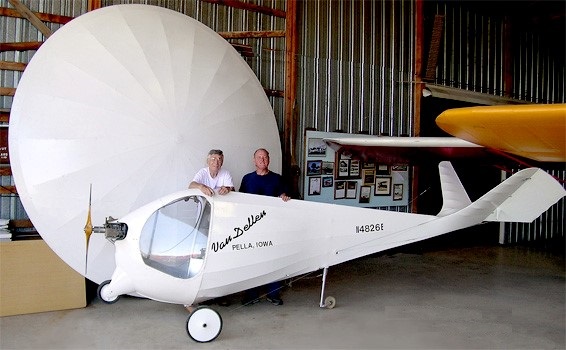
VanDellen LH-2

VanDellen LH-2 N4826E

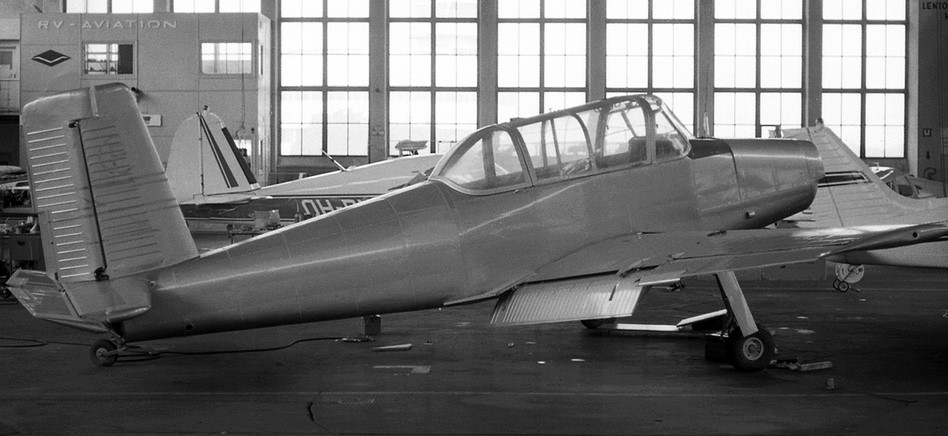
Built by Lubert VanDellen in 1959, the LH-2 was two=place powered by an unknown reciprocating engine. The register classified it as a “rotocraft”—instead of a wing, it had a circular saucer-like disk which was said to rotate. A small engine with a tractor prop was located in the front end, and the opposite end sported a butterfly tail.

Registered N4826E, it was taxi-tested but never flown, donated to AAA’s Airpower Museum.

Gross wt: 900 lb
Seats: 2

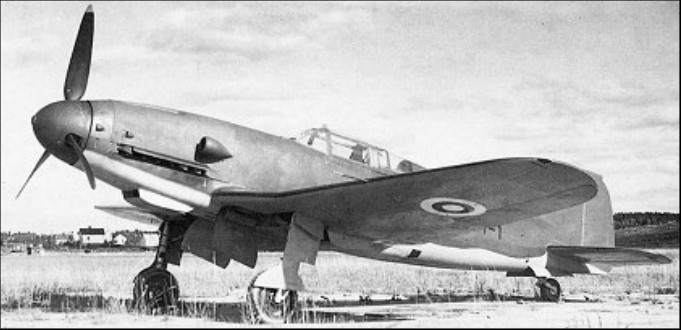
Valtion Pyorremyrsky

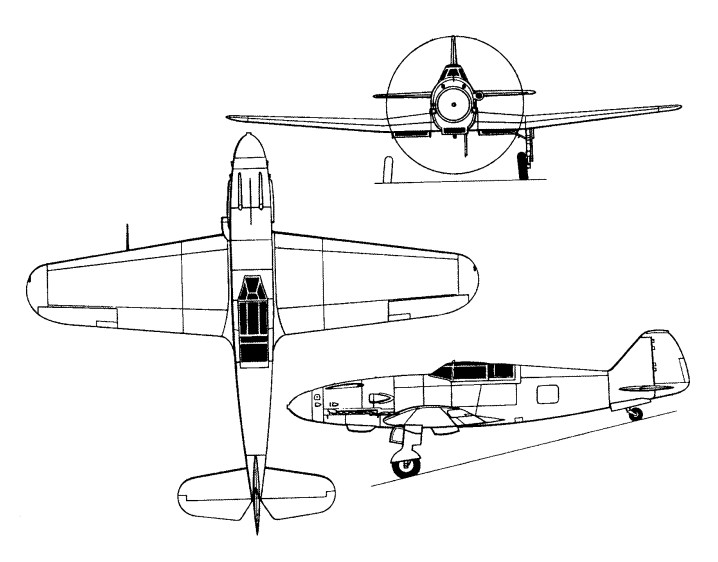
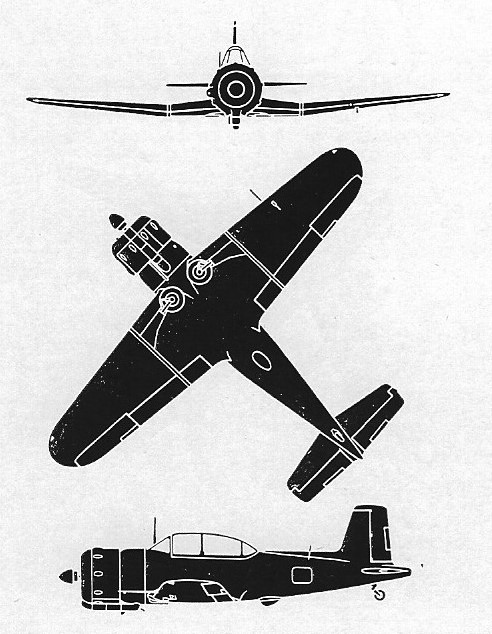
Conceived to make maximum use of indigenous materials with emphasis on suitability for operation from small Finnish front-line airfields under the most severe climatic conditions, the Pybrremyrsky (Whirlwind) was designed by Dipl-Ing Torsti R Verkkola. Powered by a 12-cylinder inverted-Vee Daimler-Benz DB 605AC engine rated at 1475hp, the Pyorremyrsky had a single-spar wooden wing with plywood skinning and a fuselage of steel-tube construction with detachable metal panels forward and a wooden ply-covered mono-coque aft. Armament comprised one engine-mounted 20mm MG 151 cannon and two 12.7mm LKK/42 machine guns, provision being made for two 200kg bombs underwing. Prototype construction was slowed by the preoccupation of the VL with higher priority programmes, and work on the Pyorremyrsky, which had languished for several months, came to a halt with the Finnish-Soviet Armistice of 4 September 1944. Somewhat surprisingly, construction of the fighter was resumed later, in January 1945. A DB 605AC engine was removed from a Bf 109G and installed in the prototype, which flew for the first time on 21 November 1945. The Pyorremyrsky could outclimb the Bf 109G-6 and was more manoeuvrable, but, as no funds were available for the purchase of new aircraft for Ilmavoimat and sufficient Bf 109Gs remained to equip the Ilmavoimien fighter force that was permitted under the Armistice terms, the prototype was grounded after 30 hours flying and the programme terminated.

Max take-off weight: 3310 kg / 7297 lb
Empty weight: 2619 kg / 5774 lb
Wingspan: 10.38 m / 34 ft 1 in
Length: 9.85 m / 32 ft 4 in
Height: 3.89 m / 13 ft 9 in
Wing area: 19.00 sq.m / 204.51 sq ft
Max. speed: 620 km/h / 385 mph

Valmet TL-III Tuuli

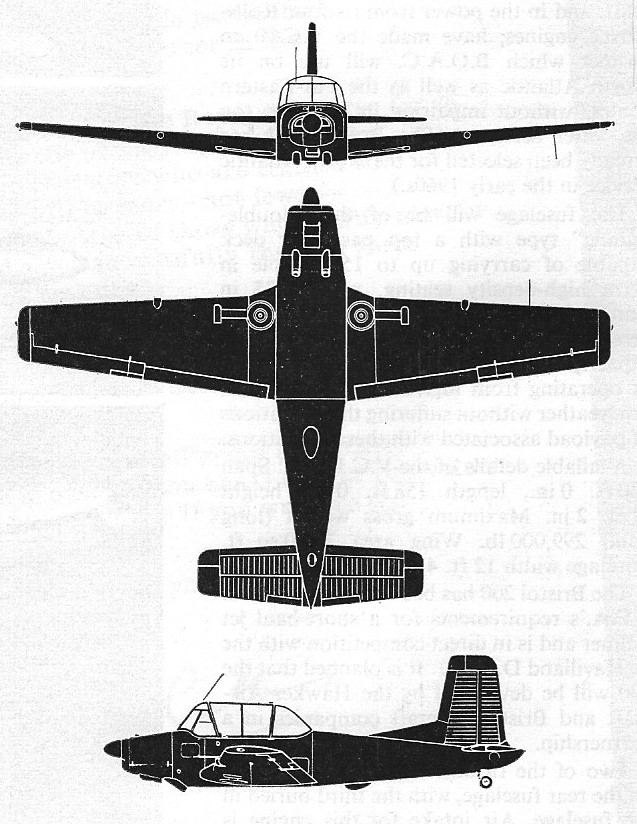
The TL-III Tuuli was a primary trainer for the Finnish Air Force.

The wing is a light alloy stressed-skin structure. With a main spar at 25% chord. The slotted ailerons are light-alloyed covered. Aerodynamically and mass balanced, and fitted with balance tabs adjustable on ground. The landing flaps open 40 degrees, and the ailerons are coupled to the landing flaps so when the flaps fully open the ailerons are deflected 15 degrees.

The fuselage is a light-metal stressed-skin construction. Two main frames, one at the instrument panel and one behind the cargo compartment, divide the fuselage into three separately manufactured parts, which are riveted together. The extension of the main spar passes under the front seats in the fuselage, to which the fastening points of the main spar of the wings are attached. The fastening point of the auxiliary spar connects with a reinforced fuselage rib. The rudder and the elevators are stressed-skin structures with light-alloy covering.

The fin and stabiliser are attached to the reinforced ribs on the rear fuselage. Landing gear is rtractable mains and fixed tailwheel. The front cockpit has side-by-side pilot seats with full dual controls.

It was available in three versions; an aerobatic two-seater, a three-seat utility aircraft, and a for-seat liaison aircraft. It is capable of fitting a standard size stretcher.

Engine: Continental O-470-A, 225 hp
Span: 36 ft 1 in
Length: 26 ft 3 in
Height: 8 ft 6 in
Empty weight: 2350 lb
Loaded weight: 3166 lb
Max speed SL: 136 mph
Cruise: 112 mph
Valmet Vihuri

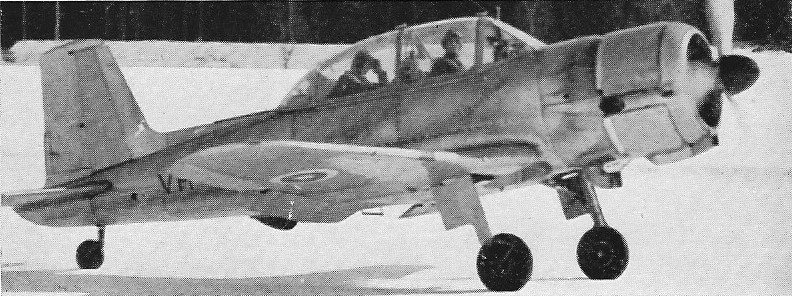
The Vihuri (Squall) was built for the Finish Air Force by Valmet OY at Tampere. The prototype flew for the first time on 6 February 1951, and the first production machine of an initial batch of thirty was flown on 3 August 1953.

Engine: 820 hp Bristol Mercury 8
Wingspan: 33 ft 1 in
Wing area: 202.9 sq.ft
Length: 28 ft 9 in
Height: 12 ft 8 in
Max weight: 6345 lb
Max speed: 268 mph at 12.140 ft
Econ cruise: 203 mph at 3280 ft
ROC: 2263 fpm
Service ceiling: 29,100 ft
Seats: 2

Valmet L.70 Militrainer

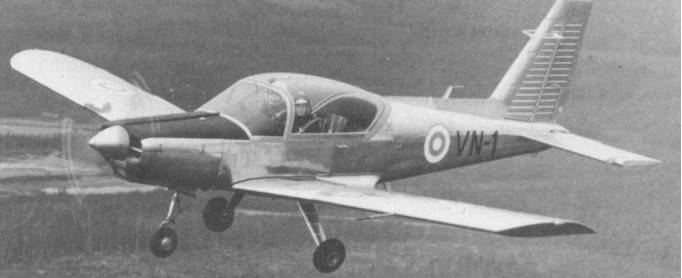
Own designed Leko-70 Vinka two-seat piston-engined trainer evolved by new design group created September 1970. The L.70 first flew on July 1, 1975.

Valmet L.70 Militrainer Article

30 Valmet Vinka were delivered to the Finish air force in the late 1970s, and entered service as the Vinka in October 1980. Production of the L.70 piston-engined side-by-side primary/basic trainer for the Finnish Air Force ended in 1982.

Gallery

L-70 Miltrainer
Engine: 1 x Lycoming AEIO-360, 150 kW
Span: 9.8 m
Length: 7.5 m
Wing area: 14.5 sq.m
Empty wt: 765 kg
MTOW: 1250 kg
Warload: 300 kg
Max speed: 235 kph
Initial ROC: 340 m / min
Ceiling: 4800 m
T/O run: 230 m
Ldg run: 175 m
Fuel internal: 170 lt
Range: 970 km

Valmet

Valmet Oy Kuoreveden Tehdas
Valtion Metallitehtaat Lentokonetehdas
Valmet Oy Tampere
Valmet Aviation Ind
Finavitec OY

Finland
Valmet Oy was shortened title from 1958 of state-owned group (Valtion Metallitehtaat Lentokonetehdas) consisting of several metalworking factories. Kuoreveden Tehdas (Kuorevesi Works) was formerly part of factory group Valmet Oy Tampere, from which it separated in 1974, and became the largest aircraft factory in Finland. Foreign aircraft produced under license included Potez (Air Fouga) Magister jet trainers and 12 Saab Draken fighters. Own designed Leko-70 Vinka two-seat piston-engined trainer evolved by new design group created September 1970, followed in 1985 by the two/four-seat L-80 TP turboprop version. Also flew prototypes of the PIK-23 Towmaster. Valmet also assembled 46 of the 50 BAe Hawk jet trainers for Finnish Air Force. Other activities included overhaul and repair of military and civil aircraft and piston aero engines. The other aviation member of group was Valmet Oy Linnavuoren Tehdas, at Siuro, concerned mainly with overhaul and repair of jet aero engines.

Valmet Aviation Ind followed on from Valmet OY before the latest change to Finavitec OY. Manufactured the L-90TP RediGO turboprop trainer before being sold to Aermacchi of Italy in 1996. Began assembly of 57 F-18C Hornet fighters for the Finnish Air Force from kits, and manufactured parts, plus their engines.

UTVA U75

The Utva 75 two-seat trainer/glider-tug/agricultural aircraft entered production in late 1970s. The UTVA-75 first flew on May 19, 1976.
More than 100 have been delivered to the Jugoslavian Air Force and civilian flying clubs as side-by-side primary trainer by 1987.

A developed four-seat version, the UTVA¬75A, flew in 1986, and was in production alongside the two-seat UTVA-75.

UTVA UTVA-66

UTVA-66

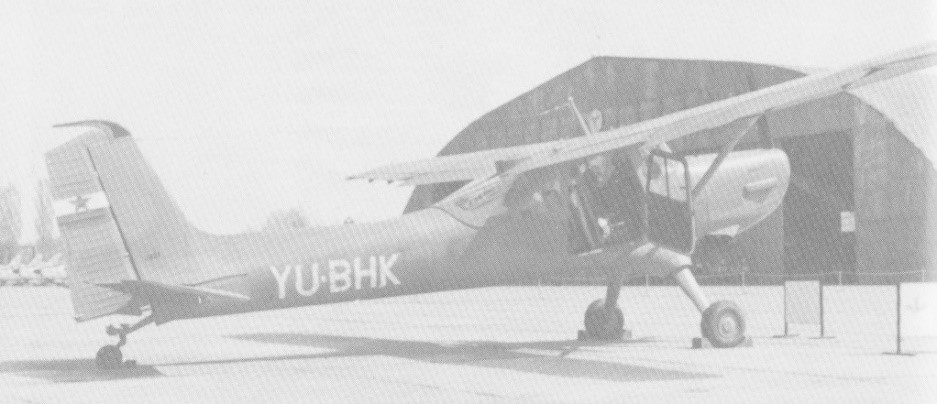
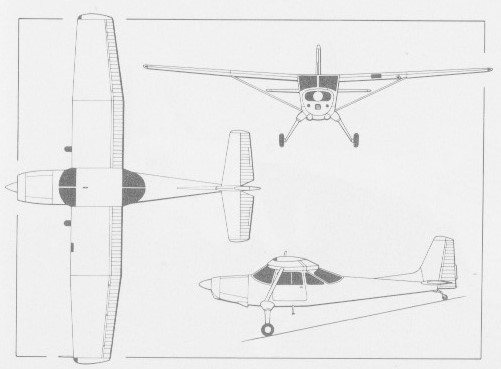
The Utva 65 was originally an agricultural aircraft, developed as the U66 to serve various utility roles and including the armed U66V version.

The UTVA-66 first flew in 1965.

The UTVA-66 was a development of the basic four-seat UTVA-60-AT1. It could be used for glider towing.

The UTVA-66-AM was an ambulance version.

The UTVA-66-H was a twin float version similar to the standard UTVA-66 but with the optional auxiliary fuel tanks fitted as standard.

UTVA-66
Engine: Lycoming GSO-480-B1J6, 270 hp
Wingspan: 37 ft 5 in / 11.40 m
Length: 27 ft 6 in / 8.38 m
Empty weight equipped: 2756 lb / 1250 kg
MTOW: 4000 lb / 1814 kg
Max cruise: 124 kt / 143 mph / 230 kph
ROC SL: 885 fpm / 270 m/min
Service ceiling: 22,000 ft / 6700 m
Range std fuel: 404 nm / 466 mi / 750 km
Seats: 4
Cabin length: 4 ft 11 in / 1.50 m
Cabin width: 3 ft 5 in / 1.05 m
Cabin height: 3 ft 11 in / 1.20 m

UTVA-66