Breguet Br 480 / Br 482

By the 1930s, the French air force’s bomber force was very out-of-date and too small. In December 1936, a requirement was issued code-named “B4”, the French Air Ministry, for a new four-seat, twin-engined medium bomber design.

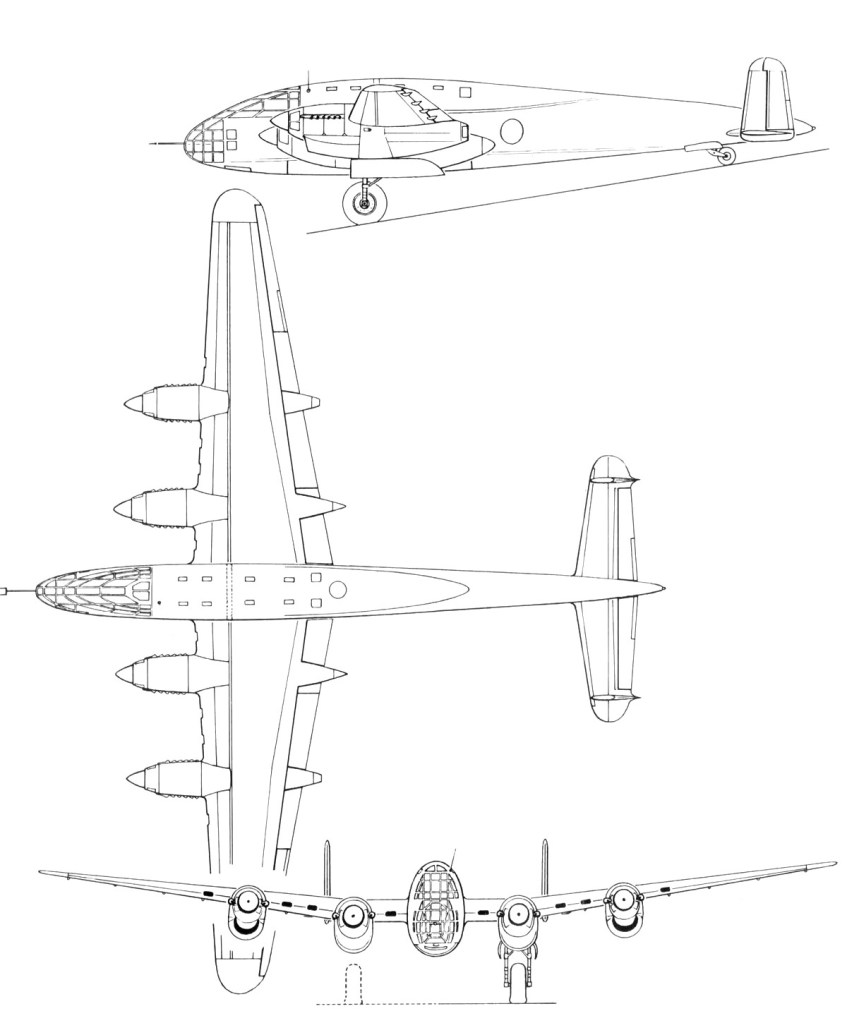
Breguet submitted four designs and Bloch one; of which a two-engine Breguet and four-engine Bloch design were both shortlisted. Breguet’s initial design, the Breguet 480 (or Bre. 480) to be powered with the specified 1,225 hp (914 kW) Gnome et Rhône 14L radial engines which was meant to carry 1,000 kg (2,200 lb) of bombs over a 2,500 km (1,600 mi) radius. Gnome et Rhône abandoned the 14L however, so, after considering a version powered by two Hispano-Suiza 12Y V12 engines, Breguet reworked the design as the Breguet 482, with four 1,350 hp (1007 kW) Hispano-Suiza 12Z engines, with an order for two prototypes placed by the French Air Ministry on 12 May 1938.

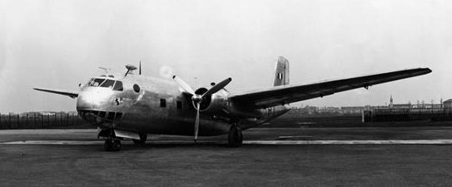
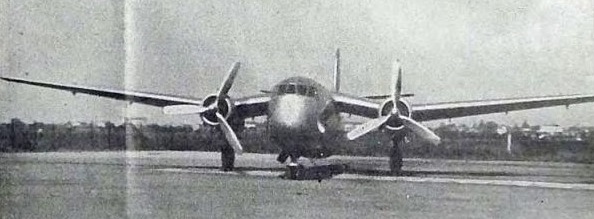
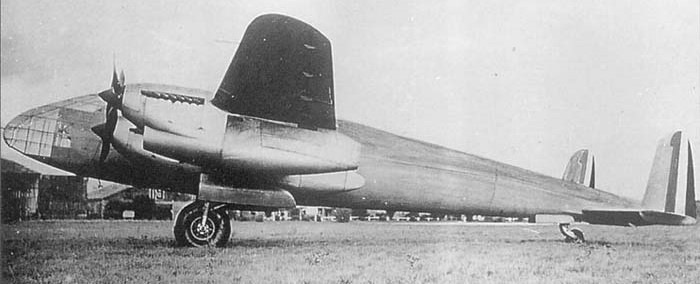
The Breguet 482 was a mid-winged monoplane of all-metal construction, with a clean, low-drag, oval section monocoque fuselage, twin tails and a retractable tailwheel undercarriage. The planned defensive armament was a 20mm Hispano-Suiza HS.404 cannon in a power operated dorsal position, with a 7.5mm machine gun in the nose and a further two machine guns in ventral mountings. Up to 2,500 kg (5,500 lb) of bombs could be carried.

The Br-482 was of all-metal construction with a four-man crew. The most characteristic feature was the large “glazed” nose area. The plane was fully-enclosed and had retractable main and tail landing gear. The internal wing supports were three spars, the outer two aluminium and the centre steel.

Construction of the two prototypes was well progressed when Germany invaded France on 10 May 1940, and in late May it was decided to evacuate the near complete prototypes from Villacoublay near Paris, with the first prototype being sent to Bône in Algeria and the second to the Breguet factory at Anglet, near Bayonne in the far south-west of France. The first prototype was destroyed during a German air-raid in November 1942 following the Allied invasion of French North Africa, but the first prototype remained hangered untouched, despite the fact that Anglet had been occupied by the Germans since 1940.

When the Germans withdrew, Breguet resumed work on the Br 482, proposing to complete it with more powerful Hispano-Suiza 12Z engines and a heavier armament. The French Armée de l’Air had no requirement for a bomber, however, and it was decided to use the aircraft, with the planned modifications, but with armament removed, as a research aircraft. Breguet deleted one of the crew positions leaving the Br-482 a three-man plane. The defensive guns, which had not been fitted before France’s 1940 surrender, were never installed and the mounts deleted. The engines were upgraded to the newest and most powerful model of the Hispano-Suiza 12Z with a centrifugal supercharger.
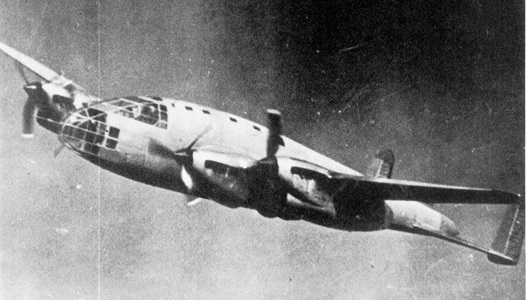
In this form it was finally flown for the first time on 27 November 1947 with a crew of three, being used for various experimental purposes, including testing of the 12Z engines.

The Br-482’s first mission was to explore the performance regime of the supercharged upgraded engines. They did not perform as well as expected and the Br-482 was never able to explore the full range of its flight envelope. After frequent engine failures the Br-482 was restricted to 84% throttle. Although Spain and Yugoslavia used the supercharged 12Z engine after WWII, the lone Br-482 was the only French plane to use it.
After these tests, it had been planned to use the Br-482 to test the planned 24Z engine and a new contra-rotating propeller design. Both of these projects were cancelled. Likewise, a planned quad gun mount design was cancelled before tests aboard the Br-482 could start.

In 1949, some consideration was given to re-engining the Br-482 with Gnome-Rhone 14R radial piston engines. The last design of Gnome-Rhone (which did not survive the occupation), the 14R was built by SNECMA after WWII and were 15% more powerful than the 12Z. There were concerns about the stability of the Br-482 at the increased speed, especially with the weight of the guns, bombsight, and fourth crewman missing. The re-engining was never done. The plane continued in use with the original engines as an observation vehicle for early French ballistic missile tests.

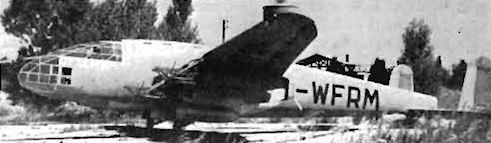
Twenty flights in all were done between 1948 and 1950. At some point in 1950, the Br-482 was transferred out of the French air force’s inventory and given the civil registration F-WFRM.

The Br-482 was discarded on 13 September 1950. The deactivated plane, stripped of the engines and equipment, was still in existence as late as 1952 when it was presumably finally scrapped.
Gallery

Br 482
Engines: 4 × Hispano-Suiza 12Z, 1,007 kW (1,350 hp) (take off power)
Wingspan: 24.09 m (79 ft 0 in)
Wing area: 64.4 m2 (693 sq ft)
Length: 18.86 m (61 ft 11 in)
Height: 5.21 m (17 ft 1 in)
Empty weight: 10,450 kg (23,038 lb)
Gross weight: 14,500 kg (31,967 lb)
Maximum speed: 560 km/h (348 mph; 302 kn) at 8,000 m (26,250 ft)
Cruising speed: 529 km/h (329 mph; 286 kn)
Range: 1,519 km (944 mi; 820 nmi)
Service ceiling: 12,000 m (39,370 ft)
Crew: 3
Armament: 1 x Hispano-Suiza HS.404 20mm gun firing forward (500 rds), twin Reibel 7.5mm machine gun in the dorsal position (600 rds), two loose MAC-1934 7.5mm machine guns firing from drop-down belly mounts.
Bombload: 5,500 lbs / 2500 kg

Br.482B.4
Engines: 4 x Hispano-Suiza 12 Y 51, 1100 hp
Wingspan: 24.20 m
Wing area: 67.90 sq.m
Length: 18.60 m
Height: 4.25 m
Empty weight: 9500 kg
Normal takeoff weight: 16,060 kg
Cruising speed: 400 kph
Practical range: 2500 km
Practical ceiling: 9000 m
Crew: 4
Armament: one 20-mm cannon Hispano-Suiza / four 7.5-mm machine gun Darne
Bombload: 2500 kg
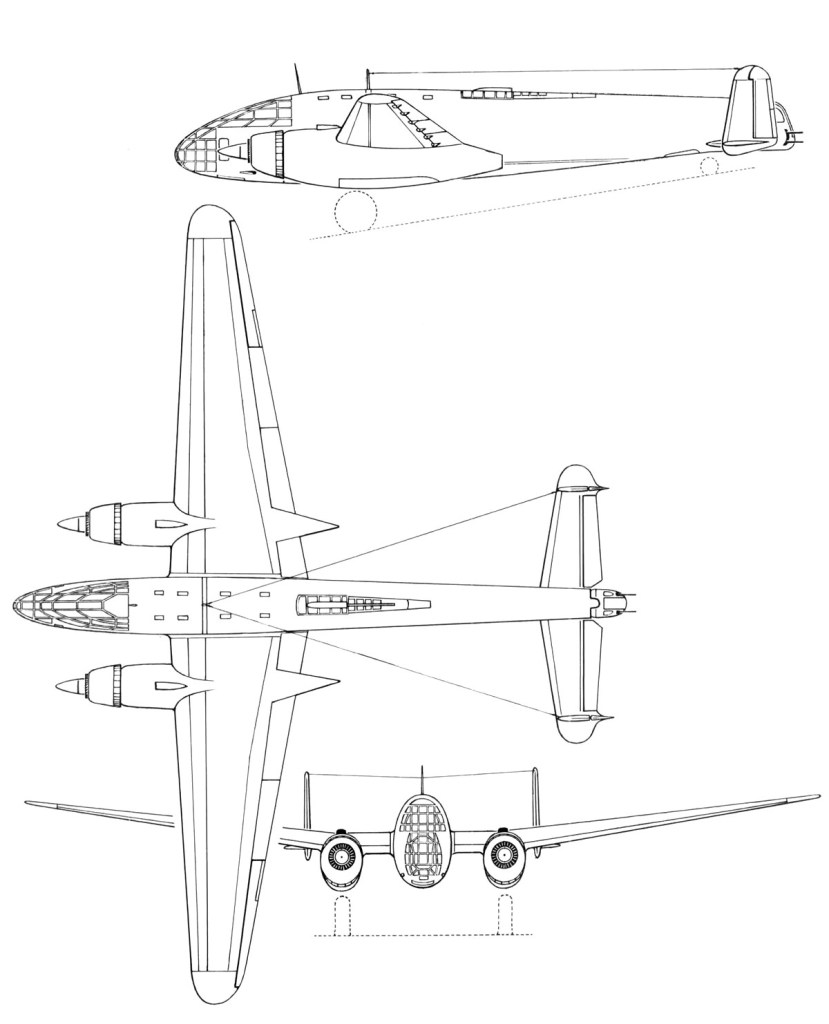
Br.480
Br.482

Breguet

Louis Breguet, founder of Societe Anonyme des Ateliers d’Aviation Louis Breguet in 1911, was a French pioneer of rotary-wing flight. The aircraft built by the Breguet brothers lifted a man off the ground on September 29,1907, but did not constitute a free flight. BU3 biplane bomber prototype of 1915 built under subcontract by Edouard and Andre Michelin as Breguet-Michelin BUM. Improved SN3 entered production with Michelin 1916 as BUC. Breguet 14 tractor biplane of 1917 was a significant French wartime bomber. Its successor, the Breguet 19 of 1921, remained in service until 1936. One specially prepared Breguet 19 (Question Mark), flown by Costes and Bellonte, made first east-west aircraft crossing of North Atlantic September 1930. Built Short Calcutta flying-boat under license during 1930s as Breguet Bizerte. Breguet elected not to be included in nationalized industry 1936; his factories were, however, incorporated.
Les Mureaux, CAMS, and part of Breguet formed SNCAN in 1938.

Regained some independence in 1939 through purchase of former Latecoere factories. Avions Marcel Dassault became major stockholder June 28,1967. Anglo-French company Societe Europeenne de Production de I’Avion Ecole de Combat et d’Appui Tactique (SEPECAT) formed between British Aircraft Corporation and Breguet Aviation 1966 to design and develop tactical support/advanced trainer. Built four 941 unpressurized cargo/passenger transports, which used deflected slipstream technique to give STOL capability, for French Air Force trials. Breguet Type 1150 Atlantic maritime patrol aircraft selected by NATO, with prototypes ordered 1959; production aircraft built internationally by Belgium, France, Germany, Netherlands, and U.S.A..

Avions Marcel Dassault had merged with Breguet Aviation on 14 December 1971 to become Dassault Breguet Aviation.

Breguet Article

Breen Hi-Fli        

Hi-Fli

Made in 1976, the Hi-Fli was offered during the first three months of ’76 at a special price of £269.00 (£289.00 for the deluxe model). The only concession made to modern trends is the inclusion of two small battens near the tips.

By March 1976 the Hi-Fli was relaunched as Hi-Fli 1B and aimed at the intermediate to advanced pilot. It can be flown prone, supine or seated and is claimed to have a 7:1 + glide angle. It features double surface leading edges and an aerofoil shaped keel. The price was £311.00 inc VAT.

The 1976 Hi-Fli 2 is for the beginner to intermediate pilot and claims a reasonable glide angle. It was supplied in three sizes for varying pilot weights and has good roll control through expert use of battens. Pitch stability is provided by a relatively long keel. The Hi Fli 2 had a L/D of 6.3:1, and was priced at £ 336.00 inc VAT.

Hi-Fli 2

Both of the Hi-Fli Models were available in deluxe versions.

Breen Customkite / Butterfly / Firefly / Cirrus / Cumulus / Stratus / Nimbus       

Made in 1975, the Customkite was available with wing-nuts and safety cross-pins, thus making it possible to rig and de-rig without tools whilst still retaining aircraft approved methods. The Custom kite series was advertised to include the following variants: Butterfly, Firefly, Cirrus, Cumulus, Stratus, Nimbus, each of these in two sizes (+6, presumably six inches longer leading edge).

Breda Nardi Costruzioni Aeronautiche SpA

Breda Nardi Costruzioni Aeronautiche SpA was established on February 15,1971 by Nardi SA per Costruzioni Aeronautiche, and Breda, a member company of the EFIM state-owned financial group, each with a 50 percent holding. Initiated manufacture of helicopters under a license granted by Hughes Helicopters, and is building the Hughes 300C, 500C, 500D, and 500M under the respective designations of Breda Nardi NH-300C, NH- 500C, NH-500D, and NH-500M-D (TOW). The last is a multirole military helicopter armed with TOW missiles.

Breda-Pittoni B.P.471

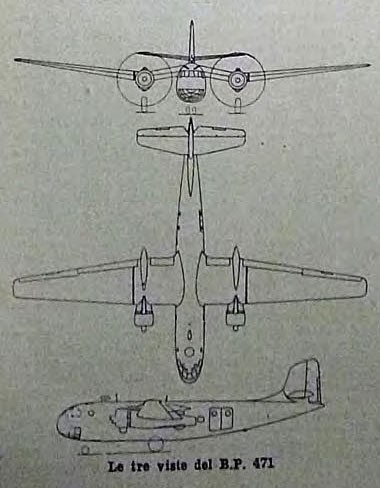
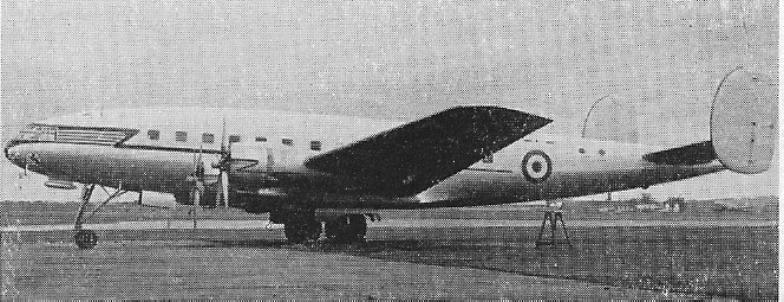
As part of its efforts to get back into aircraft manufacturing following the war, Breda commissioned Mario Pittoni to develop a twin-engine medium transport designated the Breda-Pittoni B.P.471. The prototype first flew in 1950. It was an all-metal twin-engine monoplane of stressed-skin construction. It had a retractable tricycle undercarriage and wings were of an inverted-gull configuration, this allowed the main landing gear to be short and light. The cabin had room for 18-passengers or freight. The company proposed many uses for the aircraft including a civil airliner and freighter, military navigation trainer or utility freighter. With no interest from buyers the prototype was operated by the Italian Air Ministry as a staff transport until retired in 1954.

Gallery

B.P.471
Engines: 2 × Pratt & Whitney R-1830-92 Twin Wasp, 890 kW (1,200 hp) each (take off power), 780 kW (1,050 hp) at 2,300 m (7,500 ft)
Length: 17.5 m (57 ft 5 in)
Wingspan: 23.0 m (75 ft 6 in)
Height: 5.75 m (18 ft 10 in)
Empty weight: 5400 kg
Gross weight: 10,000 kg (22,046 lb)
Maximum speed: 473 km/h (294 mph; 255 kn) at 3000 m
Cruising speed: 412 km/h (256 mph; 222 kn)
Range: 2,000 km (1,243 mi; 1,080 nmi) at 395 km/h (245 mph; 213 kn)
Service ceiling: 7,500 m (24,606 ft)
Time to altitude: 9 min 39 sec to 4,000 m (13,100 ft)
Crew: 2
Capacity: 18 passengers

Breda-Zappata BZ.308

Designed by Filippo Zappata, the 1948 Breda-Zappata BZ.308 was a four engined airliner evolved from the Zappata Z.511/BZ.305. The BZ.308 was designed primarily for trans-Atlantic services between Italy and the Latin American countries, and four were ordered by Argentina.

Powered by four 1750 hp Bristol Centaurus 568 radials, one prototype was built, employed by the Italian Air Ministry.

Engines: four 1750 hp Bristol Centaurus 568
Wing span: 138 ft 2 in / 33.50m
Length: 110 ft
Empty weight: 50,706 lb
Loaded weight: 79,366 lb
M ax speed: 311 mph
Cruise: 262 mph
Crew: 5
Passengers: 55

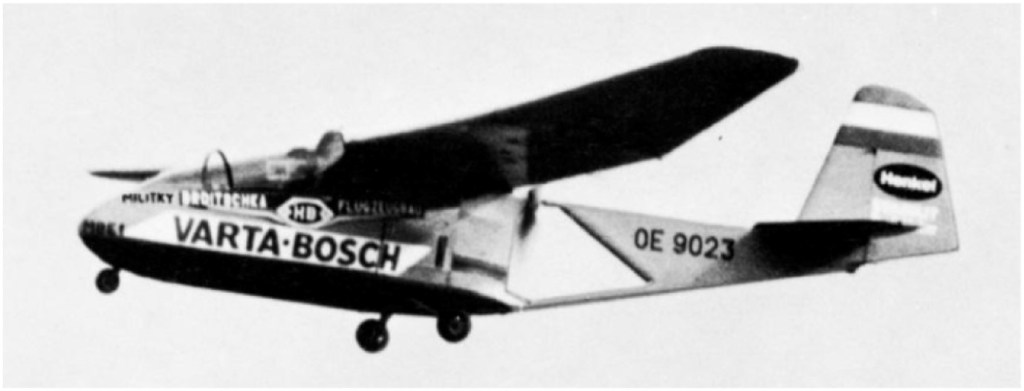
Brditschka-Militky MB-E1

In 1973 aircraft manufacturer Heinrich Brditschka and an engineer with the Graupner model-building company, Fred Militky, enlisted the collaboration of Bosch (propulsion motor) and Varta (nickel-cadmium battery technology) to study the feasibility of an all-electric aircraft.

They converted an HB-3A motor glider into the first electric manned airplane: the MB-E1 (Militky-Brditschka Elektroflieger No. 1).

On 21 October 1973, the MB-E1 took to the skies in Wels, Austria with Heinrich’s son, Heino Brditschka, at the controls. The maiden flight lasted for about 9 min and achieved an altitude of 300 m. However, further advancement in battery and motor technology would be required to achieve practical electric flight.