A 1952 aerobatic glider, designed by Alfred Vogt and Wolf Hirth. Forty five were built.
Vogt Lo 100 Zwergreiher Length: 20.177 ft / 6.15 m Wingspan: 32.808 ft / 10.0 m Wing area: 10.9 sq.m Aspect ratio: 9.17 Airfoil: Clark Y 16% Empty Weight: 143 kg Gross Weight: 265 kg Wing Load: 24.3 kg/sq.m Water Ballast: 0 Max. speed: 157 kts / 290 km/h Seats: 1 MinSink: 0.80 m/s 72 kph L/DMax: 25 85 kph
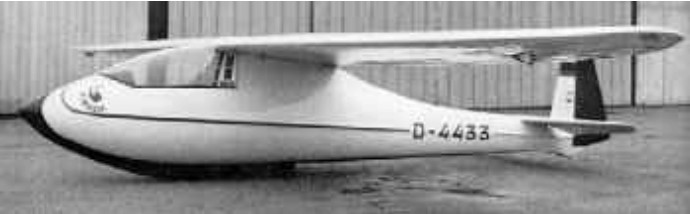
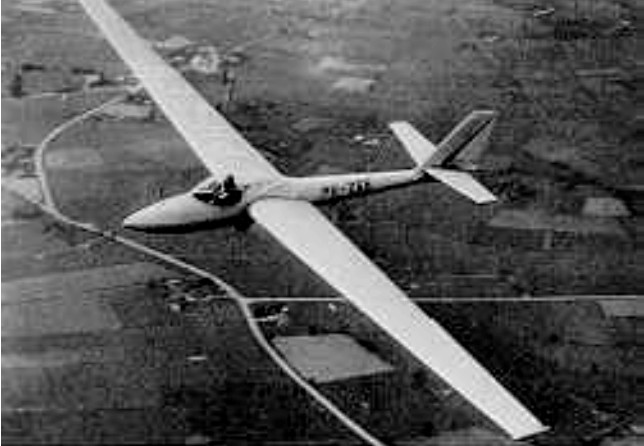
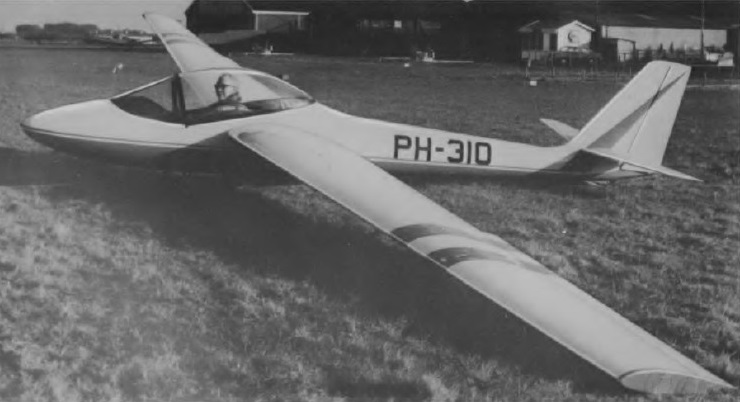
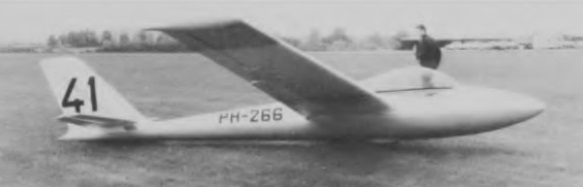
The 15m Standard class Sagitta (Arrow) sailplane was designed and built by Piet Alsema, who formed NV Vliegtuigbouw to put it into production at Teuge airfield, near Apeldoorn, Holland, at a rate of one every two months in 1964. It was issued an airworthiness certificate in the aerobatic and cloud flying category.
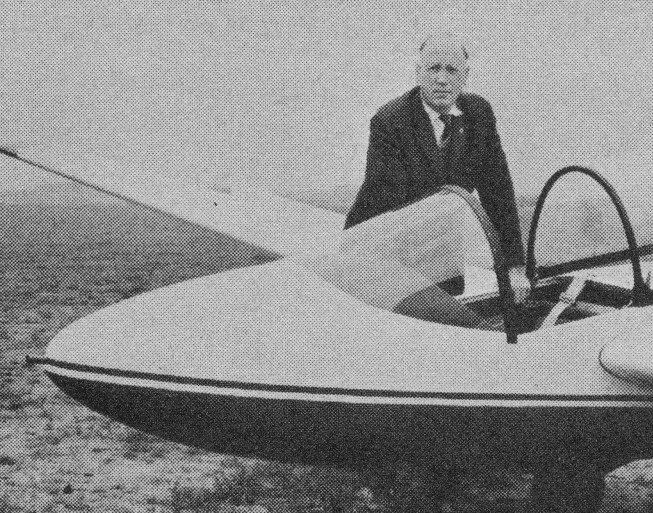
Designer Piet Alsema
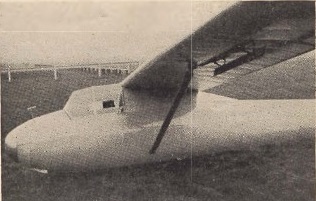
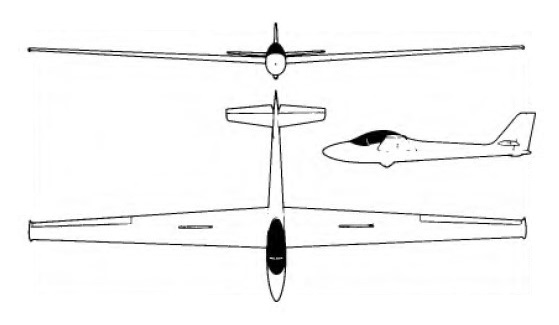
The single-seat Sagitta is of conventional all-wood construction with a large, sliding blown canopy giving the pilot, seated over the wing leading edge, all-round visibility. The canopy slides backward and can be fixed open in flight at several positions. The mid-set wooden wings have a single spar and a plywood leading edge torsion box and the plain ailerons are also of wood; the wing is fabric covered over 25% of its area. Air brakes of a special design operate on both the upper and lower wing surfaces. Aluminium spoilers 20 inch long in the upper and lower wing limit top speed to 168 mph (test craft were dived at 193 mph). Fuselage and tailplane are all-wood; fuselage and tail frames are pine and plywood, fittings are steel. Aerolite glue is employed throughout. The fin and rudder is swept and the cantilever tailplane can be folded when the sailplane is towed in a trailer. All control surfaces connect automatically on assembly. A fixed monowheel with brake comprises the landing gear.
The 1964 price was around US$3212.
A special long-wing model of 58.55 ft span was built for championship meets.
The Sagitta first flew in prototype form on 4 July 1960. It was followed on 24 November 1961 by the first of the production aircraft, designated Sagitta 2; some 20 being produced.
A 17m (55 ft 9 in span) development of the Sagitta, known as the Super Sagitta, was reported in the spring of 1964, this being very similar apart from the increase in wing and tail surface areas, but the Super Sagitta remained a project only.
Sagitta Span: 48.5 ft Length: 21 ft 3 in Empty weight: 463 lb Useful load: 243 lb Root chord: 4 ft Tip chord: 1 ft 8 in Tail span: 9 ft 10 in Wing area: 129 sq.ft Aspect ratio: 18.7
Sagitta 013 Wing span: 15m / 49.2ft Wing area: 11.98sq.m / 129sq.ft Aspect ratio: 18.7 Airfoil: NACA 63-618/4412 Length: 6.47 m / 21 ft 2 in Empty Weight: 215kg / 473lb Payload: 105kg / 232lb Gross Weight: 320kg / 705lb Water ballast: None Wing Load: 26.71kg/sq.m / 5.46lb/sq.ft Max speed: 146 kt / 270 km/h Max rough air speed: 108 kt / 200 km/h Stalling speed: 35.5 kt / 66 km/h L/DMax: 34 at 52.3 kt / 97 km/h MinSink: 0.64 m/s / 2.1 fps / 1.24 kt at 42 kt / 78 km/h Structure: wood/ fabric wings and tail, wood fuselage Seats: 1
Sagitta 2 Span: 49 ft 2.5 in Length: 21 ft 2.75 in Height: 3 ft 11 in Wing area: 129.2 sq ft Aspect ratio: 18.7 Empty weight: 478 lb Max weight: 705 lb Max speed: 168 mph Min sinking speed: 2.1 ft/sec at 48 mph Best glide ratio: 37:1 at 60 mph
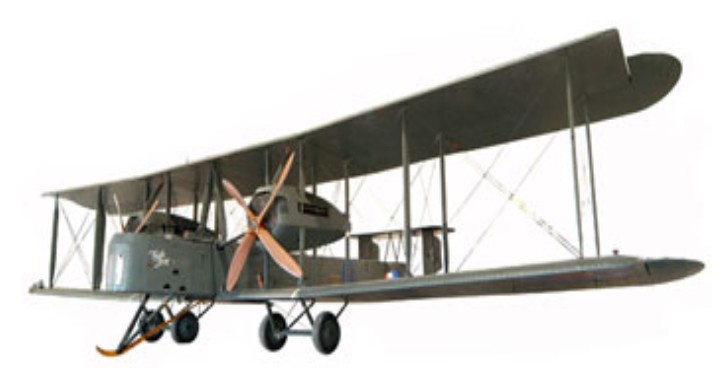
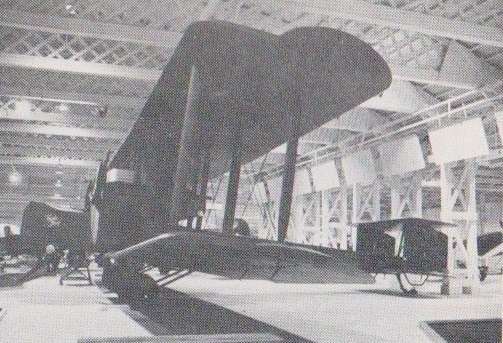
In May 1967 the Vintage Aircraft and Flying Association decided to build a Vimy replica to commemorate the 50th anniversary of the Alcock and Brown’s trans-Atlantic flight. When told of the project Rolls-Royce began a world wide search for engines. Eventually they were successful and recovered three Eagle engines from Dutch canal barges two of which they stripped down and rebuilt; putting the first on bench test in August 1968. The aircraft was completed on Friday 30 May 1969. The following days were filled with final inspections and checks and on Tuesday 3 June at 6.40pm the aircraft took off on its first flight.
The aircraft was completed on Friday 30 May 1969 at Weybridge with the original Rolls-Royce Eagle VIIIs. The following days were filled with final inspections and checks and on Tuesday 3 June at 6.40pm the aircraft took off on its first flight. It first flew at Wisley, un-marked, registered G-AWAU c/n VAFA.02 and pained as H651.
The aircraft went through an intensive flight test programme before receiving a Special Category Certificate of Airworthiness on 5 June. The next day the aircraft crossed the Channel to appear at the Paris Air Show. On 9 June it returned to the United Kingdom and two days later, after being repainted in service markings, flew to Ringway Airport, Manchester to become the centre of an Alcock and Brown exhibition.
It was badly damaged by fire at Ringway on 18 July 1969 while on display. It was repaired and donated to the RAF Museum where it went on display at Hendon as F8614.
1979: Viking Aircraft Ltd. (pres: Robert J Walters), Carlsbad CA. USA
Offers plans and kits to construct Dragonfly two-seat composites monoplane of unusual design, with mid-mounted wings and canards, plus kits for Cygnet two-seat monoplane (originally the Sisler SF-2 Whistler).
1996-8: PO Box 646, Elkhorn, WI 53121, USA. 2008: Viking Aircraft, 333 Sunny Hill Dr, Elkhorn, Wisconsin 55312, USA
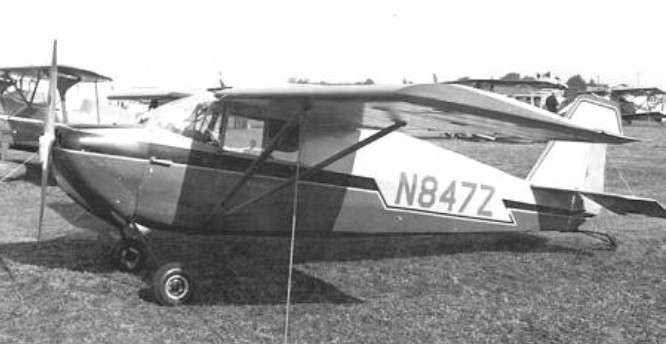
The Daphne was an original homebuilt design of Arpad ‘Art’ Szaraz and produced in association with James Vidervol. Development took four years and the construction of the prototype aircraft was carried out by Vidervol and Szaraz in Cleveland OH.
Registered N847Z (c/n 961) the aircraft made the first flight on October 4, 1961, fitted with an 85 hp Continental C85-8 engine, which was later replaced by a 90 hp Continental C90. Flown by Vidervol, it was prototype for Szaraz SDS-1A.
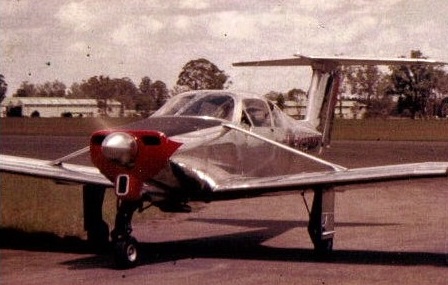
The Victa R2 was a four-seater monoplane designed by Luigi Pellarini. The R2 was all-metal with a T-tail, retractable nosewheel suspension, and was powered by a Lycoming O-360 piston engine with 135 kW.
The prototype C/n 02-1 VH-MVR flew for the first time on February 15, 1961. In April 1961 it was decided at Victa to cancel the development in favor of the Airtourer, as it turned out that the production cost would have become too high.
The R2 was disassembled and stored at Milperra until the Victa plant was closed. It was later taken to Bankstown where it remained in storage for many years.
Engine: 1 × Lycoming O-360, 135 kW Length: 6.58 m Span: 9.75 m Height: 2.53 m Empty weight: 539 kg Max. take-off wt: 1120 kg Top speed: 280 km / h Service ceiling: 5547 m Range: 1190 km Crew: 1 Passengers: 3
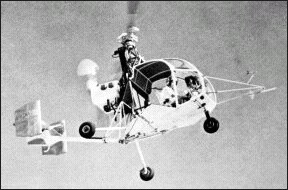
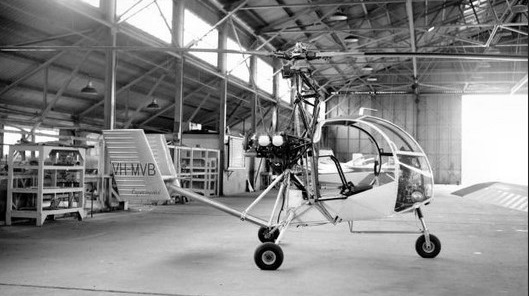
Victa’s aviation division designed a small two-seat gyroplane, the Model 67. The prototype, which was designed by John Blackler, was registered VH-MVB c/n 1 and flew in May 1962. With a tricycle undercarriage, twin-fin tail unit and a two-blade main rotor with a pusher propeller driven by a 160hp Lycoming engine, the prototype logged 150 flights and 20 hours of test flying time, but was abandoned due to financial constraints in 1966.
Engine: Lycoming O-320-A, 160 hp Top speed: 153km/h
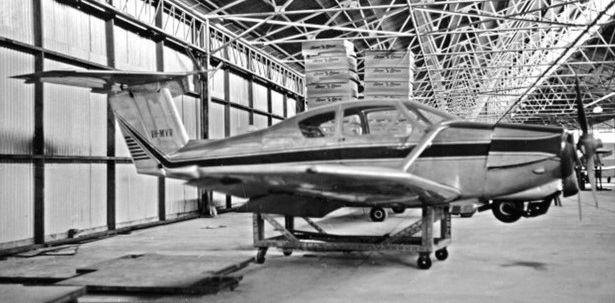
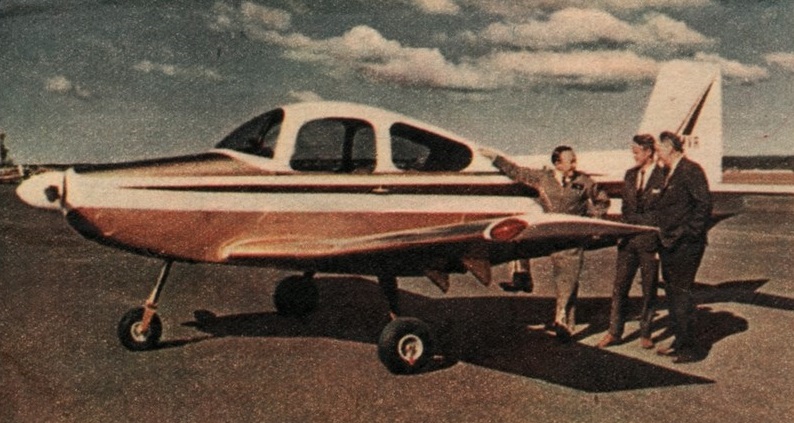
The possibilities of developing a four-seat variant of the Airtourer was mooted in Australia and Henry Millicer designed the CT/2 Aircruiser. A completely new design, a prototype, VH-MVR, was built and flown on 17 July 1966. The Aircruiser was powered by a 210 hp Continental IO-360-D and featuring a roomier four-seat cockpit.
However Australian Government approval for levies on imported US light aircraft was not obtained and the project was shelved. The Aircruiser option on the Aircruiser was taken up in 1969 across the Tasman by Aero Engines Services Ltd in company with the production jigs and became ZK DAH, grandfather of today’s CT/4C. The aircraft arriving in New Zealand in December of that year.
 All Aero