Champion Lancer 402

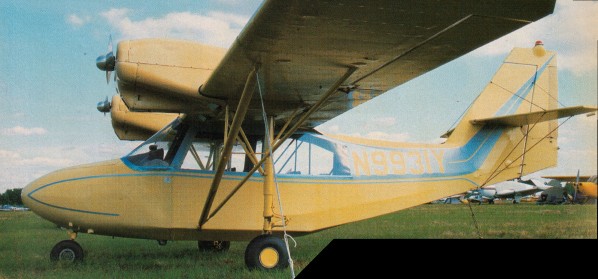
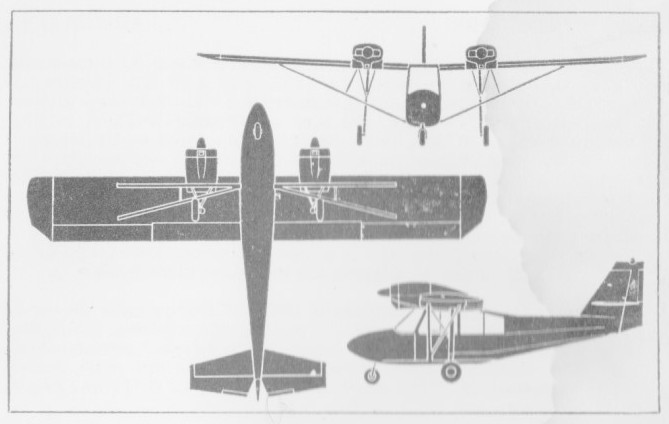
Manufactured by Champion Aircraft, the Lancer 402 was a multi-engine trainer from 1963.

With a fabric covered airframe and tandem seating, the Lancer had heel brakes and oleo-spring gear.

Powered by two Continential O-200A engines of 100 hp each, it sold for around US$12,500. The wing span was just over 34 feet, a wing area slightly over 170 sq.ft and an overall length of around 22 feet.

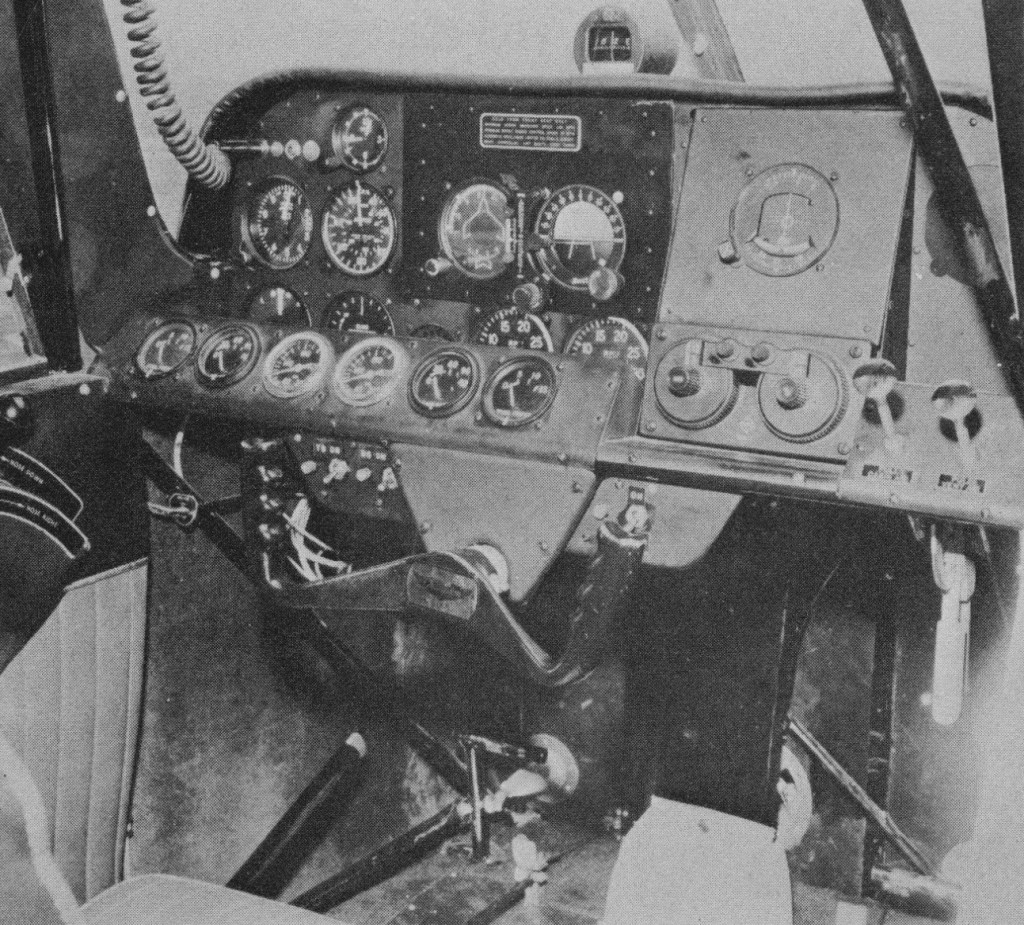
Landing gear tread is 9 ft 8 in. Steerable nose wheel is aluminium casting. Fuselage nose piece, top and cowl noses are fibreglass. Ground clearance of 44in at tail allows full stall landings. Cockpit with control wheel in front, stick in rear, is 28in wide. Rudder and stabiliser trim is via levers at the left of front and rear seats. Vertical trim tab on high, wire-braced tail provides for hands-off trim, even with the loss of one engine. Mixture and throttle controls are duplicated and located high on the cockpit left, with carb heat controls opposite back of front seat. Located at left wing root are fuel tank gauges selector switch for left tank, ignition switch, left engine starter and cockpit lights. Right wing root contains similar units for right engine plus two ammeters and electrical switches. Throttle mix controls hang from left side of cockpit.

The Lancer first flew in October 1961 and a number of changes were made, including the raising of the engine nacalles above the wing, and the first production model flew on 10 March 1963.

FAA certification was obtained in the spring of 1963, and the first production deliveries were made during the following summer, 36 being delivered by years end.
American Champion Aircraft Corporation held the Type Certificate Number A3CE for the Model 402.

Useable fuel is held in two 26 US gallon tanks. Climb and approach speeds are both 80 mph.
Up to 100 lb of baggage can be carried in a compartment behind the rear seat.
With two seats in tandem, Champion only manufactured 24 Lancers, featuring a control yoke for the front seat and a floor mounted stick in the rear.

Gallery

Engines: 2 x Continental O-200A, 100 hp
Propellers: 69 in fixed pitch
Wingspan: 34 ft 5.5 in
Length: 22 ft 3 in
Height: 8 ft 1.5 in
Wing area: 170.22 sq.ft
MAUW: 2450 lb
Empty weight: 1790 lb
Useful load: 660 lb
Baggage capacity: 100 lb
Max structural cruise: 130 mph at 7500 ft
Cruise 75%: 120 mph
Cruise 65%: 115 mph
Range: 710 miles
Service ceiling; 12,000 ft
SL ROC: 642 fpm
Landing speed: 48 mph
SE min control speed: 73 mph
Stall clean: 64 mph
Seats: 2
Champion Aircraft Corp

Champion Aircraft Corp was formed by Robert Brown after acquiring rights in the Aeronca Model 7 Champion two-seat training/ touring monoplane in June 1954. Aeronca Aircraft Corporation ceased manufacture of the Champion in 1951. Production began at Osceola, Wisconsin, in late 1954; subsequent models included the 7EC Traveler, 7FC Tri-Traveler, Sky-Trac, Challenger and Citabria. By mid-1960s the Citabria had become the main production version. In 1961 Champion Aircraft Corporation produced the single-seat parasol-wing Model 8 Citabria Pro for professional aerobatic pilots. Bellanca Sales Company acquired the company’s assets on September 30,1970, by which time some 1,500 Citabrias had been built.
In 1982 B & B Aviation purchased rights to Champion lightplanes from Bellanca, then founding Champion Aircraft Company Inc. to build Citabria, Decathlon and Scout until 1985.

CGS Falcon        

Falcon V

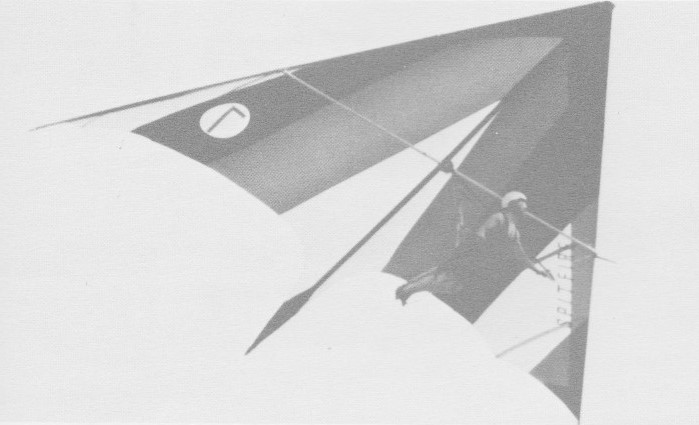
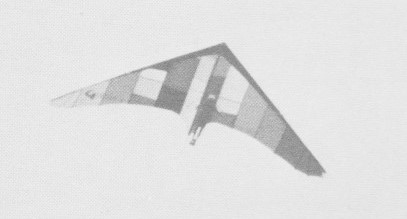
The Falcon V is a second generation high performance glider that features good penetration and high speed coupled with good low speed and low sink rate. It has no tendency to drop a wing in stalls and is very stable in slow speed landings. It tends to mush considerably before stalling.

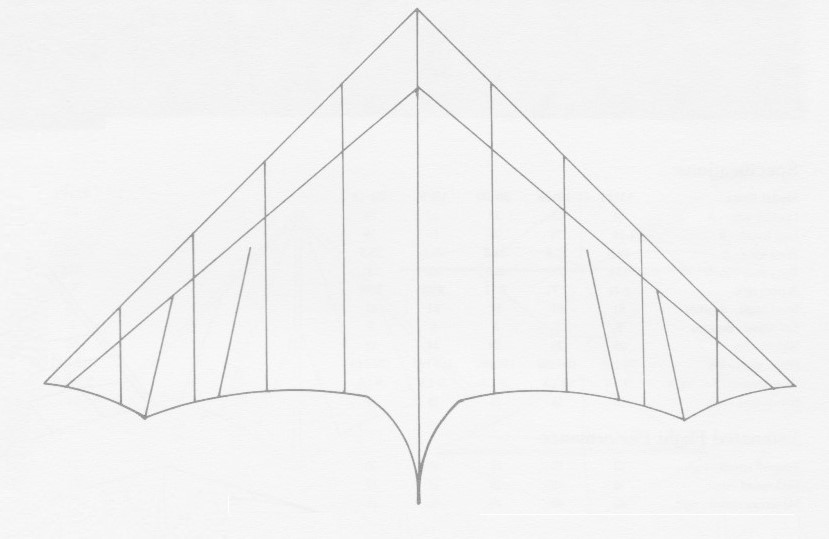
The king post allows the king post tubing to be simply unplugges for replacement. The Falcon V incorporates and elliptical planform and the shape on the wing tips is maintained by use of radially arranged battens in the wing tips. A S-shaped keel adds camber and reflex to the sail. The control bar bracket allows the spar to fold up umbrella-type setup without requiring tools. Deflexers are used. Seat or harness were optional, as was negative or inverted deflexer blades.

The airframe is made from 6063-T832 1.5in x .049 or 1.75in x .049 (depending upon size and model) certified aluminium tubing, bright dipped and anodised for a chrome-like finish. Exterior sleeving is 6063-T832 1 5/8in x .058 or 1 7/8in x .058. Full bushings throughout with dowelings are used in high stress areas. Spar saddles are used.

Rigging cable is 3/32in 7×7 302 plastic coated stainless steel. Cable ends are double nico presses utilising stainless steel thimbles. Turnbuckles are aircraft grade. All hardware is aircraft quality, and all tangs, kingpost bracket, shackles, and rounded nose plate are stainless steel.

The sail is made from Howe & Bainbridge 3.8oz stabilised dacron, in 11 colours or combinations. All seams are double zig-zag stitched and stress points are reinforced. The sail is cut for wing spar deflection and has utilised keel pocket construction. A large leading edge pocket is 18in at the nose tapered to 6in at the wing tip.

The pilot support system has dual rigging for either prone or seated flying.

Leading edge: 20 ft
Keel length: 15 ft
Wing span: 32 ft
Wing area: 195 sq,ft
Aspect ratio: 5.25
Nose angle: 105˚
Sail billow: 1.7˚
Weight: 44 lb
Pilot weight: 140-200 lb
Takeoff speed: 14 mph
Stall speed: 15 mph
Max speed: 44 mph
Best glide ratio (L/D): 8-1
Best L/D speed: 23 mph
Min sink: 225 fpm

Leading edge: 22 ft
Keel length: 17 ft
Wing span: 34 ft
Wing area: 220 sq,ft
Aspect ratio: 5.25
Nose angle: 105˚
Sail billow: 1.7˚
Weight: 46 lb
Pilot weight: 170-225 lb
Takeoff speed: 14 mph
Stall speed: 15 mph
Max speed: 44 mph
Best glide ratio (L/D): 8-1
Best L/D speed: 23 mph
Min sink: 225 fpm

Leading edge: 18 ft
Keel length: 13 ft
Wing span: 29 ft
Wing area: 160 sq,ft
Aspect ratio: 5.25
Nose angle: 105˚
Sail billow: 1.7˚
Weight: 42 lb
Pilot weight: 110-140 lb
Takeoff speed: 14 mph
Stall speed: 15 mph
Max speed: 44 mph
Best glide ratio (L/D): 8-1
Best L/D speed: 23 mph
Min sink: 225 fpm

CGS Spitfire

The Spitfire was one of the highest performing standard gliders of the time. Performance was equal to that of Intermediate gliders and some of high performance, with a glide ratio of 6.5-1. The Spitfire offered extreme stability with the performance.

The stinger tail give the directional stability at low speeds. The Spitfire has no tendency to spin off or drop a wing when landing.

The Spitfire was available in two versions: Standard Set Up sets up like most other gliders having a one piece spar, with no tools necessary taking 8 minutes, Quickie Set Up opens like an umbrella, taking about 60 seconds. Nothing comes off the glider, not even the control bar. The Spitfire has a J-wire for defining the S-shaped keel, Dual rigging for either prone or seated flying, swing down deflexers for increased maneuverability, and holes for centre of gravity adjustment.

The airframe is made from 6063-T832 1.5in x .049 certified aluminium tubing, Reinforced sleeves are 6061-T6 1in x .058 tubing. All tubing is bright dipped and anodised. Spar saddles are used wherever there is tube to tube contact. All hardware is aircraft quality and all tags are stainless steel. Plastic king post fittings allow the kingpost to be plugged in or out for easy replacement. A stainless steel king post bracket is fitted.

Rigging is 3/32in 7×7 pastic coated stainless steel cable. Cable ends are double nico pressed utilising stainless steel thimbles. Cable tensioners are used on upper rigging.

The sail is Howe & Bainbridge 3.8oz stabilised dacron in eleven colours combination. 12in leading edge pockets tapered to 6in at the wing tips.

17×15
Leading edge: 17 ft
Keel length: 15 ft
Wing span: 23 ft
Wing area: 150 sq,ft
Aspect ratio: 3.5
Nose angle: 90˚
Sail billow: 3.5˚
Weight: 37 lb
Pilot weight: 100-130 lb
Takeoff speed: 14 mph
Stall speed: 16 mph
Max speed: 40 mph
Best glide ratio (L/D): 6.5-1
Best L/D speed: 24 mph
Min sink: 285 fpm

18×16
Leading edge: 18 ft
Keel length: 16 ft
Wing span: 25 ft
Wing area: 180 sq,ft
Aspect ratio: 3.5
Nose angle: 90˚
Sail billow: 3.5˚
Weight: 39 lb
Pilot weight: 130-160 lb
Takeoff speed: 14 mph
Stall speed: 16 mph
Max speed: 40 mph
Best glide ratio (L/D): 6.5-1
Best L/D speed: 24 mph
Min sink: 285 fpm

20×18
Leading edge: 20 ft
Keel length: 18 ft
Wing span: 28 ft
Wing area: 225.5 sq,ft
Aspect ratio: 3.5
Nose angle: 90˚
Sail billow: 3.5˚
Weight: 42 lb
Pilot weight: 150-210 lb
Takeoff speed: 14 mph
Stall speed: 16 mph
Max speed: 40 mph
Best glide ratio (L/D): 6.5-1
Best L/D speed: 24 mph
Min sink: 285 fpm

CGS Aviation

As an aeronautical engineer who had collaborated in programmes from such as Apollo X 15 and XB 70, Chuck Slusarczyk founded CGS (Chuck’s Glider Supplies) in 1972 and around 2000 hang gliders were sold in five years. This company was made famous by the creation and distribution of the first drive unit specifically designed for microlights, the famous Power Hawk.
In the early 1970’s, Chuck Slusarczyk designed, built, and sold hang gliders and various associated supplies. Shortly thereafter, he began experimenting with the powered hang glider, propelled at the time by small direct-drive go-kart engines. The propeller was bolted directly to the crankshaft of the engine and turned at high (5,000-6,000 rpm) speeds. Chuck realized that this design was not efficient.
With this shortcoming as impetus, Chuck successfully designed and produced a power system implementing a reduction drive to turn a larger-diameter, more efficient propeller. By 1977, Chuck’s Glider Supplies had become a leading manufacturer of hang gliders with a successful division producing power plants for a variety of ultralights. For his pioneering efforts, Chuck was awarded Patent No. 4.262.263, “Powered Hang Glider with Reduction Drive.” Slusarczyk declined to take legal action against his competition for patent infringement.
In October, 1979, Chuck’s Glider Supplies became CGS Aviation, Inc. In early 1980, CGS conducted a market study at Sun N Fun and also Oshkosh to determine the features of an ultralight most desired by pilots. The “Hawk” was the end result of that study. The first prototype took to the air in January 1982.
1982: CGS Aviation Inc, 1305 Lloyd Road, Wickliffe, Ohio 44092, USA.
1995-8: PO Box 470635, Broadview Heights, OH 44147, USA.
2009: CGS Aviation
9090 Louis Tillman Rd
Grand Bay, AL 36541-5210
CGS Aviaton came under new ownership. Due to health issues, Chuck Slusarczyk, the founder of CGS, passed on the Hawk design and daily manufacturing operations of the company. New owner and president, Danny Dezauche, Tony Warnock serve as Operations Officer and Steve Bensinger the Technical Director. Chuck continued to provide technical assistance as needed.

CFA D21T-4 Super Phryganet / Phryganet Major

D.21T-4 Super Phryganet

The Cri Cri was superseded by prototypes of the D57 Phryganet (first flight 7 November 1950) of similar general layout and D.21T-4 Super Phryganet (first flown July 30,1951). All three designed Paul J. Deville of Salmson.

A development of the pre-War Salmson D.2, the post-War D.21T-4 Super Phryganet is externally similar to the pre-War model and is of wooden construction.

D.21T-4 Super Phryganet
Engine: 135 hp Salmson 7AQ
Wingspan: 38 ft 8 in
Length: 25 ft 11 in
Height: 7 ft 7 in
Wing area: 241 sq.ft
Empty weight: 1716 lb
Loaded weight: 2750 lb
Max speed: 134 mph
Cruise: 120 mph
Service ceiling: 14,300 ft
Range: 500 mi

CFA D57 Phryganet

The Cri Cri was superseded by prototypes of the D57 Phryganet (first flight 7 November 1950) of similar general layout and D21T-4 Super Phryganet (first flown July 30,1951). All three designed by Paul J. Deville of Salmson.

The D.57 Phryganet is basically a two-seat side-by-side adaptation of the D.7 Cri-Cri Major. The width of the fuselage was increased and a number od design refinements were included.

Engine: 85 hp Salmson 5 AQ
Wingspan: 35 ft 11 in
Height: 8 ft 6 in
Length: 23 ft 3 in
Wing area: 200 sq.ft
Empty weight: 1034 lb
Loaded weight: 1625 lb
Max speed: 99 mph
Cruise: 87 mph
Range: 310 mi

CFA Cri-Cri / D-7 Cri-Cri Major

D.7 Cricri Major

Compagnie Française d’Aviation (usually known as CFA) was established in 1936 as a division of the Salmson engine company to handle the mass-production of the Salmson D-6 Cri Cri light aircraft.

The CFA D.7 Cricri Major was a postwar-built light high-wing monoplane development of the Salmson D-6 Cri Cri with enclosed two-seat tandem glazed cabin and a fixed tail-wheel undercarriage, powered by a Salmson 5Aq-01 radial engine.

First flying on 15 March 1949, an initial series of ten Cricri (Cricket) Majors was completed and these were bought by aero clubs and private pilots. The design was rather outdated and no further examples were completed.

D.7 Cri-Cri

Four D.7s remained in service in 1956 and one, F-BFNG remained airworthy in 1967. This aircraft has been restored to airworthiness and was operational in 2005.

Engine: 1 × Salmson 5Aq-01, 90 hp (67 kW)
Wingspan: 35 ft 11 in (10.95 m)
Wing area: 200 ft2 (18.58 m2)
Length: 23 ft 3 in (7.09 m)
Height: 8 ft 6 in (2.59 m)
Empty weight: 1,023 lb (464 kg)
Gross weight: 1,585 lb (719 kg)
Maximum speed: 93 mph (150 km/h)
Cruise speed: 80 mph (129 km/h)
Range: 312 miles (500 km)
Service ceiling: 13,120 ft (4,000 m)
Crew: 1
Capacity: 1 passenger

CFA / Compagnie Frangaise d’Aviation

France
Compagnie Française d’Aviation (usually known as CFA) was a French aircraft manufacturer of the 1930s and 40s. It was established in 1936 as a division of the Salmson engine company to handle the mass-production of the Salmson Cri Cri light aircraft.

Manufacturing was interrupted by World War II, but was revived on a small scale thereafter. By 1951, their CFA D.7 Cricri Major design and its derivatives were thoroughly outdated, and the company was dissolved at this time.