In 1948 E B Votaw built the W-2V registered N17624, A two-place open cockpit monoplane, power was a 125hp Warner Scarab.
Post WW2
Votaw, E B
Beaumont TX.
USA
In 1948 E B Votaw built the W-2V registered N17624.
Volvo Aero
Volvo Aero
Nohab Flygmotorfabriker AB
Svenska Flygmotor AB
Nohab Flygmotorfabriker AB was founded in Trollhättan, Sweden, in 1930 to produce aircraft engines for the Swedish Board of Aviation. As the name of the company indicates it was a subsidiary to NOHAB. In 1937 it became a part of the newly founded SAAB but already in 1941 Volvo acquired a majority of the stock and the name was changed to Svenska Flygmotor AB (SFA), and later on Volvo Flygmotor.
Since the 1950s the company have been the major engine supplier to the Swedish Air Force. The Volvo Aero Group has 3,600 employees and in 2003 had total sales of 0.9 billion euros. Today Volvo Aero is a partner in more than ten commercial engine programmes. Components from Volvo Aero are installed in more than 90% of all large commercial aircraft engines sold.
On 6 July 2012 Volvo Aero was acquired by the British aerospace manufacturer GKN in a SEK 6.9 billion deal.
Volvo Aero was a supplier of single-engine systems for military aircraft. These have largely been in partnership with other engine manufacturers, such as the RM1 (de Havilland Goblin) for the Saab 21R, RM2 (de Havilland Ghost) for the Saab J29, RM5 and RM6 (Rolls-Royce Avon) for the Saab 32 Lansen, the RM6B for the Saab 35 Draken, and the RM8 (Pratt & Whitney JT8D) for the Saab 37 Viggen. The Saab JAS 39 Gripen’s RM12 engine is a derivative of the General Electric F404.
Svenska Flygmotor also designed the B42, horizontally-opposed four-cylinder engine, intended for the SAAB Safir. However, SAAB decided on using engines from de Havilland and Lycoming for the Safir. In the end the B42 came to power the Infanterikanonvagn 103 assault gun. A follow-up called B44 powered the Pansarbandvagn 301 armoured personnel carrier.
Volvo Aero delivered engine components, mainly complex engine structures like turbine exhaust casings, turbine mid frames, LPT cases, compressor housings, LPT shafts, vanes, and large rotating parts.
Volvo Aero also had a facility in Trollhättan where they did maintenance on aircraft engines and stationary gas turbines. The aircraft engines are Pratt & Whitney Canada PW100 and TFE-731 engines. The Stationary gas turbines is General Electric LM1600 engine, and the DR990, which Volvo bought the OEM responsibility from Dresser Rand.
Volvo Aero manufactured combustion chambers, nozzles and turbines for commercial launch vehicles.
The company have produced the F-series hydraulic motors under the Volvo Flygmotor and VOAC brands.
Volvo Aero subsidiaries were located in the United States and Norway, in addition to Volvo’s home country, Sweden. The Norwegian plant, in Kongsberg, is the former Norsk Jetmotor, itself formerly a part of Kongsberg Våpenfabrikk.
Volpar-Spencer Drag-n-fly
This single-seat waterborne biplane glider is designed to be towed in tethered flight behind a conventional motor boat. It was designed at the instigation of Volpar Inc. In February 1977 Volpar engaged Mr Percival H. Spencer, a pioneer pilot and amphibian designer, to design a small but fully manoeuvrable waterbased glider. This was to use modern plastics and foam materials for high strength and low cost, and to have simple controls that could be operated safely by an amateur or non-pilot.
Mr Spencer himself made the first flight of the prototype Drag-N-Fly, on 20 April 1977 (nearly 63 years after his first solo flight) and continued air and water trials have proved very satisfactory. Flight testing during 1978 resulted in the addition of a 1ft extension on each wing tip, to reduce the power requirements of the towing boat.
When in flight the tether can be disconnected by the pilot in an emergency, and will disconnect automatically if the glider tends to overrun the tow boat. The fuselage is hinged so that the Drag-N-Fly can be transported on a light road trailer without exceeding a width of 8ft 0in. The structure makes extensive use of stryrofoam and other lightweight materials; the strut-braced biplane wings are of constant chord and covered in glasscloth laminate, bonded with epoxy resin; there are spoilers on the outer panels of the upper wing. The wings themselves are built up of aerofoil shaped styrofoam blocks, with plywood spar caps bonded to styrofoam shear webs with epoxy resin. There are wooden blocks between the capstrips at each end to provide bolt attachments for joining the panels together. The fuselage and the twin floats which attach directly to the bottom of the lower wing are built up from plywood internal frames and bulkheads and are covered in polyester resin-bonded moulded glassfibre cloth laminate. The cantilever tail unit has a styrofoam core and glassfibre laminate covering; the vertical surfaces have wooden frame edges and the one-piece horizontal tail has plywood spar caps. The latter is hinged at the aft fuselage bulkhead and is statically balanced by means of a bob-weight; trim adjustment is by means of a bungee spring. There is a single open cockpit forward of the wings, an a water rudder is provided for control during towing, as well as the more conventional rudder.
Span: 17 ft 0 in
Length: 15 ft 11 in
Height: 5 ft 9 in
Wing area: 113.0 sqft
Aspect ratio: 2.56
Empty weight: 225 lb
Max weight : 425 lb
Max speed: 75 mph (in smooth air)
Required take-off speed: 40 mph
Volpar
Volpar Inc formed in 1960, Volpar marketed tricycle landing- gear kit for Beechcraft Model 18. Following merger with Volitan Aviation Inc, kits produced to convert Model 18 to turboprop power, designated Turbo 18. Lengthened-fuselage versions followed, Turboliner and Turboliner II; then came ‘Packaged Power’ units for Beech 18, de Havilland Dove and Beaver, Grumman Goose. Larger premises acquired February 1975 to increase production of Turboliner II.
From 1976 collaborated with Century Aircraft Corporation in producing turboprop conversions for Handley Page Jetstream. Produced programs to upgrade T-33 as T-33V and Falcon 20 as PW300-F20. As Volpar Aircraft Corporation, was acquired by Gaylord Holdings of Switzerland 1990.
Volmer VJ-12
The 1971 Volmer Jensen VJ-12 was a hang glider conventionally controlled from aileron to elevator.
Volmer VJ-21 Jaybird
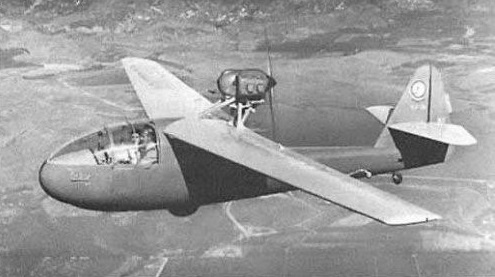
The Jarvis Jaybird design was acquired by Volmer Jensen as homebuilt project soon after World War II and became the VJ-21 Jaybird with retractable wheels and 75hp Continental A75 engine.
The 1947 Volmer Jaybird all-metal evolution features a pod nacelle with a pusher engine and has monowheel gear with outriggers on the wings. Reportedly more than 900 plans sold to builders through the 1960s.
A later owner (ca.1960) put a 125hp Continental C125 in, repositioned wings slightly lower and added small auxiliary fins.
VJ-21 Jaybird
Engine: 75hp Continental A-75
Wingspan: 45’0″
Length: 24’0″
Useful load: 500 lb
Max speed: 135 mph
Cruise speed: 110 mph
Stall: 35 mph
Range: 400 mi
Take-off run: 50′
Landing run: 150′
Seats: 2
Volmer VJ-24 SunFun

The VJ-24 is Volmer Jensen’s hang glider design built from aluminum. This motorglider is constructed of aluminum tubing plus fabric, and originated as a foot-launched glider. SunFun is made from pop riveted aircraft aluminium with the wings leading edge formed in styrene foam. Covering is polyester aircraft fabric doped. Control is by aileron, elevator and rudder. A permanent seat is built into the hanger structure.
The VJ-24 was first flown in about 1975 and showed excellent controllability with a joystick. Plans were available from Volmer Aircraft for $100.00. Materials have been estimated at $2400, with a building time of 250 hours.
The VJ-24 uses pip pins and thumb screws to assemble in 10 minutes without tools.
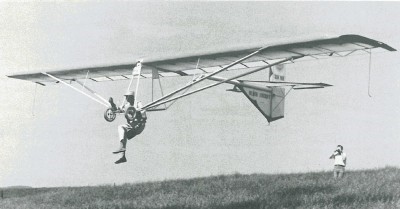
Designated the VJ-24E, the Sunfun is essentially a simplified version of the Swingwing hang glider or powered hang glider. The wings are fabric-covered aluminum tube and are a rectangular-planform type braced by V struts. The two wheels are for ground handling only, so the Sunfun is foot-launched and foot-landed. A 10-hp engine and fuel tank are installed beneath the wing and behind the pilot so that takeoff can be performed without benefit of a steep hill. Wingspan is 36 feet 6 inches, and total weight is 110 pounds. The Volmer VJ 24E Sunfun has a useful load of about 200 pounds, burns about 1.5USG per hour.
A minimum powered glider, the VJ-24W is a modified version of VJ-24E Sun Fun hang glider with wheeled landing gear, tractor engine, independent rudder control, manufactured by Airway Aircraft Inc., 905 Airway Ave., Glendale, CA 91201, USA.
Fairing behind pilot cuts drag. Independent three-axis controls. Construction is all metal with Dacron cover. Yamaha KT100 or McCulloch 101 engine. Two main wire wheels, tail skid undercarriage.
VJ-24
Wingspan: 36 ft
Wing chord: 4 ft 6 in
Wing area: 160 sq.ft
Empty weight: 110 lb
Speed range: 18-25 mph
VJ-24
Speed max: 40 mph
Cruise: 30 mph
Range: 30 sm
Stall: 17 mph
ROC: 350 fpm
Take-off dist: 100 ft
Landing dist: 100 ft
Engine: Yamaha, 15 hp
Fuel cap: 1.5 USG
Weight empty: 210 lbs
Gross: 410 lbs
Height: 5.75 ft
Length: 198.5 ft
Wing span: 36 ft
Wing area: 163 sq.ft
Seats: 1
Landing gear: tail wheel
VJ-24W Sun Fun
Wing span: 36.5 feet
Wing area: 163 square feet
Empty weight: 165 pounds
Max gross weight: 345
Engine: Yamaha KT-100, 97.6cc, 15 hp.
Reduction unit: 2,75:1
Prop: 57 in
Wingspan: 36 ft
Wing area: 160sq.ft
Aspect ratio: 8:1
Length 18’
Empty weight 200 lbs
Payload 200 lbs
Gross weight 400 lbs
Wing loading 2.5 lbs/sq.ft
L/D 10:1
Cruise speed 30mph
Stall speed 18mph
Vmax 40 mph
Takeoff run 100’
Landing roll 100’
Climb Rate 350 fpm
Fuel Capacity 1.5 USG
Chord length: 4.5 ft
Wing span: 36.5 ft
Wing area: 163 sq,ft
Aspect ratio: 6.75
Weight: 110 lb
Pilot weight: 160-200 lb
Takeoff speed: 13 mph
Stall speed: 15 mph
Max speed: 30 mph
Best glide ratio (L/D): 9.5
Best L/D speed: 17 mph
Min sink: 158 fpm

Volmer VJ-23 Swingwing

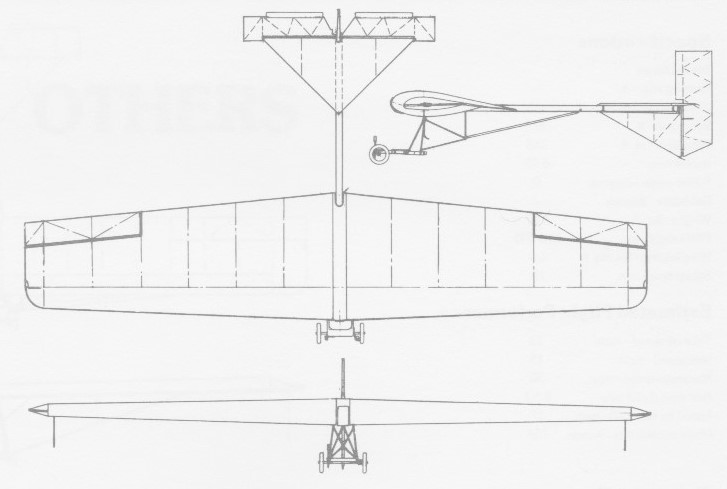
Designed by Volmer Jensen and Irv Culver, its cost Jensen roughly $400 in supply in 1971. The total construction time is estimated at three months of construction in free time. Culver is an aerodynamic engineer who designed the profile of the VJ 23 SwingWing and made the fatigue study.
Volmer VJ-23 Swingwing Article
The cantilever wing has a relative thickness of 16%, thus eliminating the reinforcement by cables or struts. The disassembled craft is designed to be assembled in 30 minutes.
The cantilever wing is largely built from spruce and plywood with a fabric covering. The wing is constructed in two parts of 4.88 meters and able to be assembled with three bolts. The wings, which weigh 15 kilos each, with a limit load factor of 2G and an ultimate load factor of 3G. The leading edge of the wing is made with a 1mm backing, and the leading edge ribs are 1cm thick marine plywood, with spruce for the ribs of the tail unit, and rods for the spar of the wing. Jensen does not use epoxy for the VJ23, preferring white glue that he has been trusted for years. The wings and tails are covered with Ceconite, a light fabric of 1.8oz / sqrd. The tail boom is an aluminum tube of diameter 10 cm and 4m long.
Apply the fabric without stretching it, then apply a coating to ensure waterproofing. The fabric can then be stretched with an iron.
The VJ-23 features padded arm rests and wheels. It is controlled by a joystick. The kit came with an airspeed indicator.
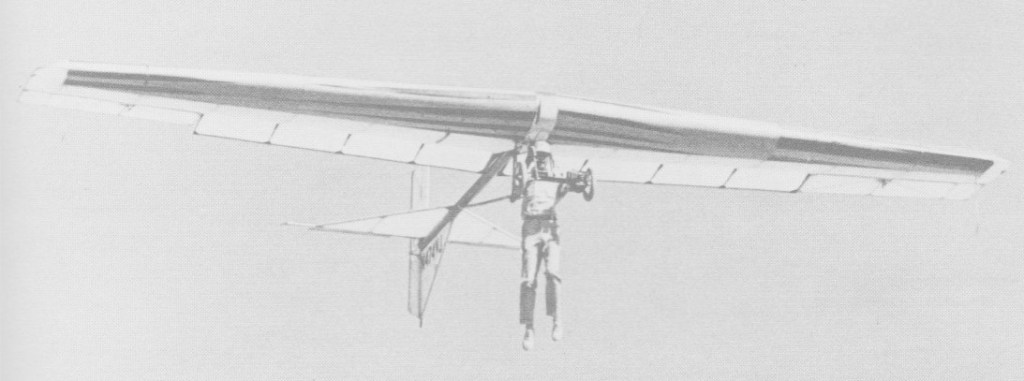
It was originally available in kit form only.
The airframe is made from 6061-T6 1.25in x .035 aluminium tubing. The 15 ft boom is made from 6061-T6 4in x .035 tubing. The ribs are wood truss. A permanent seat is built into the hanger structure.

What distinguishes SwingWing is its unusual ability to stay in the air. With a modest wind of about 30 km / h, the pilot takes off in less than two or three steps and then flies as long as he can stay in the ascending part. For short-term flights, the pilot is suspended by leggings, but a seat harness can be used with a seat for longer flights.
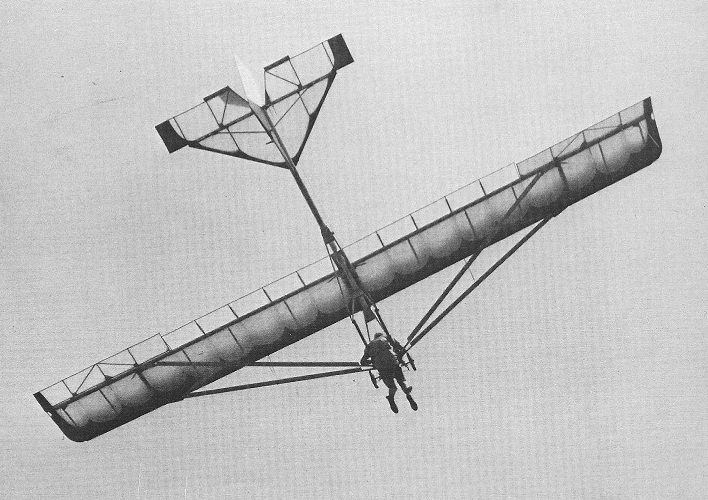
During a demonstration of SwingWing, Jensen remained in the air for more than 40 minutes, flying along and before a dune at an altitude of 35 ft (10 m) with a length of 300 yards. The 23° slope seemed to have an excellent performance for dynamic flight. The speed of cruising is between 25 and 40 km / h. The landing takes place in one or two steps.
Although the VJ23 prototype carries Federal Aviation Administration registration number N474VJ, registration is not required.
In 1978, David Cook became the first hang glider pilot to fly over the English Channel in one hour, flying at an altitude of 1000 feet in a powered Swingwing.
A motorized version has been built as the VJ-23E.
The VJ 23 was never built factory, but designed for amateur construction, very many plans were sold.
Designed in the early 1970s by Volmer Jensen, the Swingwing is essentially a powered hang glider. Empty weight without engine is 100 pounds, and the gross weight is 300 pounds. The Swingwing is built from aircraft plywood, spruce, steel tubing and fabric covering. Control surfaces include ailerons, elevators and rudder.
In 1978, David Cook became the first hang glider pilot to fly over the English Channel in one hour, flying at an altitude of 1000 feet in a powered Swingwing.

VJ-23
Wing span: 9.88 m
Length: 4.96 m
Wing area: 16.65 sq.m
Aspect ratio: 5.88
Airfoil: Irv Culver
Empty Weight: 45 kg / 100 lb
Gross Weight: 136 kg / 300 lb
Wing Load: 7.9 kg/sq.m
Vzmin: 1.1 m/sec
Glide Ratio: 12 @ 62 kph
Takeoff distance: 31 m
L/DMax: 12 32 kph
MinSink: 0.96 m/s 30 kph (18-20 mph)
Seats: 1
Cruise: 16-25 mph
Stall: 15 mph
Chord length: 4.7 ft
Wing span: 32.6 ft
Wing area: 179 sq,ft
Aspect ratio: 6.9
Wing sweep: 2˚
Weight: 100 lb
Pilot weight: 160-200 lb
Takeoff speed: 13 mph
Stall speed: 15 mph
Max speed: 25 mph
Best glide ratio (L/D): 9-1
Best L/D speed: 18 mph
Min sink: 176 fpm
Volmer VJ22 Sportsman
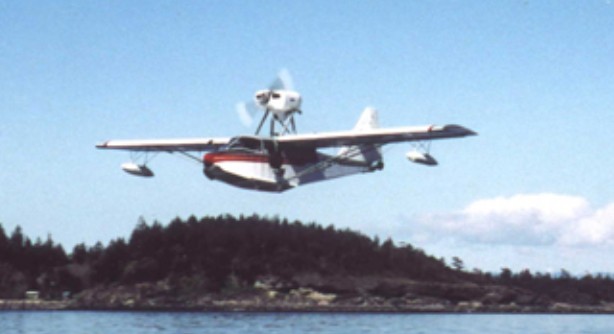
The Volmer VJ-22 Sportsman (or Chubasco) is a two-place, side by side, closed cabin, highwing monoplane, amphibious flying boat. Designed by Mr. Volmer Jensen, the Sportsman first flew on 22 December 1958 as an original design based on an earlier aircraft, the VJ-21, a high-wing pusher that contributed much data for the Sportsman.

Construction of the original Sportsman started in September 1957 and was completed in December 1958. The rigid, corrosion proof hull is made of 1/16 inch and 3/32 inch aircraft mahogany plywood with 1/4 inch plywood at the step for maximum strength and covered with fiberglass for added protection. The fin is built integral with the hull. The Sportsman can use fabric-covered Aeronca Chief or Champion wings. The wing panels are identical to those of the Aeronca Chief and consist of front and rear solid spruce spars, aluminium ribs, steel tube compression members and internal wire bracing. Each panel is externally braced by steel tube V struts to the fuselage. Floats are attached, and are braced to the outboard end of each wing. The main undercarriage retracts by swinging forward 90o. Shock absorption is by means of rubber bungee cord. The tailwheel incorporates a water rudder, and retracts upwards when not required. The pusher engine is mounted on a steel tube structure above the wing. To facilitate storage, the wings may be removed by undoing the few retaining bolts.
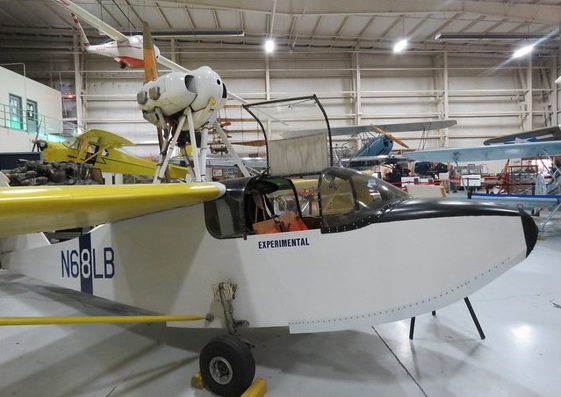
Numerous testing from calm water to five foot swells in the open sea have proven the design to be both extremely airworthy and seaworthy. Wings are wood spar and ribs, fabric covered. It takes off from water at sea level in about 20 seconds. The VJ-22 is powered by a Continental C-85, starter and gen. It has a cruising speed of 85 mph and stalls at 45 mph.
Suited to Continental s from the C85 to the O-200, most VJ-22 have their pylon-mounted engine mounted as a pusher, but one built by Viv Bellamy, G-BAME c/n VHB-1, started in 1971 and first flown from St. Just in early 1974, had a tractor engine. Possibly a Lawrence or Salmson radial.
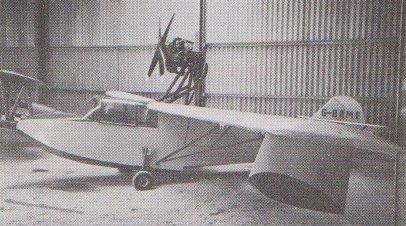
Designed to use wings from light aircraft including Auster, Aeronca, and Taylorcraft, In the UK, G-BAHP completed at Rollasons at Croydon by September 1972 featured Aeronca 7AC G-ATXC wings. It was first flown at Biggin Hill in 1973 with a Continental C90 engine.
Engine: Continental, 85 hp
HP range: 85-100
Speed max: 110 mph
Cruise: 80 mph
Range: 225 sm
Stall: 45 mph
ROC: 550 fpm
Take-off dist: (land) 350 ft., (water) 1000 ft
Landing dist: (land) 500 ft., (water) 1000 ft
Service ceiling: 12,000 ft
Fuel cap: 20 USG
Weight empty: 1000 lb
Gross: 1500 lb
Height: 8 ft
Length: 24 ft
Wing span: 36.5 ft
Wing area: 180 sq.ft
Seats: 2
Landing gear: tail wheel, retractable
Takeoff time 20 sec
Engine: 100 hp
ROC: 600 fpm
Span: 36 ft 6 in
Length: 24 ft
Empty wt: 1000 lb
Max wt: 1500 lb
 All Aero