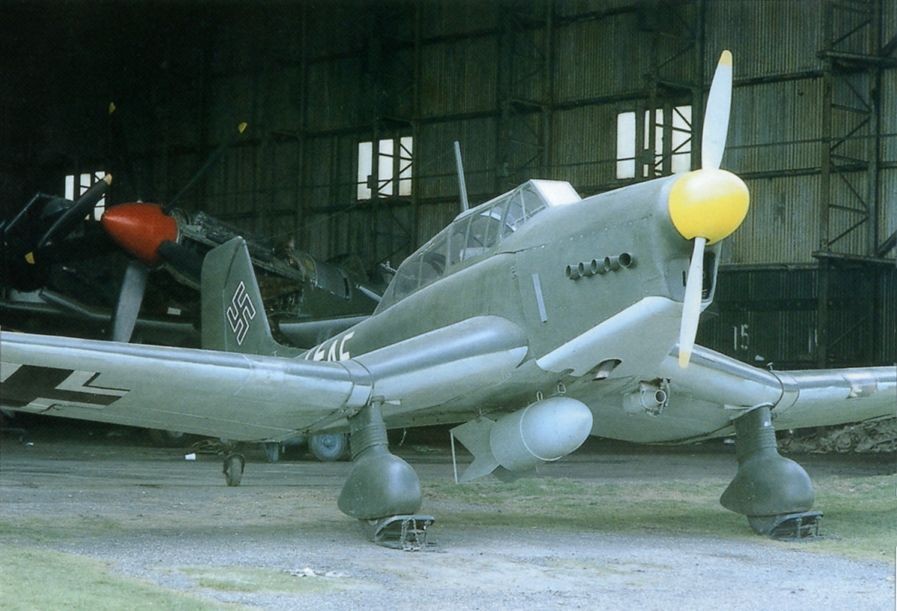
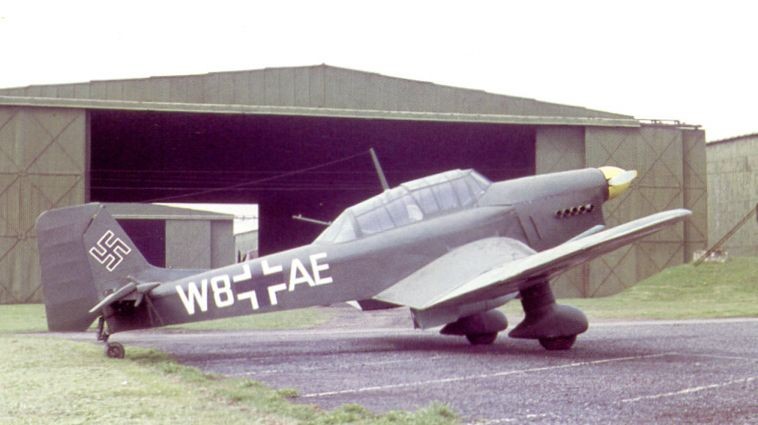
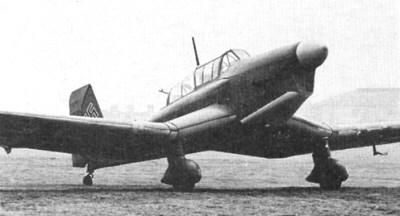
Vivian Bellamy’s Percival Proctor/Junkers Ju 87 Stuka conversion was built for the ‘Battle of Britain’ movie.
This aircraft was known as a “Proctuka”, and was a Percival Proctor trainer that had been heavily modified in order to make it look like a German Stuka dive bomber, including the addition of the cranked wings. Flight characteristics of the Proctukas were not good, though, and their flying footage was not used in the film (models were used for the Stukas instead).
It was considered by one pilot as “too dangerous to fly”
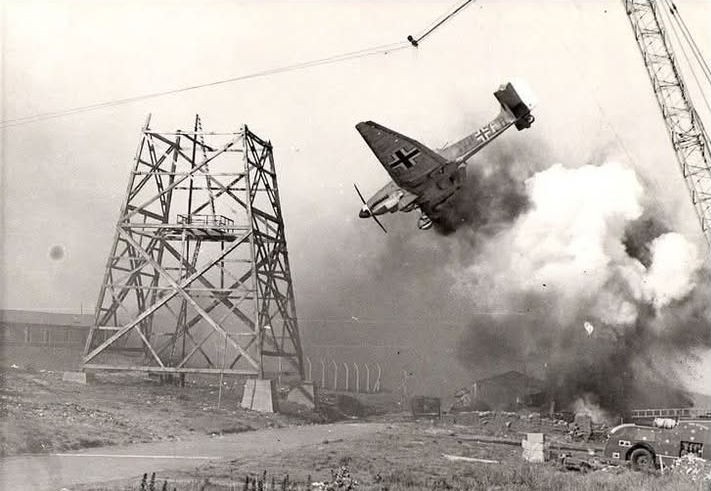
replica Stuka sliding down a cable which was suspended between two cranes, crashing into Chain Home antenna tower
The Stuka impacting the tower, from an unknown magazine
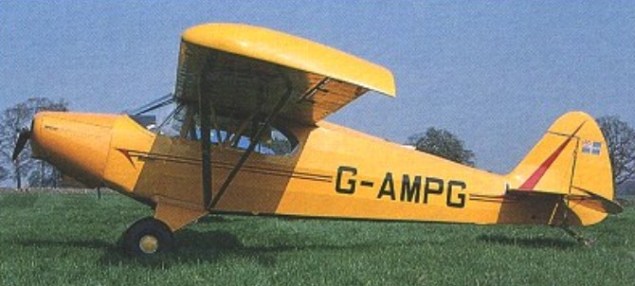
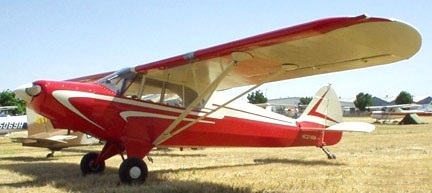
Although technically a three-seat aircraft, the Piper PA-12 Super Cruiser (ATC 780) was more usually used and regarded as a deluxe two-seater, and differed from the J-5C only in a number of cosmetic refinements including two wing tanks.
Dimensionally little had changed from the J-5C, and having the same 100 or 108 hp Lycoming O-235-C engine, the PA-12 had a maximum speed of 183km/h at sea level.
The prototype was flown in December 1945 and attracted so much attention that the company soon had an enormous backlog of orders at $2,995 in 1945, and $3,205 in 1947 (both less radio, starter and generator).
After the J-5, the type re-entered production in 1946 in refined form as the PA-12.
When production of this version ended in 1948 3,758 had been built. Lock Haven more than 3,500, Ponca City more than 250.
First around-the-world lightplane flights by City of Washington (p: Clifford Evans) NX2365M, and City of Los Angeles (p: George Truman) in 1947 NX3671M.
Piper PA-12-125 Super Cruiser
Engine: Lycoming O-235, 100 hp @ 2600 rpm Prop diameter: 76 in Wingspan: 35 ft 6 in Wing area: 179.3 sq.ft Length: 22.8 ft Height: 82 in Gross weight Normal: 1750 lb Gross weight utility: 1500 lb Empty weight: 950 lb Fuel capacity: 38 USG Power loading: 17.5 lb/hp Wing loading: 9.8 lb/sq.ft Baggage capacity: 41 lb Tire pressure: 18 lb/sq.in Max speed: 114 mph Cruise: 105 mph Stall: 42 mph Rate of climb: 600 fpm Service ceiling: 12,600 ft Absolute ceiling: 15,500 ft Cruise range: 600 sm Fuel burn: 6.5 USG/hr Seats: 3
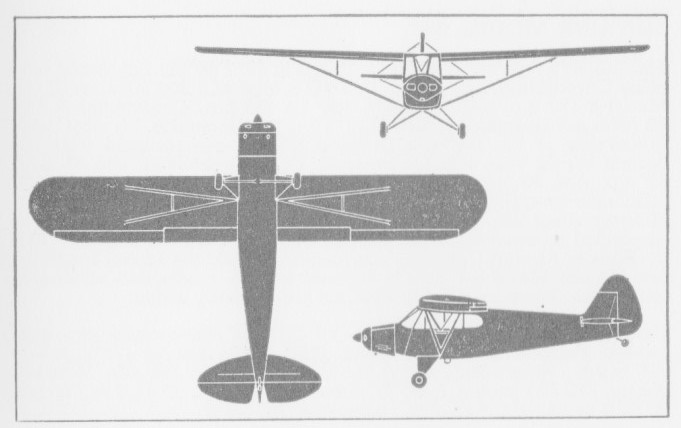
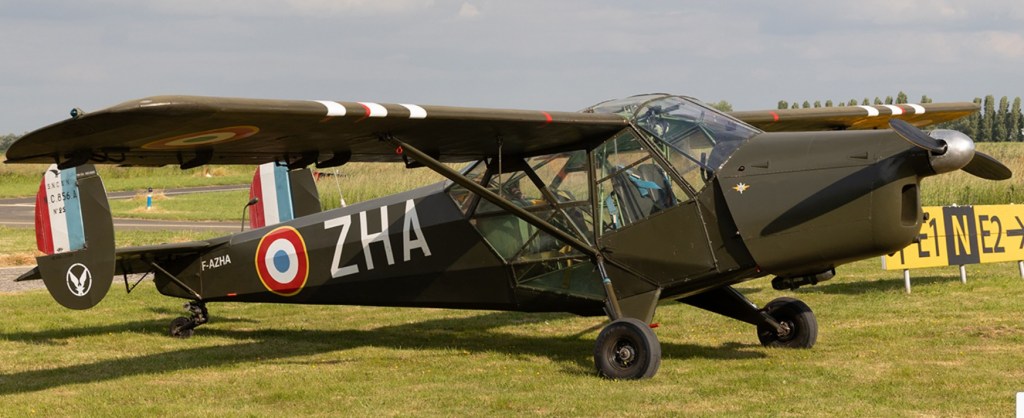
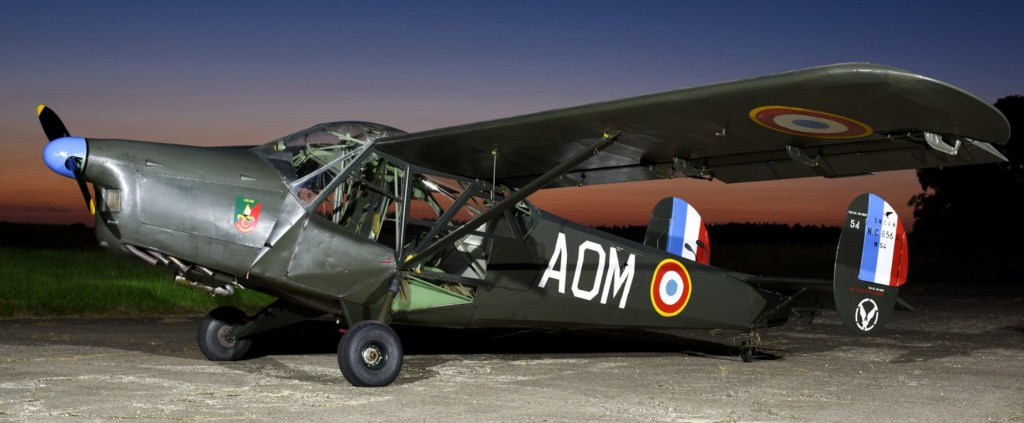
The Norvigie two-seat observation post and liaison aircraft evolved from the civil NC.856 tourer and served in the observation crew training and reserve formations of the ALAT, and during 1963, twenty were transferred to the Armee de l’Air for the communication role after being re-engined with Lycoming O-320 or O-360 engines of similar output to the SNECMA-Regnier 4LO-4.
The first prototype NC.856 powered by a 105 hp Walter Minor 4-OOO flew on 12 March 1949, and after the liquidation of the parent company, the SNCA du Centre, development was taken over by the SNCA su Nord, a second prototype with a Regnier engine being flown on 15 March 1951. One hundred and 12 machines were subsequently manufactured for the ALAT, the first on on 12 March 1953.
Engine: 135 hp SNECMA-Regnier 4LO-4 Max speed: 118 mph at SL Cruise: 105 mph at 3280 ft ROC: 984 fpm Range: AOP – 110 mi / Liaison – 332 mi Empty weight: 1430 lb Loaded weight: 1947 lb AOP MTOW: 2198 lb Wingspan: 39 ft 4.5 in Length: 25 ft 3 in Height: 7 ft 4.5 in Wing area: 181.372 sq.ft
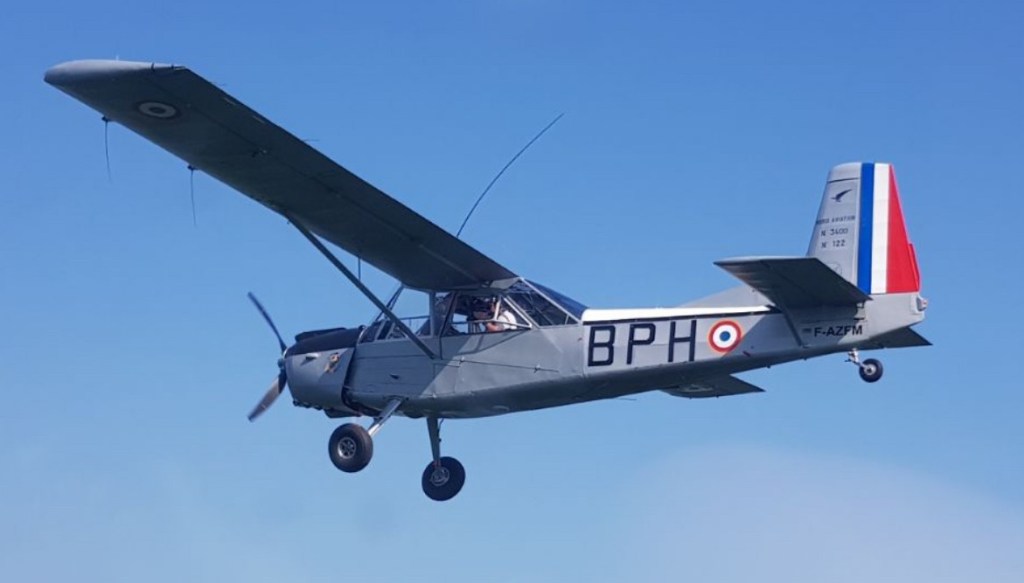
The Nord 3400 Norbarbe was a French two-seat observation and casualty-evacuation aircraft built by Nord Aviation for the French Army Light Aviation.
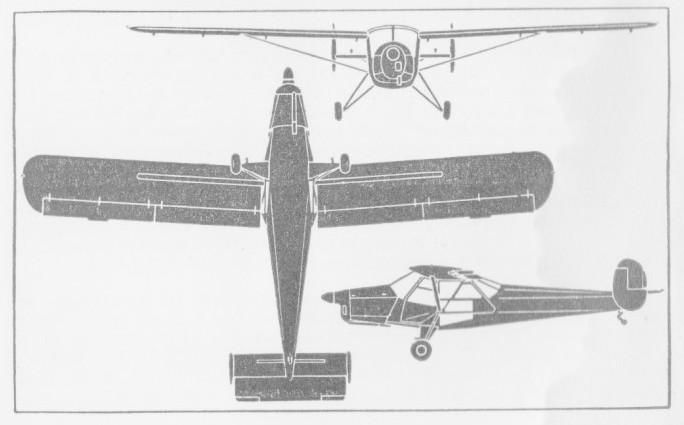
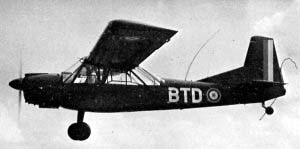
The Nord 3400 was designed to meet a French Army requirement for a two-seat observation aircraft, with a secondary casualty-evacuation role. The 3400 was a braced high-wing monoplane with a fixed tailwheel landing gear and an enclosed cabin with tandem seating for a pilot and observer. The prototype F-MBTD first flew on 20 January 1958, powered by a 179 kW (240 hp) Potez 4D-30 engine. A second prototype with an increased span and wing area followed, being powered by a 194 kW (260 hp) Potez 4D-34 engine. A production batch of 150 was ordered by the French Army in the same configuration as the second prototype.
The wings may be folded for storage.
The first Nord 340 was accepted by the ALAT on 9 July 1959 and the 150th and last was delivered in March 1961.
Nord 3400-01 First prototype F-MBTD Engine: 179 kW (240 hp) Potez 4D-30 Wing span: 12.7 m (42 ft) Wing area: 19.5 sq.m (210 sq ft)
Second prototype Engine: 194 kW (260 hp) Potez 4D-34
Nord 3400 Powerplant: 1 × Potez 4D-30, 180 kW (240 hp) Propeller: 2-bladed Ratier Type 24-56 adjustable-pitch Propeller diameter: 2.25 m (7 ft 5 in) diameter adjustable-pitch propeller Wingspan: 13.11 m (43 ft 0 in) Wing area: 20.82 sq.m (224.1 sq ft) Aspect ratio: 8.2 Airfoil: NACA 23015[4] Length: 8.42 m (27 ft 7 in) Height: 3.1 m (10 ft 2 in) Empty weight: 920 kg (2,028 lb) equipped Max take-off weight: 1,350 kg (2,976 lb) Fuel capacity: 220 L (58.1 US gal; 48.4 imp gal) in two self-sealing rubber tanks (160 kg (353 lb)) Maximum speed: 235 km/h (146 mph, 127 kn) Cruise speed: 200 km/h (120 mph, 110 kn) Stall speed: 70 km/h (43 mph, 38 kn) < Range: 1,000 km (620 mi, 540 nmi) Rate of climb: 7 m/s (1,400 ft/min) Wing loading: 65 kg/sq.m (13 lb/sq ft) Power/mass: 0.192 kW/kg (0.117 hp/lb) Take-off run: <100 m (328 ft) Landing run: <100 m (328 ft) Crew: 2
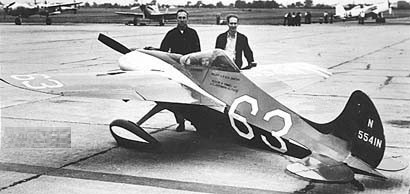
The 1948 Anderson Special was a single-place low wing 85hp Continental C-85 powered midget racer with a diamond-shaped fuselage cross-section. Raced by Bruce Raymond as Ace of Diamonds and Beetle Bomb, registered N5541N, it was modified as mid-wing in 1949.
The Special crashed in racing in 1950 and the wings were salvaged for use on the 1953 Pitt Yellow Jacket.
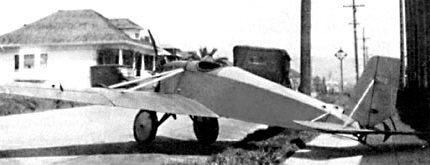
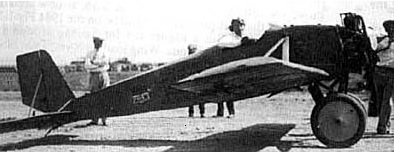
R H Aurebach built the Aurebach Wasp Special in 1927.
Wasp Special NX7571
The 1927 single-place “18-foot Wasp” (as described) has a provocative, albeit grim, story in a found newspaper clipping. Student pilot Henry Axton died in the crash after its wing collapsed while landing at Alameda airport. Before the coroner could investigate the accident, builder Aurebach set fire to the ship’s remains “in order to clear the field of the wreckage, because it was harmful to his business, to aviation, and to the airport.” He denied doing it to destroy any evidence of criminal negligence. We have no follow-up on this story; however … an old knot on our pages unravels right here.
‘A small ship resembling this brief description, built in nearby Oakland in 1927, that also suffered a crash before its entry in the Dole Race. That was enough to goad us to search Les Forden’s The Glory Gamblers, where on page 56 is: “On Aug 5th, spectators watched in horror as the little plane spun in and crashed, killing Henry Axton. Alameda County DA Earl Warren [later CA governor] warned the aviation community to expect legal action regarding unlicensed [the Wasp was X-licensed] and unsafe airplanes. The resulting publicity became part of the furor that followed when so many of the press, and the public, insisted the Dole flyers were irresponsible adventurers who flew home-made crates.”


 All Aero