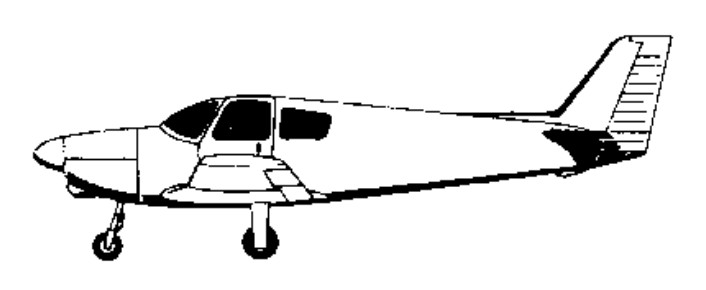
Wassmer started development of an all plastics lightplane in 1962 with the object of producing a comparatively cheap but durable and easily maintained type for ihe private owner.
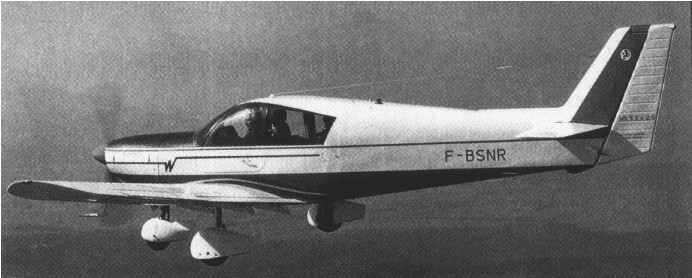
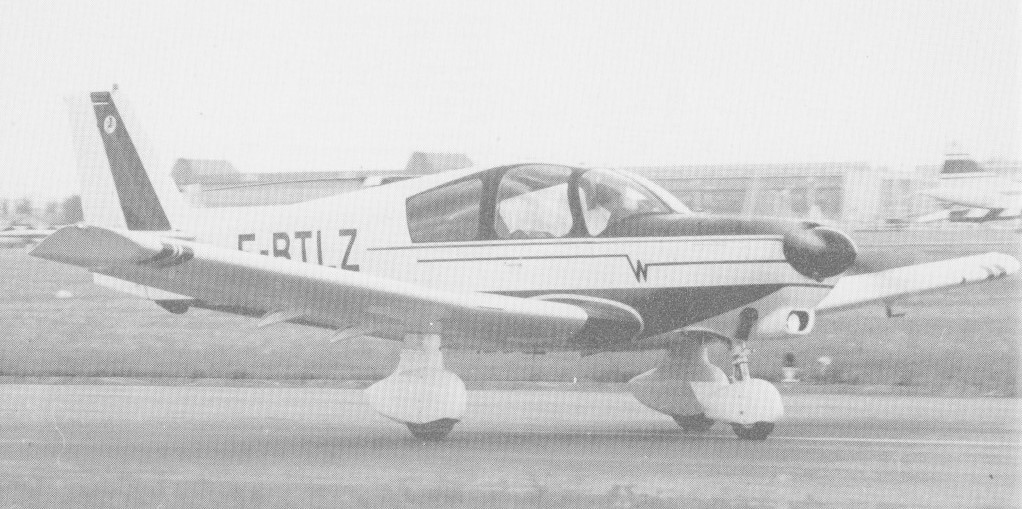
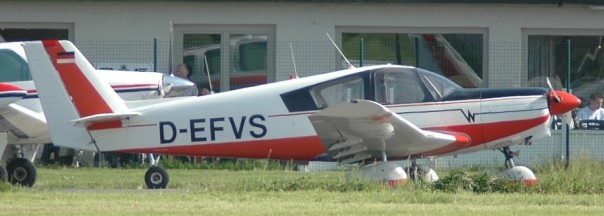
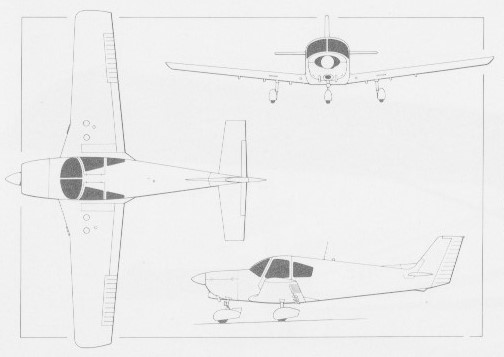
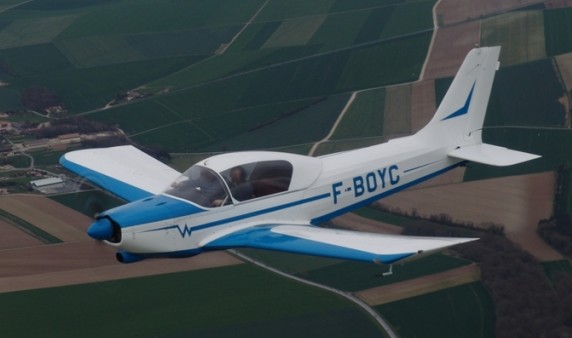
The WA-50 prototype flew in March 1966 as a four-seater powered by the 112-kW (150-hp) 0-320 engine. One of the first aircraft extensively constructed from glassfibre, production began in the form of the WA-51 Pacific with fixed tricycle landing gear and the 112-kW (150-hp) O-320-E2A engine, though a companion model was produced as the WA-52 Europa with the 119-kW (160-hp) IO-320-B1A driving a variable-pitch propeller. As these two initial models went out of production in 1973 the company introduced the WA-54 Atlantic with the 134-kW (180-hp) O-360-A engine, more baggage volume, revisions to the landing gear, and other modifications.
WA-54 Atlantic
Wassmer went into liquidation in 1977, and by that time sales of the WA-50 series totalled 190 aircraft.
WA-51 Pacific Engine: Lycoming O-320-E2A, 150 hp Wingspan: 30 ft 10 in / 9.40 m Length: 23 ft 11 in / 7.30 m Empty weight: 1320 lb / 600 kg MTOW: 2292 lb / 1040 kg Max cruise 5500ft/1675m: 120 kt / 138 mph / 222 kph ROC SL: 787 fpm / 240 m/min Service ceiling: 14,450 ft / 4400 m Range max fuel: 490 nm / 565 mi / 910 km Seats: 4
WA-54 Atlantic four-seat touring lightplane Powerplant: 1 x Avco Lycoming 0-360-A, 134kW (180 hp) Span: 9.40m (30ft 10 in) Length: 7.5m (24ft7.25in) Max TO weight: 1130 kg (2,491 lb) Max speed: 174mph at sea level Operational range: 839 miles
In 1955 Société Wassmer opened a design department, its first fully original aircraft was the WA-40 Super Sancy. This was a low winged four/five-seat tourer monoplane with a retractable nosewheel undercarriage. The fuselage was of steel tube construction with fabric covering, while the wings were of wooden construction.
The first prototype flew on 8 June 1959, receiving French certification on 9 June 1960. The WA-40 Super IV flew with the 134-kW (180-hp) 0-360-AlA.
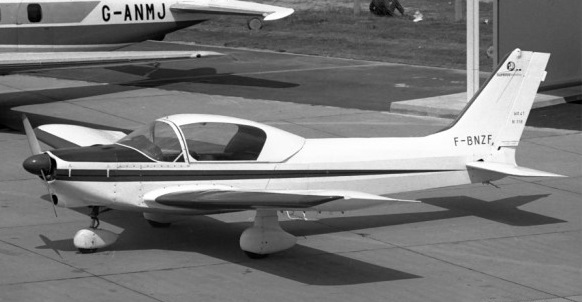
WA-41 Super IV F-BNZF (118)
Some 180 aircraft were produced in three variants (the Directeur basic model, the Commandant du Bord deluxe model and the President IFR model) with different equipment standards.
A revised version, the WA-40A, with swept tailplane, followed in 1963. In 1965 the company introduced a variant with fixed landing gear, and this WA-41 Baladou also had a different engine and simplified systems for lower purchase cost.
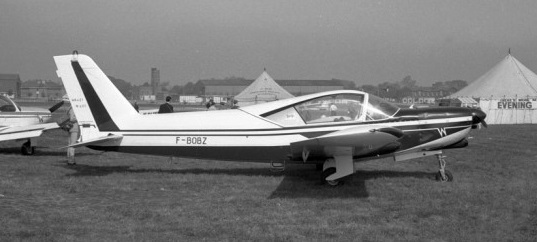
The final development of this initial series was the WA 4/21 Prestige in 1967 with the 175-kW (235-hp) IO-540 engine, a variable-pitch propeller and refinements such as an autopilot, blind-flying instrumentation and electrically operated flaps.
WA-421 F-BOBZ (401)
The Cerva CE-43 Guepard is an all-metal derivative of the Wassmer WA-40.
WA-40 Super IV Original production. Powered by 180 hp Lycoming O-360-A1A engine. Upswept fin. Two prototypes + 50 production aircraft.
WA-40A Super IV Revised production with swept fin. 180 WA-40 and WA40A built.
WA-41 Baladou Simplified version with fixed undercarriage. 60 built by 1970.
WA 4/21 Prestige More powerful version of the WA-40A with 250 hp Lycoming IO-540-C4B5 engine, electric flaps and landing gear, lengthened nose, the prototype was fitted with a 235 hp engine, 25 built by 1970.
WA-41-250 Alternate designation for the WA 4/21 production aircraft with a 250 hp engine.
WA-40A Powerplant: 1× Lycoming O-360-A1A, 134 kW (180 hp) Length: 8.09 m (26 ft 6.5 in) Wingspan: 10.0 m (32 ft 9.5 in) Height: 2.86 m (9 ft 5 in) Wing area: 16.0 sq.m (172 sq.ft) Empty weight: 740 kg (1,631 lb) Max takeoff weight: 1,200 kg (2,645 lb) Never exceed speed: 310 km/h (167 knots, 192 mph) Maximum speed: 270 km/h (146 knots, 168 mph) Cruise speed: 225 km/h (122 knots, 140 mph) (econ cruise – 55% power) Stall speed: 95 km/h (51 knots, 59 mph) Range: 1,700 km (917 nm, 1,055 mi) Service ceiling: 5,000 m (16,400 ft) Rate of climb: 4.6 m/s (905 ft/min) Crew: 1 Capacity: 4 passengers
WA-41 Baladou four/five-seat touring lightplane Span: 10m (32 ft 9.4 in) Length: 8.09m (26ft 6.5 in) Powerplant: 1 x Avco Lycoming O-360-A2A, 134kW (180 hp) Max TO weight: 1200 kg (2,646 lb) Max speed: 158 mph at sea level Operational range: 1,056 miles
WA 4/21 Prestige Engine: IO-540, 175-kW (235-hp) Prop: variable-pitch
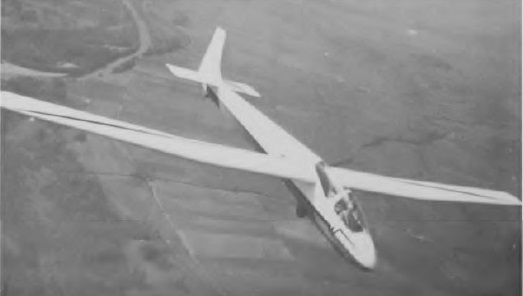
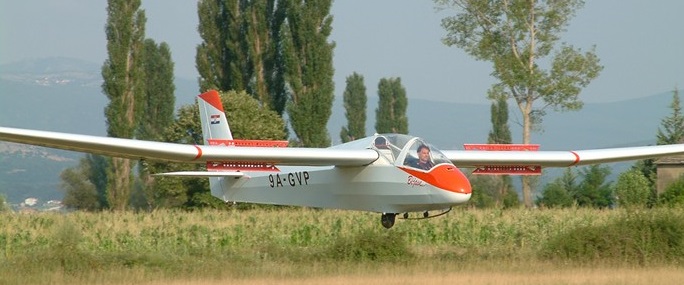
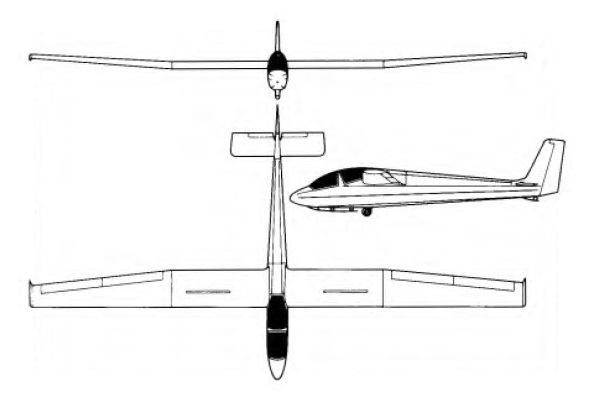
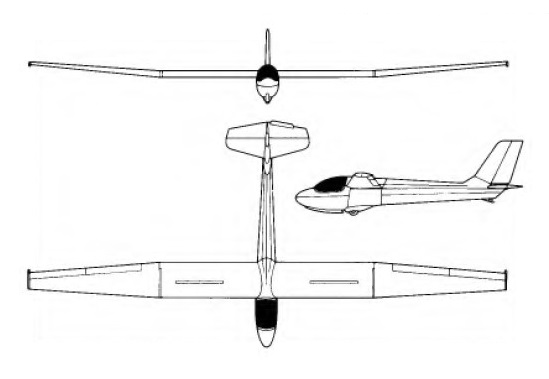
This tandem two-seat advanced training glider was the standard aircraft in this category for the French gliding clubs during the 1960s, and was developed from the WA 21 Javelot. Designed by M Maurice Collard, the first prototype Bijave made its maiden flight on 17 December 1958 and the second prototype, incorporating some improvements, first flew on 18 March 1960.
The Bijave is of conventional mixed construction very similar structurally to the Javelot; the cantilever wooden shoulder wings are in three pieces, with 4° 30′ dihedral on the outer wings and none on the centre section. They have single box spars and D type leading edge torsion boxes, with birch plywood covering forward of the spar and fabric covering aft of it; the plain spruce ailerons are also fabric covered. There are no flaps, but perforated Schempp-Hirth wooden air brakes retract into slots above and below each wing; wing tip ‘salmon’ fairings are also fitted. The fuselage is a welded steel tube framework covered with fabric, and with a glassfirbe nose cone. The two pilots sit in tandem under individual blown Plexiglas canopies, the rear seat being raised a bit to give its occupant a good view forward; a full range of instrumentation, a compass, oxygen and radio can be carried. There is a retractable monowheel with rubber ring shock absorption and a SATMO motor-cycle brake mounted aft of a rubber-sprung wooden nose skid, and there is also a steel tailskid. The cantilever wooden tail unit has a fabric-covered rudder, and the all-moving one-piece tailplane has large antibalance tabs.
The type soon went into production and over 300 were eventually built.
WA 30 Bijave Span: 16.85 m / 55 ft 3.5 in Length: 9.5 m / 31 ft 2 in Height: 2.74 m / 9 ft 0 in Wing area: 19.2 sq.m / 206.7 sq ft Wing section: NACA 63821763615 Aspect ratio: 15.0 Empty weight: 295 kg / 650 lb Max weight: 550 kg / 1,213 lb Water ballast: None Max wing loading: 28.6 kg/sq.m / 5.85 lb/sq ft Max speed: 149 mph 130 kt / 240 km/h (in smooth air) Max aero-tow speed: 93 mph / 81 kt / 150 km/h Stalling speed: 32.5 kt / 60 km/h Min sinking speed: 0.75 m/sec / 2.30 ft/sec at 47 mph / 42 kt / 78 km/h Best glide ratio: 30:1 at 47 mph / 40.5 kt / 75 km/h
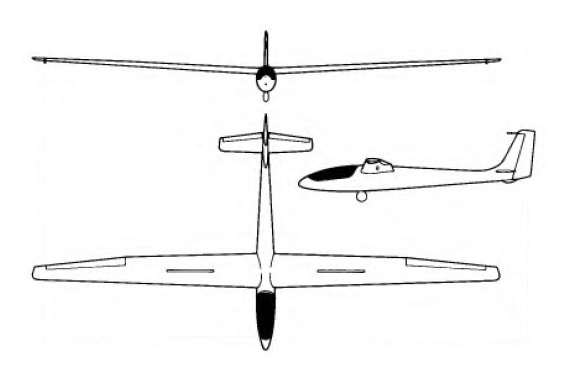
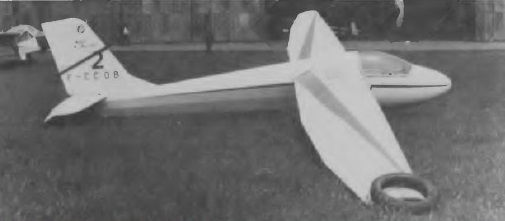
The WA 28 Espadon (or Swordfish) high performance single-seater is the all-glassfibre version of the earlier WA 26 Squale (or Shark), differing from it in having cantilever shoulder wings of the same span, area, aspect ratio and plan form but of glassfibre/plastic foam sandwich construction instead of the WA 26 Squale’s conventional wooden construction with trailing edge air brakes inboard of the ailerons; the Espadon has perforated Schempp-Hirth air brakes above and below the wings.
The WA 26 Squale first flew in prototype form on 21 July 1967; series production started in 1968 and by January 1970 a total of 85 Squales had been ordered. A version without the spring-loaded anti-tab in the allmoving one-piece tailplane was designated WA 26CM.
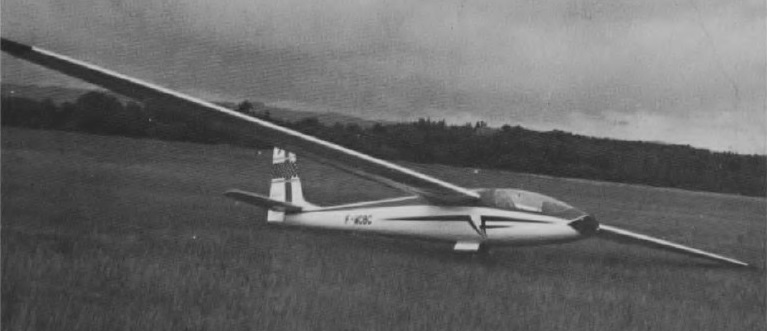
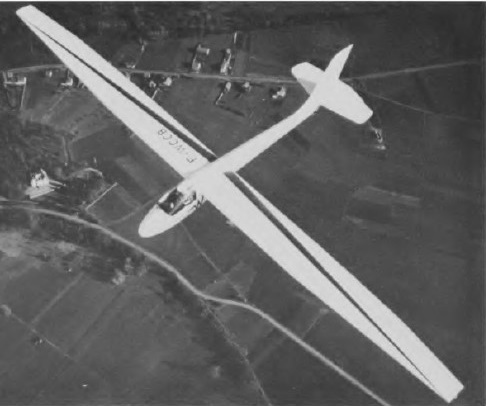
Design work on the Espadon began in 1972 and the prototype WA 28 made its first flight in May 1974, appearing at the Paris Air show in 1975 as F-CCBC, followed by the first production Espadon in November that year; 20 were on order by the spring of 1975. Both types have an oval section fuselage made of reinforced polyester plastics, with the pilot in an adjustable semi-reclining seat, with adjustable headrest and rudder pedals, under a long flush-fitting one-piece Plexiglas cockpit canopy that opens sideways to port. Comprehensive instrumentation is provided. Both types have a retractable monowheel mounted forward of the cg with a hydraulic brake; a fixed tailwheel is optional in place of the bumper fairing. The tail unit is a conventional wooden structure with fabric covering, with an all-moving one-piece tailplane with (on the Espadon) spring-loaded trimming.
WA 28 Espadon (Swordfish) Span: 15.0 m / 49 ft 2.5 in Length: 7.65 m / 25 ft 1.25 in Height: 1.66 m / 5 ft 5.5 in Wing area: 12.63 sq.m / 135.6 sq.ft Wing section: Wortmann FX-61-163/60-126 Aspect ratio: 17.82 Empty weight: 245 kg / 540 lb Max weight: 378 kg / 833 lb Water ballast: None Max wing loading: 29.92 kg/sq.m / 6.13 lb/sq ft Max speed: 151 mph / 131 kt / 242 km/h (in smooth air) Max rough air speed: 84.5 kt / 157 km/h Stalling speed: 36.5 kt / 68 km/h Best glide ratio: 38:1 at 56 mph / 48.5 kt / 90 km/h
The WA 28 Espadon (or Swordfish) high performance single-seater is the all-glassfibre version of the earlier WA 26 Squale (or Shark), differing from it in having cantilever shoulder wings of the same span, area, aspect ratio and plan form but of glassfibre/plastic foam sandwich construction instead of the WA 26 Squale’s conventional wooden construction with trailing edge air brakes inboard of the ailerons;
The Super Javelot is a single-seat Standard Class version of the WA 20 Javelot with three-piece instead of two-piece wings of 15m span and 5° 30′ dihedral on the outer panels, there being no dihedral on the centre section; the modified fuselage has the forward portion covered with three resin-bonded glass-cloth panels and the rear part fabric-covered, the nose now being longer and more streamlined and the blown plastic canopy redesigned. In addition, the fin and rudder are now swept back.
The cantilever wooden shoulder wings have single spars and the wooden ailerons are each in two parts operated differentially; there are perforated wooden air brakes above and below each wing, and small end-plate ‘bumper’-type fairings at the wing tips. The welded steel tube fuselage framework is now in two portions, the forward section having four longerons and the rear part only three, both sections being differently covered to those of the Javelot. The cantilever tail unit is of wood, with a trim tab in the one-piece elevator. Landing gear consists of a rubber-sprung nose skid with a non-retractable monowheel mounted aft of it; this has a brake linked to the wing air brake control, and there is also a rubber-sprung tailskid. The pilot sits in a canvas seat and there is provision for radio and oxygen.
The prototype Super Javelot first flew on 26 June 1961 and the type succeeded the WA 21 Javelot in production; in 1964 two Supers a month were being turned out.
A number of refinements were introduced on the 1964 model, which was known as the Super Javelot 64; these included a modified leading edge for improved performance at low speeds, modified wing roots to improve airflow at the wing/fuselage junction, increased dihedral of 5° 30′ on the outer wing panels and the use of birch plywood to cover the entire wings to give better laminar flow.
The Wassmer WA 23, of which the prototype first flew on 6 August 1962, was an experimental ‘one-off’ sailplane used to test a new 18m (59ft 0in) span wing with an aerofoil section developed by M Maurice Collard; this had an aspect ratio of 22 and was married to the fuselage of a WA 22 Super Javelot.
Super Javelot 64 Span: 49 ft 2.5 in Length: 23 ft 2 in Height: 6 ft 3 in Wing area: 155.0 sqft Aspect ratio: 15.7 Empty weight: 452 lb Max weight: 750 lb Max speed: 124 mph Min sinking speed: 2.29 ft/sec at 50 mph Best glide ratio: 30:1
WA 22 Super Javelot Wing span: 15.0 m / 49 ft 2.5 in Length: 7.06 m / 23 ft 2 in Height: 1.9m / 6 ft 3 in Wing area: 14.4 sq.m / 155 sq ft Wing section: NACA 63821 /63615 Aspect ratio: 15.7 Empty weight: 205 kg / 452 lb Max weight: 350 kg / 750 lb Water ballast: None Max wing loading: 24.3 kg/sq.m / 4.84 lb/sq ft Max speed: 108 kt / 200 km/h Stalling speed: 33 kt / 61 km/h Min sinking speed: 0.7 m/sec / 2.29 ft/sec at 43 kt / 80 km/h Max rough air speed: 70 kt / 130 km/h Best glide ratio: 30
The WA 20 Javelot (or Javelin), designed by Maurice Collard, made its first flight in August 1956, and was intended to meet the growing need of the French gliding clubs for a single-seater of good performance and uncomplicated construction to replace the now obsolescent German designs such as the Weihe and the Nord 2000 (the French-built DFS Meise) and early postwar French types such as the Arsenal Air 100 that were then in service.
The Javelot marked Wassmer’s entry into sailplanes and was of conventional mixed construction, the cantilever shoulder wings being of wood with a single box spar and D-type leading edge torsion boxes; there are air brakes above and below each wing, and small endplate ‘bumper’-type fairings at the wing tips. The wings are in two pieces and joined with two cylindrical pins, being rigged to the fuselage with four securing pins. The fuselage is a steel tube framework covered by fabric and is distinguished by a rather blunt nose and a flush-fitting cockpit canopy that is curved longitudinally but has flat sides and a flat curved top. There is a non-retractable monowheel with a brake aft of the rubber-sprung nose skid, and a tailskid. The tail unit is a cantilever wooden structure with a trim tab in the one-piece elevator.
Span: 52 ft 9 in Length: 23 ft 2 in Wing area: 166.9 sqft Aspect ratio: 16.7 Empty weight: 430 lb Max weight: 728 lb Max speed: 124 mph (in smooth air) Min sinking speed: 2.2 ft/sec at 47 mph Best glide ratio: 29:1 at 50 mph
Founded 1905 by Benjamin Wassmer. Up to Second World War was repair and overhaul organization. Started aircraft production at Issoire in 1945, building Jodel D.112 under license, subsequently building over 300 Jodel aircraft. Opened own design department 1955. First production aircraft Jodel-Wassmer D.120 Paris-Nice. In 1959 built WA.40 Super Sancey, followed by Baladou and 1966 WA.52 Europa, one of the first aircraft extensively constructed from glassfibre. WA.54 Atlantic appeared 1973 and WA.80 Piranha in 1975. Formed in 1971 with Siren SA company named CERVA to develop an all-metal four/six-seat light aircraft. Wassmer went into liquidation in 1977, and by that time sales of the WA-50 series totalled 190 aircraft. Wassmer Aviation by 1982 was Issoire Aviation.
 All Aero