Weatherly W620 / W620TP

W620B

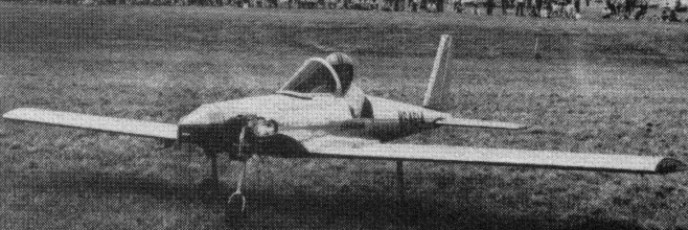
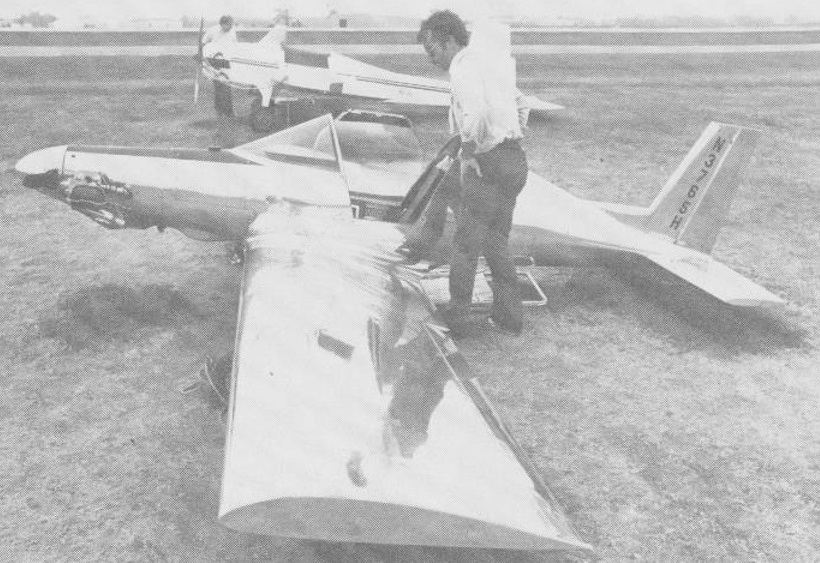
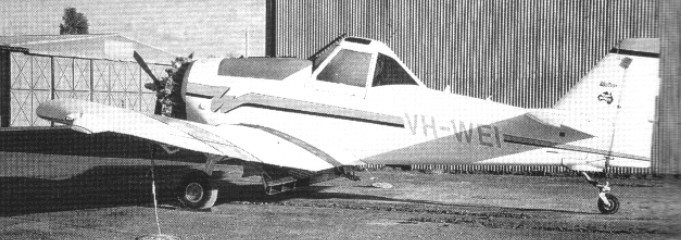
Built in Hollister, California and first built and certified in 1979 (TC A26WE). The 620, the first of which, N9245W, first flew in 1979 and was powered by the 450-hp R-985. The next aircraft, N9259W, was fitted with a PT6A-11AG. One similar aircraft was manufactured in 1960 but Weatherly remained faithful to the radial.

Production waned in the mid-eighties but with the introduction of the model 620A sales picked up again. The 620A wingspan was further extended another five feet to 40 ft 8 in (the wing is now 277 sq.ft) with longer ailerons and a new wingtip design but still retaining the vanes. The 620A also featured a new tail. The empty weight of the 620A is 2,840 lbs and the maximum all-up weight is 5,900 lbs, the hopper capacity being 335 US gallons.

In 1991 the 620A was upgraded to the 620B with major improvements to the cockpit and the addition of two auxiliary fuel tanks providing extra range on ferry flights. Put into production in 1992, this has by far been the most popular model with over one hundred been built and sales not only in the United States but Canada, Central and South America and Australia.

The 620B was then offered with a turbine, this time an Allied Signal TPE331-1, which Weatherly Aviation market as the 620BTG.

W620
Engine: 1 x P&W R-985, 450 hp
TBO: 1000 hrs
Prop: Hartzell, 3 blade, constant speed 95.5 in
Seats: 1
Length: 27.2 ft
Height: 8.1 ft
Wingspan: 41 ft (with wingtip vanes 47’0″)
Wing area: 264 sq.ft
Wing aspect ratio: 6.1
Max take off wt: 5600 lbs
Standard empty wt: 2760 lbs
Max useful load: 2840 lbs
Max landing wt: 4000 lbs
Wing loading: 21.2 lbs/sq.ft
Power loading: 12.4 lbs/hp
Max useable fuel: 390 lbs
Hopper capacity: 335 USG
Max climb rate: 700 fpm
Service ceiling; 15,000 ft
Max speed: 130 kts
Working speed: 78-100 kts
Stall speed flaps down: 57 kts
Turbulent air penetration speed: 122 kts
Fixed tail wheel undercarriage
W620A

W620B

W620TP
Engine: 1 x P&W PT6-11AG, 500 hp turboprop
TBO: 3500 hrs
Prop: Hartzell 3 blade constant speed 96 in
Seats: 1
Length: 30.5 ft
Height: 8.3 ft
Wingspan: 41 ft
Wing area: 264 sq.ft
Wing aspect ratio: 6.1
Max take off wt: 5600 lbs
Standard empty wt: 2700 lbs
Max useful load: 2900 lbs
Max landing wt: 4000 lbs
Wing loading: 21.2 lbs/sq.ft
Power loading: 11.2 lbs/hp
Hopper capacity: 340 USG
Service ceiling; 15,000 ft
Max speed: 153 kts
Working speed: 78-122 kts
Stall speed flaps down: 57 kts
Turbulent air penetration speed: 122 kts
Fixed tail wheel undercarriage
Weatherly W201

When the supply of Fairchild aircraft ran out, John Weatherly started to build the complete aircraft. Two model W201s were built in 1966/67, N86686 and M86687. Powered by a 450-hp R-985 Pratt & Whitney, these aircraft had an improved wing design with the span increased to 39 ft.

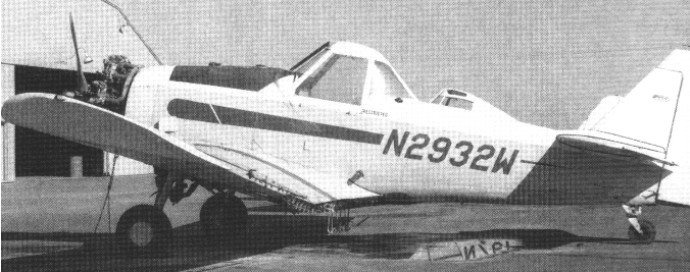
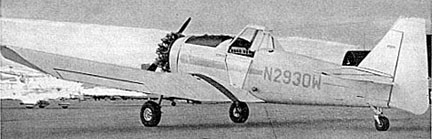
The 1970 production aircraft, the W201A, were built between 1968 and 1971. These can be identified by a triangular shaped fin and rudder. More than 100 were built at $22,800.

Weatherly 201A N2930W

The W201B model commenced production in 1971 and 45 aircraft were built at $31,500 in 1974.

Another version followed in 1975, the W201C, and this was the Weatherly that introduced the wingtip vanes which diffuse the normal formation of the wingtip vortex. The 201, 201A, and 201C models were under TC A10WE.

201 / 201A / 201C
Engines: P&W R-985, 450 hp
Wingspan: 39’6″
Length: 26’7″
Max TO wt: 4800 lb
Empty wt: 2580 lb
Equipped useful load: 2169 lb
Payload max fuel: 1769 lb
Hopper cap: 270 USG
Wing loading: 19.2 lb/sq.ft
Pwr loading: 10.6 lb/hp
Max speed: 128 mph
Cruise speed: 105 mph
Stall: 58 mph / 60 kt
Working speed: 95 kt
Working endurance: 3 hr
ROC: 980 fpm
Min field length: 1500 ft
Fuel cap: 400 lb
Seats: 1

210B
Engine: P&W R-1340, 450hp
Wing span: 39’0″
Length: 26’7″
Useful load: 2260 lb
Max speed: 130 mph
Cruise speed: 108 mph
Stall: 53 mph
Seats: 1

Weatherly WM62C

WM62C

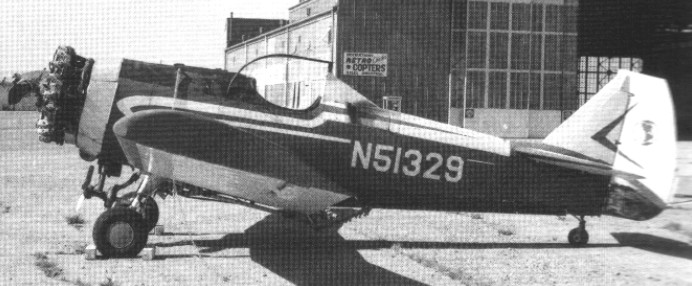
Weatherly Aviation’s first aircraft was the WM-62C, N3775G. This was followed by at least 18 aircraft 1961-1965 which were conversions of the PT-19/-23 aircraft. They can be identified by their rounded Fairchild fin and rudders. The first were open cockpit with a roll-over frame but later versions were fitted with an enclosed cockpit.

Weatherly WM-62C N51239

Single place aircraft, power was from a Continental W-670 or P&W R-985.

Weatherly Aviation Co Inc

John C. Weatherley operated the Weatherley Campbell Aircraft Company as a fixed-base operator, at Dallas, Texas. Acquired plans of the Colt 4-seater from Luscombe Airplane Corporation.
The Weatherly cropduster had its origins in Texas but, when manufacturing began, it was California that John Weatherly turned to for the production of this typical low-wing American cropduster. Weatherly has been building cropdusters since 1960 at Hollister, not far south of San Francisco. At first these aircraft were modified from the ex-military World War Two trainer, the Fairchild M-62 Cornell. When the supply of Fairchild aircraft ran out, John Weatherly started to build the complete aircraft.
Weatherley Aviation Company established at Hollister, California. Built WM 62C agricultural aircraft 1961-1965, a converted Fairchild 62. Developed W.201, a much-improved agricultural aircraft in 1967; followed by 201A in 1970 and 201C in 1975. In production in 1998 were the 600 and 600 BTG single-seat agricultural aircraft, the latter a turboprop version.
In 1990, the company moved production from Hollister to Lincoln, near Sacramento, and in recent times (circa 2000) Hal Weatherly, a nephew of John Weatherly, has taken over running the company.

Watson Windwagon

The original Wind Wagon was built in Texas by Gary Wilson and was based on the Teenie Two and used the similar wing ribs that slipped onto the “C” spar. The fuselage was a tapered tube from the seat backward and from the seat to the firewall. The aircraft was equipped with tricycle undercarriage and a ½ VW.

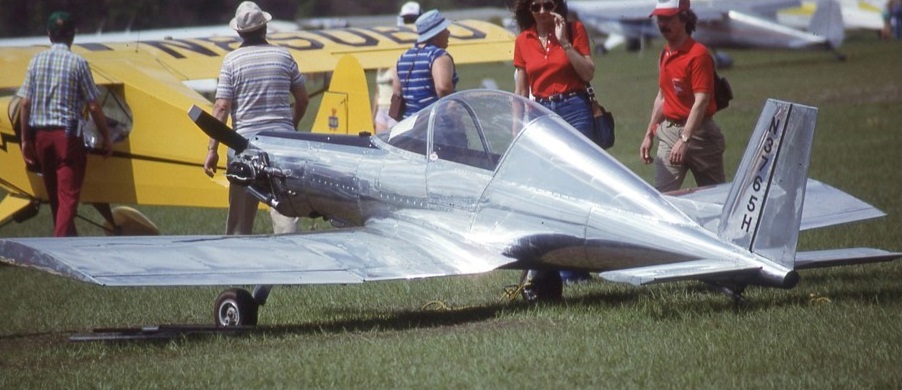
1981 Watson Windwagon N3765H C/N 147

First flown on 19 April 1977 (N64614), the Windwagon measures 18 feet from wingtip to wingtip and it features all-aluminum construction with pop rivets. The tricycle gear are nonretractable, but the wings are removable for storage or transportation. The powerplant is a 900 cc half-Volkswagen modified engine and drives a four-blade propeller. On just two cylinders tip speed is 110 mph, and climb rate is 450 to 500 fpm. The wing features a Clark Y wing section with constant chord. There are conventional ailerons and no flaps. The fuselage is a conventional semimonocoque structure made from pop-riveted aluminum. Morry Hummel introduced a few changes.

1981 Watson Windwagon N3765H C/N 147

In 1980 full size plans were available for US$50.

Gallery

Engine: ½ VW, 30 hp
Speed max: 140 mph
Cruise: 100 mph
Range: 200 sm
Stall: 40 mph
ROC: 400 fpm
Take-off dist: 250 ft
Landing dist: 250 ft
Service ceiling: 12,000 ft
Fuel cap: 4 USG
Weight empty: 273 lbs
Gross: 486 lbs
Height: 4 ft
Length: 13 ft
Wing span: 18 ft
Seats: 1
Landing gear: nose

Engine: VW, 35hp
Wing span: 18’0″
Length: 12’5″
Useful load: 210 lb
Cruise speed: 100 mph
Stall: 40 mph
Seats: 1

Watley Mayfly III

It is was the third full size aircraft Bill Watley has constructed since 1945.
The Mayfly 3 is a very large Biplane: each wing is 50 ft in span and height of 10ft. (approx).
The variable pitch propeller is made of blue foam and is 12 ft in diameter, turning at 100 RPM.
Bill Watley constructed the aircraft over a period of three years full time, working almost every day. It had taken at least 6000 hours. The structure is normal commercial pine and white polystyrene covered with Mylar. The cockpit frame for the pilot is commercial aluminium.
All parts of the aircraft were carefully drawn and the dimensions carefully adhered to.
A water level was used at all times to ensure the diagonals were all correct
The Mayfly 3 did achieve flight in Kooralbyn, Australia, after a number of structural amendments, including a redesign of the undercarriage and wheel diameter.

Wingspan: 50 ft
Length: 26 ft
Propeller: blue foam 12 ft diameter

Watley, Bill

Bill Watley constructed three full size aircraft has since 1945. The first, HM 290 (The Flying Flea) recorded 2 flights at 100 ft, each flight about 2 miles in length. The second aircraft, a Jodel D9, took four and a half years to build (2140 hours) and flew from Gatton, Queensland, Australia, for 15 years (about 1000 hours). The third was the Mayfly III.

Watkinson CG-4

The CG-4 was the third manpowered ‘cyclogyroplane’ built by Mr. Herbert Watkinson of Bexhill in his effort to win the $50,000 Kremer prize for man powered flight. By March 1977 the CG-4 was nearing completion, and permission to carry out flight trials at Lydd Airport in Kent had been granted. Then in 1977, Mr. Watkinson was diagnosed as terminally ill and died at Bexhill in October 1977. After going into storage, this machine, together with all the surviving documentation and photographs of the cyclogyroplane story, were donated to the Helicopter Museum for preservation as a tribute to one man’s attempt to fly with the birds.

Waterman Pusher

Waterman Pusher c.1965

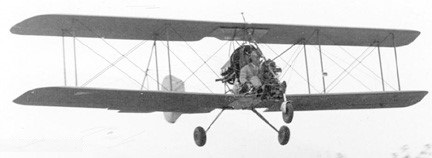
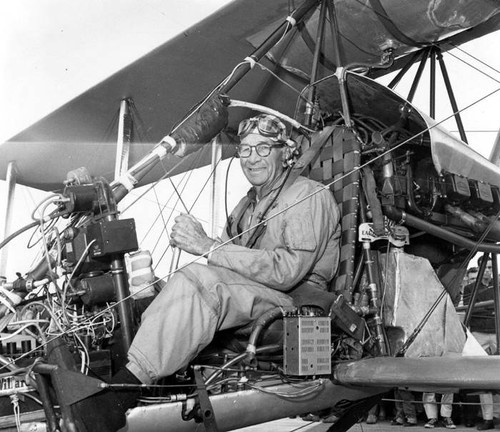
Several single place open biplane experimentals based loosely on the Curtiss design were produced by Waterman for himself and others in exhibition flying.

Individual aircraft were only lightly documented, but a particularly notable one used the wings and tail of the original Vought VE-7, which were discovered in an old hangar after WW2. Donated to the San Diego Air Museum, but perished in its 1978 fire.

Waterman W-11 Chewy Bird / Chewy Duck

In 1967 Waterman produced the W-11 Chevy Bird N262Y, his 11th design, as test bed for Chevrolet Corvair motor car engine. An open cockpit high wing monoplane, power was a 140hp Corvair engine. It was open frame fuselage; wings and tail from a Cessna 140.

The Chevy Bird was later fitted with floats and promptly christened Chevy Duck N262Y.

The W-11 designation wasn’t changed when it became a seaplane.

The NTSB website mentions the W-12 as N6039, an airplane that was damaged during tests in 1971 with Waterman himself on board.

There is clear mention of the W-12 as a landplane: