France
JDM was founded in the late 1940s by Jean Dabos to market the Roitelet (Wren) single-seat ultra-light monoplane. Poinsard-engined prototype flew successfully, but lack of suitable production engine prevented manufacture and by 1951 company had been dissolved.
Post WW2
Jaskiewicz Electric
In September 1973 the Liverpool Echo covered a story about a man who was building an aircraft to be powered by a form of electric motor. Jan Jaskiewicz was the designer and builder, although at the time he was employing two women to do the fabric work for him. He had leased an old school for his workshop in Great Homer Street, Liverpool, UK.
The aircraft was of tubular steel construction and employed a large amount of glass-fibre areas. Empty weight was quoted at 300 lb. At that time a professional-looking fuselage had been completed and the wings were about to be worked on. The exact nature of the engine, which the designer referred to as a battery engine”, was not revealed.
Janox
USA
Manufacturer of reflector landing systems which, in about 1970, acquired Navion Aircraft Corporation. Intended to continue production of Navion Model H in new factory at Coshocton, Ohio; instead, Navion Aircraft Corporation was purchased in late 1972 by Mr Cedric Kotowicz, who moved all assets to a new plant at Wharton, Texas, subsequently setting up the Navion Rangemaster Aircraft Company.
Janowski J-3 Eagle
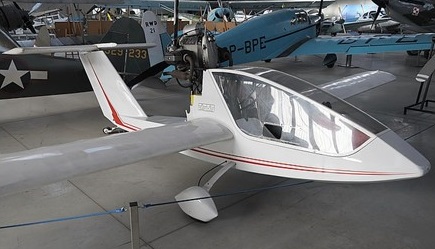
J-3 Eagle was the third, after Prząśniczka J-1 and J-2 Polonaise amateur single-seat aircraft, designed by Jaroslaw Janowski.
The aircraft of wooden construction featured Wortmann airfoil with flaperons all along the trailing edge, wingtip fuel tanks and composite landing gear legs. The aircraft was powered in succession by a modified Porsche car engine, a Rotax and a BMW R100 engines. The J-3 Eagle (Orzel) was produced using the pod-and-boom pusher arrangement, with a top-mounted engine and conventional landing gear similar to the J-1, and a T-tail stabilator and shoulder-mounted cantilever wings similar to the J-2. The wings used a 19% thick laminar airfoil and could be easily detached for ground transport.
A single example was built by Witold Kalita, J. Janowski and Marian Smith, for whom the aircraft was the intended. The J-3 Eagle was built from sketches, and no blueprints or plans of any sort were ever produced.
When Marian Nowak emigrated from Poland to Canada he took the J-3 with him. He flew the aircraft for 250 trouble-free hours, regularly making 375 mile commutes. However, he decided to take advantage of the detachable wings and transport it by trailer when he exhibited it at the EAA convention at Oshkosh in 1980 as the first amateur construction from the Eastern Bloc.
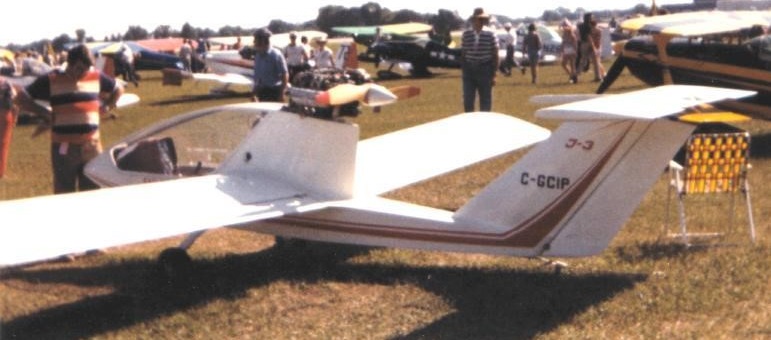
The Eagle initially flew with a 35 HP converted Porsche automobile engine, but Mr. Nowak also flew it with a Rotax 503, a Rotax 447, a 69 hp BMW motorcycle engine, and finally a water-cooled 3 cylinder Suzuki auto engine. Eventually Mr. Nowak sold the airplane, and the new owner tied it down outdoors where it unfortunately deteriorated beyond airworthy condition. The Transport Canada database listed it as last registered to Wieslaw Pawelkiewicz in April 2002, operating at Burlington, Ontario. It was donated to the Polish Aviation Museum in 2003 by the last owner, Wieslaw Pawełkiewicz of Canada.
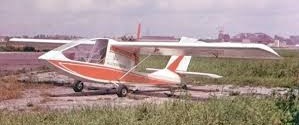
J-3 Eagle (Orzel)
Serial Number: MN-1
Registration: C-GCIP
Engine: Porsche, 35 hp
Airfoil: Wortmann NACA 23015
Wingspan: 6.7 m / 22 ft 11 in
Wing area: 6.8 sq m /73 sq ft
Length: 4.8 m (15 ft 9 in)
Gross Weight: 699-721 lb
Empty Weight: 231-320 lb
Max Speed: 155 mph
Cruise Speed: 100 mph
Landing Speed: 45 mph
Takeoff run: 328 ft
First Flight: 1976 / 1977 / 1978 / 1980
Janowski J-2 Polonaise
An amateur single-seat aircraft, designed by Jaroslaw Janowski.
Janowski J-1 Don Quixote / Przasniczka
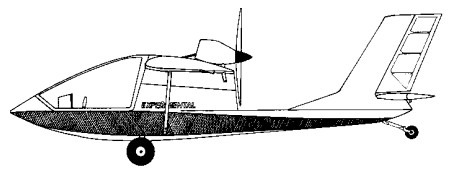
The prototype Don Quixote designed and built by MR. Janowski in 1974 was powered by a 23-hp two-stroke Saturn engine, also designed by Janowski. De¬veloping 23 hp from 500 cc, the J 1 features a fully enclosed cockpit with access via a lift up windscreen. The J 1’s construction uses tradi¬tional materials.
Single seat single engined high wing mono¬plane with conventional three axis control. Wing has unswept leading and trailing edges, and constant chord; conventional tail. Pitch control by elevator on tail; yaw control by fin mounted rudder; roll control by ailerons. Wing braced from below by struts; wing profile Clark Y; double¬-surface. Undercarriage has three wheels in tail dragger formation. Fuselage, totally enclosed. Engine mounted above wing driving pusher propeller.
However, several problems were inherent in the two-stroke engine, so the more readily available Volkswagen engine was settled on. The heavier engine called for strengthening the airplane’s structure. To over the widest range of homebuilders in various coun¬tries, it was decided that the Don Quixote would make use of conven¬tional wood an fabric along with more modern polyurethane foam and epoxy/fiberglass. The J-1 B can withstand loading of + 4G and – 2.3, but in the foam /fiberglass version of the plane, + 6.3 and —3.3 are possible. Construction of the plane follows conventional building rules, with spruce wood, birch plywood and flat sheets of plexiglass as basic materials.
J-1
Length overall 16.0ft, 4.88m.
Height overall 4.6ft, 1.40m.
Wing span: 24.9ft, 7.60m.
Constant chord 3.2 ft, 0.99 m.
Sweepback 0 deg.
Total wing area 81 sq.ft, 7.5 sq.m.
Wing aspect ratio 7.74.
Engine: Saturn, 25 hp.
Max take off weight 595 lb, 270 kg.
Max wing loading 7.37 lb/sq.ft, 36.0kg/sq.m.
Max power loading 23.8 lb/hp, 10.8 kg/hp.
Max level speed 81mph, 130kph.
Cruising speed 68mph, 110 kph.
Stalling speed 37 mph, 60 kph.
Max climb rate at sea level 590ft/min, 3.0m/s.
Range at average cruising speed 171 mile, 275 km.
J-1B
Engine 25-50 hp.
Wingspan: 24 ft 7.25in.
Wing Chord: 3 ft 3 in.
Length: 16 ft 4.75 in.
Height: 4 ft 5.75 in.
Empty Weight: 286 lbs.
Maximum Weight: 551 lbs.
Maximum Speed, Level Flight: 103 mph.
Cruise speed: 75 mph.
Stall speed: 41 mph.
Take-off Run: 328 ft.
Landing Roll: 164 ft.
Fuel Capacity: 4.4 Imp gal.
Nominal Range: 248 miles.
Engine: Volkswagen, 23 hp
Top speed 84 mph.
Cruise 77 mph.
Stall 39 mph.
Climb rate 244 fpm.
Ceiling 6820 ft.
Range 310 mile
Takeoff run 761 ft.
Land¬ing run (50ft) 1256 ft
Jamieson Take 1 / J
In December 1958 Jamieson Aircraft Co flew the prototype of a four-seat, single tailed development of Jupiter known as the Take 1. This was certificated in mid-1963 and limited production of an improved model, the Jamieson “J” soon began.
Jamieson D
Daytona Aircraft Construction Inc was founded 1990 and bought rights to Jamieson D light aircraft.
Jamieson J-2-L1 Jupiter
Jamieson Aircraft Company Inc formed late 1940s to develop and produce the J-2-L1 Jupiter, a small, three seat low-wing monoplane with retractable landing gear and a vee tail.
Jamieson Corp
USA
Formed late 1940s as Jamieson Aircraft Company Inc. to develop and produce the J-2-L1 Jupiter, a small, three seat low-wing monoplane with retractable landing gear and a vee tail. Name changed in middle/late 1950s, and in December 1958 flew prototype of a four-seat, single tailed development of Jupiter known as the Take 1. This was certificated in mid-1963 and limited production of an improved model, the Jamieson “J,” soon began.
 All Aero