Kazan BK-7 / LAK-9 Lietuva

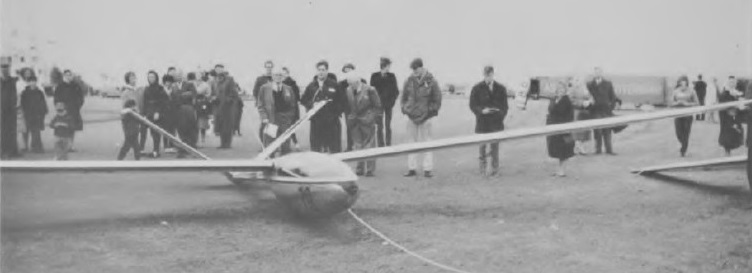
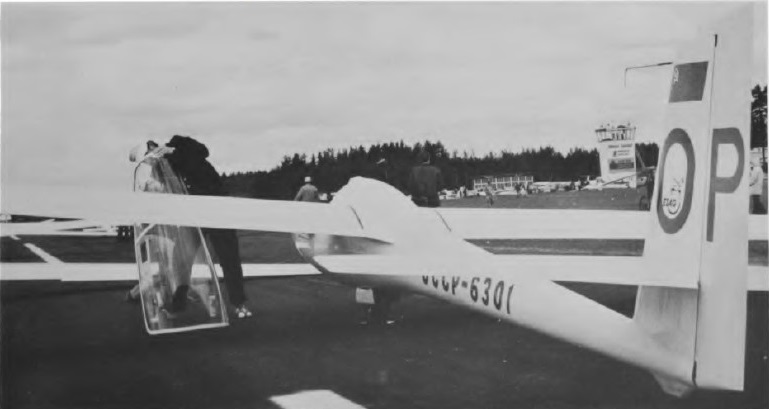
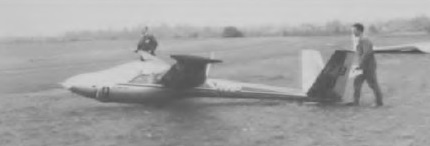
It is believed to have been designed originally by Balys Karvyalis and first flown, under the designation BK-7, in 1972. It had a Wortmann FX-67-K-170 wing section and a retractable monowheel landing gear, with tailskid. The BK-7, which was of glassfibre construction, was subsequently reported to have entered series production and a Polish journal later referred to a ‘BK-7A Lietuva’ with a wing span of 20 m (65 ft 7.5 in), length of 7.27 m (23 ft 10.25 in), weight of 380 kg (837 lb), best glide ratio of 46 and max speed of 210 km/hr (113 kt).

An almost identical aircraft was flown by O. Pasetnik in the Open Class of the June 1976 World Championships in Finland but withdrew from the last two days of the competition because of aileron damage. This aircraft was referred to as the LAK-9 Lietuva and it was reported that the three LAK-9s then built had not, at that time, fully completed flight testing. The LAK-9 is the first Soviet sailplane to compete in the World Championships since 1968.

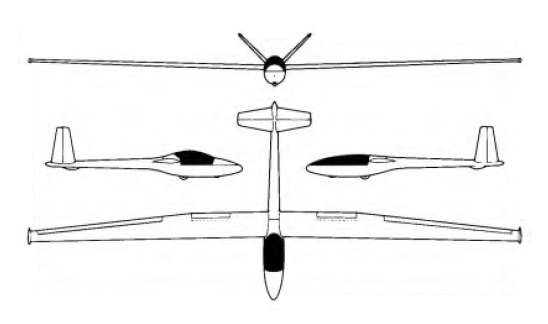
LAK-9 Lietuva
Wing span: 20.02 m / 65 ft 8 in
Length: 7.27 m / 23 ft 10.25 in
Height: 1.53 m / 5 ft 0 in
Wing area: 14.99 sq.m / 161.4 sq ft
Wing section: Wortmann FX-67-K-170
Aspect ratio: 26.8
Empty weight: 380 kg / 838 lb
Max weight 580 kg / 1,278 lb
Water ballast: 100 kg / 220 lb
Max wing loading: 38.69 kg/sq.m / 7.92 lb/sq ft
Max speed: 121 kt / 225 km/h
Stalling speed: 35 kt / 64 km/h
Min sinking speed: 0.51 m/sec / 1.67 ft/sec at 40 kt / 74 km/h
Max rough air speed: 113 kt / 210 km/h
Best glide ratio: 48 at 55.5 kt / 103 km/h
Kazan KAI-14

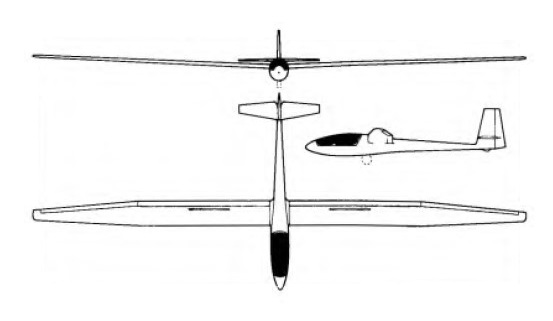
The Kazan Aviation Institute at Kazan designed and produced the KAI-14 high performance Standard Class single seater. Designed by a team headed by M. P.Simonov; of all-metal construction it made its first flight in about 1962, and two KAI-14s were entered in the 1965 World Championships held at South Cerney in England.

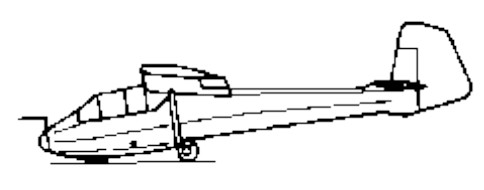
Two versions of the type have been produced, the first being for competition flying with the pilot seated in a reclining position under a long flush-fitting one-piece transparent canopy; this version has a polished metal finish to reduce drag.

The second version, intended for series production, is similar except that the pilot sits upright in a conventional seat under a raised cockpit canopy, and is unpolished. Both versions are otherwise the same, with cantilever shoulder wings with a forward sweep of 2° at the leading edges and compound taper on the trailing edges; the inset ailerons are each in two sections and small trailing edge air brakes are featured. The wings are metal-covered as is the semi-monocoque fuselage, in which the forward section tapers to a slimmer rear half carrying the all-metal cantilever ‘butterfly’-type V-tail. The landing gear consists of a non-retractable monowheel faired into the bottom of the fuselage, with a brake that is linked to the air brakes, and a tail bumper.

KAI-14
Span: 49 ft 2.5 in / 15.0 m
Length: 19 ft 1 in / 5.82 m
Wing area: 107.7 sq.ft / 10.0 sq.m
Aspect ratio: 22.5
Max weight: 573 lb / 260 kg
Water ballast: None
Max wing loading: 26.0 kg/sq.m / 5.32 lb/sq ft
Max permissible diving speed: 155 mph / 135 kt / 250 km/h
Max aero-tow speed: 87 mph
Landing speed: 43.5 kt / 80 km/h
Min sinking speed: 1.90 ft/sec / 0.58 m/sec at 56 mph / 48.5 kt / 90 km/h

Kazan Aviation Institute

Russia
Founded 1939, and since 1951 has manufactured Mil helicopters.
The Kazan Aviation Institute at Kazan on the River Volga, nearly 500 miles east of Moscow, has designed and produced some of Russia’s most notable sailplanes, especially the very advanced KAI-19 high performance all-metal single-seater which, in two-seater form, broke the world’s 300km closed circuit speed record on 1 August 1964, and the KAI-17 training glider.
Own designs are Ansat twin-turboshaft light multipurpose helicopter (first flown 1998) for up to 10 persons, and Aktay three-seat piston helicopter (to fly about year 2000).

Kawasaki KAL-2

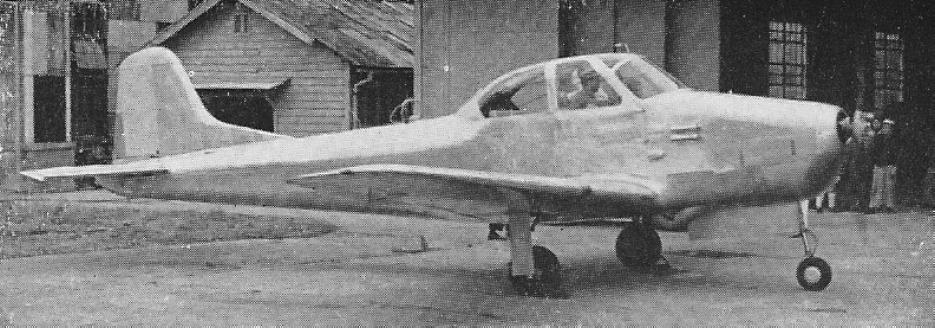
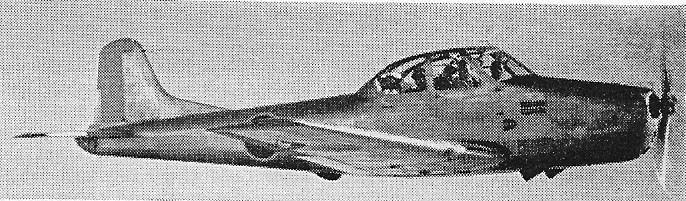
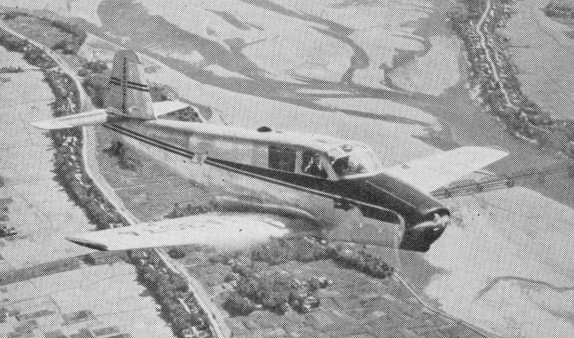
The Kawasaki KAL-2, deigned and built by the Kawasaki-Gifu division of the Kawasaki Aircraft Company, was produced in 1955 as a development of the KAL-1 ns KAT-1.

Of all-metal construction, the KAL-2 seats four.

KAL-2 no.2

An initial order for two was placed by the Japanese Air Self-Defence Force.

Engine: Lycoming GO-435-C2B, 260 hp
Span: 39 ft 0.5 in
Wing area: 206.66 sq.ft
Length: 28 ft 8.5 in
Height: 9 ft 6 in
Empty weight: 2315 lb
Loaded weight: 3527 lb
Max speed: 183 mph at 7742 ft
Cruise: 112 mph
Range: 994 mi
Seats: 4

Kawasaki C-1

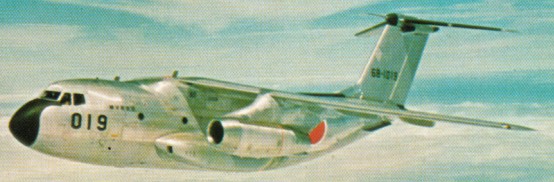
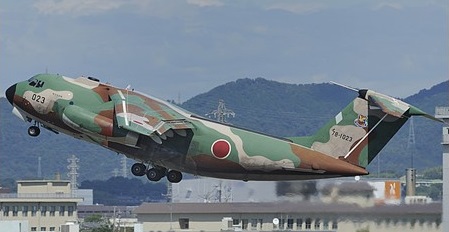
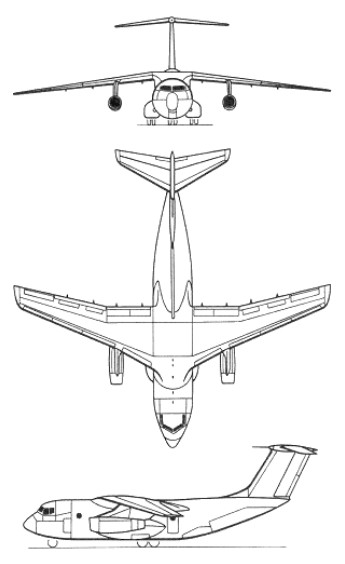
Designed to replace the JASDF’s Curtiss C 46 Commando transport aircraft, the Kawasaki C 1 first flew on 12 November 1970 and was delivered from December 1974.

Kawasaki C-1 Article

Power is provided by two 14,500 lb thrust Mitsubishi produced Pratt & Whitney JT8 M 9 turbofan engines and it can carry 60 troops, 45 paratroops, 36 stretchers, or 26,235 lb (11,900 kg) of freight (including vehicles).

Inordinately expensive because of Japan’s relative inexperience in creating this type of airplane, by law the C 1 could not be sold abroad. Production ceased after 31 were built for the Japanese military, by a consortium of companies including Mitsubishi Heavy Industries, Kawasaki Heavy Indus¬tries, Fuji Heavy Industries, Nihon, Shin Meiwa and Sumitomo Precision practically all the companies involved in Japanese aircraft production.

By 1981 the 31 production C-1s had been delivered, including several long-range aircraft with an additional 4,732 litre wing centre-section fuel tank.

Kawasaki has modified a single C-lA twin-jet tactical transport for use in the ECM training role. Serialled 78 1021, the aircraft was fitted with seven radomes. Featuring nose and tail radomes housing elements of the TRDI/Mitsubishi Electrics XJ/ALQ-5 ECM system, the C-1ECM completed trials with the JASDF’s Air Proving Wing in 1986, and is now in service with the Electronic Warfare Training Unit.

Variation:
Science & Technology Agency Asuka

C-1
Engines: 2 x P+W JT80D-M-9A, 64.5kN
Wingspan: 30.6 m / 100 ft 5 in
Length: 29.0 m / 95 ft 2 in
Height: 10.0 m / 32 ft 10 in
Wing area: 120.5 sq.m / 1297.05 sq ft
Max take-off weight: 38600 kg / 85099 lb
Empty weight: 23700 kg / 52250 lb
Max. speed: 815 km/h / 506 mph
Cruise speed: 705 km/h / 438 mph
Ceiling: 12200 m / 40050 ft
Range w/max.fuel: 3300 km / 2051 miles
Range w/max.payload: 1300 km / 808 miles
Crew: 5
Passengers: 60

C-1ECM
Engines: 2 x Pratt & Whitney JT8D-M-9 turbofan, 14,500 lb (6575 kgp) thrust.

Kawasaki KH-4 / KHR-1

At the beginning of the sixties, Kawasaki began to develop a version of the three-seat Bell Model 47G-3B, with a stretched cabin to make room for two rows of seats.
Powered by a 201kW Lycoming TVO-435-B1A air-cooled engine, the first KH-4 flew in August 1962 and received Japanese type approval on 9 November of that year.
Apart from changes to the cabin to accommodate extra passenger, and new supercharged engine, the KH-4 had a new instrument layout, modified control system and larger fuel capacity.
The engine retained was a 270hp Lycoming TVO-435-B1A or -D1A.
By the beginning of 1972, 193 of the Kawasaki KH-4 had been built, 19 of which were assigned to the Japanese Army, 23 to the Thai armed forces, four to the South Korean armed forces and one to the Philippines.
A total of 338 built for civil and military customers between 1960 and 1975.
An experimental variant of the KH-4 was the KHR-1 which was modified to test a three-blade rigid rotor system. This aircraft flew for the first time on 26 April, 1968.

KH-4
Rotor diameter: 11.32m
Length overall: 13.30m
Length of fuselage: 9.93m
Height overall: 2.84m
Empty weight: 816kg
Maximum take-off weight weight: 1293kg
Maximum level speed: 169km/h
Cruising speed: 140km/h
Service ceiling: 5640m
Hover ceiling in ground effect: 5485m
Maximum range: 400km

Kawasaki KAL-1

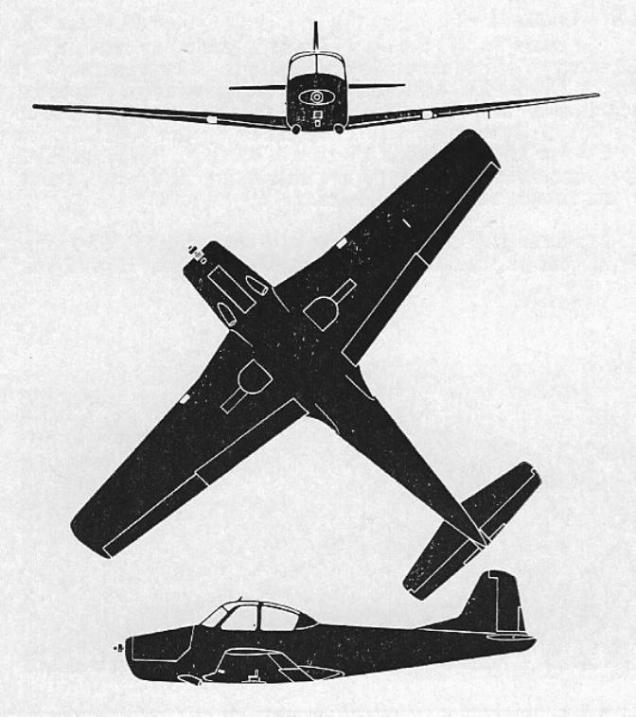
The Kawasaki KAL-1 was the first post-war all-metal aircraft of Japanese design. Flown for the first time on 21 July 1953, the KAL-1 was built by the Kawasaki Gifu works and powered by a 260 hp Lycoming GO-435-C-2 engine. Two prototypes were completed.

Designed as a four-seat liaison aircraft for the Japanese Air Self-Defence Force, the KAT-1 tandem two-seat basic trainer employs a similar wing and tail assembly.

Engine: 260 hp Lycoming GO-435-C-2
Wing span: 34 ft 1.5 in
Wing area: 196 sq.ft
Length: 29 ft 6 in
Height: 8 ft 2.5 in
Empty weight: 2022 lb
Loaded weight: 3230 lb
Max speed: 174 mph
Cruise speed: 167.5 mph
Service ceiling: 19,700 ft
Max range: 1000 mi

Kawasaki

Kawasaki aircraft was formed in 1918 as subsidiary of the heavy-industrial complex Kawasaki Jukogyo to build aircraft and aero engines. Based at Kobe, in the early 1930s built Salmson biplanes and engines as well as own designs. Kawasaki had a Dornier license for all-metal construction, and in December 1924 the first Kawasaki-Dornier Wal flying-boat made a notable flight with a German pilot. Thereafter made aircraft mainly for the Japanese Army.
A designer of Kawasaki landplanes was German Dr. Richard Vogt, with the company from 1923 unitl 1933. Vogt designs were Type 88 reconnaissance biplane (1927), Type 92 single-seat biplane fighter (1930), and Ki-3 single-engined biplane bomber. Japanese designed were Ki-10 single-seat fighter biplane (1935), Ki-32 single-engined monoplane bomber (1937), Ki-45 fast and widely used twin-engined fighter (1939), Ki-48 twin-engined light bomber (1939), Ki-61 single-seat fighter (liquid-cooled engine and showing German influence (1941), Ki-100 radial-engined development (1944), and Ki-102 twin-engined fighter (1944).
After the war, in March 1954, a new company of the same name was founded by the merger of Kabushiki Kaisha Kawasaki Gifu Seisakusho and Kawasaki Kikai Kogyo Kabushiki Kaisha. The Kawasaki KAL-1 (July 1953) was the first postwar all-metal aircraft of Japanese design. Early production covered 210 Lockheed T-33 jet trainers, 48 Lockheed P-2H Neptunes and 239 Bell Model 47 helicopters, all built under license from the USA. Also made major components for the NAMC YS-11 turboprop transport.
1962:
38 Akashi-machi,
Ikuta-ku,
Kobe

The company reorganized in April 1969 as Kawasaki Jukogyo Kabushiki Kaisha. In November 1970 flew the C-1 twin turbofan military transport, production aircraft later going to the JASDF. Went on to complete 82 P-2Js (derived from Neptune), 211 KH-4 helicopters (derived from the Model 47), 160 KV107 helicopters (derived from the Boeing Vertol 107 Model II), and many Hughes/McDonnell Douglas Model 500D and OH-6DA helicopters (production continued through 1998). Produced the Lockheed Martin P-3C Orion for the JMSDF; 101st and final aircraft delivered in 1997, when four EP-3/UP-3D electronic intelligence/training variants remained to be delivered up to the year 2000. Kawasaki produced 16 CH-47J examples of Boeing Chinook for the JASDF and compled delivery of 52 CH-47JAs to the JGSDF. It was s prime contractor on the OH-1 Kogata Kansoku armed scout, observation and attack helicopter (first flown August 1996), and had almost completed manufacture of some 200 T-4 intermediate jet trainers and liaison aircraft for the JASDF by 1998. Also constructs components and assemblies for the F-15J and various Airbus and Boeing airliners. Kawasaki teamed with Eurocopter on the BK117 helicopter, and has engine and space programs.

Kawasaki Heavy Industries, Limited is an international corporation and has headquarters in both Chūō-ku, Kobe and Minato, Tokyo. As of 31 March 2013 Kawasaki had 34,010 employees, total assets of ¥ 1.3 trillion at March 31, 2012, and a nett income ¥ 23.3 billion at March 31, 2012.

Kawanishi / ShinMaywa / Shin Meiwa

In July 1924 a Kawanishi biplane seaplane made a round- Japan flight in nine days. The company formed as Kawanishi Kokuki Kogyo Kabushiki Kaisha in November 1928, taking over the factory and windtunnel (at Kobe) of Kawanishi Machine Works. Held Short Bros license and was Rolls-Royce agent. At the time of formation was supplying aircraft, components, and accessories to Japanese Navy.

Early types included a single-seat biplane fighter and a two-seat long-range high-wing monoplane. At the end of 1930 moved to new works at Narao. In February 1933 flew new three-seat reconnaissance floatplane (E7K) adopted by Japanese Naval Service. Short and Rolls-Royce connections manifested in Navy type 90-2 (K.F.1) flying boat, built in England, assembled in Japan. Built from 1936 a highly successful long-range maritime reconnaissance/ bomber/transport flying-boat, the strut-braced H6K. Subsequent H8K had deep hull and cantilever wing. N1K single-seat fighter monoplane of 1942 originated as floatplane but was developed into outstanding landplane. Projects included suicide aircraft based on German V-1.

ShinMaywa (or Shin Meiwa) became the title of the Kawanishi company after reestablishment in October 1949 as overhaul center for Japanese and U.S. aircraft. Also made components for other constructors, developed re-engined de Havilland Heron.
1962:
Shin Meiwa Industry Co Ltd
125 Agenaruo-Naruocho,
Nishinomiya City

Shin Meiwa’s technical adviser, Dr Shizuo Kikuhara, designed the Type 97 and Type 2 multi-engined flying-boats used by the former Imperial Japanese Navy.
Under his leadership, the company designedg a medium-range patrol flying-boat for the JMSDF. It is also producedfuselage and tail assemblies of the P2V-7 Neptune for Kawasaki and components of the NAMC YS-11, and was licensed to overhaul DH Gipsy Queen engines.
Much other overhaul work is done for the US and Japanese services.

After contract in January 1966 directed attention especially to new marine aircraft. Rebuilt a Grumman Albatross as a dynamically similar flying model for projected very large STOL ASW flying-boat for Japanese Maritime Self Defense Force. The latter type developed as four-turboprop PS-1, but later also as U.S.-1 amphibious search-and-rescue aircraft. PS-1 flew October 1967; U.S.- 1 October 1974. First prototype PS-1 converted later as waterbombing test vehicle. Basic type remarkable for low take-off and landing speeds, achieved by boundary-layer control system and large flaps for slipstream deflection. Company also carries out major subcontract work for advanced Mitsubishi and Kawasaki aircraft, and manufactures components for Boeing 717/ 757/ 767/ 777 and Gulfstream bizjets.