Williams Aircraft Design W-17 Stinger

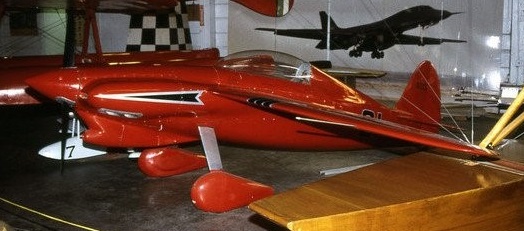
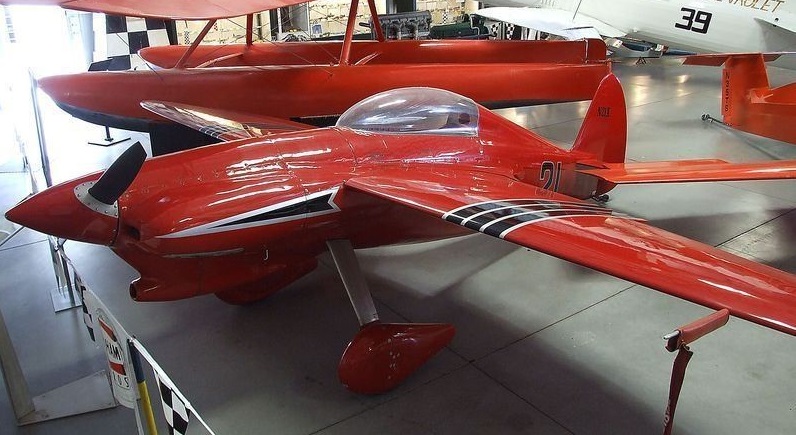
The Williams W-17 Stinger is an American homebuilt racing aircraft that was designed for Formula One Air Racing by Art Williams and produced by his company, Williams Aircraft Design of Northridge, California, introduced in 1971. The aircraft was at one time available in the form of plans for amateur construction, but only one was ever constructed.

The W-17 Stinger features a cantilever mid-wing, a single-seat enclosed cockpit under a bubble canopy, fixed conventional landing gear and a single engine in tractor configuration.

The aircraft fuselage is made from sheet aluminum in a monocoque structure. The wings are all-wood, with laminated spruce spars. Its 19.0 ft (5.8 m) span wing employs a NACA 64008 airfoil at the wing root, transitioning to a NACA 64010 at the wing tip. As the Formula One rules require, the engine is a 100 hp (75 kW) Continental O-200A powerplant.

The W-17 has an empty weight of 585 lb (265 kg) and a gross weight of 835 lb (379 kg), giving a useful load of 250 lb (110 kg). With full fuel of 8 U.S. gallons (30 L; 6.7 imp gal) the payload is 202 lb (92 kg).

Only one example of the W-17 Stinger was registered in the United States with the Federal Aviation Administration in 1971 (N21X). The sole example was raced at the Reno Air Races by pilot John P. Jones in 1973 and captured second place. It went on display at the Planes of Fame Air Museum.

W-17 Stinger
Engine: 1 × Continental O-200A, 100 hp (75 kW)
Length: 15 ft 10 in (4.83 m)
Wingspan: 19 ft 0 in (5.79 m)
Airfoil: Root: NACA 64008, wing tip: NACA 64010
Empty weight: 585 lb (265 kg)
Gross weight: 835 lb (379 kg)
Fuel capacity: 8 U.S. gallons (30 L; 6.7 imp gal)
Propellers: 2-bladed metal
Maximum speed: 260 mph (418 km/h; 226 kn)
Stall speed: 65 mph (56 kn; 105 km/h)
Crew: one
Williams Aircraft Design Co

The Williams Aircraft Design Company was an American aircraft manufacturer based in Northridge, California and run by Art Williams. The company specialized in the design of racing aircraft.

Several of Williams products were the result of collaboration with other designers. For instance the Williams-Cangie WC-1 Sundancer was designed with Carl Cangie and won first place at the 1973 Reno Air Races Formula One Class.

The Williams W-17 Stinger design captured second place at the 1973 Reno Air Races in the biplane class.

Wigal Autogyro

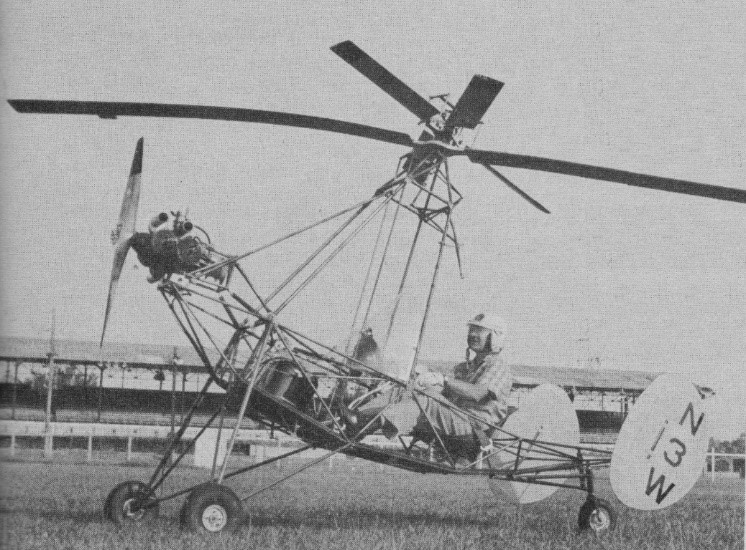
In 1964 Fritz Wigal built an experimental open-frame, single place, autogyro, N3W. The engine could be pivoted to direct prop blast against a 4-bladed stub rotor located above the main rotor.

Engine: McCulloch O-100, 72hp
Rotor diameter: 20’0″
Empty weight: 320 lb
Gross weight: 570 lb
Useful load: 250 lb
Max speed: 75 mph
Cruise speed: 60 mph
Min speed: 15 mph
Take-off run: 100 ft
Seats: 1

Widerues C.5 Polar / Honningstad Polar C5

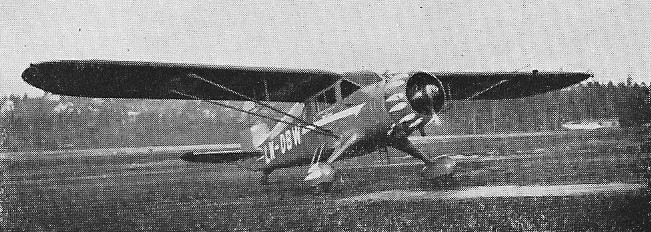
The Polar light utility monoplane built by Wideröe’s Flyveselskap og Polarfly A.S. in 1948, was designed by Birger Hönningstad to a specification prepared by the company. This called for an aircraft suitable for carrying a pilot and five passengers or cargo, capable of operating from wheels, floats or skis. Only one example of the Polar was built.

The Polar is of mixed construction, the plywood and fabric covered wing having two spruce spars and spruce ribs, and the fuselage has a welded steel-tube framework with a spruce and duralumin superstructure covered by light alloy panels forward and fabric aft.

Only one C.5 Polar was built, which was employed by the Wideröe company.

Engine: 1 x Wright R-769-E2, 350 hp
Span: 45 ft 0 in
Length: 29 ft 6 in
Height: 8 ft 4 in
Wing area: 269.09 sq.ft
Empty weight: 2550 lb
Loaded weight: 4130 lb
Max speed: 150 mph
Cruise speed: 130 mph
ROC: 800 fpm
Range: 625 miles

Wickham Model E Sunbird II

The Wickham Model E Sunbird II is a single seat homebuilt aircraft designed by engineer James M. Wickham.

The Sunbird II is a single place low wing aircraft made primarily of wood. It differs from the Model C by employing tricycle landing gear, a larger wing, and power from a larger 1835cc VW engine.

The Wickham E was the fifth of six designs by Wickham, which first flew on August 8, 1979 at Arlington, WA. The aircraft was lost following a spin test where the aircraft did not recover on July 20, 1980.

Only the one was ever built.

Engine: VW, 1835cc
Propeller: 2-bladed 54/40
Wingspan: 26 ft 8 in / 8.13 m
Wing area: 82 sq ft / 7.6 m2
Aspect ratio: 8.7
Length: 18 ft / 5.5 m
Height: 7 ft / 2.1 m
Maximum speed: 104 kn / 193 km/h / 120 mph
Seats: 1