The 1950 Sky Mouse N6840 midwing midget racer was built by James Wilson powered by an 85hp Continental C-85.
Post WW2
Wilson Li’l Rebel
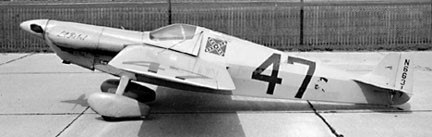
The 1948 Li’l Rebel N66317 midget racer was built by James Wilson from salvage of a Pack C racer. Powered by an 85hp Continental C-85, the single seater was piloted by M L LeFevers and Jimmy Wilson.
Wilson Baby Cyclone
The 1959 Baby Cyclone N121W was a single place cabin midwing midget racer built by James Wilson. It was not raced until 1965 at Reno where it qualified ninth at 162 mph.
Wilson, James
Los Angeles CA.
USA
Aircraft builder circa 1948-59
Wills Wings Swallowtail / Super Swallowtail
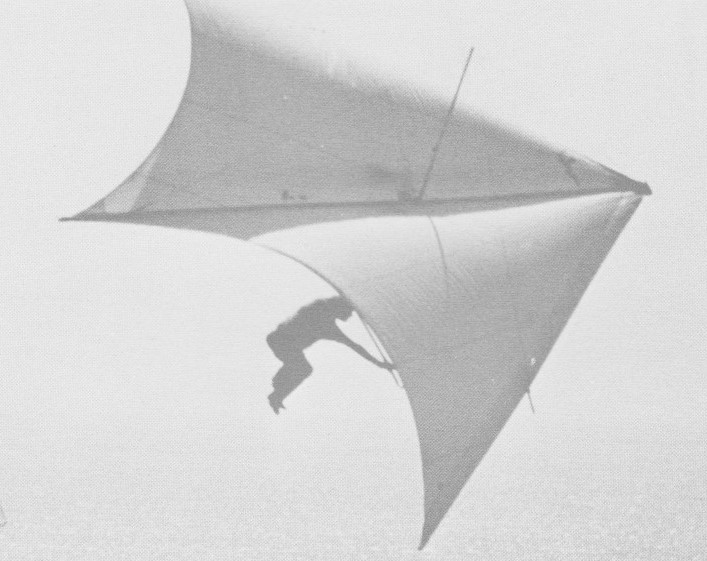
The Swallowtail was designed to be a high performance glider with the parachuting abilities of a standard. It features battens at the wingtips for chord extension. Seated or prone cable set-ups came as standard equipment. Quick release turnbuckle allows the kingpost to be dropped without undoing the turnbuckle. A wide control bar is fitted.
All tubing is 6061-T6 anodised aluminium. The main frame is 1.5in x 0.049, sleeving is 1 5/8in x 0.058 and the control bar legs and kingpost are 1ib x 0.065. Bushings are 2024-T3 aluminium tubing.
Flying wires are 3/32in 7 x 7 cable, and kingpost and wing wires are 5/64in 7 x 7 cable; all stainless steel.
All nuts and bolts at AN grade aircraft quality. Kingpost tangs, noseplates and wingposts are specially made from aluminium.
The sail is Howe and Baibridge 3.8oz or 4.5oz stabilised dacron, doube zig-zag stitched with non-rot V-46 polyester thread. It was available in 10 colours.
Seated or prone harness were optional.
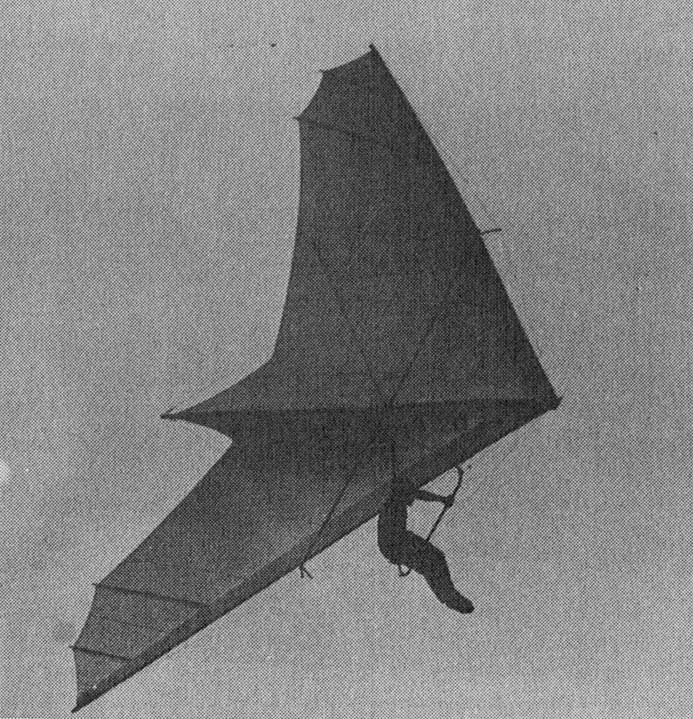
The 1975 Super Swallowtail is a swept wing, high aspect ratio, high performance Rogallo. It has a cambered S-keel, very low billow, and anhedral in the crossbar. The wing tips are roached and have fibreglass foam tapered battens to accomplish the chord extension without any of the problems of a rigid tip. Double wingposts curve the leading edges. They, along with the light billow and sail roach, maintain perfect washout control in the SST. It is easy to pull out of a dive, and can be flown hands off for minutes at a time, even in turbulent air, returning to straight and level flight.
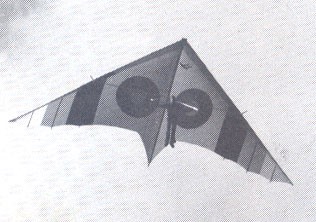
Seated and prone cable set-ups came as standard on the Super Swallowtail. A quick release turnbuckle allows the kingpost to be dropped without undoing. All tubing is 6061-T6 anodised aluminium. The main frame is 1.5in x 0.049, sleeving is 1 5/8in x 0.058 and the control bar legs and kingpost are 1in x 0.065. Bushings are 2024-T3 aluminium tubing.
The flying wires are 3/32in 7×7 cable, and kingpost and wingpost wires are 5/642 7×7, all stainless steel. All nuts and bolts are AN grade aircraft quality. Kingpost tangs, noseplate and wingposts are specially made from aluminium. The sail is made from Howe & Bainbridge 3.8-4.5o stabilised dacron, double zig-zag stitched with non-rot V-46 polyester thread, in ten colour choices.
The Super Swallowtail 100B was reported as being very stable. According to the manufacturer it is easy to pull into a dive, yet hard to keep it there. It can be flown hands-off for minutes at a time, even in turbulent air, returning to straight and level flight on its own after a gust upsets its glide path. This may well be attributed to a large extent to the greater sweepback angle of the quarter chord line.
Take down / set up times are under 10 minutes and the Super Swallowtail may be transported like a standard.
Swallowtail 19 x 19
Leading edge: 19 ft
Keel length: 19 ft
Wing span: 26.9 ft
Wing area: 190 sq,ft
Aspect ratio: 3.81
Nose angle: 90˚
Sail billow: 3.1˚
Weight: 42 lb
Pilot weight: 100-150 lb
Takeoff speed: 10 mph
Stall speed: 16 mph
Max speed: 45 mph
Best glide ratio (L/D): 6-1
Best L/D speed: 31 mph
Min sink: 396 fpm
Swallowtail 20 x 20
Leading edge: 20 ft
Keel length: 20 ft
Wing span: 28.2 ft
Wing area: 227 sq,ft
Aspect ratio: 3.52
Nose angle: 90˚
Sail billow: 3.1˚
Weight: 43 lb
Pilot weight: 140-195 lb
speed: 10 mph
Stall speed: 16 mph
Max speed: 45 mph
Best glide ratio (L/D): 6-1
Best L/D speed: 31 mph
Min sink: 396 fpm
Swallowtail 21 x 20
Leading edge: 21 ft
Keel length: 20 ft
Wing span: 29.8 ft
Wing area: 240 sq,ft
Aspect ratio: 3.7
Nose angle: 90˚
Sail billow: 3.1˚
Weight: 44 lb
Pilot weight: 185-240 lb
speed: 10 mph
Stall speed: 16 mph
Max speed: 45 mph
Best glide ratio (L/D): 6-1
Best L/D speed: 31 mph
Min sink: 396 fpm
Swallowtail 22 x 20
Leading edge: 22 ft
Keel length: 20 ft
Wing span: 31.1 ft
Wing area: 260 sq,ft
Aspect ratio: 3.72
Nose angle: 90˚
Sail billow: 3.1˚
Weight: 45 lb
Pilot weight: 230-280 lb
Takeoff speed: 10 mph
Stall speed: 16 mph
Max speed: 45 mph
Best glide ratio (L/D): 6-1
Best L/D speed: 31 mph
Min sink: 396 fpm
Super Swallowtail 100M
Leading edge: 20 ft
Keel length: 15 ft
Wing span: 31.1 ft
Wing area: 165 sq,ft
Aspect ratio: 5.87
Nose angle: 100.5˚
Sail billow: 1.9˚
Weight: 42 lb
Pilot weight: 100-145 lb
Takeoff speed: 12 mph
Stall speed: 14 mph
Max speed: 45 mph
Best glide ratio (L/D): 8-1
Best L/D speed: 22 mph
Min sink: 220 fpm
Super Swallowtail 100C
Leading edge: 21 ft
Keel length: 15 ft
Wing span: 32.6 ft
Wing area: 182 sq,ft
Aspect ratio: 5.85
Nose angle: 100.7˚
Sail billow: 1.8˚
Weight: 43 lb
Pilot weight: 120-160 lb
Takeoff speed: 12 mph
Stall speed: 14 mph
Max speed: 45 mph
Best glide ratio (L/D): 8-1
Best L/D speed: 22 mph
Min sink: 220 fpm
Super Swallowtail 90
Leading edge: 22 ft
Keel length: 16 ft
Wing span: 32 ft
Wing area: 189 sq,ft
Aspect ratio: 5.42
Nose angle: 91.1˚
Sail billow: 2.3˚
Weight: 44 lb
Pilot weight: 140-175 lb
Takeoff speed: 12 mph
Stall speed: 14 mph
Max speed: 45 mph
Best glide ratio (L/D): 8-1
Best L/D speed: 22 mph
Min sink: 220 fpm
Super Swallowtail 100B
Leading edge: 22 ft
Keel length: 16 ft
Wing span: 34.7 ft
Wing area: 200 sq,ft
Aspect ratio: 6.0
Nose angle: 101.3˚
Sail billow: 1.5˚
Weight: 44 lb
Pilot weight: 155-200 lb
Takeoff speed: 12 mph
Stall speed: 14 mph
Max speed: 45 mph
Best glide ratio (L/D): 8-1
Best L/D speed: 22 mph
Min sink: 220 fpm
Super Swallowtail 100A
Leading edge: 22 ft
Keel length: 16 ft
Wing span: 34.6 ft
Wing area: 212 sq,ft
Aspect ratio: 5.71
Nose angle: 100.9˚
Sail billow: 1.7˚
Weight: 45 lb
Pilot weight: 190-220 lb
Takeoff speed: 12 mph
Stall speed: 14 mph
Max speed: 45 mph
Best glide ratio (L/D): 8-1
Best L/D speed: 22 mph
Min sink: 220 fpm
Super Swallowtail 100P
Leading edge: 22 ft
Keel length: 16 ft
Wing span: 37 ft
Wing area: 220 sq,ft
Aspect ratio: 6.22
Nose angle: 110˚
Sail billow: 1.5˚
Weight: 50 lb
Pilot weight: 210-250 lb
Takeoff speed: 12 mph
Stall speed: 14 mph
Max speed: 45 mph
Best glide ratio (L/D): 8-1
Best L/D speed: 22 mph
Min sink: 220 fpm
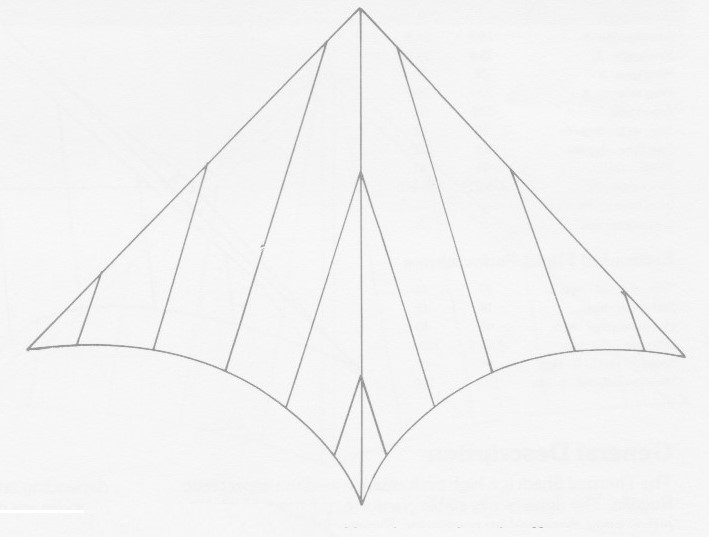
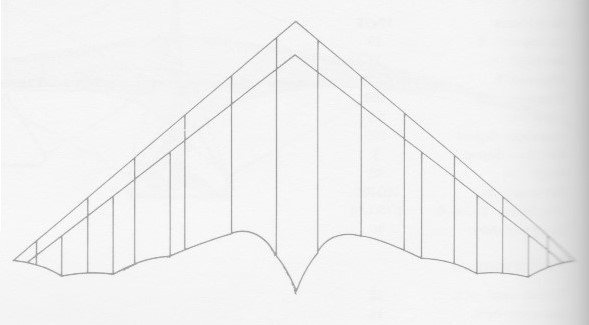
Wills Wings SST
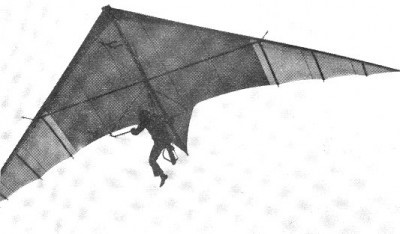
A 1975 hang glider.
SST 100
Wing area: 19.5 m²
Wing span: 10.40 m
Aspect ratio: 5.55
Hang glider weight: 20 kg
Number of battens: 6
Nose angle: 100°
Wills Wings Raven
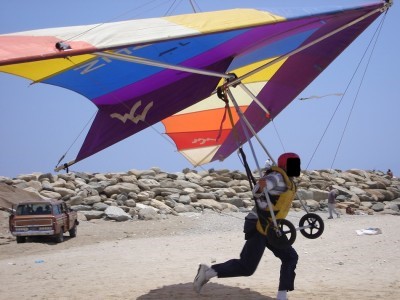
A 1979 single surface hang glider for novice pilots built in three models: 179, 209, and 229. They had a very tall keel pocket, lightly loaded, low profile airfoil.
It had very light handling even near stall. You could slow this thing way down and have exceptional control when scratch soaring next to a mountain. An absolute joy to fly because you could always nail the best parts of a thermal and climb to the best of your ability. It was tail heavy on launch but landed easy.
It had excellent stall recovery, a big floater for most part, not great penetration, could get as high as any doubles, but hang it up when wind over 20. It was a good sturdy single surface, and gained reputation for tandem glider….used flat foam core fiberglass battens with couple aluminum tube tips battens, and one AL tube, neg washout stop, near tips.
Wills Wings Alpha
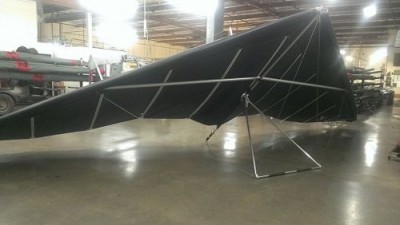
The original 1978 Wills Wing Alpha was for novice pilots.
Wills Wing recycled the model name for the 2014 Alpha.
Williams Skeeter Hawk
In 1959 Robert F Williams built the fully aerobatic Skeeter Hawk N7795B. A single place open cockpit biplane powered by an 85hp Continental. The maximum speed was 150 mph and cruise 130 mph.
Williams, Robert F
Houston TX.
USA
Airplane builder circa 1959.
 All Aero