Wolf W-II Boredom Fighter

Don Wolf, a technical engineer at Fairchild’s Engine Division on many classified military projects and flew many different the past half century, then finally got around to designing a replica of the World War I wood-and-wire fighter types he loved as a kid. Rather than metal, he chose to build the framework of steel fittings of chrome-moly as well as tube structures for cabine, landing gear, etc. Wolf spent a year of spare time detailing Boredom Fighter after running stress analyses. First flying on 30 August 1979, the takeoff roll of 150 is spectacular, as well as its fast climb and excellent economy cruise of 100 mpg burning 3 gph of low-octane fuel.

W-II
Engine: Continental, 65 hp
Wing span: 20 ft
Wing area: 100 sq.ft
Length: 15.7 ft
Height: 6ft
Weight empty: 473 lbs
Gross: 770 lbs
Fuel cap: 15 USG
Speed max: 120 mph
Cruise: 110 mph
Range: 440 sm
Stall: 42 mph
ROC: 1200 fpm
Take-off dist: 150 ft
Landing dist: 350 ft
Service ceiling: 16,000 ft
HP range: 65-75
Seats: 1
Landing gear: tailwheel

Wojcicli Pulse

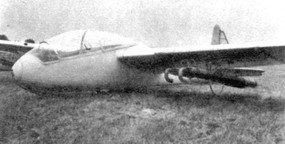
Stanislav Wojcicki designed in 1956 a pulse-jet giving about 10 kg of thrust. Four of these pulso were installed on a flying test bed, a two-seater glider Bocian. They were installed in pairs under the wings. In 1955, S.Wojcicki had also developed more powerful versions of 20, 40 and 70 Kgp.

The Bocian included an accelerometer for measuring horizontal accelerations.

The pulse was tested in two stages: first a 10 kg pulse, that start could only be performed in flight, then a group of four 8 kg pulse, allowing the autonomous takeoff of the Bocian.

These pulses had a consumption of 2 kg / kgf / h, a weight of 6 kg and a length of 2.80 m.

Wittman W.8 Tailwind / W-9L Tailwind / W.10 Tailwind

W.8 Tailwind

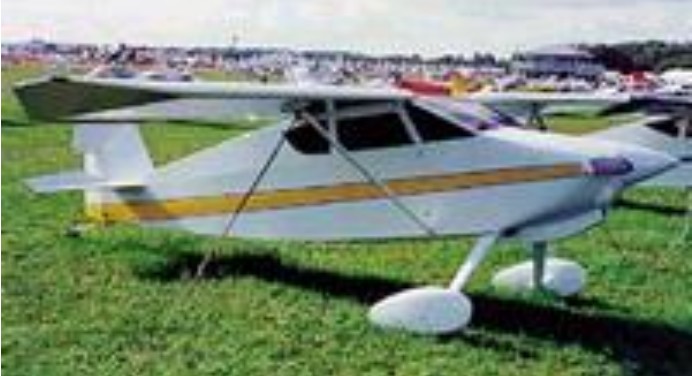
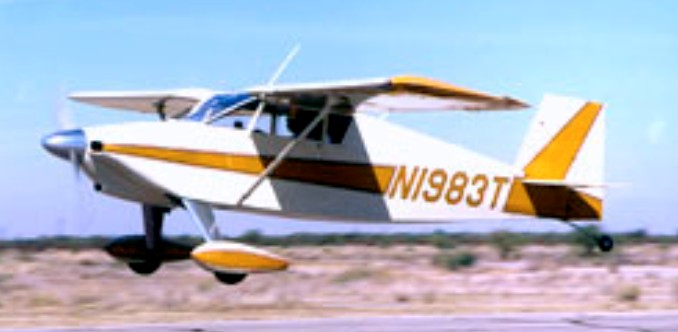
The Tailwind (prototype) W-8C, a two-seat high wing monoplane, built and first flew in 1953. So suc-cessful was this aircraft that plans were made available to amateur builders.

Wittman Tailwind Article

The Tailwind is a side by side, two seat, high wing, strut-braced, cabin monoplane. The wing consists of two separate panels, each incorporating wooden spars and ribs, internal wire bracing and plywood covering. An NACA 4309 aerofoil section is used. The ailerons and flaps are of steel tube construction, and are fabric covered. The fuselage is a chrome molybdenum steel tube structure, and is fabric covered. A cabin door is incor¬porated in each side. The empennage, like the fuselage, is built up of welded steel tube, and is fabric covered. The main undercarriage incorporates round spring steel main legs, and 500 x 5” wheels. The wheel track is 5’ 5”. A 20 Imp. gallon fuel tank is installed in the fuselage behind the firewall.

The W-8L Tailwind, powered by a Lycoming engine, was built in 1954. Revisions have been made to allow the use of the 150-hp Lycoming, 145-hp Continental and the Olds/Buick 215-cu.in. V-8s. The Oldsmobile Tailwind was built in 1974.

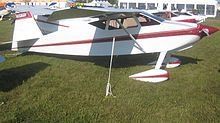
Wittman W-10 Tailwind built by Jim Clement
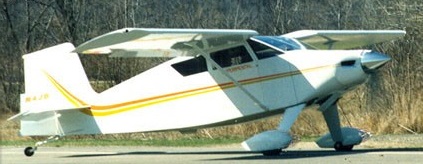
Wittman W-9 N4JB

The W-9L Tailwind, with a tricycle landing gear, was built in 1958. Based on the W-8, the prototype N374 was powered by a 160hp Lycoming O-320-B1A.

In 2009 available as kit or plans from Aircraft Spruce & Specialty Co. Plan Price $180.00.
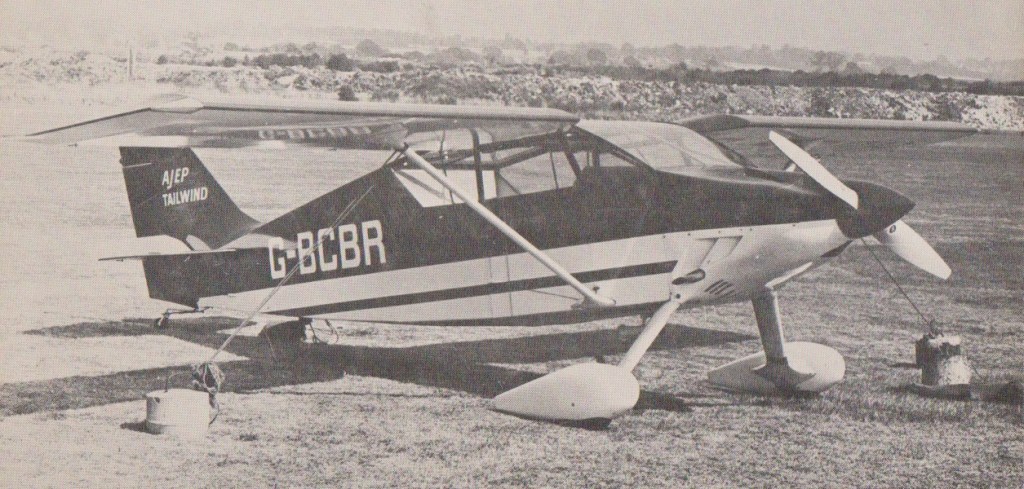
AJEP Developments in the UK offered kits to construct modified version of Whittman Tailwind homebuilt aircraft.

AJEP Tailwind G-BCBR September 1975 at Luton

Aircraft Spruce acquired the rights to the Tailwind in January 1996 and is became the exclusive distributor for plans and materials kits, the W-10 replacing the W-8.

Gallery

Engine: Continental, 100 hp
Gross Wt. 1300 lb
Empty Wt. 700 lb
Fuel capacity 25 USG
Wingspan 22’6’
Length 19’3”
Span: 22’ 6”
Length: 19’ 3”
Wing Area: 90 sq. ft
Empty Weight: 318 kg / 700 lb
Loaded Weight: 590 kg / 1300 lb
Wing Loading: 14.5 lb/sq. ft
VNE: 161 kt / 185 mph / 298 kmh
Max. Speed: 130 kt / 150 mph / 241 kmh
Cruise Speed: 130 mph
Stall Speed: 60 mph
Climb: 900 fpm / 5 m/s
Range: 500 miles
Takeoff run 800 ft
Landing roll 600 ft
Seats: 2

Engine: Lycoming O 290 D2, 135 hp
Wing span: 21 ft. 11 in
Airfoil: NACA 4309
Length: 19 ft 3 in
Height: 5 ft 3 in
Wing area: 82 sq.ft
Wing loading: 17 lb/sq.ft
Seats: 2
Empty weight: 800 lbs
Useful load: 600 lbs
Gross weight: 1,400 lbs
Power loading: 11 lb/hp
Fuel capacity: 26 USG
Baggage capacity: 60 lbs
Rate of climb: 1,200 fpm
VNE: 161 kt / 185 mph / 298 kmh
Max speed: 170 mph
Cruise speed (75% power): 160 mph
Range (at max cruise, no res): 500 sm
Stall speed (flaps down): 65 mph

Engine: Lycoming O-235, 115 hp
Wingspan: 22 ft 6 in
Length: 19 ft 3 in
Height: 5 ft 6 in
Wing area: 90 sq.ft
MAUW: 1400 lb
Empty weight: 318 kg / 700 lb
Fuel capacity; 25 USG
Baggage capacity: 65 lb
VNE: 161 kt / 185 mph / 298 kmh
Max speed: 160 mph
Cruise: 130 kt / 150 mph / 241 kmh
Stall: 70 mph
ROC SL: 1000 fpm
Take off run: 800 ft / 244 m
Landing roll: 600 ft
Ceiling: 17,000 ft
Range: 600 sm

W-9L Tailwind
Engine: Lycoming O-320-B1A, 160hp
Wingspan: 20’0″
Length: 19’3″
Useful load: 650 lb
Max speed: 198 mph
Cruise speed: 180 mph
Stall: 55 mph
Range: 600-700 sm
Undercarriage: tricycle
Seats: 2

W.10 Tailwind
Engine: Cont. 85, 90, 100 or 145 HP Lyc. 108-160 HP
Length: 19′ 6″
Wing Span: 24′
Wing Area: 90 Sq. Ft.
Cruising Speed (Vc): 150 to 190 MPH

W10 Tailwind
Top speed: 200 mph
Cruise: 180 mph
Range: 600 sm
Rate of climb: 1200 fpm
Takeoff dist: 750 ft
Landing dist: 650 ft
Service ceiling: 20,000 ft
Engine: continental O-300, 145 hp
Fuel capacity: 35 USG
Empty weight: 876 lb
Gross weight: 1425 lb
Height: 5.5 ft
Length: 19.6 ft
Wing span: 24 ft
Wing area: 92 sq.ft
Seats: 2
Landing gear: tailwheel

W-10 Tailwind
Engine: 150hp Lycoming O-320 or 145hp Continental O-300 or 130-135hp Oldsmobile F85 or Buick V-8
Max speed: 210 mph
Cruise speed: 180 mph
Stall: 40-43 mph
Range: 466 sm
Seats: 2
Undercarriage: Tricycle

Wittman Witt’s Vee

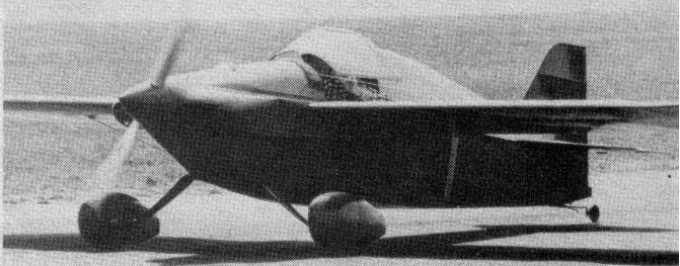
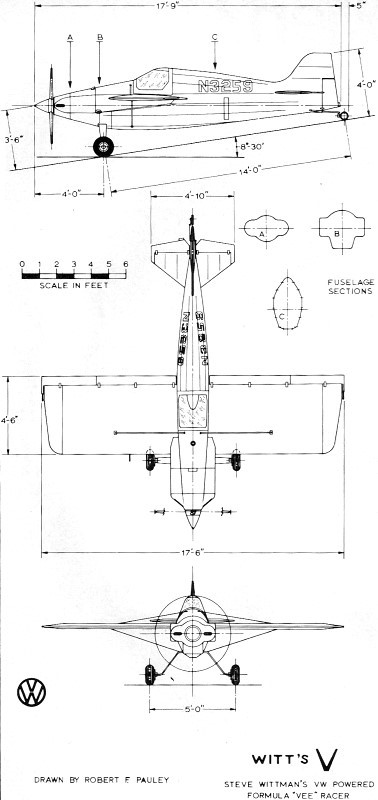
This was a single-seat mid-wing monoplane powered by a 96 cu.in. converted Volkswagen engine, for Formula V air racing. N3259 was built in 1970 and raced 1971-1989. Wittman has had it up to 170-mph.

Steve sold blueprints for this design and about 10 have been built. Aircraft Spruce & Specialty was planning to put the Witt’s V blueprints back on the market.

Engine: VW 1600cc, 60-65hp
Wingspan 16’8”
Length 18’2”
Gross Wt. 700 lb
Empty Wt 430 lb
Fuel capacity 10 USG
Top speed 170 mph
Cruise 150 mph
Stall 48 mph
Climb rate 1000 fpm
Takeoff run 800 ft
Range 400 sm
Seats: 1

Wittman

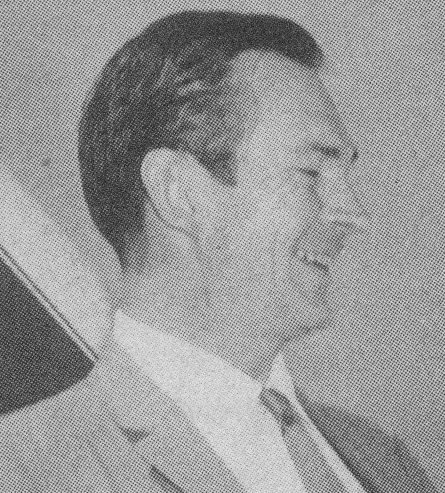
Sylvester Joseph “Steve” Wittman was born April 5, 1904, at Byron, Wisconsin, and attended Fond du Lac High School.

Wittman gained his pilot’s certificate in 1924 (signed by Orville Wright) in a Standard J-1 and built his first aircraft, the Harley powered “Hardly Abelson” later that same year.

From 1925 to 1927, he had his own flying service, giving joyrides and during this time also became a demonstration and test pilot for the The Pheasant Aircraft Company and Dayton Aircraft Company, flying the Pheasant H-10 in multiple events. He also began his air-racing career, designing, building, and piloting his own aircraft, including Chief Oshkosh in 1931 and Bonzo in 1934. Wittman’s first race in his first aircraft design was in “Bonzo” in the 1935 Thompson Trophy race, where he placed second.

In 1937, piloting his second homebuilt, “Chief Oshkosh”, Wittman placed second in the Greve Trophy Race. Wittman flew “Bonzo” in the Thompson Trophy race, and he led for the first 18 laps of the 20 lap race, at an average speed of over 275 mph (442.57 km/h). Suddenly his engine began to run rough, and Wittman was forced to throttle back to remain in the race, finishing in 5th place. In 1938, he was awarded the Louis Blériot medal by the Fédération Aéronautique Internationale (FAI).

Possibly the Tailwind W-8 had its real beginnings in 1937 as the “Buttercup,” a ship that featured many innovations pioneered by Wittman on his racing aircraft, such as spring steel gear and welded steel frame. A high wing design built to outperform the Cubs, Chiefs, T-Crafts, and Luscombes of the day. The Tailwind bore a striking resemblance to the ’37 Buttercup except for Buttercup’s obvious outward differing features, like the two lift struts and wire braced tail feathers. But the W-5 and W-8 are sister ships, or at the very least, cousins. (At last report, the W-5 is still airworthy.) Another cousin is the Wittman Big-X, the four-place, Franklin-powered machine based on the Buttercup design. The Big-X flew for the first time in 1945 and was another Wittman winner. The Big-X and the Tailwind have all the same things going for them: speed, efficiency and ease of handling. It has recently been restored and is going strong.

Steve’s spring steel landing gear used on the pre-World War II “Bonzo” racer was the last word in simplicity and low drag, ail the while remaining strong and flexible. The Wittman landing gear appeared on all postwar Cessnas another plus for Yankee engineering.

Wittman’s “Buster” racer of the late ’40s was typical of the small postwar racers that were hitting 240 mph with little 85-hp engines. Steve reasoned that you could scale up a racer by widening the cockpit, move the wing topside and only lose about 75 mph in the process. The result was a simple, flat-sided cabin ship whose fuselage resembled an airfoil; it had small, wellbalanced control surfaces, and the only thing sticking out in the wind was the paint job. Steve liked his two-placer that could hit 150 mph cruise so much that he brought out the Tailwind in the early ’50s – not as a projected prototype for-selling plans, but as a peron’al airplane to carry two people comfortably with a Continental C-85 up front. It worked.

During World War II, his Wittman Flying Service was part of the Civilian Pilot Training Program, training pilots for the Army Air Corps.

After the war, Wittman finished eighth in the 1946 Thompson Trophy race with a clipped wing Bell P-63 Kingcobra fighter. In 1947, Bill Brennand won the inaugural Goodyear class race at the National Air Races piloting Wittman’s ‘Buster’. ‘Buster’ was a rebuild of the pre-war “Chief Oshkosh”, went on to win many more Goodyear/Continental Trophy races, and was retired after the 1954 Danville, New York air races. It is now on display at the National Air and Space Museum in Washington, D.C.

Wittman built an entirely new ‘Bonzo’ for the 1948 National Air Races, and flying it himself, finished third. Wittman raced ‘Bonzo’ through the 1950s and 1960s, including the first few Reno National Championship air races, before retiring from Formula One competition in 1973. ‘Bonzo’ is now displayed next to Wittman’s prewar ‘Bonzo’ in the EAA AirVenture Museum along with several other Wittman airplanes.

Wittman was manager of the Oshkosh, Wisconsin airport from 1931 to 1969 – which is now named after him (Wittman Regional Airport). Wittman became involved in the newly formed Experimental Aircraft Association in 1953 and was instrumental in bringing the EAA’s annual fly-in to the Oshkosh Airport in 1970.

He designed and built the Wittman V-Witt to compete in the new Formula V Air Racing class. He competed in races with that aircraft until 1979. Winners of the Formula V National Championship are presented with the Steve Wittman Trophy.

Wittman remained active in aviation his entire life. For Wittman’s 90th birthday a celebration, Wittman demonstrated aerobatic maneuvers in his V-Witt and Oldsmobile powered Tailwind. He also used “Buttercup” to give Young Eagles flights. Letters of appreciation were given by President Bill Clinton and Wisconsin Governor Tommy Thompson.

Steve married Dorthy Rady in 1941. He taught her to fly and she accompanied him to most of his races. Dorthy died in 1991 and Wittman married Paula Muir in 1992. On April 27, 1995, Wittman and Muir took off for a routine cross-country flight from their winter home in Ocala, Florida to their summer home in Oshkosh, Wisconsin. The Wittman “O&O” N41SW (41 for 1941, year of his first marriage, plus SW, his initials) crashed five miles south of Stevenson Alabama, killing both Steve and Paula. The cause was improper installation of the wing fabric, causing it to debond, resulting in aileron/wing flutter.

In 2014, Wittman was inducted into the National Aviation Hall of Fame.

Wittman Designed Aircraft:
Wittman Hardley Ableson
Wittman Chief Oshkosh
Wittman D-12 Bonzo
Wittman DFA Little Bonzo
Wittman Buttercup
Wittman Big X
Wittman Tailwind
Wittman V-Witt
Wittman O & O Special
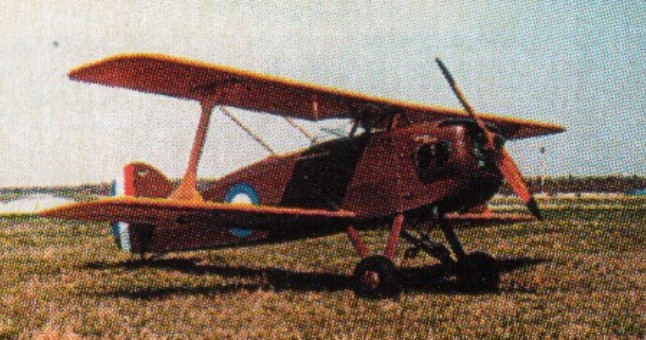
Wittemann Sundstedt-Hannevig / Sunrise

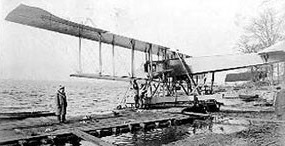
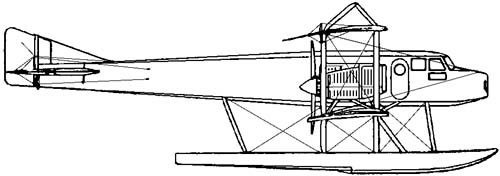
One of the largest seaplanes then in existence, the plane was built by Witteman-Lewis Aircraft Corp in 1923 for an intended transatlantic flight by the two Swedish aeronauts.

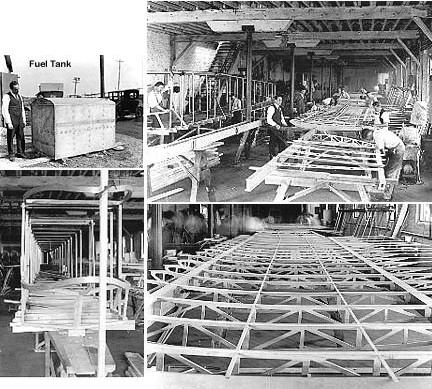
Sundstedt-designed, linen-covered balsawood floats of 32′ length, all else was of ash and spruce construction; 750-gallon fuel tanks.

It crashed in a test flight in Feb 1919 and was considered beyond economical repair.

Engines: two 220hp Hall-Scott L-6
Wingspan: (upper) 100’0″ (lower) 71’6″
Length: 50’6″
Speed: 80
Seats: 4

Wittaker MW-2B Special / Buzzabout

Designed by Mike Wittaker in 1974, the MW-2B Special, nick-named Buzzabout, was a single-seat all metal low wing monoplane with a twin boom tail and tricycle undercarriage.

To be powered by a VW engine driving a pusher propeller fitted into a ducted shroud, designed by Dowty-Rotol.

Backed by Charles Robertson (Developments) Ltd, the prototype, G-BDDX. c/n 001, PFA.41-10106, was being built at Bodmin, UK, in August 1975 with a first flight expected in early 1976.

Wing D-1 Derringer

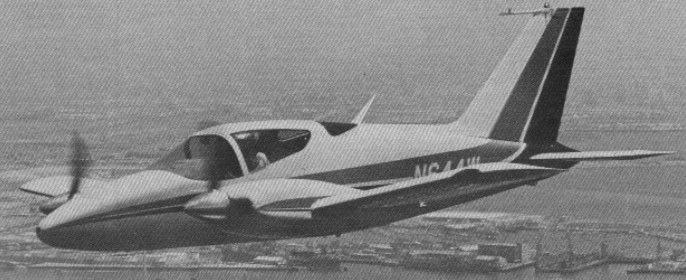
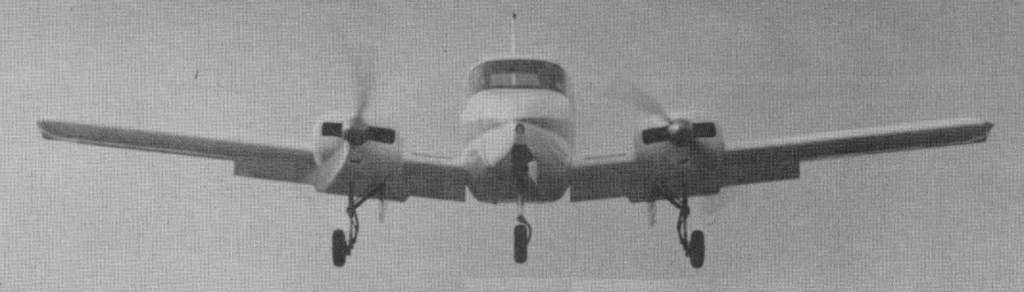
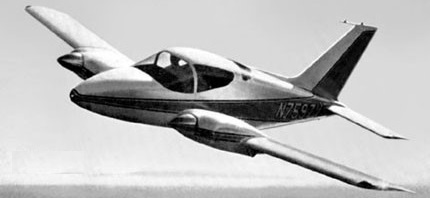
By 1962, George Wing had moved on to the development of John Thorp’s little twin, which eventually became the Wing Derringer. George Wing hired John Thorp to design a high performance two seat twin. Thorp, who had been toying with the idea of hanging two engines on his Sky Skooter (one of which Wing owned), was already primed for the idea. They started with a clean sheet of paper and, using two Continental O 200 engines and fixed pitch props, came up with an airplane that was, for its operating costs, a wonderful performer, first built in 1978. John E Robey designed the major assembly tooling for the Wing Derringer at Olin-Dixon in Coffeyville Ks in the late 1960’s. Derringer project leader was Larry Heuberger.

The prototype carried two special Continental 115 hp IO-200 engines with fuel injection. The cowling was 21.5 inches deep. The prototype N3261G first flew on 1 May 1962, kept throwing prop blades, however, its engine out performance was inadequate, and the tweaked engines were not a realistic choice for a production airplane; and so eventually, production prototypes were equipped with 160 hp Lycoming engines. Originally, the Derringer was equipped with very thin, narrow bladed racing props.

While testing the prototype, the next two units were nearing completion in Torrance, California.

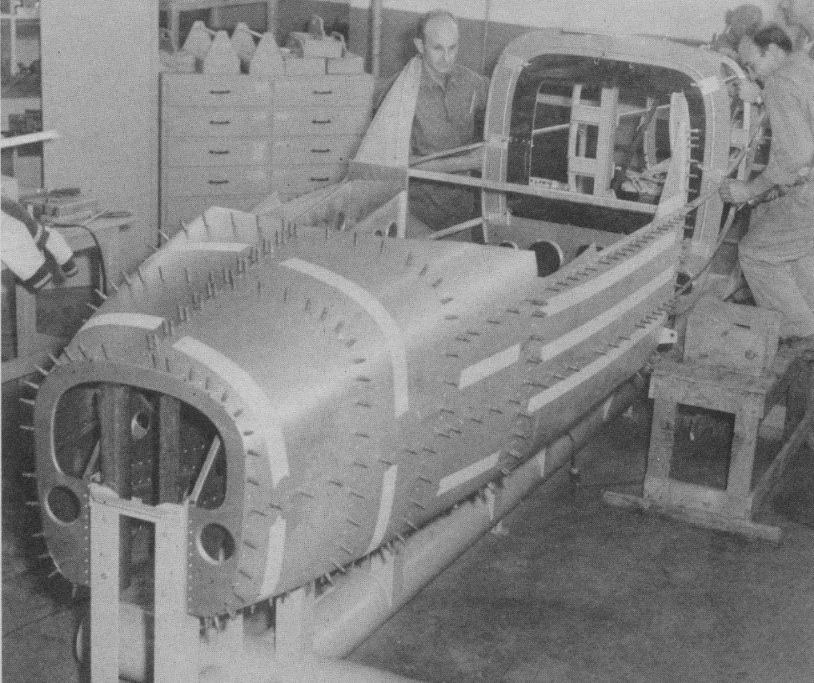
The airplane was a compact two-seater with a huge baggage bay behind the seats, a simple rectangular wing and a fuselage that was all curves from nose to tail. Its structure used stretched chem milled skins throughout. With stretch-formed, chemically-etched skins, the number of metal pieces requied is greatly reduced and labour time is cut accordingly. The Derringer has eight fuselage pieces and there isn’t a flat surface on any of them. There are only 13 major skins in the entire plane with the wing a single wrap-around sheet .064 thich where ribs and attachments occur. Remaining metal is etched away to .032 where no stresses occur. The wing walk for instance is .064. Metal skins start out at .064 or .040, depending on their function, and are etched down to whatever thickness the specs call for.

The flight test and production models, under construction in 1964, were to be equipped with 150 hp Lycoming IO-320 engines that operate on 80/87 octane fuel. The production aircraft would have full-feathering, constant speed, two-blade Hartzell props.

Matched-hole tooling means the Derringer can be assembled with a minimum of jigs and fixtures. All holes were to be in a temperature-controlled room so that the parts for number 2 and 3 aircraft were interchangeable with any others, All skin assembly is butt-jointed and flush riveted.

Derringer no.2

The prototype had a fuselage two inches narrower than the production model and was fitted with a slide-back cover. The prototype had a hand brake while the production craft were to have toe brakes. A simple automotive window motor operates the Saginaw ball and screw system for gear retraction and flap movement.

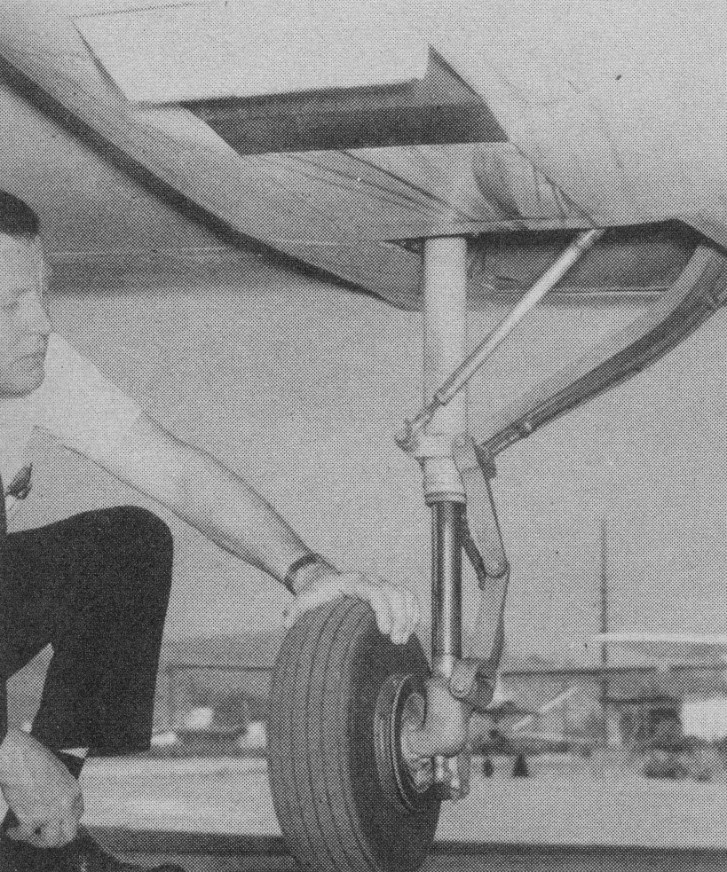
The Derringer undercarriage is fitted with three oleo struts, each with 9 inches of travel.

It would cruise at 190 knots, climbing at 1,700 fpm and boasting a range of over 1,000 nm with reserves.

There is no steering on the ground except with the engines.

Pre-take off check list
Fuel on
Crossfeed off
Trim set
Mixture rich
Flaps 10 deg
Controls free
Canopy locked

Landing check list
Mixture rich
Gear down and locked
Flaps as desired

First deliveries were expected in the Spring of 1964, priced at $27,500.

Wing spent $3 million of his own money, $5 million all told, in developing and certificating the airplane.

Wing contracted with a Kansas manufacturing firm, Olin Dixon, to manufacture an initial production of five with 150hp, ATC A9WE, in 1966, and a second production with 160hp. Problems developed, which Olin blamed on Wing and Wing blamed on Olin. Litigation followed. The first 3 if the initial production were built by Wing’s Transland company

In 1979 Wing Aircraft’s two seat Derringer twin seemed to be on the verge of entering the general aviation marketplace at $40,500. Company President George Wing said that the first production Derringer were to be delivered in the fall. The aircraft, which is powered by two 160 horsepower Lycomings, has a book cruise speed of 182 knots at 65 percent power. Sea level rate of climb is 1,700 feet per minute, and the empty weight is 2,100 pounds. An IFR equipped Derringer was to sell for about $100,000.

Gallery

Prototype
Engine: Continental IO-200, 115 hp
Props: fixed pitch
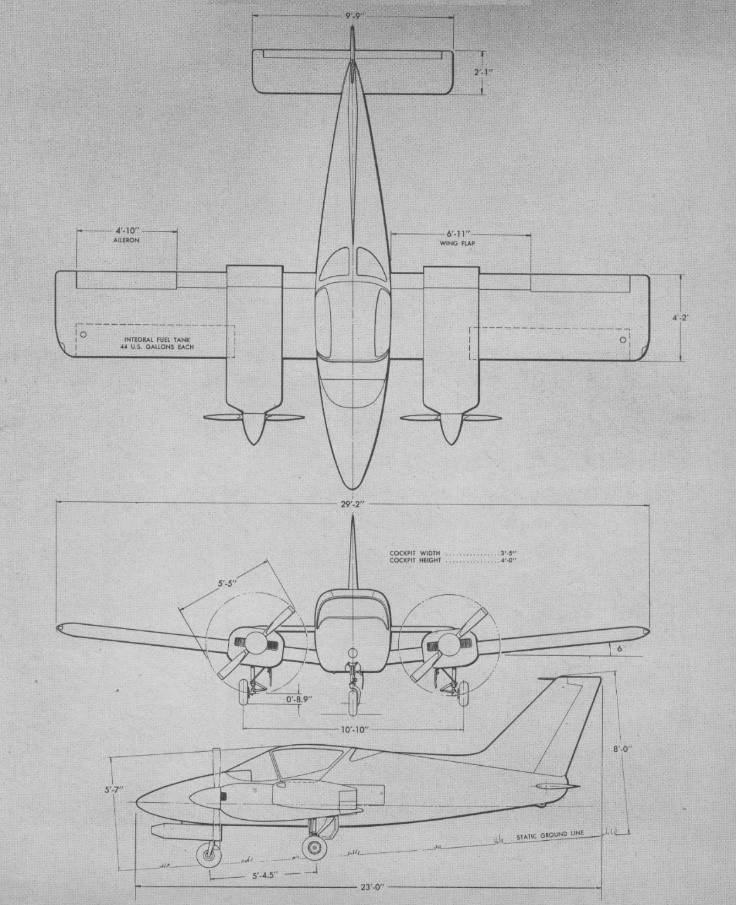
Wingspan: 29 ft 2 in
Cabin height: 5 ft 7 in
Fin top: 8 ft
Fuel capacity: 2 x 44 USG
Wing loading: 22.15 lb/sq.ft
Liftoff speed: 90 mph
TO roll: 700 ft
Cruise climb: 130 mph / 1200 fpm
UC down max: 125 mph
Stall speed: 66 mph
SE critial speed: 77 mph
Cruise speed 75%: 250mph at 20,000 ft
Baggage compartment: 22 cu.ft
Baggage door is 10×30 in on thebleft side of the fuselage.
Cabin height: 48 in
Cabin width: 44 in
Cabin length: 98 in
Seats: 2
Gear cycling: approx 6 sec

Engine: 2 x Lycoming O-320-B1C, 160 hp
TBO: 2000 hrs
Prop: Hartzell, 2 blade, variable pitch 66 in
Seats: 2
Length: 23 ft
Height: 5.8 ft
Wingspan: 29.1 ft
Wing area: 121 sq.ft
Wing aspect ratio: 7
Max ramp wt: 3050 lbs
Max take off wt: 3050 lb
Standard empty wt: 2100 lb
Max useful load: 950 lb
Max landing wt: 2900 lb
Wing loading: 25.2 lbs/sq.ft
Power loading: 9.5 lbs/hp
Max useable fuel: 522 lb
Climb rate: 1700 fpm @ 104 kt
Climb gradient: 981 ft/nm
Rate of climb @ 8000 ft: 1015 fpm
Service ceiling; 19,600 ft
SE climb rate: 420 fpm @ 96 kts
SE climb gradient: 263 ft/nm
SE ceiling: 8,000 ft
Max speed: 202 kt
Cruise @ 65% power @ 8,000ft: 182 kt
Fuel flow @ 65% power @ 8,000ft: 95 pph
Endurance @ 65% power @ 8,000ft: 5.2 hr
Stalling speed clean: 70 kt
Stall speed gear/flaps down: 63 kt
Turbulent air penetration speed: 148 kt

Wing Aircraft Co

George Wing – Head of Wing Aircraft and Hi-Shear

George Wing soloed in an OX-5 American Eagle in 1932 and worked in aviation ever since. He worked as a sheet-metal man at the Glenn Martin company on the China Clipper, at Monocoupe and Sikorsky. He went on the barnstorming circuit, sold rides, and msde a few parachute jumps.

Then he did five years with North American in the preliminary design group of the P-51.

Hi-Shear was a 495-employee corporation that produced specialised hardware and fastening systems for aerospace and other industries.

Subsidiary of Hi-Shear Corporation, Torrance, California. George S. Wing formed company 1960 to develop and market sporting twin-engined executive Wing Derringer. Company became independent 1966.

(George S) Wing Aircraft Co/Hi-Shear Corp,
2660 Skypark Dr,
Torrance CA.
USA