
Xenoah 150 Japanese engine develops 150 lb thrust, is available to power ultralights, its 22 bp derated to 18 hp.
Xenoah 150 Japanese engine develops 150 lb thrust, is available to power ultralights, its 22 bp derated to 18 hp.
The Xenoah firm has been around since 1910 and early on manufactured various engines for lightplanes. Their airframe department built a plane for the Aeronautical Research Institute of Tokyo University in 1937, and with it they established a world record for nonstop closed-course max distance flight. After World War II Xenoah produced many piston engines for trainers and engine parts for Japan’s Self Defense Forces. They have been involved in overhauling piston engines for civil and military planes.
The Xenoah Company is now called Komatsu Xenoah, since the firm was taken over by Komatsu Co., Ltd., Japan’s leading manufacturer of bulldozers and other earthmoving equipment.
Company Director, Brian Harrison, flew his first hang glider in 1973, became a manufacturer in 1975, marketed the first commercially available powered hang glider in 1978 and moved up to composite ultralights in 1982, manufacturing the Goldwing and assisting in productionising the Shadow.
After several years in the automotive and wind turbine industries, Brian has returned to ultralight aviation with the desire to bring to the world market a practical, fun-to-fly, easy to operate, motor glider, which presents the U/L pilot with an un-equalled opportunity to fly cross-country, thermal and ridge soar.
With the design skills and manufacturing capabilities of Polish company, Ekolot, these objectives have been achieved and we are proud to announce that the exciting Elf is now in production.
Peter Wright started the construction of a man powered aircraft in January 1971 at Melton Mowbray, UK. Similar to the ‘Puffin’ but differing in having a three unit undercarriage and swept forward wings.
The Mk.I first flew in February 1972 for 120 yards. After several flights it was decided a better test site was needed and that a Mk.II should be built.
Mk.I
Aspect ratio: 10:1
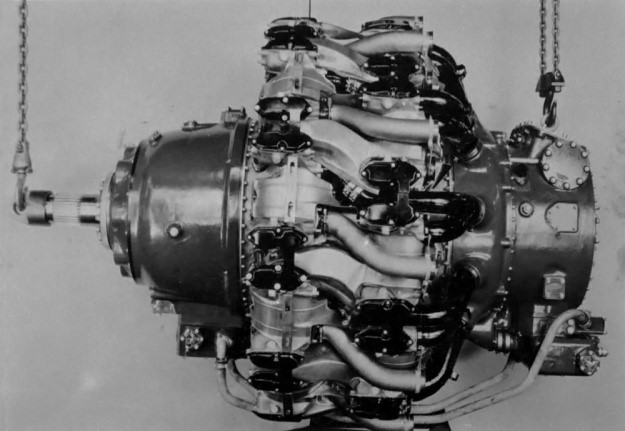
During the 1940s, Wright Aeronautical Corporation was constantly in competition with Pratt & Whitney for new engine designs required for civil and military aircraft. Utilising the Wright R-3350 as a basis, Wright developed a 22-cylinder engine (Wright model no. 792C22AA), using R-3350 cylinders arranged as a two-row radial engine with 11 cylinders per row.
The air-cooled R-4090 was rated to deliver 3,000 hp (2,200 kW) at 2,800 rpm for take-off, from a total displacement of 4,092 cu in (67.06 l), with a compression ratio of 6.85:1. Improved performance was expected from the R-4090 if it was proceeded with. A two-speed single-stage supercharger helped maintain rated power to higher altitudes.
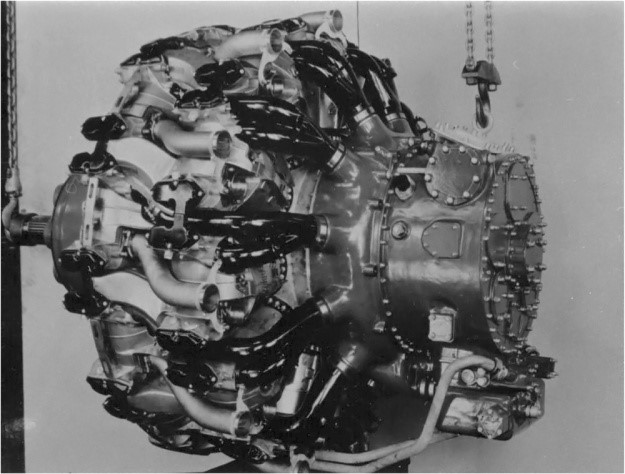
The core of the engine was a forged steel crankcase which enclosed the three piece two-throw crankshaft. The three-piece crankshaft was built up through the two one-piece master connecting rods. Ten articulating rods were attached to each master rod. The cylinders were arranged equally around the crankcase, with each row off-set by 16.3636° to ensure cooling airflow. The cylinders had 3,900 sq in (2.52 sq m) of cooling fin area. Each cylinder’s hemispherical combustion chamber had two valves; the exhaust valve was sodium-cooled. It appears that the .333 to 1 propeller gear reduction was provided by Wright’s standard, multi-pinion planetary gear system.
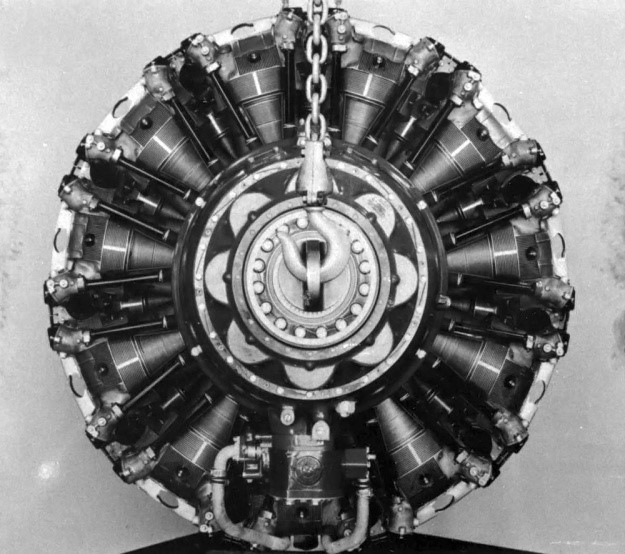
Accessories similar to other Cyclone engines were arranged around the rear face of the crankcase and a 0.333:1 planetary reduction gearbox at the front. The supercharger and accessory drive section was very similar to that used on the R-3350 engine. However, the supercharger had a 14 in (356 mm) impeller and gear ratios of 5 to 1 and 7 to 1.
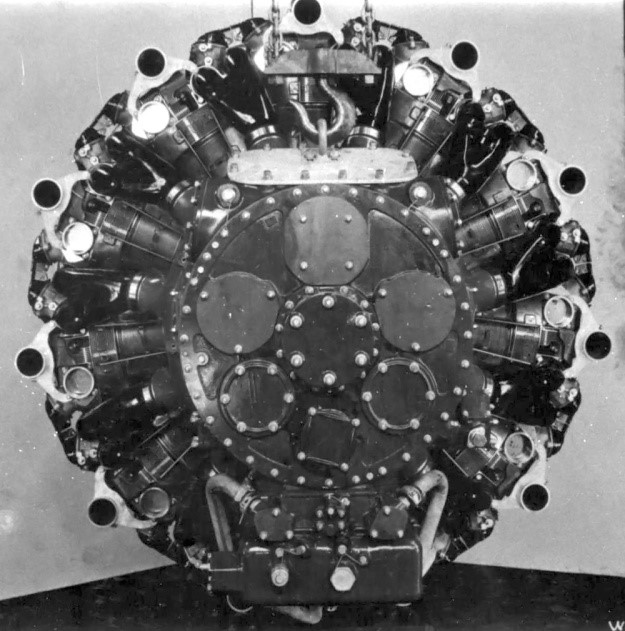
Although there are no records of failings of the R-4090, the engine was abandoned to allow development of the R-3350 Cyclone 18 series. It is doubtful that the engine ever flew. Perhaps three R-4090 engines were completed: two XR-4090-1 engines with a single propeller shaft and one XR-4090-3 engine with a coaxial shaft for contra-rotating propellers. The XR-4090-3 weighed an additional 30 lb (13.6 kg) for a total of 3,260 lb (1,478 kg). In addition, the XR-4090-3 was to have a two-speed nose case to maximize propeller and engine speed efficiency for maximum power and cruise power.
Ultimately, the R-4090 Cyclone 22 was abandoned so that more resources could be used for the R-3350 Cyclone 18.
Variants:
XR-4090-1
(790C22AA1), drove a single propeller.
R-4090-3
(792C22AA), drove a contra-rotating propeller shaft and was intended to have a two-speed reduction gearbox to maximise efficiency in cruising flight.
XR-4090-1
Type: Air-cooled 22 cylinder two-row radial piston engine
Bore: 6.125 in (155.6 mm)
Stroke: 6.3125 in (160.3 mm)
Displacement: 4,092 cu in (67.06 l)
Length: 91 in (2,300 mm)
Diameter: 58 in (1,500 mm)
Dry weight: 3,230 lb (1,470 kg)
Fuel type: Gasoline
Power output: 3,000 hp (2,200 kW) at 2,800 rpm for take-off
Compression ratio: 6.85:1
Supercharger: 14 in (360 mm) diameter impeller, single-stage two-speed supercharger; gear ratios: of 5 to 1 and 7 to 1.
Reduction gear: 0.333:1 planetary reduction gearbox
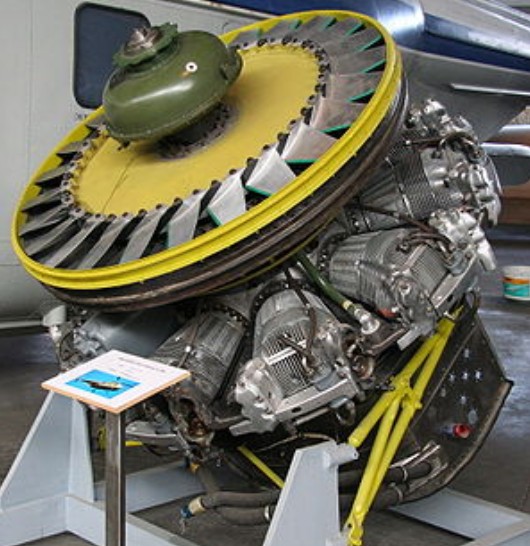
The Wright R-1300 Cyclone 7 is an American air-cooled seven-cylinder supercharged radial aircraft engine similar to a single row Wright R-2600. The engine was mass-produced but not widely used. Engineering began in 1942 but the first flight of an R1300 did not take place until 1949. The engine was produced under license by Kaiser-Frazer and later by AVCO Lycoming.
The R-1300 was developed for installation in the North American T-28. A production contract wither $7,000,000 was signed in 1948, 266 T-28 were on order.
The engine was used in combat, the R1300-1A, -1B in the A model North American Aviation T-28 Trojan and the R1300-3,-3A,-3C,-3D Sikorsky UH-19 Chickasaw. The R1300-1B was used in the Ayres Thrush. The R1300-4, -4A was used in the N class blimp, 50 of these designation were produced by AVCO.
The engines early on had vibration problems, an improved lateral dampener in the crank brought about most of the model changes.
Variants:
R1300-2
A direct drive version of the R1300-1. It had a 0.5625:1 reduction drive. Both used the PD9F1 carburetor.
R1300-3
Derated to 690.3 hp (515 kW), uses forced-air cooling fan and uses a PD9G1 carburetor.
R1300-4
Similar to the R1300-1, uses some different accessory components.
R-1300-CB7A1
With reduction gear for use on fixed wing aircraft.
Applications:
N class blimp
North American T-28 Trojan
Rockwell Thrush Commander
Sikorsky H-19
Westland Whirlwind
Specifications:
R-1300-1A
Type: 7-cylinder supercharged air-cooled single row radial engine
Bore: 6.125 in (155.6 mm)
Stroke: 6.312 in (160.2 mm)
Displacement: 1,301 cu in (21.3 L)
Length: 48.22 in (1,225 mm)
Diameter: 55 in (1,397 mm)
Dry weight: 1,055 lb (478 kg)
Valvetrain: Two pushrod-actuated valves per cylinder with sodium-cooled exhaust valve
Supercharger: 1-stage
Fuel system: Bendix-Stromberg PD9F1 downdraft carburetor with automatic mixture control
Cooling system: Air-cooled
Power output: 800 hp (596 kW)
Specific power: 0.61 hp/cu.in (27.94 kW/L)
Compression ratio: 6.20:1
Power-to-weight ratio: 0.76hp/lb (1.25 kW/kg)
In the late 1950s Jim Robertson designed the Skyshark featuring many STOL features. The best of these features was then applied to the Cessna 182G/H airframe to produce the Wren 460. These featured full span, double slotted flaps, moveable spoilers on the upper surface of each wing (called Wren’s teeth) to assist in roll control and a moveable high lift canard wing.
The Wren 460 first flew in 1958, and the 460 Beta STOL in 1968.
In August 1964 it was reported the Wren was building an initial production fleet of 10 Wren 460 STOL, two monthly. A second fleet of 40 was scheduled.
There were reported 34 conversions to Wren 460.
460
Engine: 260 hp
Wingspan: 36’7″
Length: 28’1″
Max speed: 170 mph
Cruise speed: 151 mph
Stall: 31 mph
Range: 1150 mi
TO & Ldg dist: 300′
Fort Worth, Texas. Built James L. Robertson’s Wren 460, STOL-configured Cessna 182, first flew 1963. Additions included foreplanes, wing spoilers, and double-slotted flaps. Produced in small numbers.
A small single-seat low-wing monoplane designed by R.E.Carr in 1946 and built by his Wren Aircraft Company in the UK.
Of all-wood construction and powered by a Scott Squirrel engine, registered G-AICX c/n 1, it first flew in 1947.
It found certification problems and was broken up in 1947.
Span: 23.00 ft
Length: 16.08 ft

The Woody’s Pusher was designed by H.L. Woods, a former engineer at Bensen Aircraft Corp. The Woody’s Pusher is a tandem two-seater with a parasol-mounted wing. The engine, which may range in power from 65 to 85 hp, is carried on top of the wing in a pusher fashion and turns a wooden, fixed-blade prop. Originally the Pusher was designed with a fuselage of wood covered with plywood and fabric. Later models of the light open-cockpit feature a steel-tube, fabric-covered fuselage and metal leading edges on its wood and fabric wing assemblies. Later versions utilised a wooden framed fuselage with fibreglass covered wood panelling. The landing gear is the nonretractable tailwheel type.
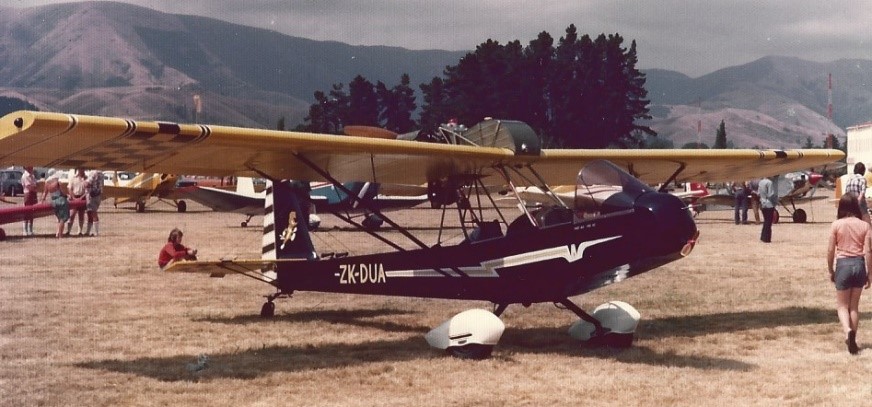
Engine: Continental A75, 75 hp
Wing span: 29 ft 6 in
Length: 20 ft 6 in
Empty wt: 830 lbs
MAUW: 1260 lbs
Wing area: 130 sq.ft
Fuel cap: 14 ImpG
ROC: 500 fpm
Seats: 2
 All Aero