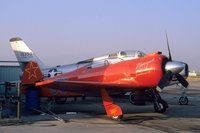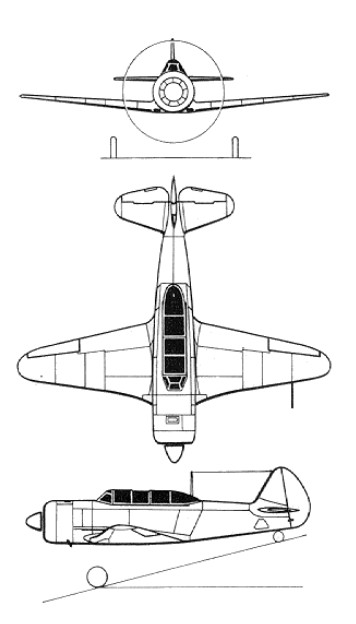
Yakolev Yak-15

Yak-15UTI

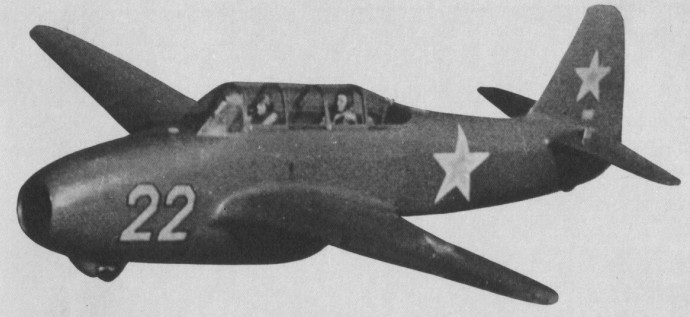
In 1945 the Soviet authorities instructed four bureaux to design fighters Mikoyan/Gurevich and Sukhoi were allocated respon¬sibility for twin engined types, with Lavoch¬kin and Yakolev concentrating on single jet aircraft. The powerplant was to be the Kolesov RD 10, an adaptation of the Junkers Jumo 004B developing 850 kg (1874 lb) of thrust. Primarily the responsibility of Yevgenii Adler and Leon Shekhter, development of the Yak-15 began in May 1945 around the captured German jet engines which were becoming available. The all-metal second-generation Yak-3 airframe was used as a basis and enabling the first of three prototypes to be completed in the following October. Taxying trials and short “hops” were performed, but flight testing was delayed while the possibility of the jet efflux attaching to the fuselage at high incidences was explored in the TsAGI T-101 full-scale wind tunnel. The Yak-15 retained most of the wing, rear fuselage, tail and undercarriage of the Yak-3, a new fuselage nose housing a Junkers Jumo 004B turbojet being introduced, and the main-spar being arched over the jetpipe.
Main longerons were strengthened to take the increased load. A stainless steel sheet was attached beneath the rear fuselage to protect it from the hot exhaust gases, and a roller replaced the tail wheel, with protection against the jet blast being given by a shield.
The first prototype was ready in October 1945, but the first flight was delayed to 24 April 1946, just three hours after the Mikoyan-Gurevich OKB’s I-300 (MiG-9).
The Yak-15 was demonstrated over Tushino during Aviation Day on 18 August 1946, and two days later, on 20 August, the NKAP (People’s Commissariat for the Aircraft Industry) issued a directive that 12 additional aircraft be built to participate in the October Revolution Parade to be held on the following 7 November, 80 days later. Produced by hand, the first of these flew on 5 October and the last in time to participate in the Parade, which, in the event, was cancelled because of inclement weather.
State Acceptance testing was completed in May 1947, and, despite being structurally limited to Mach=0.68 below 3200m, 280 were ordered into production at GAZ 153 as an interim type single-¬seat jet conversion trainers. Flutter problems with an airframe which had been designed to accept a piston engine resulted in the Yak 15’s top speed being limited to Mach 0.68, thus preventing full power being used below 3200 m (10500 ft).
One of the pre-series Yak-15s had meanwhile been adapted as a tandem two-seat conversion trainer under the designation Yak-21.
The initial pro¬duction batch used the tailwheel undercar¬riage, but this proved unsatisfactory and the type was redesigned as the Yak 15U (Usover shenstvovanny, or improved) with a tricycle layout. The nose wheel could not retract fully, since it was mounted beneath the air intake, so it was housed in a bulged fairing when in the up position. The change to a nose wheel layout altered the Yak 15’s balance, so the main undercarriage was mod¬ified to retract between the main spars instead of in front of the forward member.
The series Yak-15 carried an armament of two 23mm NS-23 cannon and was powered by a Jumo 004B turbojet which had been adapted by I F Koliesov of the Lyulka bureau for manufacture at Kazan as the RD-10 with a rating of 892kg. Production gave place late in 1947 to the Yak-17 after completion of 280 Yak-15s.

The Yak-15 was to achieve the distinction of being one of only two service jet fighters in aviation’s annals to have been derived from a piston-engined service fighter (the other being the Swedish Saab 21R).

Span, 30 ft 2.25in (9,20m)
Length, 28 ft 6.5 in (8,70 m)
Height, 7 ft 5.5 in (2,27m)
Wing area, 159.85 (14,85sq.m)
Max speed, 435 mph (700km/h) at 8,200 ft (2 500 m), 500 mph (805km/h) at 16,405 ft (5 000 m)
Time to 16,405 ft (5000 m), 4.8 min
Max range, 317mls (510 km)
Empty weight, 5,1811b (2350 kg)
Loaded weight, 6,0291b (2735kg)

Yakolev Yak-12 / Shanghai Dragon Volant – 1

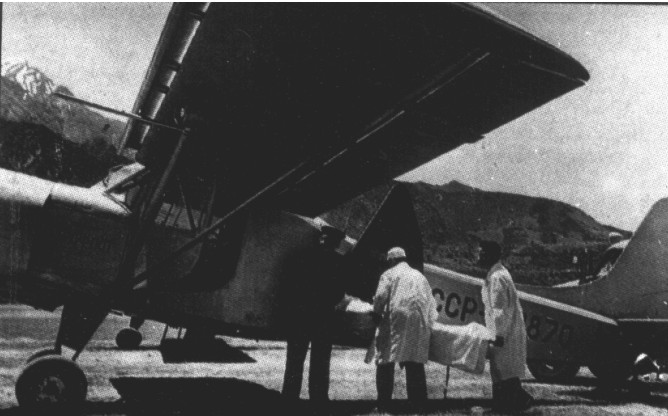
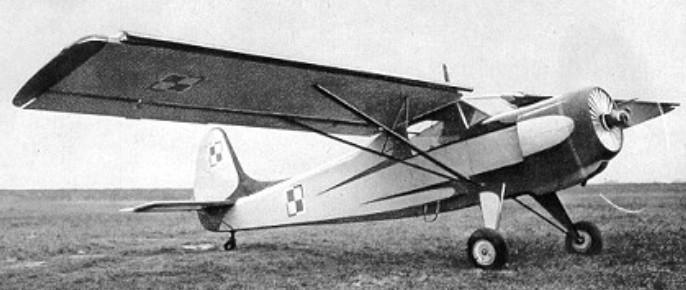
A high-winged, single-engined monoplane used by Aeroflot as a utility aircraft and air ambulance. NATO code name ‘Creek’.

Yakolev Yak-12 Article

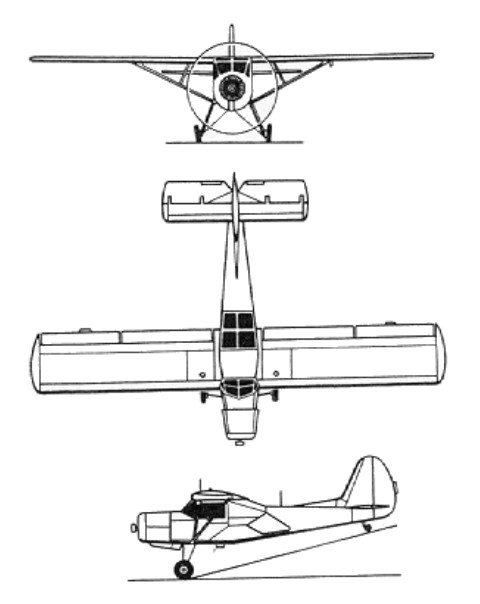
The Yak-12 was a single 179kW AI-14R-engined high-wing light general-purpose aircraft built in several versions from the late 1940s. It was known to NATO as Creek.

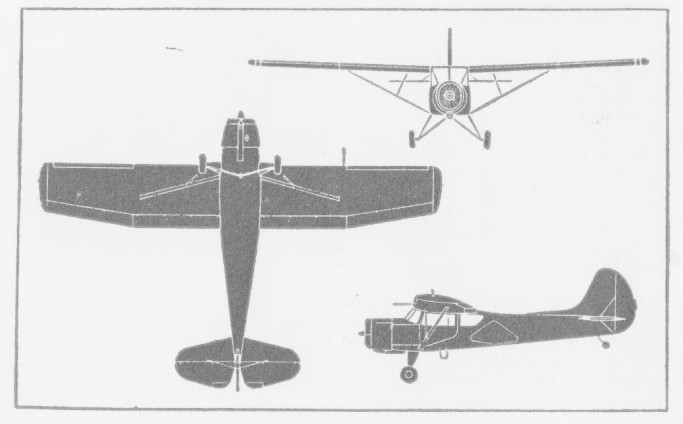
The Yak-12A four-seater presented a complete re-design of the basic aircraft, providing greater payload and range. Apart from additional windows, the fuselage remained unchanged, but entirely new wings of reduced area with taper on the trailing edges of the outboard panels was introduced. Single bracing struts replaced the earlier Vee-type struts, along with re-designed tail surfaces. Fuel capacity was substantially increased. Appearing in 1957, Yak-12A manufacturing was sold to Poland, the first Polish production model flying in August 1959 and production continuing until 1961.

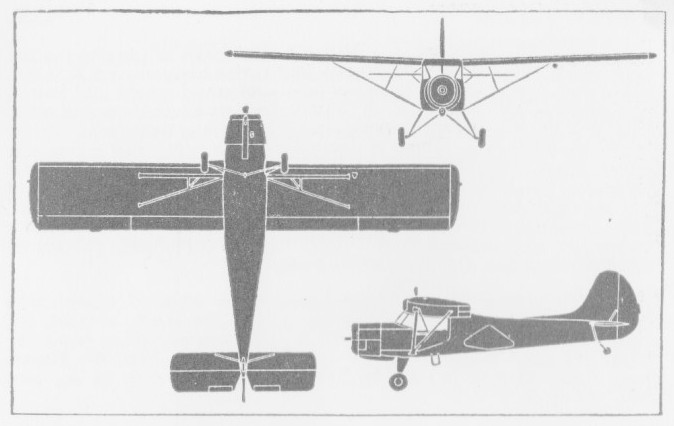
In 1952 the Yak-12R (Creek-B) appeared. This retained the mixed construction of the original but introduced the 240 hp Ivchenko AI-14R radial.

The Yak-12R was superseded in production by the Yak-12M (Creek-C) which employed an all metal structure with fabric covering. In 1955 a manufacturing licence for the Yak-12M was acquired by Poland, the type entering production at Okecie in 1955

The Shanghai Dragon Volant – 1 version was built in Shanghai, China.

Shanghai Dragon Volant – 1
Chan Yang 1

The Chinese Chan Yang 1 version of the Yak-12 featured a 220 hp engine.

Yak-12
Engine: 1 x AI-14R, 190kW
Max take-off weight: 1435 kg / 3164 lb
Empty weight: 1014 kg / 2235 lb
Wingspan: 12.6 m / 41 ft 4 in
Length: 9.0 m / 30 ft 6 in
Height: 3.1 m / 10 ft 2 in
Wing area: 2.9 sq.m / 31.22 sq ft
Max. speed: 220 km/h / 137 mph
Cruise speed: 160 km/h / 99 mph
Ceiling: 4600 m / 15100 ft
Range w/max.fuel: 760 km / 472 miles
Crew: 1
Passengers: 1

Yak-12A
Engine: 240 hp Ivchenko AI-14R
Wingspan: 31 ft 4 in
Length: 29 ft 6 in
Height: 10 ft 3 in
Wing area: 233.264 sq.ft
Empty weight: 2330 lb
Loaded weight: 3494 lb
Max speed: 133 mph
Max cruise: 112 mph
Econ cruise: 96 mph
ROC: 709 fpm
Service ceiling: 15,090 ft
Range: 688 mi

Yak-12M
Engine: 240 hp Ivchenko AI-14R
Wingspan: 41 ft 4 in
Length: 29 ft 6 in
Height: 10 ft 3 in
Wing area: 233.264 sq.ft
Empty weight: 2263 lb
Loaded weight: 3197 lb
Max speed: 112 mph
Max cruise: 102 mph
Econ cruise: 79 mph
ROC: 805 fpm
Service ceiling: 13,650 ft
Range: 475 mi

Yak-12R
Engine: 240 hp Ivchenko AI-14R
Wingspan: 41 ft 4 in
Length: 29 ft 6 in
Height: 10 ft 3 in
Wing area: 233.264 sq.ft
Empty weight: 2204 lb
Loaded weight: 3494 lb
Max speed: 114 mph
Max cruise: 99 mph
Econ cruise: 80 mph
Service ceiling: 13,120 ft
Range: 310 mi

Yakolev Yak-12
Yak-12A
Yak-12M

Yakolev Yak-11

The Yak 11 began life as a radial engine tandem seat advanced fighter trainer variant of the Yak 3. A converted Yak 3 trainer flew in 1945 as the Yak-3UTI and in 1946 there appeared a second prototype with a number of refinements and using less Yak-3 components.

Trials were completed in 1946 and entering Soviet service in 1947. The Yak-11 has all-metal wings and a fuselage covered in plywood and fabric and has a retractable tailwheel landing gear.

NATO code name ‘Moose’. A total of 3859 being built until production ended in 1956 before moving on to a modified version featuring a nosewheel.

Also built under licence in Czechoslovakia as the LET C-11, production totalled 3859 in the USSR and, from 1953, 707 in Czechoslovakia,

In 1958 there appeared the Yak-11U (Czech C-11U) version with retractable tricycle landing gear. 

Yak C.11

The Yak-11 was a two-seat intermediate trainer and became a standard type with the Soviet forces and those of a large number of other countries including Afghanistan, Albania, Angola, Bangladesh, Bulgaria, Cambodia, China, Czechoslovakia, East Germany, Hungary, Mongolia, Poland, Romania, Somalia, USSR, Vietnam, and Yemen.

Gallery

Engine: 1 x Shvetsov ASh-21, 570 hp / 425 kW
Wingspan: 9.4 m / 30 ft 10 in
Length: 8.5 m / 27 ft 11 in
Height: 3.3 m / 10 ft 10 in
Wing area: 15.4 sq.m / 165.76 sq ft
Empty weight: 1900 kg / 4189 lb
Max take-off weight: 2418 kg / 5331 lb
Max. speed: 456 km/h / 283 mph at 8200 ft / 2500 m
Cruise speed: 400 km/h / 249 mph
Service ceiling: 7100 m / 23,295 ft
Range w/max.fuel: 1290 km / 802 miles
Armament: 1 x 12.7mm or 2 x 7.62 mm machine-guns
Bombload: 2 x 110 lb / 50 kg
Crew: 2

Yakolev Yak-11

Yakolev

While working as a mechanic at Khodynka airfield, Yakolev had access to an aircraft graveyard in a ravine next to the flight area. In the course of a dozen years it was filled with wrecked airframes from all over the world, and Alexandre Sergeevich fully used his chance to study variety of construction methods, examine the nature of breakdowns and to discover the weak points in damaged parts.
Aieksandr Sergievich Yakolev won a design competition for lightplanes even before entering an engineering academy in 1927. His design bureau was established 1935, and first military design was the Yak-4 twin-engined fighter, completed 1939. The Yak-1/3/9 series of single-seat fighters served the Soviet Union well in combat during Second World War and were built in larger numbers than any other Soviet wartime fighter. A Yak-3 airframe was modified to produce the Yak-15 jet fighter in 1945, developed subsequently as the Yak-17. The Yak-23 of 1947 was a complete redesign, resembling the earlier fighters only in fuselage configuration.
Other post-war Yakolev designs included the Yak-12 high-wing utility aircraft, produced also in Poland and China, Yak-11 and Yak-18 trainers, Yak-28 twin-jet bomber and reconnaissance aircraft (production began 1960) and related Yak-28P radar-equipped all-weather interceptor (first flown 1960), and Yak-40 (first flown October 1966) and Yak-42 (first flown March 1975 and still in production) short-range transports. The important Yak-38 operational VTOL combat aircraft (first flown January 1971 for Russian naval use) was followed by a new VTOL prototype known as the Yak-41 (first flown March 1987) which was subsequently abandoned, as was the projected next-generation STOVLYak-43 and the Yak- 44 shipborne AEW&C aircraft. The Yak-142 transport is a new variant of Yak-42D, featuring mostly US digital avionics and other improvements. Projected airliners include the short-range twin-turbofan Yak-46-1 for 126 passengers, short-range Yak-46-2 with propfan engines, and Yak- 242138-180 passenger short-range airliner.
In the field of general aviation, Yakolev developed the Yak-18T 4-seat multipurpose lightplane development of Yak-18 (first flown 1967 and still available), Yak-50 aerobatic sporting aircraft (first flown 1972), Yak-52 tandem two-seat piston trainer (first flown 1974 and still built in Romania), Yak-54 two-seat aerobatic trainer (first flown December 1993), Yak-55M single-seat aerobatic aircraft (first flown 1989), Yak-58 six-seat business transport with a pusher piston engine (first flown April 1994), and Yak- 112 four-seat light aircraft (first flown October 1992). General aviation projects include Yak-48, thought to be derived from the Israeli-designed Galaxy, Yak-56 piston-engined primary trainer and Yak-57 single-seat aerobatic competition aircraft. Yakolev is also a partner with Aermacchi of Italy in the Yak/Aem-130 and Yak-131 jet trainer and light combat aircraft program. In total, Yakolev has produced over 70,000 aircraft of more than 100 types since 1927, and the present Design Bureau is joined by the Saratov and Smolensk manufacturing facilities under Yak Aircraft Corporation.

On 22 August 1989, Alexander Yakovlev died at age 83.

Xian H-8

In 1970, Xian Aircraft Factory proposed an upgraded four-engined version of their H-6 Tu-16 copy. The proposal was approved, while the PLAAF issued an extra requirement of capabilities against sea targets two years into development. To test their plans, Xian re-engined an H-6 with four Rolls-Royce Spey turbofans – two in the wing roots and two under the wings. Designated the H-6I, the prototype took flight in 1978. Performance gains were impressive – climb rate increased by 40%, and range increased by a third. Payload was also increased significantly. While Xian’s proposed H-8 was to use revised Spey engines mounted in underwing pylons to reduce maintenance costs, the program fell victim to downsizing efforts in 1980.

Xian JH-7 / FBC-1 Flying Leopard

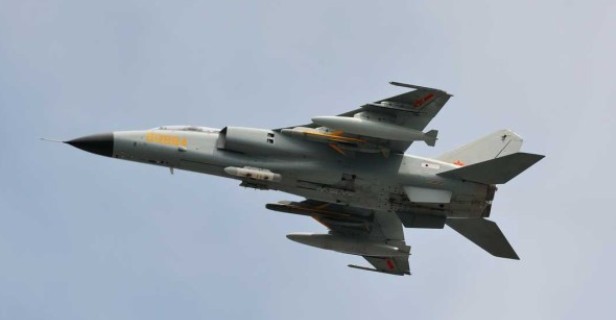
JH-7

In the early 1970s, China was looking for a fighter-bomber to replace the H-5 (Il-28) and Q-5. Initially, China looked abroad for joint solutions, but when these efforts fell through, a program was started to develop a domestic design. Requirements soon emerged from the PLAAF and PLANAF requesting separate configurations. The PLAAF wanted side-by-side seating, terrain-following radar, and an extensive ECM suite, while the PLANAF requested tandem seating, all-weather performance, and reconnaissance capabilities. The PLAAF variant would be dropped fairly early on and by the end of 1988, Xian had developed a two-seat design with a shoulder mounted wing, powered by two Rolls-Royce Spey engines. While it was equipped with a powerful radar capable of tracking both aircraft and ships, the original design lacked any significant air-to-air capabilities.
The aircraft was not without its teething issues. Flight testing was filled with major (often near catastrophic) malfunctions. The first flight ended early when violent vibrations shook off the majority of the cockpit instrumentation, and later tests ended when massive fuel leaks almost caused the aircraft to run out of fuel in flight. When the aircraft began operational evaluations, one aircraft lost its entire rudder in flight, making a successful emergency landing. Despite all of the issues, the PLAAF soon requested its own variant of the JH-7. Designated the JH-7A, the new aircraft was to have a stronger airframe and higher payload than the JH-7 and the capability to deploy various precision-guided weapons.

JH-7

After extensive testing and redesigns, JH-7s began to enter service with the PLANAF and PLAAF in 2004. Over 200 have entered service, providing the Chinese with a fairly capable replacement to their MiG-19-derived Q-5s. JH-7As continue to be upgraded with systems such as a newly developed helmet-mounted sight. Meanwhile, the Chinese are working on a more extensive upgrade to the design, designated the JH-7B. The JH-7B is to feature upgraded avionics, a reduced frontal RCS, aerial refueling capabilities, and upgraded engines producing 15% more thrust. Plans called for the JH-7B to enter production in 2015.

Xian JH-7A

China revealed a 20-year-old fighter/bomber at the Air Show China ‘98, held at Zhuhai. The aircraft, the FBC-1 Flying Leopard, is an export version of the JH-7 twin-seat strike fighter and actually flew in 1989, though its development programme dates back to the 1970s. This was the first time the aircraft has been flown in public. The aircraft was developed by the Xian Aircraft Design and Research Institute (ADRT) and is capable of Mach 1.7, and has a range of 890 nm.

Gallery

JH-7
Seats: 2

FBC-1 Flying Leopard
Seats: 2
Max speed: Mach 1.7
Range: 890 nm

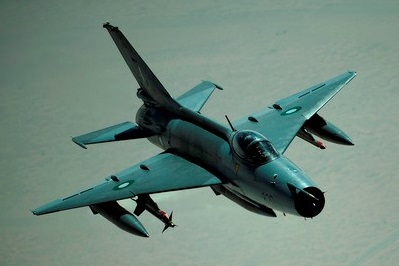
Xian J-7 / JJ-7 / F-7 Airguard / Skybolt / Chengdu J-7

The Xian factory reverse-engineered the MiG-21 and the resulting J-7 made its first flight in December 1964. Two years later, manufacture halted because of unexplained technical problems after only 70 had been built.

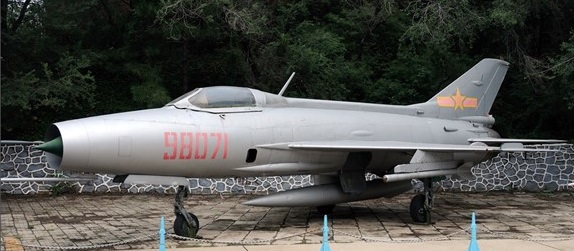
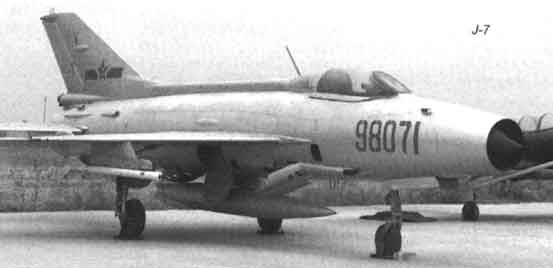
The early model J7I can be seen as the first variant of the type of full production standard. One difference with the MiG-21F-13 is the drag chute housing at the base of the tail.

J7I 98071

Meanwhile, in the common cause of communism, China was allowing Soviet supplies to pass through its territory bound for Vietnam, where the USA was embroiled in conflict. One day, several railway wagons containing dismantled MiG-21s went astray, and subsequently the J-7 re-entered production in modified form at Chengdu. The new J-7 II, a considerably upgraded Chinese development, entered production in the early 1980s, and by 1982 was being exported as the F-7B. China (Giuzhou) also produces the JJ-7 two-seat operational trainer, designated FT-7 for export (first flown in 1981). The JJ-7 dual seat version was originally built by Guizhou Aviation Industry Group (GAIG).

Despite Chinese denials, a number of F-7s have been confirmed in Iranian service, while Iraq has also received the type via assembly (by Chinese technicians) in Egypt.

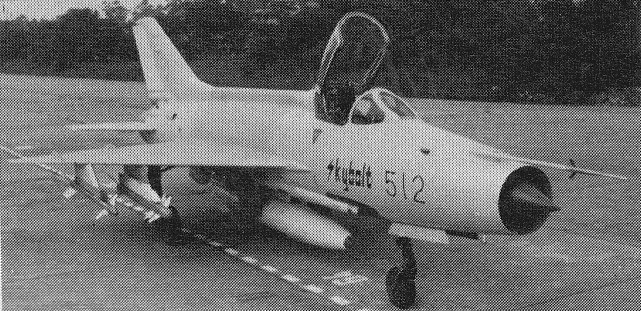
Details of the latest export version of the Chinese-built MiG-21 were released in 1984. Known as the F-7M Airguard and (as offered to Pakistan) F-7P Skybolt, this variant of the earlier F-7B is extensively modernised with Western avionics including ranging radar, a weapons aiming computer, a headup display, multimode radios, and IFF. Two additional wing hardpoints are fitted, and two fuselage cannon are carried, rather than the one carried by earlier models. Other changes include a revised canopy, an updated ejection seat, and a relocated brake-parachute housing.

With development of a successor to the J-7 (MiG-21) that formed the backbone of the PLAAF taking far longer than hoped, Chengdu began efforts to modernize the design. Work began in 1987, resulting in a major design overhaul. The wings were redesigned to have a double-delta planform, and the engine was replaced with a WP-13F engine. The primitive radar of the J-7 was replaced with the British Super Skyranger radar, and fuel capacity was increased. The modifications improved turn performance, and the takeoff roll was reduced from 1km to 600m. Upgrades to the cockpit included HOTAS controls, as well as the later addition of a helmet-mounted sight. Development proceeded quickly, with the first J-7E, as the new model was known, flying in 1990.

By the time the J-7E came about, most J-7 operators had since moved on to more capable designs. However, Pakistan, the largest non-Chinese J-7 operator, ordered significant numbers of the type. A special variant was developed to meet Pakistani requirements, integrating new western radars and the capability to mount AIM-9 AAMs.

Ever eager to develop anti-shipping platforms, the PLANAF also ordered a special J-7 variant with the ability to deploy AShMs (J-7EH). The J-7EH features the ability to carry antiship missiles, but, due to limitations with the radar, must receive targeting data from other aircraft.

The derivative of the F-7M supplied to Pakistan as the F-7P Skybolt featured 20 PAF specified changes, including for four, rather than two, PL-5B or AKM-9 Sidewinders on pylons outboard of the main undercarriage attachment points. The Skybolt retains the two wing root-mounted Type 30-1 cannon ND MOST OF TE Western systems of the basic F-7M, although some equipment (eg. IFF) is installed in Pakistan.

F-7P Skybolt

The initial Pakistan Air Force order for 20 F-7P was fulfilled in August 1988 when the aircraft were ferried from Chengdu, but the Chengdu Aircraft Corporation was by then responsible for F-7 production.

After the final deliveries to Bangladesh, Chengdu shut down J-7 production in May 2013, marking the end of a 2,400 aircraft production run.

F-7M Airguard
Engine: 1 x Wopen-7B (BM)
Installed thrust (dry / reheat): 43 / 60 kN
Span: 7.2 m
Length: 13.9 m
Wing area: 23 sq.m
Empty wt: 5275 kg
MTOW: 7531 kg
Warload: 1800 kg
Max speed: 2.05 Mach
Initial ROC: 9000 m / min
Ceiling: 18,700 m
TO run: 700-950 m
Ldg run: 600-900 m
Combat radius lo-lo-lo: 370 km
Air refuel: No
Armament: 2 x 30 mm, 2 x AAM
Hard points: 5

Xian H-6

H-6

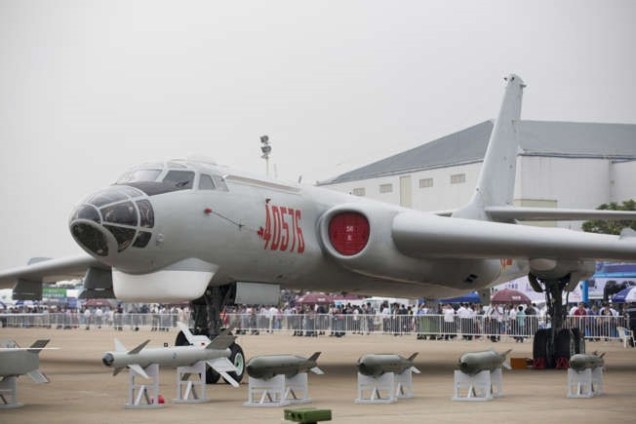
A 1961 split ending Soviet assistance, left the Chinese with the task of getting the Tu-16 into production as the Hongzhaji-6 (bomber aircraft no. 6). The Chinese spent two years in reverse-engineering the Tu-16 and its Mikulin AM-3 turbojets, and started production in 1962 for first deliveries in 1968. Since that time the Air Force of the People’s Liberation Army has received more than 100 H-6s for the strategic free-fall bomber and anti-ship roles, the latter with two missiles carried under the wings. Principal version – H-6 (sole production model in several variants up to at least the H-6D, or H-6 IV, which is believed to be the anti-ship type). Low-rate production of the Tu-16 Badger continues at Xian in 1987, and the H-6 is still the mainstay of China’s strategic nuclear bomber force. Local developments of the design include an anti-shipping version carrying C601 missiles and equipped with an under-nose search radar. A four-engined variant of the H-6 has also been reported. Customer: China 120+

Xian H-6 Article

H-6K

After decades of service, Xian finally performed a major overhaul of their H-6 (Tu-16) around the turn of the century. While previous modifications merely upgraded avionics of the design, the new variant developed, the H-6K, redesigned the airframe to extensively use composites, and replaced the old Chinese engines with Russian-made Saturn D-30KP turbofans. As Chinese bomber doctrine has long since shifted to the use of bombers as cruise-missile carriers, the bomb bay was replaced with larger fuel tanks, and the obsolete tailgun armament was replaced with an extensive ECM suite. Similarly, the glazed navigator position was replaced with a more powerful targeting radar. The H-6K first flew in January 2007, and after two years of testing, the bomber entered service with a combat radius nearly double that of the original H-6.

China International Aviation & Aerospace Exhibition in Zhuhai, China, 2014

About 150 of its bombers have been built, and about 120 were still operational in 2025. The H-6 has been upgraded to carry modern weapons, including hypersonic and nuclear-capable missiles.

China sold H-6s to both Egypt and Iraq, but those countries no longer have their bombers operational. According to the Center for Strategic and International Studies, Iraq’s four H-6s were destroyed while in service.

The H-6 has four crew and is powered by two Soloviev D-30KP-2 turbofan engines, each with 27,000 pounds of thrust. Its top speed is 670 mph, and its cruising speed is 477 mph. Its combat range is 2,200 miles.
It can also carry 26,500 pounds of bombs, both guided and unguided (dumb bombs), but no longer carries free-fall nuclear bombs, as the H-6 could not be relied upon to penetrate an enemy’s air space.

Xian H-6
Type: six-seat strategic medium bomber and anti-ship missile carrier
Engines: 2 x 20,944-lb (9,500-kg) thrust Xian WP-8 turbojets
Maximum speed 616 mph (991 km/h) at 19,685 ft (6,000 m)
Initial climb rate 4,100 ft (1,250 m) per minute
Service ceiling 40,355 ft (12,300 m)
Range 2,983 miles (4,800 km) with an 8,157-lb (3,700-kg) warload
Empty weight about 82,010 lb (37,200 kg)
Maximum take-off weight 158,733+ lb (72,000+ kg)
Wing span 108 ft 1.2 in (32.95 m)
Length 114 ft 2.1 in (34.80 m)
Height 35 ft 5.2 in (10.80 m)
Wing area 1,772.87 sq ft (164.70 sq.m)
Armament: four 23-mm cannon in twin-gun dorsal and tail turrets, and up to 19,842 lb (9,000 kg) of bombs

Xian

This major aircraft company was established in 1958. In 1961 it took over from Harbin production of the H-6, a Chinese version of the Soviet Tupolev Tu-16 Badger bomber, and also developed the H-6D as a cruise missile carrier. Produced the Y7 short/medium-range transport based on the Soviet An-24, the first flying in December 1970, and improved versions continue in production. Y7H and Y7H-500 are military and civil versions of the An-26. A supersonic strike aircraft first flew in 1989 as the JH-7, which might have entered service in small numbers with the PLA Naval Aviation for maritime strike duties from 1994. An export version of JH-7 was revealed in November 1998 as the FBC-1 Flying Leopard.

Xenoah C72C-C

C72C-C

Affected by an Arabian oil embargo, like many other countries Japan has felt the squeeze in private flying. One result was Xenoah’s takeover by Komatsu, which decided to go ahead with the development program of the G72C-C engine, since there was a growing homebuilt market developing in Japan itself.

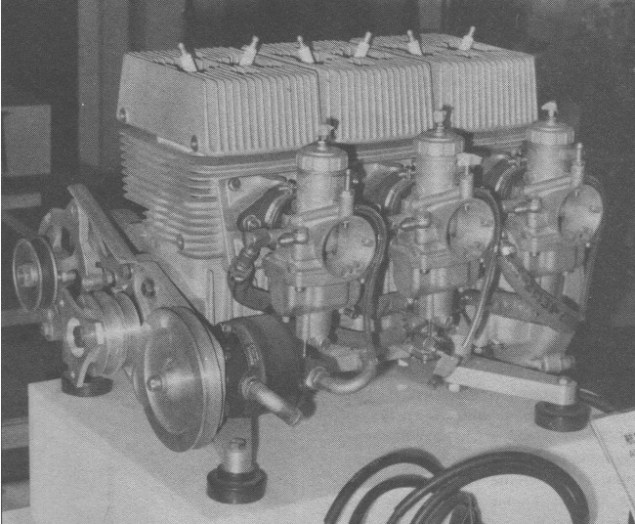
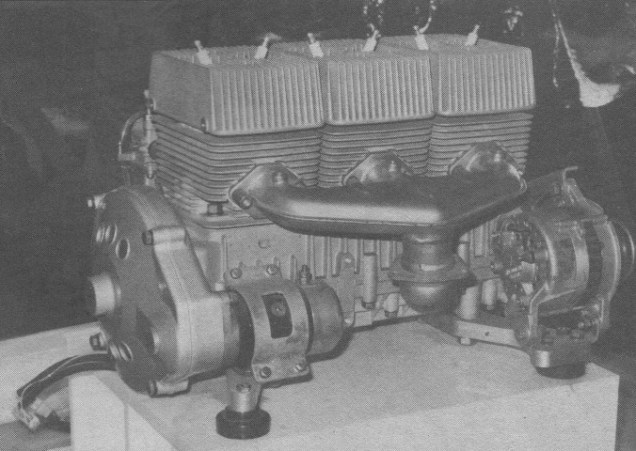
The Xenoah C72C-C is a two-cycle, three-cylinder, in-line, air-cooled powerplant with three carburetors; it burns 100/130 octane av gas. Of 44.34 CID and a compression ratio of 71, the engine measures 22.2 inches long, 17.4 inches wide and 15.35 inches high. It comes with dual ignition, oil injection, starter, and engine mount.

The G72C-C weighs 157 pounds and is rated at maximum continuous 54 hp at 6080 rpm SL. The cruise rpm of 6080 requires a reduction unit for the propeller.
The G72C-C aircraft engine has been certified by both the FAA and Japan’s JCAB for use in homebuilts.