Polyteknikkojen llmailukerho
Finland
The Flying Club of the Finnish Institute of Technology was founded in 1932 and built a series of gliders; the PIK-20 high-performance sailplane was still in production through the 1990s. PIK has also built several low-wing single-engine monoplanes, the PIK-11 in 1953, the PIK-15 glider tug in 1964, and the PIK-19 glider tug and two-seat trainer in 1972.
Post WW2
Pietsuj PAI-6
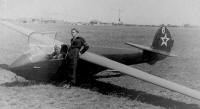
Between 1947 and 1948, the test pilot and aeronautical constructor Alexei Ivanovich Pietsuj developed two new projects at the MAI that were called PAI-5 and PAI-6 (Russian: Пьецух ПАИ-6).
The PAI-6 was designed as a single-seater training glider to take advantage of thermal flight and had full aerobatic capabilities. It was generally similar to the previous PAI-5, but was notable for its increased wingspan.
The PAI-6 was a high-cantilever glider with a large trapezoidal high-wing.
The glider was built entirely of wood. The fuselage had a simple construction made up of 24 frames joined by three stringers and a set of stringers. The exterior coating was made with plywood between 1.5 and 2 mm thick. The cross section was oval, with downward elongation. In the upper part of the fuselage, a slit was made, crossed by the force elements of the wing. An aluminium cover was placed over this slit.
The wing composition comprised two trapezoidal-shaped consoles in plane joined at their bases on the longitudinal axis of the apparatus. The consoles had a TsAGI R-Sh profile of constant relative thickness (15.5%) and were fixed to the fuselage by means of four points of two reinforced frames located in the upper part. The two consoles were joined together by screws and conical fixings. The fixing points to the frames were located on the spar and on the last wing spar.
The wing featured a single spar structure with ends working by twisting. The stringer was made up of two faces with plywood partitions. The wingtips and the frontal region of the wing were covered with plywood and the rest with fabric covered with paint.
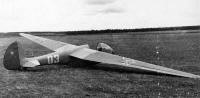
The ailerons were attached to an auxiliary spar at three points and featured a single spar structure with diagonal ribs. The front part was covered with plywood and the rest with fabric. The wing-end interceptors were conceived as smooth pine frames with fabric covering on both sides. Each interceptor was attached to the wing spar by three points.
The horizontal tail plane was raised to the top line of the fuselage and positioned in front of the vertical tail. The stabilizer featured a single spar construction with plywood overlay. The elevators also used a single spar and coating similar to that of the ailerons.
The keel was an integral part of the fuselage construction and ended in a rudder with aerodynamic compensation. This rudder featured a two-stringer structure. From the leading edge to the second spar the covering was plywood and from there on fabric. All rudders featured three-point fixation. The landing was made on a wooden ski, with a trunk structure, located in the lower part of the fuselage.

The cockpit, located in front of the wing, was closed by a cover that protruded from the upper line of the aircraft. The flight control was mixed with control of the ailerons by means of ropes and bars for the control of the tail planes.
The control of the interceptors and the tow hook was also carried out by cables, with actuators located on the sides of the cockpit.
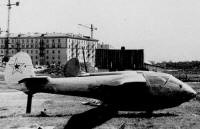
Once the tests were completed from the GK NII VVS Experimental Factory, improvements were made to the original design and the entire set of plans and technical diagrams was created to launch production. In Ryazan, Moscow, a small series was built in 1949. Its main destination was the flying clubs of the country. PAI-6 participated in several air parades for Aviation Day in Túshino.
An improved version of this glider known as PAI-6M was built in the early 1950s at the MAI. This aircraft was never flown and was destroyed as a result of the cooling towards the gliders that occurred in the USSR in those years.
PAI-6
Wingspan: 12.4 m
Wing area: 11.8 m²
Aspect ratio: 13
Length: 5.41 m
Height. 1.35 m
Glider weight: 193 kg
Wing loading: 24 kg / m²
Stabilizer surface: 0.9 m²
Elevator area: 0.75 m²
Keel surface: 0.17 m²
Rudder surface area: 0.85 m²
Spoiler area: 1.58 m²
Minimum descent speed: 0.82 m / s
Cruising speed: 85 km / h
Landing speed: 60 km / h
Max glide ratio: 24
Accommodation: 1
Pietsuj PAI-5
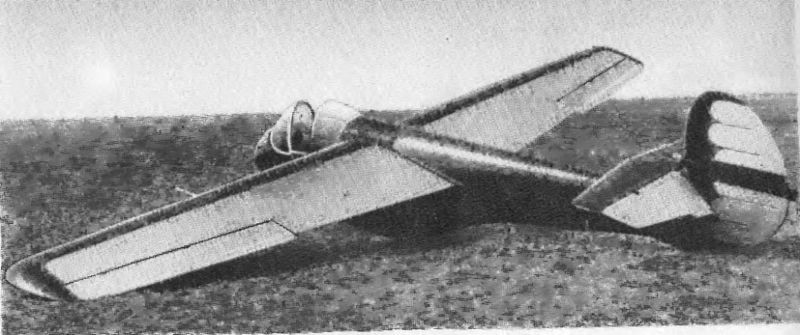
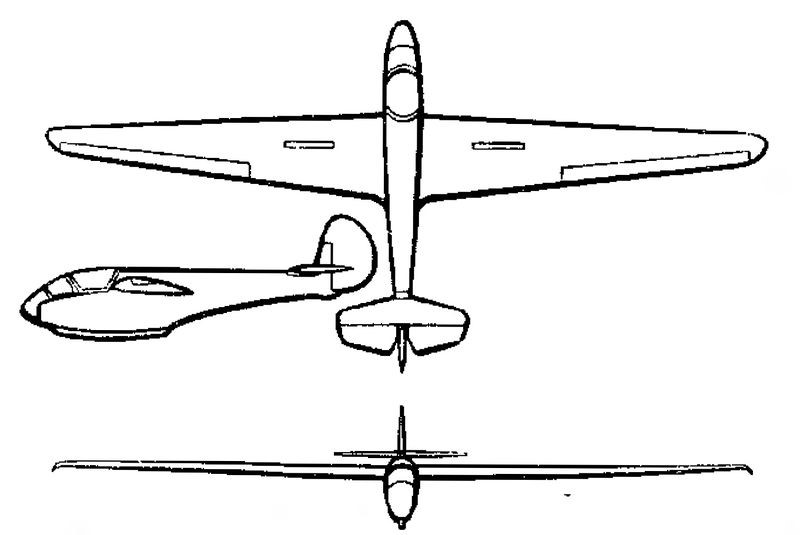
Between 1947 and 1948, the test pilot and aeronautical constructor Alexei Ivanovich Pietsuj developed two new projects at the MAI that were called PAI-5 and PAI-6. The Pietsuj PAI-5 (Russian: Пьецух ПАИ-5) was designed as a single-seater competition glider and was built at the GK NII VVS experimental factory in 1947.
The PAI-5 was designed as a high cantilever glider with a small trapezoidal wing.
The glider was built entirely of wood. The fuselage had a simple construction made up of a series of frames joined by four stringers. The outer covering was made with plywood. The wings had an R-Sh profile. The wingtips were covered with plywood and the rest with paint coated fabric.
The horizontal tail plane was raised to the top line of the fuselage and positioned in front of the vertical empennage.
The landing was made on a wooden ski, with a trunk structure, located in the lower part of the fuselage.
The cockpit, located in front of the wing, was closed by a cover that protruded from the upper line of the aircraft.
The PAI-5 glider was tested in February 1948. Pietsuj himself flew the model in front of a group of renowned test pilots, most notably Air Marshal Ye. During the test flight the complete set of high school aerobatics was executed and an overload of 8g was achieved at speeds of 220 km / h.
During the celebration of Air Fleet Day in 1948 Pietsuj made a demonstration of high school piloting. For the design and construction of this glider AI Pietsuj received the Order of the Red Star.
Pietsuj, Alexei Ivanovich
Alexei Ivanovich Pietsuj (Russian: Алексей Иванович Пьецух) was born in 1918 in Vínnitsa, Ukraine. At age 16, he built a small glider, called PAI-1, in which he learned to fly and demonstrated at Aviation Day parties in Kiev. For this device he would receive the award for the youngest constructor in the national competition for light aircraft.
Later, working in the Osoaviajim Glider Factory and under the direction of Oleg Konstantínovich Antonov and BN Sheremetiev he would build his second model, called PAI-2 “Pavel Golovin” in 1937, followed by PAI-3in 1937 itself. Pietsuj worked as a teacher at the glider school, developing the PAI-4 tailless glider in that period.
From 1939 on he was called up to serve in the ranks of the Red Army.
During the Great Patriotic War he served as a tug pilot in the glider section of the air landing troops. He was tasked with piloting an Ilyushin Il-4 to tow gliders towards the front line, but Pietsuj requested a fight. After his request was denied three times, in reply he made a dead link between Nesterov and the Il-4. His performance was branded as “dangerous vandalism”, for which he was handed over to a court, demoted to the ranks and sent to a punishment battalion. On his first night he made seven combat sorties in a Polikarpov Po-2 bomber. After two months the accusation was withdrawn in court.
As a pilot of the 44th Guards Bombardment Aviation Regiment and the Don Red Flag belonging to the 9th Guards Bombardment Division, he carried out 91 combat sorties. He participated in the fighting for Warsaw.
In the spring of 1945 in Germany and with the help of several soldiers, he managed to assemble a flight-capable Messerschmitt Me-410 using components from three aircraft. At the controls of the Me-410 he airlifted it to Moscow. In June this aircraft was tested on the NII VVS.
After the victory he began working as a test pilot in the GK NII VVS, serving in the V. Ye squad. Golofastov. At this stage he built the PAI-5 (1947) and PAI-6 (1949) gliders with aerobatic capacity, which participated in several aerial demonstrations for the Air Fleet Day in Túshino. He was the test pilot PAI-5 (02- 1948) towed gliders Antonov A-7 from Ilyushin Il-4. As a test pilot he flew in more than 60 types of aircraft and gliders.
In the early 1950s Pietsuj organized a student construction bureau among the students of the Moscow Aviation Institute. In this institution he developed the glider models PAI-6M (1952), MAI-56 (1956), MAI-63 (1964), MAI-68 “Pushinka” (1970) and the MAI-58 (1958) and MAI- 62 (1962), as well as the MAI-63M motor glider. He personally tested the MAI-53 models in 1954, MAI-56 in 1958, MAI-62 in 1965, MAI-63 in 1964 and MAI-63M in 1965.
He lived in the village “Liotchik Ispitatiel” (Test Pilot) of the city Iksha, in the Moscow suburbs. He built a house made of bottles there. He died in 1994.
Military grade
Captain
Awards and distinctions
Order of the Great Patriotic War Second Class (5-02- 1988)
Twice Order of the Red Banner (04- 1945, 1948)
Medals
Pietsuj was the author of several articles published in the pre-war period in the magazine “Samoliot”.
He wrote the book “Krylya Molodiozhi” (Youth Wings), published by the Moscow publishing house “Oborongiz” in 1954.
Pietenpol
Bernard H Pietenpol built two early single-place, open cockpit biplanes, one powered by a 50hp Gnôme rotary engine and the second, in 1923, powered with a Ford Model T.
1980: B.H. Pietenpol, Spring Valley, MN 55975, USA
1995: 1604 Meadow Circle S.E., Rochester, MN 55904-5251, USA.
Pierce Arrow
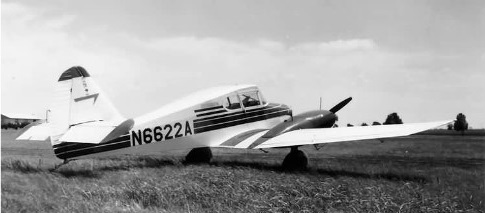
The Langley 2-4, aka Langley Monoplane or Langley Twin twin-engine utility aircraft built in the United States in 1940. The aircraft was designed to make use of non-strategic materials in its construction and thereby avoid any shortages brought about by war. Two prototypes were constructed, one with 65 hp (49 kW) engines, and another with 90 hp (67 kW) engines. The second machine was purchased by the United States Navy and evaluated as the XNL-1, but the navy did not order the type.
The XNL-1 was sold as war surplus. The Langley was landing in Oklahoma in 1965 and after touch down the brakes locked flipping the airplane over and damaging the fuselage beyond economical repair.
John Pierce and Hurley Boehler had a Stinson 108 fuselage in their hangar without wings, so they decided to purchase the Langley and, following the accident, its wings, engine nacelles, and main undercarriage were mated to a Stinson 108 fuselage to create a one-of-a-kind homebuilt aircraft named the Pierce Arrow, model U-2, serial number 1.
Construction of the airplane occurred at Harvey Young Airport, Tulsa, Oklahoma. Several old timers including John Pierce, Hurley Boehler and Jerry Hinds participated. The name came from Hurley Boehler who said “call it a Pierce Arrow.” Then Jerry Hinds, who was present, said “you two guys are crazy.” From this conversation came the type (Pierce Arrow) and the model (U-2 as an abbreviation for “you two”).
The Stinson 108 fuselage had the original Franklin engine removed and a nose cover added along with a new windshield.
The airplane was licensed in the experimental category as amateur built. FAA records for the airplane shows the approval for flight was issued on July 8, 1966. At this time the airplane was powered by the original engines installed on the Langley Twin, Franklin 90 Hp engines driving Flottorp 70KA54 fixed pitch props.
Toward the end of 1967 the engines were replaced with Lycoming O-290-D engines (115 Hp) driving Sensenich M74DM props. About 1980, the airplane was re-engined, this time with Lycoming O-320 engines driving McCauley 74-64 props.
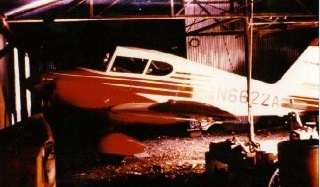
One big draw back was the small fuel tanks of the Langley twin, only 17 USgallons each. To extend the range when flying cross country Jerry Hinds often shut down one engine. As fuel drained he would then restart the engine then shutdown the other engine.Normal cruise was 150 MPH, rate of climb was 2,000 FPM, service ceiling 18,000, and single engine best rate of climb 750 FPM.
FAA records show that it changed registered owners 6 times, with John Pierce being the registered owner twice.
One owner is listed on some forms but apparently it was never actually registered to Joe Kennison as there is no bill of sale or registration in his name. Jerry Hinds purchased the airplane in June 1981 and he was the last registered
owner on the FAA records. At the time Jerry purchased the airplane it had 551 hours flying time.
Jerry Hinds sold the airplane about 1986). He traded the Pierce Arrow for a Swift to an individual in Aerococa, New Mexico. Apparently the new owner never actually registered the airplane.
The Pierce Arrow was flown in formation with a Pitts Special, named “Foxy Lady,” owned and flown by Mike, a friend of Jerry Hinds. Jerry and Mike flew the pair in airshows in addition to a Swift Jerry owned.
This airplane appeared on the April 1974 cover of Plane and Pilot magazine.
The last information was the airplane was owned by Jimi Genzling of New Mexico.
Pieniazek Kukulka / Cuckoo
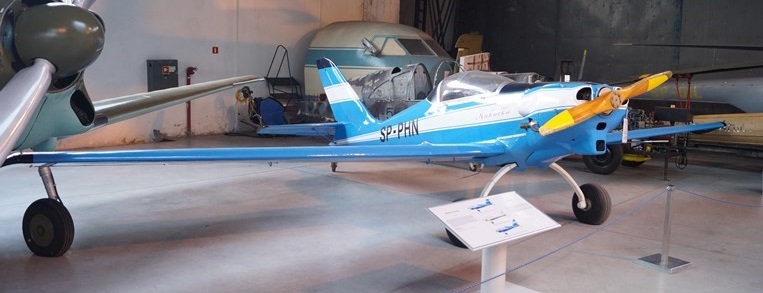
Eugeniusz Pieniazek was well-known pilot in aviation circles in 1960s Poland, he flew gliders in Polish aviation exhibitions in Sweden, but then the Polish security service tried to recruit him. When he wouldn’t cooperate, they started a file on him and refused to grant him permission to fly. He lost his job and his passport — but, crucially, not his pilot’s license.
Using a Continental aircraft engine and parts from different gliders — the tail from a Foka, the wings from a Swallow — he began assembling an aircraft in his 7-year-old daughter’s bedroom in their apartment in Leszno, about 200 miles west of Warsaw. The tail extended into the hallway.
As each component was completed, he lowered it out his first-floor window and then took it to a nearby hangar for storage and assembly. The wooden plane, which his daughter named the Kukulka, or Cuckoo, wasn’t even that secret. It was the first self-constructed plane registered with Polish authorities, and the national media picked up the story.
After 26 months, the Cuckoo was airworthy. Pieniazek flew it on short trips around Poland for months. In that time, he trained 44 other pilots in the Cuckoo, including several women.
On September 13, 1971, Poland’s borders were difficult to cross. Once airborne, Pieniazek opted to fly due south across Hungary to what was then Yugoslavia. Even though it too was under communist rule, Marshall Tito had broken with Stalin and the Soviet Union in 1948, and since then the country had more or less gone its own non-aligned way. But that route meant flying across the eastern end of Czechoslovakia (now Slovakia) as well as Hungary, both part of the Eastern Bloc. Nevertheless, Pieniazek set off in the middle of a storm and never turned back.
Pieniazek’s supporters didn’t know for months whether he’d made it or not, and the country mourned what they assumed was the loss of their pilot hero. In fact, by flying low under the radar and following railway lines — his main navigational tool was a road map — he had managed to land safely just inside the Yugoslav border in the town of Subotica (now in Serbia) after a four-hour flight.
Without a passport, he immediately was arrested and thrown in prison. The Yugoslavian authorities apparently never informed Poland that they’d taken their do-it-yourself airman prisoner. Seven months went by. Then, one day, the warden simply told Pieniazek to leave (Yugoslav officials held onto the Cuckoo). The airman was taken to the Austrian border, where he managed to successfully apply for asylum in Sweden.
Once in Sweden, Pieniazek spent two years arranging for his family to join him. After some time he was able to retrieve Kukulka. Pieniazek drove to Yugoslavia, paid for two years of hangar storage fees and towed the Cuckoo back to Sweden behind their Volkswagen Beetle with the plane’s wings tied on top. The plane sat at the airport for 17 years before restoration and registration had her back in flight condition.
Eventually, both the Cuckoo and Pieniazek ended up back in Poland. After the end of communist rule in Poland, in 1989, Pieniazek returned home to Leszno, where he founded the Experimental Aviation Association and continued to build planes
In 2005 the Cuckoo took up residence at Krakow’s Museum of Aviation.
Pieniazek, Eugeniusz
Eugeniusz Pieniazek was well-known pilot in aviation circles in 1960s Poland, he flew gliders in Polish aviation exhibitions in Sweden, but then the Polish security service tried to recruit him. When he wouldn’t cooperate, they started a file on him and refused to grant him permission to fly. He lost his job and his passport — but, crucially, not his pilot’s license.
Using a Continental aircraft engine and parts from different gliders he assembled a wooden plane, which his daughter named the Kukulka, or Cuckoo, in their apartment in Leszno, about 200 miles west of Warsaw. This wasn’t a secret. It was the first self-constructed plane registered with Polish authorities.
On September 13, 1971, Pieniazek flew south in the middle of a storm across Hungary to what was then Yugoslavia. Even though it too was under communist rule, Marshall Tito had broken with Stalin and the Soviet Union in 1948, and since then the country had more or less gone its own non-aligned way.
Pieniazek’s supporters didn’t know for months whether he’d made it or not, and the country mourned what they assumed was the loss of their pilot hero. In fact, by flying low under the radar and following railway lines — his main navigational tool was a road map — he had managed to land safely just inside the Yugoslav border in the town of Subotica (now in Serbia) after a four-hour flight.
Without a passport, he was immediately arrested and thrown in prison. The Yugoslavian authorities apparently never informed Poland that they’d taken their do-it-yourself airman prisoner.
Seven months went by. Then, one day, the warden simply told Pieniazek to leave (Yugoslav officials held onto the Cuckoo). The airman was taken to the Austrian border, where he managed to successfully apply for asylum in Sweden, leveraging the contacts he’d made there doing air shows a decade earlier.
Once in Sweden, Pieniazek spent two years arranging for his family to join him. As a precautionary measure, two years before escaping, he’d divorced his wife out of fear for her safety, and that meant she was free to enter a sham marriage with a Swede and emigrate with their daughter to join Pieniazek.
Pieniazek became a political refugee in Sweden, but after some time he was able to retrieve Kukulka. Pieniazek drove to Yugoslavia, paid for two years of hangar storage fees and towed the Cuckoo back to Sweden behind their Volkswagen Beetle with the plane’s wings tied on top. The plane sat at the airport for 17 years before restoration and registration had her back in flight condition.
After the end of communist rule in Poland, in 1989, Pieniazek returned home to Leszno in Poland, where he founded the Experimental Aviation Association and continued to build planes, barely remembered for his place in Polish history, until his exploits were featured in a 1998 Polish documentary. Then, in 2005, he was the subject of an episode in a national TV series titled Great Escapes. That same year the Cuckoo took up residence at the Krakow’s Museum of Aviation, where it is still displayed.
Piel CP.328 Super Emeraude / CP.1310 / CP.1315
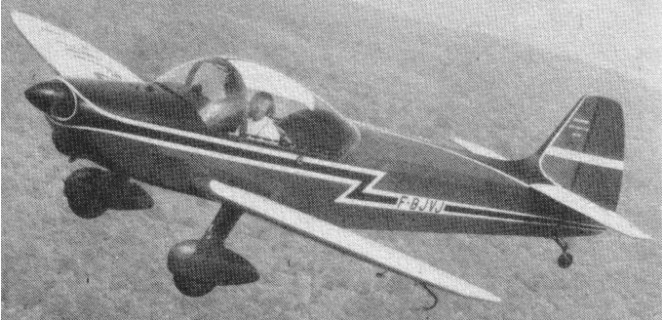
The C.P. 328 Super Emeraude is a side by side two seat, low wing aircraft designed by Claude Piel. Construction materials are wood & fabric, and the landing gear is a fixed tailwheel.
The most significant improvement in the Super Emeraude is a reinforced structure to allow the use of engines up to 150 hp and to be fully aerobatic when flown solo. It is distinguished by a larger and swept-back vertical tail, which improves directional stability. Other¬wise the airplane has all modern features including: slotted flaps, slot¬ted ailerons, single-leg landing gear, steerable tail wheel and sliding canopy. The Super Emeraude is approved for categories N, U and A.
The tail may be built in a straight or swept configuration.
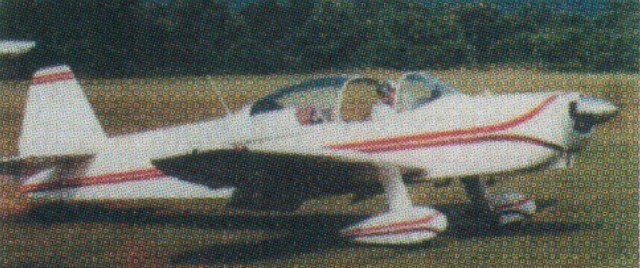
Scintex SA, a mechanical and electrical equipment manufacturer, held an exclusive license to build improved versions of the Piel Emeraude. They built the Super Emeraude with fixed landing gear as the CP1310/CP1315.
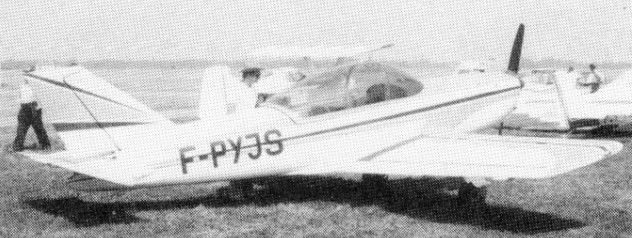
Engine: Continental, 100 hp
Span: 26.5 ft
Length: 21.0 ft
Height: 6.3 ft
Area: 117 sq ft
Empty Weight: 800 – 900 lbs
Gross Weight (N): 1545 lbs
Gross Weight (U): 1455 lbs
Gross Weight (A): 1125 lbs
Fuel: 185 lbs
U/C Track: 6.72 ft
Baggage: 100 lbs
Dihedral: 5° 40′
Incidence: 4° 10′
Max Speed: 143 mph
Cruise 75% 5,000 ft: 136 mph
Cruise 65% 5,000 ft: 127 mph
Range: 620 miles
T/O Distance: 600 ft
Rate Of Climb: 780 fpm
Stall Speed Flaps Up: 60 mph
Stall Speed Flaps Down: 56 mph
Max Speed Flaps Down: 93 mph
Approach Speed Flaps Down: 65 mph
Optimum Takeoff Speed: 72 mph
Vne: 172 mph
Complete set of plans 2009: US$325
Engine: Lycoming115 hp
Span: 26.5 ft
Length: 21.0 ft
Height: 6.3 ft
Area: 117 sq ft
Empty Weight: 800 – 900 lbs
Gross Weight (N): 1545 lbs
Gross Weight (U): 1455 lbs
Gross Weight (A): 1125 lbs
Fuel: 185 lbs
U/C Track: 6.72 ft
Baggage: 100 lbs
Dihedral: 5° 40′
Incidence: 4° 10′
Max Speed: 150 mph
Cruise 75% 5,000 ft: 142 mph
Cruise 65% 5,000 ft: 135 mph
Range: 620 miles
T/O Distance: 450 ft
Rate Of Climb: 780 fpm
Stall Speed Flaps Up: 60 mph
Stall Speed Flaps Down: 56 mph
Max Speed Flaps Down: 93 mph
Approach Speed Flaps Down: 65 mph
Optimum Takeoff Speed: 75 mph
Vne: 172 mph
Complete set of plans 2009: US$325
Scintex CP 1310 Super Emeraude
Engine : Continental, 99 hp
Length : 21.161 ft / 6.45 m
Height : 8.038 ft / 2.45 m
Wingspan : 27.067 ft / 8.25 m
Wing area : 118.404 sq.ft / 11.0 sq.m
Max take off weight : 1455.3 lb / 660.0 kg
Max. speed : 127 kt / 235 km/h
Service ceiling : 14108 ft / 4300 m
Wing load : 12.3 lb/sq.ft / 60.0 kg/sq.m
Range : 540 nm / 1000 km
Crew : 2
CP.1315
Engine: Lycoming, 150 hp
HP range: 150-160
Length: 21.65 ft
Wing span: 25.9 ft
Wing area: 119.5 sq.ft
Height: 8.3 ft
Weight empty: 1190 lb
Gross: 2075 lb
Fuel cap: 55 USG
Speed max: 196 mph
Cruise: 161 mph
Range: 950 sm
Stall: 53 mph
ROC: 1220 fpm
Take-off dist: 650 ft
Landing dist: 850 ft
Service ceiling: 13,000 ft
Seats: 2/3
Landing gear: tail wheel retractable
Piel CP.30 / CP.301 Emeraude / CP.315 Emeraude / Genair Aeriel Mk II / Garland-Bianchi Aircraft Co Linnet / Fairtravel Ltd Linnet / Scintex CP301C / Schempp-Hirth Emeraude / Smaragd
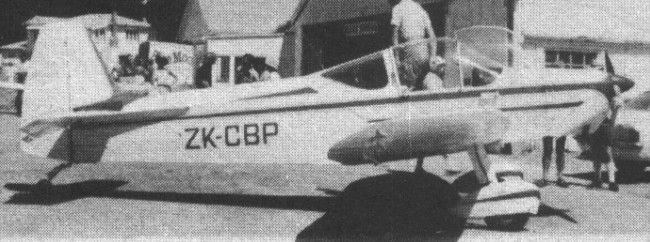
Designed in France by M.M. Blaircacq and M. Claude Piel, the prototype Emeraude CP 30 was powered by a 65 h.p. Continental engine and first flew in 1952. A later development, designated CP 301A is fitted with a 90 or 100 h.p. Continental engine.
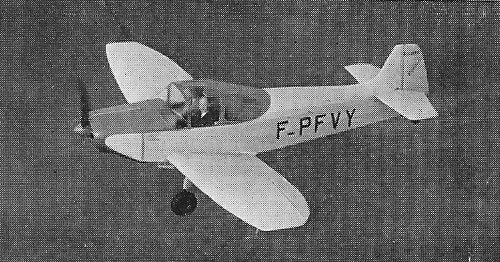
The Emerald seats two people side by side and has dual controls. The fuselage is a rectangular wooden framed structure with curved top decking and fabric covering. The fin is built integral with the fuselage. The tailplane is a single spar all wood unit. The rudder and elevator are fabric covered. The wings are of NACA 23012 section. The inner portion of the wing is rectangular, and the outer part elliptical. The leading edge forward of the box type spar, is plywood covered to form a torsion box. The remainder of the wing including the ailerons is fabric covered. Slotted flaps are fitted inboard of the ailerons. The main landing gear utilises rubber in compression, and the tailwheel is mounted on a leaf spring. A 17.6 Imp. gallon fuel tank is located behind the firewall with provision for an auxiliary tank of 8.8 gallons.
The Scintex Emeraude (65 hp. A65 or 90 hp.), designed by M. Claude Piel, this two seat light monoplane is built under licence by three French companies, of which Scintex S.A. is the major one.
Scintex SA, a mechanical and electrical equipment manufacturer, held an exclusive license to build improved versions of the Piel Emeraude. Built the CP301C, also in C1, C2 and C3 versions, and the two-seat Super Emeraude with fixed landing gear as the CP1310/CP1315.
The aircraft is also supplied in kit form for amateur construction. Its loaded weight is 1,350 lb. and its cruising speed 122 m.p.h. Range is 590 miles.
Schempp-Hirth KG licenced built Emeraude and Smaragd before passing production to Binder Aviatik KG in 1966. Production began of the CP 301 S Smaragd. Built under license, this aircraft was a deluxe version of the Piel Emeraude.
Durban-based (Genair / General Aircraft (Pty.) Ltd.) built the Piel Emeraude two-seat light aircraft under the name Aeriel Mk II. First prototype flown in October 1959, and first production aircraft in February 1960. Aeriel was subsequently built by Southern Aircraft Construction and Robertson Aircraft Sales, but in September 1962 Durban Aircraft Corporation was formed to continue its construction.
Garland-Bianchi Aircraft Co was formed in 1955 by P. A. T. Garland and D. E. Bianchi to license-build the Piel CP.301 Emeraude two-seat light aircraft, subsequently renamed Linnet. Built two aircraft before a new company, Fairtravel Ltd, was formed by AVM Don Bennett to take over production. Fairtravel Ltd. built three more Linnets, the last being delivered in 1965.
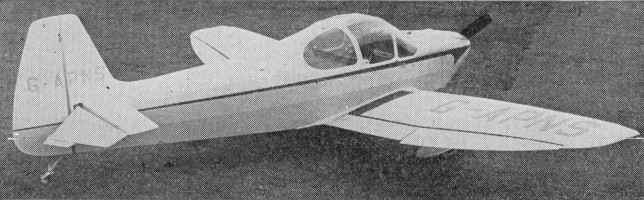
The Garland-Bianchi Linnet first flew at Fair Oaks airfield in August 1958.
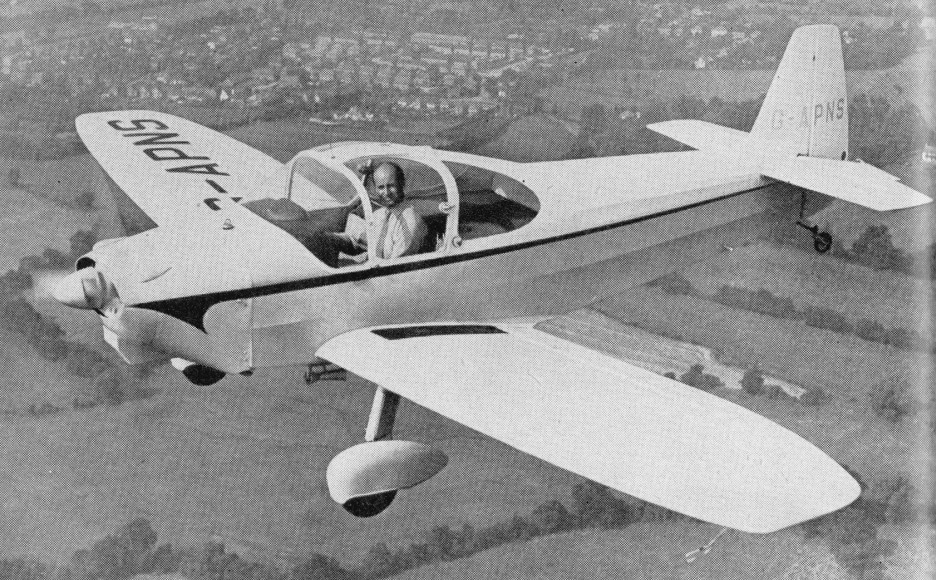
The Fairtravel Linnet was selling at £2,395 ex-works, the standard Linnet has a 105 h.p. Continental O-200 engine, full blind-flying panel with venturi-driven, reconditioned instruments, standard 18 Imp gal fuel tank and an indicated cruising speed, using 72 % power at sea level, of 116 mph. Its useful load makes it possible to carry two people, the full optional 28 Imp gal of fuel and 60 lb of luggage or equipment, for a maximum range of 645 miles.
Delivery time of a few weeks is being quoted.
It operates in the normal category at a gross weight of 1,4001b, but the claim is made that it could obtain clearance for aerobatics at a weight limited to 1,2851b, which would still allow two people and normal fuel to be carried.
Flight International flew the first Fairtravel Linnet, G-APRH, at Blackbushe with AVM Bennett and found it corresponded quite closely to the French original.
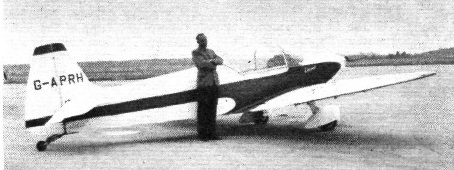
It achieved its 116 mph cruise speed at 1,000ft. Elevator ttim, worked from a lever between the seats, was so effective that the aircraft could easily be flown with this rather than with the stick. Dual control is standard, but the right stick can be unclipped and stowed. Trim changes following flap movements were virtually cancelled out by a separate elevator trim tab linked with the flaps. Heel brakes and spring-connected tailwheel made ground handling easy. Visibility through the optional sliding canopy (a hard top with doors is standard) was excellent.
Full blind-flying panel as part of the standard aircraft and the electrical system and starter are standard, as are stall warning horn and fuel-boost pump. A heater is standard.
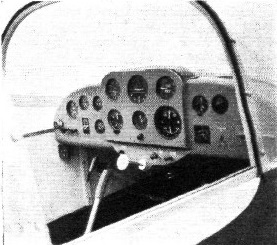
The original Linnet had a short undercarriage, which gave a very flat ground angle, making three-point landings difficult to achieve without touching the tailwheel first. The legs were to be lengthened by 3in in future aircraft.
The Garland-Bianchi built Linnet II, powered by a Continental C90-14F, were;
c/n 001 G-APNS first flown in 1958
c/n 002 G-APRH first flown in 1959, written off on 5 May 1967
c/n 003 G-AFVO not completed and sold to Fairtravel and finished as G-ASFW first flying in 1963
Two Linnet II were completed by Fairtravel with revisions including a one-piece rearward sliding canopy and powered by a Rolls-Royce/Continental O-200-A. These were;
c/n 004 G-ASMT first flying in 1964
c/n 005 G-ASZR first flying in 1965
A development of the CP.301 resulted in the Mudry CAP-10.
CP.30
Engine: Continental A65, 65 hp
Wingspan: 29 ft 6 n
Length: 21 ft
Height: 7 ft 4 in
Empty weight: 610 lb
Loaded weight: 1095 lb
Max speed: 118 mph at SL
Cruise: 105 mph
ROC: 882 fpm
Range: 830 mi
Engine: Continental, 90 h.p
Span: 26’ 6”
Length: 19’ 9”
Wing Area: 116.7 sq. ft
Empty Weight: 838 lb
Loaded Weight: 1410 lb
Wing Loading: 12.1 lb/sq. ft
Max. Speed: 134 mph
Cruise Speed: 121 mph
Stall Speed: 50 mph
Initial Climb: 785 fpm
Range: 590 miles
Fairtravel Linnet
Engine: Continental O-200, 105 hp
Span: 26 ft 5 in
Length: 20 ft 9 in
Wing area 116.8 sq.ft
Empty weight 8101b
Gross weight: 1,400 lb
Fuel capacity, standard: 18 Imp gal
Fuel capacity, optional: 28 Imp gal
Wing loading: ll.5 lb/sq.ft
Power loading: 23.31 bhp /sq.ft
Maximum speed: 132 mph
Cruising speed 72% power: 116 mph
Economical cruising speed: 109 mph
Max range 103 mph 28 Imp gal: 643 miles
Take-off run: 900 ft
Take-off to 50ft: 1.500 ft
Landing run: 820 ft

