This little bubbletop trainer was the world’s first fiberglass airplane. It bore a deceptive similarity to the Tomahawk, with which it has nothing in common. Heralded as Piper’s next generation trainer when it was previewed by the press in 1962, the airplane was quietly dropped: the potential profits weren’t worth the risks of being a plastics pioneer.
Only the one was built, N2900M, first flying on 30 April 1962.
A side by side two seat training aircraft, construction was all plastic / glassfibre honeycomb construction and fitted with a fixed tricycle undercarriage. The aircraft is fitted with one piece full span flaperons and the canopy slides rearwards.
The aircraft is now preserved at the Piper Aviation Museum at Lock Haven.
Engine: Lycoming O-235-C1B, 108 hp Wingspan: 25 ft 0 in Length: 21 ft 6 in Height: 7 ft 0 in Empty weight: 803 lb Loaded weight: 1500 lb Seats: 2
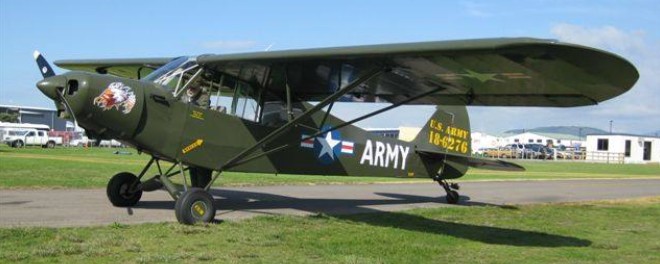
Early in 1948 Piper was developing the PA-19, which was a version of the PA-11 Cub Special for the U.S. Army. Only three were built and the first of them, N5011H (Ser. No. 19-1), would serve as the certification test bed for the installation of the Continental C-90-12F, Lycoming O-235-C1 and O-290-D.
The PA-11 airframe was unchanged, except for a revised center section and the use of the more rounded rudder that was first used on the J-4 Cub Coupe. A sporty 90hp Continental-powered version of the Vagabond with Clipper wings, which was to be a mate with the 90hp PA-11 for the 1949 model year.
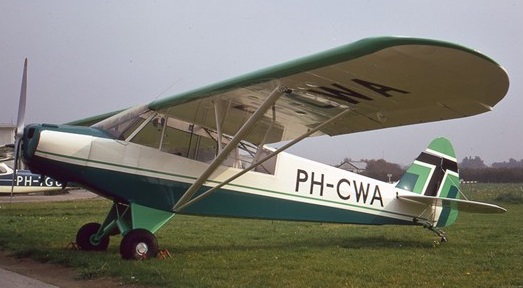
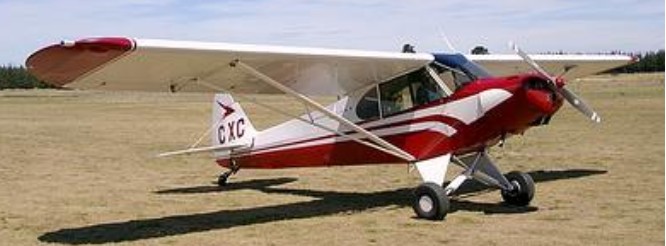
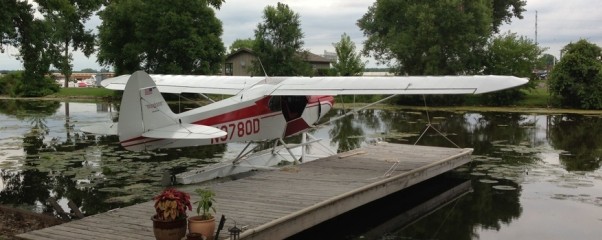
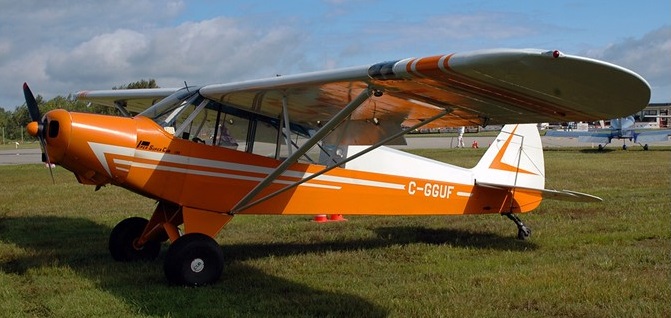
Military orders for the PA-19 that Piper Aircraft hoped for did not immediately materialize, so the company decided to ”civilianize” the design and market it as the Super Cub. Rather than advancing to the next model designation, which would have been PA-20, Piper chose to go backward and assign the unused PA-18 designation to the Super Cub.
Ot the three PA-19s were built: the first became the test bed for the PA-18-90 and -105 models; the second example became the test bed for the PA-18-125 and -135; and the third was built and sold to the Department of the Interior and used by the Fish and Game Commission. This PA-19 existed in 2009 and was flying in Alaska.
Early in 1948, Piper assigned the model designation PA-18 to an improved version of the PA-17 Vagabond, which was to be introduced to the marketplace in 1949. A sporty 90hp Continental-powered version of the Vagabond with Clipper wings, which was to be a mate with the 90hp PA-11 for the 1949 model year. A prototype was built and tested, but Piper decided to cancel the program early in 1949.
In October 1948, the Army approached Piper with a request for a new model: a light aircraft to be used for utility, training and patrol, similar to the previously built L-4. But it needed to be different in some ways to allow an opening for the L-18 light observation and utility aircraft contract.
Piper was just starting to get back on its feet from the aviation business crash of March 1947 and was very willing and able to devote attention to this request. So in January 1949 Piper responded with a proposal of a model known as the PA-19. At that time the PA-18 model number had been assigned to the 90hp Continental-powered version of the Vagabond with Clipper wings.
The PA-18 Vagabond programme was cancelled, leaving the number 18 open. As the development of the PA19 continued (the Army was very interested in the first one, having both the Continental 90hp and then a Lycoming 108hp engine installed), Piper looked at the possibility of making a civilian version of this aeroplane during the latter half of the 1949 model year, deleting some of the items the military had requested.
This would then be called the PA-18, and the Type Certificate 1A2 already assigned to the PA-19 would be updated to include the PA-18 as well. Hence the first PA-18 was born gaining type certification on 23 November 1949, patterned after the first PA-19 built in January that year. Both were powered with the Continental C90-8 engine.
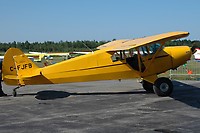
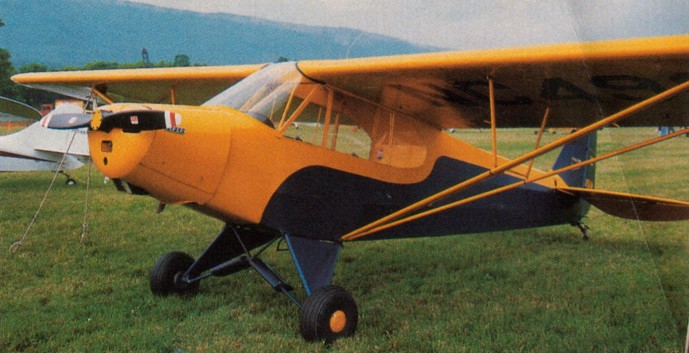
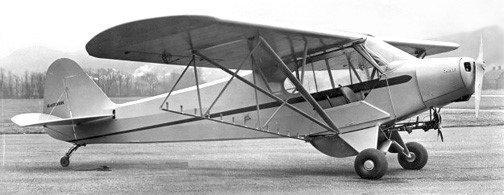
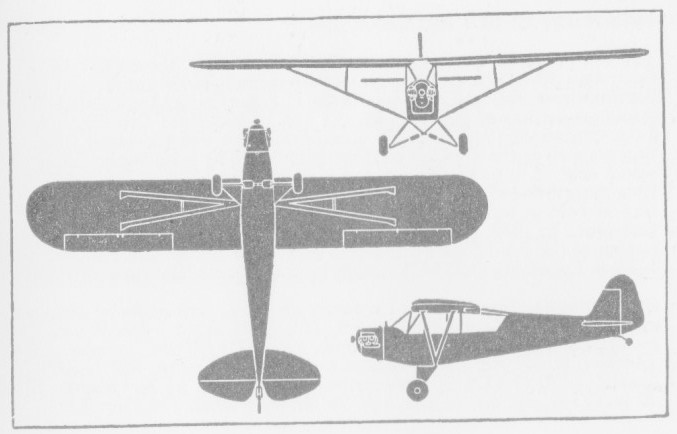
The new civilian aircraft was the PA-18-90 Super Cub, very much like the 90hp PA-11 but better. Only three PA-19s were built: the first became the test bed for the PA-18-90 and -105 models; the second example became the test bed for the PA-18-125 and -135; and the third was built and sold to the Department of the Interior and used by the Fish and Game Commission.
The PA-18-105 was powered with a Lycoming O-235-C1. It had a larger horizontal tail, with balanced elevators and flaps (from the PA-20 parts bin). The PA-18-105s were only built from January to October of 1950 when that model was replaced by the PA18-125.
Piper PA-18-105 Super Cub
So the first full year of production was the 1950 model year and these two models were on the market. For 1951 the 90hp / 67kW version continued with the C90-12 engine and the PA-18-105 was replaced by the O-290-D Lycoming powered PA-18-125, which had wing flaps and the big tail, and oil cooler scoop on top of the cowling.
The very first Super Cub was N5410H, Ser. No. 18-1. It is still on the FAA’s books (2006) – registered to Eugene Frank of Caldwell, ID, who has been deceased for a number of years.
In 1952 the 125hp models gave way to the PA-18-135 with a Lycoming O-290-D2, production beginning in May of 1952. Two wing tanks standard with this model, with a right wing tank changed from optional to standard. The oil cooler scoop was moved to the bottom of the cowling. The PA-18-90 production continued and actually lasted until 1961, when a Piper employee bought the final example of that model.
In 1955 the 150hp Lycoming O-320 engine became available and was adopted as the standard engine for the PA-18-150. A few PA-18-135s were still built after that, but very few.
The PA-18-150 continued in production right up until the last one was produced as a 1983 model, actually built in November 1982. This was ferryed from Lock to Lubbock, Texas, during the New Year holiday vacation of 1982-83.
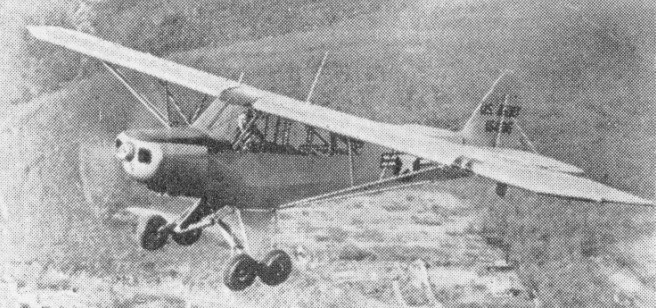
The military also utilised some special versions of the PA18. The first was known as the L-18C, a PA-18-90 with the observation greenhouse rear enclosure and first coming out in July 1950. N 1951 two YL-21, 51-6495 and 51-6496, enlarged PA-18 were used for evaluation.
In 1951 the military began receiving L-21A models, redesignated as U-7 in 1962, a military version of the PA-18-125. One-hundred and fifty, 51-15654 to 51-15803, were enlisted, of which some modified with full dual-controls as TL-21A trainer. In 1952 the L-21B, a military version of the PA-18-135, became available. 584 were built, of which 14 were transferred to other nations under Mutual Aid.
Several versions of the civil Piper PA-18 Super Cub were in service with the U. S. Army Field Forces under the designations L-18 (90 h.p. Continental) and L-21 (135 h.p. Lycoming) in 1955. The L-21B has tandem wheels for operation from rough ground. About 270 Piper 18-T trainers were being used by civil schools for initial training of U.S.A.F. pilots in 1955.
L-21B
The PA-18-95 was powered with a Continental C-90 engine. Like the PA-11 from which it was derived, it had no flaps, had a straight elevator (no counterbalancing horns) and one 18 gallon fuel tank in the left wing. Another 18 gallon tank for the right wing was optional. The initial price in 1949 was $5,850. Surprisingly, even though more powerful models were being manufactured, the PA-18-95 continued in production until 1961.
Also in 1952 was the PA-18-105 Special, or PA-18T, built for the Civil Air Patrol and the US Army and Air Force flying clubs as a trainer. These models had the Lycoming O-235-C1 engine, toe brakes, no flaps and the big tail with an upper and lower elevator bungee spring system, along with some other special options. Two hundred and forty-three of these aircraft were built.
In 1955 Piper built a very small number of L-21B “Modified” models which utilised the 112kW Lycoming O-320 engine.
Several versions of the civil Piper PA-18 Super Cub were in service with the U. S. Army Field Forces under the designations L-18 (90 h.p. Continental) and L-21 (135 h.p. Lycoming) in 1955. The L-21B has tandem wheels for operation from rough ground. About 270 Piper 18-T trainers were being used by civil schools for initial training of U.S.A.F. pilots in 1955.
Another PA-18 model was the PA-18A (for Agricultural) which began with the 1952 model year. These were equipped for spraying or dusting of dry material from a hopper located in the rear seat area. The fuselage frame of these models was beefed up considerably and lacked the familiar turtle deck arches, giving it a flat back look. When production ended a total of 2,650 PA-18A had been built
So the first PA-18 was built in Lock Haven in November 1949 and the last was built in November 1982. A total of 10,326 units were built during that time. The financial situation leed to the company disposing of all rights in this aircraft to WTA Inc. of Lubbock, Texas, in 1981.
A total of 10, 222 models were built 1982.
When Stuart Millar bought Piper from a holding company in 1986, one of his desires was to put the PA-18 back in production as a fully assembled turnkey aircraft, and also as an owner-assembled, fully-certified kit aeroplane. Piper of Vero Beach, set out to create the Cub Kit Programme and help get the production version off the ground.
The first Vero Beach Super Cub was built in July 1988 as a $45.000 completed airplane or a $21,000 kit (minus engine and prop). In December 1989 the company filed for bankruptcy and the Cub Kit Programme was cancelled before any kits got out of the factory, but the production models continued through the bankruptcy and were built until December 1994 when the last Piper built Super Cub, N41594, rolled off the production line. One hundred and thirteen additional aircraft had been built in Vero Beach.
In total, Piper Aircraft built 10,326 Super Cubs between 1949 and 1994. Just 44 were built at Vero Beach – all the rest at Lock Haven. The biggest year for Super Cub production was 1953, when 1043 were built.
Some significant changes pertaining to the Super Cub’s production occurred. In 1970 the method of welding the fuselage frame was converted to TIG welding from oxyacetylene. Also that year saw a change from covering with grade A cotton to Ceconite 101.
The 1977 models went to metal flaps and ailerons, Cleveland wheels and brakes with 6.00 x 6 tyres as standard, and an Alcor alternator kit for the electrical system.
All models were certified under FAA 1A2, except the PA-18A-135 under FAA AR-7.
Piper built 838 PA-18s with the 71kW Continental C90-8F engine for the US Army under the designation L-18C, 108 of this total being supplied to foreign nations under the Military Aid Program, and the army then ordered 150 examples of the generally similar L-21A which differed by having the 92kW Avco Lycoming O-290-II engine; at a later date a number of these aircraft were converted for use as trainers, then being redesignated TL-21A. Under the designation YL-21 the US Army evaluated two examples of a version of the PA-18 Cub powered by a 101kW Avco Lycoming O-290-D2 engine, later acquiring a total of 584 under the designation L-21B, a number of them being supplied to foreign nations under MAP. In 1962 in-service L-21Bs were redesignated U-7A.
WTA Inc received from Piper rights to PA-18-150 Super Cub lightplane and PA-36 Brave agricultural aircraft; 250 Super Cubs built before becoming once again Piper type, while PA-36 produced as New Brave.
Chincul SACAIFI manufactured aircraft under license from Piper Aircraft Corporation. The company was a wholly owned subsidiary of “La Macarena S.A.”, Piper’s Argentine agent. Production included PA-18 Super Cub.
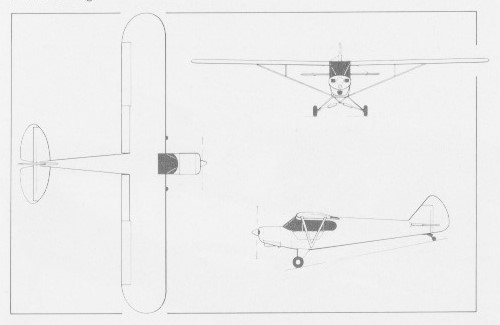
Piper PA 18 – 125 Super Cub Engine : Lycoming O-290 D2C, 123 hp Length : 22.507 ft / 6.86 m Height : 6.627 ft / 2.02 m Wingspan : 35.302 ft / 10.76 m Wing area : 178.037 sq.ft / 16.54 sq.m Max take off weight : 1565.6 lb / 710.0 kg Weight empty : 1045.2 lb / 474.0 kg Max. weight carried : 520.4 lb / 236.0 kg Max. speed : 109 kt / 201 km/h Initial climb rate : 866.14 ft/min / 4.4 m/s Service ceiling : 17110 ft / 5215 m Wing load : 8.82 lb/sq.ft / 43.0 kg/sq.m Range : 216 nm / 400 km Endurance : 3 h Crew : 2
PA-18-135 1952 Engine: Lycoming O-290-D2, 135 hp
PA-18 Super Cub 150 Engine: Lycoming O-320, 150 hp / 112kW TBO: 2000 hrs Prop: 2-blade, 74/76-in Length: 22ft 5in Height: 6ft 8in Wingspan: 35ft 3in / 10.73 m Wing area: 179 sq.ft / 16.58 sq.m Wing aspect ratio: 6.98 Maximum ramp weight: 1750 lbs / 794 kg Maximum takeoff weight: 1750 lbs / 794 kg Standard empty weight: 984 lbs / 446 kg Maximum useful load: 766 lbs Payload max fuel: 566 lb Maximum landing weight: 1750 lbs Wing loading: 9.77 lbs/sq.ft Power loading: 11.66 lbs/hp Maximum usable fuel: 215 lbs Fuel cap Std: 36 US Gal Best rate of climb: 960 @ 65 kts Climb gradient: 886 ft/nm ROC @ 8000 ft: 600 fpm Take off (50ft): 500 ft Service ceiling: 19,000 ft / 5790 m Maximum speed: 113 kts / 209 km/h / 130 mph Normal cruise @ 65% pwr @ 8000 ft: 100 kts Fuel flow @ normal cruise: 40 pph Endurance at normal cruise: 5.3 hrs Range max fuel/75% pwr: 400 nm/3.3hr Stalling speed clean: 40 kts Stalling speed flaps down: 37 kts Turbulent-air penetration speed: 83 kts Fixed tail wheel under carriage Seating cap: 2 Baggage cap: 50lbs 1.3 Vso: 48 kt Min field length: 885 ft Seats: 2
By the autumn of 1948, when the market was showing signs of recovery, Piper introduced the PA-17 Vagabond which was powered by a 48kW Continental A65-8 engine and again equipped with the ‘frills’ as standard. One aim of the PA-17 was to reduce a stockpile of materials held at Lock Haven.
The PA-17 Vagabond Trainer (ATC 805), designed soon after Piper began producing the PA-15, was a dual control, deluxe version of the PA-15. New were an engine primer for the 65hp Continental A-65 and bungee cord shock absorbers for the landing gear, and priced at $2,195.
Piper PA-17 N4835H
A total of 214 were built from May to October 1948.
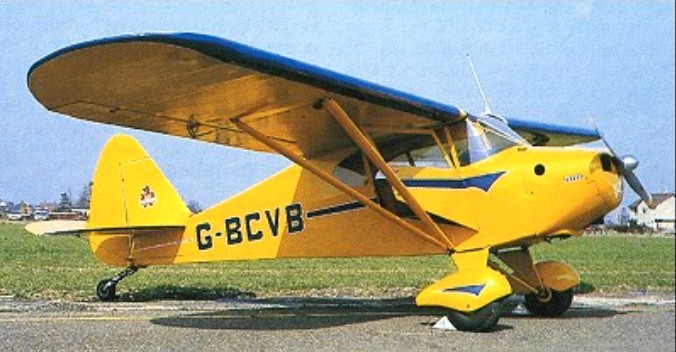
Piper in 1949 added to this success by introducing a four-seat version of the PA-15; designated PA-16 Clipper (TC 1A1), and powered by a 115-hp / 86kW Avco Lycoming O-235-C1 engine. Essentially an expanded Vagabond, the PA-16 Clipper was priced at $$2,995-$3,095.
Piper PA-16 N5852H
The prototype was completed in 1948 but all 724 units were produced in 1949. It had a front seat door on the left.
Following a complaint and suit threat by PanAm over the use of the Clipper name, the production was stopped in October of 1949, the design was modified for the O-290 engine, control wheels replaced the stick and slight mods to the landing gear was made and the production continued under the Pacer name in February of 1950. It was therefore the forerunner to the popular Tri-pacer.
Piper PA-16 Clipper Engine: Lycoming O-235-C1, 115 hp TBO: 2400 hr Fuel type: 80 Propeller type: FP Landing gear: Conv./Fixed Max ramp weight: 1650 lb Gross weight: 1650 lb Landing weight: 1650 lb Empty weight, std: 850 lb Useful load, std: 800 lb Payload, full std. fuel: 584 lb Useful fuel, std. (gals.): 36 USG Oil capacity: 6 qt Wingspan: 29 ft 2in Overall length: 20 ft 1 in Height: 6 ft 2 in Wing area: 147 sq. ft Wing loading: 11.2 lb/sq. ft Power loading: 16.2 lb/hp Seating capacity: 4 Cabin doors: 2 Cabin width (in.): 40 Baggage capacity: 50 lb Cruise speed 75% power: 97 kt Fuel consumption: 6.1 USgph Best rate of climb (SL fpm): 600 Best rate of climb, 8,000 ft: 300 fpm Service ceiling: 13,500 ft Vso: 43 kt Takeoff ground roll: 720 ft Takeoff over 50-ft. obstacle: 925 ft Landing ground roll: 600 ft Landing over 50-ft. obstacle: 875 ft
The first flush of sales success which followed the end of World War II was followed by a period of near disaster when the US government unloaded its accumulation of war surplus-aircraft on to an active market. This sudden influx of some 31,000 aircraft at highly attractive prices almost paralysed the activities of companies like Beech, Cessna and Piper that were building general-aviation aircraft for the popular market.
One of the steps taken to offset this situation being the design and development of a low-cost utility aircraft as a crash programme. Of the same general configuration as the Piper Cub, it reintroduced a shorter-span wing and a low-powered Avco Lycoming O-145-B2 engine, and there were no ‘frills’ as standard. Which meant, of course, that the basic practical flying machine could be obtained at low cost, and the more de luxe accessories could be added later, as and when they could be afforded. Designed around raw material at hand, the blueprints were completed in a little more than six weeks. Designated Piper PA-15, the prototype was flown for the first time on 29 October 1947 and this new machine was soon winning orders.
Powered by a 65 hp Lycoming and with rigid landing gear, production began in early January 1948 and priced at $1990.
By the autumn of 1948, when the market was showing signs of recovery, Piper introduced the PA-17 Vagabond which was powered by a 48kW Continental A65-8 engine and again equipped with the ‘frills’ as standard. When production ended, Piper had built a combined total of 585 of these PA-15 / PA-17 versions, 387 PA-15s.
Replica: Wag Aero Wag-a-Bond / Traveller
Ultralight replica: Rag Wing RW 11 Rag-a-Bond
Engine: Lycoming O-145-B2, 48kW Max take-off weight: 499 kg / 1100 lb Empty weight: 281 kg / 620 lb Wingspan: 8.92 m / 29 ft 3 in Length: 5.69 m / 18 ft 8 in Height: 1.83 m / 6 ft 0 in Wing area: 13.7 sq.m / 147.47 sq ft Max. speed: 164 km/h / 102 mph Ceiling: 3810 m / 12500 ft Range: 410 km / 255 miles
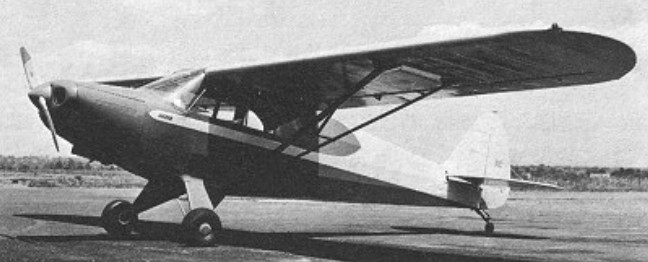
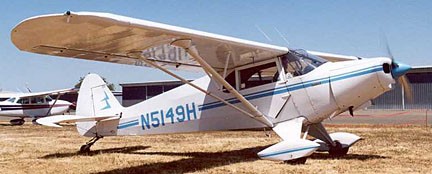
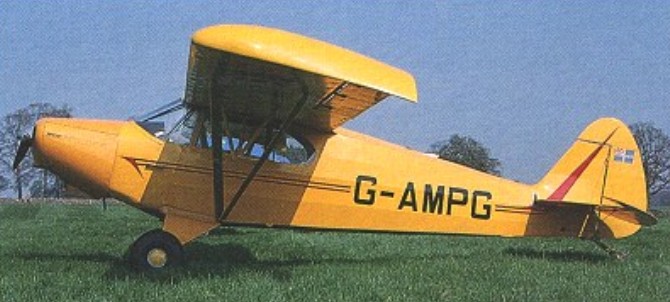
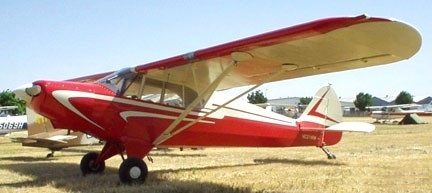
Piper discovered that it was beginning to lose sales to the lightweight four-seaters being marketed by its competitors. In an attempt to provide an aircraft of four-seat capacity without a resulting large price increase, the company revised the fuselage of the PA-12 to give additional width for four seats and installed an Avco Lycoming O-235-C1 engine.
Produced from May 1948 (ATC 797), the PA-14 had the 115 hp and slotted flaps. Although the resulting PA-14 Family Cruiser was offered at a keen price, $3,825-2,985, it failed to gain any real interest, and when production ended during September 1949 a total of only 232 had been built.
Piper PA-14 N5149H
Replica: Wag-Aero Sportsman 2+2
Engine: Lycoming O-235-C1, 86kW / 115 hp @ 2800 rpm Gross weight Normal: 1850 lb Gross weight utility: 1550 lb Empty weight: 1020 lb Wingspan: 35 ft 6 in / 10.82 m Wing area: 179.3 sq.ft / 16.66 sq.m Length: 23 ft 3 in / 7.06 m Height: 77 in / 1.96 m Prop diameter: 74 in Power loading: 17.1 lb/hp Wing loading: 10.3 lb/sq.ft Baggage capacity: 80 lb Fuel capacity: 38 USG Tire pressure: 18 lb/sq.in Max speed: 123 mph / 198 km/h Cruise: 110 mph Stall: 46 mph Rate of climb: 600 fpm Service ceiling: 12,500 ft Absolute ceiling: 14,500 ft Cruise range: 500 sm / 805 km Fuel burn: 7 USG/hr Seats: 4
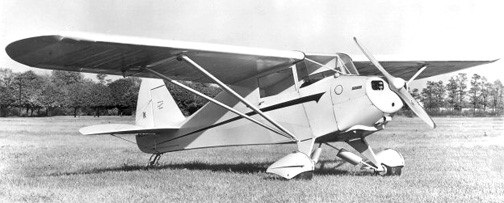
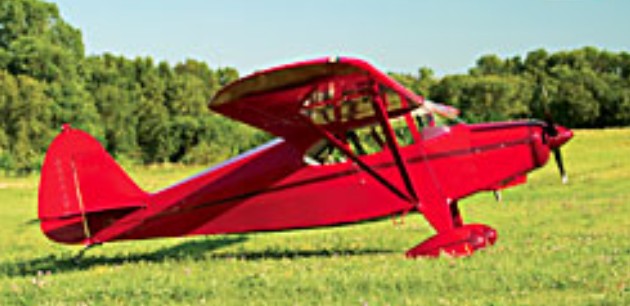
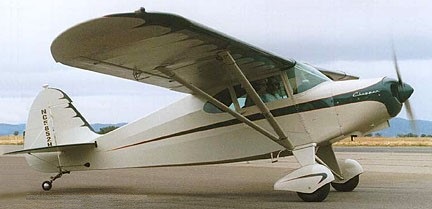
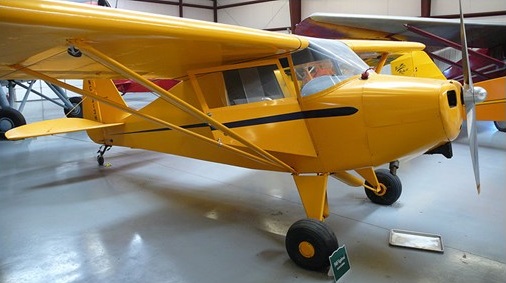
Although technically a three-seat aircraft, the Piper PA-12 Super Cruiser (ATC 780) was more usually used and regarded as a deluxe two-seater, and differed from the J-5C only in a number of cosmetic refinements including two wing tanks.
Dimensionally little had changed from the J-5C, and having the same 100 or 108 hp Lycoming O-235-C engine, the PA-12 had a maximum speed of 183km/h at sea level.
The prototype was flown in December 1945 and attracted so much attention that the company soon had an enormous backlog of orders at $2,995 in 1945, and $3,205 in 1947 (both less radio, starter and generator).
When production of this version ended in 1948 3,758 had been built. Lock Haven more than 3,500, Ponca City more than 250.
First around-the-world lightplane flights by City of Washington (p: Clifford Evans) NX2365M, and City of Los Angeles (p: George Truman) in 1947 NX3671M.
Piper PA-12-125 Super Cruiser
Engine: Lycoming O-235, 100 hp @ 2600 rpm Prop diameter: 76 in Wingspan: 35 ft 6 in Wing area: 179.3 sq.ft Length: 22.8 ft Height: 82 in Gross weight Normal: 1750 lb Gross weight utility: 1500 lb Empty weight: 950 lb Fuel capacity: 38 USG Power loading: 17.5 lb/hp Wing loading: 9.8 lb/sq.ft Baggage capacity: 41 lb Tire pressure: 18 lb/sq.in Max speed: 114 mph Cruise: 105 mph Stall: 42 mph Rate of climb: 600 fpm Service ceiling: 12,600 ft Absolute ceiling: 15,500 ft Cruise range: 600 sm Fuel burn: 6.5 USG/hr Seats: 3
After the end of World War II the demand for civil lightplanes seemed for a time to be insatiable, but when low-price government war-surplus aircraft came on the market the situation was changed overnight. One of Piper’s plans to meet this challenge was to make available an austerity civil version of the extensively built L-4 Grasshopper. Designated Piper PA-11 Cub Special (ATC 691), and powered by a 48kW Continental A65-8 flat-four engine.
Piper PA-11 NC209H
It proved to be an attractive proposition, and its price of only $2,495 in 1947 meant that many preferred a slightly dearer new aircraft to a war-surplus model of uncertain history.
Before the company ended production of the Cub Special a total of 1,323 civil examples had been built, these aircraft having a maximum speed of 161km/h and range of 483km. The type appealed also to the US Army for supply to other nations under the Military Aid Program, and 105 aircraft with the 71kW Continental C90-8F engine were acquired under the designation L-18B and delivered to Turkey.
Piper PA-11 Ag modification NC209H
Produced from March 1947 until the PA-18 Super Cub replaced the PA-l1 Cub Special in November 1949, 1541 were built.
Variations: Wagner Cub Twin
Engine: Continental A65-8, 65 hp Wingspan: 35’3″ Length: 22’5″ Height: 6 ft 8 in Wing area:178.5 sq.ft Empty weight: 730 lb Loaded weight: 1220 lb Useful load: 490 lb Max speed: 100 mph at SL Cruise 75%: 87 mph Stall: 35 mph ROC: 514 fpm Service ceiling: 14,500 ft Range: 325 mi
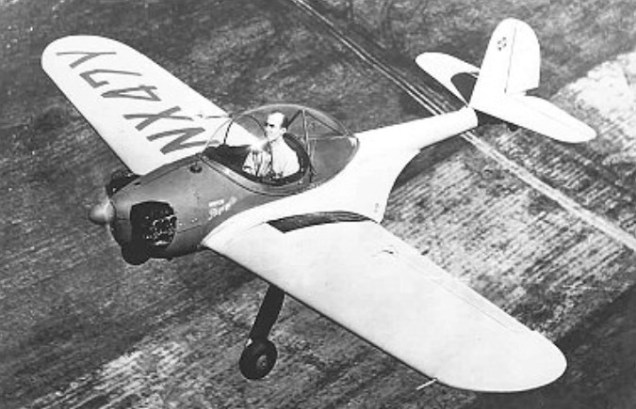
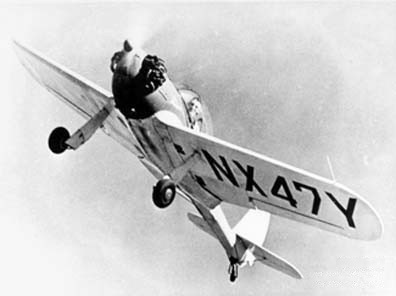
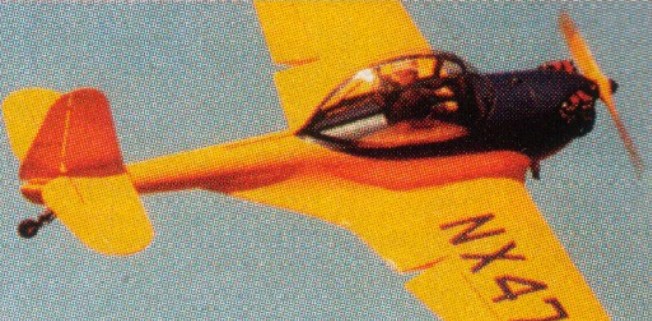
The Piper Skycycle of 1946 was a serious effort by a major manufacturer to develop a single-seat sport plane. The only prototype flew in 1947. The prototype fuselage was made from a surplus F4U Corsair dropable fuel tank made for a fighter aircraft. The rear was an aluminum tube. The sale price was $999.
Piper PA-8 NX47Y
The single prototype, NX47Y, was destroyed in a fire at Johnstown PA Vocational School in 1948.
An adaptation of the Piper Skycycle was later marketed by Carlson Aircraft Inc as a kit for $13,900 US.
Piper PA-8 Skycycle Engine: 1 x Lycoming O-145, 55hp Wingspan: 6.10 m / 20 ft 0 in Length: 4.77 m / 16 ft 8 in Height: 1.86 m / 6 ft 1 in Wing area: 12.68 sq.m / 136.49 sq ft Max take-off weight: 567 kg / 1250 lb Empty weight: 346 kg / 763 lb Max. speed: 185 km/h / 115 mph Cruise speed: 152 km/h / 94 mph Stall: 45-55 mph Ceiling: 3560 m / 11700 ft Range: 643 km / 400 miles
Carlson Aircraft Skycycle Engine: Continental, 65 hp Height: 5.1 ft Length: 15.85 ft Wing span: 20 ft Wing area: 95 sq.ft Weight empty: 295 lb Gross: 925 lb Fuel cap: 8 USG Speed max: 109 mph Cruise: 100 mph Range: 200 sm Stall: 37 mph ROC: 875 fpm Take-off dist: 375 ft Landing dist: 400 ft Seats: 1 Landing gear: tail wheel