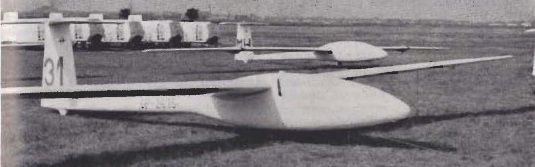
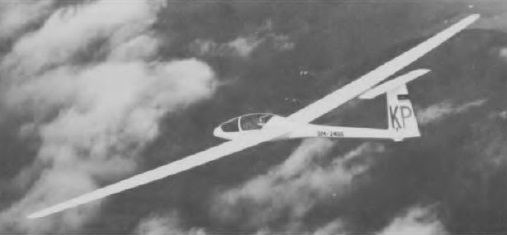
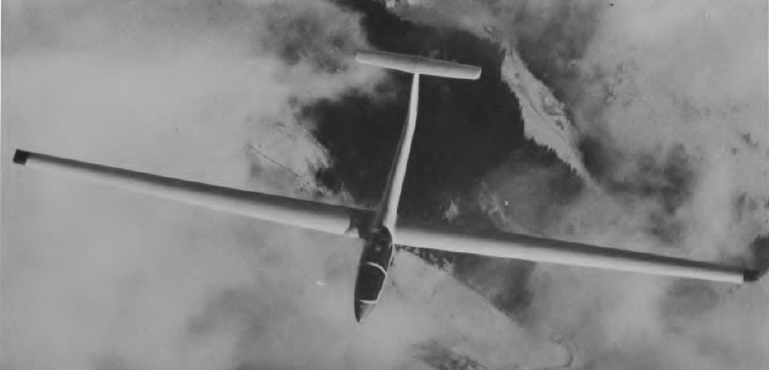
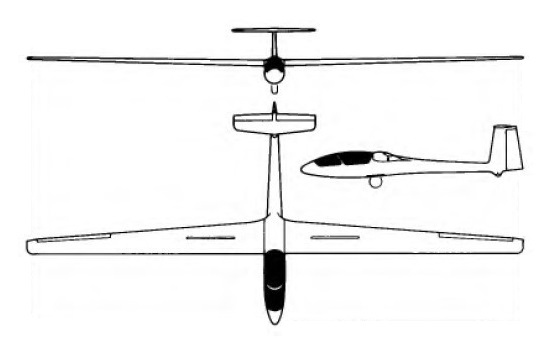
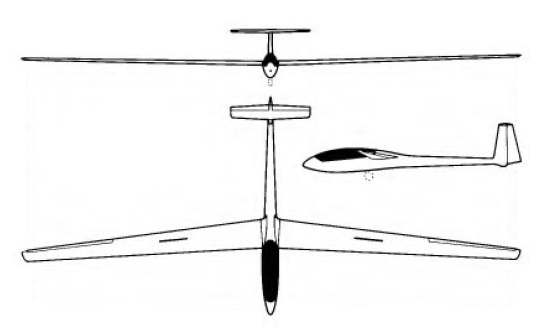
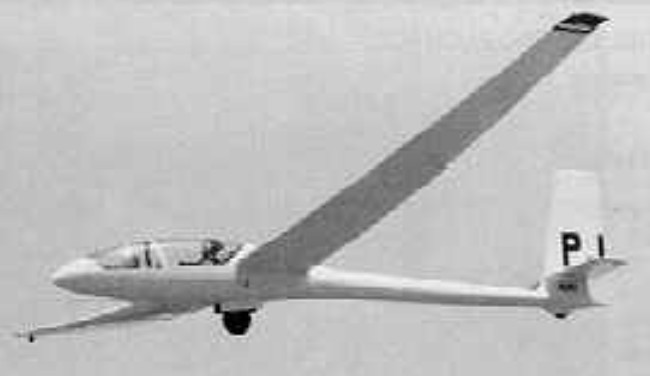
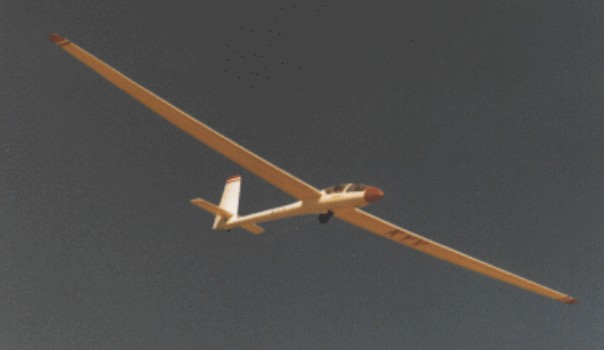
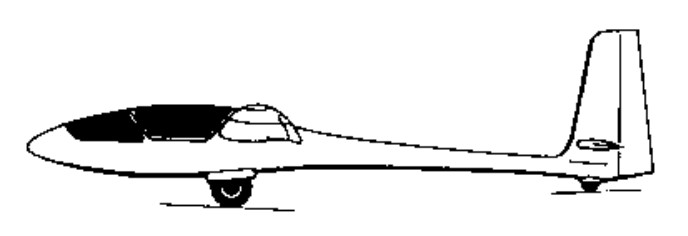
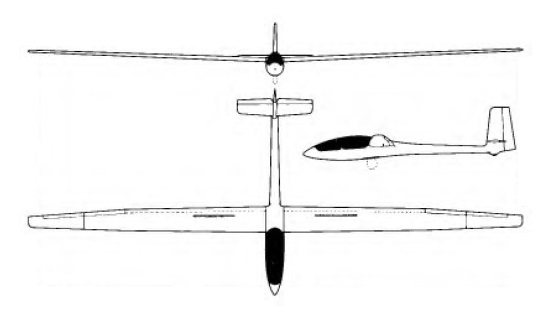
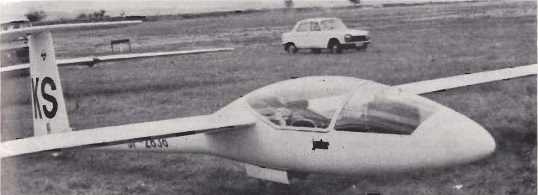
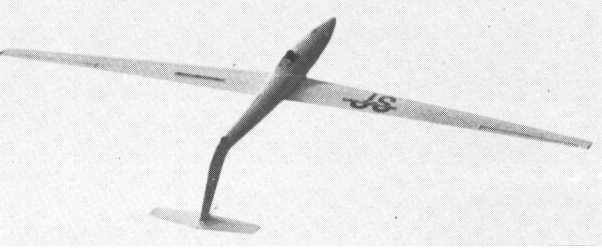
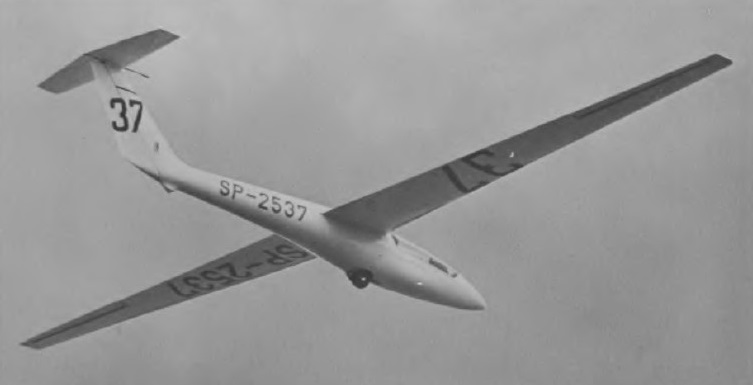
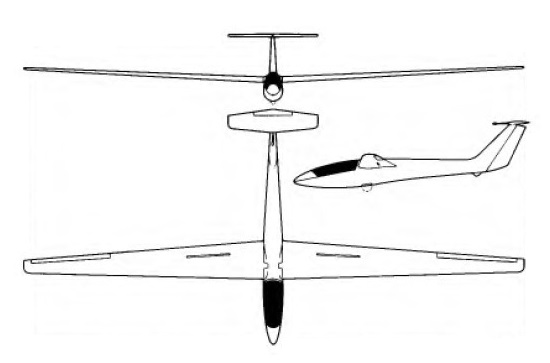
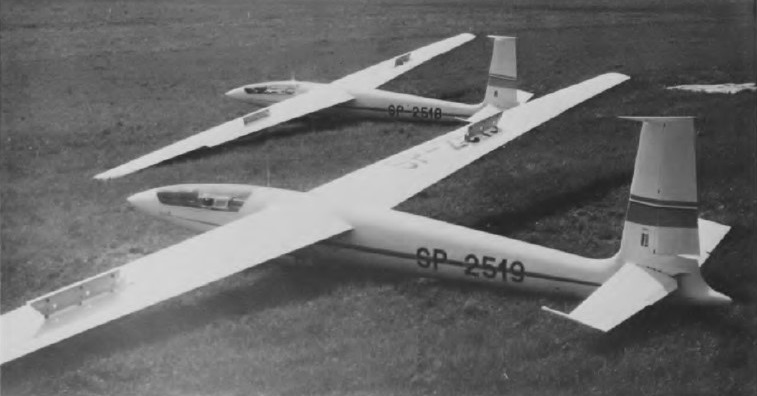
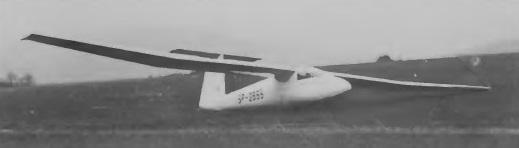
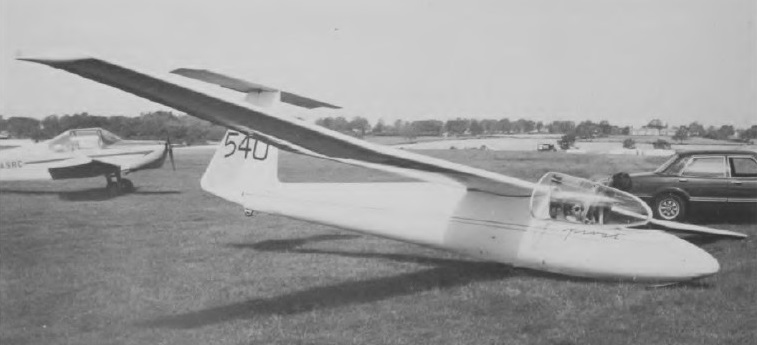
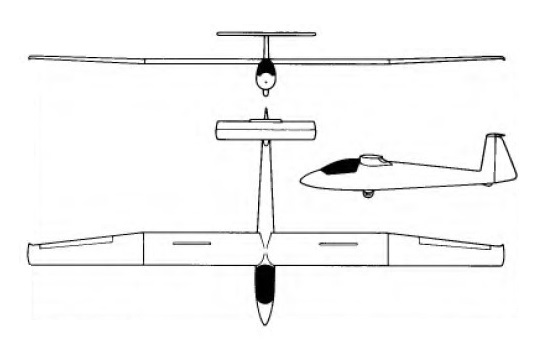
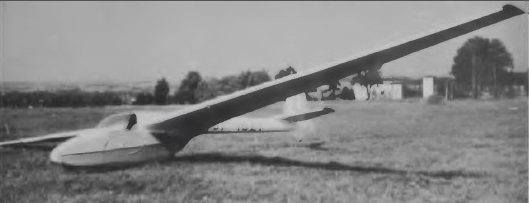
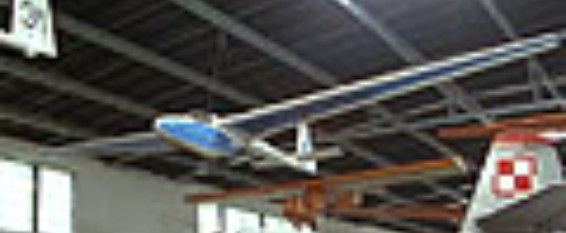
The 1972 Open Class SZD-38 Jantar-1 single-seater (or Amber), designed by Dipl-lng Adam Kurbiel, was developed by Dipl-lng W.Okarmus into the SZD-41A Jantar Standard, which had the same fuselage and tail unit as the Jantar-1 but new cantilever mid-set wings of 15m span designed to OSTIV Standard Class requirements.
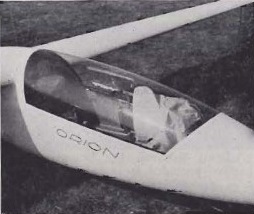
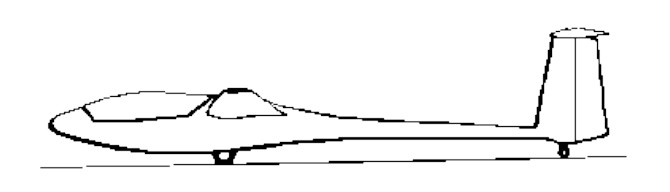
The wings are single-spar ribless structures with foam-filled glassfibre/epoxy resin sandwich skin; no flaps are fitted and there are DFS glassfibre air brakes above and below each wing. There is also provision for 80kg (176lb) of water ballast in the leading edges. The fuselage is an all-glassfibre/epoxy resin shell, the centre portion having a steel tube frame on which the wings and the monowheel are mounted. The cantilever T-tail is also of glassfibre/epoxy resin, the fin being integral with the fuselage; the elevator has a spring trim. There is a retractable monowheel with a disc brake and a fixed tailwheel. The pilot sits on a semi-reclining seat under a flush-fitting two-piece canopy of which the front half is fixed and the rear section is removable for exit and entry.
The SZD-41A made its first flight on 3 October 1973 in the hands of A. Zientek, and the Polish team flying the type in the 1974 World Championships at Waikerie, Australia, took 3rd and 7th places in the Standard Class, while SZD-41 s were placed 4th, 6th and 18th in the 1976 World Championships at Rayskala, Finland.
The SZD-49 Jantar K is an FAI 15m class version of the Jantar Standard with wing flaps; the prototype first flew on 10 October 1978.
SZD-48 Standard Jantar 2
The SZD-48 Jantar Standard 2 single-seater is a development of the SZD-41A also designed by Dipllng W. Okarmus, and first flew in prototype form on 10 December 1977; 96 had been built by the beginning of 1980. The cantilever shoulder wings have single glassfibre roving main spars and no ribs; they are covered with glassfibre/foam/glassfibre moulded skins and have plain ailerons, with duralumin air brakes in the upper and lower surfaces. There is provision for 150 litres (33 Imp gal) of water ballast. The glassfibre fuselage has a steel tube central frame, and the rear portion is stiffened by half-frames and ribs. The cantilever T-tail is of similar construction to the wings and has a spring trim in the elevator. There is a retractable monowheel with disc brake and a semi-recessed tailwheel. With simple modifications to the trim and speed measuring systems the SZD-48 becomes the SZD-48-2.
Altogether 160 Jantar Standards had been built by the beginning of 1980 and the type has been exported to 18 countries, including both East and West Germany, the USA and the Soviet Union.
The 48-3 Standard 3 superseded the 2 first flying in 1983.
SZD-41A Span: 49 ft 2.5 in / 15.0 m Length: 23 ft 4 in / 7.2 m Height: 5 ft 3 in Wing area: 114.7 sqft / 10.66 sq.m Aspect ratio: 21.1 Empty weight: 551 lb / 250.0 kg Max weight: 970 lb / 440.0 kg Max. payload: 419.0 lb / 190.0 kg Wing loading: 8.41 lb/sq.ft / 41.0 kg/sq.m Max speed: 135 kts / 250 km/h / 155 mph (in smooth air) Max aero-tow speed: 93 mph Landing speed: 37 kts / 68 km/h Cruising speed: 57 kts / 105 km/h Min sinking speed: 2.03 ft/sec at 48.5 mph Best glide ratio: 40:1 at 65 mph Crew: 1
Jantar Standard 2 Wing span: 15.0 m (49 ft 2.5 in) Length: 6.71 m (22 ft 8.5 in) Wing area: 10.66 sq.m (114.8 sq.ft) Wing section: NN-8 Aspect ratio: 21.1 Empty weight: 247 kg (545 lb) Max weight: 520 kg (1,146 lb) Water ballast: 150 kg (330 lb) Max wing loading: 41.27 kg/sq.m (8.45 lb/sq.ft) Max speed: 167 kt (310 km/h) Stalling speed: 39 kt (72 km/h) Min sinking speed: 0.65 m/sec (2.0 ft/sec) at 39.4 kt (73 km/h) Max rough air speed: 86.5 kt (160 km/h) Best glide ratio: 40 at 70 kt (130 km/h)
48-3 Standard 3 Wing span: 15 m / 49.2 ft Wing area: 10.66 sq.m / 113.4 sq.ft Aspect ratio: 21.1 Airfoil: PZL NN-8 Empty Weight: 265 kg / 583 lb Payload: 266 kg / 586 lb Gross Weight: 540 kg / 1190 lb Wing Load: 50.66 kg/sq.m / 10.49 lb/sq.ft Water Ballast: 150 kg / 330 lb MinSink: 0.77 m/s / 2.53 fps / 1.50 kt L/DMax: 40 111 kph / 60 kt / 69 mph Seats: 1
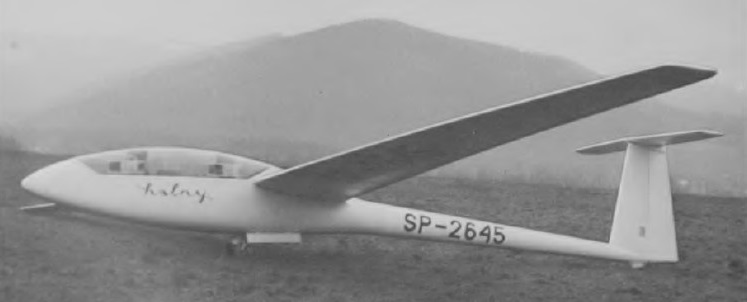
The SZD-40X Halny high performance two-seater research sailplane was designed by Dipl-lng Wladyslaw Okarmus to test a new NN-11M wing section based on that of the SZD-31 Zefir 4, which gave excellent performance at high speeds but was not so good for soaring in weak thermals. The Halny made its first flight on 23 December 1972 piloted by Dipl-lng Z.Bylock.
The new cantilever 20m span shoulder mounted wing has 4° forward sweep at the quarter chord line and is a sparless glassfibre/wooden box structure with stainless steel fittings; the hingeless flaps and plain ailerons are operated by pushrods, and there are SZD-type double plate metal air brakes above and below the wing surface at 60% chord. The forward part of the fuselage is an all-plastic monocoque, the centre portion has a steel tube frame on which the wings and monowheel are mounted, and the rear fuselage is a monocoque metal tube. The cantileverT-tail is made of glassfibre and has spring trimming, while the landing gear consists of a backwards-retracting monowheel with a shoe brake and a fixed tailwheel. The forward seat is occupied by a flight observer, the controls and instrument panel being fitted in the rear cockpit only; the crew of two sit under a long flush-fitting one-piece canopy in tandem.
SZD-40X Halny
Span: 20.0 m / 65 ft 7.5 in Length: 8.75 m / 28 ft 8.5 in Height: 1.8 m / 5 ft 11 in Wing area: 16.11 sq,m / 173.4 sq.ft Aspect ratio: 24.66 Wing section: NN-11M Empty weight: 410 kg / 904 lb Max weight: 596 kg / 1,314 lb Water ballast: None Max wing loading: 36.9 kg/sq.m / 7.55 lb/sq.ft Max speed: 150 mph / 130 kt / 240 km/h Stalling speed: 35 kt / 65 km/h Min sinking speed: 0.55 m/sec / 1.8 ft/sec at 46.5 mph / 40.5 kt / 75 km/h Best glide ratio: 43:1 at 62 mph / 54 kt / 100 km/h
The first all glassfibre SZD type being the prototype Open Class SZD-38 Jantar-1 single-seater (or Amber) of 19m span, designed by Dipl-lng Adam Kurbiel, which first appeared in public at the 1972 World Championships at Vrsac, Yugoslavia, where it came 3rd in the Open Class and won the OSTIV cup for the best 19m design.
In 1972 it set up seven new Polish national records. It was then developed by Dipl-lng W.Okarmus into the SZD-41A Jantar Standard. The T-tailed 19 m. Jantar 1 (SZD 38A) was followed by the 20.5 m. Jantar 2 and 2B versions (SZD 42A) in 1976, which reverted to a conventional tail, and raised the wing to the shoulder position. All models have airbrakes on upper and lower wing surfaces and an unusual upper wing skin consisting of one unbroken sheet all the way to the flap trailing edge, the flaps moving from +8 to -8 degree by bending the skin. Apart from some plywood bulkheads and a welded steel tube fuselage center section carry through, the ship is all fiberglass.
Originally designated SZD-42A, the SZD-42-1 Jantar 2 high performance Open Class single-seater was developed by Dipl-lng Adam Kurbiel from the all-plastics SZD-38A Jantar-1 of which a small number had been built; the Jantar 2 made its first flight on 2 February 1976. The first two prototypes were flown by the Polish team in the 1976 World Championships in Finland, where they came 2nd and 3rd in the Open Class flown respectively by J. Ziobro and H.Muszczynski. These two Jantars had wings built in two sections whereas the production aircraft have the wings built in four pieces for ease of rigging and trailer transport; one of the latter aircraft, flown by R.Johnson of the USA, came 7th in the Open Class in the 1976 World Championships.
SZD-42A Jantar 2
Altogether 23 Jantar 2s had been built by the beginning of 1979, and these differ from the Jantar Standard chiefly in having wings of 20.5m (67ft 3in) span and a low-set tailplane with elevators and no tabs. Up to 287lb of water ballast can be carried, and when it is the g limits of the airframe are +4.0/-1.5, or +5.37-2.65 g without the water ballast. The Jantar 2 is of all glassfibre construction very similar to the Jantar Standard; unlike the latter it has hingeless trailing edge flaps hung from the upper surfaces, as well as light alloy DFS-type air brakes in both the upper and lower wing surfaces. The cantilever tail unit is of glassfibre/epoxy resin and there is a retractable monowheel and a tailskid instead of a tailwheel.
A later version was the SZD-42-2 Jantar 2B, which is very similar to the Mk 2 but with the wings raised from the mid to the shoulder position and the incidence reduced slightly. Up to 375lb of water ballast can now be carried, and the Jantar 2B features improvements to cockpit comfort, the monowheel retraction system and the elevator spring trim; there is provision for a towing hook on the cg. The Jantar 2B made its first flight on 13 March 1978 and 32 had been built by the beginning of 1980.
PZL Bielsko / SZD SZD 38 Jantar Length: 23.622 ft / 7.2 m Wingspan: 62.336 ft / 19.0 m Aspect ratio: 27.0 Wing area: 144.022 sq.ft / 13.38 sq.m Max take off weight: 1146.6 lb / 520.0 kg Weight empty: 639.5 lb / 290.0 kg Max. weight carried: 507.2 lb / 230.0 kg Max. speed: 135 kts / 250 km/h Landing speed: 35 kts / 65 km/h Cruising speed: 52 kts / 97 km/h Wing loading: 8.0 lb/sq.ft / 39.0 kg/sq.m Glide ratio: 47.0 Crew: 1
Jantar 2 Span: 67 ft 3 in Length: 23 ft 4 in Height: 5 ft 9.25 in Wing area: 153.4 sqft Aspect ratio: 29.5 Empty weight: 727 lb Max weight: 1,307 lb Max speed: 155 mph (in smooth air) Max aero-tow speed: 87 mph Min sinking speed: 1.80 ft/sec at 56 mph Best glide ratio: 48:1 at 63.5 mph
PZL Bielsko / SZD SZD 42 Jantar 2a Length: 23.327 ft / 7.11 m Wingspan: 67.257 ft / 20.5 m Aspect ratio: 29.2 Wing area: 153.279 sq.ft / 14.240 sq.m Max take off weight: 1278.9 lb / 580.0 kg Max. speed: 135 kts / 250 km/h Landing speed: 35 kts / 65 km/h Cruising speed: 49 kts / 90 km/h Wing loading: 8.41 lb/sq.ft / 41.0 kg/sq.m Glide ratio: 48.0 Crew: 1
SZD 42 Jantar 2B Wing span: 20.5 m / 67.2 ft Wing area: 14.27 sq.m / 153.6 sq.ft Aspect ratio: 29.5 Airfoil: Wortmann FX 67-K-150 root Empty Weight: 362 kg / 798 lb Payload: 287 kg / 632 lb Gross Weight: 649 kg / 1430 lb Wing Load: 45.6 kg/sq.m / 9.28 lb/sq.ft Water Ballast: 191 kg / 420 lb L/DMax: 48 90 kph / 49 kt / 56 mph MinSink: 0.46 m/s / 1.5 fps / 0.89 kt Seats: 1 No. Built: 60
Jantar 2B Wing span: 20.15 m / 66 ft l/4 in Length: 7.11 m / 23 ft 4 in Height: 1.56 m / 5 ft 1.5 in Wing area: 14.25 sq.m / 153.4 sq.ft Wing section: Wortmann FX-67-K-170/150 Aspect ratio: 29.2 Empty weight: 355 kg / 783 lb Max weight: 645 kg / 1,422 lb Water ballast: 170 kg / 375 lb Max wing loading: 45.3 kg/sq.m / 9.28 lb/sq.ft Max speed: 151 kt / 280 km/h Stalling speed: 35 kt / 65 km/h Min sinking: 0.45 m/sec / 1.48 ft/sec at 40.5 kt / 75 km/h Max rough air speed: 108 kt / 200 km/h Best glide ratio: 48 at 57 kt / 105 km/h
Adam Kurbiel, the 36-year old designer of the Jantar, started in 1969 and it first flew on 14 February 1972. It was the first Polish glassfibre and GRP.
The Jantar headrest, backrest and pedals are all adjustable in the air and all controls are pushrod operated.
The T-tail is fixed and has a spring trim lever on the side of the control column. Flaps and ailerons work in conjunction and water ballast tanks are fitted.
At least two 19m span were built, plus two with a span of 17.5m. Production plans were in the preliminary stages.
Jantar Wingspan: 19m Wing section: FV K67-170-150 Wing area: 13.38 sq.m Aspect ratio: 27 Empty weight: 275 kg AUW: 490 kg Wing loading: 36 kg/sq.m Min sink: 0,5 m/sec at 75 kph Stall: 65 kph Max speed: 250 kph Glide ratio: 47-1 at 95 kpg
The SZD-36 high performance Standard Class single-seater was designed by Dipl-lng Wladislaw Okarmus for the Polish gliding team at the 1970 World Championships at Marfa, Texas. Design work began in October 1968 and the prototype Cobra 15 made its maiden flight on 30 December 1969. At the 1970 World contest, Jan Wroblewski and Franciszek Kepka of the Polish team flew their early pro¬duction Cobra 15s into 2nd and 3rd places respectively in the Standard Class, and a Cobra 17 – this being the 17m span version – came 5th in the Open Class.
Of all-wood construction with plywood and glassfibre covering, the Cobra 15 has cantilever single-spar shoulder wings with heavy moulded plywood stressed skin covered by glassfibre; the plain ailerons are mass balanced and are of plywood/polystyrene/foam sandwich construction, and there are SZD doubleplate metal glassfibre air brakes in the upper and lower wing surfaces. 45 degree to 45 degree roll rate is less than three seconds. The SZD-39 Cobra 17 is the same as the Cobra 15 except for the increased span (55ft 9.25in) Wortmann profile wing of 23.56 aspect ratio, which has provision for water ballast. The fuselage is an oval section semi-monocoque covered with plywood over the rear part and glassfibre on the forward portion, and there is an aero-tow hook in the lower fuselage forward of the monowheel.
The SZD-36A differs from the SZD-36 in having this hook repositioned about 1 m further forward of the cg with provision for locating it at the cg if required. The monowheel retracts mechanically to lie horizontally in the bottom of the fuselage, and has a brake; there is also a tailskid. The Cobra is distinguished by a sharply swept back fin and rudder with an all-moving mass-balanced tailplane mounted on top of it, with a trim tab on its trailing edge. The pilot sits under a vacuum-formed jettisonable flush-fitting canopy which slides forward to open; there is a small luggage compartment behind the pilot’s seat and also a full range of instrumentation, plus provision for an oxygen system with a 4-litre cylinder in the baggage compartment and a radio.
SZD-36A Cobra 15
Altogether 238 Cobras of all versions had been built when production ended in 1977, and the type has been exported to more than 20 countries.
Cobra 15 Wing span: 15 m / 49 ft 2.5 in Wing area: 11.6 sq.m /124.9 sq.ft Aspect ratio: 19.4 Length: 7.05 m / 22 ft 11.25 in Height: 1.59 m / 5 ft 2.25 in Empty Weight: 257 kg / 567 lb Payload: 128 kg / 282 lb Gross Weight: 385 kg / 849 lb Water ballast: None Wing Load: 33.2 kg/sq.m / 6.8 lb/sq.ft Max speed: 155 mph / 135 kt / 250 km/h (in smooth air) Max rough air speed: 91.5 kt / 170 km/h Stalling speed: 36 kt / 67 km/h L/DMax: 38 @ 94 kph / 51 kt / 59 mph MinSink: 0.60 m/s / 1.97 fps / 1.17 kt at 45.5 mph / 39.5 kt / 73 km/h Airfoil: Wortmann FX61-168/60-1261 Seats: 1
The SZD-29 Zefir 3 was a much improved version of the SZD-19-2 Mk 2 intended for advanced competition flying, with a wing of 19m (62ft 4in) span, full-span Fowler flaps, a longer fuselage and an unswept fin and rudder; the Mk 3 first flew in prototype form in April 1965 and had an improved best glide ratio of about 42:1.
Its production development was the Zefir 4, the first Mk 4 prototype making its maiden flight on 7 December 1967. It was devleoped for the 1968 World Championships, in which one flown by Jan Wroblewski came 14th in the Open Class.
The wing has an NACA 66-series section and no dihedral, unlike the Mk 2’s; it is a multi-longeron sparless stressed skin wooden structure with full-span flaps like the Mk3’s, the outer sections of which are wooden and also act as ailerons while the inboard sections are of plywood/balsa sandwich; unlike the Mk 2, double metal air brakes are featured. The fuselage is an oval section monocoque, the forward part being made of glassfibre laminate and the rear portion of wood. The tailplane is an all-moving mass-balanced surface with trim tab, and the unswept rudder is also mass-balanced. The monowheel is manually retractable with rubber shock absorbers and a hand-operated wheel brake and, like the Mk 2, a tail-braking parachute is fitted; unlike the Mk 2, the cockpit canopy is now sideways hinging.
Zefir 4 Span: 62 ft 4 in Length: 26 ft 3 in Height: 7 ft 0 in Wing area: 169 sqft Aspect ratio: 23.0 Empty weight: 772 lb Max weight: 970 lb Max speed: 149 mph (in smooth air) Max aero-tow speed: 93 mph Min sinking speed: 1.97 ft/sec at 58 mph Best glide ratio: 42:1 at 58.5 mph
This Standard Class single-seater, designed by Ing Jerzy Smielkiewicz, is intended to be suitable for a wide range of tasks from training to competition flying, and is cleared for cloud flying, spinning and basic aerobatics. The prototye Pirat first flew on 19 May 1966 and production started the following year.
The Pirat is a T-tailed cantilever high wing monoplane of wooden construction, the initial production version having mass-balanced ailerons larger than those of the improved SZD-30C, which has epoxy/glassfibre partially mass-balanced ailerons; the first SZD-30C made its maiden flight on 10 January 1978, and was preceded by the SZD-30B Pirat 75, which was a prototype only.
On the C variant the forward fuselage is reinforced with a thick layer of glassfibre, which replaces the removable front skid with shock abosrber of the initial production SZD-30; the letter’s nonretractable monowheel had a band brake instead of the C’s disc brake, the C also having a tailwheel which can be replaced by a tailskid and a roomier cockpit with an enlarged canopy. The wing has a rectangular centre section which is a plywood covered multi-spar structure, and ply-covered tapered outer panels of single-spar torsion box construction; there are double-plate air brakes in the centre section in both upper and lower surfaces. The fuselage is a plywood monocoque, all versions having a glassfibre nose and cockpit floor, and the cantilever wooden tail unit has a tab in the elevator trailing edge. The pilot sits under a jettisonable sideways-hinged blown Perspex canopy, and has an adjustable seat back rest and rudder pedals, as well as two baggage compartments; there is provision for radio and oxygen.
A total of 776 of all versions had been built by the beginning of 1980, including 430 completed at the VSK-Swidnik works where production was undertaken until October 1977. Production has now ended.
The type had been exported to 24 countries, including Argentina, Egypt, North Korea, New Zealand, the USA, the Soviet Union and Venezuela amongst others.
SZD-30C Wing span: 1 5m / 49 ft 2.5 in Wing area: 13.8 sq.m /148.6 sq.ft Aspect ratio: 16.3 Wing section: Wortmann FX-61-168/60-1261 Length: 6.92 m / 22 ft 8.5 in Height: 0.96 m / 5 ft 5.75 in Empty Weight: 260kg / 573lb Payload: 110kg / 243lb Gross Weight: 370kg / 816lb Water ballast: None Wing Load: 26.8 kg/sq.m / 5.49 lb/sq.ft L/DMax: 33 @82 kph / 44 kt / 51 mph MinSink: 0.70 m/s / 2.3 fps /1.36 kt at 47 mph / 40 kt / 74 km/h Max. speed: 130 kt / 240 km/h / 155 mph (in smooth air) Max aero-tow speed: 87 mph / 77 kt / 145 km/h Stalling speed: 32.5 kt / 60 km/h Airfoil: Wortmann FX-61-168, root Seats: 1
The SZD-25 high performance single-seater combines the wings of the SZD-22 Mucha Standard with a metal fuselage developed from that of the SZD-16 Gil prototype. Designed for large scale production, with low manufacturing and maintenance costs, the Lis (or Fox) made its first flight as a prototype on 5 March 1960, and production aircraft began to enter service with the Polish gliding clubs early in 1962; not a great many were built, but several were exported.
Slotted ailerons are fitted, instead of the SZD-22’s Frise-type ones, and these are aerodynamically and mass balanced, and air brakes are also fitted. The all-metal fuselage is built in two portions: the welded steel tube forward part with fabric covering and the tail boom of riveted sheet duralumin, the cantilever all-wood tail unit being fabric-covered. Landing gear consists of a semi-retractable sprung monowheel with brake and a rubber-mounted nose skid. The pilot sits under a sideways-hinging canopy.
Some 30 were built.
PZL Bielsko / SZD 25 A Lis Wingspan: 49 ft 2 in / 15.0 m Wing area: 137.24 sqft Aspect ratio: 17.65 Length: 23 ft 0 in / 7.0 m Height: 5 ft 0 in / 1.5 m Empty weight: 452 lb Max take off weight: 751.9 lb / 341.0 kg Max. speed: 124 kts / 230 km/h / 143 mph (in smooth air) Min sinking speed: 2.5 ft/sec at 43 mph Glide ratio: 27.0 at 47 mph Crew: 1