Yakolev Yak-50

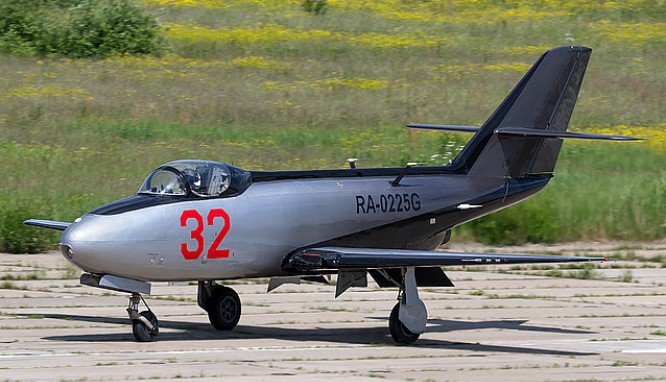
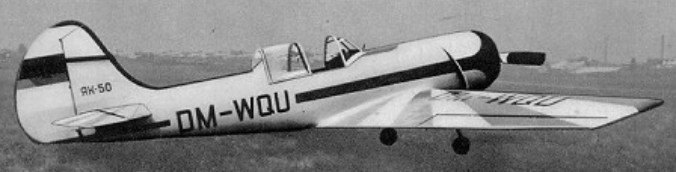
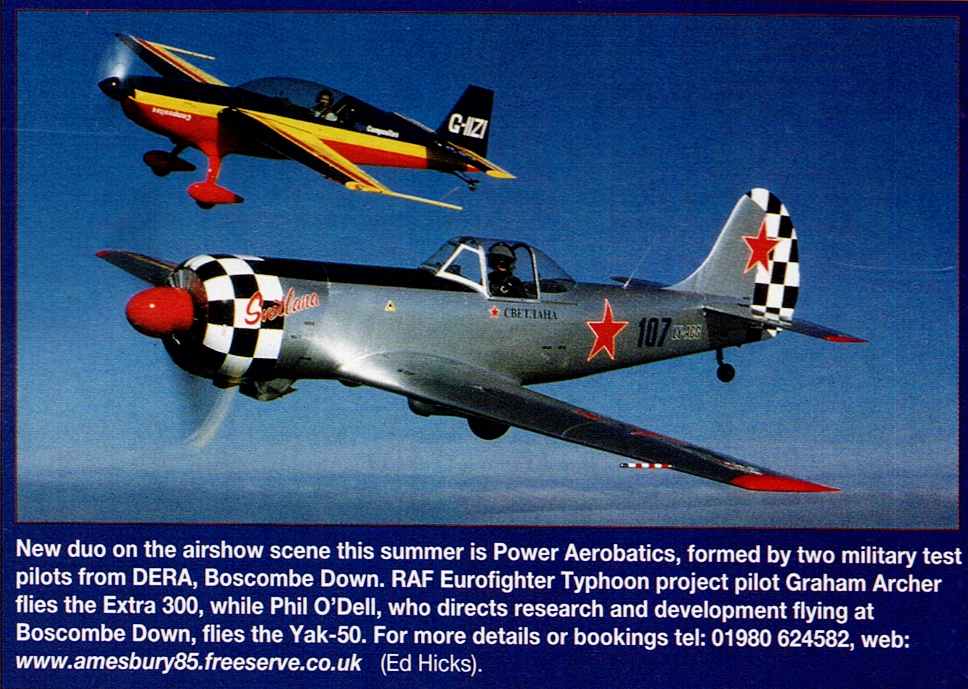
The Yakolev Yak-50 is a single-seater aerobatic low wing monoplane with retractable landing gear with tail wheel. Development of the Yakolev Yak-50 started in 1972 based on the single-seat Yak-18PS. With a new wing planform and more power, the Yakolev Yak 50 provides more performance than its predecessor.

The center spar box appeared to have been removed and the wing panels, with squared tips, now join the fuselage directly, with very little dihedral. Both the 18PM and 18PC had 300 hp Ivchenko AI14RF engines, whereas the 50 uses a 360 hp M 14P radial that looks quite similar as it is installed; it drives two large, constant speed, paddle like propeller blades that are geared down.
Gross weight of 900 kg or 1,980 pounds and the span is down, from 10.6 meters to 9.5, which means they’ve clipped between a foot and a half and two feet from each wing, and the wing area is correspondingly reduced nearly 12 percent. The airplane is also shorter than the 18s by a bit less than a meter. Its gear is fully retractable. The pilot sits near the trailing edge of the wing, which affords a fairly good view of the ground in vertical maneuvers, when such views are most needed.

The first of two prototypes built was flown first in 1972. After a series of modifications and a considerable amount of testing the Yak-50 was put into production at Arsenyiev in the Russian Federation as a duraluminium skinned semi monocoque airframe and deliveries started early 1975.
The Yak-50 proved its aerobatic versatility and worth at the 8th World Aerobatic Championships in 1976. Yak-50’s ended first, second and third in the men’s championships, took the top five places in the women’s competition and the overall men’s and women’s team prizes. The Yak-50 airplane is equipped with a 360 hp Ivchenko Vedeneyev M-14P nine cylinder, air-cooled radial piston engine.
When production ended in 1985 a total of 312 were built, of which the vast majority were for the Russian DOSAAF Clubs. With the introduction of the Yak-55, Moscow instructed all DOSAAF Clubs to scrap the Yak–50s and return the logbooks to Moscow, with the result that there are less than sixty Yak-50s left in the world.
May 2000

Engine: Vedeneyev Ivchyenko M-14P radial, 360hp / 265kW
Max take-off weight: 900 kg / 1984 lb
Empty weight: 765 kg / 1687 lb
Wingspan: 9.5 m / 31 ft 2 in
Length: 7.8 m / 26 ft 7 in
Height: 3.2 m / 11 ft 6 in
Wing area: 15.0 sq.m / 161.46 sq ft
Max. speed: 320 km/h / 199 mph
Cruise speed: 240 km/h / 149 mph
Ceiling: 6000 m / 19700 ft
Range: 550 km / 342 miles
Crew: 1

Yakolev Yak-50

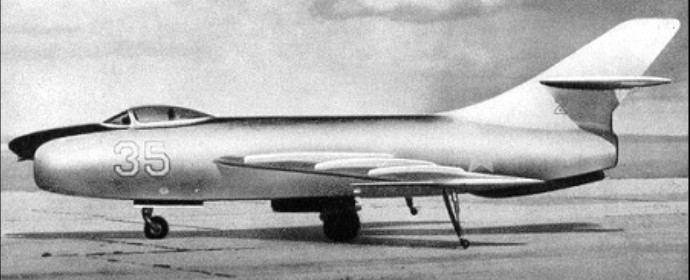
Yakolev Yak-50 [1949]

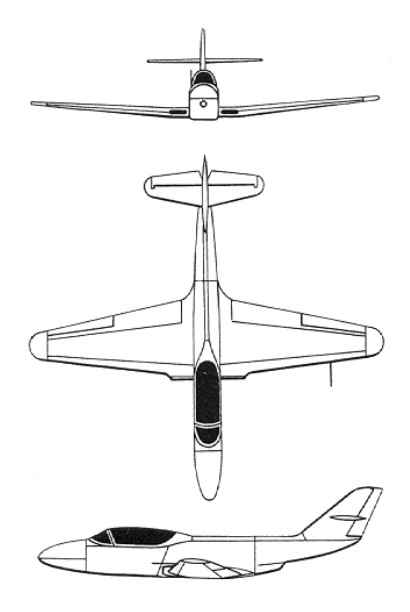
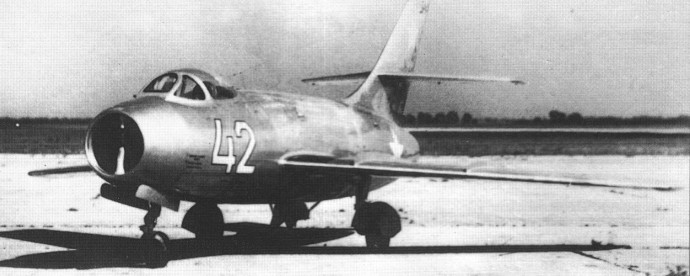
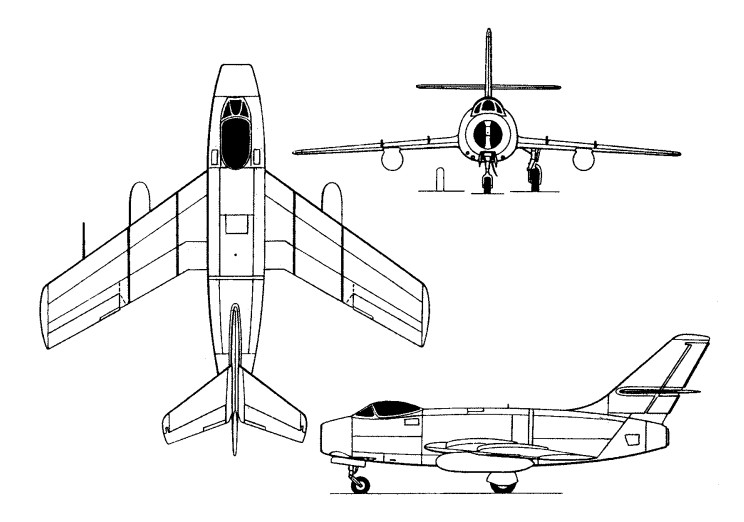
With V-VS formulation of a requirement for a single-seat limited all-weather fighter, the Yakolev OKB developed the Yak-50 in competition with the MiG-15Pbis. The wing, mounted in full mid position, was a two-spar structure of constant 12% thickness sweptback 45 degree at quarter chord. The OKB used magnesium alloys in the structure for the first time to any great extent as a contribution to weight reduction, a further weight-saving measure being the adoption of a velosipedno tipa, or “bicycle type” undercarriage. This zero-track arrangement, earlier tested by the Yak-25, comprised a single nosewheel member and a twin-wheel main unit, the latter taking 85% of the total aircraft weight; in addition, small outrigger stabilising wheels retracted into wingtip fairings. Power was provided by a single 2700kg Klimov VK-1 turbojet, armament consisted of two 23mm NR-23 cannon and provision was made for the installation of a single-antenna, fixed-scan, manually-tracked Korshun (Kite) AI radar in a housing above the nose air intake splitter. The first of three Yak-50 prototypes was flown on 15 July 1949, several months before the first radar-equipped MiG-15Pbis (SP-1), and demonstrated an outstanding speed performance, exceeding Mach=1.01 in a shallow dive on several occasions during manufacturer’s trials and Mach=1.048 during State Acceptance testing. It could take-off within 578m and land within 965m, but in more than a 18km/h crosswind, the Yak-50 tended to swerve from the runway, and it was barely controllable on a wet surface. In level flight at speeds between Mach=0.92 and 0.97, the Yak-50 suffered lateral oscillation preventing gun aiming. These shortcomings, coupled with the fact that the Mikoyan-Gurevich OKB was offering the potentially superior Izumrud radar-equipped MiG-17P, led to termination on 30 May 1950.

Max take-off weight: 4155 kg / 9160 lb
Empty weight: 3125 kg / 6889 lb
Wingspan: 7.98 m / 26 ft 2 in
Length: 11.20 m / 37 ft 9 in
Wing area: 16.00 sq.m / 172.22 sq ft
Max. speed: 1170 km/h / 727 mph
Range: 1100 km / 684 miles

Yakolev Yak-50

Yakolev Yak-40

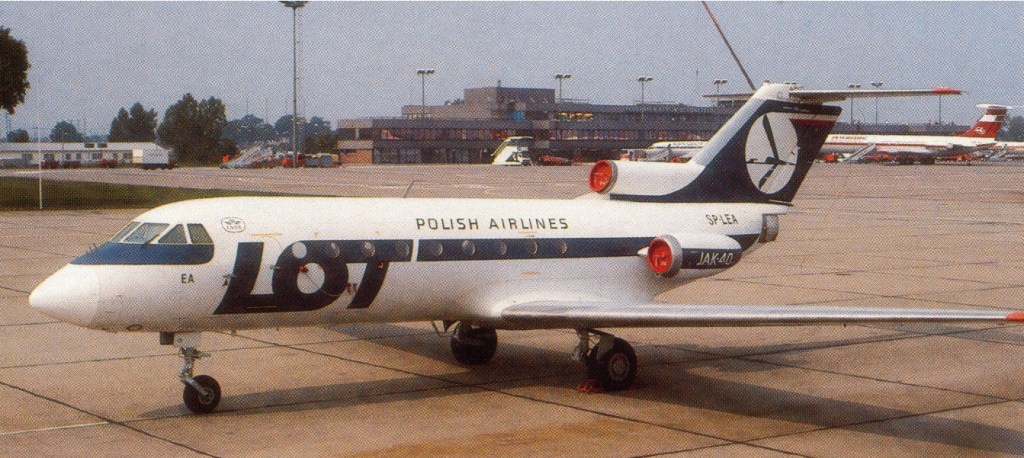
Development the Yak-40 as a replacement of the ageing LI-2, Il-12 and Il-14’s, started in 1965 by the Yakolev Design Bureau. The Yak-40 was required to operate from Class 5 grass airfields or semi-prepared strips. The resulting aircraft has high-lift lightly-loaded wings and, for added safety, three Ivchenko AI-25 turbojets. All three engines are operated on take-off, but the central engine may be throttled back to idle for fuel economy during cruise. In configuration, the Yak-40 is a cantilever low-wing monoplane with retractable tricycle landing gear, rear-mounted engines and with accommodation for a flight crew of two or three and up to 32 passengers. The provision of a ventral rear door with airstair makes it possible to operate the Yak-40 from airfields with minimum facilities, and an onboard auxiliary power unit makes the type independent of ground equipment for engine starting and the maintenance of cabin heating and air-conditioning.

The first prototype tri-jet was flown on 21 October 1966, the Yak bureau eventually building five pre-production test airframes. The type entering revenue service with Aeroflot on 30 September 1968 with 2 crew and 27-31 passengers (NATO reporting name ‘Codling’).

The Yak-40 is cleared for Class Five grass airfield operations, and to improve its short landing performance a single clamshell thrust reverser has been fitted to the centre engine on later production models. The rear mounted turbofan engines enable it to take off and land within 1500 ft (500 m), and it can operate from grass fields.

The Yak-40K cargo version is configured purely for the carriage of freight, the aircraft being cleared to carry a load of up to 5070 lbs in weight.

When production ended in 1980, 1011 Yak-40 airliners were built in Saratov in the former USSR. The majority of these are still in service in 1993, with both military and civilian operators.

Gallery

Yak40
Engines, Ivehenko Al-25 (3 x 3300 lb thrust)
Max take-off weight, 27,500 lb
Payload. 5500 1h
Cruising speed, 405 kt
Range. 620-1240 st. miles
Take-off distance to 50 ft, 1950 ft
No. of passengers, 24

Engines: 3 x 3,306 lb (1,500 kg) st Ivehenko AI 25 turbofans
Wing span: 82 ft 0.25 in (25.00 m)
Length: 66 ft 9.5 in (20.36 m)
Wing area: 735 sq ft (70.0sq.m)
Gross weight: 30,200 lb (13,700 kg)
Max cruising speed: 342 mph (550 kph)
Typical range: 620 miles (1,000 km) with normal payload of 5,070 lb (2,300 kg)
Crew: 2
Passengers: 24 40
T/O run: 700m
Ldg run: 360m
Cargo: 5070 lbs

Engines: 3 x turbo-jet AI-25, 14.7kN
Max take-off weight: 12400 kg / 27337 lb
Empty weight: 8500 kg / 18739 lb
Wingspan: 25.0 m / 82 ft 0 in
Length: 20.2 m / 66 ft 3 in
Height: 6.5 m / 21 ft 4 in
Wing area: 70.0 sq.m / 753.47 sq ft
Cruise speed: 550 km/h / 342 mph
Range w/max.fuel: 1600 km / 994 miles
Range w/max.payload: 600 km / 373 miles
Crew: 2
Passengers: 24-33

Yakolev Yak-40

Yakolev Yak-38

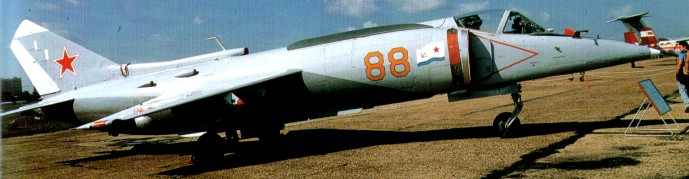
Flown in prototype form in 1971, the Yak-38 was developed under the design leadership of S Mordovin for the primary tasks of fleet air defence against shadowing maritime surveillance aircraft, reconnaissance and anti-ship strike. Power plant combined a Yu Gusev-developed Tumansky R-27V thrust-vectoring turbojet with two Rybinsk (Koliesov) RD-36-35 vertical-lift turbojets designed by a team led by A Dynkin. Hydraulic drives synchronised by a transverse shaft rotated the thrust-vectoring nozzles aft of the wing, their output in vertical take-off and landing operations being balanced during hover and transition by the paired lift engines mounted in tandem immediately aft of the cockpit and inclined forward 13 degrees from the vertical.

Yakolev Yak-38 Article

Yak-38A


Shipboard trials with the Yak-38 began aboard the Moskva half-deck anti-submarine cruiser in 1972, and, in the following year, the decision was taken to build a pre-series of Yak-38 fighters for service evaluation, the first two of these landing aboard the carrier-cruiser Kiev in 1975. An evaluation squadron comprising 12 single-seat Yak-38s and two two-seat Yak-36Us embarked aboard the Kiev in the summer of 1976, the aircraft being confined to vertical take-off with conversion following at 5-6m above the deck. During 1976, production was initiated of a much improved version of the basic design as the Yak-38.

Yak-38 aboard Kiev

Externally similar to the Yak-36M, apart from substantial strakes either side of the intake for the lift engines, the Yak-38 possessed a full weapons system and an automatic control system permitting a short roll leading into vertical take-off as distinct from an orthodox short take-off benefiting from wing-induced lift. Although intended only for vertical take-offs and landings, the ‘Forger’ had double-slotted flaps and a braking parachute.
The Yak-38 entered service with the Soviet Navy in 1978, and, during 1980, was evaluated under operational conditions in Afghanistan. Progressive development resulted in the Yak-38M, which, with 1000kg more engine thrust, a steerable nosewheel and provision for paired 600-litre underwing auxiliary tanks, entered production in succession to the Yak-38. The Yak-38M had a 6940kg R-27V-300 thrust-vectoring turbojet and two vertical-lift RD-38 turbojets each rated at 3250kg. Two wing stations immediately inboard of vertically-folding panels provided for two gun pods each containing a twin-barrel 23mm GSh-23 cannon, rocket packs or bombs weighing up to 500kg each, two R-60 IR-homing AAMs or short-range ASMs. The tuitional version, the Yak-38UM, had vertically-staggered tandem seats, a plug being inserted in the aft fuselage to compensate for a lengthened nose. Each of the four Soviet Navy Kiev-class carrier cruisers received a 14-aircraft squadron of Yak-38s or -38Ms (each including two two-seaters), and production was completed by 1987 with a total of 231 Yak-38s (all versions) built.
The ‘Forger’ had a system to automaticaliy eject the pilot if the engine stopped while the thrust was angled below the horizontal. On one occasion this occurred in full view of a British carrier, who rescued the pilot.
Production of the Yak-38 Forger subsonic V/Stol shipborne fighter continued in 1987, to equip four Kiev-Class aircraft carriers. Each vessel carries 12 Forger As and two two-seat Forger Bs, which lack the ranging radar of the single-seat aircraft. Some 70 Yak-38s had been built by mid-1986.
Photographs of Forger As executing rolling take-offs from the deck of a carrier appeared in 1984, ending all speculation that the aircraft was only capable of Vtol operations. Short take-off techniques will improve the Forger’s payload/range performance. The Yak-38 has no internal armament, but carries gun and rocket pods on four underwing hardpoints to a maximum load of approximately 3,600kg.

Yak-38 aboard Minsk

Yak-38 Forger A
Engine: 1 x Lyuika AL-21F, 8160 kg / 17,989 lb thrust
Lift engines: 2 x Koliesov ZM, 3750 kg / 7870 lb thrust
Installed thrust (dry): 80 kN
Span: 7.32 m / 24 ft 8.25 in
Length: 15.50 m / 50 ft 10.5 in
Height: 4.37 m / 14 ft 4 in
Wing area: 18.50 sq.m / 199.14 sq ft
Empty wt: 7385 kg / 16,281 lb
MTOW VTOL: 11,700 kg / 25,794 lb
MTOL STOL: 13,000 kg / 28,660 lb
Warload: 1350 kg
Max speed: Mach 0.95 / 1110 kph / 627 mph
Initial ROC: 4500 m / min
Ceiling: 12,000 m / 39,370 ft
T/O run: VTOL
Ldg run: VTOL
Range: 740 km / 460 mi
Combat radius: 370 km
Fuel internal: 2900 lt
Air refuel: No
Hard points: 4
Bombload: 3600 kg / 7937 lb
Seats: 1

Yak-38M
Max take-off weight: 11700 kg / 25794 lb
Wingspan: 7.32 m / 24 ft 0 in
Length: 15.5 m / 51 ft 10 in
Height: 4.37 m / 14 ft 4 in
Wing area: 18.50 sq.m / 199.13 sq ft
Max. speed: 1010 km/h / 628 mph

Yakolev Yak-38

Yakolev Yak-36

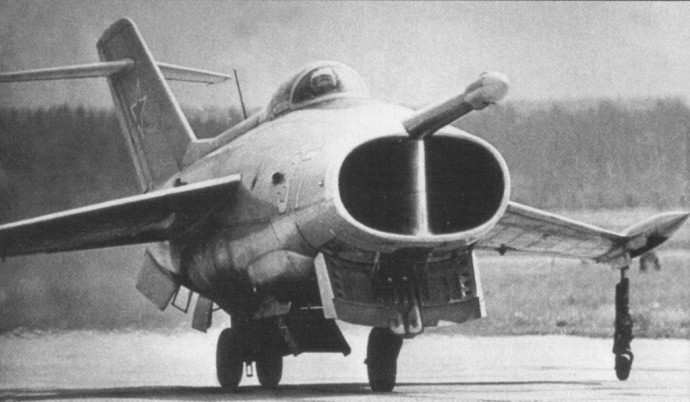
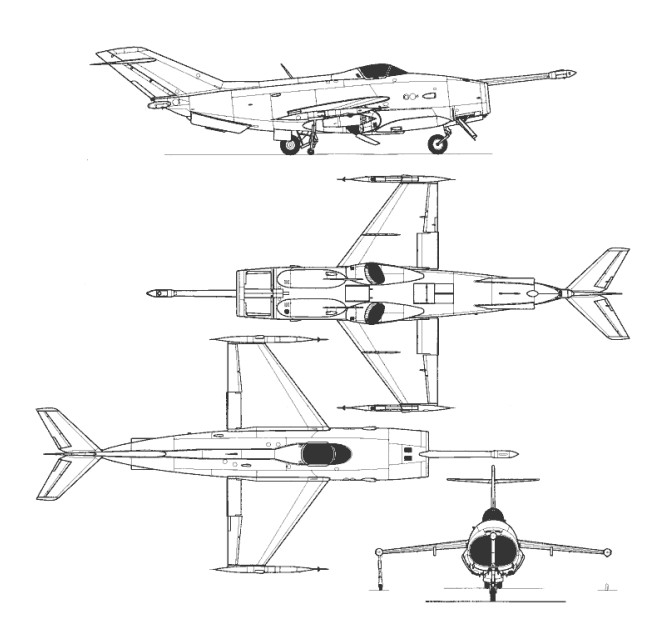
In 1962 the Yakolev bureau was chosen to produce the first Soviet vertical take-off and landing aeroplane for the Soviet navy’s new ‘Kiev’ class of aircraft-carriers. Initial consideration was given to a composite arrangement of lift jets and a cruise engine, but it was finally decided to use two 36.78kN Koliesov engines with vectoring nozzles on the centre of gravity to provide direct lift or forward thrust as required. The airframe designed for the new Yak-36 was necessarily broad to accommodate the side-by-side engines, used the now-standard arrangement of tandem main units on the centreline together with stabilizing outriggers at the wingtips, and was completely conventional as only high subsonic speeds were envisaged. Hovering control was provided by reaction jets in the wingtip pods, the tail and the long nose boom. The type first flew in the mid-1960s, and trials with at least 12 such prototypes paved the way for the Yak-38 VTOL naval aeroplane, which has a composite powerplant with one vectored thrust turbojet in the rear fuselage, and two lift turbojets in the forward fuselage.
Displayed publicly at the Domodedovo, Moscow, flying display in July 1967, this single seater appeared to be powered by two turbojets installed side by side in the belly, each discharging through a louvred and gridded swivelling nozzle. The nose was occupied by large lateral air ducts from a bifurcated pitot inlet. Freehand had no lift jets, and pipes from the main engine served reaction control nozzles at the tips of the wing, at the tail and on the end of an outsize nose boom. The wing was mounted in the mid position directly above the engine nozzles. The vertical tail was sharply swept, and two ventral fins were fitted under the rear fuselage. A large surface under the nose, double hinged to function as an airbrake, was also hinged at the rear, and was judged to reduce reingestion of hot gas in the low level hovering mode.
Two Freehands took part at Domodedovo, one No 37 and the other No 38, the latter carrying two UV 16 57 rocket pods. Fitting the latter was considered chiefly a public relations exercise. There is no evidence to suggest that it was ever an operational type, though at least eight were built, and one went aboard the helicopter ASW cruiser Moskva where it conducted flying trials from an elevated platform not quite the same as those often used by Ka 25 helicopters.

Engines: 2 x RD-27-300, 53.0kN
Max take-off weight: 8900 kg / 19621 lb
Wingspan: 10.5 m / 34 ft 5 in
Length: 17.0 m / 56 ft 9 in
Height: 4.5 m / 15 ft 9 in
Max. speed: 1010 km/h / 628 mph
Ceiling: 12000 m / 39350 ft
Hardpoints: 2
Crew: 1

Yakolev Yak-36

Yakolev Yak-30 [1960]

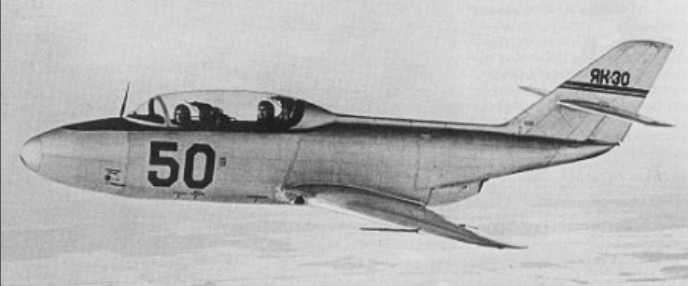
In 1959 the VVS held a competition for a light jet trainer, able to be used for ab initio instruction. Such aircraft had never been developed in the Soviet Union, the only jet trainers being conversions of powerful military types. Yakolev produced a prototype, with the Service designation Yak-30. In parallel, funded by DOSAAF, the OKB produced a single-seat version, the Yak-32. Surprisingly, the only competitors came from outside the Soviet Union.

Yakolev Yak-30 Article

The contest for a jet trainer resolved itself in 1960 into a three-pronged evaluation, the rivals being the Czechoslovak L-29 Delfin and the Polish TS-11 Iskra. The TS-11 was soon eliminated and sent back to Poland, and a head-to- head developed in which the Yak-30 showed an edge in performance, but was marred by detail problems. In any case Czechoslovakia needed the work, and so the L-29 was chosen in August 1961 as the trainer for all Warsaw Pact air forces except Poland’s.

NATO code MANTIS.

Engine: 1 x Tumanskii TRD 29 turbojet, 1,764 2,315 lbs.t. (800 1050kgp)
Cruise, 350 mph (563 kph)
Service ceiling, 40,000 ft (12192 m)

Engine: 1 x turbo-jet RU-19, 8.8kN
Max take-off weight: 2250 kg / 4960 lb
Empty weight: 1555 kg / 3428 lb
Wingspan: 9.38 m / 31 ft 9 in
Length: 10.14 m / 33 ft 3 in
Wing area: 14.3 sq.m / 153.92 sq ft
Max. speed: 767 km/h / 477 mph
Ceiling: 16100 m / 52800 ft
Range: 965 km / 600 miles
Crew: 2

Yakolev Yak-30

Yakolev Yak-30 [1948]

The Yakolev OKB’s response to the March 1946 requirement for a Rolls-Royce Derwent-powered Mach=0.9 “frontal” or general-purpose tactical fighter suitable for use from existing unpaved airfields was the Yak-30. Derived from the Yak-25 from which it differed primarily in having wings sweptback 35 degrees at quarter chord, the Yak-30 retained the fuselage, tail surfaces and undercarriage of the earlier fighter fundamentally unchanged, together with the three-NR-23 cannon armament. Powered by a 1590kg RD-500 turbojet, the first of two Yak-30 prototypes was flown on 4 September 1948. The second prototype, the Yak-30D, which joined the flight test programme early in 1949, had a 38cm section inserted in the aft fuselage, revised mainwheel doors forming a large section of the fuselage skinning, Fowler-type flaps in place of split flaps, increased fuel and ammunition capacity, and changes to the oxygen system and radio equipment. The Yak-30D was also fitted with air brakes on the aft fuselage. Normal loaded weight (without external fuel) was increased by 110kg. Although the modifications introduced by the Yak-30D eradicated several shortcomings displayed by the first prototype, the first production deliveries of the superior MiG-15 were already taking place by the time that the improved version of the Yakolev fighter entered flight test, and the results of NIl V-VS trials were, therefore, little more than academic.

Yak-30
Max take-off weight: 3330 kg / 7341 lb
Empty weight: 2415 kg / 5324 lb
Wingspan: 8.65 m / 28 ft 5 in
Length: 8.58 m / 28 ft 2 in
Wing area: 15.10 sq.m / 162.53 sq ft
Max. speed: 1010 km/h / 628 mph
Ceiling: 15000 m / 49200 ft
Range w/max.fuel: 1720 km / 1069 miles
Crew: 1

Yakolev Yak-30

Yakolev Yak-28 / Yak-129

Yak-28 Firebar

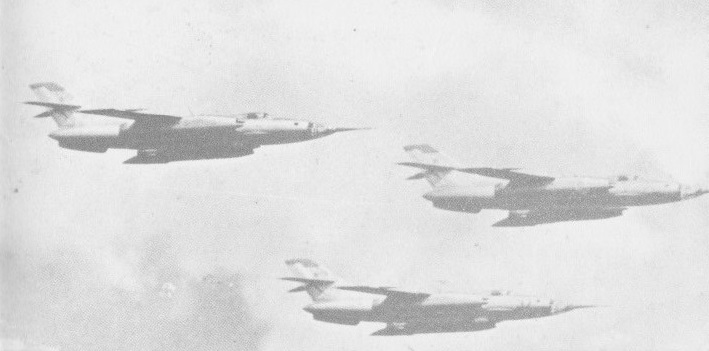
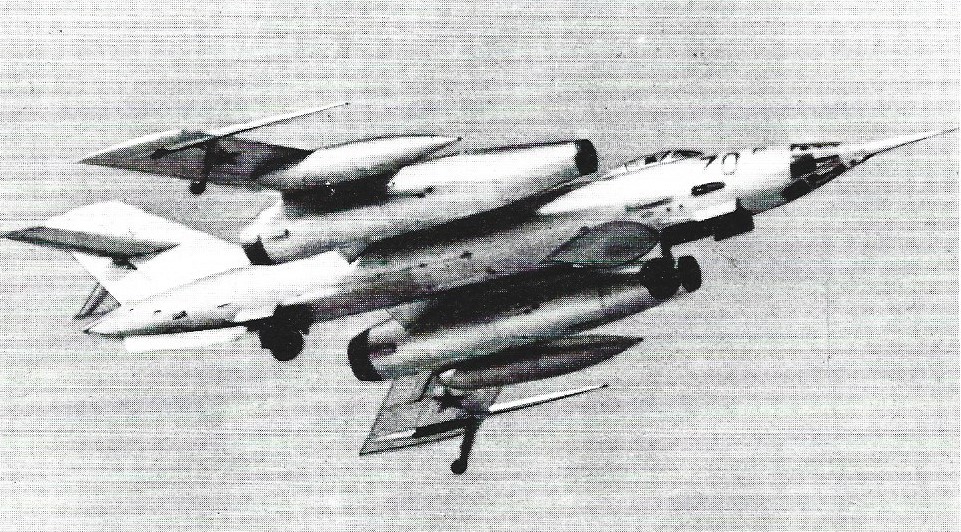
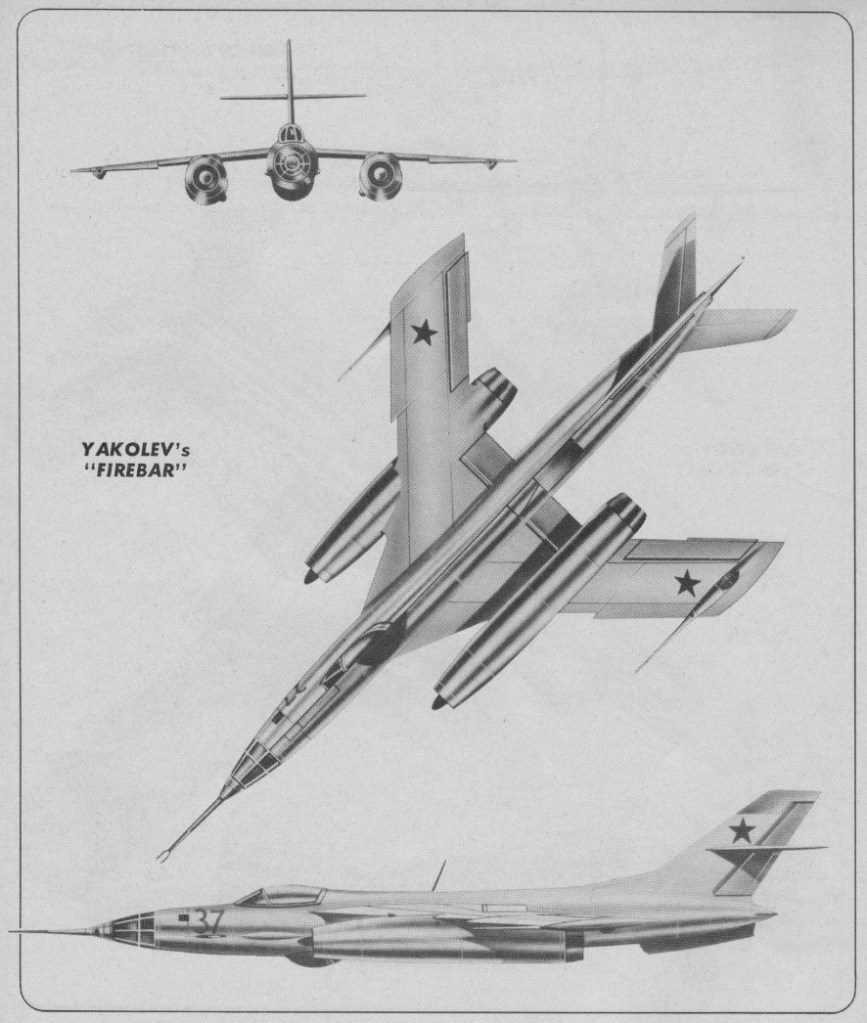
A light bomber and reconnaissance aircraft (NATO code name ‘Brewer’), and all weather fighter (NATO code name ‘Firebar’) and trainer (NATO code name ‘Maestro’). The Yakolev Yak-28P Firebar was a two-seater transonic all-weather twin-jet interceptor with a maximum speed of Mach 1.1 at 35,000 feet and a service ceiling of 55,000 feet. The Yak-28 first flew on 5 March 1958.

Yakolev Yak-28 Article

Possessing no more than a configurational similarity to preceding twin-engined Yakolev combat aircraft, the Yak-129 multi-role aircraft was first flown on 5 March 1958 in tactical attack bomber form. Powered by two Tumansky R-11AF-300 turbojets each rated at 5750kg with afterburning and 3880kg maximum military power, the Yak-129 had a shoulder-mounted wing swept back 63 degrees inboard of the engine nacelles and 44 degrees outboard. Although of zero-track arrangement as on the Yak-25 and -27, the undercarriage of the Yak-129 consisted of long-base twin-wheel units sharing aircraft weight almost equally.

Assigned the service designation Yak-28 and first shown publicly during the 1961 Aviation Day Display in Moscow, the first series version of the aircraft was the Yak-28B with an RBR-3 radar bombing system. This was followed by the Yak-28I and -28L tactical attack aircraft, differing in avionic equipment, which were joined under test during 1960 by the Yak-28P dedicated all-weather interceptor fighter. This featured tandem cockpits for the two crew members and was intended for low- and medium-altitude operation with an Orel-D radar and one beam-riding and one radar-homing R-30 (K-8M) AAM. The Yak-28P entered IA-PVO service during the winter of 1961-62.

The Yak 28 series, comprising the Brewer bomber in addition to the Firebar intercepter, was substantially larger and more powerful than its predecessor. Area ruling was adopted for the fuselage and the wing, of increased area, carried 50 degrees of sweepback on the inboard leading edge. Firebar is powered by a pair of Tumansky R 11 turbojets, the power of which has progressively been uprated since the aircraft entered service. Late production versions are powered by variants rated at an estimated 4600 kg (10140 lb) of dry thrust each, or 6200 kg (13670 lb) with afterburning.

The major differences from the Brewer, which was developed in parallel, lay in the forward fuselage. A radome replaced Brewer’s glazed nose, and the windscreen of the two crew cockpit was, along with the forward undercarriage leg, mounted some 76.2 cm (2.5 ft) further forward in the intercepter version. The internal weapons bay fitted to Brewer was deleted from the intercepter, and Firebar’s lengthened fuselage was later also adopted for the strike variant. A longer and more pointed radome was fitted to later production Firebars.
Firebar is fitted with an X band Skip Spin search and fire control radar operated by the rear crew member.

Standard armament comprises four AA 3 Anab air to air missiles, two of which use infrared guidance while the other pair employ semi active radar homing. A Yak 28P has been displayed with one Anab and one AA 2 Atoll under each wing, but this is thought to have been only an experimental installation. Firebar had by 1978 been mainly replaced by the Flagon E variant of the Sukhoi Su 15.

Brewer

Progressive upgrading resulted in R-11AF-2-300 engines uprated to 3950kg and 6120kg with afterburning, and enclosed by forward-lengthened nacelles, a longer, sharply-pointed radome housing an upgraded radar and affording lower supersonic drag and reduced erosion, and an additional stores station beneath each wing permitting two short-range dogfight IR missiles to be carried. With all these changes incorporated the designation was changed to Yak-28PM. With further upgrading, the fighter was evaluated as the Yak-28PD, but this suffered high-speed aileron reversal during trials, and by the time that this problem had been overcome production of the Yak-28P was phasing out, terminating in 1967 with limited production of the Yak-28PP electronic warfare version. Production of the fighter totalled 437 aircraft.

Yak-28P
Span: 12.5 m (41 ft)
Length: 22 m (72 ft 2.25 in)
Gross weight: 18500 kg (40785 lb)
Maximum speed: Mach 1.15
(all figures estimated)

Yak-28PM
Max take-off weight: 15700 kg / 34613 lb
Wingspan: 11.64 m / 38 ft 2 in
Length: 20.65 m / 68 ft 9 in
Max. speed: 1890 km/h / 1174 mph
Ceiling: 16000 m / 52500 ft
Range: 2630 km / 1634 miles

Yakolev Yak-28

Yakolev Yak-27

In 1955, the Yakolev OKB flew the prototype of a light tactical bomber, the Yak-26, which, evolved from the Yak-25, embodied aerodynamic refinement and was powered by two Tumansky RD-9AK turbojets each rated at 3250kg with afterburning. During test, the Yak-26 achieved 1235km/h at 3000m, or Mach = 1.05, but suffered from serious instability at high attack angles, development consequently being discontinued in favour of a tandem two-seat all-weather fighter, the Yak-27, as a potential successor to the Yak-25. Similarly powered to the Yak-26 and flown in 1956, the Yak-27 featured extended wing root leading edges increasing sweepback inboard of the engine nacelles to 62 degrees, and a sharply pointed nose radome to reduce drag and lessen rain erosion. Armament remained paired 37mm N-37L cannon, but provision was made to supplement this with two RS-2U beam-riding AAMs. Parallel development was undertaken of a tactical reconnaissance aircraft, the Yak-27R, which accommodated the navigator in a pointed, glazed nose. Recurrence of the instability problems that had afflicted the Yak-26 led to major redesign of the wing, broader-chord outer panels being introduced and the tips were extended beyond the outriggers which were enclosed by streamlined under-wing blisters.
The Yak 27P was dubbed Flashlight C on its appearance at the Tushino Soviet Aviation Day in 1956.

Series production of the Yak-27 fighter was not undertaken – although 180 examples of the Yak-27R were built – but a single-seat mixed-power development, the Yak-27V, underwent extensive evaluation. Intended as a high-altitude interceptor and first flown in May 1957, the Yak-27V was powered by two RD-9Ye turbojets with an afterburning thrust of 3800kg each and a tail-mounted Dushkin S-155 bi-fuel rocket motor of 1300kg. Basic armament remained two 37mm cannon. The Yak-27V attained zoom altitudes of up to 25000m during a test programme that continued for two years, but the disbandment of the Dushkin OKB and a loss of interest in rocket propulsion resulted in termination of the programme.

Max take-off weight: 11340 kg / 25001 lb
Wingspan: 11.90 m / 39 ft 1 in
Length: 16.76 m / 55 ft 0 in
Height: 4.05 m / 13 ft 3 in
Max. speed: 1150 km/h / 715 mph
Ceiling: 15250 m / 50050 ft
Range: 3000 km / 1864 miles

Yakolev Yak-27