In 1966 Leon York built the single place cabin, low wing monoplane Y-2, registered N6101.
Engine: Lycoming O-290-G, 125hp
Wingspan: 19’8″
Length: 18’6″
Useful load: 367 lb
Max speed: 145 mph
Cruise speed: 130 mph
Stall: 55 mph
Range: 575 mi
Seats: 1
In 1966 Leon York built the single place cabin, low wing monoplane Y-2, registered N6101.
Engine: Lycoming O-290-G, 125hp
Wingspan: 19’8″
Length: 18’6″
Useful load: 367 lb
Max speed: 145 mph
Cruise speed: 130 mph
Stall: 55 mph
Range: 575 mi
Seats: 1
The 1954 June Bug built by Leon York was a home-built designed for “cow pasture operation.” An open cockpit, low wing monoplane, it first flew in November 1954.
Engine: Continental A-80, 80hp
Wingspan: 23’6″
Length: 16’0″
Max speed: 125 mph
Seats: 1
Midland TX.
USA
Airplane builder 1954-66

The 1956 XHC-22 Yorkopter was a single place cabin monoplane using tilt-rotor technology.

Australian designed and built, based on the CAC CA-6 Wackett trainer. A new wing, tail, and engine were fitted and twenty-one were built between 1959 and 1967. The first flying in February 1960.
Production versions were the KS.3 Cropmaster 250 and Fieldmaster 285.
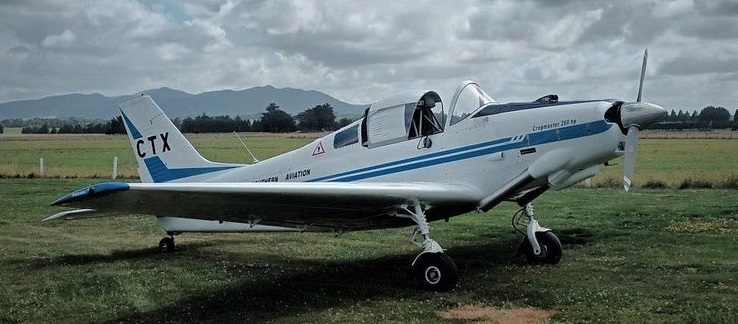
At least one was converted to three seats and, as a Yeoman Hanes 250, fitted with an extended glazed canopy to cover all seats.
Formed 1958 as an associate of Kingsford-Smith Aviation Service to specialise in development of agricultural aircraft. First prototype Yeoman YA-1 conversion of Commonwealth CA 6 Wackett trainer flew in 1960, followed by production versions: KS.3 Cropmaster 250 and Fieldmaster 285.
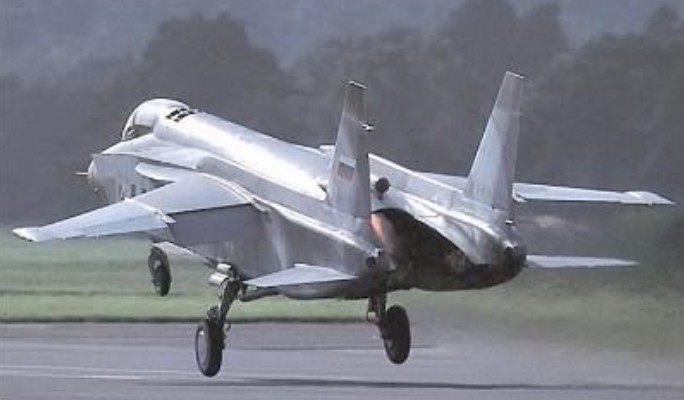
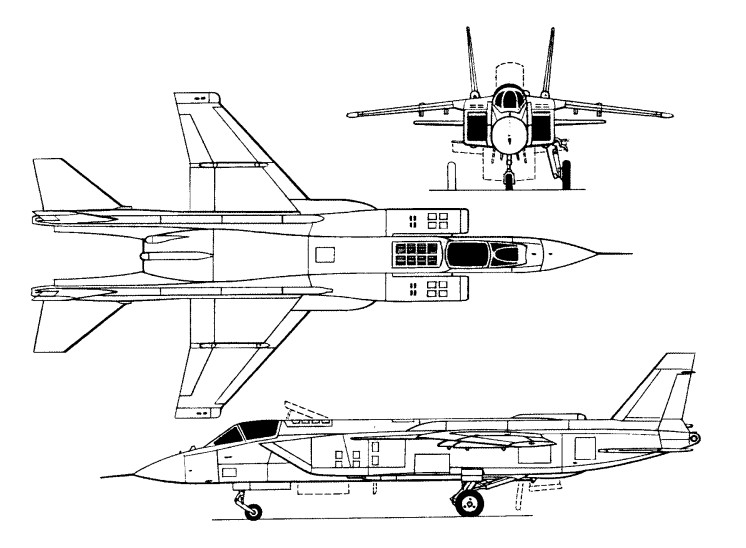
The Yak-141, being the world’s first supersonic STOVL (short take-off/vertical landing) aircraft, has three engines: one lift-cruise R-79 with a thrust of 15500kg and two small-sized RD-41 of 4100kg each. The powerplant allows the plane to lift off vertically with a weight of up to 15,800kg. Alternatively, the Yak-141 can perform short take-offs (60-120m) with a weight of up to 19,500kg. In the latter case the combat radius increases by 1.5-2 times and patrol time in the combat zone by two times. The pilot can use afterburner even when the nozzles are deflected. The Yak-141’s integral flight-control system sets power and deflection of the nozzles so as to optimise making vertical/short take-offs and landings.
The Yak-141 first flew in March 1989, piloted by Andrei Sinitsin.
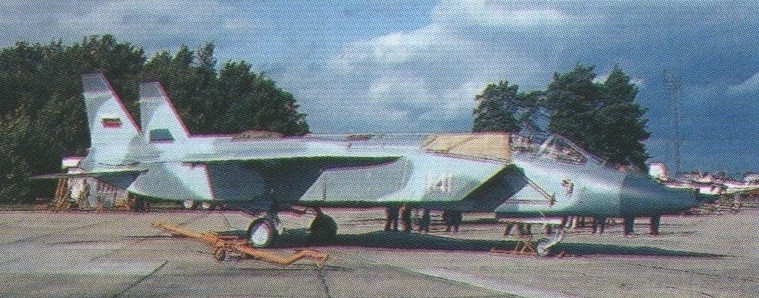
The Yak-141M was meant primarily for ground-basing. Introduction of new flight regimes, as well as new take-off/landing techniques, has entailed changes in the airframe, leading to a new design, the Yak-141M.
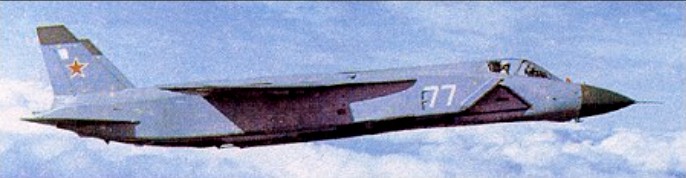
Engine: 1 x R-79V-300, 152.0 kN , 2 x RD-41, 41.8 kN
Max take-off weight: 19500 kg / 42990 lb
Empty weight: 11650 kg / 25684 lb
Wingspan: 10.1 m / 33 ft 2 in
Length: 18.3 m / 60 ft 0 in
Height: 5.0 m / 16 ft 5 in
Wing area: 31.7 sq.m / 341.22 sq ft
Max. speed: 1850 km/h / 1150 mph
Ceiling: 15500 m / 50850 ft
Range w/max.fuel: 2100 km / 1305 miles
Range w/max.payload: 1400 km / 870 miles
Crew: 1
Armament: 1 x 30mm cannon, 1000kg (VTOL) or 2650kg (STOL)
Hardpoints: six
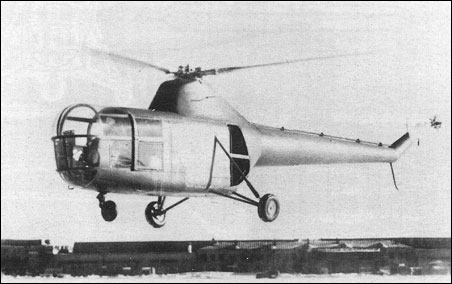
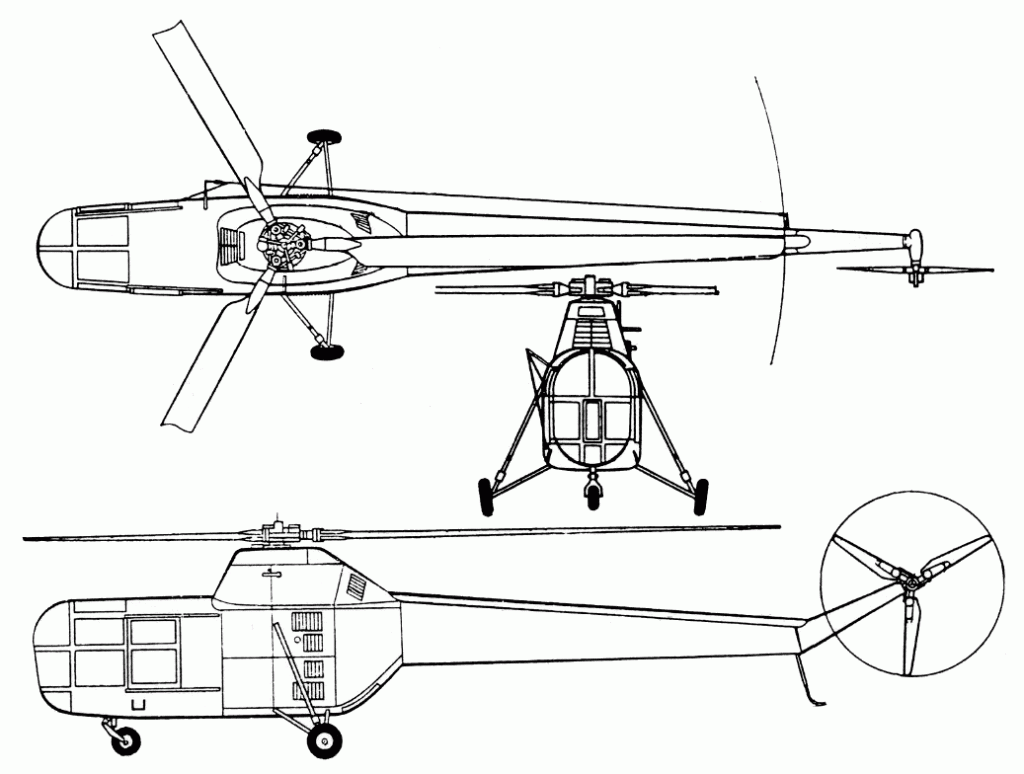
Yakolev ordered the development of a practical helicopter capable of being built in two forms, as a transport carrying a pilot and two passengers, or equivalent cargo, and as a two-seat, dual-control trainer. Design began in June 1947, this machine being one of several which were given out-of-sequence type numbers. The Yak-100 was externally similar to the Sikorsky S-51. The OKB team, under Erlikh, designed this single-rotor machine retaining similar dynamic parts the to EG. The drive and hub mechanism with damped flapping, feathering and drag hinges and hydraulic-dashpot control via swashplate were similar with three main blades of hardwood and pine as before, with ply skin and glued fabric overall. Root of each blade in upper/lower halves of bolted D1, steel hub. Main change in engine installation was vertical engine mount with several changes to enable engine to run in this attitude. Cooling fan, clutch/freewheel and reduction gear and angle box for tail rotor were more Sikorsky than scaled-up EG, though pilot controls and control system retained OKB belief in spring and oil vibration dampers (this time with pilot adjustment) and in spring-loaded actuation of pitch into autorotation following loss of drive torque. Pedal control of tail-rotor pitch. Airframe based on welded steel-tube frame carrying landing gear, seats, rotor hub and engine. Skin riveted D1, and cranked tailboom D1 monocoque. Basic design completed late 1947 as tandem trainer or as transport with single pilot in front and two-seat divan or other payload behind.
The engine was Ivchyenko’s AI-26 seven-cylinder radial, the version chosen being the 575hp AI-26GRFL designed to operate with crankshaft vertical. This drove via a cooling fan and centrifugal clutch to a main gearbox which turned the single main rotor at 232 (not 233) rpm, with a bevel drive to a shaft carried on external trunnions along the top of the long tail boom to a 2.6m three-blade tail rotor. The latter counteracted the main-rotor drive torque and provided yaw (directional) control, driven by pedals. Both rotors were again of fabric-skinned wood laminates, the main rotor having manual control via swash-plates, with spring-loaded automatic autorotative control following loss of drive torque.
The fuselage was again based on a welded-tube truss, with unstressed D1 skin, but the tail boom was a D1 semi-monocoque. The main gearbox was housed in a large mast fairing above the engine compartment, with a front air inlet for the fan-assisted oil cooler. Again the undercarriage was a simple tricycle, with a castoring levered-suspension nosewheel and triangular-braced main units with oleo shock struts pinned to the upper longerons. Track was 3m and wheelbase 2.865m. The entire front of the fuselage was transparent, with sliding doors on the right for the pilot and on the left for the backseater (who had dual control in the first prototype). The transport version was to have a two-seat divan at the rear.
Two prototypes built, first with VVS funds and bearing VVS insignia. The first prototype was tested from November 1948. Initially suffering from severe vibration and apparent blade flutter, the lades given ground-adjustable TE tabs and eventually modified with CG further aft, behind flexural axis. These blades first fitted to No.2 Yak-100, which began test July 1949. Gradually problems with vibration and flutter were solved, and a second prototype was built with modified blades with the cg behind the flexural axis which greatly improved behaviour without complicated damper systems. This dubler, first flown in July 1949, had a more-fully enclosed engine bay with grilled panels and an internally mounted tail-rotor drive shaft. NII-VVS testing took place in the second half of 1950.
Factory test complete June 1950 and NII tests successfully accomplished later same year, but Mi-1 already adopted and Yak-100 project was lost dropped.
Yak-100
Total length: 13.91m
Main rotor diameter: 14.50m
Tail rotor diameter: 2.60m
Empty mass: 1805kg
Max take-off weight: 2180kg
Max. speed: 170km/h
Static ceiling: 2720m
Dynamic ceiling: 5250m
Range: 325km
Crew: 1-2

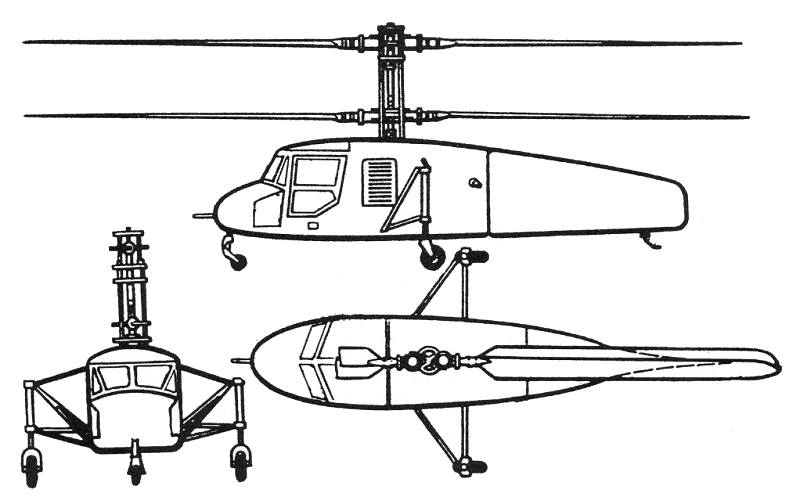
The Yakolev OKB started development of helicopters after the war and designed an experimental machine in 1946, the Yak-EG (Eksperimentalnyi Gelikopter) with a coaxial rotor system, and widely known as the Yak-M11FR-1.
The chief engineer was S.A.Bemov, assisted by I.A.Erlikh. From the outset it was planned as the smallest practical machine to solve basic problems. The engine was a 140hp M-11FR-1 mounted in the normal attitude with the drive taken through a cooling fan and centrifugal clutch to a 90deg bevel gearbox to co-axial vertical shafts. These turned two-blade rotors in opposite directions, at 233 rpm. After studying the possible use of pilot controlled tabs or auxiliary surfaces behind the blade tips the choice was a fully articulated hub with swashplates giving collective and cyclic pitch control. A unique feature was a spring-loaded hydraulic coupling which, upon failure of the drive torque, automatically moved the collective linkage to autorotative pitch.
The rotor blades were laminated pine and hardwood, covered in glued fabric, held in a hub of steel and duralumin. The fuselage was a simple truss of welded steel tube, with Dl skin as far back as the rear of the engine compartment, where an aft-facing gap allowed fan-induced cooling air to escape. The fuel tank was under the main gearbox and the oil tank next to the engine. For better stability in cruising flight a light fabric-covered rear fuselage with twin fins and a tailskid was added behind this point. The welded truss was extended at the front and sides to three vertical shock struts with single wheels, the nose unit having levered suspension. Track was 2.8m and wheelbase 2.68m. The side-by-side cockpit had a door on each side and the largest possible window area.
The Sh was completed in early 1947. The chief pilot was V.V.Tezavrovskii, who with others made forty tethered tests (total 5hr) followed by seventy-five free flights (total 15hr). Ground resonance, then little known, was avoided by pure chance. The centre of gravity was clearly too far aft, so the tail (and for a time the tail-skid) were removed and the oil tank relocated behind the cockpit bulkhead.
Eventually the Sh hovered under good control, but as soon as forward speed exceeded about 30km/h vibration and progressive loss of control were encountered. Following testing it was decided that the coaxial rotor layout should be developed by the Kamov bureau, and Yakolev moved on to other helicopter configurations.
EG
Engine: M-11FR-1 5-cylinder air cooled piston, 140 hp
Rotor diameter: 10.0m
Length: 6.53m
Max take-off weight: 1020kg
Empty weight: 878kg
Payload: 142kg
Fuel: 50kg
Max speed at sea level: 150km/h
Max speed reached: 70km/h
Hovering ceiling: 250m
Service ceiling: 2700m
Service ceiling reached: 180m
Range: 235km
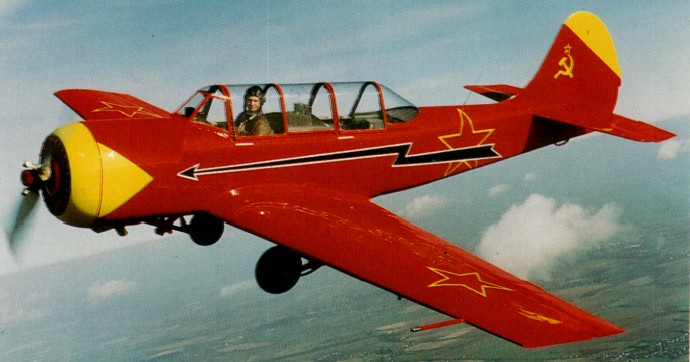
The Yakolev Yak-52 is a two-seater tandem low wing civil and military aerobatic trainer aircraft with semi-retractable tricycled landinggear. Development of the Yakolev Yak-52, originally known Yak-50U, started in 1973 as a successor of the Yakolev Yak-18 training aircraft. The Yakolev 52 was designed by the Yakolev Design Bureau as a trainer version of the single-seat Yak-50. The prototype was flown first in 1974. Production was initiated in 1976 at the Intreprinderea de Avioane Bacau factory in Bacau, Romania and production of the Yak-52 started in 1977.
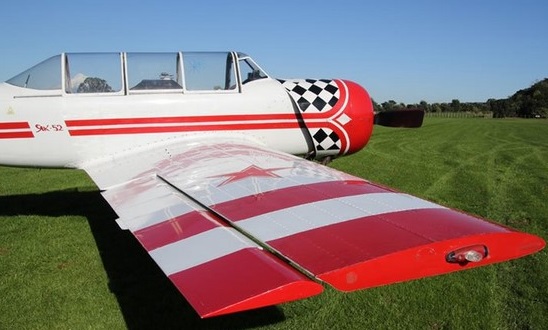
The Romanian prototype Yak-52 was flown first in May 1978 and deliveries started the same year. The IAK-52 airplane is equipped with a 360 hp Ivchenko Vedeneyev M-14P nine cylinder, air-cooled radial piston engine. The 400 hp M14PF can also be fitted. The Yak is all-metal, fully aerobatic machine with an inverted fuel system, and features semi retractable tricycle landing gear. As an aircraft with excellent performance and +7/-5 G limits with two pilots and full fuel, the Yak-52 enables training from basic to unlimited level.
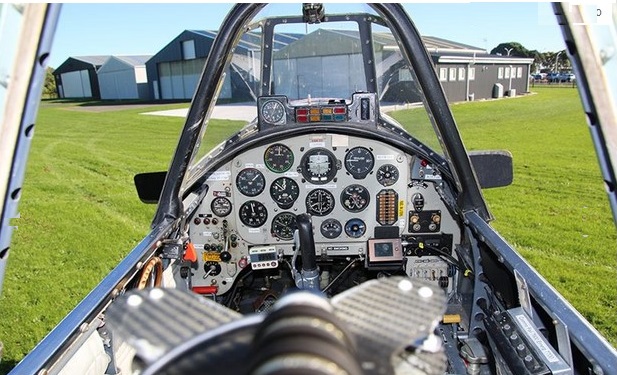
The Yak-52 was used in the Soviet Union as a basic military trainer as well as primary and advanced aerobatic trainer. A vast majority is in use with the Russian DOSAAF Clubs. The I.Av. Bacau was renamed Aerostar S.A. in 1991. Over 1800 have been produced starting with series-production in 1979. At the peak of production 150 aircraft were manufactured per year. Aerostar in Bacau, Romania as of 2009, was still producing the Yak-52 in limited numbers on request. The models were the Yak-52W, an upgraded derivative with Western instruments, radio, electrical etc. and the tail wheel version Yak-52TW.
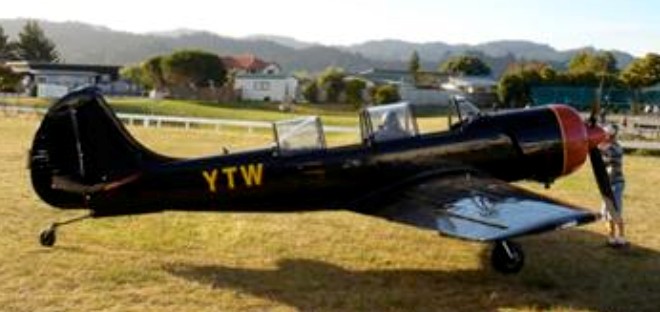
The 2025 developed Yak-52B2 variant is tailored for counter-drone operations. It features a 90 kg payload capacity under each wing. One pylon mounts a circular-view radar capable of air-to-air, air-to-ground, and weather tracking. The other currently carries a 12-gauge semi-automatic carbine.
The aircraft is further equipped with a weapon aiming subsystem and modern flight control and navigation systems, enabling reliable operations in all weather conditions.
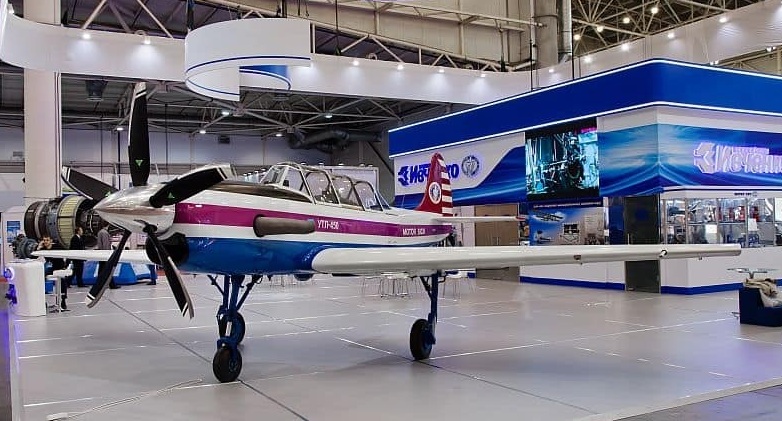
Motor-Sich developed an upgraded version of this aircraft, which received a AІ-450S turboprop engine with 5-blade variable-pitch propeller MTV-5, as well as a number of other new systems. Also, the upgraded version received a new instrument panel with liquid crystal indicators.
Engine: Vedeneyev Ivchyenko M-14P, 360 hp
Crew: 2
Height: 2.7 m
Length: 7.745 m
Wing span: 9.3 m
Wing area: 15 sq. m
Dihedral: 2 degrees
Wing incidence: 2 degrees
Propeller diameter: 2.4 m (V530TA-D35 constant speed propeller)
Wheel track: 2.715 m
Dry weight: 1035 kg
Maximum takeoff weight: 1315 kg
Maximum landing weight: 1315 kg
Weight of crew with parachutes: 180 kg
Fuel weight: 90 kg
Oil weight: 10 kg
Maximum fuel load: 120 L
Maximum oil load: 16 L
C of G limits (%): 17.5 – 27.0
Maximum level airspeed (at altitude 1000 m): 270 km/h
Range (10% fuel reserve at 190 km/h): 465 km (2 h 30 min)
Takeoff roll: 180 – 200 m
Landing roll: 330 m
Stall speed, engine at idle – erect flight, clean: 120 km/h
Stall speed, engine at idle – flaps, gear down: 110 km/h
Stall speed, engine at idle – inverted: 150 km/h
Approach speed: 160 km/h
Cruise 70%: 130 kt / 60 lt/hr.
Touchdown speed: 115 – 120 km/h
Takeoff speed: 120 km/h
Climb speed: 170 km/h
ROC: 1800 fpm.
Never exceed speed (VNE): 420 km/h
Maximum manoeuvring speed: 360 km/h
G limits: +7/-5
Maximum gear extended speed: 200 km/h
Maximum flaps extended speed: 170 km/h
Minimum fuel qty for aerobatics: 24 L
Maximum inverted flight time: 2 min (followed by at least 3 min of erect flight)
Maximum oil load for cross-country: 16 L
Maximum oil load for aerobatics: 10 L
Minimum oil load: 8 L
Yak 52TW
Engine: 400 HP
Prop: MTV-9-B/260-29
Motor-Sich UTL-450
Engine: AІ-450S turboprop
Propeller: MTV-5 5-blade variable-pitch
Empty aircraft weight: 900 kg
Maximum take-off weight: 1315/1500 kg (pilot/multi-purpose category)
Maximum horizontal flight speed: 350 km/h
Maximum flight range with 10% fuel reserve: 650 km
Maximum flight range with additional fuel reserve: 2890 km
Practical ceiling: 9000 m
 All Aero